Buffalobur Solanum rostratum
Also called Buffalobur Nightshade, Kansas Thistle, Prickly Nightshade, špáŋšni yútapi iyéčheča (Lakota)
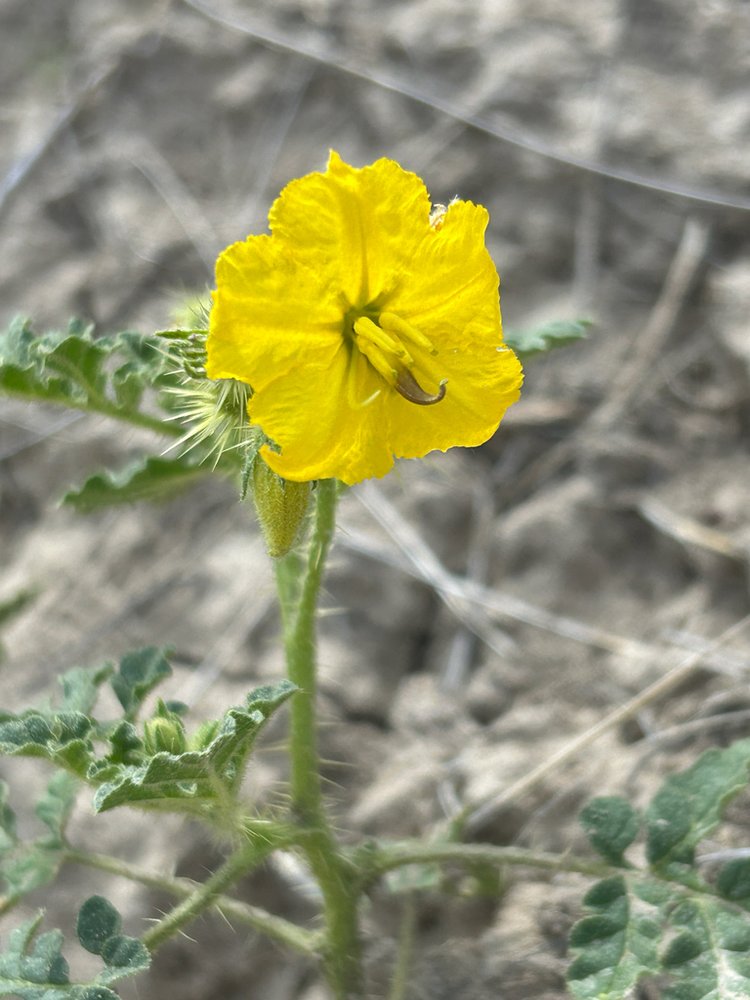
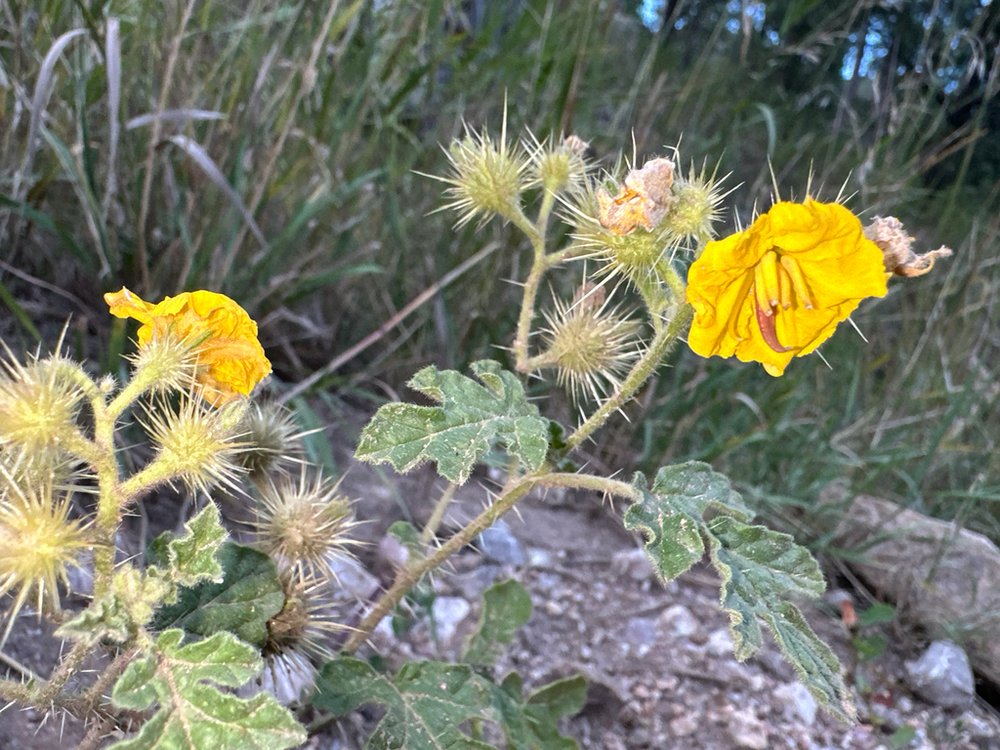
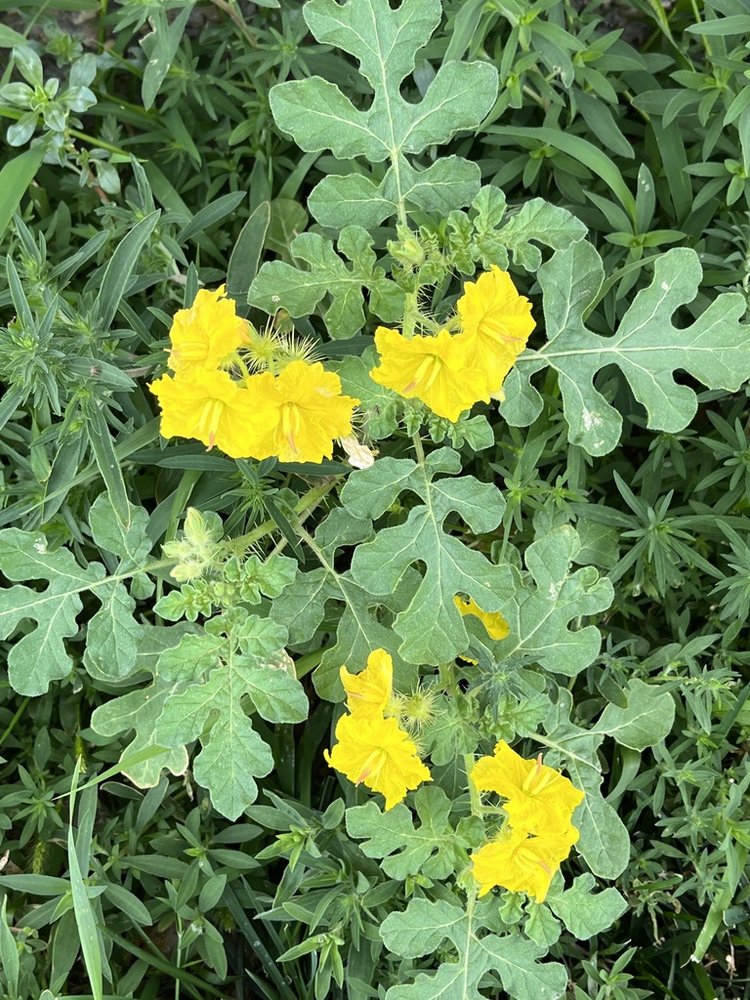
Buffalobur (Solanum rostratum) is a spiny annual with deeply lobed leaves, yellow flowers 1.5–3.5 cm (⅝–1⅜ in) across, and berries wrapped in a bristly, prickly bur. It grows on disturbed ground such as roadsides, pastures and waste areas, and in the Black Hills the National Park Service lists it at Wind Cave, Jewel Cave and Mount Rushmore.
Free photos from other sources
| Family | Solanaceae · Nightshade |
|---|---|
| Status | Native annual |
| Blooms | June into September |
| Height | 20–100 cm (8–39 in) |
| Where | Disturbed ground: roadsides, overgrazed pastures, waste areas and field edges |
| Also called | Buffalobur Nightshade, Kansas Thistle, Prickly Nightshade, špáŋšni yútapi iyéčheča (Lakota) |
| Synonym | Androcera rostrata, Solanum heterandrum |
| Toxicity | Flora of North America reports that pigs have been poisoned by eating the berries and roots. |
| Traditional use | Black Elk and Flying By's 1998 list of Lakota plants records that the Lakota made an infusion of buffalobur for nausea. Moerman's database records that the Zuni took an infusion of the powdered root, which was not an emetic, for a sick stomach (Stevenson 1915). |
| Note | USDA PLANTS lists it as native to the lower 48 states. Flora of North America says its native range likely reaches the Great Plains from Mexico, and that it is widely introduced elsewhere; it also calls it a noxious weed in several states, none of them South Dakota or Wyoming on the state lists checked. |
Traditional use: first drafted by Google AI, then checked against the sources on this page.
Roots, seeds & germination
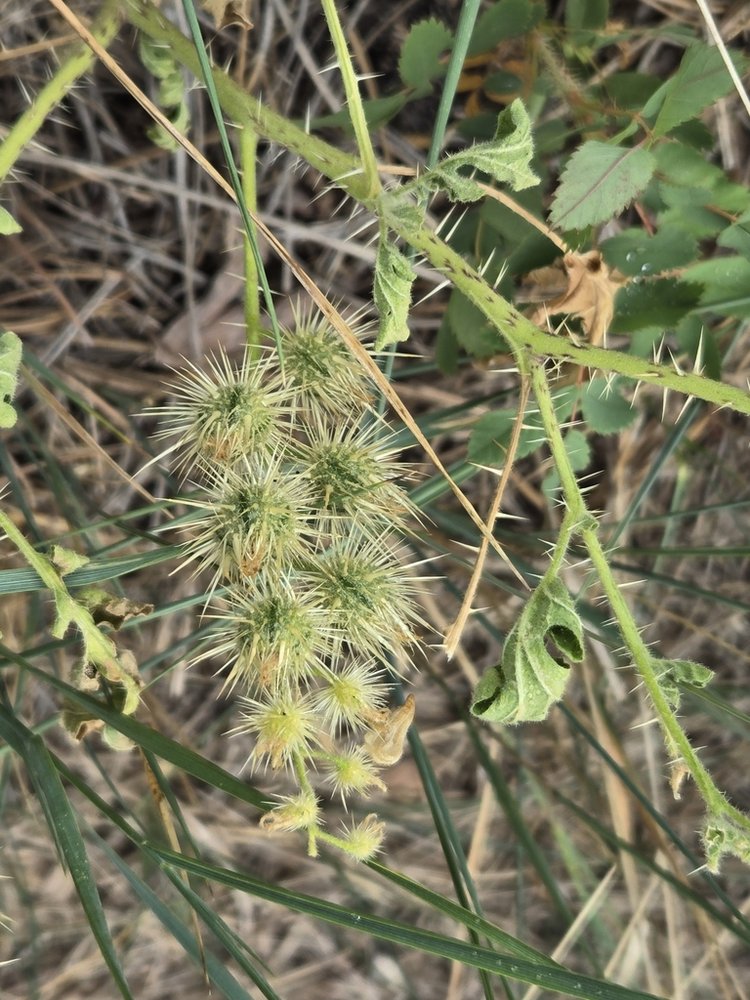
Seed: The berry is brown, round and dry, 1–1.2 cm (about ½ in) across, tightly enclosed by the prickly calyx, with dark brown, flattened, pitted seeds 2–3 mm long (Flora of North America). Kansas Wildflowers says a mature plant breaks off near the ground and rolls like a tumbleweed, scattering thousands of seeds.
How do you identify Buffalobur?
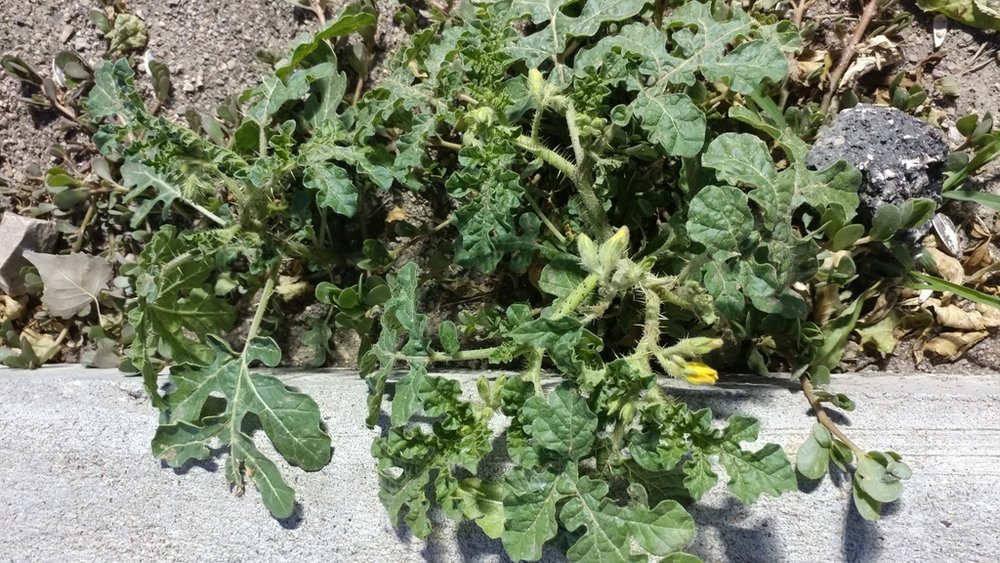
Look for an erect, branching plant armed with straight yellow prickles on the stems and leaves. The leaves are lobed to twice divided into rounded lobes, covered in star-shaped hairs. The yellow flowers have 5 lobes, with 4 short yellow stamens and 1 longer, curved, reddish or purplish one, and open in small clusters of 5–12 on a short stalk off the side of the stem. After the petals fall, the calyx (the ring of green sepals) tightens around the brown berry as a densely prickly bur, 7.5–12.5 mm long, and the dark seeds are about 2–3 mm. When the plant dries, the main stem breaks near the ground and it rolls like a tumbleweed.
When does it bloom?
June into September.
Where does it grow?
Disturbed sites on a wide range of soils: roadsides, pastures, overgrazed ground, waste areas and feedlots (Flora of North America, Kansas Wildflowers). Black Hills herbarium labels give road corridors and ditches, gravelly slopes, plowed and idle fields, lawns, parking lots, a waste dirt pile and creek floodplains, and one 1994 label says it is considered a weed by most people in the area. The National Park Service lists it at Wind Cave, Jewel Cave and Mount Rushmore, and GBIF holds 62 herbarium specimens from Lawrence, Pennington, Custer, Fall River and Meade counties in South Dakota and Crook County in Wyoming, collected between 1892 and 2010.
Nightshade family (Solanaceae): 2 other plants in this guide
Sources: Flora of North America Vol. 14: Solanum rostratum (Dunal), eFloras; Kansas Wildflowers and Grasses: Buffalo bur (Solanum rostratum); USDA PLANTS Database: Solanum rostratum (SORO); NPSpecies checklist, Wind Cave National Park vascular plants; NPSpecies checklist, Jewel Cave National Monument vascular plants; NPSpecies checklist, Mount Rushmore National Memorial vascular plants; GBIF occurrence search: Solanum rostratum herbarium specimens, Black Hills counties of South Dakota and Wyoming; GBIF specimen 2512329320: Black Hills National Forest 2010, road corridor; GBIF specimen 3111469346: Lawrence County 1994, roadsides, field edges and old lots; considered a weed; Culturally Important Plants of the Lakota (Black Elk and Flying By, 1998), entry 286, filed with the South Dakota PUC; Native American Ethnobotany Database (BRIT): Solanum rostratum; South Dakota locally noxious weed list, updated 2024 (DANR); Wyoming Weed and Pest Council: Designated Weed List.