American Elm Ulmus americana
Also called White elm, Water elm, Soft elm, p'eíkčeka (Lakota), p'éčhaŋ (Lakota)
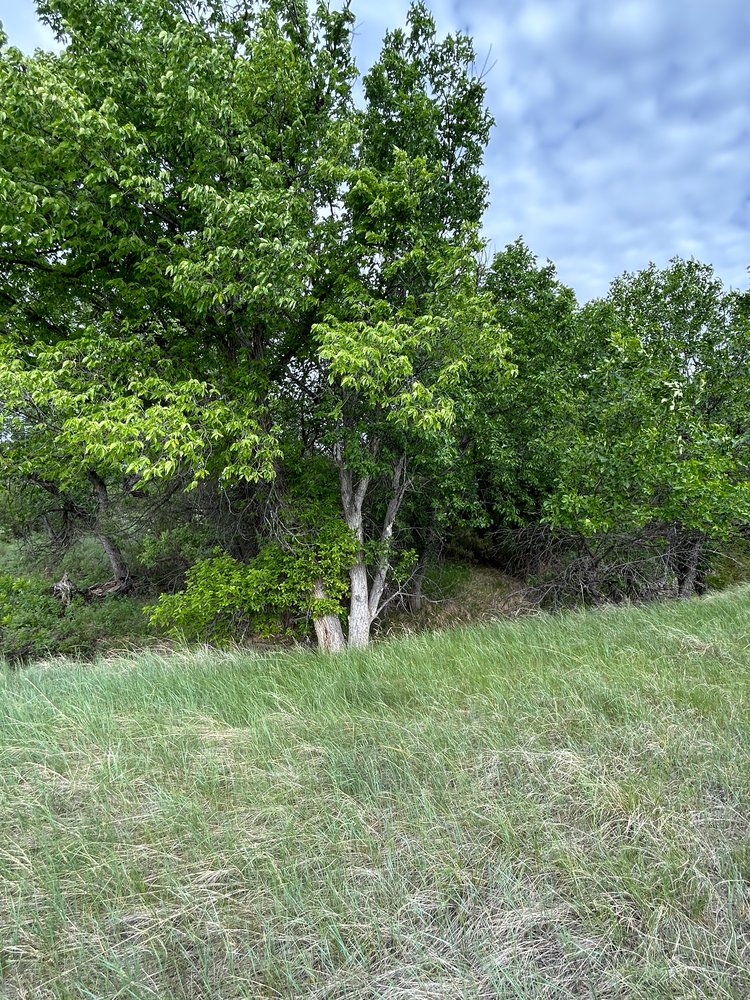
American Elm (Ulmus americana) is a native tree with a spreading, vase-shaped crown, gray bark deeply furrowed between interlacing ridges, and oval leaves with double-toothed edges and a lopsided base. Its petal-less flowers dangle in small clusters from March into May, before the leaves, and ripen by late spring into flat, round, papery-winged seeds about 1 cm across, and in the Black Hills it grows along creeks and in canyons, ravines and draws, where the Forest Service counts it among the common trees of the bur oak woods and the National Park Service lists it at Wind Cave and Mount Rushmore.
Free photos from other sources
| Family | Ulmaceae · Elm |
|---|---|
| Status | Native deciduous tree |
| Blooms | March into May, before the leaves; the winged seeds ripen in late spring |
| Height | Usually 20–30 m (65–100 ft); 12–18 m (40–60 ft) on very wet or very dry ground |
| Where | Creek bottoms, floodplains, canyons, ravines and draws; also planted in towns |
| Also called | White elm, Water elm, Soft elm, p'eíkčeka (Lakota), p'éčhaŋ (Lakota) |
| Synonym | Ulmus floridana, Ulmus americana var. floridana |
| Traditional use | Black Elk and Flying By (1998) record that the Lakota drank an infusion of the outer and inner bark for tuberculosis, lung hemorrhaging, coughs, colds, influenza, dysentery, eye infections, cramps and diarrhea, washed wounds with a bark decoction, and used the wood for fuel, pots and building. |
| Note | Dutch elm disease, a fungus carried by bark beetles that plugs the tree's water vessels, has spread over much of the United States since it arrived from Europe around 1930, and American elm has declined sharply. |
Roots, seeds & germination
Root: On wet soils the roots spread widely and stay mostly within about 1 m (3–4 ft) of the surface; on drier soils the tree sends down a deep taproot. Small trees sprout fairly well from the stump, trees 150 to 250 years old seldom do, and in Minnesota bottomlands root suckers may replace trees.
Seed: The fruit is a flat, round to egg-shaped samara 1–1.5 cm (½ in) across, the seed in the middle of a papery wing fringed with short white hairs and notched at the tip. It ripens in late spring, with seed fall over by mid-June in the North. The wind carries the seed, and in river bottoms water can carry it for miles. Trees begin to bear at about 15 years but seldom bear heavily before 40.
Germination: Fresh seed sown at once in moist, well-drained soil with light sprouts quickly, usually in 6 to 12 days and sometimes up to 60. Dormant seed can be woken with 60 days of cold, moist storage at 5 °C (41 °F); germination is best with nights near 20 °C (68 °F) and days near 30 °C (86 °F), and about 65 percent of seed germinates. The tree is also grown from cuttings, grafts and root suckers.
How do you identify American Elm?
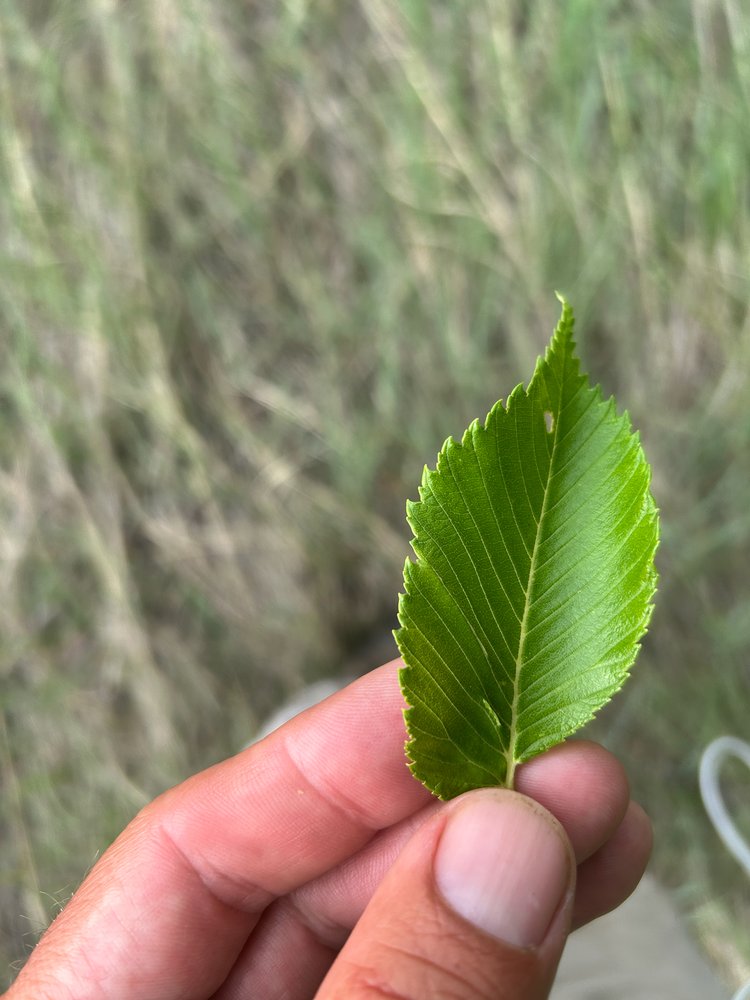
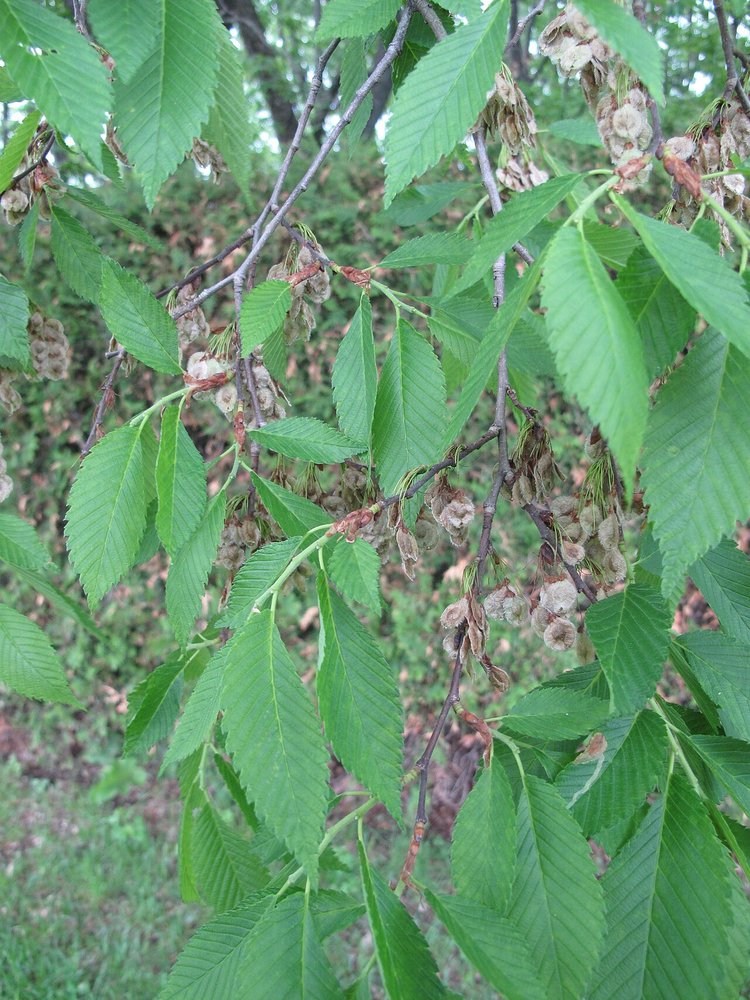
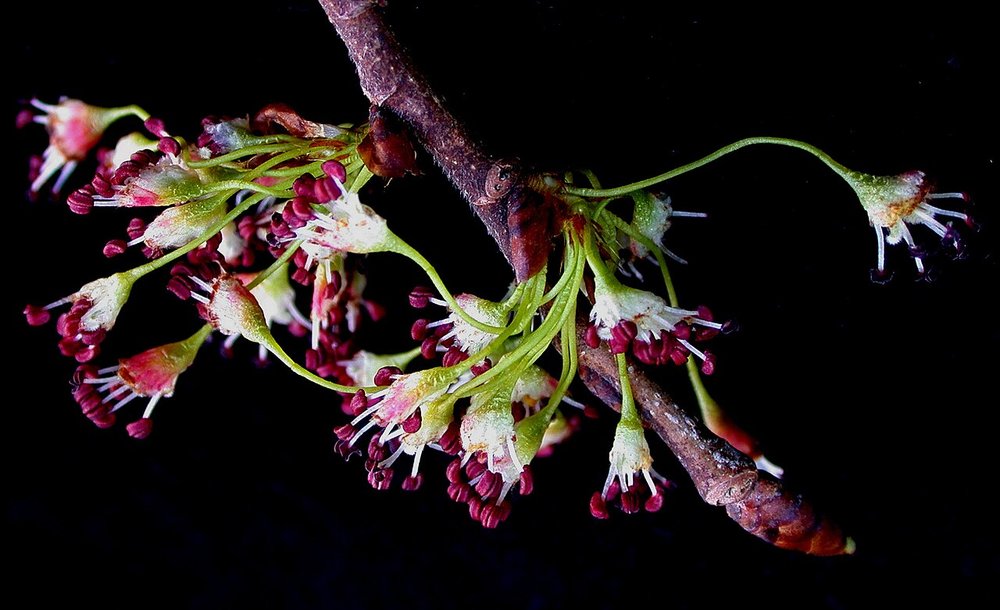
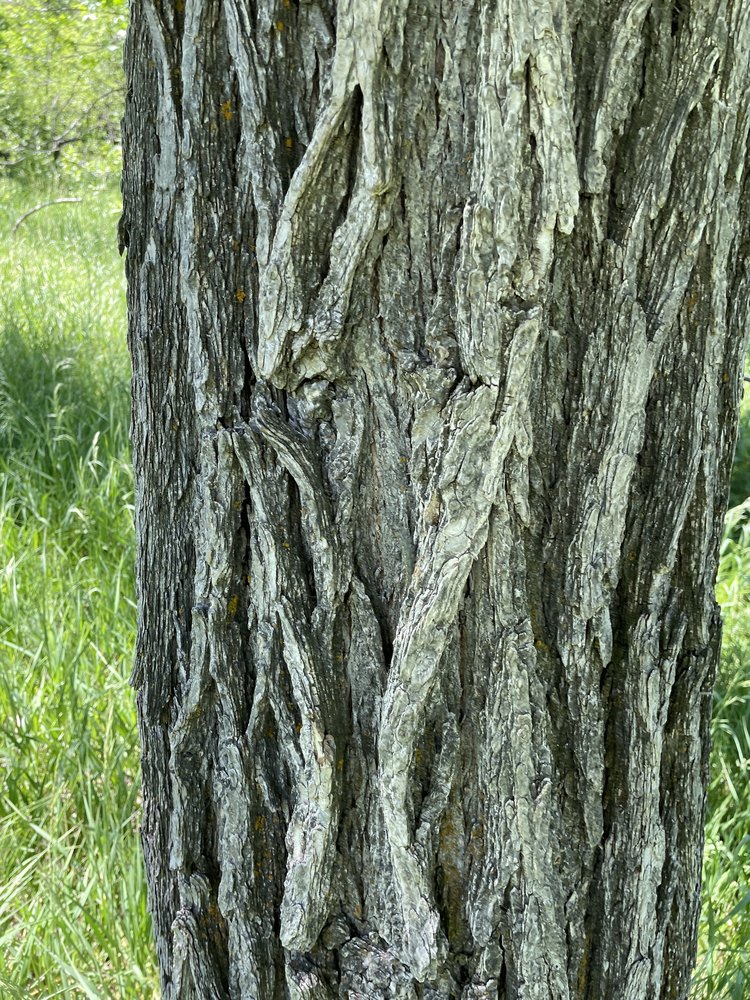
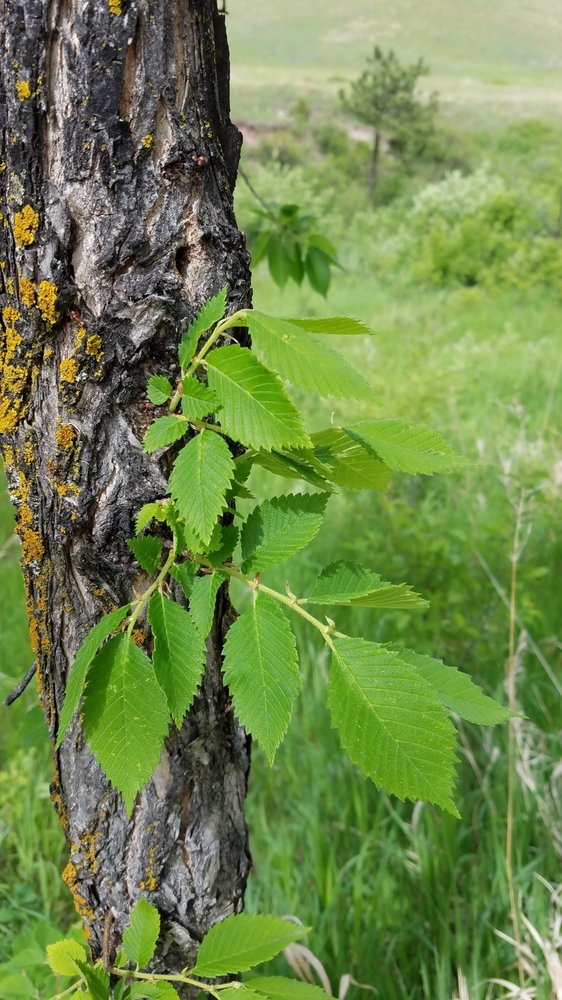
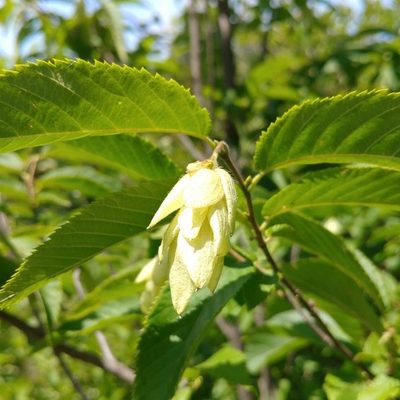
Start with a leaf: alternate, oval to oblong, 7–14 cm (3–5½ in) long, sharply pointed, with double-toothed edges (each big tooth carries smaller teeth), straight side veins that don't fork, and a base that is plainly lopsided, one side lower than the other; the top is dark green and smooth to rough, the underside paler with tufts of hair where the veins meet the midrib. Twigs are brown with pointed brown buds. The bark of a mature trunk is gray to light brown and deeply furrowed between interlacing ridges or split into plates, and the crown spreads into the classic vase shape with arching limbs. The flowers come before the leaves, in dangling clusters of 5 to 15 small petal-less flowers with red anthers on last year's twigs, and they ripen by late spring into flat, round to egg-shaped winged seeds 1–1.5 cm (½ in) across with a fringe of short white hairs around the edge and a notch at the tip. Siberian Elm, planted for windbreaks and escaping to roadsides and waste places, is easily told from the native elms by its single-toothed leaf edges, the Flora of North America says; its leaves are smaller, 2–6.5 cm (1–2½ in), with a base that is usually even, its winged seeds are hairless with a deep notch, and Minnesota Wildflowers adds its tiny dormant buds and fine, twiggy branches. The North Dakota tree handbook says Ironwood's leaves resemble elm leaves; Ironwood's fruit is a hop-like cluster of papery sacs, and its bark shreds in narrow strips.
When does it bloom?
March into May, before the leaves; the winged seeds ripen in late spring.
Where does it grow?
Creek bottoms, floodplains, canyons, ravines and draws, at about 1,065–1,525 m (3,500–5,000 ft) on herbarium labels, and widely planted in towns. SDSU records it as native to South Dakota in moist bottomlands, floodplains, riverbanks and rich woodlands. The Fire Effects Information System says that in the bur oak cover type of the Black Hills of South Dakota and Wyoming, American elm is common along with ponderosa pine and plains cottonwood, and the Forest Service's 1987 habitat-type classification of the Black Hills National Forest names it with green ash, hackberry, ponderosa pine and boxelder in the lowland riparian forests where bur oak grows as a tree, forests that have mostly vanished from the larger streams. The National Park Service lists it at Wind Cave National Park and Mount Rushmore National Memorial. Herbarium specimens come from Lawrence, Pennington, Custer, Fall River and Meade counties in South Dakota and Crook County in Wyoming, from 1908 on, with labels describing creek banks, a floodplain, a creek-bottom ravine with bur oak, birch and ash and a prairie ravine in Custer State Park, a side canyon of spruce, aspen and paper birch, a creek bank among granite boulders, and ravines and draws in the Bear Lodge Mountains. Black Hills labels show it in flower from March 29 to May 8.
Other plants to compare
Sources: SDSU Open PRAIRIE: Ulmaceae: Ulmus americana; Flora of North America Vol. 3: Ulmus americana, eFloras; Flora of North America Vol. 3: Ulmus pumila (Siberian Elm), eFloras; USDA Forest Service Fire Effects Information System: Ulmus americana (Coladonato 1992); USDA Forest Service Fire Effects Information System: Fraxinus pennsylvanica (Gucker 2005), Black Hills bur oak cover type; Minnesota Wildflowers: Ulmus americana (American Elm); Minnesota Wildflowers: Ulmus pumila (Siberian Elm); NDSU Tree Handbook: Ironwood or American Hop-hornbeam (leaves resemble elm); Hoffman and Alexander 1987, Forest Vegetation of the Black Hills National Forest: A Habitat Type Classification (USDA Forest Service RM-276); NPSpecies checklist, Wind Cave National Park vascular plants; NPSpecies checklist, Mount Rushmore National Memorial vascular plants; ITIS: Ulmus americana L., TSN 19049; GBIF occurrence search: Ulmus americana, South Dakota and Wyoming herbarium specimens; GBIF specimen 4443359806: Pennington County 2010, creek bank among granite boulders; Black Elk and Flying By 1998, Culturally Important Plants of the Lakota (entry 315), filed with the South Dakota PUC.