Prairie Rose
Rosa arkansana
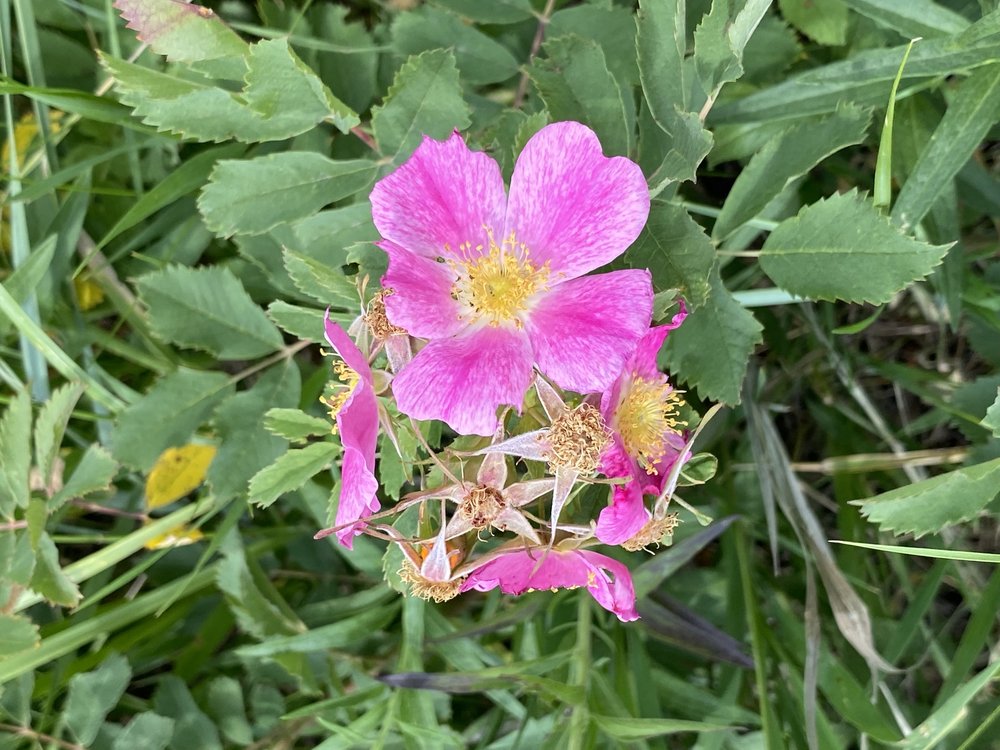
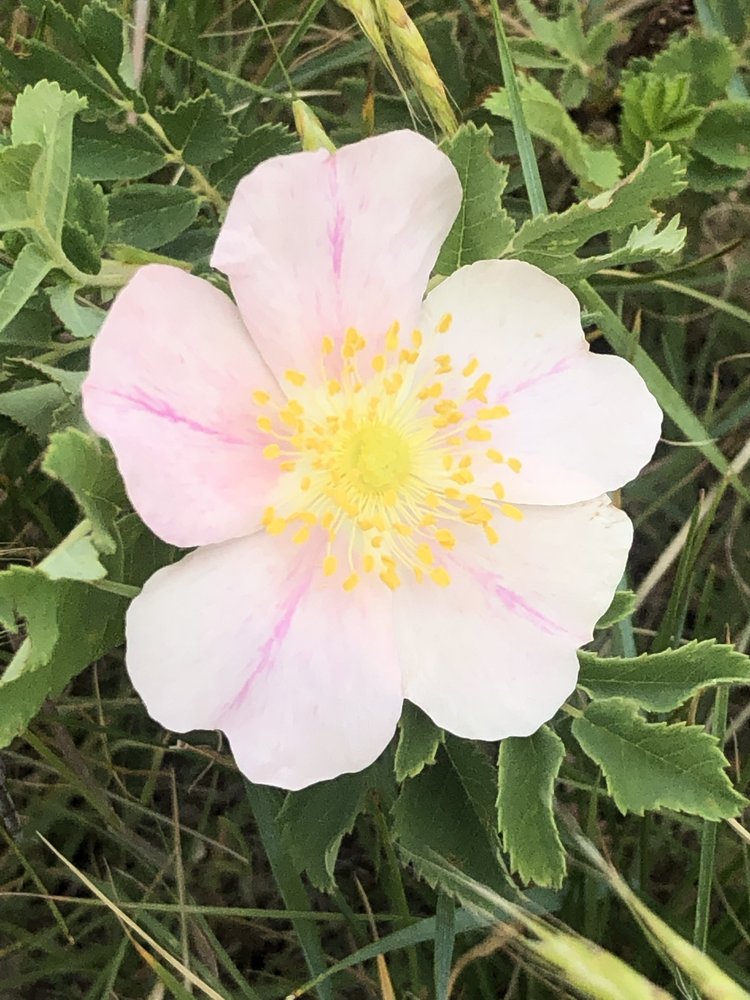
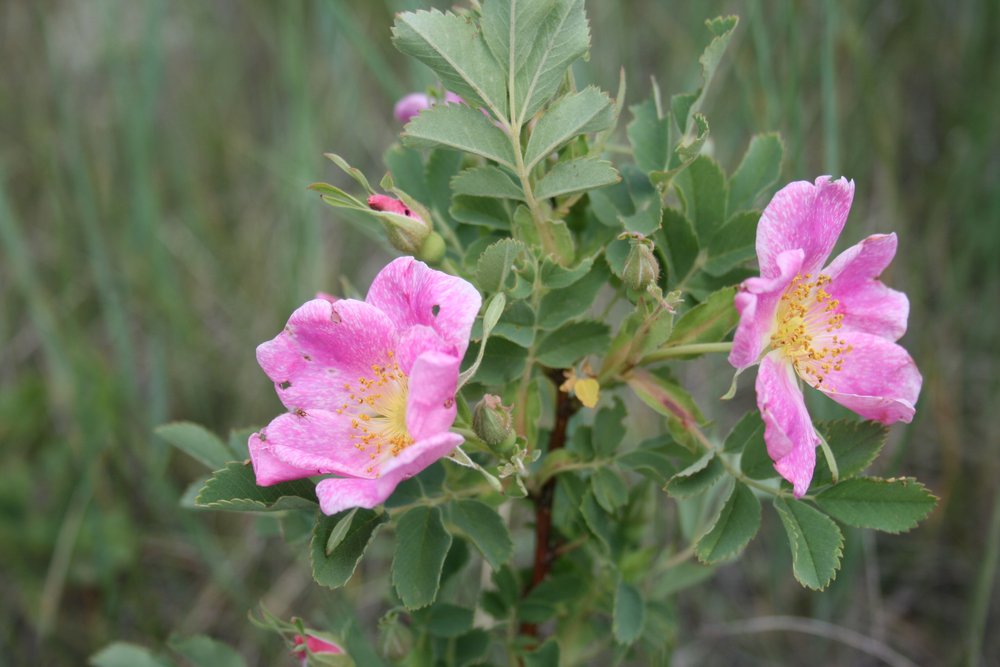
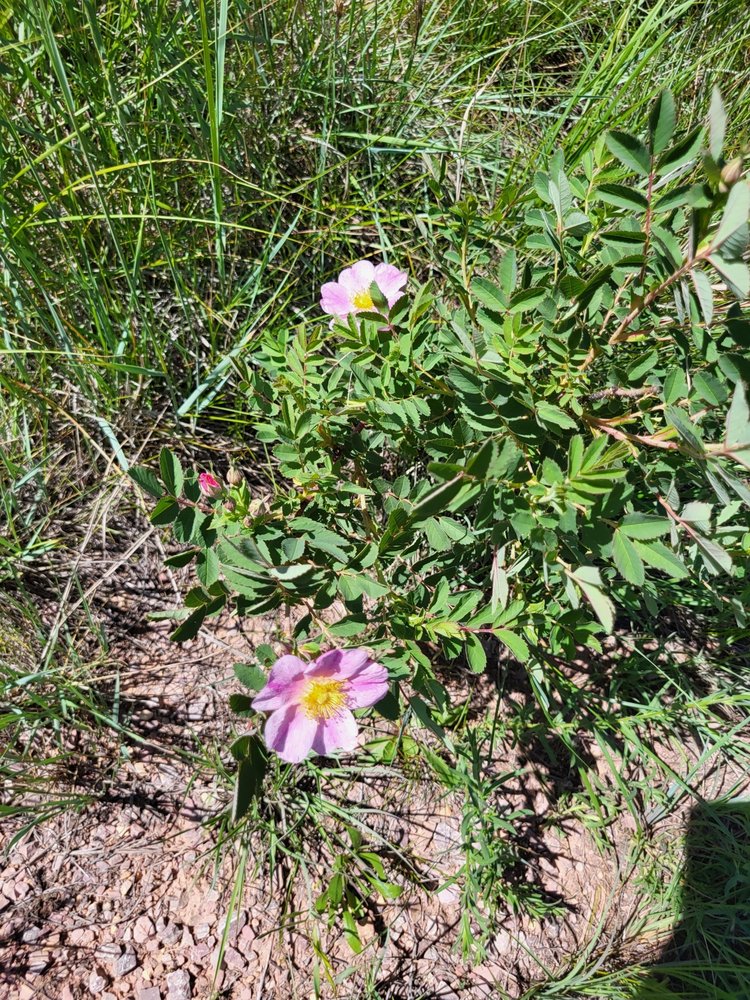
Prairie Rose (Rosa arkansana) is the low, bristly native wild rose of Black Hills grasslands, meadows and open pine woods, usually no taller than your knee. It blooms in June and July with pink to nearly white flowers clustered at the tips of new shoots, and the National Park Service lists it at Wind Cave, Jewel Cave, Mount Rushmore and Devils Tower.
Free photos from other sources
| Family | Rosaceae · Rose |
|---|---|
| Status | Native shrub |
| Blooms | June and July, a few from late May into August |
| Height | 20–50 cm (8–20 in) |
| Where | Prairies, mountain meadows, open ponderosa pine woods, forest edges and roadsides |
| Also called | Wild Prairie Rose, Arkansas Rose, Wild Rose, uŋžíŋžiŋtka hú (Lakota) |
| Synonym | Rosa suffulta, Rosa arkansana var. suffulta, Rosa pratincola, Rosa alcea, Rosa conjuncta, Rosa relicta, Rosa lunellii |
| Traditional use | Sitting Bull College's 1998 Culturally Important Plants of the Lakota says the Lakota made tea from the petals, hips and roots, dried the hips as a famine food to add to soups and stews, and used a tea of the flowers or hips for bladder infections and kidney stones. Gilmore (1919) says the Omaha used a tea of the fruits as an eye wash. |
Roots, seeds & germination
Root: It spreads by horizontal underground stems into colonies, and its stout, deep roots make it drought tolerant and hard to transplant. Each stem lives only a few years before new shoots come up from the roots, and after fire burns the tops it sends up new shoots and flowers on them the same year.
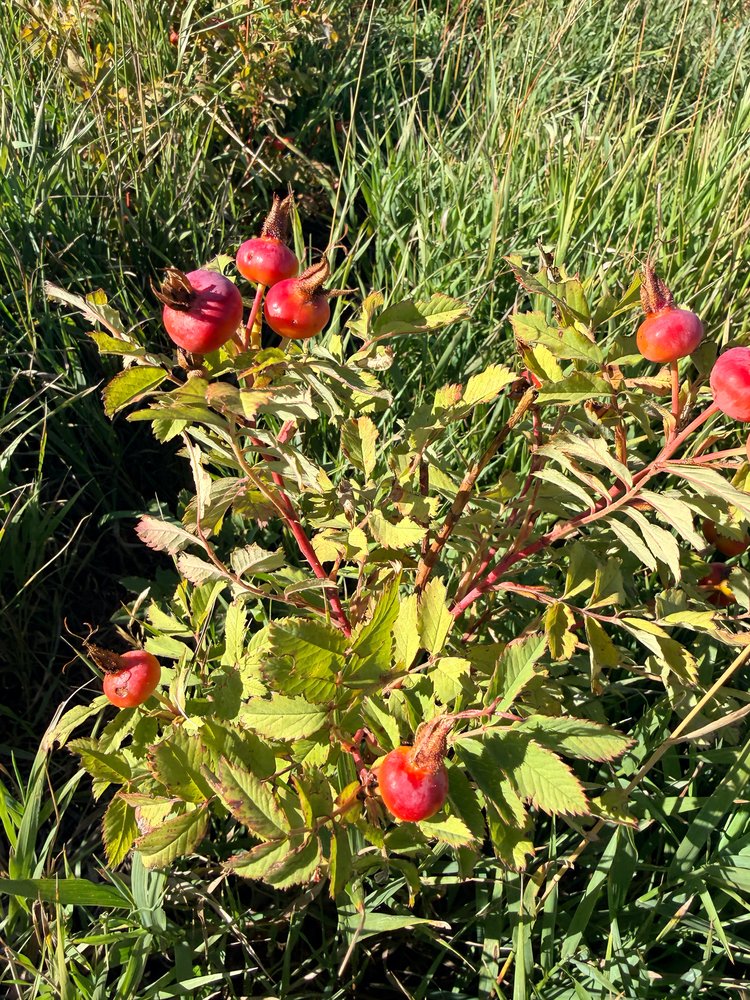
Seed: A round red hip about 1 cm (½ in) across ripens in late summer, with the dried sepals standing on top, and holds about 12–15 hard, light brown seeds 4–5 mm long. The hips hang on into winter, and birds and other wildlife eat them and spread the seeds.
Germination: The seed is slow, with deep dormancy. Prairie Moon Nursery recommends scarifying it, then a cold, moist period, a warm period and a second cold period, and sown outdoors it may take two years or more to come up; SDSU says scarifying helps and fall sowing works best. Seedlings take about 3–5 years to bloom.
How do you identify Prairie Rose?
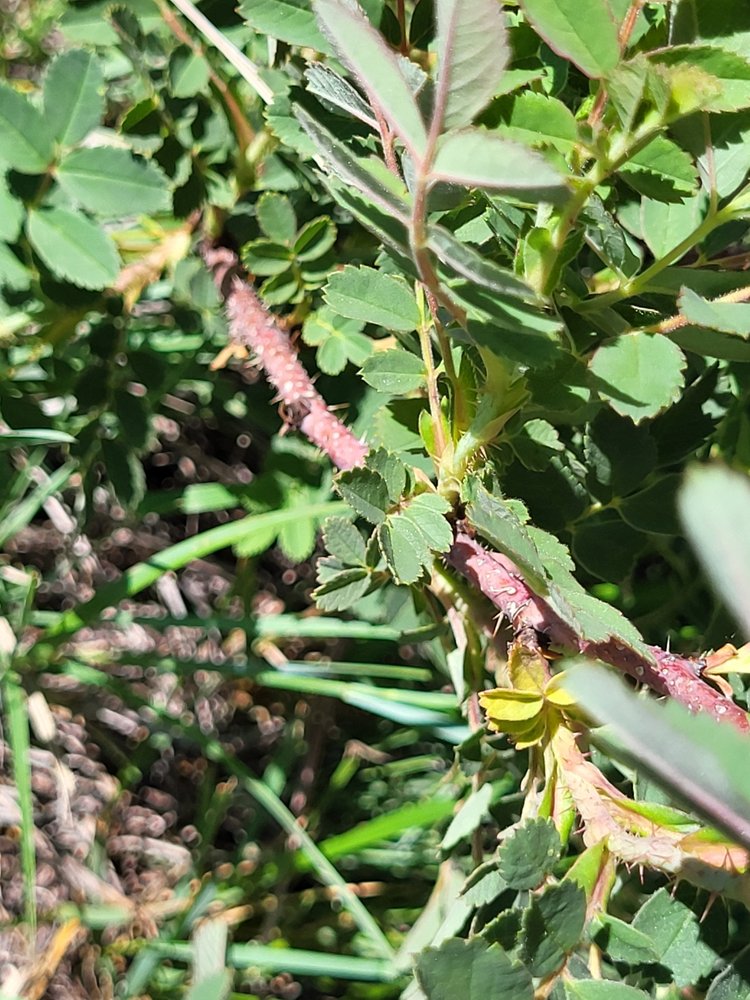
Most stems are 20–50 cm (8–20 in) tall and covered from base to tip with fine bristles and small straight prickles, with no pair of larger thorns at each leaf joint. The stems live only a few years, so a patch is a loose colony of short stems rather than a woody bush with old gray canes. One to four flowers, 3–5 cm (1¼–2 in) across, sit at the tip of a new shoot that comes straight up from the ground, and each leaf has 9–11 small, toothed leaflets. Woods' Rose is a shrub 1–2 m (3–6 ft) tall, with a pair of stout, often curved thorns just below each leaf and flowers on side branches of old canes.
When does it bloom?
June and July, a few from late May into August.
Where does it grow?
Mixed-grass prairie, mountain meadows, open ponderosa pine forest and its edges, rocky slopes and roadsides, in full sun to light shade. It is most common in the grassland and pine savanna of the southern and eastern Hills and the foothills, and reaches the high meadows of the central Hills. The 1986 plant survey of Jewel Cave lists it, and about 126 herbarium specimens from 1892 to 2020 come from all seven Black Hills counties, including Wind Cave, Custer State Park, Spearfish Canyon and the Bear Lodge Mountains.
Sources: Rosa arkansana, Flora of North America; Rosa woodsii, Flora of North America; Rosa acicularis, Flora of North America; Rosa arkansana plant profile, USDA PLANTS Database; Rosa arkansana, ITIS (accepted name and synonyms); Reese, R.N. 2015. Rosaceae: Rosa arkansana (Prairie rose), SDSU Open PRAIRIE, South Dakota Native Plant Research; Reese, R.N. 2015. Rosa woodsii (Woods' rose), SDSU Open PRAIRIE; Prairie Rose (Rosa arkansana), Minnesota Wildflowers; Wood's Wild Rose (Rosa woodsii), Minnesota Wildflowers; Prairie wild rose, Minnesota Conservation Volunteer / MN DNR; Prairie wild rose (Rosa arkansana), Kansas Wildflowers and Grasses; Prairie Wild Rose (Rosa arkansana), Prairie Moon Nursery; Germination codes, Prairie Moon Nursery; Luna, Evans, Wick & Hosokawa 2008, Propagation protocol for Rosa woodsii, Native Plant Network; Vegetation of Jewel Cave National Monument (Marriott & Hartman 1986); NPSpecies checklist – Wind Cave National Park; NPSpecies checklist – Jewel Cave National Monument; NPSpecies checklist – Mount Rushmore National Memorial; NPSpecies checklist – Devils Tower National Monument; GBIF occurrence search, Rosa arkansana preserved specimens; Black Elk & Flying By 1998, Culturally Important Plants of the Lakota, Sitting Bull College (entries 259–260); Gilmore 1919, Uses of Plants by the Indians of the Missouri River Region, BAE 33rd Annual Report, pp. 87–88; North Dakota Century Code ch. 54-02, State Emblems (54-02-03 State flower); Part 5: Symbols, North Dakota Studies (state flower adopted 1907); North Dakota State Flower, Natural North Dakota, Prairie Public; Rose hips, Foods Indigenous to the Western Hemisphere, University of Kansas; Wildflowers 2014, South Dakota Magazine (Christian Begeman, July 7, 2014); iNaturalist research-grade observations of Rosa arkansana near the Black Hills.