Mountain Ninebark Physocarpus monogynus
Also called Mountain nine-bark, Ninebark
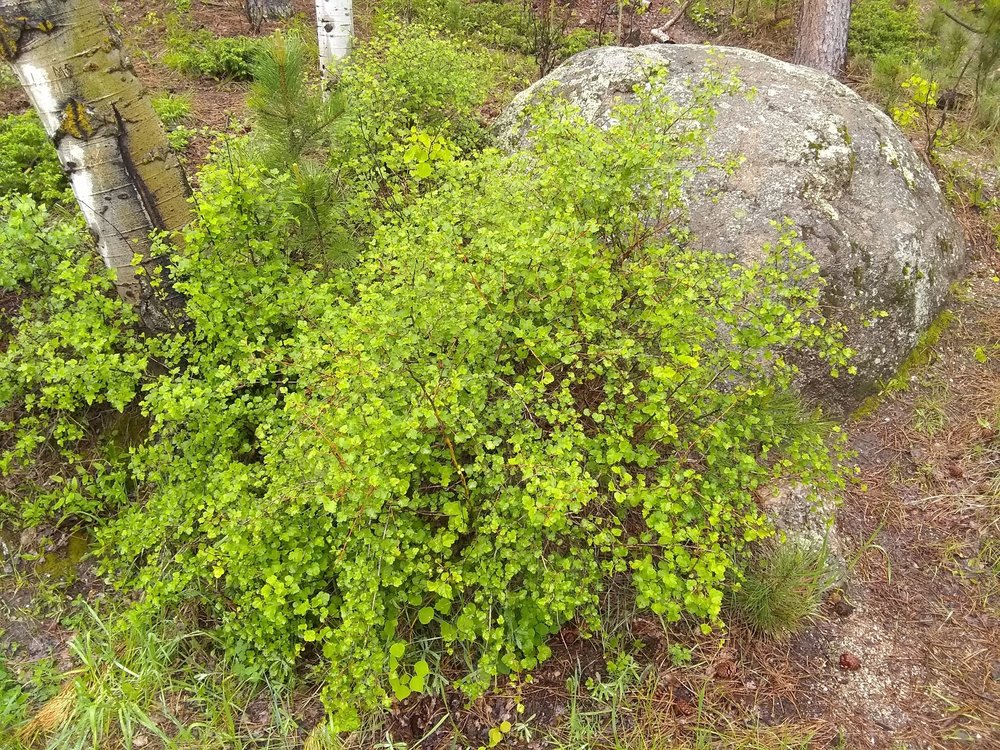
Mountain Ninebark (Physocarpus monogynus) is a low native shrub about 1 m (3 ft) tall with spreading, often sprawling reddish-brown stems, small, often lobed, double-toothed leaves that look like a currant's, rounded clusters of white five-petaled flowers in June and July, and small inflated, hairy pods in place of berries. In the Black Hills it can dominate the shrub layer under ponderosa pine on steep north-facing slopes: a Forest Service habitat-type classification names a ponderosa pine / mountain ninebark type here, the 1986 Jewel Cave survey describes the same association, and the National Park Service lists it at Wind Cave, Jewel Cave and Mount Rushmore.
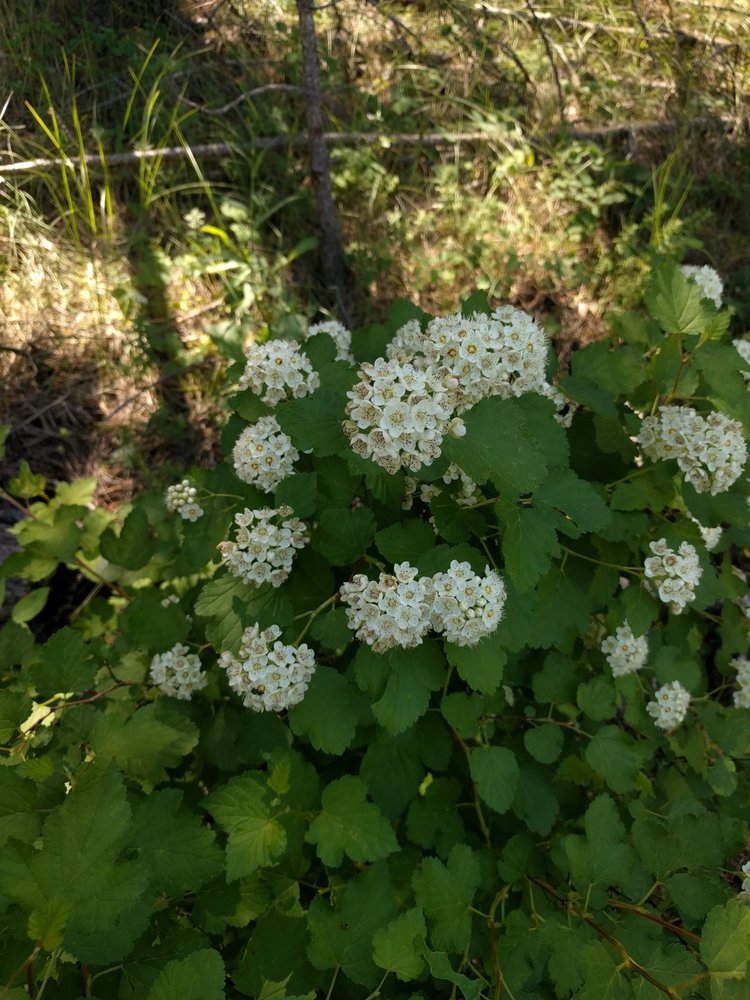
Free photos from other sources
| Family | Rosaceae · Rose |
|---|---|
| Status | Native deciduous shrub |
| Blooms | June and July on Black Hills herbarium labels; the hairy pods follow from July into October |
| Height | About 1 m (3 ft); Black Hills herbarium labels give 0.6–1.2 m (2–4 ft) |
| Where | Ponderosa pine understory on steep north-facing slopes, rocky wooded slopes, granite outcrops and crevices, limestone cliffs, canyon sides and creek margins |
| Also called | Mountain nine-bark, Ninebark |
| Synonym | Spiraea monogyna, Opulaster monogynus |
Roots, seeds & germination
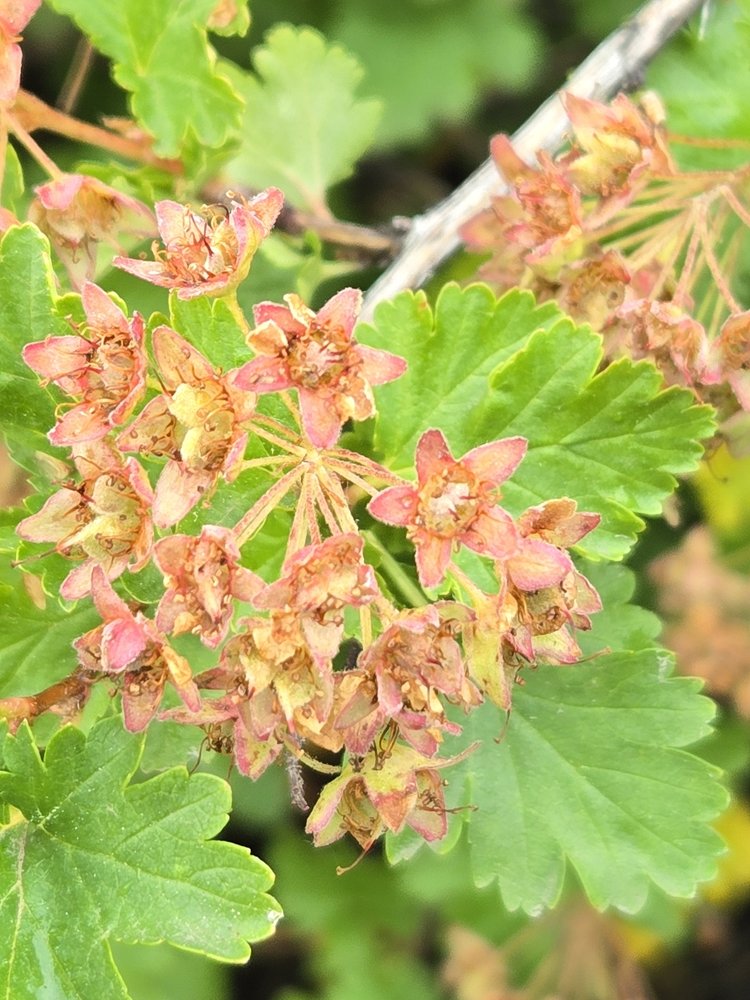
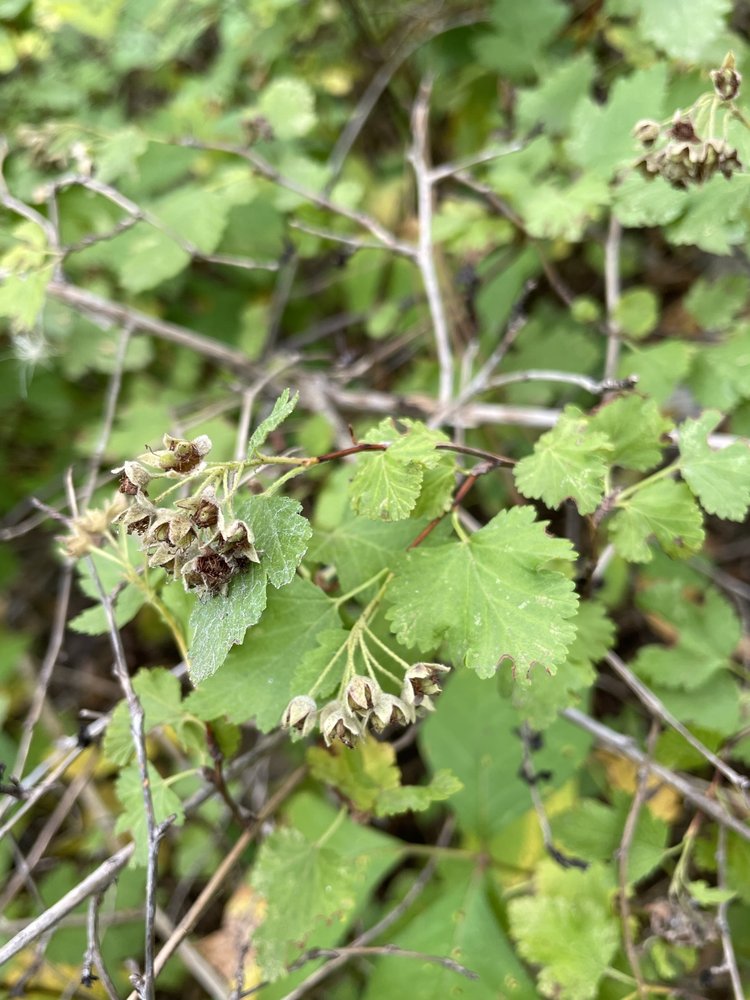
Seed: Each flower sets usually 2 (1 to 3) small inflated pods (follicles), about 2.5–4 mm, shorter than the sepals around them and densely covered in white star-shaped hairs; each holds 1 to 3 pear-shaped seeds 2–2.5 mm long. The pods ripen from July into October.
How do you identify Mountain Ninebark?
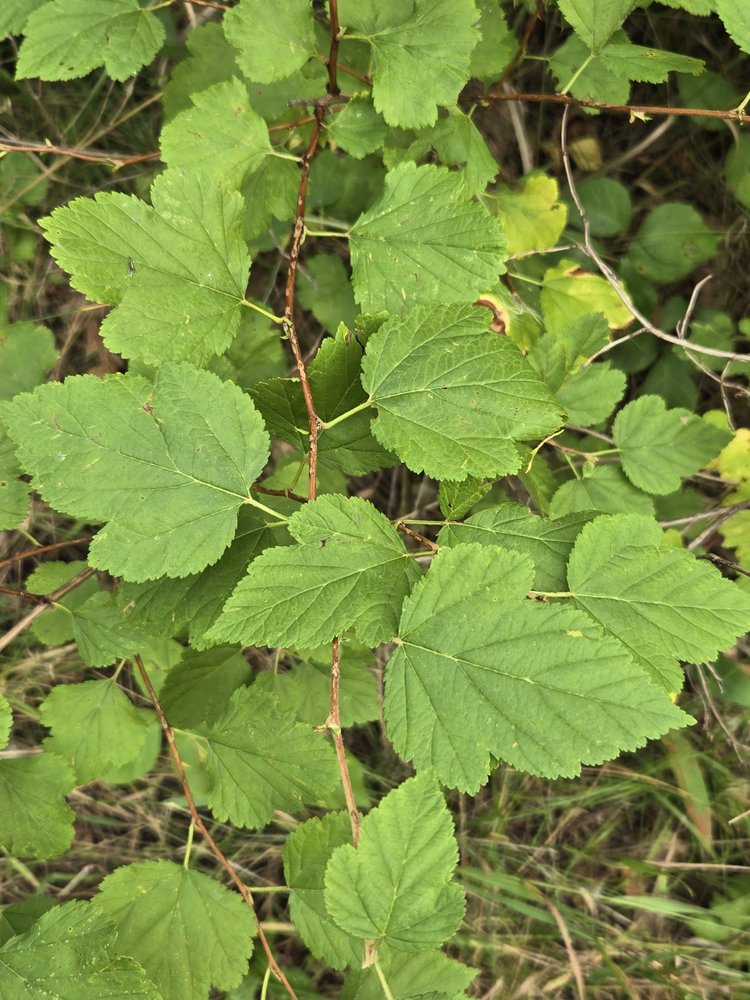
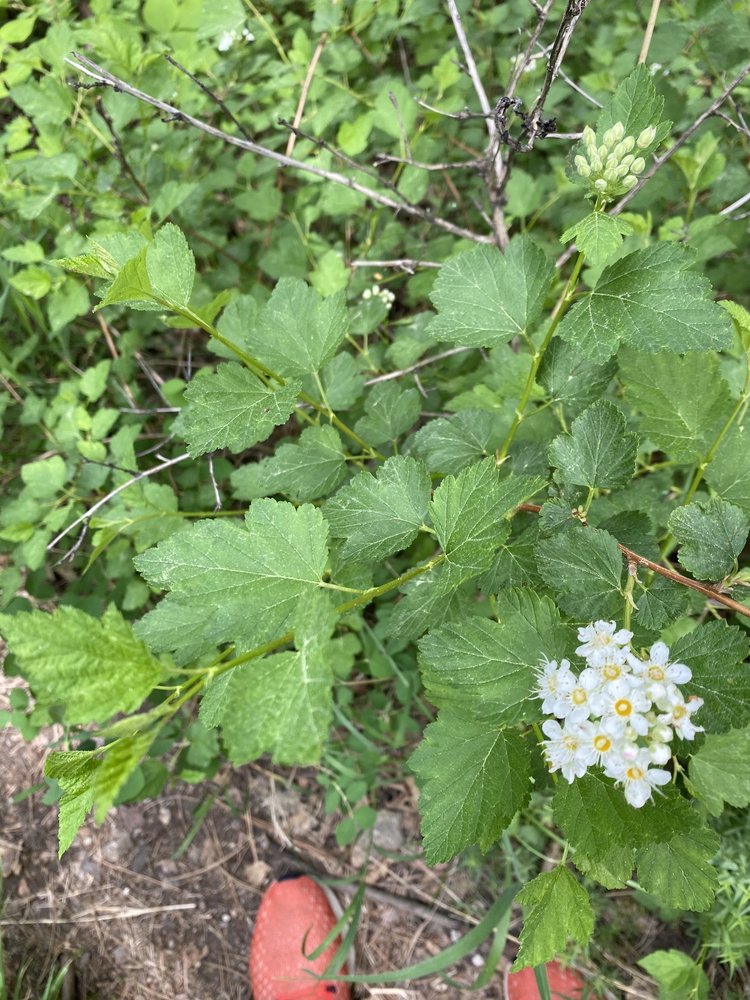
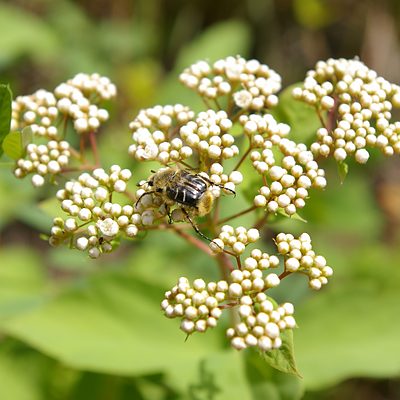
Start with the leaves, the flower clusters and the pods. The stems often lie along the ground and spread, reddish brown when young and dark gray with age; as in other ninebarks, the bark usually peels in narrow strips, and the Forest Service's Woody Plant Seed Manual says the name probably refers either to those many peeling layers or to the plant's use in old remedies. The leaves are alternate and broadly egg-shaped, 1.5–4 cm (½–1½ in) long and sometimes wider than long, with a flat or heart-shaped base, unlobed or with up to 5 lobes, and edges with double scallops or double teeth; the Seed Manual likens ninebark leaves to currant leaves. In June and July the flowers come in dense, rounded, half-ball clusters about 4 cm (1½ in) across of 10 to 30 flowers, each 8–10 mm across with 5 white petals, 20 to 40 stamens about as long as the petals, and usually 2 styles. The fruit is not a berry: each flower leaves usually 2 (1 to 3) tiny inflated pods, 2.5–4 mm, joined for at least half their length, densely covered in white star-shaped hairs and shorter than the persistent sepals around them; the dry pods stay on the bush from July into October. Common Ninebark, which is also on Mount Rushmore's plant list, has 3 to 5 pods to a flower, joined only at the base (Flora of North America's key). White Spirea also grows under Black Hills ponderosa pine; the Seed Manual describes ninebarks as spirea-like shrubs with peeling bark and lobed, currant-like leaves, and White Spirea has leaves that are shiny above and toothed mostly past the middle, with flat-topped flower clusters.
When does it bloom?
June and July on Black Hills herbarium labels; the hairy pods follow from July into October.
Where does it grow?
The understory of ponderosa pine forest, above all on steep north- and northwest-facing slopes, and on rocky wooded slopes, granite outcrops and crevices, limestone cliffs, canyon sides and creek margins, from about 1,300 to 2,160 m (4,250 to 7,100 ft) on Black Hills herbarium labels. Hoffman and Alexander's 1987 habitat-type classification of the Black Hills National Forest describes a ponderosa pine / mountain ninebark habitat type in the southern and southwestern Hills, recognized by 23 to 79 percent cover of this shrub under the pines, with Chokecherry and prickly rose sometimes present, and the 1986 vegetation survey of Jewel Cave National Monument describes a ponderosa pine–ninebark association on steep north-facing slopes where dense stands of small pines grow over an understory that ninebark dominates, often to the exclusion of other species. The National Park Service lists it at Wind Cave National Park, Jewel Cave National Monument and Mount Rushmore National Memorial. Herbarium labels describe granite crevices and talus near summits, rocky pine woods and granite outcrops, a limestone cliff and limestone outcrops under pine, white spruce forest with pine-covered rock summits, a canyon bottom near a spring, and creek margins under pine. They come from Pennington, Custer, Meade, Fall River and Lawrence counties and from Crook and Weston counties in Wyoming. iNaturalist holds 64 research-grade Black Hills records.
Other plants to compare
Rose family (Rosaceae): 21 other plants in this guide
- American Plum
- Chokecherry
- Dwarf Raspberry
- Early Cinquefoil
- Leafy Cinquefoil
- Mat Rock Spiraea
- Mountain Mahogany
- Pincherry
- Prairie Rose
- Prairie Smoke
- Red Raspberry
- Saskatoon Serviceberry
- Shrubby Cinquefoil
- Silverweed
- Slender Cinquefoil
- Sulphur Cinquefoil
- Tall Cinquefoil
- Thimbleberry
- White Avens
- White Spirea
- Wild Strawberry
Sources: Flora of North America Vol. 9: Physocarpus monogynus, eFloras; Flora of North America Vol. 9: genus Physocarpus, key and discussion, eFloras; Montana Field Guide: Mountain Ninebark, Physocarpus monogynus; Hoffman and Alexander 1987, Forest Vegetation of the Black Hills National Forest: A Habitat Type Classification (USDA Forest Service RM-276); Marriott and Hartman 1986, A Survey of the Vegetation of Jewel Cave National Monument; NPSpecies checklist, Wind Cave National Park vascular plants; NPSpecies checklist, Jewel Cave National Monument vascular plants; NPSpecies checklist, Mount Rushmore National Memorial vascular plants; Youngblood, Gill and Pogge, Physocarpus, ninebark. Woody Plant Seed Manual (USDA Forest Service); GBIF occurrence search: Physocarpus monogynus, South Dakota and Wyoming herbarium specimens; GBIF specimen 3454985208: Pennington County, SD, 1980, "open areas near summit of peak, often in crevices of granite rock"; GBIF specimen 4912154160: Pennington County, SD, 2010, limestone cliff, 1,298 m; GBIF specimen 3454985226: Custer County, SD, 1971, "granitic rocks, unshaded N slope", 1,728 m; iNaturalist: research-grade Physocarpus monogynus observations in the Black Hills.