Northern Gooseberry
Ribes oxyacanthoides
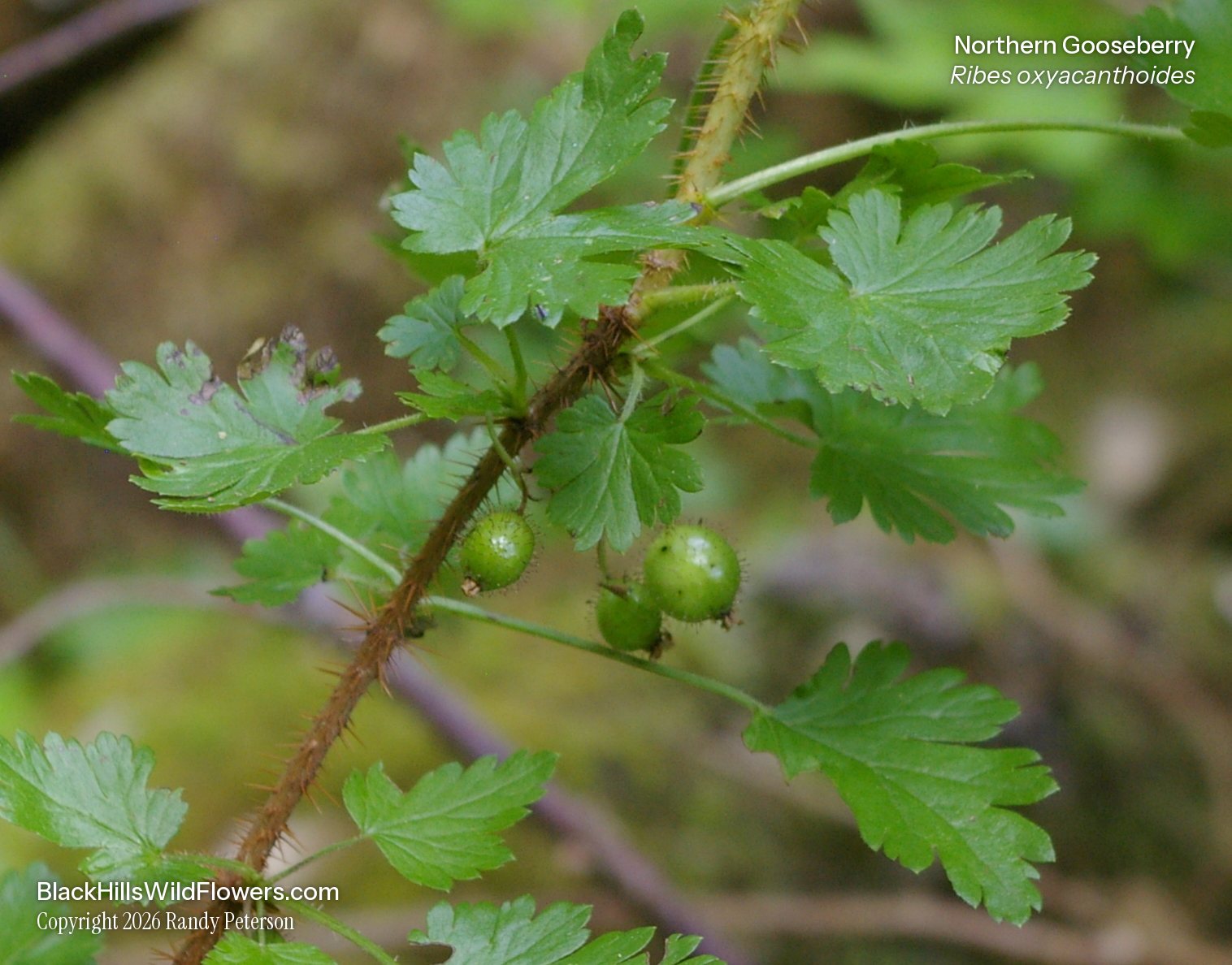
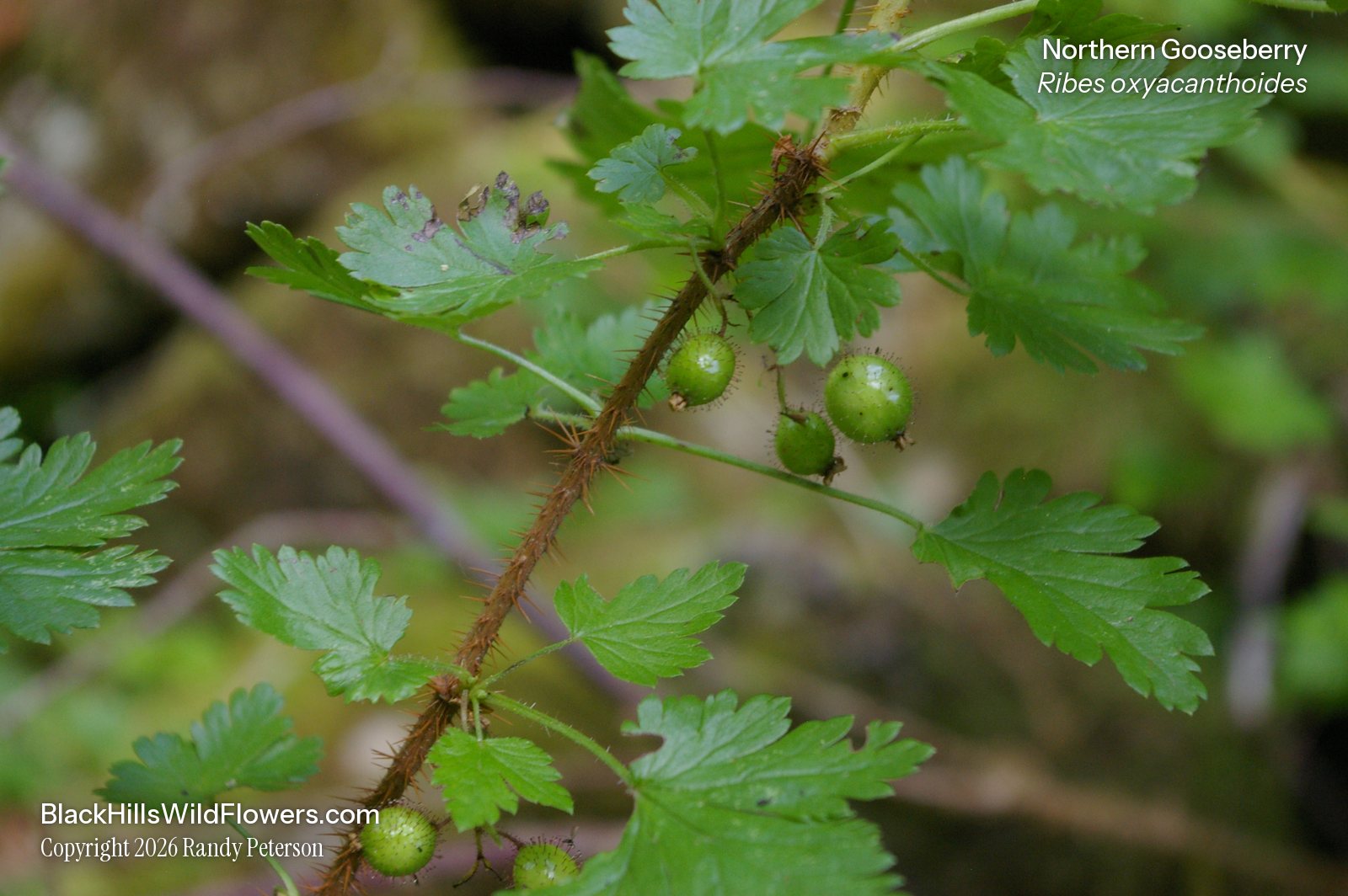
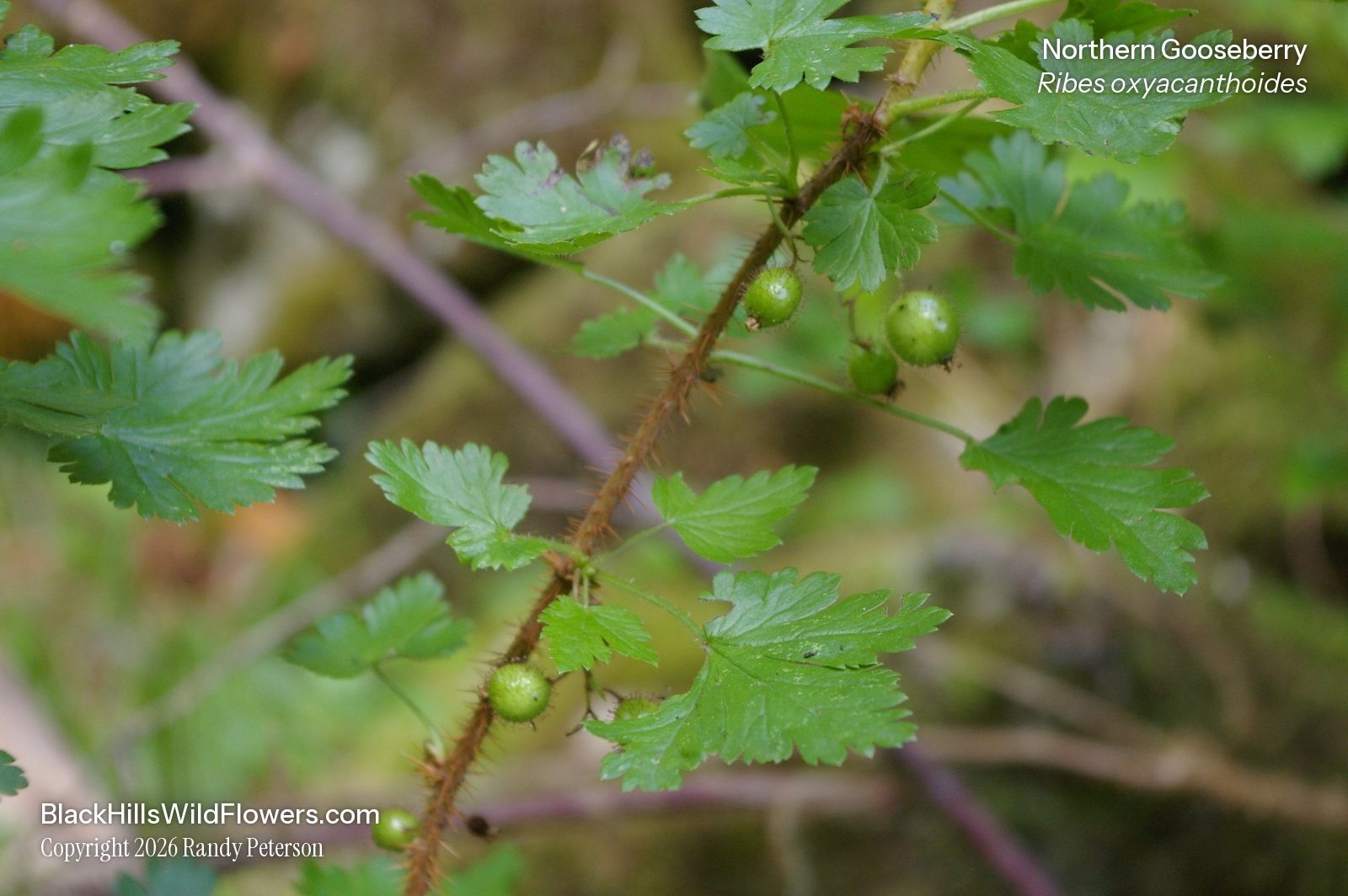
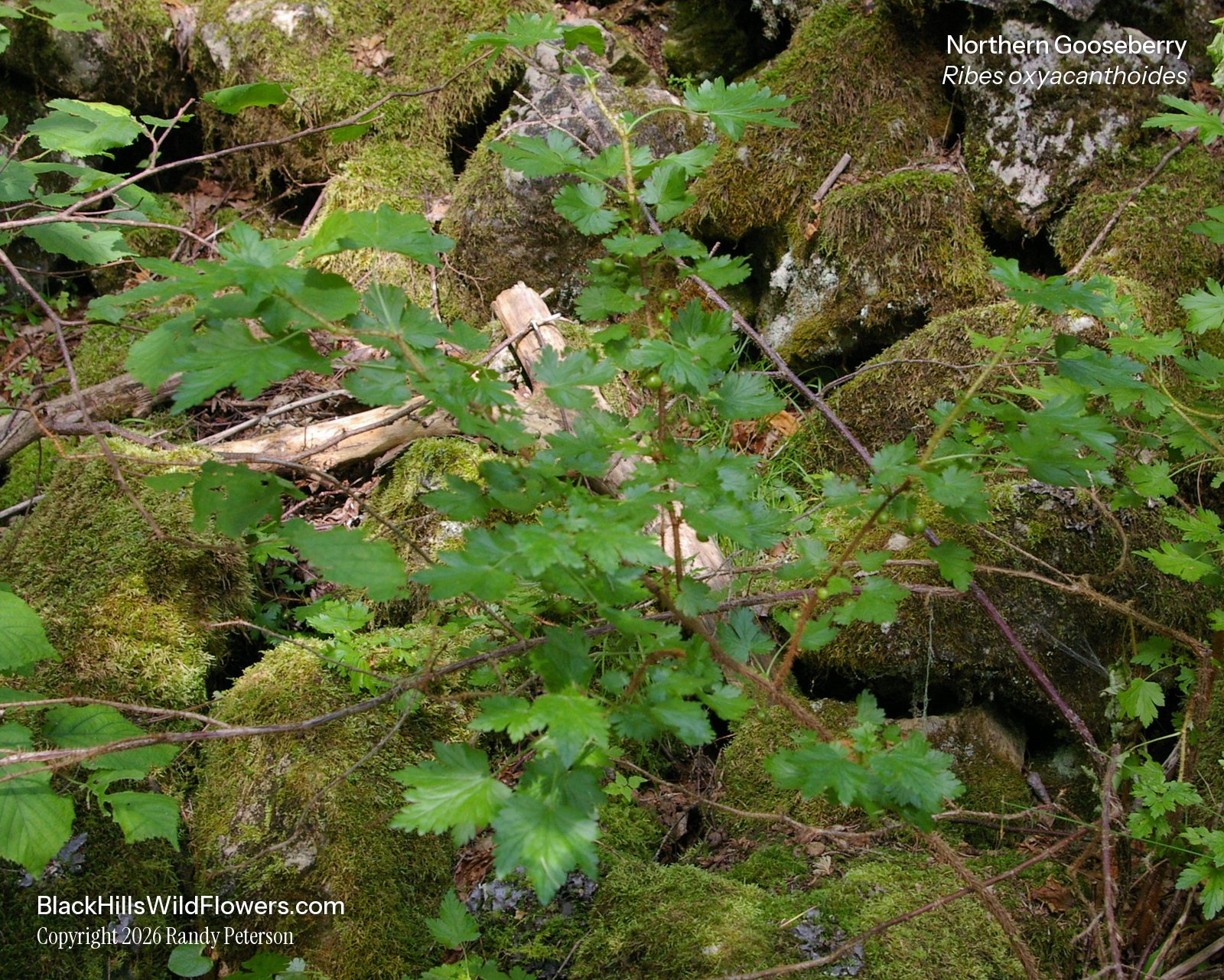
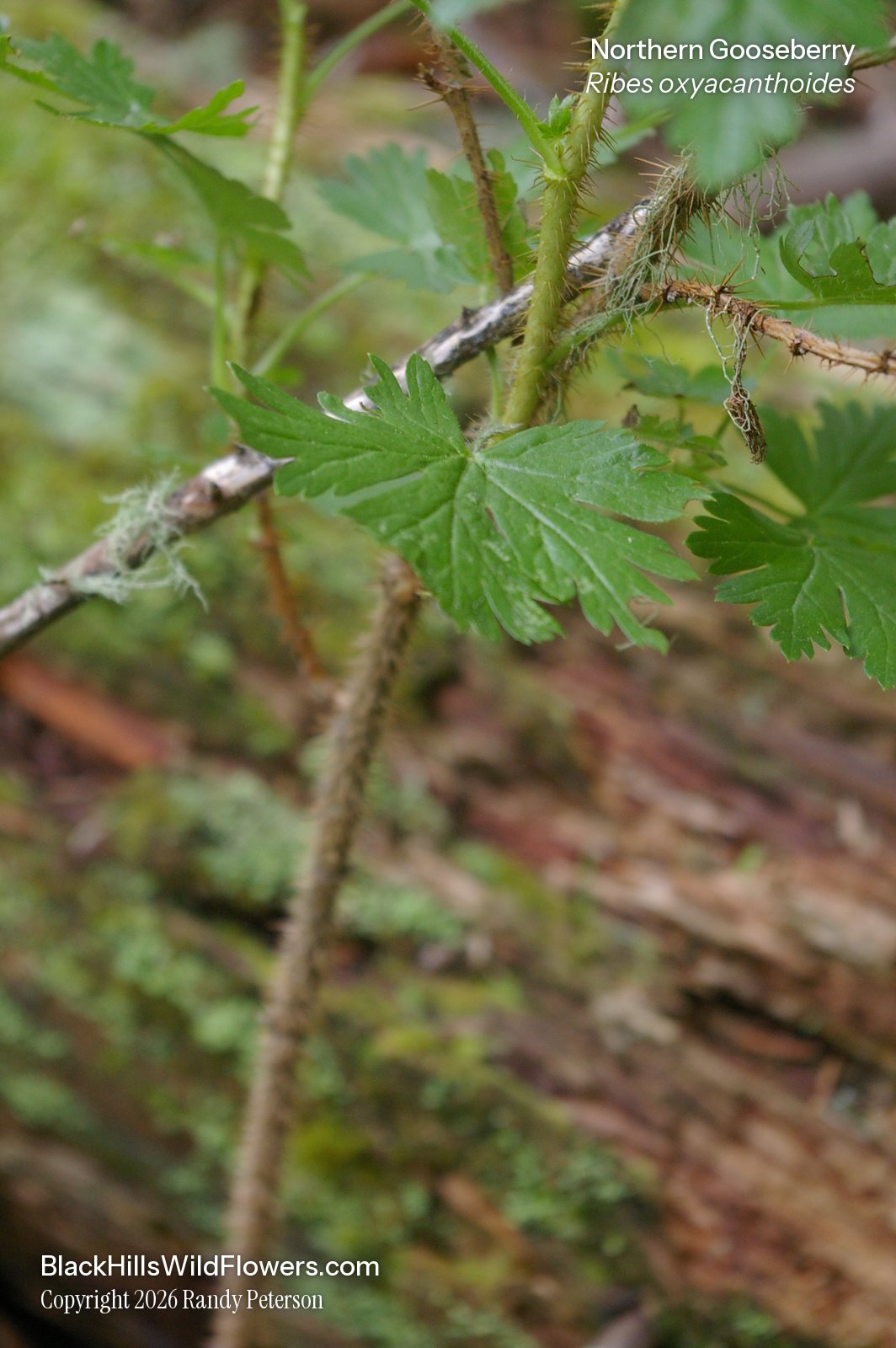
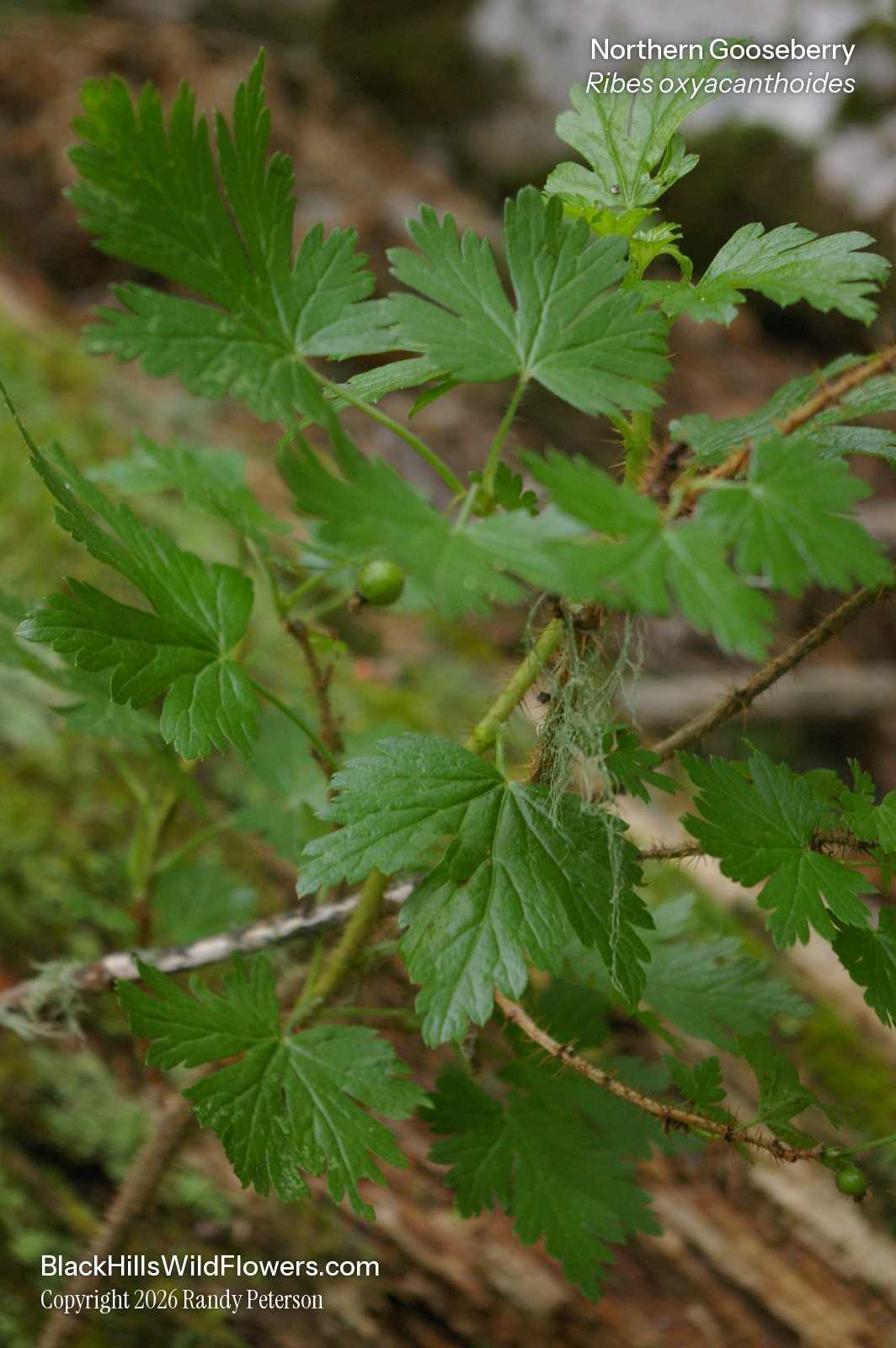
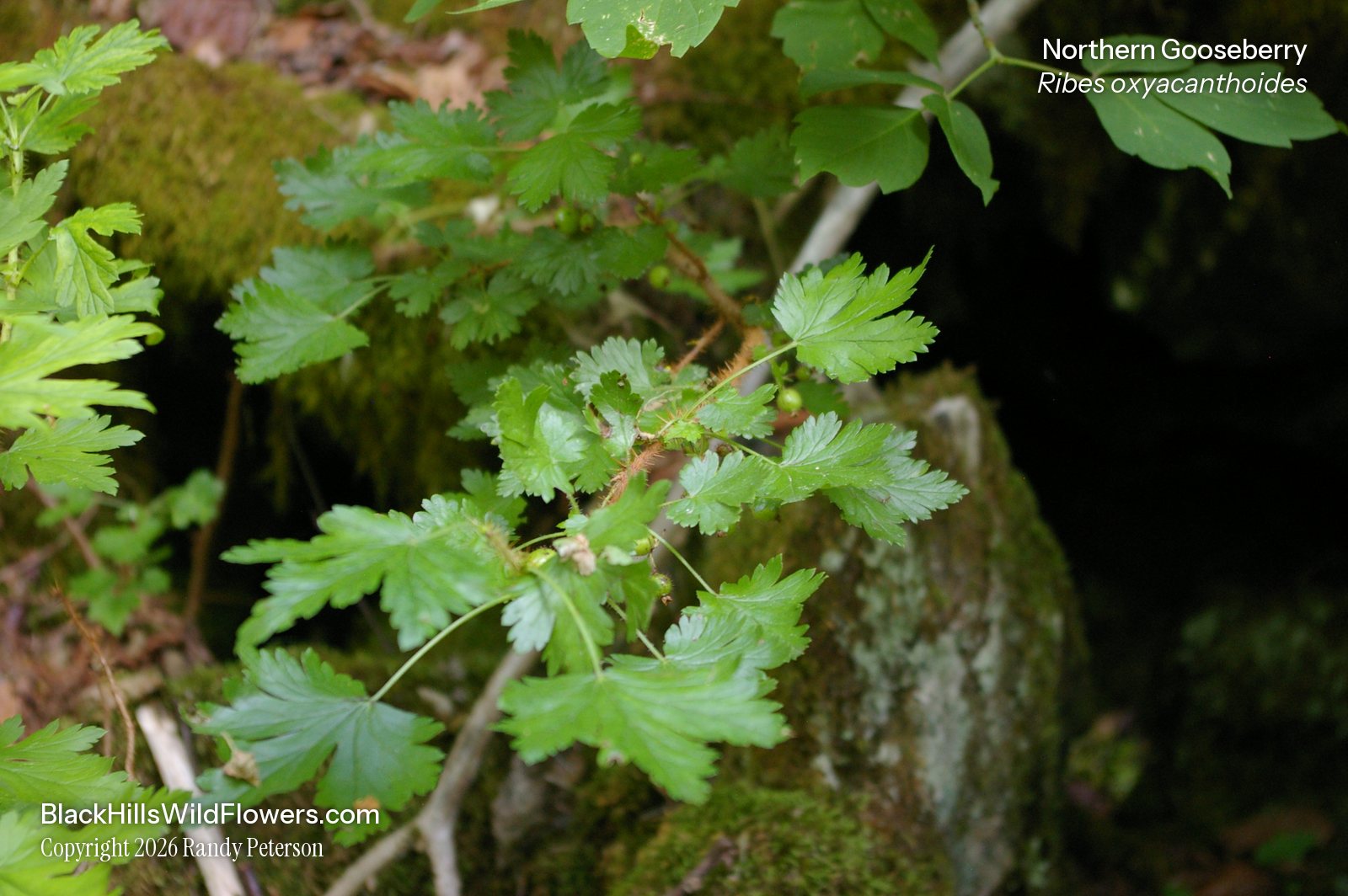
Northern Gooseberry (Ribes oxyacanthoides) is a native spiny shrub, 0.5–1.5 m tall, with prickly young stems, small lobed leaves, nodding pale yellow to greenish flowers and smooth berries that ripen reddish to purple-black. It blooms April into June in moist woods and on rocky slopes across western South Dakota, and the 1986 plant survey of Jewel Cave National Monument lists it in the Black Hills. Photographed in the Black Hills.


| Family | Grossulariaceae · Gooseberry |
|---|---|
| Status | Native shrub |
| Blooms | April into June |
| Height | 0.5–1.5 m (20–60 in) |
| Where | Moist woodlands, forest edges, streambanks and rocky hillsides |
| Also called | Canada Gooseberry, Canadian Gooseberry, Northern Prickly Gooseberry |
Roots, seeds & germination
Seed: Round berries, 7–16 mm across, ripen July through August. Seeds are separated from the pulp of mature berries in late summer.
Germination: Seeds need about 90 days of cold, moist stratification at 32–41 °F (0–5 °C) to break dormancy, then sowing about 1 cm deep in early spring.
How do you identify Northern Gooseberry?
Look for slender young stems with dense prickles and 1 to 3 stouter spines at each node, and rounded leaves with 3 to 5 toothed lobes, usually 3–7 cm (1¼–2¾ in) long. Flowers come singly or in clusters of up to 3 or 4, and the berries are smooth. Prickly Currant (Ribes lacustre) also has prickly stems, but it has drooping clusters of 7 to 15 flowers and bristly berries.
When does it bloom?
April into June.
Where does it grow?
Moist woodlands, forest edges, streambanks and rocky hillsides, scattered across western South Dakota. The 1986 Jewel Cave survey lists it and describes a ponderosa pine and gooseberry plant community in a canyon bottom.
Sources: SDSU Open PRAIRIE: Ribes oxyacanthoides; Minnesota Wildflowers: Northern Gooseberry; Flora of North America: Ribes oxyacanthoides; Marriott and Hartman 1986, A Survey of the Vegetation of Jewel Cave National Monument; SDSU Open PRAIRIE: Ribes lacustre; Forest Service: Forest Vegetation of the Black Hills National Forest, A Habitat Type Classification (RM-276).