Mountain Mahogany Cercocarpus montanus
Also called Alderleaf Mountain-mahogany, True Mountain-mahogany, Alderleaf Cercocarpus
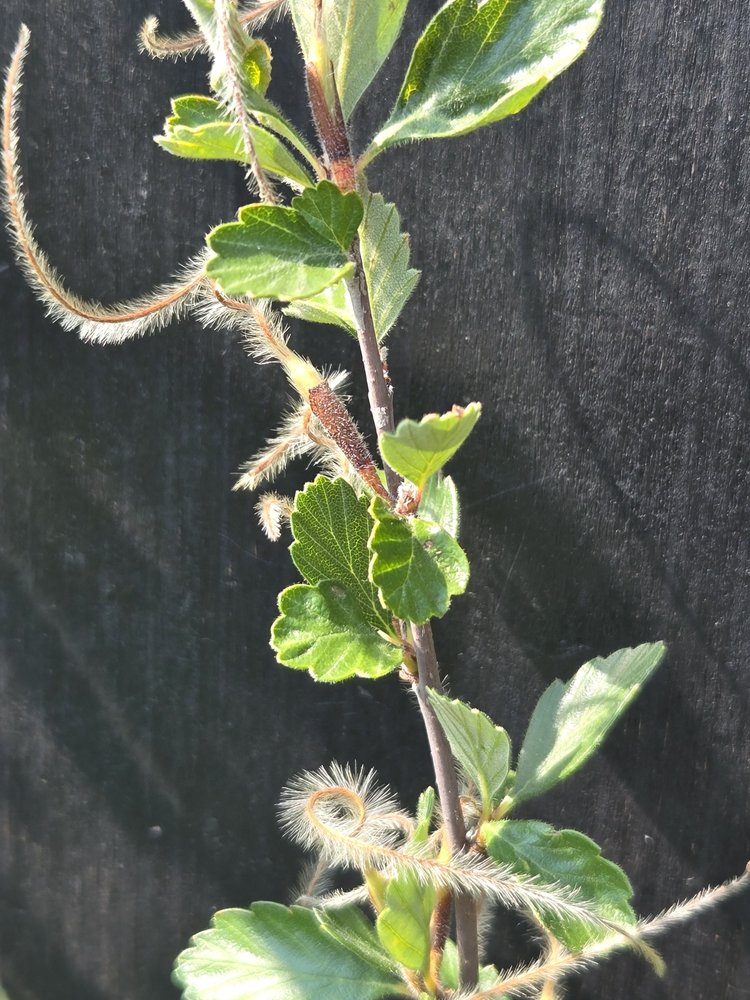
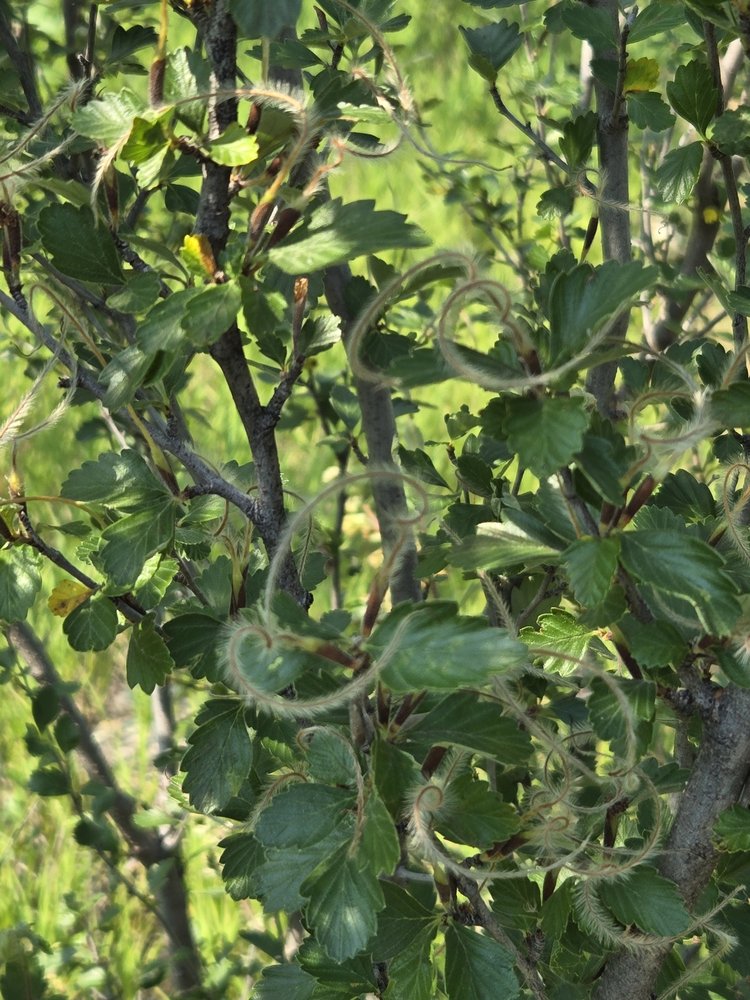
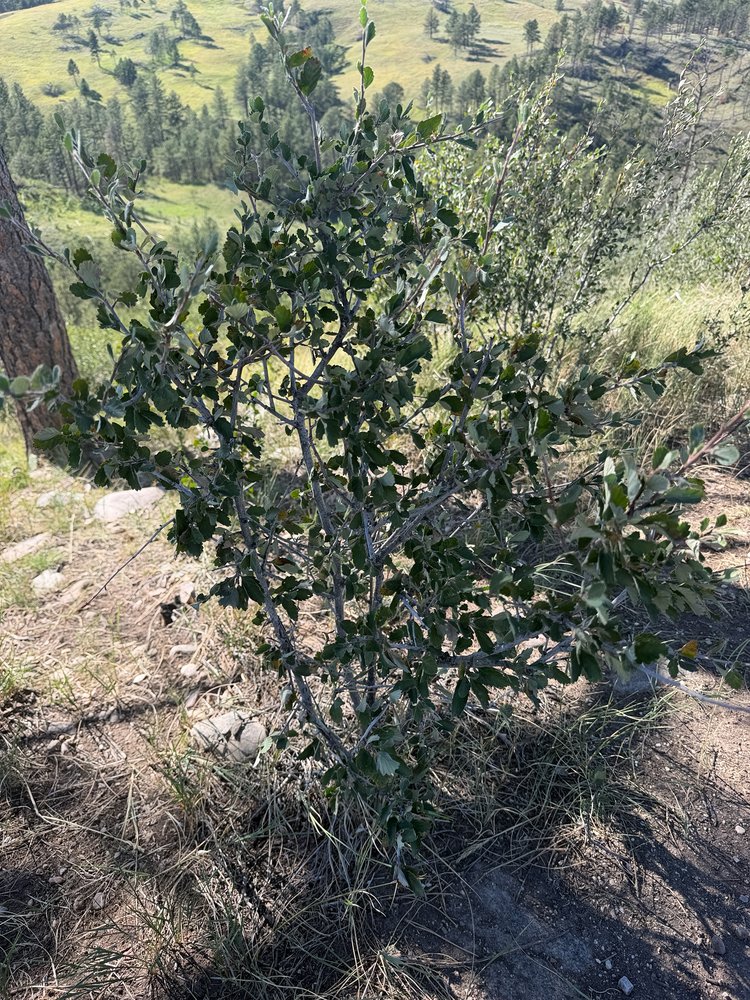
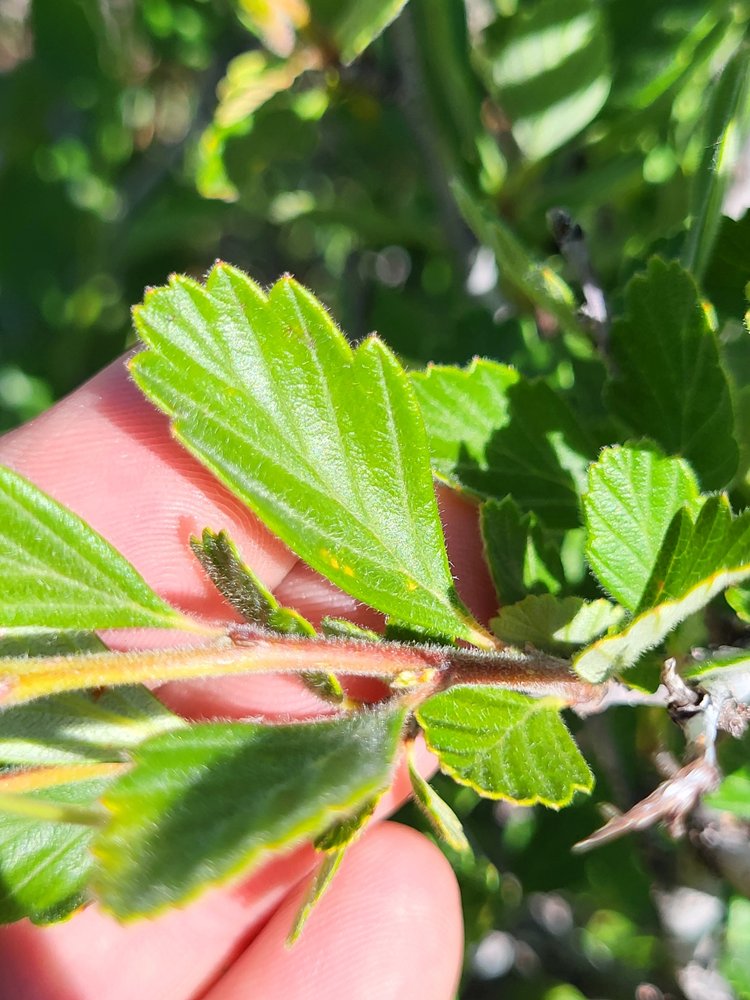
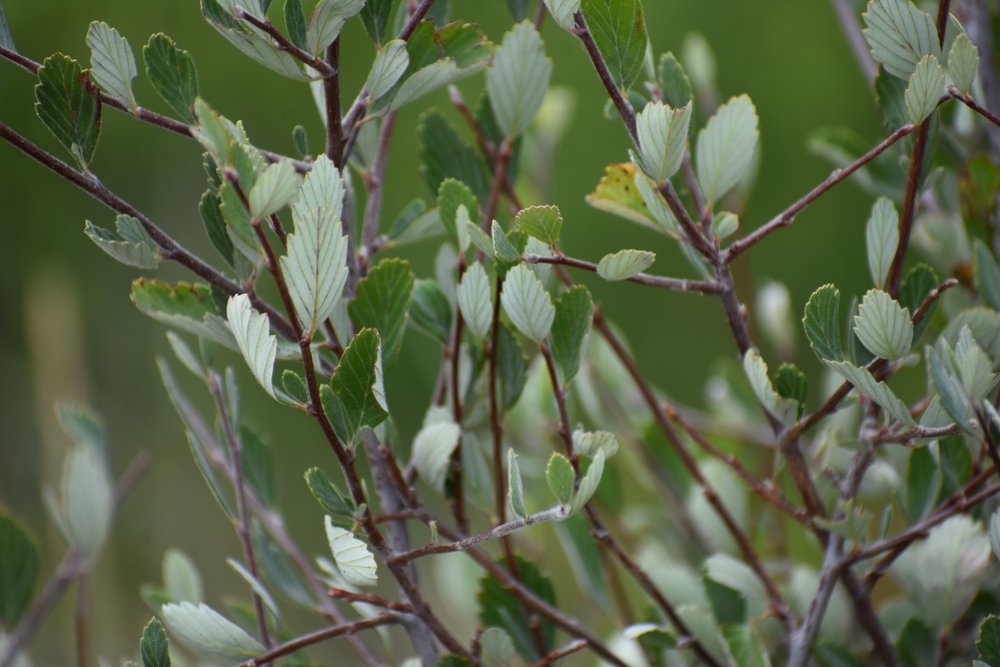
Mountain Mahogany (Cercocarpus montanus) is a native shrub in the rose family, usually 1–2 m (3–7 ft) tall, with small wedge- to spoon-shaped leaves that are dark green above, pale beneath and toothed only on their outer half. Its petal-less flowers open in May and June, and by August each seed carries a twisted, feathery silver tail 4.5–6 cm (2–2½ in) long. In the Black Hills it grows on dry, rocky slopes, often limestone, around the southern third of the Hills, where the Forest Service names a Mountain Mahogany shrub-steppe habitat type below the pine forest.
Free photos from other sources
| Family | Rosaceae · Rose |
|---|---|
| Status | Native deciduous shrub |
| Blooms | May into June; the feathery seed tails show from August into fall |
| Height | 1–2 m (3–7 ft) |
| Where | Dry, rocky, often limestone slopes and ridges at the lower edge of the pine forest, mostly in the southern Black Hills |
| Also called | Alderleaf Mountain-mahogany, True Mountain-mahogany, Alderleaf Cercocarpus |
| Synonym | Cercocarpus argenteus, Cercocarpus parvifolius |
| Traditional use | The Fire Effects Information System reports that the Navajo used the hard wood for weaving tools and tool handles and that the Hopi made a red-brown leather dye from the bark. |
Roots, seeds & germination
Root: An extensive root system with substantial taproots and side roots; taproots have been traced more than 2.5 m (8 ft) deep, and the roots can carry nitrogen-fixing nodules. The shrub resprouts from the root crown and from rhizomes after fire or browsing.
Seed: A hard seed 9–11 mm long topped by its persistent style, which grows into the twisted, hairy tail 4.5–6 cm (2–2½ in) long that carries it on the wind, up to about 140 m (450 ft). The seed coat is thin and the seed isn't dormant, which suggests it doesn't last in the soil. Plants make abundant seed every 1 to 10 years, and many of the seeds are not viable.
Germination: Some seed sprouts with no treatment, but 1 to 3 months of cold, moist stratification helps: 12 weeks of moist chilling raised germination of Utah and Colorado seed to 98%. Seedlings are vulnerable to frost and drought, and on harsh sites new plants establish only in favorable years.
How do you identify Mountain Mahogany?
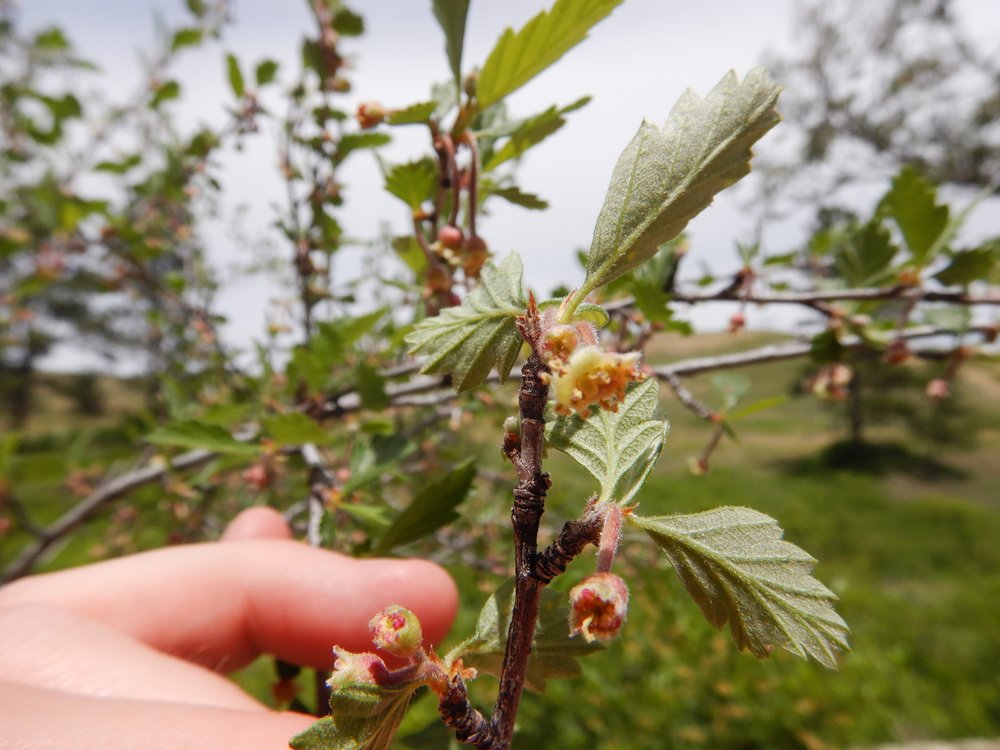
Look for a branching shrub with stiff, sturdy stems and small alternate leaves 1–3 cm (½–1¼ in) long, wedge- to spoon-shaped with a rounded tip and toothed only on the outer half; they are dark green above, pale and often sparsely hairy below, and grow in tufts on short spur shoots along twigs with smooth gray or brown bark. The flowers have no petals: 1 to 3 sit on each spur, each just a hairy tube with 5 tiny lobes and 25–45 stamens. From about August the fruits make it easy to know, because each seed keeps its style, which grows into a twisted, feathery, silvery tail 4.5–6 cm (2–2½ in) long. The Montana Field Guide separates it from Curl-leaf Mountain Mahogany (Cercocarpus ledifolius) by its toothed leaves without rolled-under edges; GBIF holds no herbarium specimen of Curl-leaf from South Dakota or the Wyoming Black Hills counties.
When does it bloom?
May into June; the feathery seed tails show from August into fall.
Where does it grow?
Dry, rocky slopes and ridges on limestone, sandstone and granite, from grassland up into pine woodland. In the Black Hills it dominates a patchy shrub-steppe on dry, low sites around the southern one-third of the Hills, just below the Ponderosa Pine forest, in stands sampled at 1,265–1,493 m (4,150–4,900 ft); the Hills are the northern and eastern limit of its range. The 1986 Jewel Cave survey calls it abundant on the limestone west of the monument, the National Park Service lists it at Wind Cave and Jewel Cave, and herbarium specimens from 1892 on come from Custer, Fall River, Lawrence and Pennington counties and from Weston and Crook counties, Wyoming, with labels such as "on limestone outcrops" and "rocky slopes and ledges."
Rose family (Rosaceae): 21 other plants in this guide
- American Plum
- Chokecherry
- Dwarf Raspberry
- Early Cinquefoil
- Leafy Cinquefoil
- Mat Rock Spiraea
- Mountain Ninebark
- Pincherry
- Prairie Rose
- Prairie Smoke
- Red Raspberry
- Saskatoon Serviceberry
- Shrubby Cinquefoil
- Silverweed
- Slender Cinquefoil
- Sulphur Cinquefoil
- Tall Cinquefoil
- Thimbleberry
- White Avens
- White Spirea
- Wild Strawberry
Sources: Flora of North America Vol. 9: Cercocarpus montanus — eFloras; Fire Effects Information System: Cercocarpus montanus (Gucker 2006) — USDA Forest Service; Forest vegetation of the Black Hills National Forest: a habitat type classification (Hoffman and Alexander 1987, RM-276) — USDA Forest Service; A Survey of the Vegetation of Jewel Cave National Monument (Marriott and Hartman 1986) — NPS History; NPSpecies checklist, Wind Cave National Park vascular plants — National Park Service; NPSpecies checklist, Jewel Cave National Monument vascular plants — National Park Service; Alderleaf mountain-mahogany, Cercocarpus montanus — Montana Field Guide; Cercocarpus montanus (CEMO2) — USDA PLANTS Database; Cercocarpus montanus — Lady Bird Johnson Wildflower Center; GBIF occurrence search: Cercocarpus montanus, South Dakota and Wyoming herbarium specimens — GBIF; GBIF occurrence search: Cercocarpus ledifolius, South Dakota and Wyoming herbarium specimens — GBIF.