Western Virgin's Bower Clematis ligusticifolia
Also called Western White Clematis, Western Clematis, Old-man's-beard, Traveler's Joy, čhaŋíyuwe skaská naȟčá (Lakota), čhaŋíyuwi owíčak'o (Lakota), owíčak'ola hú (Lakota)
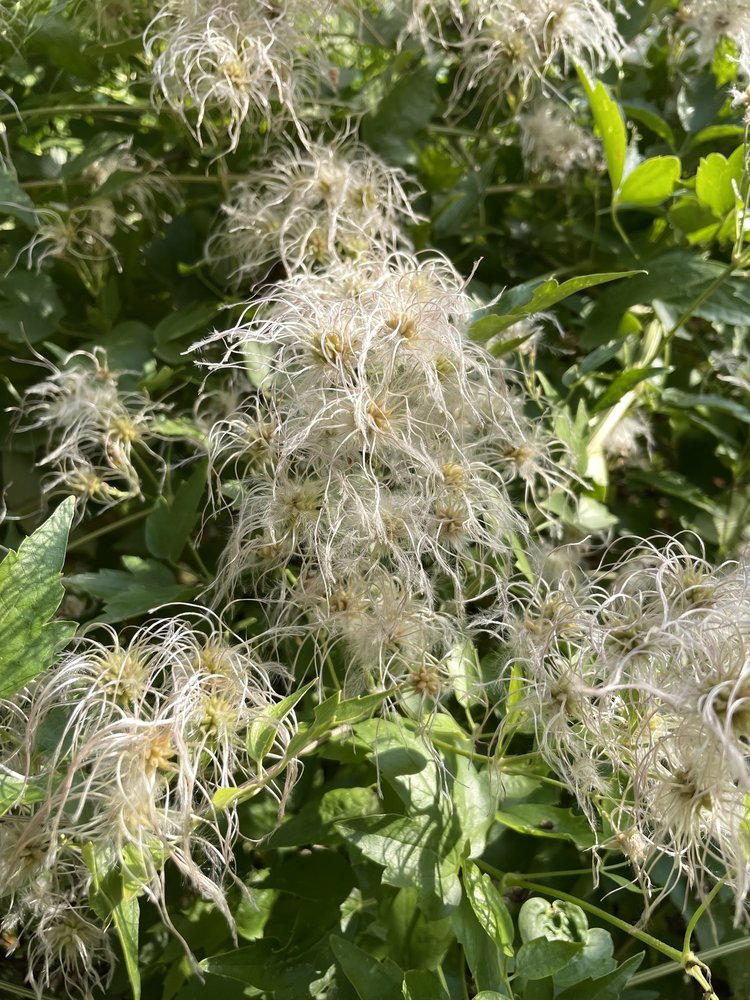
Western Virgin's Bower (Clematis ligusticifolia) is a native, somewhat woody vine of the buttercup family that climbs 3–6 m (10–20 ft) over shrubs, trees, fences and rocks. In July and August it is covered in clusters of small cream-white flowers with four petal-like sepals, and by fall the female plants carry silky seed heads like tufts of down. It grows along streams, in wooded draws and on moist slopes, and in the Black Hills the National Park Service lists it at Wind Cave, Jewel Cave and Devils Tower.
Free photos from other sources
| Family | Ranunculaceae · Buttercup |
|---|---|
| Status | Native perennial vine |
| Blooms | July and August; silky seed heads follow and ripen in late fall |
| Height | 3–6 m (10–20 ft) |
| Where | Stream banks, moist wooded draws, forest edges and thickets, climbing over shrubs, trees, fences and rocks |
| Also called | Western White Clematis, Western Clematis, Old-man's-beard, Traveler's Joy, čhaŋíyuwe skaská naȟčá (Lakota), čhaŋíyuwi owíčak'o (Lakota), owíčak'ola hú (Lakota) |
| Synonym | Clematis neomexicana, Clematis suksdorfii, Clematis ligusticifolia var. brevifolia |
| Toxicity | A USDA plant guide, citing Geyer (1846), says that just touching the scraped root to the tongue causes a burning sensation that lasts half a day. |
| Traditional use | Black Elk and Flying By (1998) record Lakota uses: leaves chewed as a cold and sore-throat remedy, an infusion of the roots for headache, the macerated root as a poultice for open sores, chest pains and rheumatic joints, an infusion of the plant as a wash for skin eruptions, sores, wounds, backaches, swollen limbs and tired feet, a poultice of the cut stems for toothache, and a poultice of mashed seeds for burns. |
Roots, seeds & germination
Root: A taproot anchors the plant, and many stems grow from the crown. The stems generally die back each winter, but the first 1–5 m (3–16 ft) persist for several years, and the plant spreads mainly by seed and also by layering, where a stem touching the ground takes root.
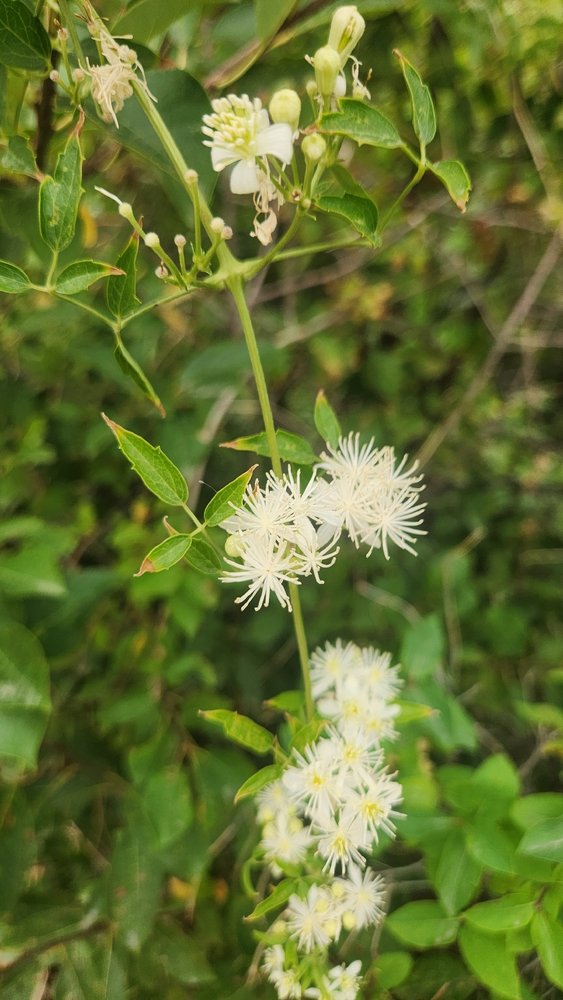
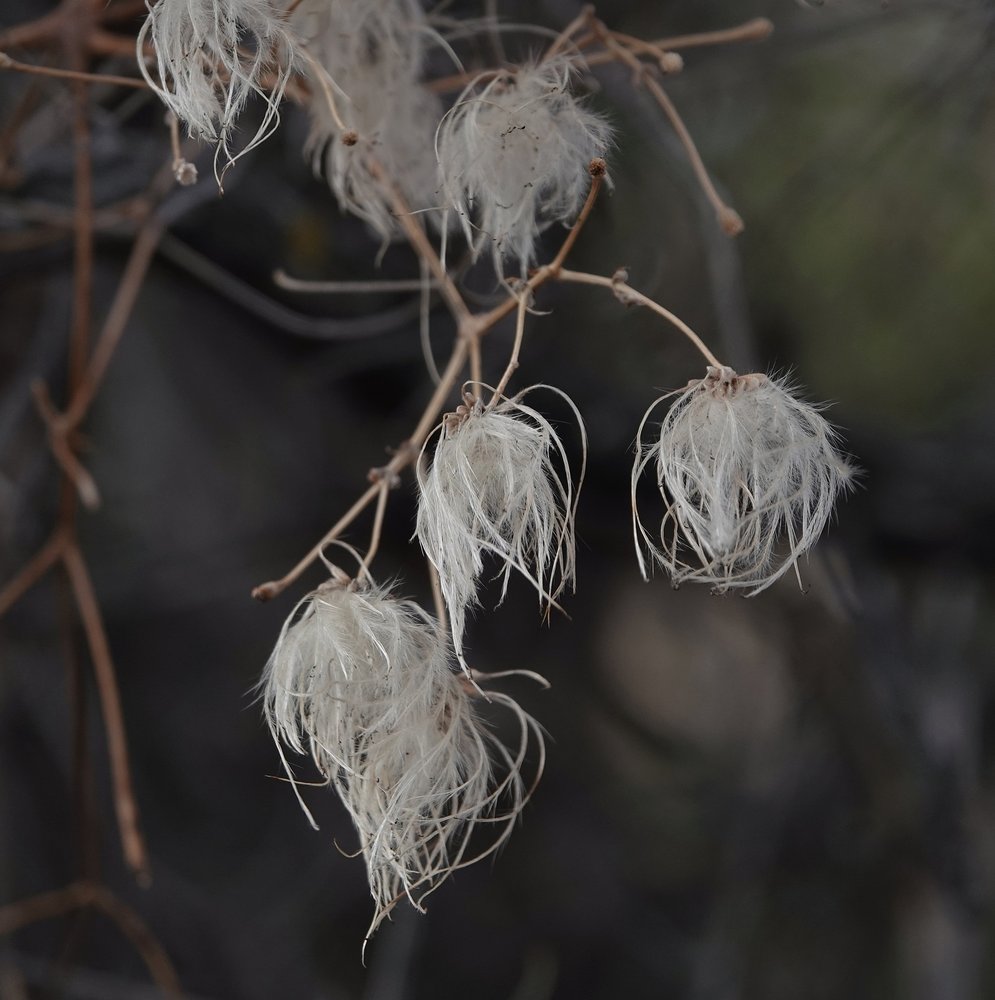
Seed: Female plants carry heads of hairy, one-seeded fruits 2–4.5 mm long, each with a feathery tail up to 6 cm (2½ in) long. They ripen dark in late fall, when the plumes make them easy to see, and a female plant produces many viable seeds.
Germination: The seed has little dormancy. SDSU recommends removing the plumes and sowing in fall or refrigerating the seed until spring, and the USDA plant guide found that a 48-hour soak in water gave high germination without a long cold treatment. Seed needs at least 12 days of favorable moisture and temperature to sprout, so the plant is rarely seeded in the field; softwood cuttings with a leaf bud root in 15 to 20 days.
How do you identify Western Virgin's Bower?
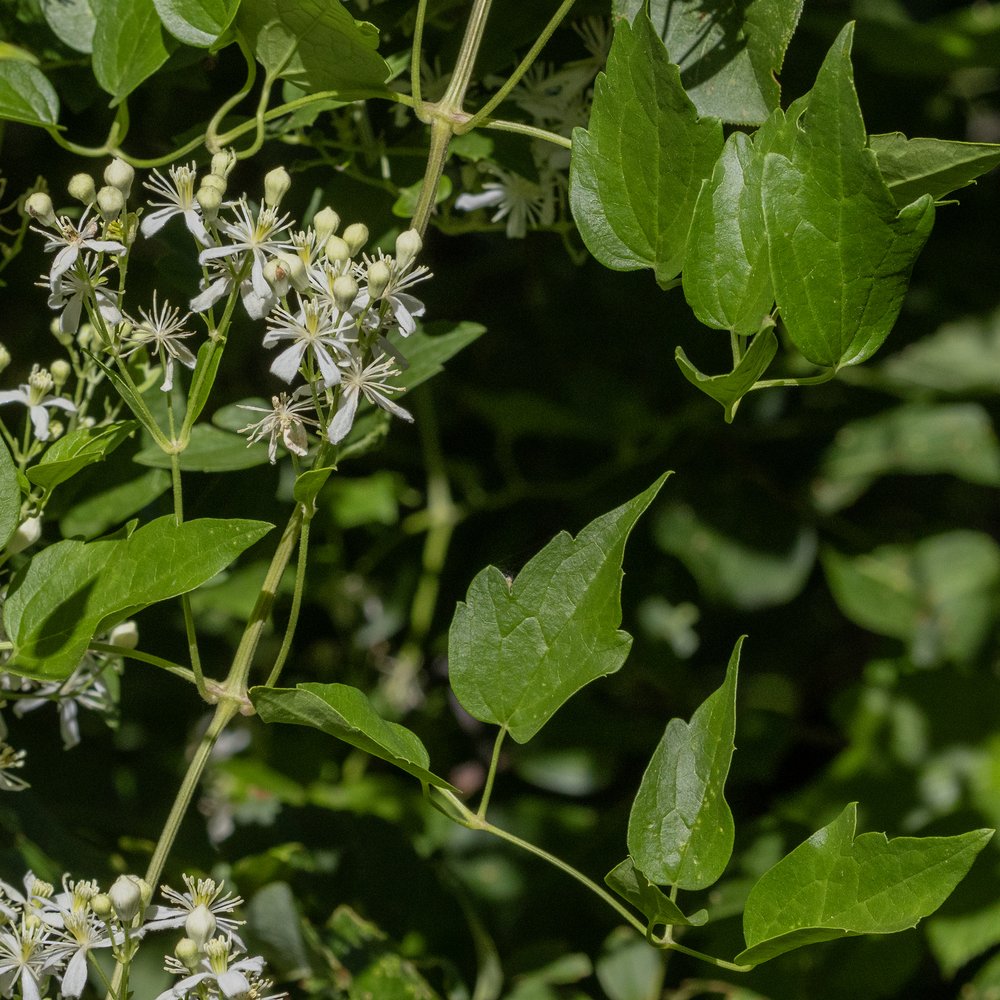
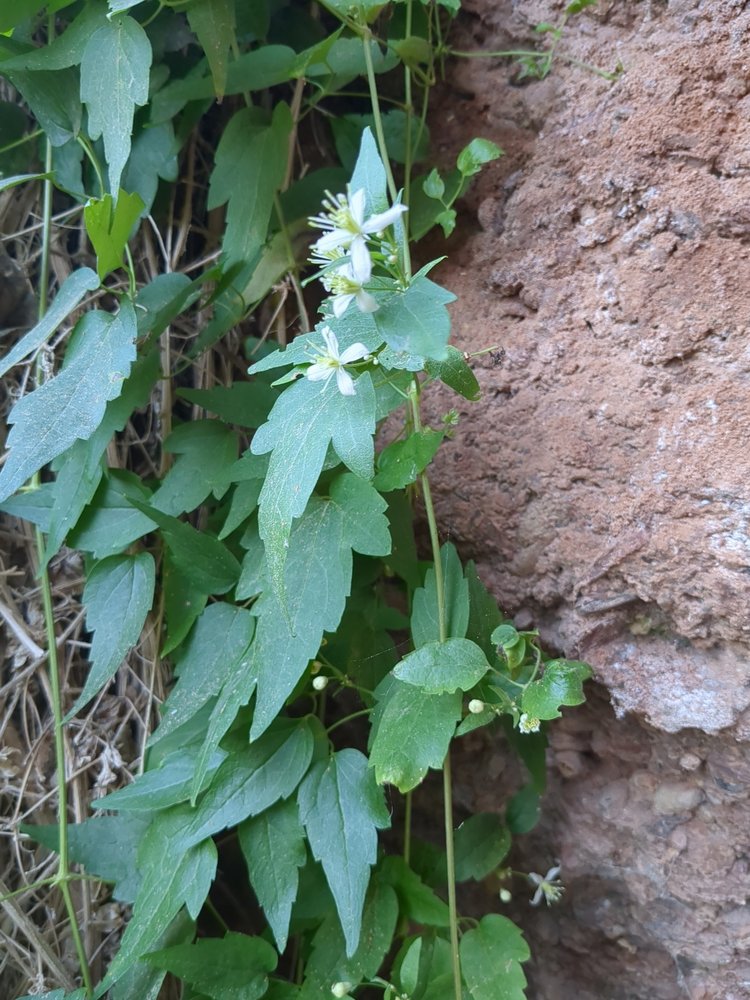
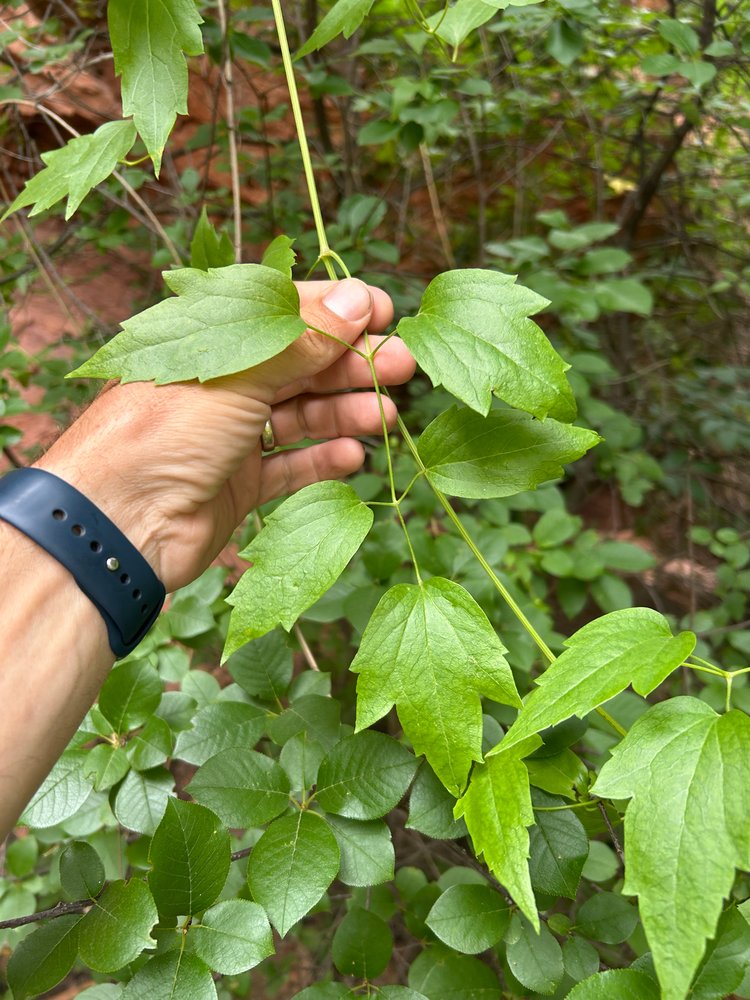
Look for a vine with limber stems 3–6 m (10–20 ft) long draped over shrubs, small trees and fences, with opposite compound leaves of 3 to 7 (sometimes up to 15) oval, coarsely toothed or lobed leaflets 2–6 cm (1–2½ in) long. The flowers come in many-flowered clusters from the leaf axils and have no petals, only four white to cream, wide-spreading sepals 5–13 mm (¼–½ in) long. Male and female flowers grow on separate plants: a male flower is a tuft of 25 to 50 stamens, while a female flower has many pistils that grow into a head of silky, hairy seeds, each trailing a feathery tail up to 6 cm (2½ in) long. The seed heads look like tufts of goose down.
When does it bloom?
July and August; silky seed heads follow and ripen in late fall.
Where does it grow?
Moist ground with something to climb: stream banks, deciduous woods along creeks, moist wooded draws, forest edges, thickets, clearings and pastures near streams, and open ponderosa pine and sagebrush bottoms. The National Park Service lists it as present at Wind Cave, Jewel Cave and Devils Tower, the 1986 plant survey of Jewel Cave lists it, and the Devils Tower native plants page lists it among the wildflowers seen along its trails. Herbarium specimens from 1926 to 1983 come from Lawrence, Custer and Fall River counties and from Crook County, Wyoming, including the Bear Lodge Mountains near Devils Tower, and a 1963 Crook County label records it climbing over chokecherry bushes in a river valley.
Other clematis in this guide
Buttercup family (Ranunculaceae): 15 other plants in this guide
Sources: SDSU Open PRAIRIE: Ranunculaceae: Clematis ligusticifolia (R. Neil Reese); USDA PLANTS Database: Clematis ligusticifolia (CLLI2); USDA NRCS Plant Guide: Western Clematis, Clematis ligusticifolia (Stannard and Crowder, 2006); Flora of North America Vol. 3: Clematis ligusticifolia, eFloras; Montana Field Guide: Western Virgin's-bower, Clematis ligusticifolia; GBIF species page: Clematis ligusticifolia Nutt. ex Torr. & A.Gray; NPSpecies checklist, Wind Cave National Park vascular plants; NPSpecies checklist, Jewel Cave National Monument vascular plants; NPSpecies checklist, Devils Tower National Monument vascular plants; Marriott and Hartman 1986, A Survey of the Vegetation of Jewel Cave National Monument; National Park Service, Devils Tower National Monument: Native Plants; GBIF occurrence search: Clematis ligusticifolia herbarium specimens, South Dakota and Wyoming; Culturally Important Plants of the Lakota (Black Elk and Flying By, 1998), filed with the South Dakota PUC.