Rock Clematis Clematis columbiana var. tenuiloba
Also called Columbian Virgin's-bower
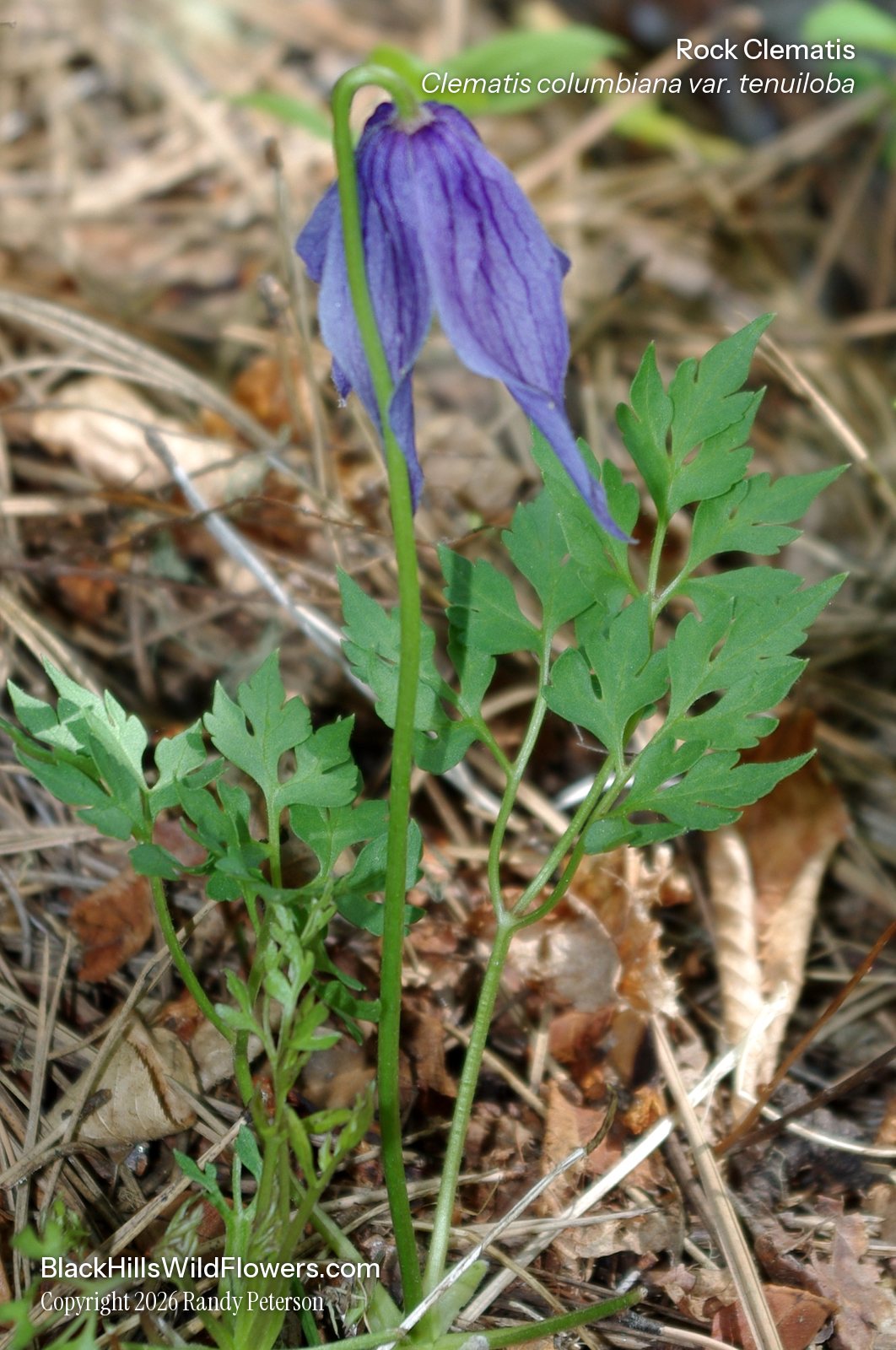
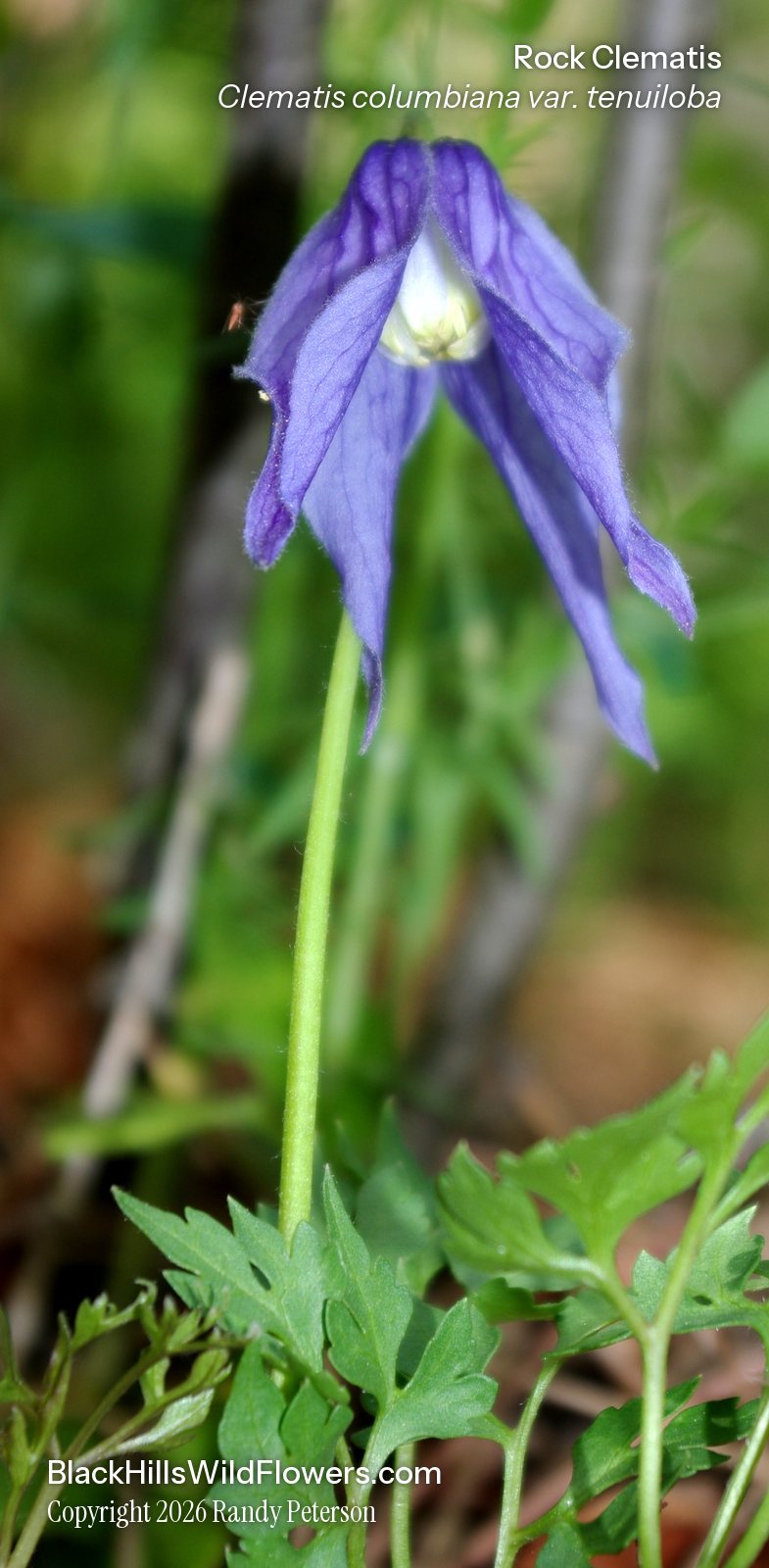
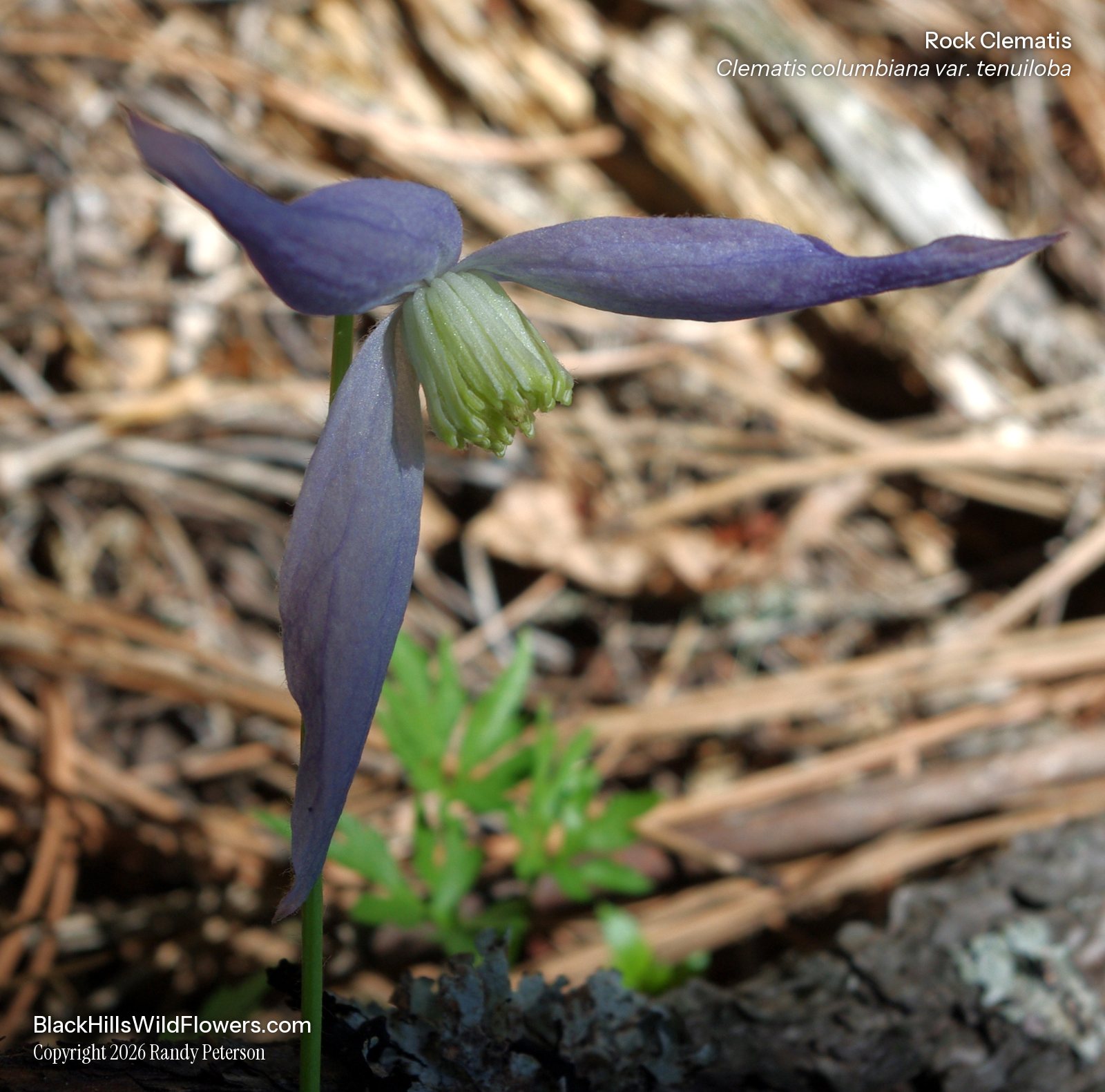
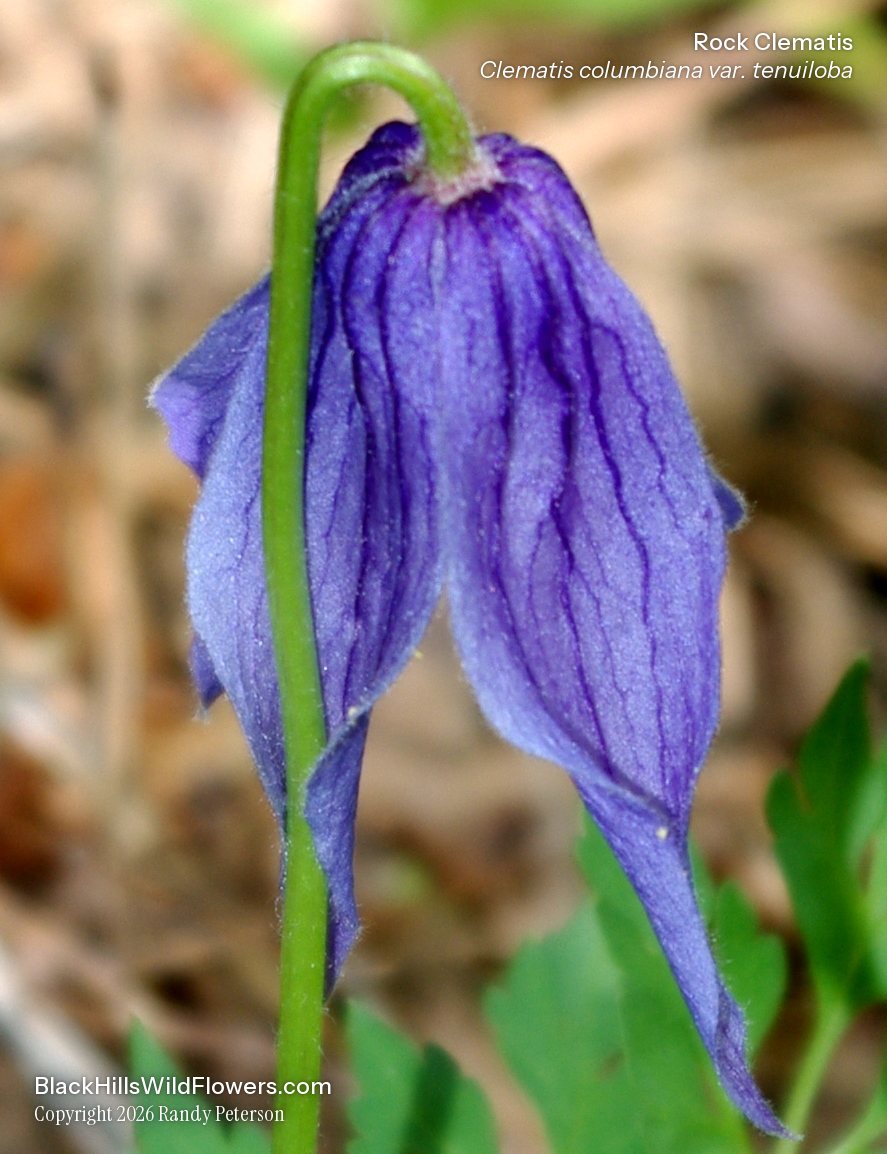
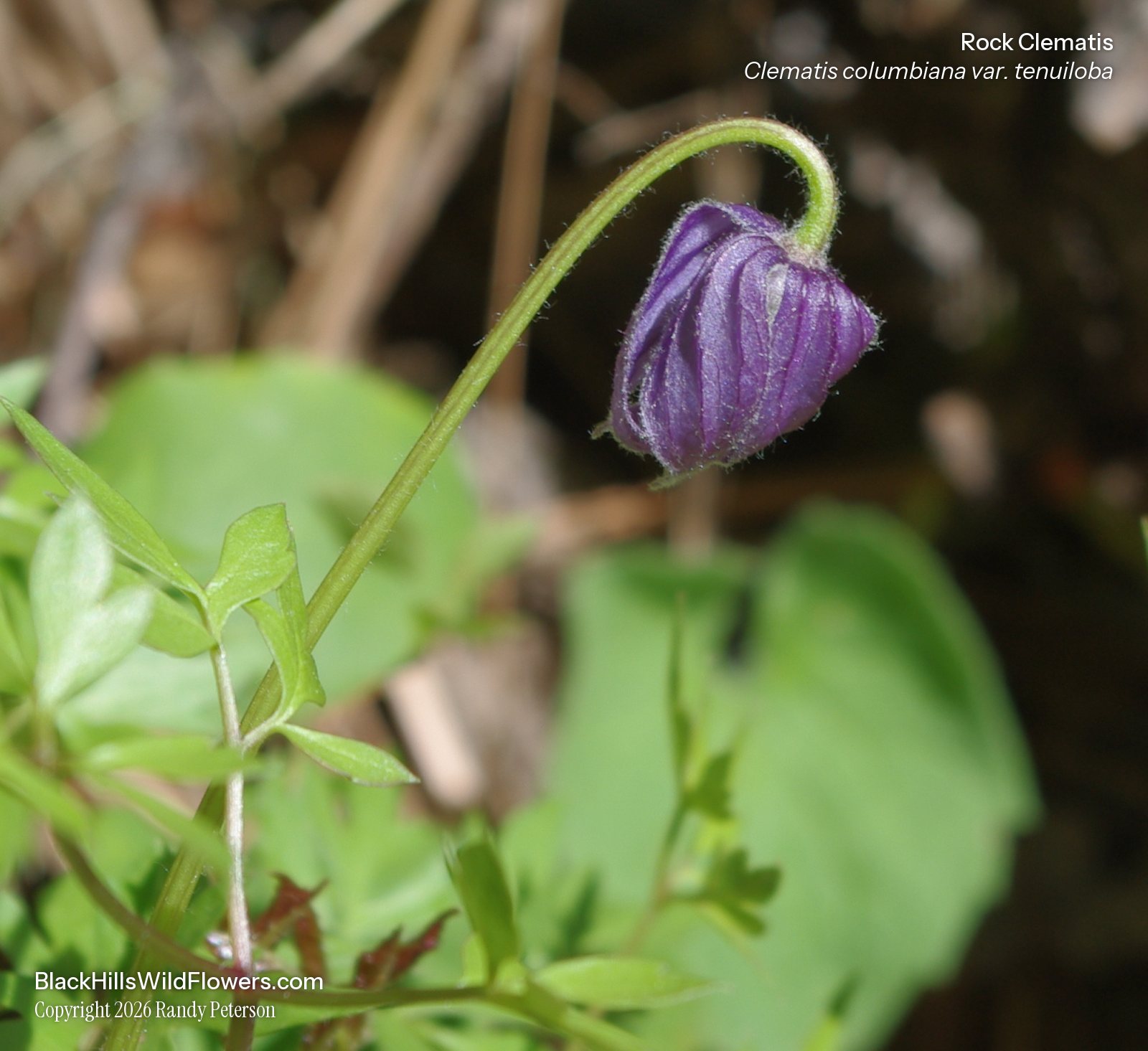
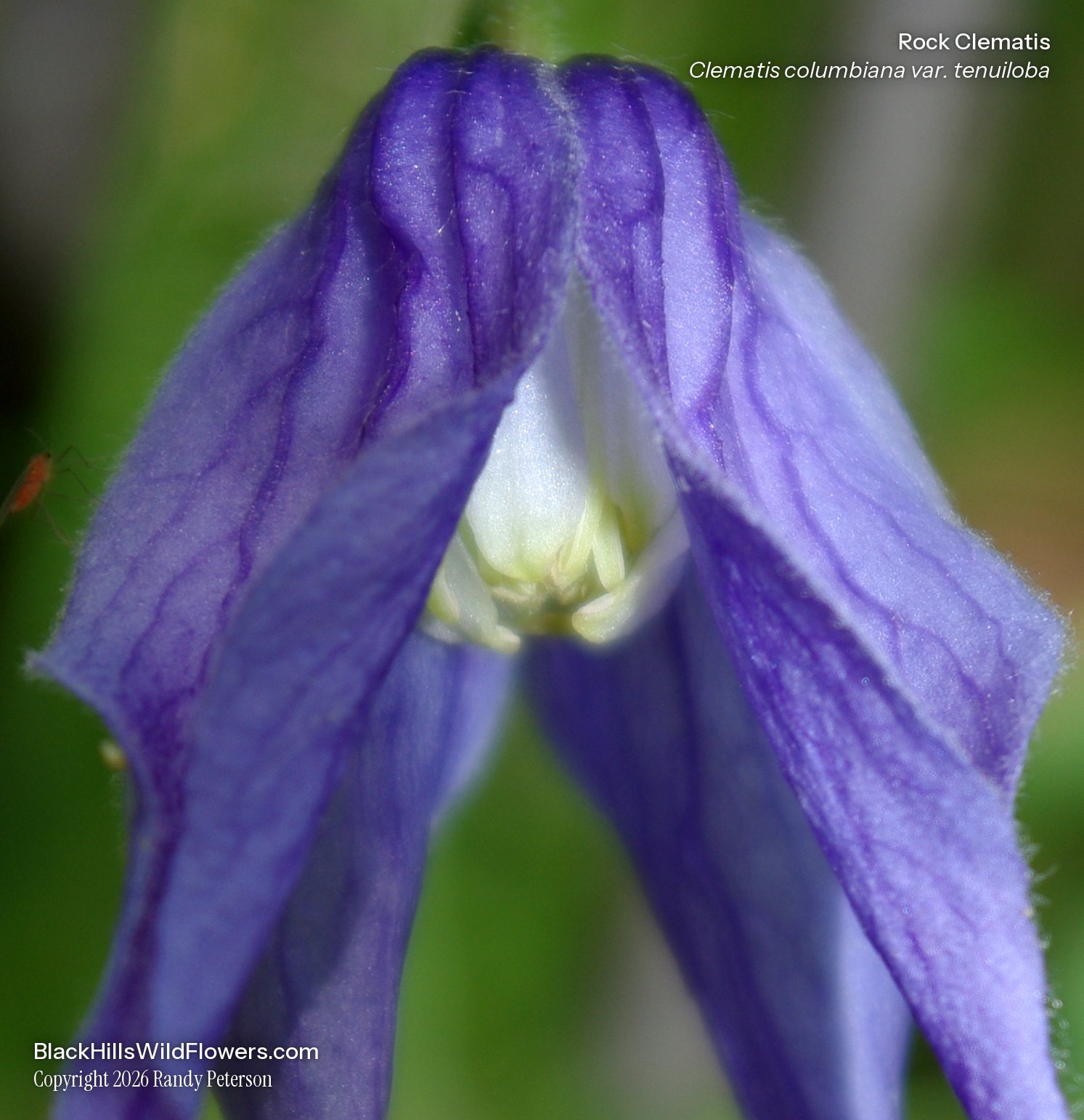
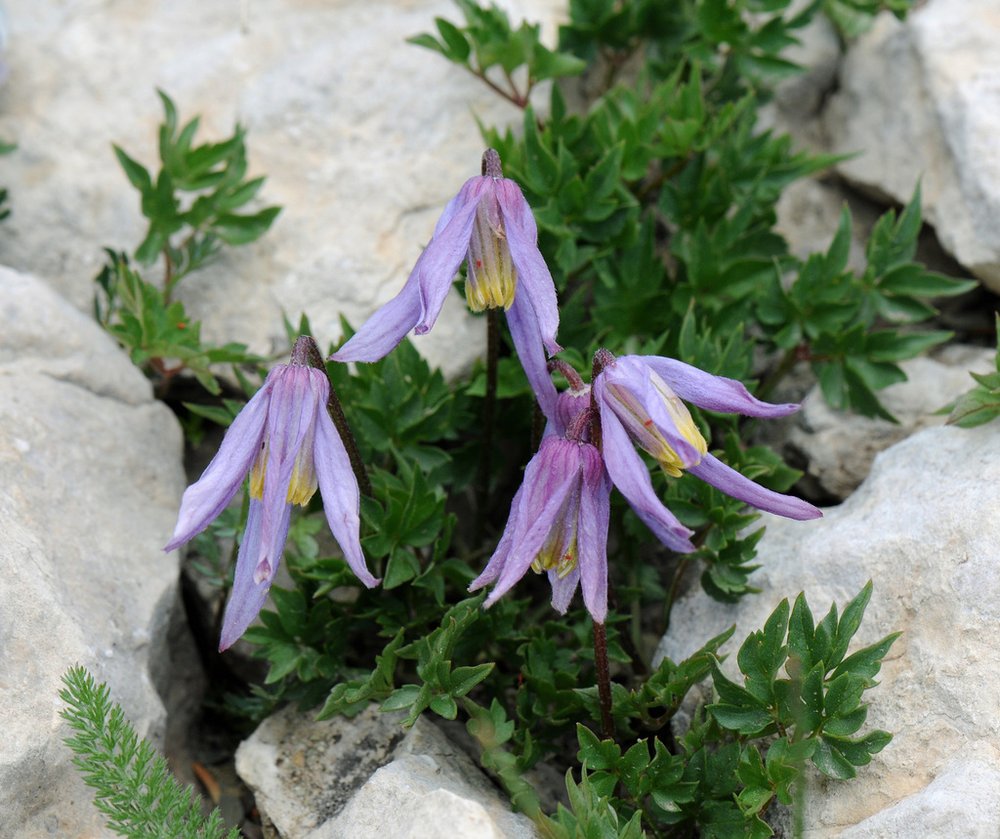
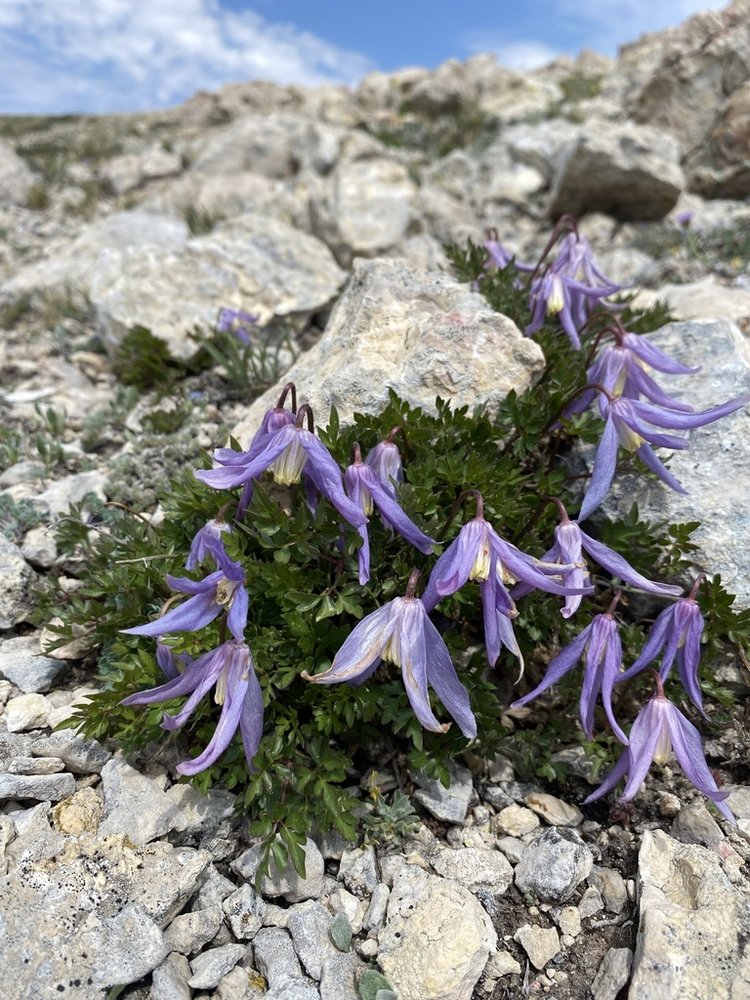
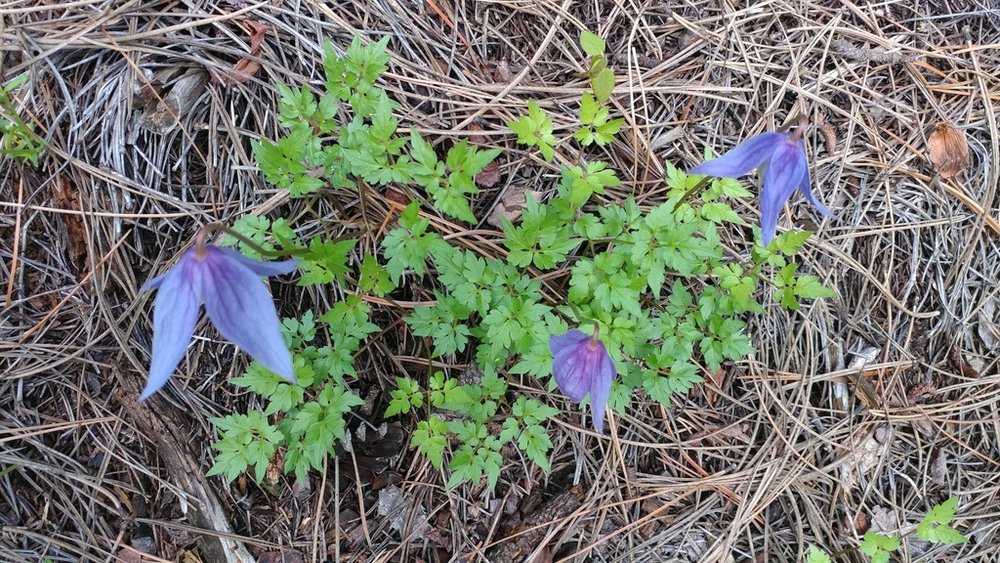
Rock Clematis (Clematis columbiana var. tenuiloba) is a low, tufted native clematis, usually under 10 cm (4 in) tall, with finely cut leaves and single nodding violet-blue bells of four pointed sepals. It blooms from May into July, mostly in June, on rocky ridges, cliffs and open pine woods, and Flora of North America says only this low, non-vining form grows in the Black Hills. Photographed in the Black Hills.
Free photos from other sources
| Family | Ranunculaceae · Buttercup |
|---|---|
| Status | Native perennial |
| Blooms | May into July, mostly in June |
| Height | Under 10 cm (4 in) |
| Where | Rocky ridges, cliffs and talus, often on limestone, and open ponderosa pine and spruce woods |
| Also called | Columbian Virgin's-bower |
| Synonym | Clematis tenuiloba |
Roots, seeds & germination
Root: Most of the stem is underground and spreads by rhizomes (underground stems), sending up short stems in tufts.
How do you identify Rock Clematis?
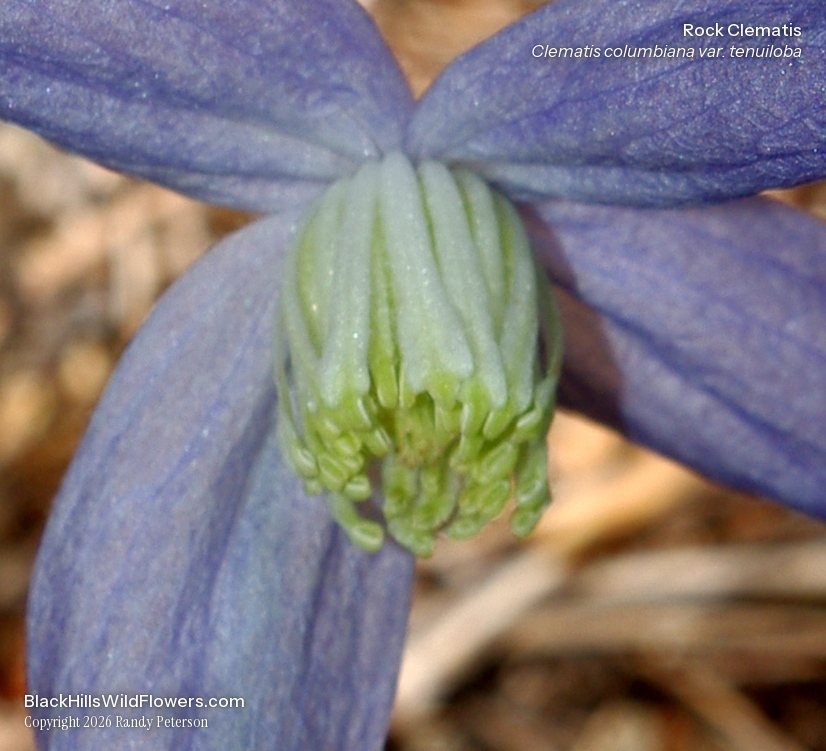
Look for a low tuft of leaves, not a vine: the short stems rise from underground runners. Each leaf is divided into threes two or three times over, ending in narrow, slightly fleshy lobes about 1.5–5 mm wide. Flowers come one to a bare stalk, a nodding violet-blue bell 1.5–5 cm (⅝–2 in) long of four thin, pointed sepals, with flat, petal-like staminodes (sterile stamens) inside around the true stamens. Purple Clematis (Clematis occidentalis) has leaves divided into three only once. The typical, vining Rock Clematis (var. columbiana) climbs 0.5–1.5 m (1½–5 ft) and has thinner leaf lobes often over 5 mm wide; Flora of North America says only the low form is found in the Black Hills. Sugar Bowls (Clematis hirsutissima) has thick, leathery sepals held together in an urn, not thin ones.
When does it bloom?
May into July, mostly in June.
Where does it grow?
Rocky ridges and hillsides, cliffs, talus and limestone outcrops, and open ponderosa pine, spruce and aspen woods; Flora of North America gives cliffs, rocky summits and open pine forest at 1000–3000 m (3300–9800 ft). The 1986 plant survey of Jewel Cave lists it, and herbarium specimens come from Lawrence, Pennington, Custer and Meade counties and from Crook and Weston counties, Wyoming, including one from limestone outcrops in ponderosa pine at Jewel Cave in 1985. Asa Gray first described it in 1880, as a form of another clematis, in a report on the geology and resources of the Black Hills.
Other clematis in this guide
Buttercup family (Ranunculaceae): 15 other plants in this guide
Sources: Flora of North America (efloras.org): Clematis columbiana; Flora of North America (efloras.org): Clematis columbiana var. tenuiloba; Flora of North America (efloras.org): Clematis columbiana var. columbiana; Flora of North America (efloras.org): Clematis subg. Atragene; Flora of North America (efloras.org): Clematis, key to subgenera; Flora of North America (efloras.org): Clematis occidentalis; Flora of North America (efloras.org): Clematis subg. Viorna (includes Clematis hirsutissima); ITIS: Clematis columbiana var. tenuiloba, TSN 527420; USDA PLANTS Database: Clematis columbiana var. tenuiloba (CLCOT); Lady Bird Johnson Wildflower Center: Clematis columbiana var. tenuiloba; Marriott and Hartman 1986, A Survey of the Vegetation of Jewel Cave National Monument; NPSpecies checklist, Jewel Cave National Monument vascular plants; GBIF occurrence search: Clematis columbiana var. tenuiloba, South Dakota and Wyoming herbarium specimens; GBIF specimen 3454980946: Jewel Cave National Monument, Custer County, 1985, among limestone outcrops in ponderosa pine forest; Rare Plants of South Dakota, South Dakota Game, Fish and Parks (lists Clematis hirsutissima, Sugar Bowls; Rock Clematis not listed).