Rocky Mountain Bee Plant
Cleomella serrulata
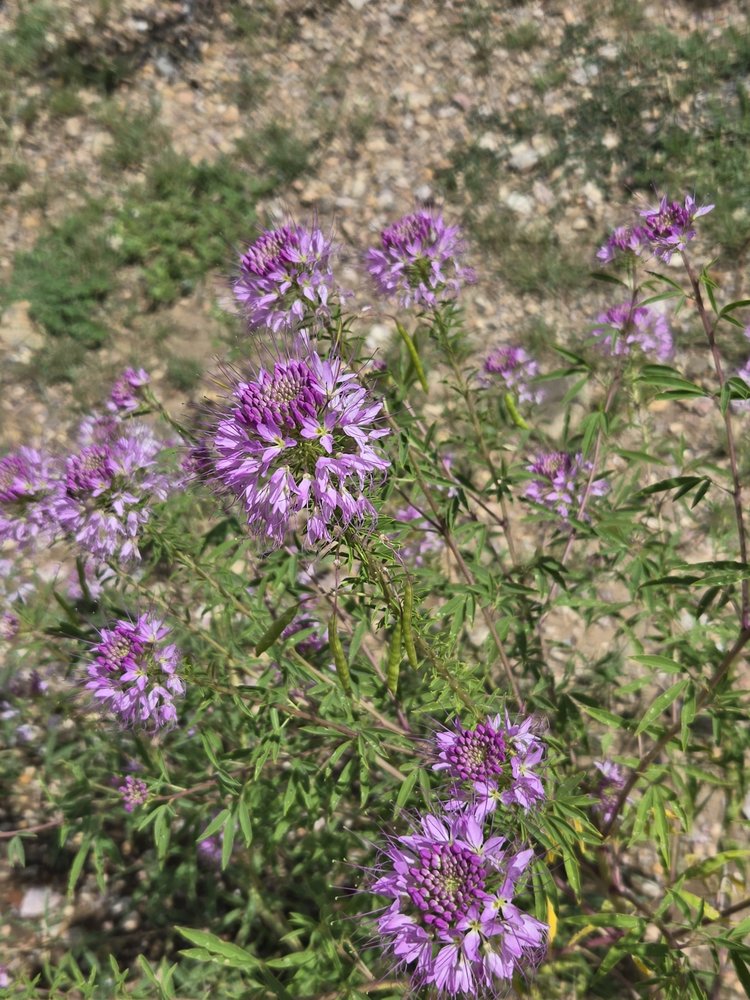
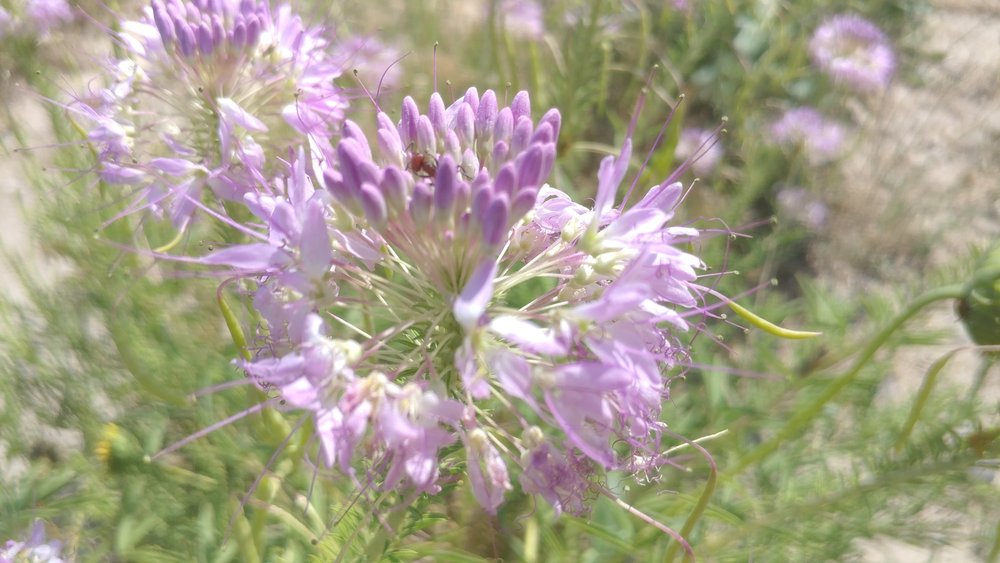
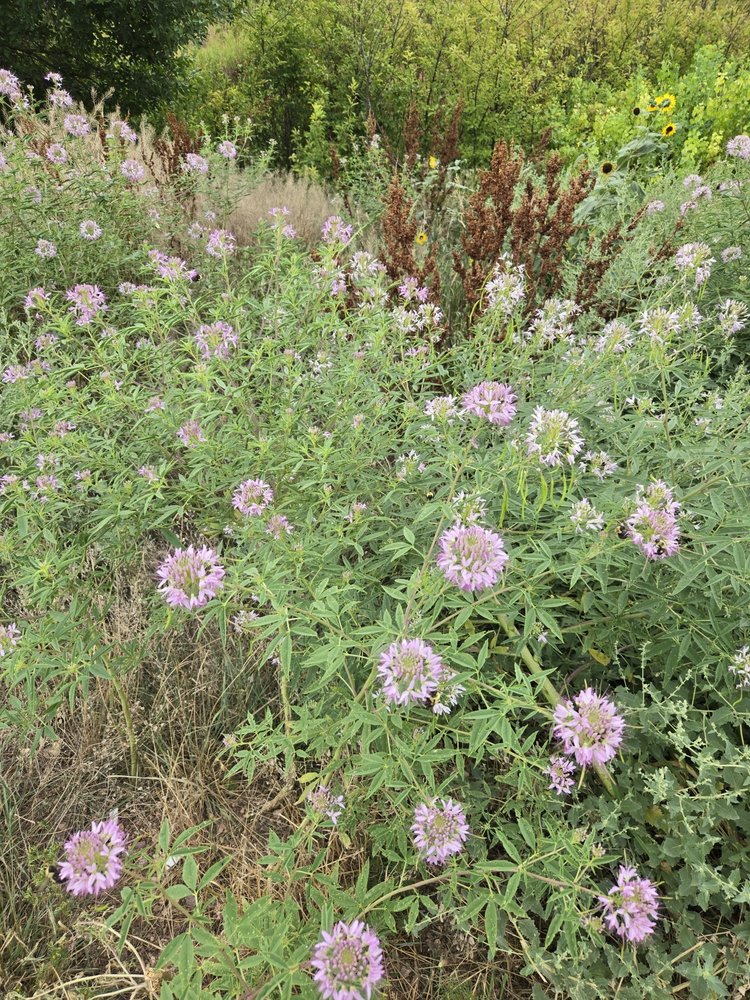
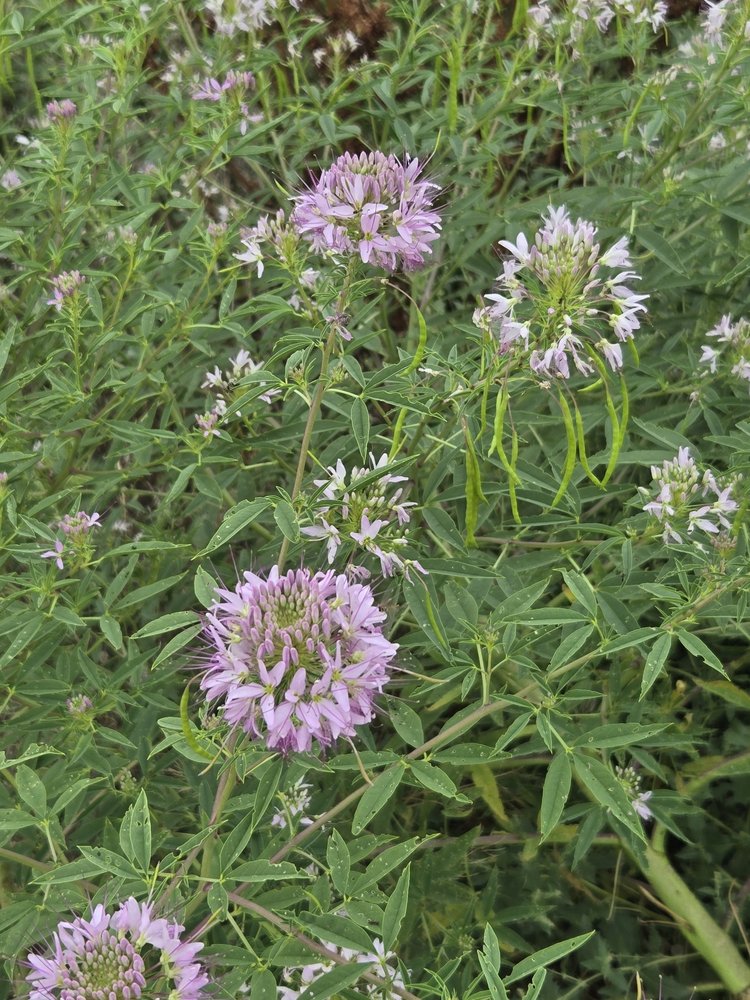
Rocky Mountain Bee Plant (Cleomella serrulata) is a tall native annual with rounded heads of pink-purple flowers, long purple stamens sticking out of each head and slender seed pods dangling below. It blooms from June into September on roadsides, creek bottoms and other disturbed ground around the lower edges of the Black Hills, and the National Park Service lists it at Wind Cave and Devils Tower.
Free photos from other sources
| Family | Cleomaceae · Spiderflower |
|---|---|
| Status | Native annual |
| Blooms | June into September, most in August |
| Height | 20–150 cm (8–60 in) |
| Where | Roadsides, creek bottoms, sandy floodplains, prairie and other disturbed open ground |
| Also called | Rocky Mountain Beeplant, Stinking Clover, Navajo Spinach, Bee Spiderflower, Skunk Weed, Pink Bee Plant, waȟpé ȟ’eȟ’é (Lakota) |
| Synonym | Cleome serrulata, Peritoma serrulata, Peritoma inornata, Peritoma serrulata var. albiflora, Peritoma serrulata var. clavata, Cleome serrulata subsp. angusta |
| Traditional use | Sitting Bull College's 1998 Culturally Important Plants of the Lakota says the Lakota ate the young shoots, leaves and flowers as a cooked green, drank a tea of the plant for fever and stomach trouble, and put a poultice of the leaves on sore eyes. Pueblo potters, among them Tewa, Keres, Zuni and Hopi, boiled the plant down to a black paste for pottery paint. |
Roots, seeds & germination
Root: A single taproot about 30–35 cm (12–14 in) deep. It is an annual, so it comes back only from seed.
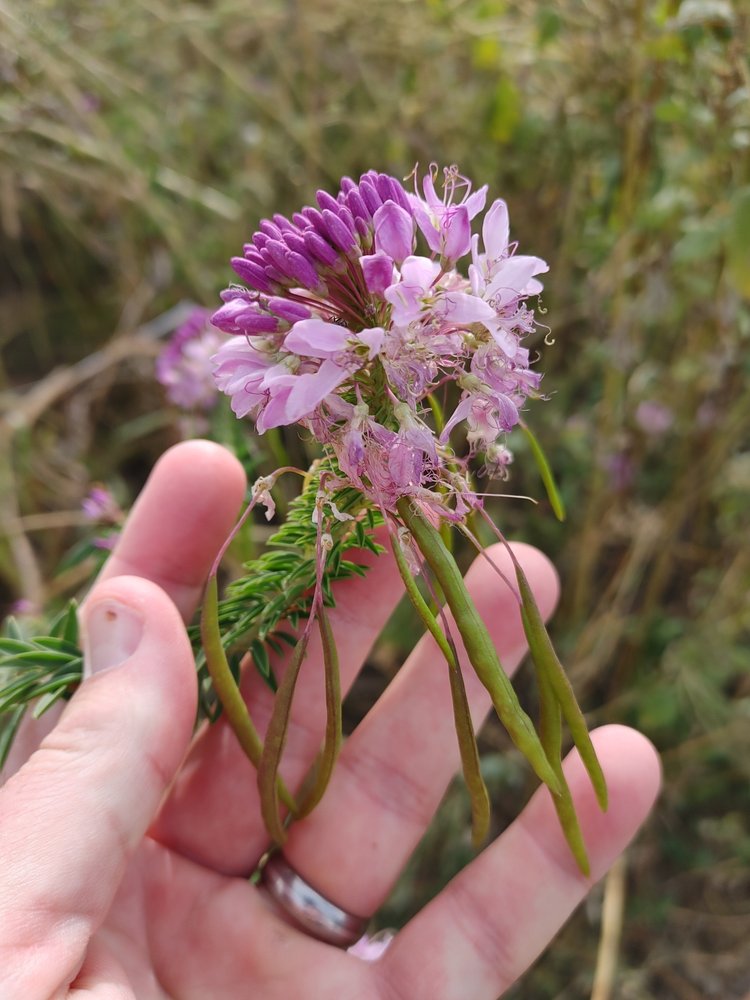
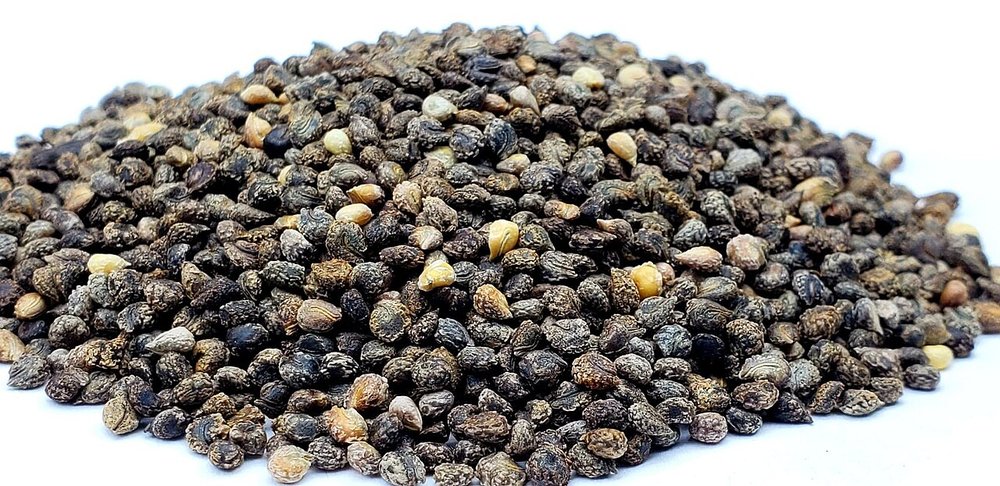
Seed: The slender pods hold about 12–38 seeds each. The seeds are black or dark brown, 2.8–4 mm across, round to horseshoe-shaped and rough, and only the dark ones are viable. Ripe pods split easily in late summer.
Germination: Fresh seed is dormant and needs cold to sprout: sow it in fall, or give it about 30 days of cold, moist stratification before spring sowing. To sprout it needs temperatures that swing between day and night; one study germinated it at 20 °C (68 °F) by day and 10 °C (50 °F) by night. Plants bloom the first summer.
How do you identify Rocky Mountain Bee Plant?
Look for an upright, branching annual with smooth stems and a rank, skunky smell. Each leaf is split into 3 narrow leaflets, 2–6 cm (¾–2½ in) long, spreading from one point like a clover. The flowers sit in a dense, rounded head at each stem tip, each with 4 pink to purple petals and 6 long purple stamens that stick out well past them, and below the head the stem carries a ladder of slender pods 2.5–7.5 cm (1–3 in) long that hang or angle down. Clammyweed, a close relative, is usually shorter and sticky all over, with much smaller white flowers, notched petals and pods that stand upright.
When does it bloom?
June into September, most in August.
Where does it grow?
Open, sunny places on sandy, gravelly or clay soil, especially ground that has been dug up or disturbed: road shoulders, creek banks and floodplains, prairie and pasture. In the Black Hills it is a plant of the lower edges and foothills, not the high pine country. The National Park Service lists it at Wind Cave and Devils Tower, and about 37 herbarium specimens since 1892 come from Fall River, Custer, Pennington and Lawrence counties in South Dakota and Crook and Weston counties in Wyoming, 22 of them from Fall River County.
Other flowers to compare

Sources: Black Elk, L. & W. Flying By. 1998. Culturally Important Plants of the Lakota, entry 82, Cleome serrulata, waȟpé ȟ’eȟ’é (Sitting Bull College; filed with SD PUC); Reese, R.N. SDSU Open PRAIRIE, South Dakota Native Plant Research: Capparaceae: Cleome serrulata; Tilley, D. & M. Wolf. 2024. Plant Guide for Rocky Mountain bee plant (Cleome serrulata). USDA NRCS Aberdeen Plant Materials Center; USDA PLANTS Database: Cleome serrulata Pursh, Rocky Mountain beeplant (CLSE); Shaw, N.L. & C.L. Gucker. 2020. Rocky Mountain Beeplant, Peritoma (Cleome) serrulata. Western Forbs: Biology, Ecology, and Use in Restoration (USFS RMRS / BLM); Flora of North America vol. 7: Peritoma serrulata (efloras.org); Plants of the World Online (Kew): Cleomella serrulata (Pursh) Roalson & J.C.Hall; GBIF: Cleomella serrulata occurrences (taxon 8145885); NPSpecies: Wind Cave National Park vascular plant checklist (Peritoma serrulata, Present); NPSpecies: Devils Tower National Monument vascular plant checklist (Peritoma serrulata, Present); Marriott, H. & R. Hartman. 1986. Vegetation of Jewel Cave National Monument (checked; not listed); Native American Ethnobotany Database (BRIT): Cleome serrulata uses (Tewa, Keres, Zuni pottery paint; Navajo, Hopi food); Kansas Wildflowers and Grasses: Rocky Mountain bee plant, Peritoma serrulata; Minnesota Wildflowers: Rocky Mountain Beeplant (Peritoma serrulata), with the comparison to clammyweed; Minnesota Wildflowers: Red-whisker Clammyweed (Polanisia dodecandra); Gilmore, M.R. 1919. Uses of Plants by the Indians of the Missouri River Region (checked; not listed); Gilmore, M.R. 1913. Some Native Nebraska Plants with Their Uses by the Dakota (checked; not listed); iNaturalist: Cleomella serrulata observations near the Black Hills.