Tall Meadow-rue Thalictrum dasycarpum
Also called Purple Meadow-rue, Meadow Rue, wazímna (Lakota), wazímniŋkpa (Lakota)
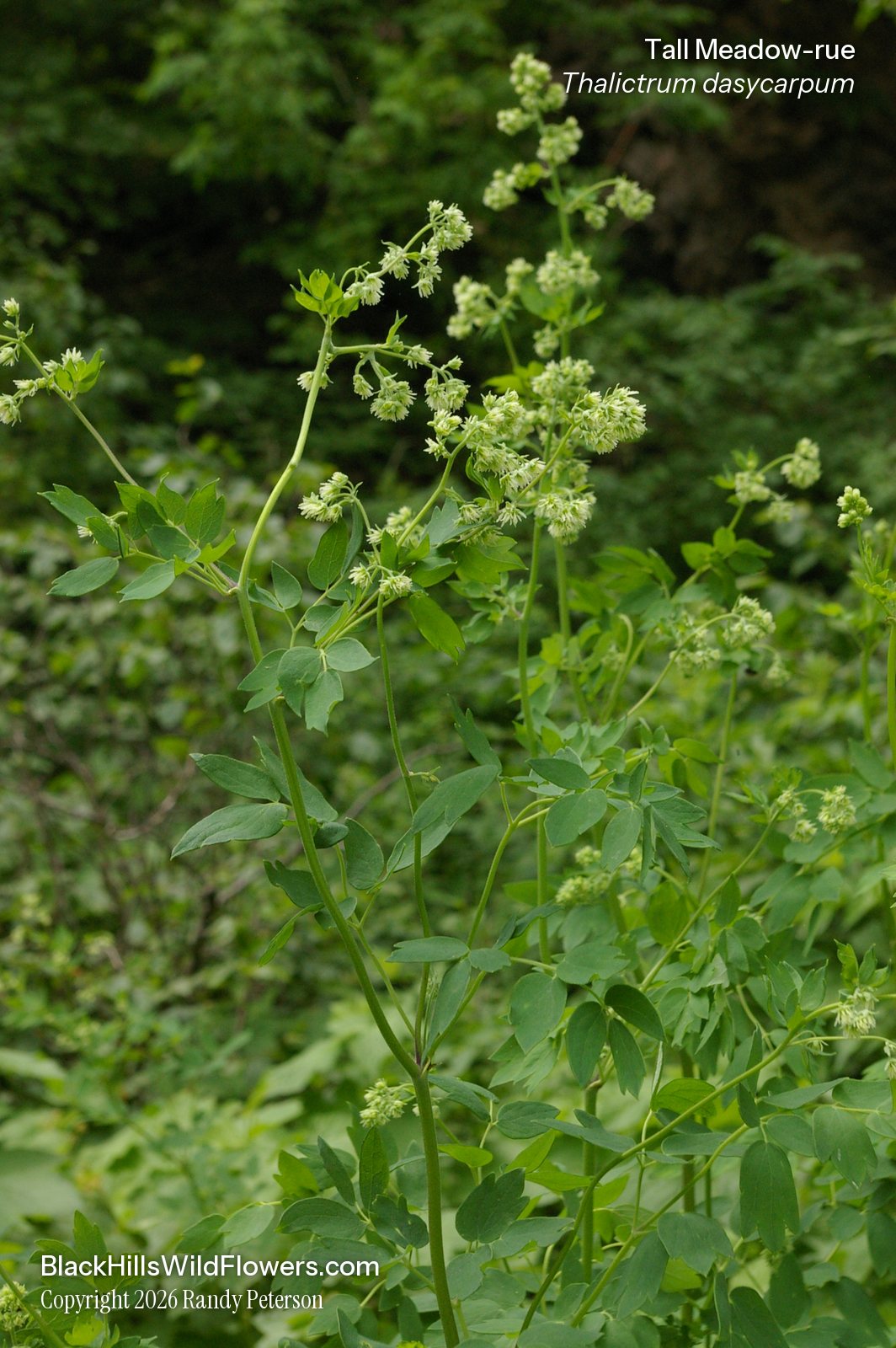
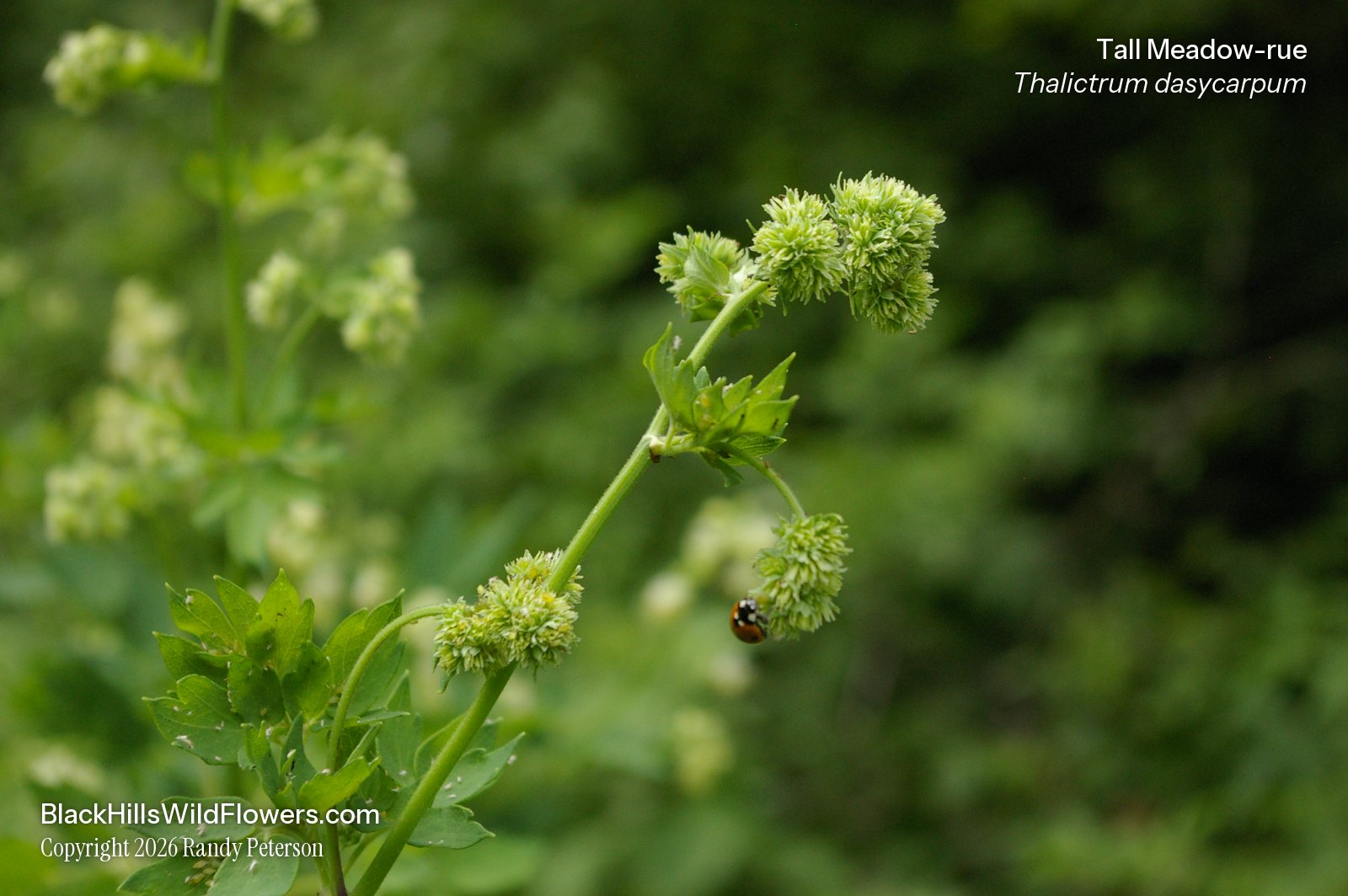
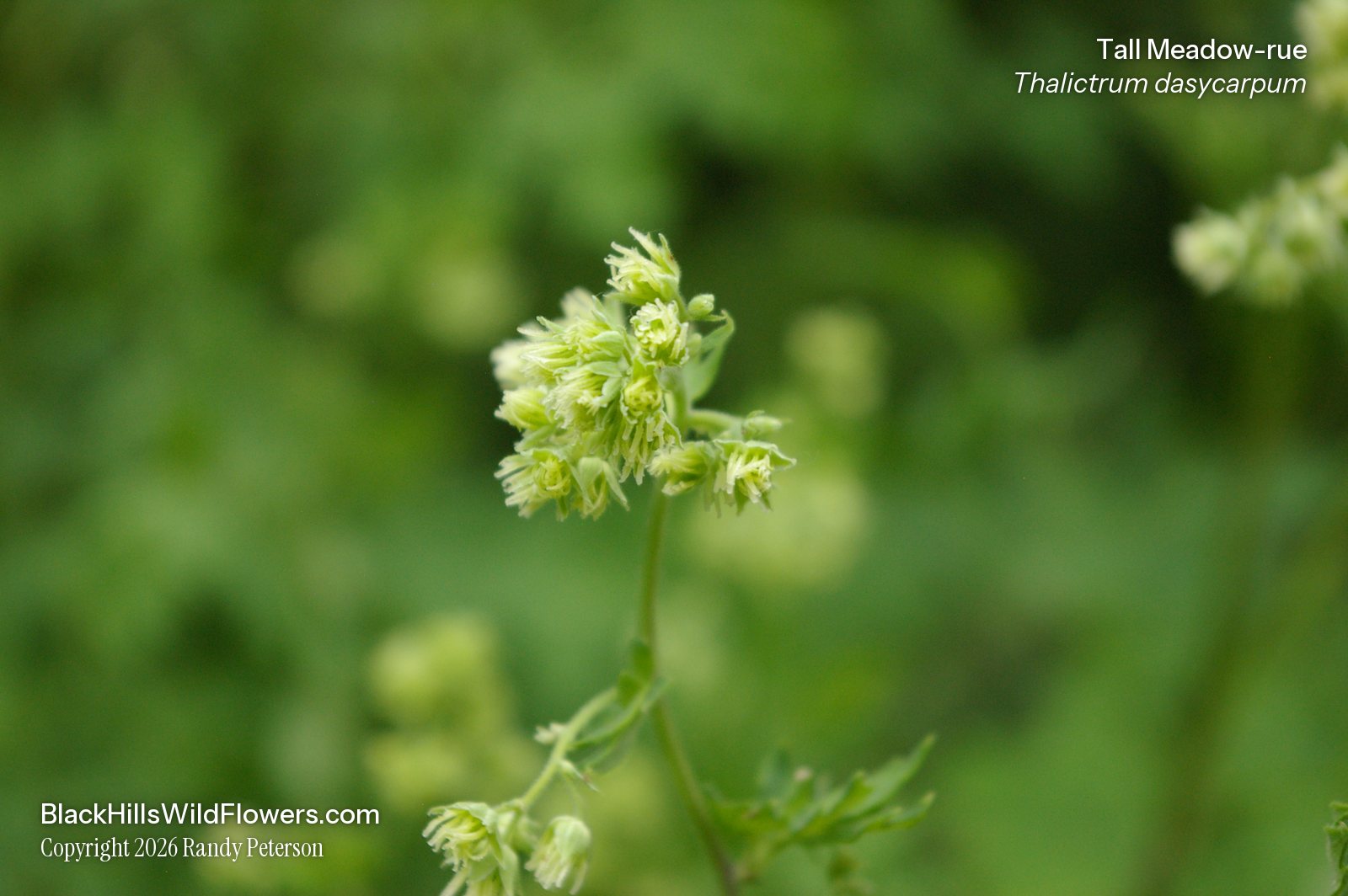
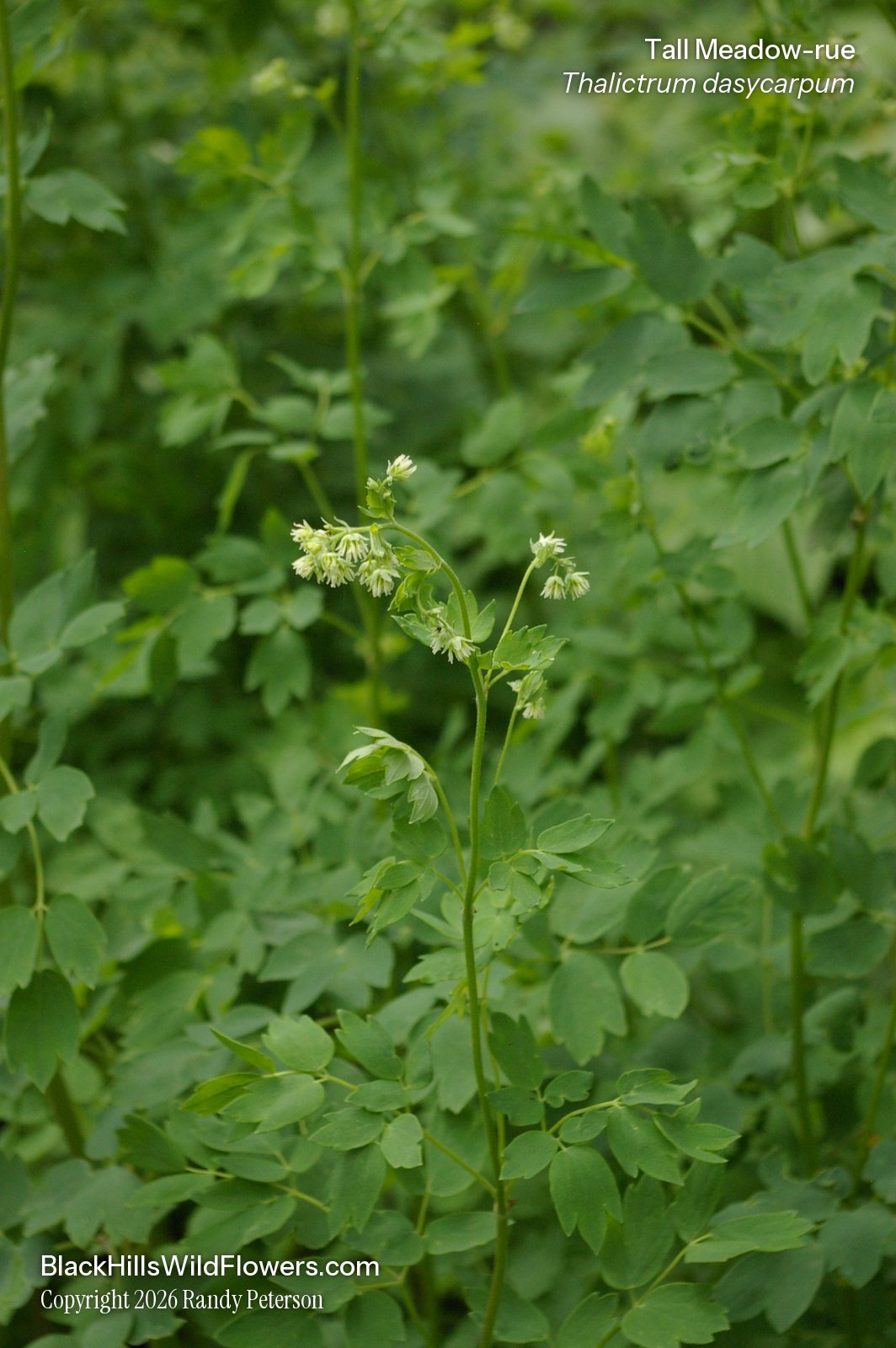
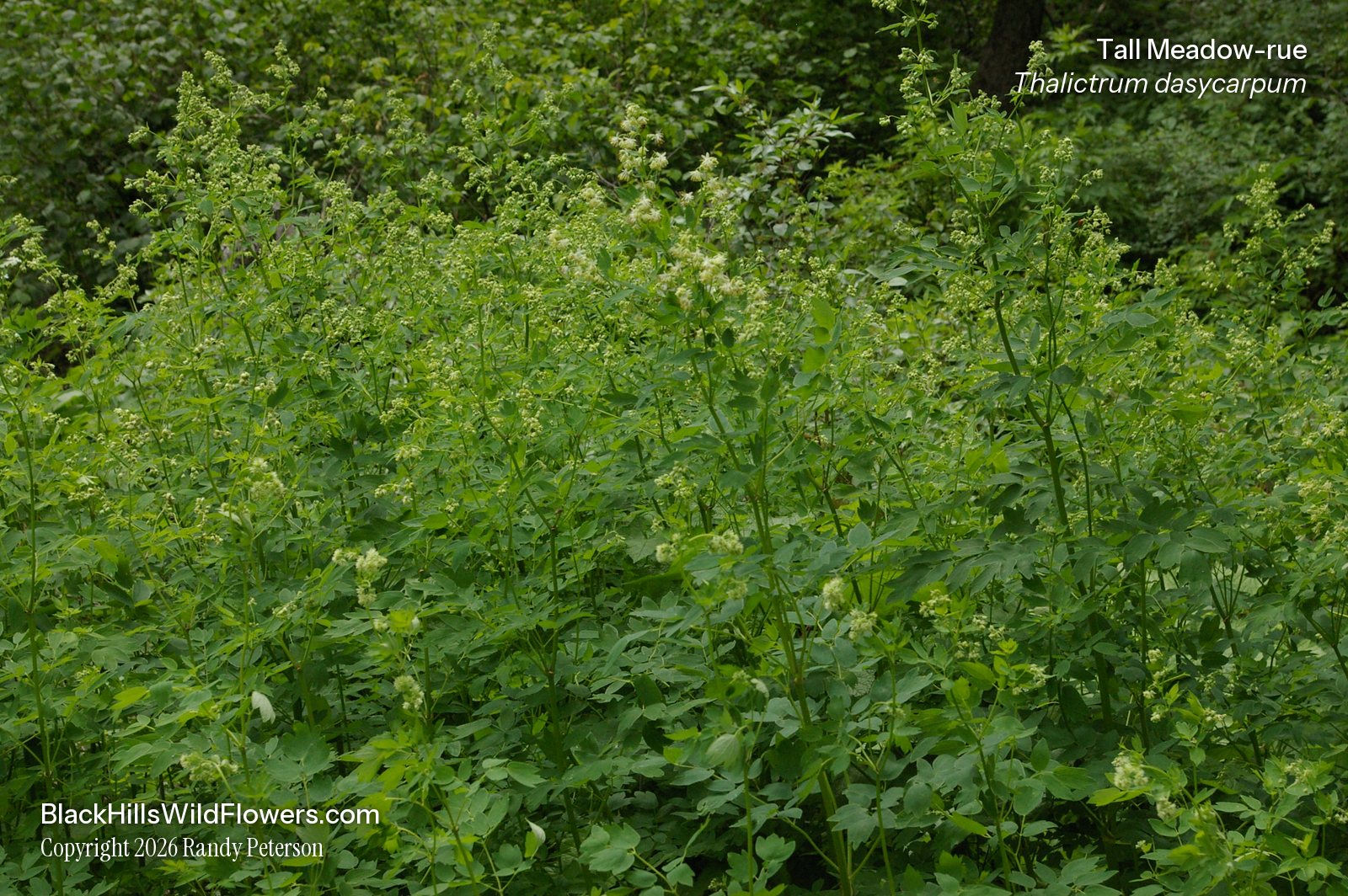
Tall Meadow-rue (Thalictrum dasycarpum) is a tall native perennial with leafy stems, leaves cut into many small three-lobed leaflets, and large airy clusters of small greenish-white flowers, with male and female flowers on separate plants. It blooms in June and July along streams, in wet thickets and in moist woods, and the National Park Service lists it at Wind Cave, Mount Rushmore and Devils Tower. Photographed in the Black Hills.
Free photos from other sources
| Family | Ranunculaceae · Buttercup |
|---|---|
| Status | Native perennial |
| Blooms | June and July |
| Height | 40–150 cm (16–60 in), sometimes to 200 cm (79 in) |
| Where | Streambanks, floodplains, wet thickets, moist woods and wet meadows |
| Also called | Purple Meadow-rue, Meadow Rue, wazímna (Lakota), wazímniŋkpa (Lakota) |
| Synonym | Thalictrum hypoglaucum |
| Traditional use | Lakota fed the seeds to horses as an energy stimulant, and chewed the seeds and rubbed them on the skin to keep insects away. |
Roots, seeds & germination
Root: Fibrous roots with short, thick rhizomes (underground stems), forming loose clumps.
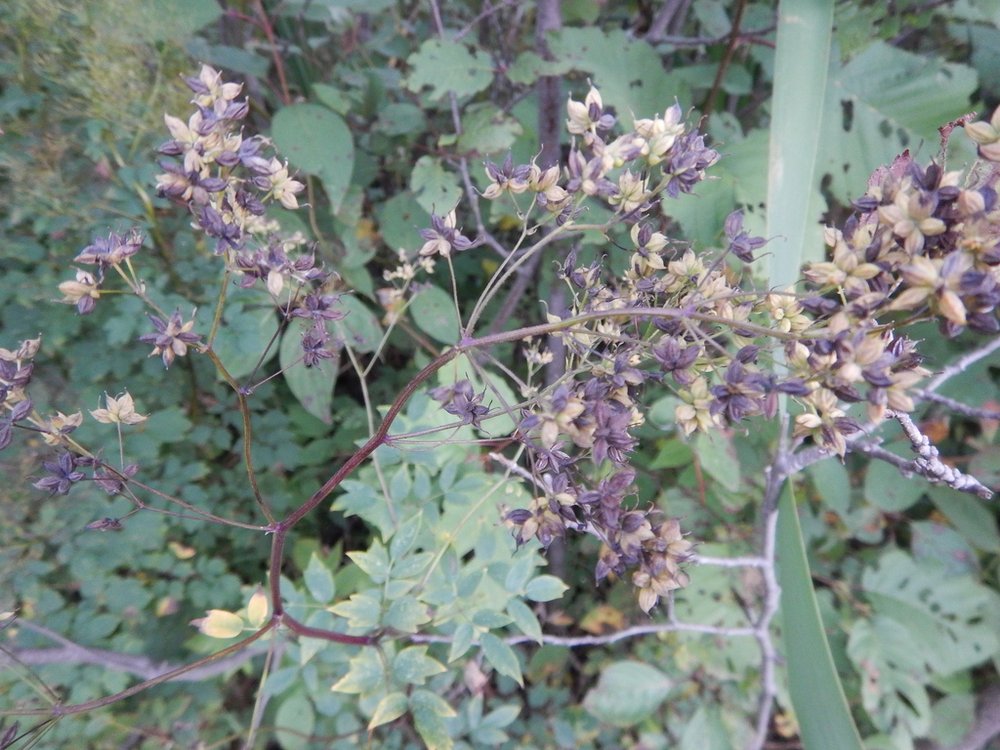
Seed: Each female flower ripens a cluster of small dry seeds, 2–4.6 mm long, ribbed and usually hairy, with a thin beak at the tip; they dry dark brown. The name dasycarpum means hairy fruit.
Germination: Seed needs 60–90 days of cold, moist stratification (chilling while damp) before sowing, and fall planting works well.
How do you identify Tall Meadow-rue?
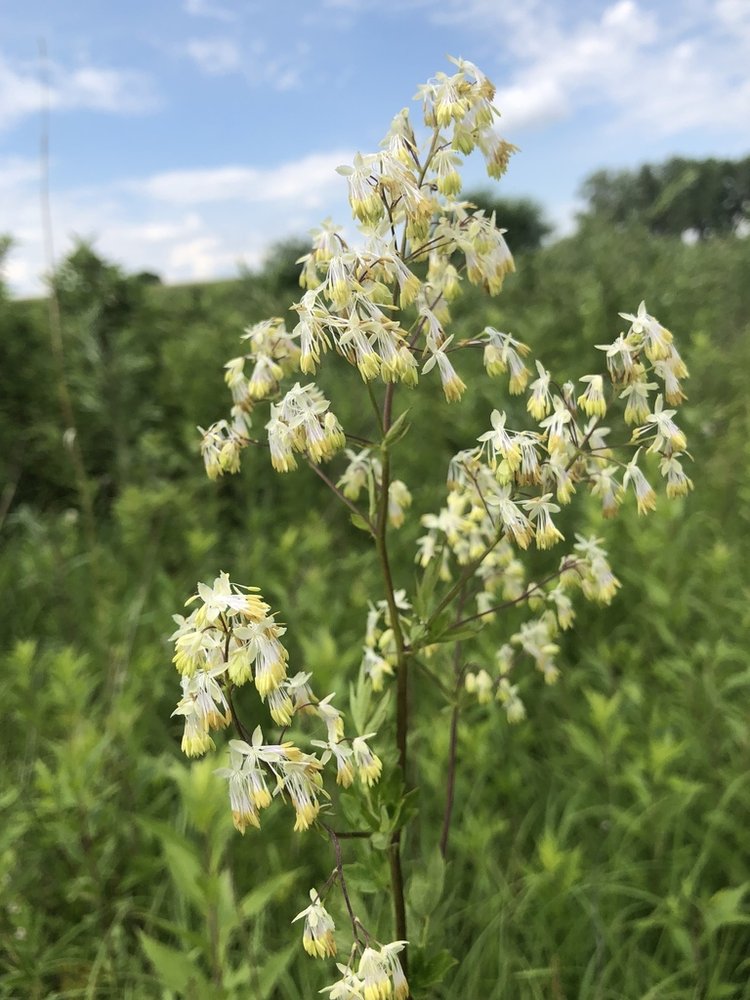
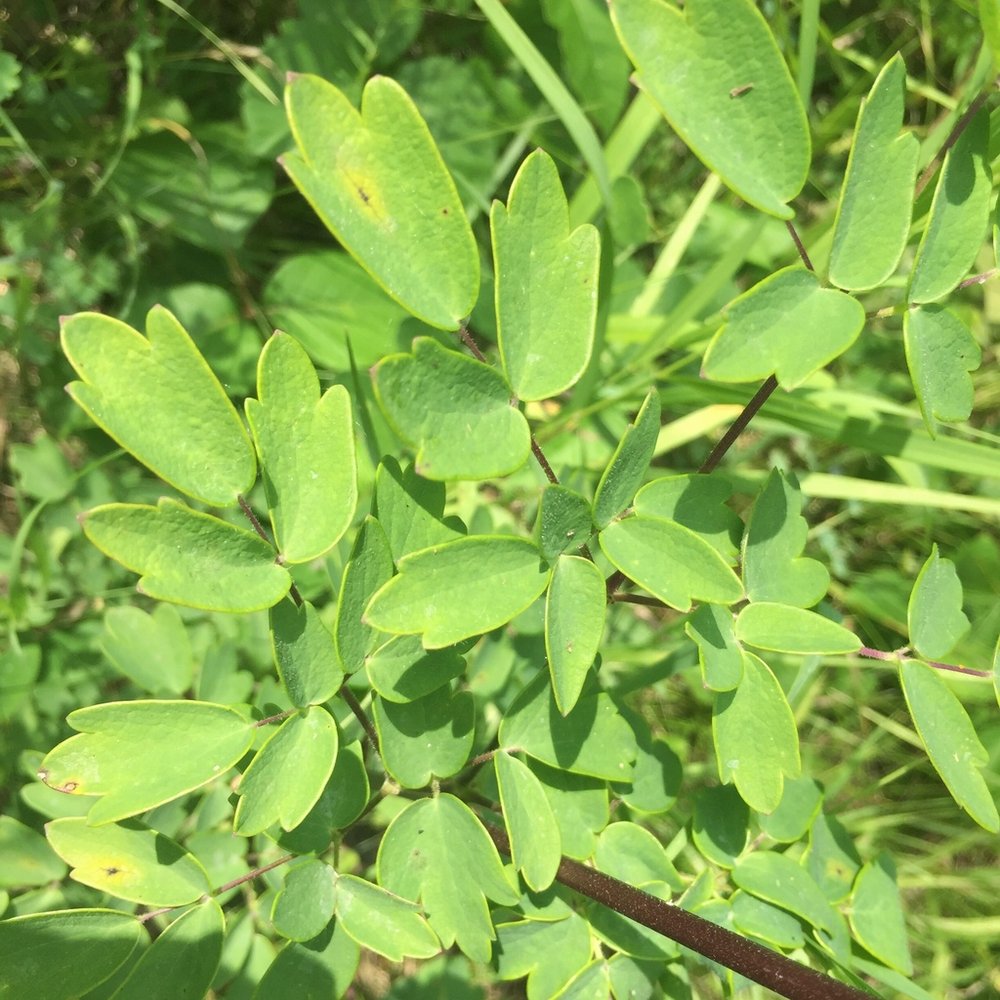
Look for a stout, leafy stem 40–150 cm (16–60 in) tall, often tinged purple, with most of its leaves along the stem. The leaves are divided into threes three to five times; each leaflet is about 2.5 cm (1 in) long, with two or three pointed, untoothed lobes at the tip, and is hairy underneath. The flowers have no petals and are about 8 mm (⅓ in) across, with greenish-white sepals that drop early, in large branching clusters at the top. Male plants carry tassels of dangling pale stamens with yellow tips; female plants carry heads of thread-like white pistils that ripen into ribbed seeds. Veiny Meadow-rue (Thalictrum venulosum), which also grows in the Black Hills, is a smaller plant with leaflets of three to five lobes. Waxyleaf Meadow-rue (Thalictrum revolutum) has more densely glandular-hairy leaf stalks and flower branches, more prominent leaf veins and a foul smell.
When does it bloom?
June and July.
Where does it grow?
Streambanks and floodplains, wet thickets and copses, deciduous woods along creeks, bur oak and spruce woods near water, and wet meadows. The National Park Service lists it at Wind Cave, Mount Rushmore and Devils Tower, and herbarium specimens come from Lawrence, Pennington, Meade, Fall River and Custer counties and from Crook and Weston counties, Wyoming.
Buttercup family (Ranunculaceae): 15 other plants in this guide
Sources: Flora of North America (efloras.org): Thalictrum dasycarpum; Minnesota Wildflowers: Thalictrum dasycarpum (Tall Meadow Rue); SDSU Open PRAIRIE, South Dakota Native Plant Research: Thalictrum dasycarpum; Lady Bird Johnson Wildflower Center: Thalictrum dasycarpum; USDA PLANTS Database: Thalictrum dasycarpum (THDA); NPSpecies checklist, Wind Cave National Park vascular plants; NPSpecies checklist, Mount Rushmore National Memorial vascular plants; NPSpecies checklist, Devils Tower National Monument vascular plants; GBIF occurrence search: Thalictrum dasycarpum, South Dakota and Wyoming herbarium specimens; Culturally Important Plants of the Lakota (Black Elk and Flying By, 1998), entry 300.