Meadow Anemone Anemone canadensis
Also called Canada Anemone, Canadian Anemone, Round-leaf Thimbleweed, Windflower, waȟpé owáŋyaŋg wašté (Lakota)
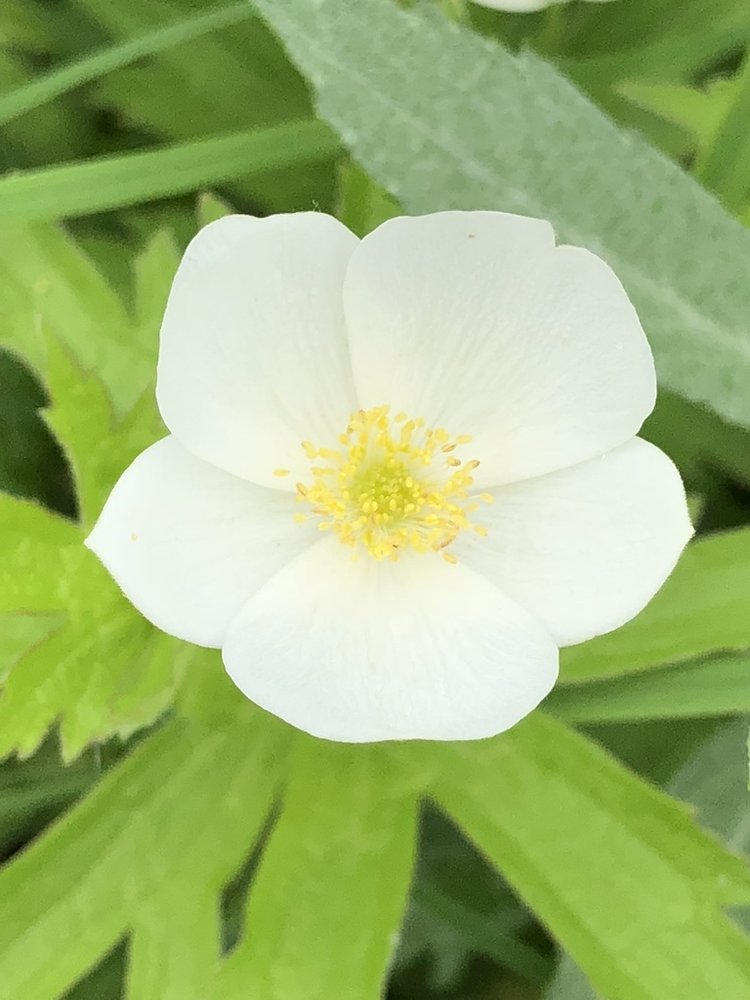
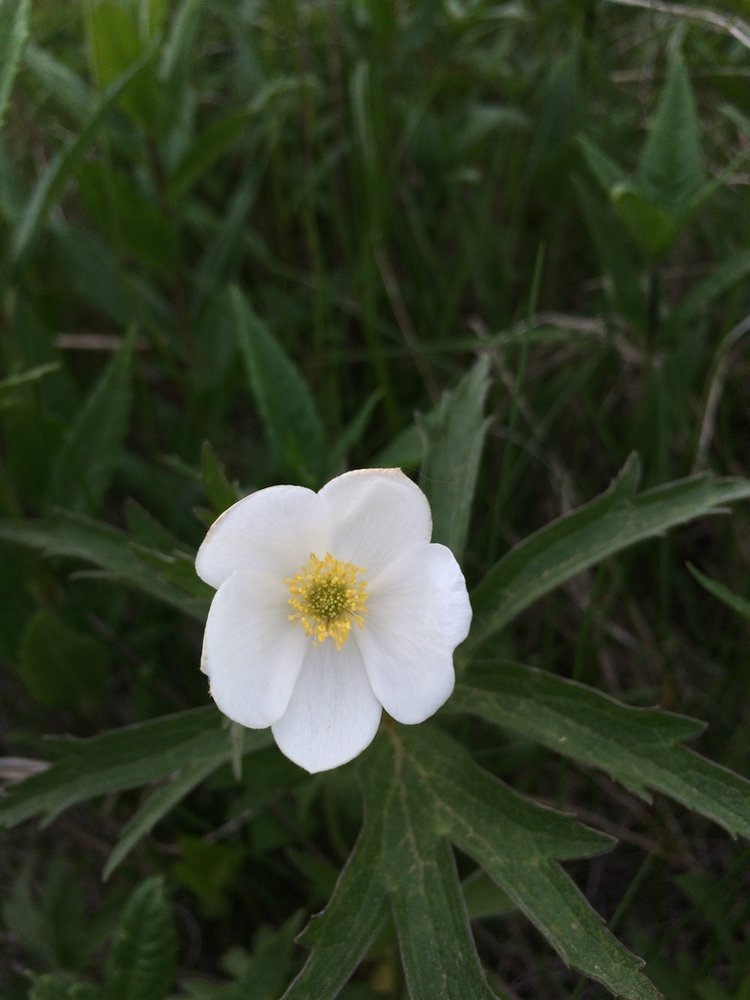
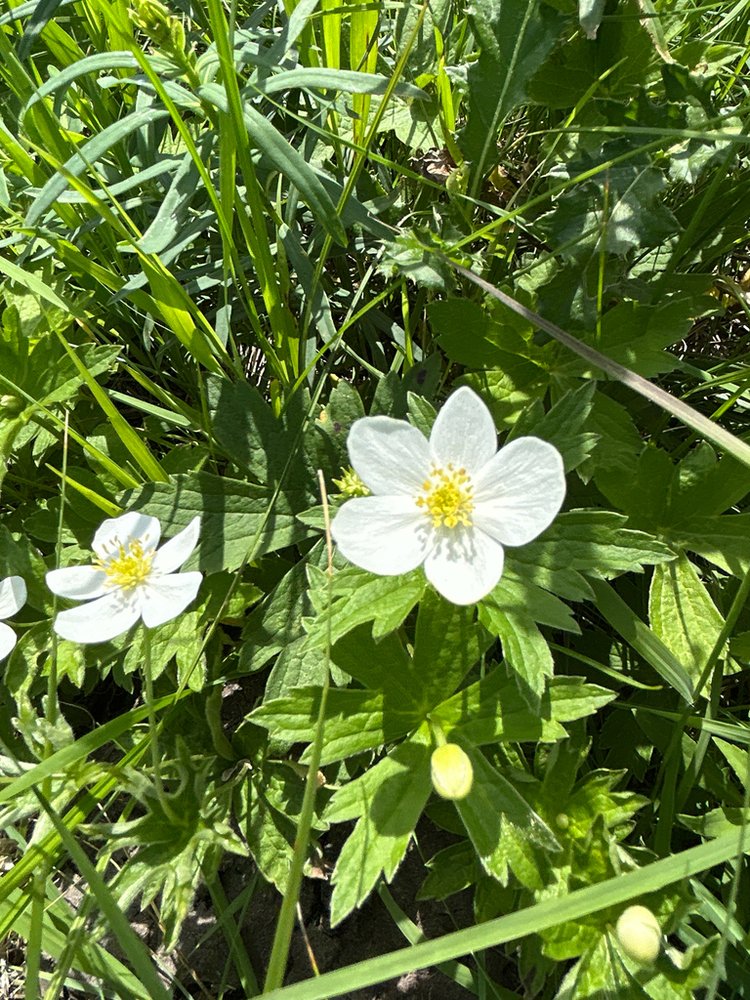
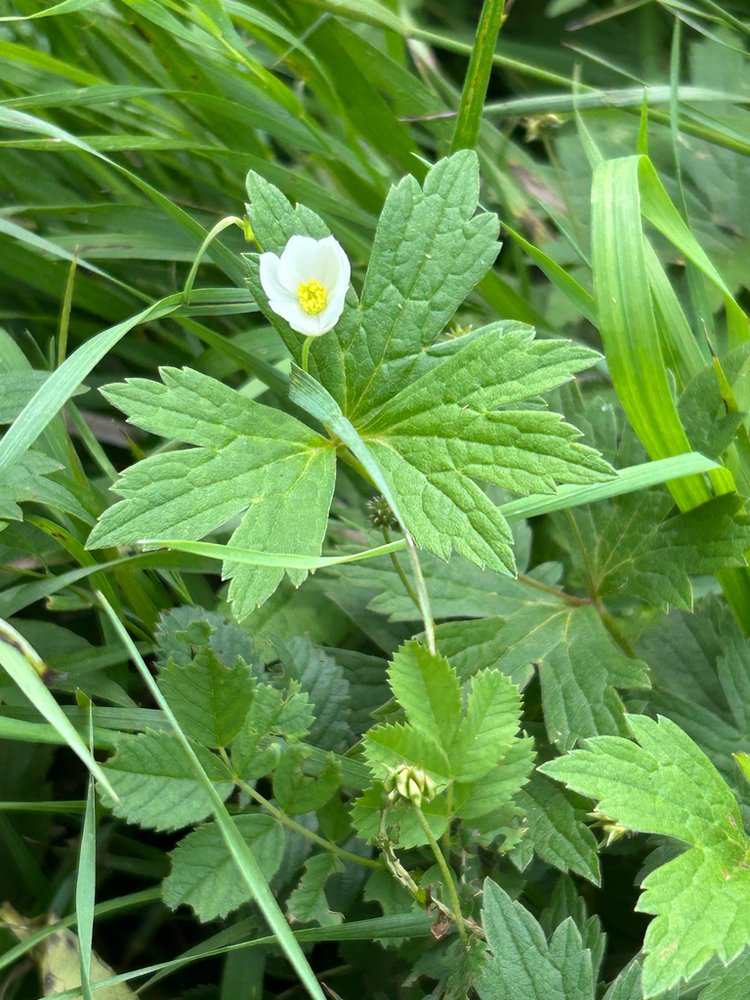
Meadow Anemone (Anemone canadensis), also called Canada Anemone, is a native perennial with white flowers 2.5–4 cm (1–1½ in) across, made of 5 petal-like sepals around a ring of yellow-tipped stamens, above deeply cut, hand-shaped leaves. It blooms from May into July in moist fields, thickets and along shores. Its Black Hills record is thin: one herbarium specimen from a roadside meadow in Pennington County (1992), two 1947 specimens from a garden in Lawrence County, and no mention on the plant lists of Wind Cave, Jewel Cave, Mount Rushmore or Devils Tower.
Free photos from other sources
| Family | Ranunculaceae · Buttercup |
|---|---|
| Status | Native perennial |
| Blooms | May into July |
| Height | 30–60 cm (12–24 in) |
| Where | Moist fields, thickets, ditches and shores, in sun or part shade |
| Also called | Canada Anemone, Canadian Anemone, Round-leaf Thimbleweed, Windflower, waȟpé owáŋyaŋg wašté (Lakota) |
| Synonym | Anemonidium canadense |
| Toxicity | All parts of the fresh plant are poisonous, though only if eaten in large quantities, and the fresh sap can blister skin (Lady Bird Johnson Wildflower Center, citing Poisonous Plants of North Carolina). |
| Traditional use | Black Elk and Flying By 1998 (entry 18) say the Lakota use the root to stop bleeding, for lower back pain and as an eye wash, and eat it to clear the throat for good singing. Moerman's ethnobotany database (BRIT) records that the Omaha and Ponca highly esteemed it as a medicine, taken and applied externally (Gilmore 1919), and that the Ojibwa ate the root to clear the throat so one could sing well in ceremonies (Smith 1932). |
| Note | The Black Hills record for this plant is thin: one herbarium specimen collected in the wild (1992), two 1947 specimens from a garden, and two research-grade iNaturalist records. |
Roots, seeds & germination
Root: It spreads by rhizomes (underground stems) and can form large colonies (Minnesota Wildflowers; Missouri Plants).
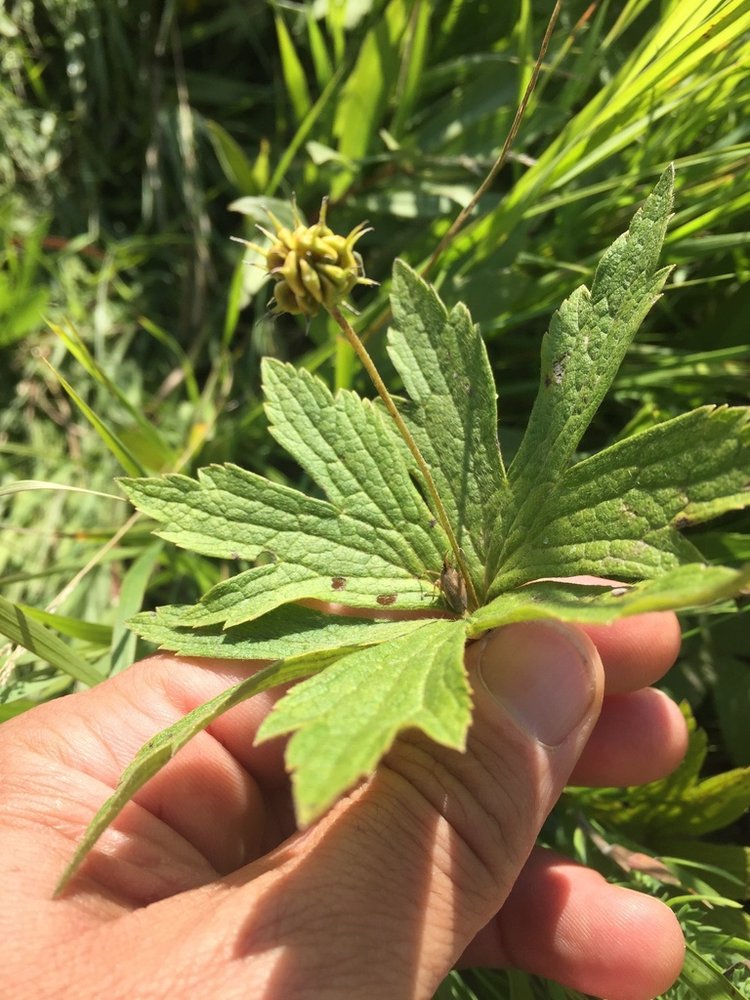
Seed: The fruit is a round head of flattened, oval, hairy seeds (achenes), each with a beak 3–6 mm (⅛–¼ in) long (Minnesota Wildflowers; Missouri Plants).
How do you identify Meadow Anemone?
Look for a perennial 30–60 cm (1–2 ft) tall with erect, sparsely hairy stems, spreading by rhizomes (underground stems) into colonies. There are 1 to 5 long-stalked basal leaves, roundish in outline, 8–15 cm (3–6 in) long, deeply divided into 3 to 5 wedge-shaped lobes that are cut again and coarsely toothed. Higher on the stem is a whorl of 3 stalkless leaves, about 13 cm (5 in) across, much like the basal ones. One to three long-stalked flowers rise from the whorl, each 2.5–4 cm (1–1½ in) across, with 5 white petal-like sepals (there are no true petals), many yellow-tipped stamens around a small green center, and hairy flower stalks (Minnesota Wildflowers; Missouri Plants). The fruit is a round head 8–11 mm (about ⅓ in) across of flattened, hairy seeds, each with a beak 3–6 mm (⅛–¼ in) long (Minnesota Wildflowers; Missouri Plants). Missouri Plants lists the thimbleweeds, Anemone virginiana and Anemone cylindrica (the guide's Candle Anemone), as broadly similar plants.
When does it bloom?
May into July.
Where does it grow?
Moist fields, thickets and shores in sun or part shade (Minnesota Wildflowers); the Lady Bird Johnson Wildflower Center gives ditches, damp meadows and sandy shores, and Missouri Plants adds floodplains, bottomland forests and roadsides. Its record in the Black Hills is thin. GBIF holds 112 preserved specimens from South Dakota, most from the eastern half of the state, and only 3 from the Black Hills. Two were collected on the same day in 1947 in Lawrence County from a garden; one label says the plant was taken from the wild and planted there. The third was collected in 1992 in Pennington County, from a roadside in a meadow beside a creek. GBIF's 6 Wyoming specimens all come from southeastern Wyoming, none from Crook or Weston County. None of the plant lists of Wind Cave National Park, Jewel Cave National Monument, Mount Rushmore National Memorial or Devils Tower National Monument names it, and neither does the 1986 survey of Jewel Cave's vegetation (it lists the thimbleweed, Anemone cylindrica, and two other anemones). iNaturalist has 2 research-grade Black Hills records (filed as Anemonastrum canadense), both from June. It isn't on South Dakota's state noxious weed list or its locally noxious (county) list, or on Wyoming's state designated weed list or weed-seed lists.
Other anemones in this guide
Buttercup family (Ranunculaceae): 15 other plants in this guide
Sources: Minnesota Wildflowers: Anemone canadensis (Canada Anemone); Missouri Plants: Anemone canadensis (White Anemone); Lady Bird Johnson Wildflower Center: Anemone canadensis (Canadian Anemone); USDA PLANTS Database: Anemone canadensis (ANCA8), native in the lower 48 states; USDA PLANTS Database: synonyms of Anemone canadensis (ANCA8); Native American Ethnobotany Database (BRIT): Anemone canadensis; Culturally Important Plants of the Lakota (Black Elk and Flying By, Sitting Bull College, 1998), entry 18; GBIF occurrence search: Anemone canadensis, South Dakota (112 preserved specimens) and Wyoming (6); iNaturalist: Anemonastrum canadense (Anemone canadensis) observations in the Black Hills; NPSpecies checklist, Wind Cave National Park (vascular plants); NPSpecies checklist, Jewel Cave National Monument (vascular plants); NPSpecies checklist, Mount Rushmore National Memorial (vascular plants); NPSpecies checklist, Devils Tower National Monument (vascular plants); A Survey of the Vegetation of Jewel Cave National Monument (Marriott and Hartman, University of Wyoming, 1986); South Dakota DANR: State Noxious Weed and Pest List; South Dakota DANR: Locally Noxious Weed and Pest List (county designations, PDF); Wyoming Weed and Pest Council: Identify Weeds (state designated weeds); Wyoming rule 010-63 Wyo. Code R. 63-3: Prohibited Noxious Weeds (weed-seed list); Wyoming rule 010-63 Wyo. Code R. 63-4: Restricted Noxious Weeds (weed-seed list).