Paper Birch
Betula papyrifera
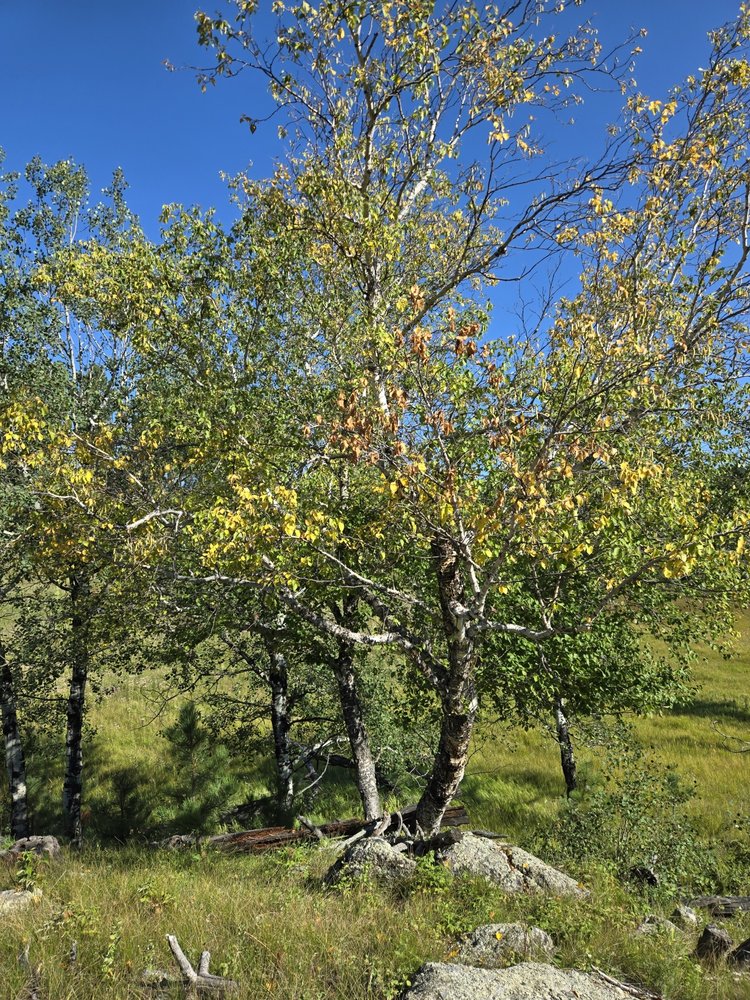
Paper Birch (Betula papyrifera) is a native, short-lived deciduous tree whose chalky white bark peels off in thin, papery strips and whose leaves turn bright gold in late September. In the Black Hills it grows in cool, moist canyons and on shaded north slopes, mostly mixed in with quaking aspen, and it sheds pollen from long, hanging catkins in late April and May as the leaves open.
Free photos from other sources
| Family | Betulaceae · Birch |
|---|---|
| Status | Native tree |
| Blooms | Catkins late April into May, as the leaves open |
| Height | 3–24 m (10–80 ft) |
| Where | Cool, moist canyons, north slopes and spring-fed draws, usually with aspen |
| Also called | White Birch, Canoe Birch, Paperbark Birch, čhaŋhásaŋ (Lakota) |
| Synonym | Betula papyrifera var. papyrifera, Betula papyracea, Betula papyrifera var. commutata, Betula papyrifera var. subcordata |
| Traditional use | Sitting Bull College's 1998 Culturally Important Plants of the Lakota says shredded bark was bound together to make torches, and the bark was formed into containers to collect and hold maple sap. |
Roots, seeds & germination
Root: Shallow roots, most in the top 60 cm (24 in) of soil, with no taproot. Cut or burned trees resprout from the stump and root collar, though this ability fades with age.
Seed: A tiny two-winged nutlet, carried by the wind mostly within 30–60 m (100–200 ft) of the parent tree. Most seed falls from September through November, and the rest drifts onto the snow through the winter. Many seeds are empty.
Germination: Fresh seed needs no pretreatment if it gets light at 20–25°C (68–77°F); seed kept in the dark sprouts only after a cold, moist treatment. It does best on bare mineral soil, and light shade helps the tiny seedlings keep from drying out. USDA recommends sowing seed on the surface as soon as it is ripe.
How do you identify Paper Birch?
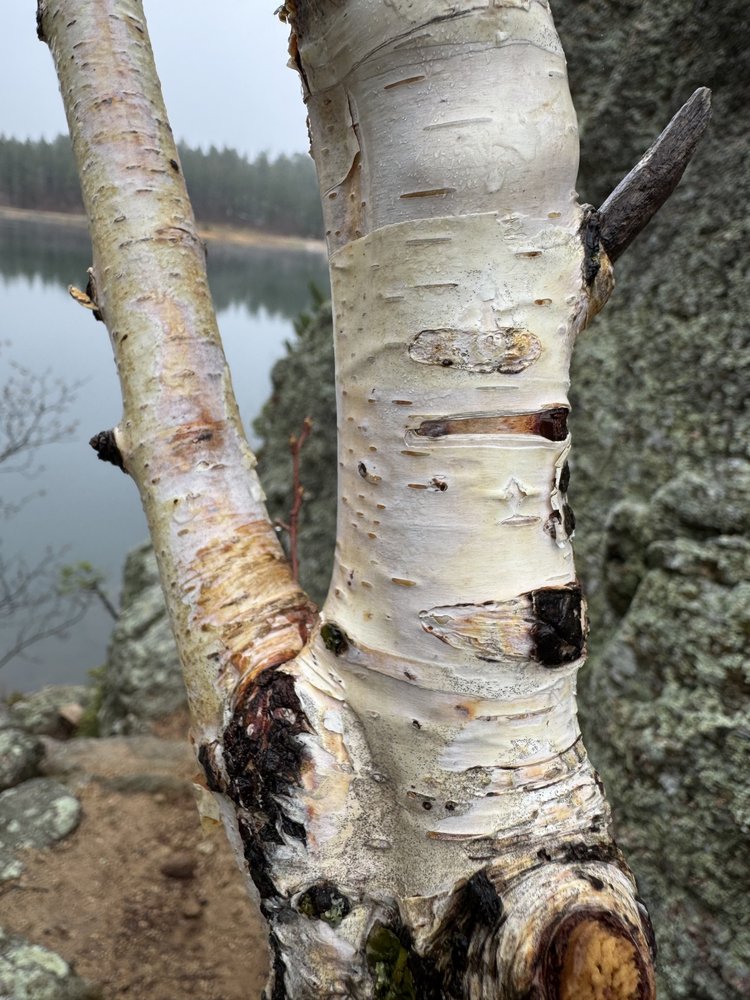
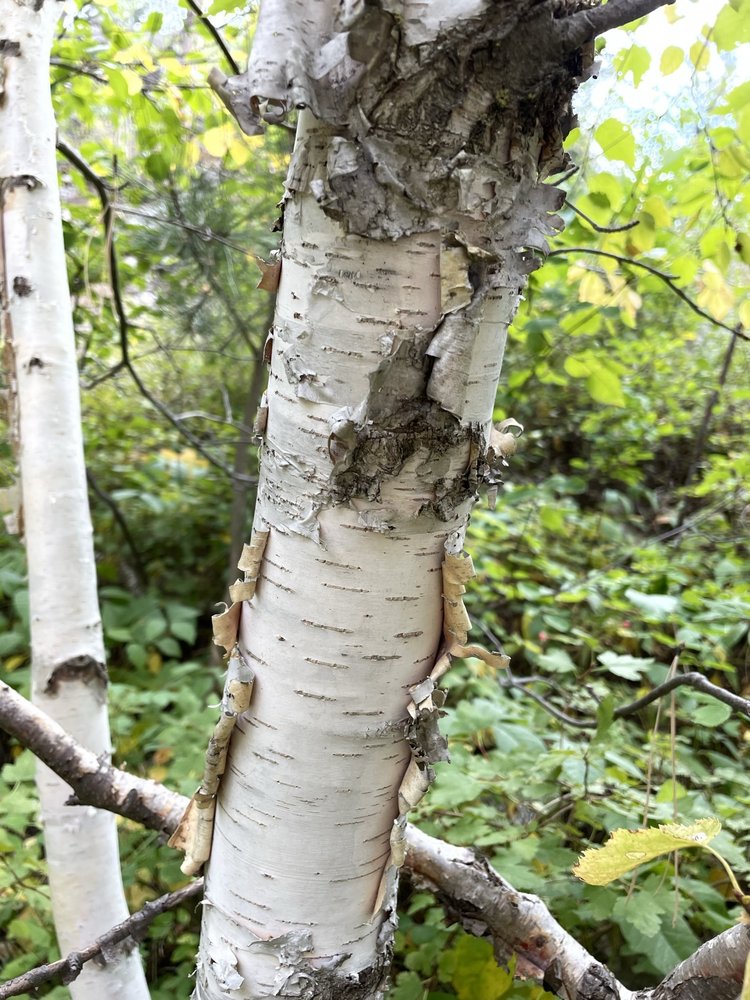
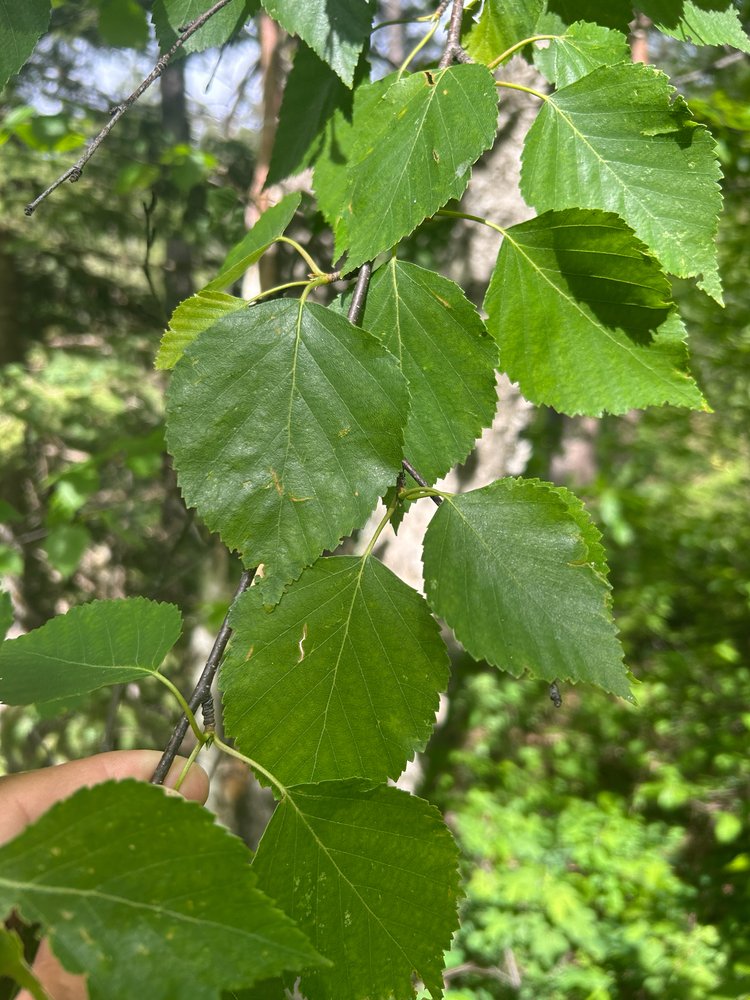
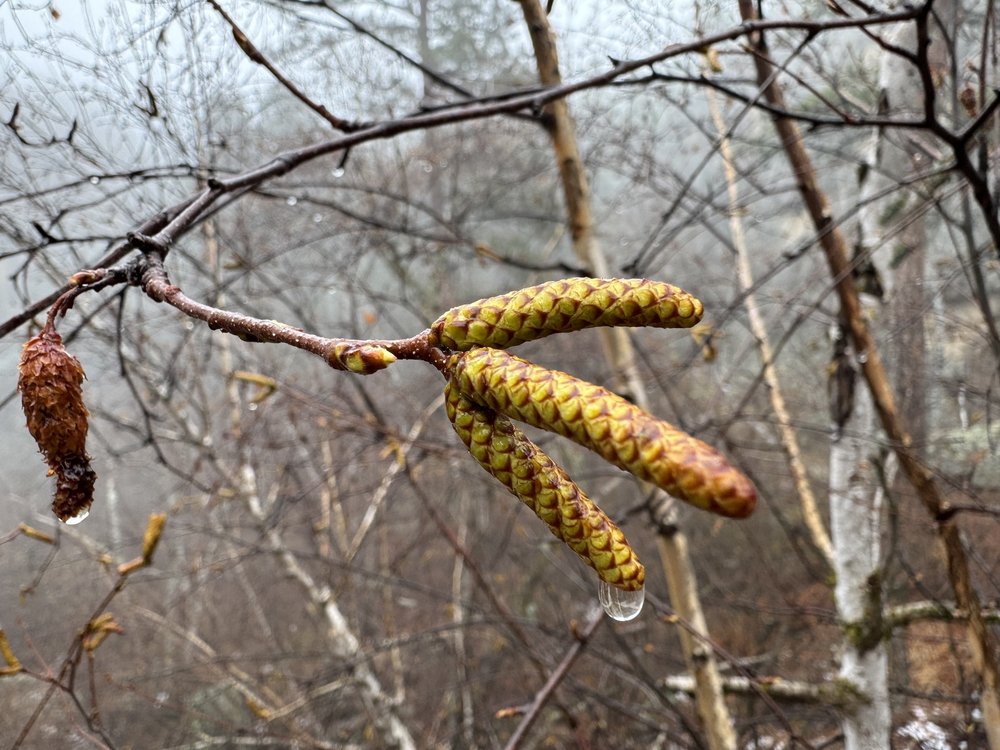
Look for chalky white bark that peels in thin horizontal sheets, marked with short, dark horizontal lines, with orange to pink bark underneath; saplings stay dark reddish-brown until about age 10–12. The leaves are egg-shaped with a sharp tip, 5–10 cm (2–4 in) long, with uneven double teeth on a round leaf stalk. In fall, small cone-like seed catkins crumble into winged seeds and three-lobed scales. Quaking Aspen bark is smooth, greenish-white and doesn't peel, and its nearly round leaves tremble on flattened stalks. Water Birch, along creeks, has shiny reddish-brown to nearly black bark that rarely peels.
When does it bloom?
Catkins late April into May, as the leaves open.
Where does it grow?
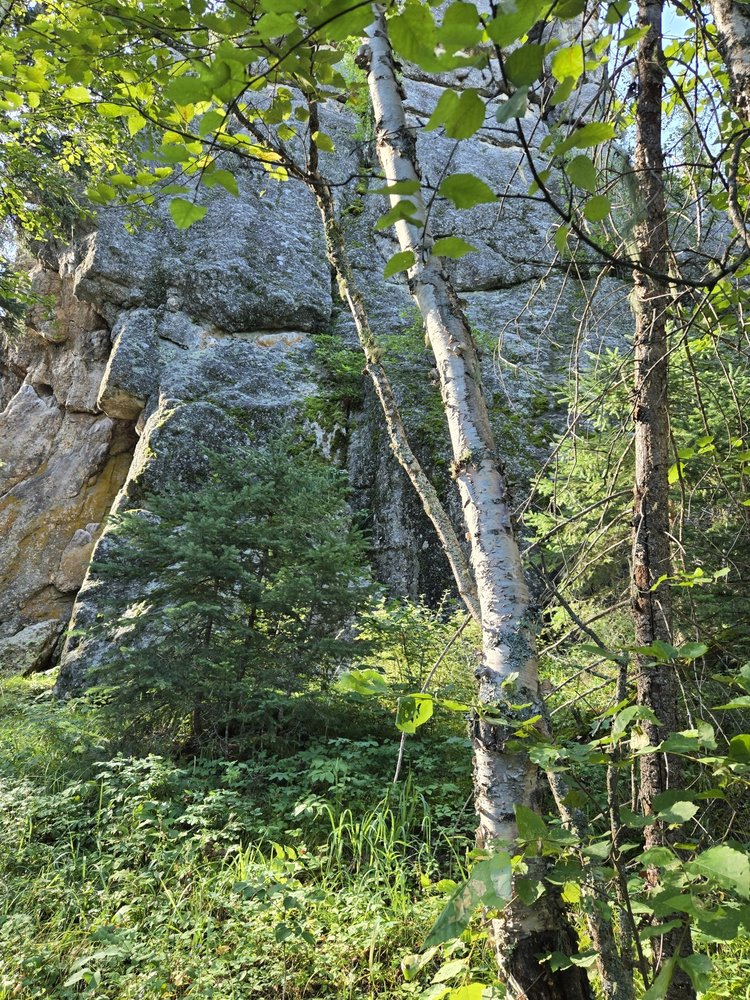
Cool, moist sites: canyon bottoms and walls, north-facing slopes, spring-fed draws and the edges of white spruce forest, mostly in the northern and central Hills, at about 1,080–2,050 m (3,550–6,700 ft). It grows most often with Quaking Aspen and beaked hazelnut, often as a shorter tree under the aspen. The National Park Service lists it for Wind Cave, Jewel Cave and Mount Rushmore, and about 200 herbarium specimens come from six Black Hills counties, most from Lawrence County and Spearfish Canyon, where birch and aspen give the canyon its fall gold. The Black Hills hold one of several scattered outlying populations south of its main northern range.
Other plants to compare
Sources: Safford, L.O., Bjorkbom, J.C. & Zasada, J.C. 1990. Paper birch. Silvics of North America, vol. 2, Hardwoods. USDA Agric. Handb. 654 (PDF via Virginia Tech); USDA Forest Service Fire Effects Information System (FEIS): Betula papyrifera; USDA Forest Service Fire Effects Information System (FEIS): Betula occidentalis (Gucker 2012); USDA NRCS Plant Guide: Paper Birch, Betula papyrifera; Hoffman, G.R. & Alexander, R.R. 1987. Forest vegetation of the Black Hills National Forest of South Dakota and Wyoming: a habitat type classification. USDA Forest Service Research Paper RM-276; USGS/NatureServe U.S. National Vegetation Classification: CEGL002079 Paper Birch / Beaked Hazelnut Forest; Marriott, H. & Hartman, R.L. 1986. A Survey of the Vegetation of Jewel Cave National Monument; Rydberg, P.A. 1896. Flora of the Black Hills of South Dakota. Contributions from the U.S. National Herbarium 3(8); NPSpecies checklist, Wind Cave National Park vascular plants; NPSpecies checklist, Jewel Cave National Monument vascular plants; NPSpecies checklist, Mount Rushmore National Memorial vascular plants; NPSpecies checklist, Devils Tower National Monument vascular plants (paper birch not listed); GBIF occurrence search: Betula papyrifera, preserved specimens, South Dakota; GBIF occurrence search: Betula papyrifera, preserved specimens, Wyoming; GBIF occurrence search: Betula occidentalis (water birch), preserved specimens, South Dakota; GBIF occurrence search: Betula nigra (river birch), South Dakota (one specimen); ITIS: Betula papyrifera Marshall (TSN 19489), with synonyms; Minnesota Wildflowers: Betula papyrifera (Paper Birch); Maine Forest Service: Paper Birch (Forest Trees of Maine); Black Elk, L. & Flying By, W. 1998. Culturally Important Plants of the Lakota (entry 51, Betula papyrifera); Gilmore, M.R. 1919. Uses of Plants by the Indians of the Missouri River Region. 33rd Annual Report, Bureau of American Ethnology; Travel South Dakota: Fall Colors Viewing Guide; Visit Spearfish: Spearfish Canyon Fall Foliage; SDPB 2022: She loves her job as leaf reporter (Spearfish Canyon fall color timing; aspen and birch on Tinton Road); Silvics of North America: River birch, Betula nigra (Grelen 1990; native range); Black Hills Wildflowers: Quaking Aspen; iNaturalist: Betula papyrifera (taxon 49883).