Western Wallflower Erysimum asperum
Also called Plains Wallflower, waȟčá zí šičámna (Lakota)
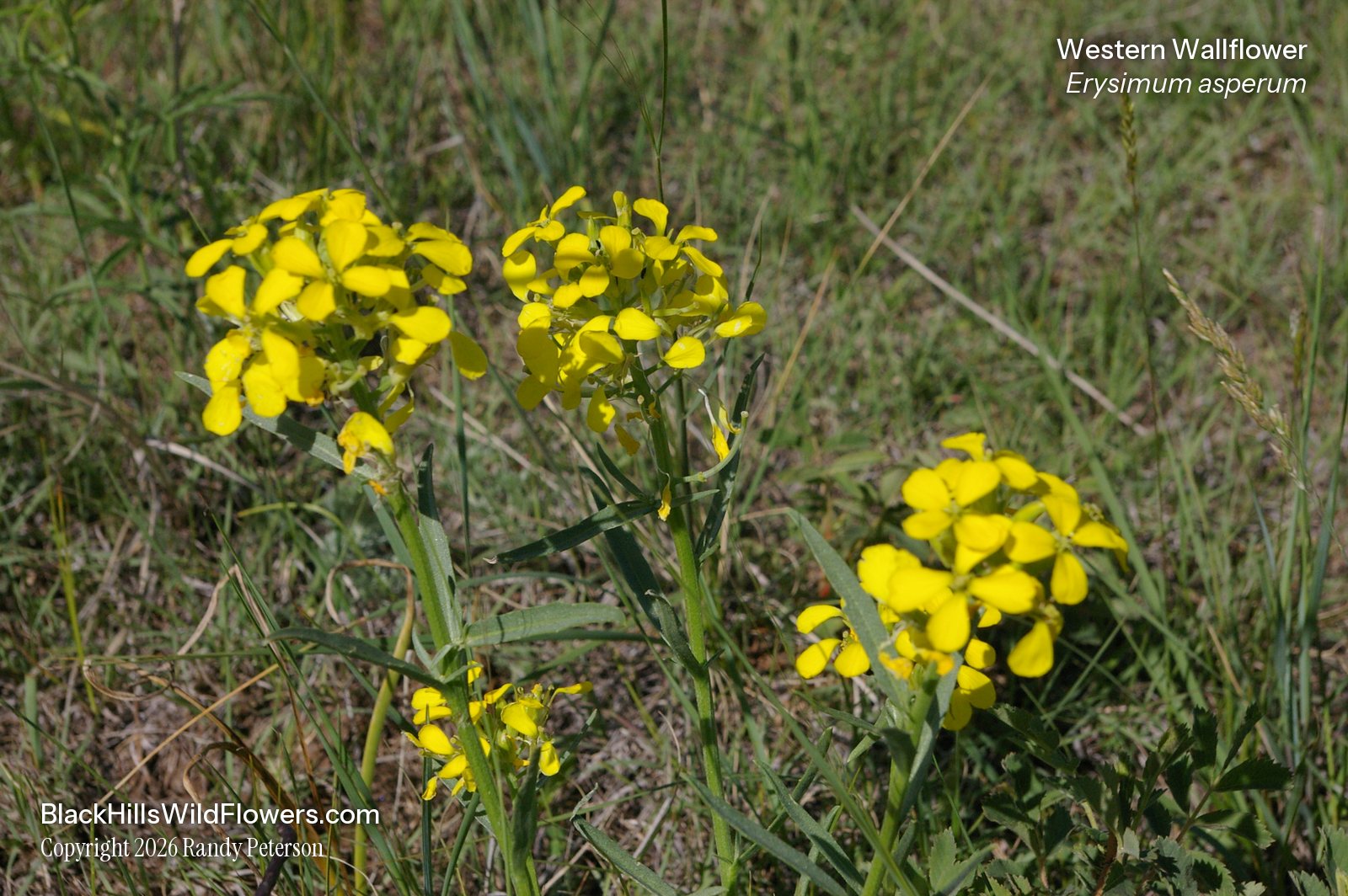
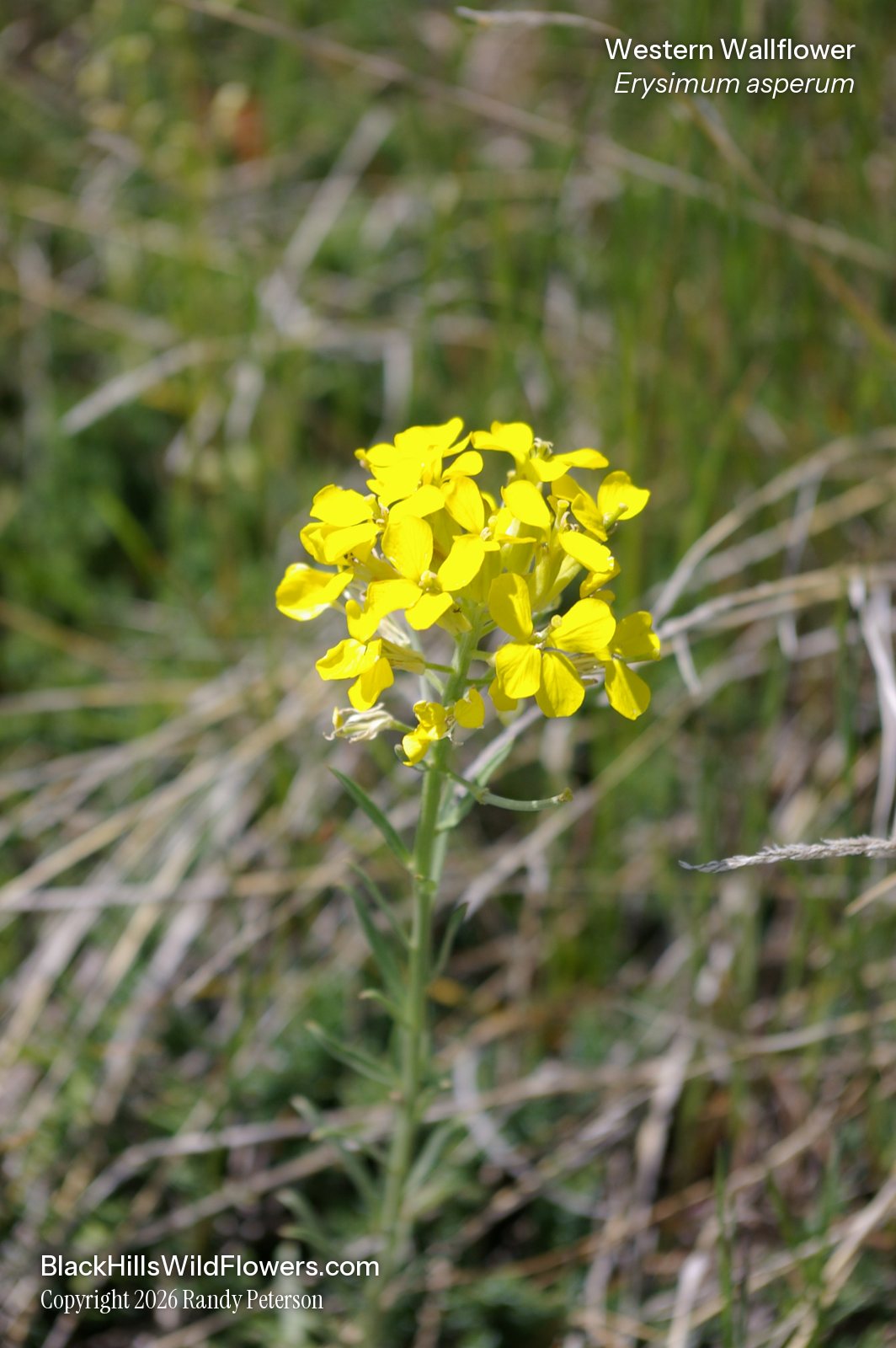
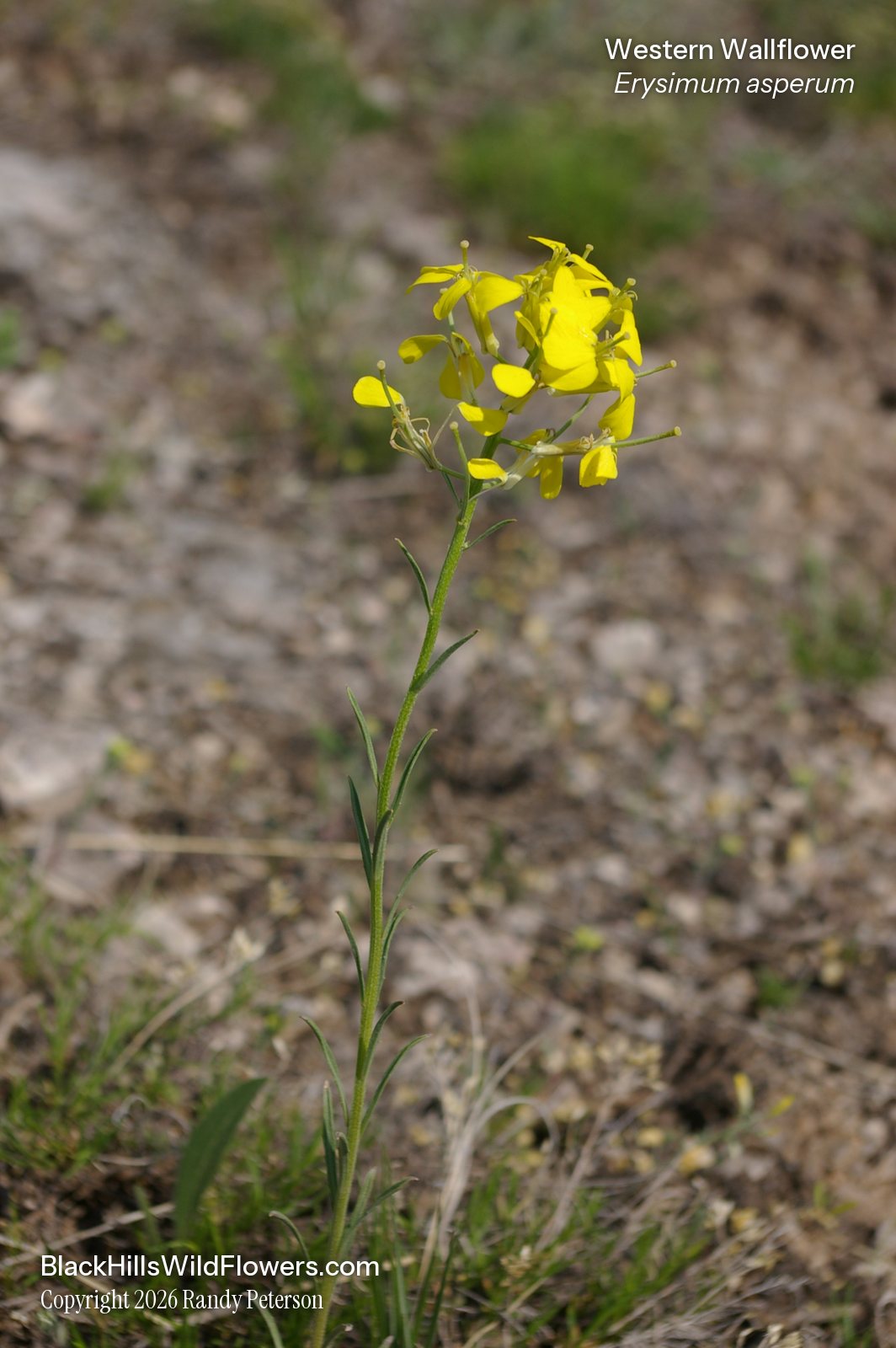
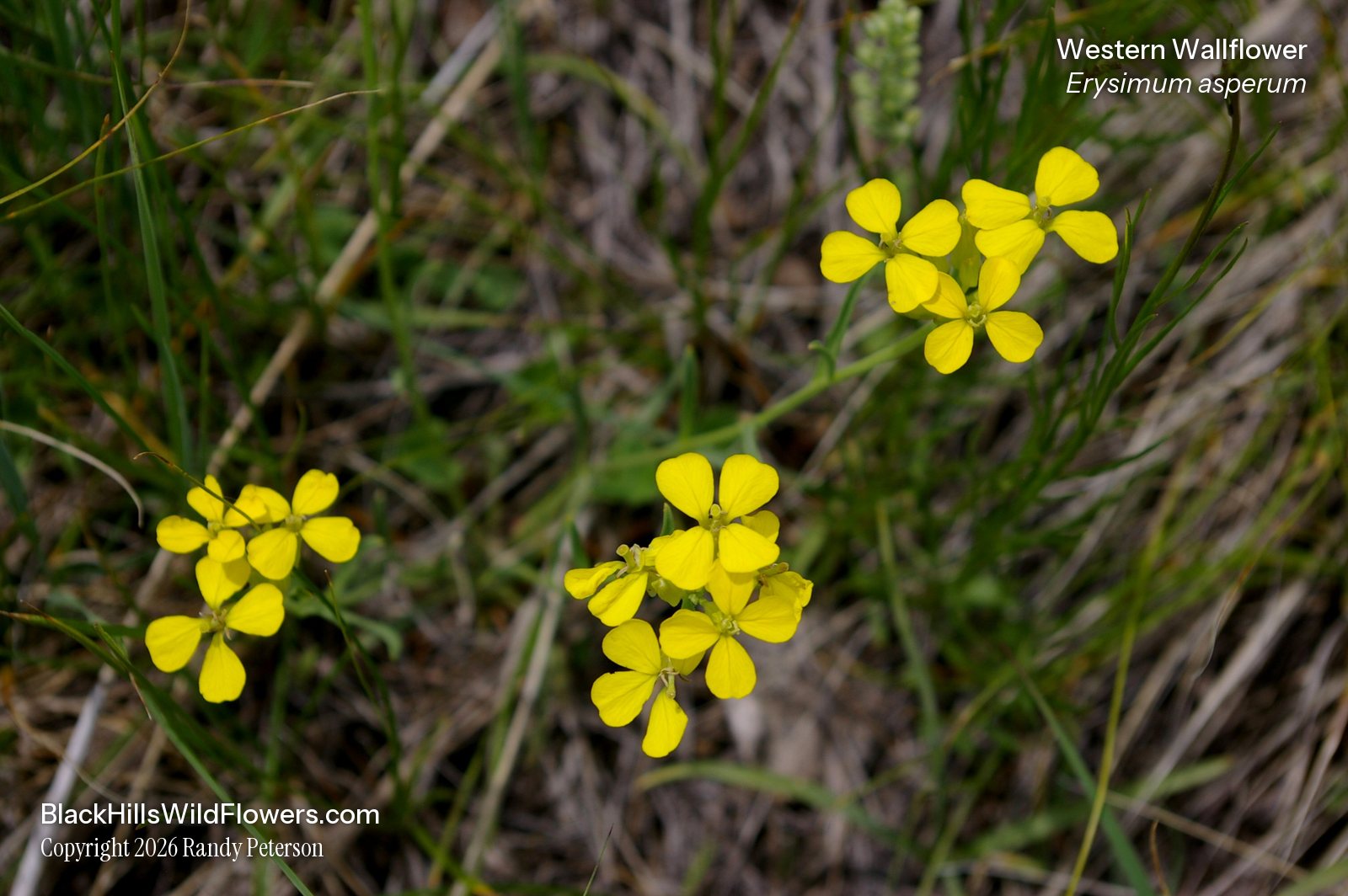
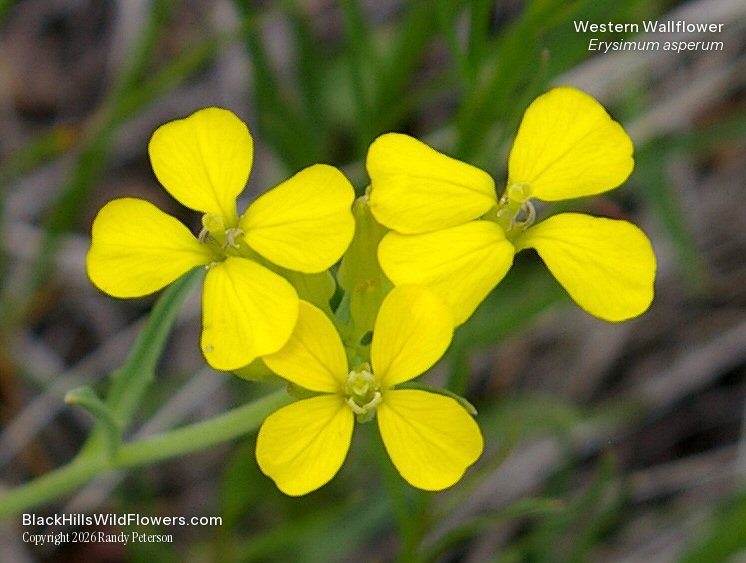
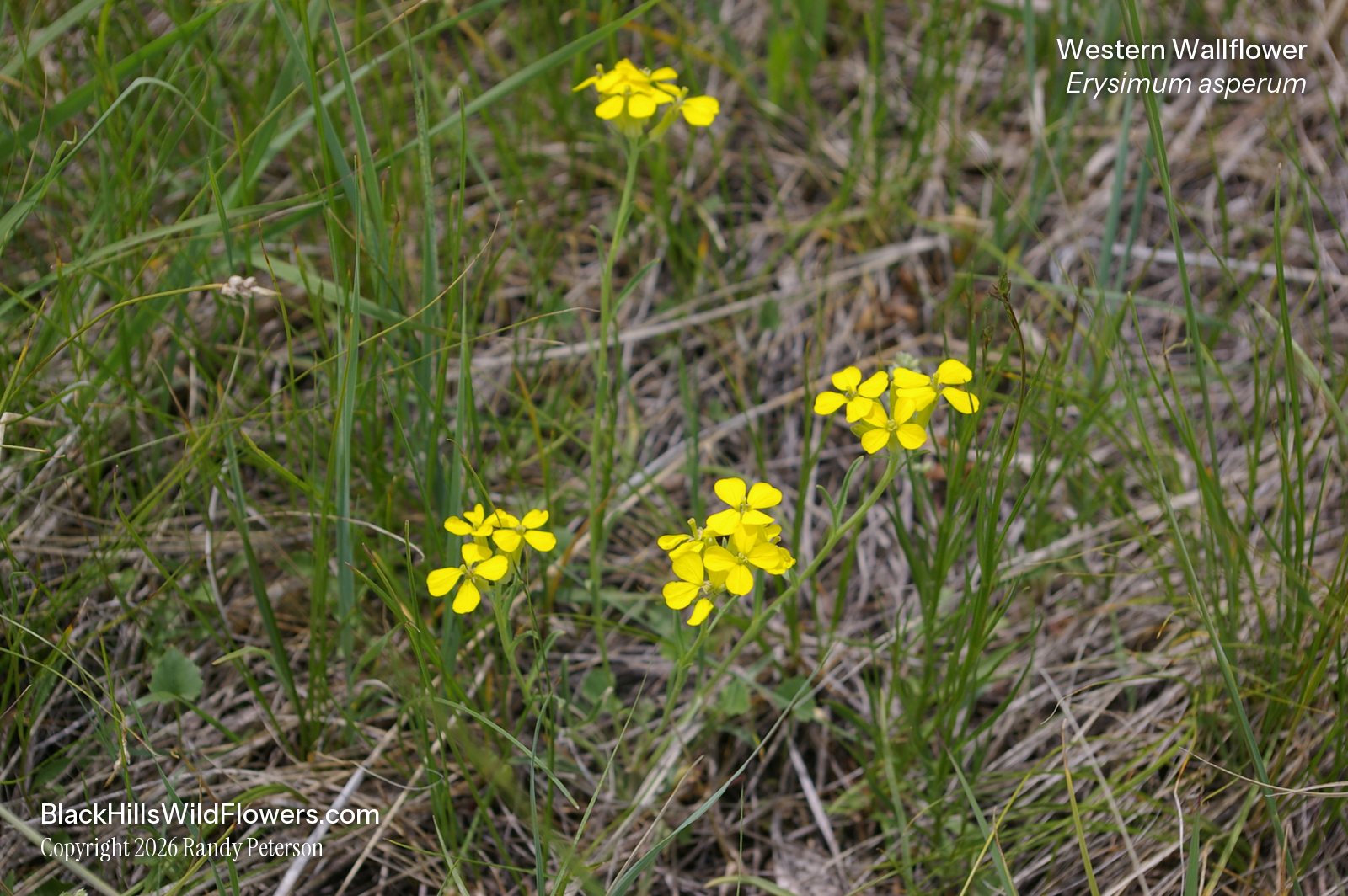
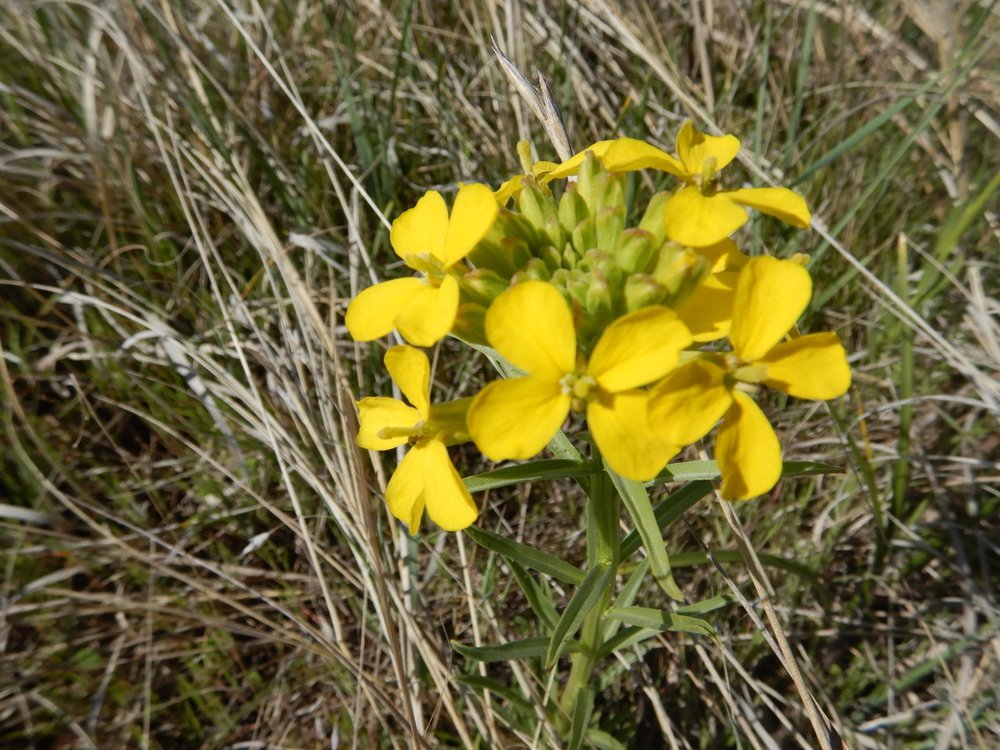
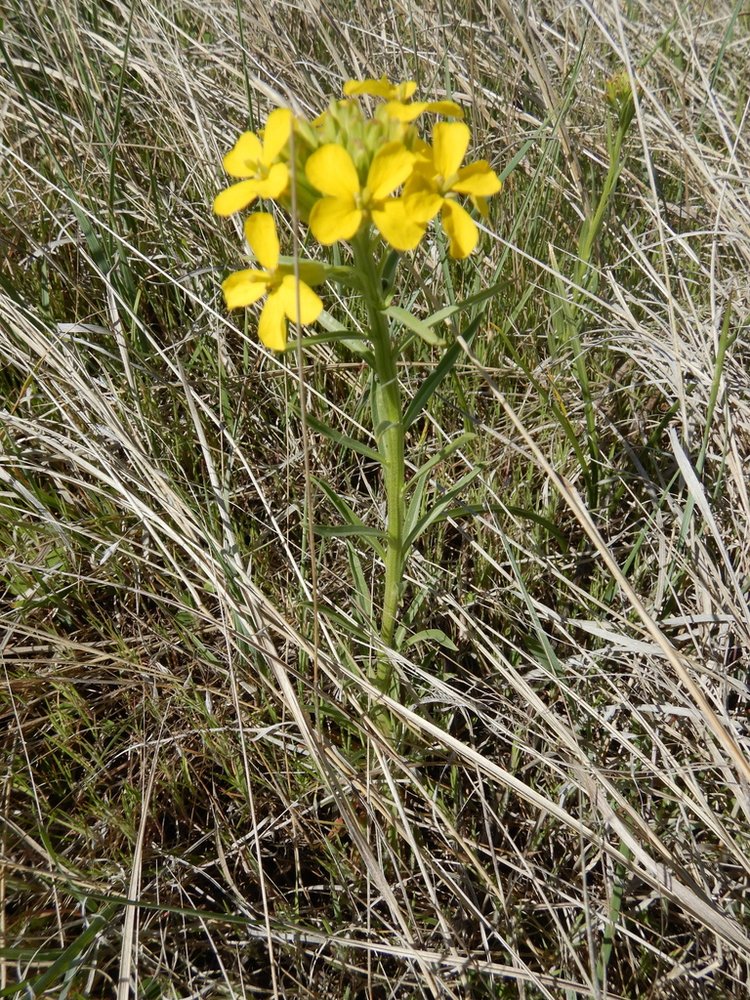
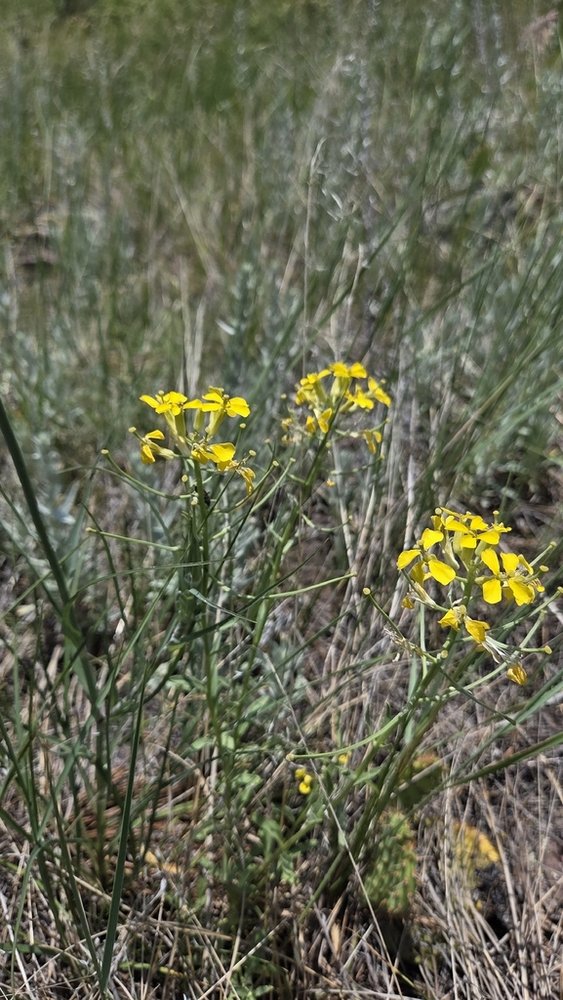
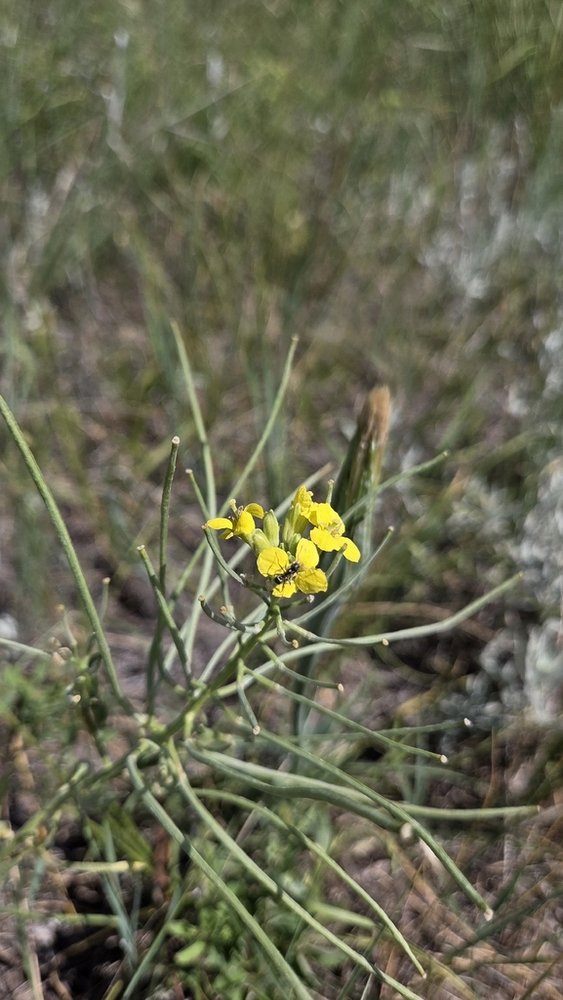
Western Wallflower (Erysimum asperum) is a native mustard with a usually single upright stem of narrow gray-green leaves topped by a dense, showy cluster of four-petaled yellow flowers, each about 2 cm (¾ in) across, from May into August, followed by long thin pods that stick out sideways. It lives two or a few seasons on dry prairie, roadsides, ridges and open pine in the Black Hills, where the National Park Service lists it at Wind Cave and Jewel Cave. Photographed in the Black Hills.
Free photos from other sources
| Family | Brassicaceae · Mustard |
|---|---|
| Status | Native biennial or short-lived perennial |
| Blooms | May into August |
| Height | 12–65 cm (5–26 in) |
| Where | Dry open prairie, pastures, sandhills, roadsides and road cuts, bluffs, ridges and open ponderosa pine |
| Also called | Plains Wallflower, waȟčá zí šičámna (Lakota) |
| Synonym | Cheirinia aspera, Cheiranthus asper |
| Traditional use | Black Elk and Flying By (1998) record that the Lakota dried and chewed the bitter foliage, or made an infusion of the whole plant, for stomach and bowel troubles such as dysentery, and drank crushed seeds in warm water for the same purpose. |
Roots, seeds & germination
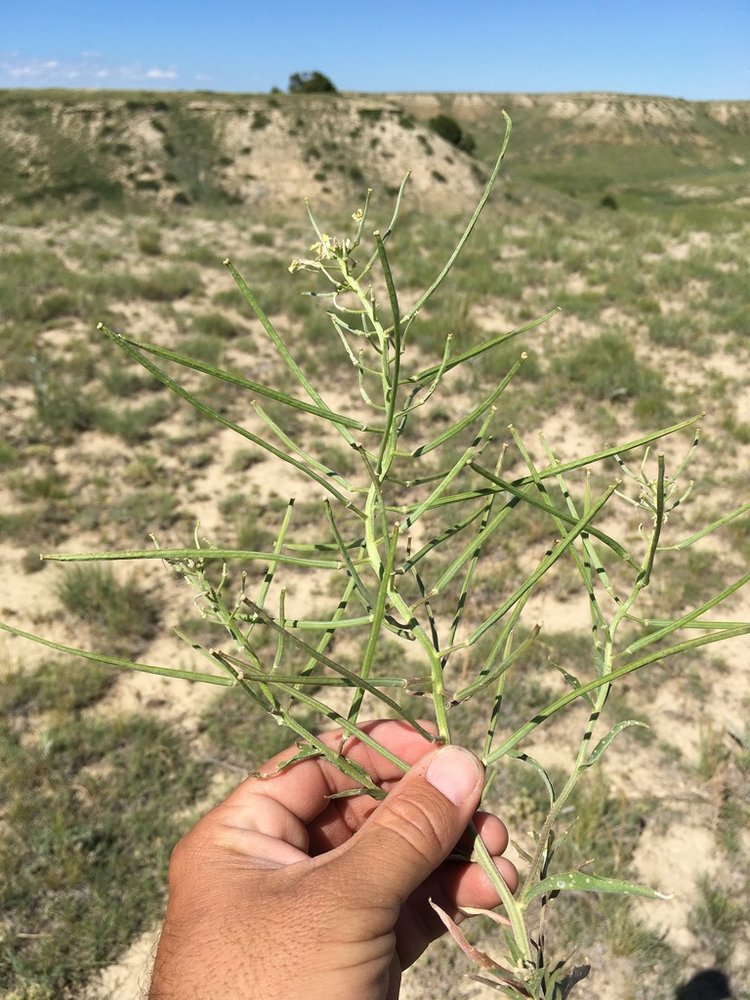
Seed: The pods are narrow, 5–12 cm (2–5 in) long, four-angled and hairy, with 72 to 120 ovules (unripe seeds) in each. The seeds are small, oblong to egg-shaped and brown, 1.3–2.3 mm long.
How do you identify Western Wallflower?
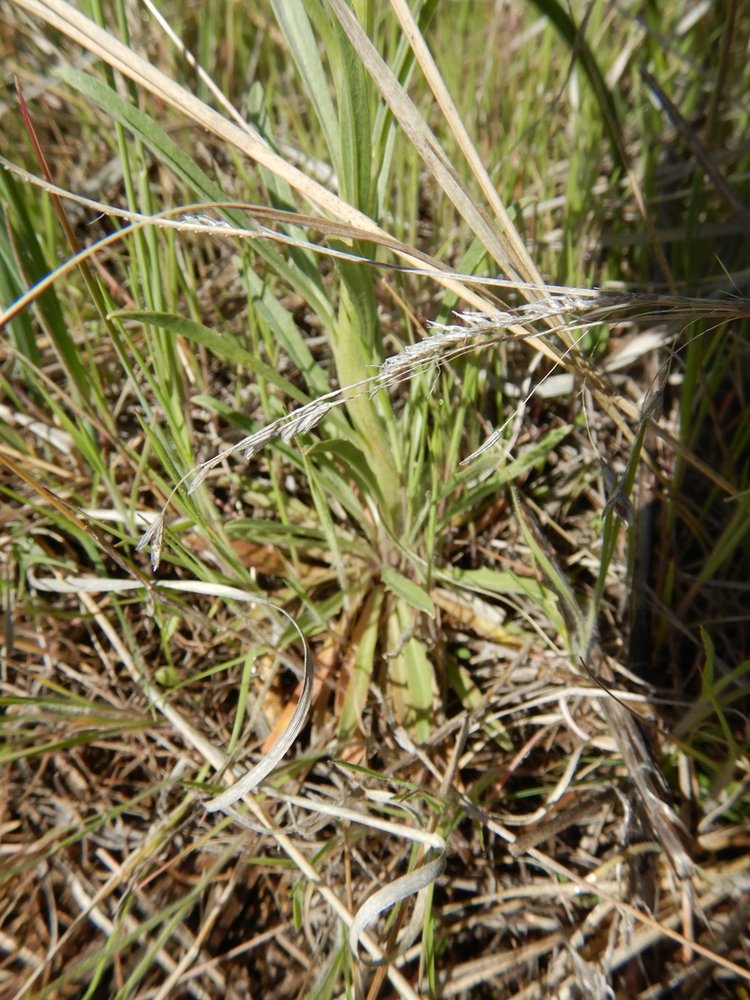
Look for one upright, ridged, rough-hairy stem, usually unbranched below the flowers, with narrow leaves densely covered in short, branched hairs that can make them look gray-green; the basal leaves have a few teeth and often wither by the time the pods form. The flowers crowd into a dense cluster at the top, each with four rounded yellow to orange-yellow petals 13–22 mm long and six stamens, about 2 cm (¾ in) across. The best mark comes after bloom: narrow, hairy, four-angled pods 5–12 cm (2–5 in) long that stand out sideways from the stem on short slender stalks, as the cluster stretches into a long spike. Minnesota Wildflowers says the large flowers and long pods set it apart from two other wallflowers on the Black Hills park lists, Wormseed Mustard and Small-flowered Wallflower. The Forest Service says the closely related Erysimum capitatum, which it also calls western wallflower, has erect pods, and that this plant replaces it on the Great Plains and differs mostly in its longer pods that spread sideways when ripe.
When does it bloom?
May into August.
Where does it grow?
Dry open prairie, pastures and sandhills, roadsides and road cuts, bluffs and knolls, rocky ridges and open ponderosa pine, in rocky or sandy soil. The National Park Service lists it at Wind Cave and Jewel Cave, the 1986 Jewel Cave plant survey records it, and Devils Tower's wildflower list gives its bloom as May to August. Herbarium specimens come from all five Black Hills counties in South Dakota and from Crook and Weston counties in Wyoming, from about 1,000 m (3,300 ft) to 1,850 m (6,070 ft). Their labels give a ridgeline and a ridge crest of pine and bur oak in Lawrence County, rocky slopes in Bear Butte State Park, the face of a limestone outcrop, open ponderosa pine on rocky soil, gravelly roadsides, open pine three years after the Jasper Fire, red clay prairie in Custer State Park, a stony slope in Wind Cave National Park and the grassy bank of a road cut.
Other mustards in this guide
Compare all 11 mustards side by side
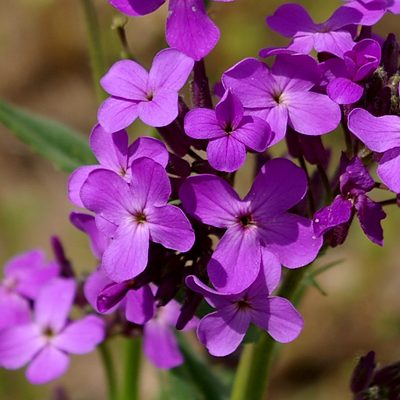
Dame's Rocket
Hesperis matronalis
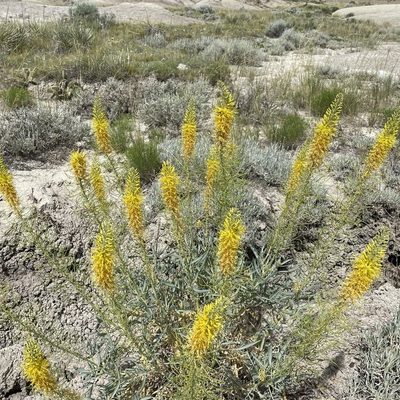
Desert Princeplume
Stanleya pinnata
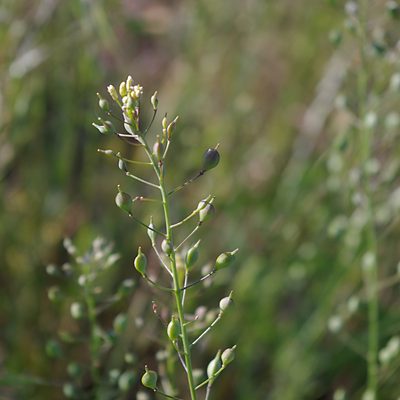
False Flax
Camelina microcarpa
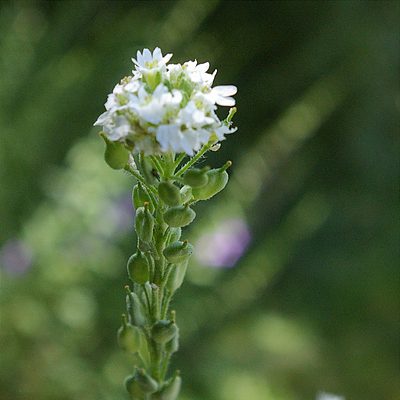
Hoary Alyssum
Berteroa incana
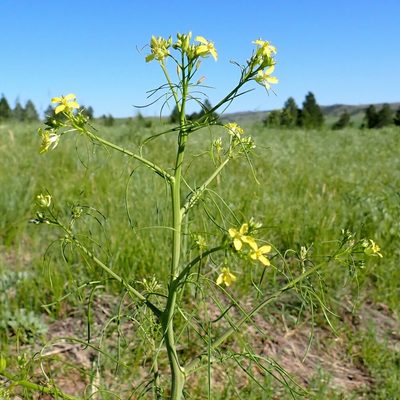
Mustard Tumbleweed
Sisymbrium altissimum
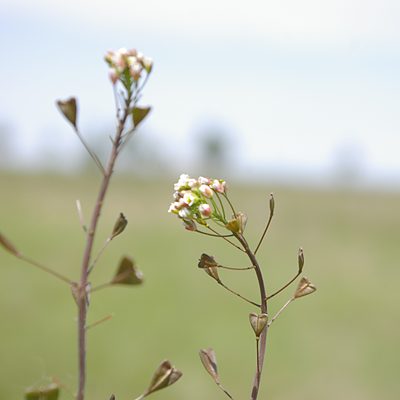
Shepherd's Purse
Capsella bursa-pastoris
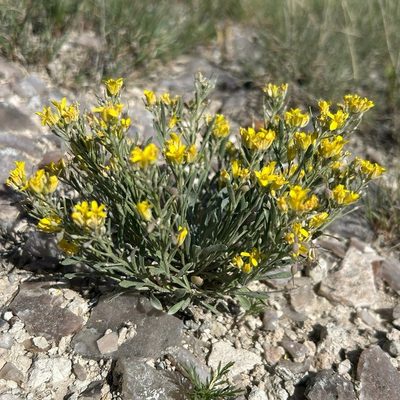
Sidesaddle Bladderpod
Lesquerella arenosa var. argillosa
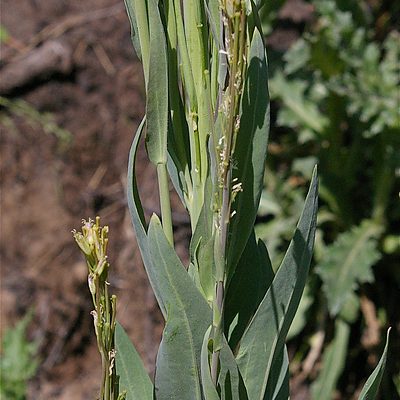
Tower Rockcress
Turritis glabra
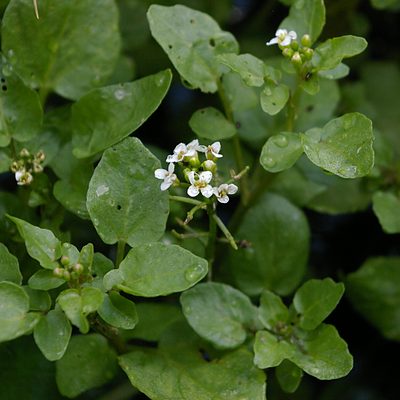
Watercress
Nasturtium officinale
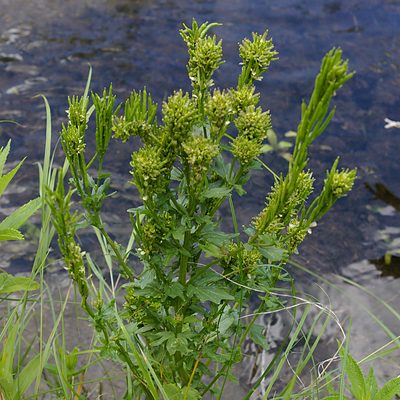
Wintercress
Barbarea orthoceras
Sources: Flora of North America vol. 7: Erysimum asperum — eFloras; Minnesota Wildflowers: Erysimum asperum (Western Wallflower); Kansas Wildflowers and Grasses: Erysimum asperum, western wallflower; Lady Bird Johnson Wildflower Center: Erysimum asperum (ERAS2); ITIS: Erysimum asperum, TSN 22931; Plant of the Week: Western Wallflower, Erysimum capitatum (Fertig) — USDA Forest Service; Wildflowers — Devils Tower National Monument, National Park Service; NPSpecies checklist, Wind Cave National Park vascular plants; NPSpecies checklist, Jewel Cave National Monument vascular plants; Marriott and Hartman 1986, A Survey of the Vegetation of Jewel Cave National Monument; GBIF occurrence search: Erysimum asperum herbarium specimens, South Dakota and Wyoming; GBIF specimen 3454992157: Lawrence County, 2014, ridgeline, 1358 m; GBIF specimen 3454984512: Jasper Fire area, three years after the burn, 2003; GBIF specimen 3454983293: Wind Cave National Park, 1978, stony slope, 1265 m; GBIF specimen 2859222467: Crook County, Wyoming, Black Hills National Forest, 2013, 1850 m; GBIF specimen 4872676791: Pennington County, 1978, grassy bank of a road cut, 1000 m; GBIF specimen 5220035407: Bear Butte State Park, 2013, steep rocky slopes, 1250 m; Culturally Important Plants of the Lakota (Black Elk and Flying By, 1998), entry 119, filed with the South Dakota PUC.