Tower Rockcress Turritis glabra also listed as Arabis glabra
Also called Tower Mustard
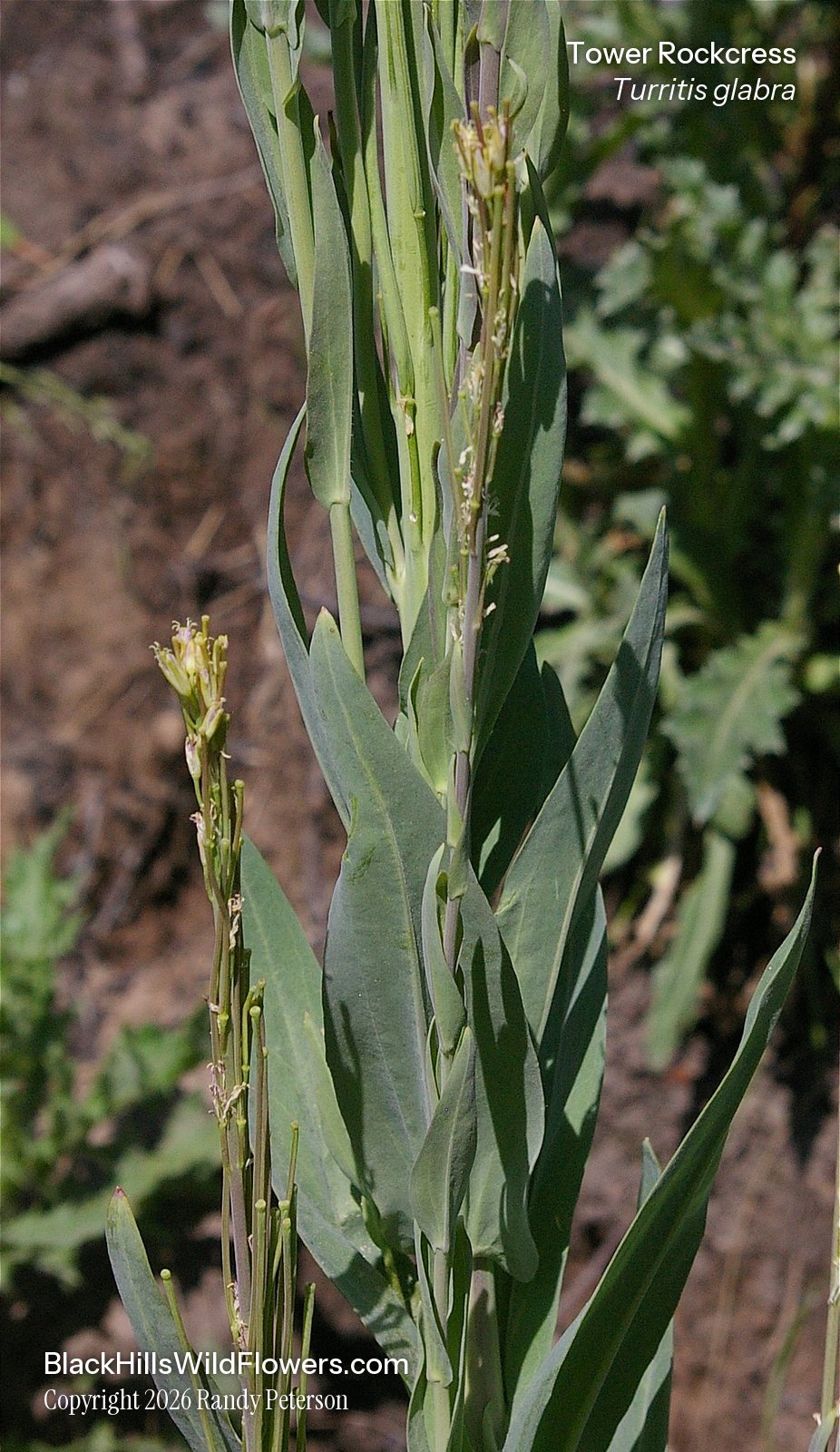
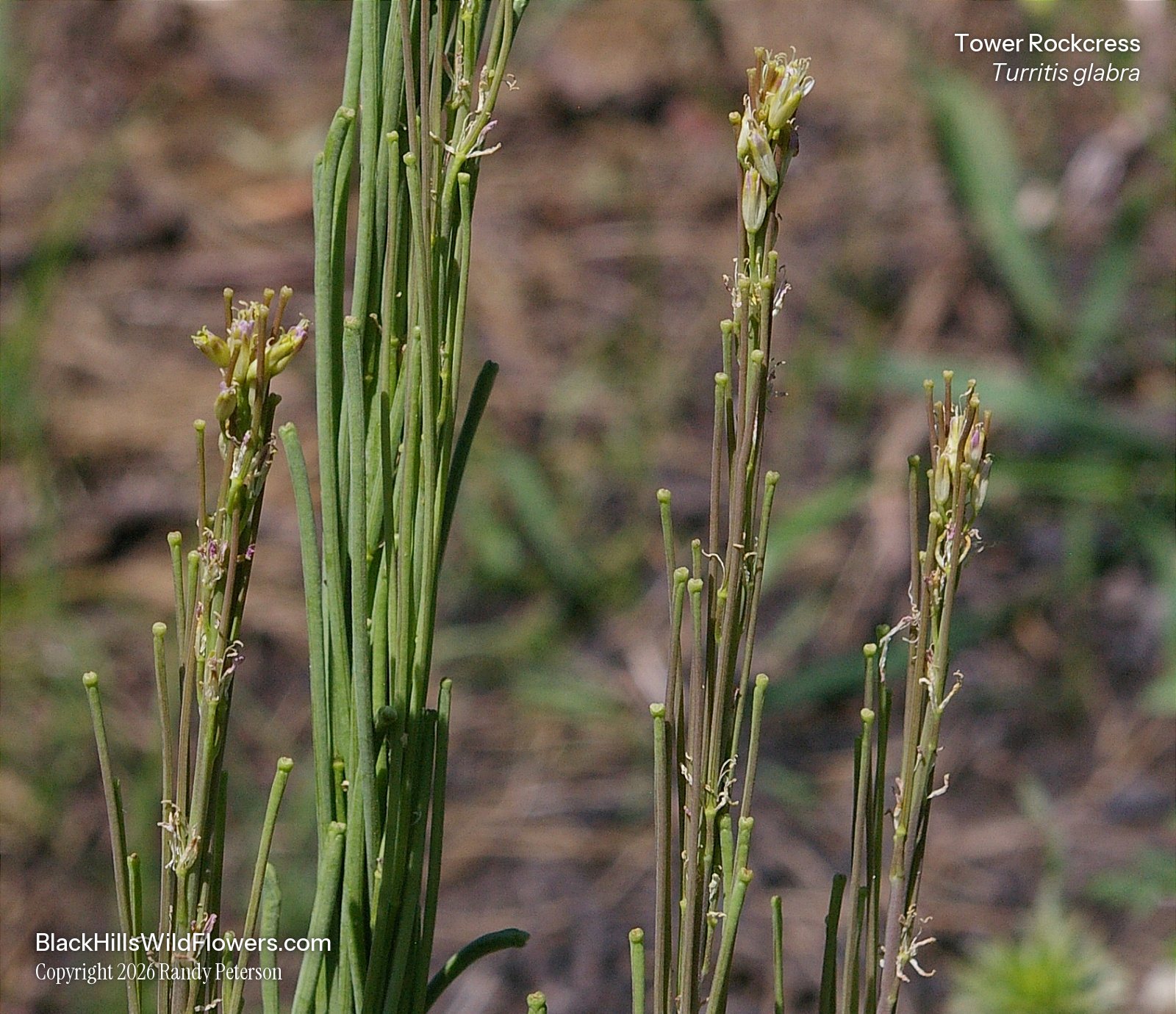
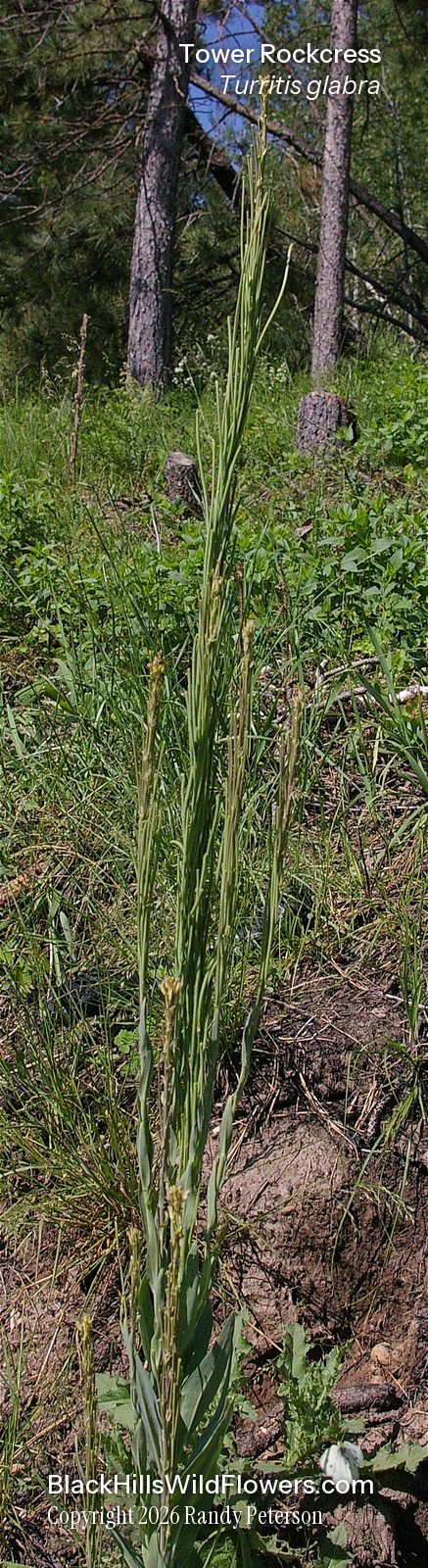
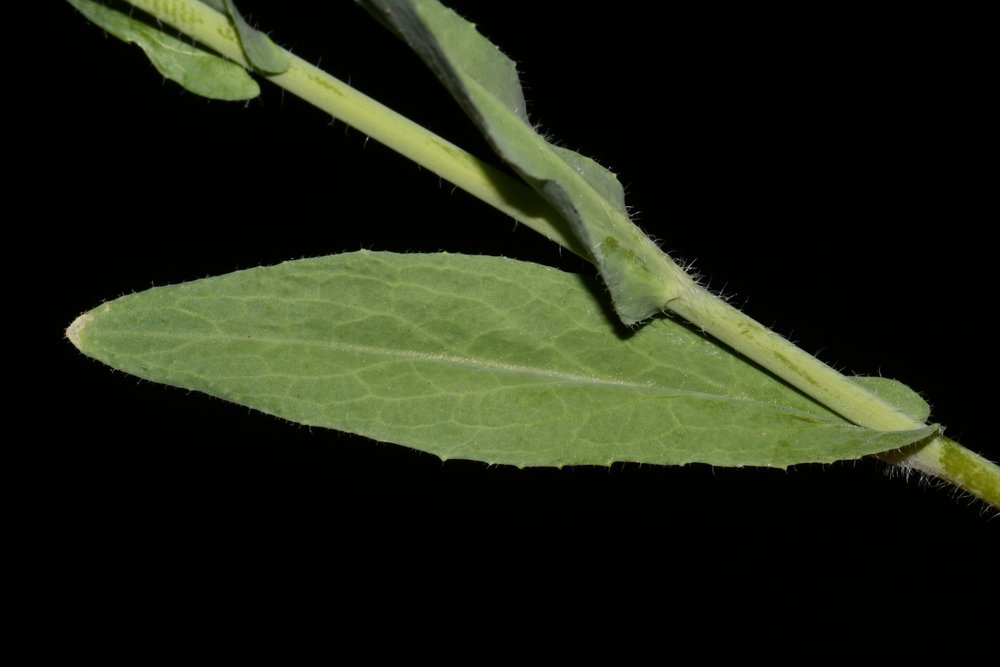
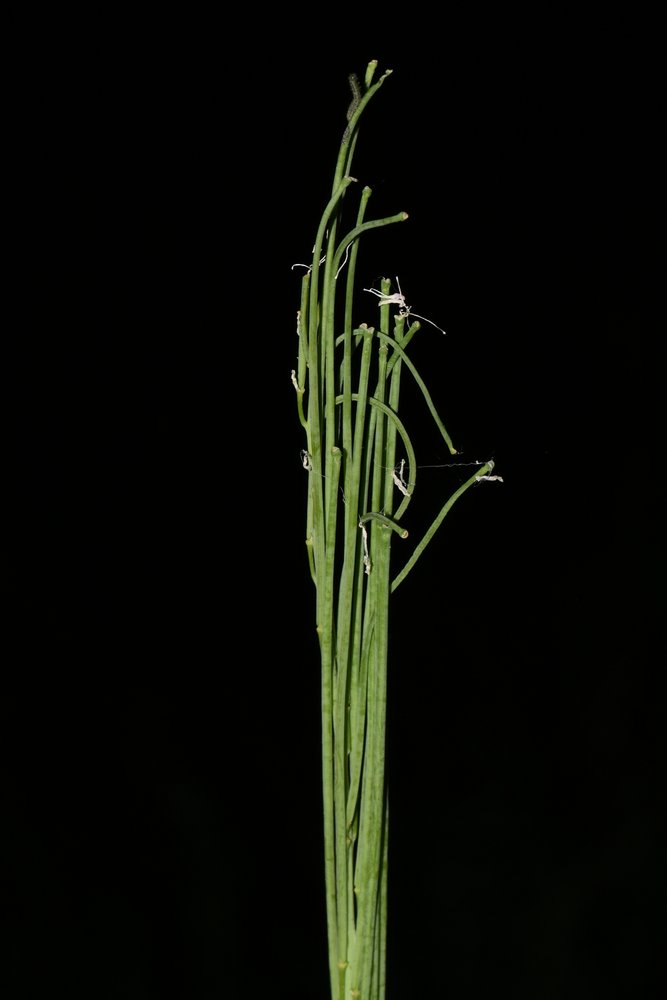
Tower Rockcress (Turritis glabra) is a tall, upright native biennial with smooth, blue-green leaves that clasp the stem, small cream flowers and long, slender pods held straight up against the stem. It blooms from May into July on dry prairie, woodland edges, creek banks and roadsides; Black Hills herbarium specimens go back to 1892, and the National Park Service lists it at Wind Cave and Devils Tower. Photographed in the Black Hills.
Free photos from other sources
| Family | Brassicaceae · Mustard |
|---|---|
| Status | Native biennial or short-lived perennial |
| Blooms | May into July |
| Height | 40–120 cm (16–47 in) |
| Where | Dry prairie, woodland edges, open pine and spruce woods, creek banks and roadsides |
| Also called | Tower Mustard |
| Synonym | Arabis glabra, Arabis perfoliata, Turritis macrocarpa |
Roots, seeds & germination
Root: A stout taproot.
Seed: The pods hold tiny seeds about 1 mm long in one or two rows. Seed ripens in June and July, when the pods begin to split.
Germination: SDSU says the seeds are dormant and need 60 days of cold, or can be sown outdoors in the fall. As a biennial it makes only leaves the first year, then sends up its flowering stem the second.
How do you identify Tower Rockcress?
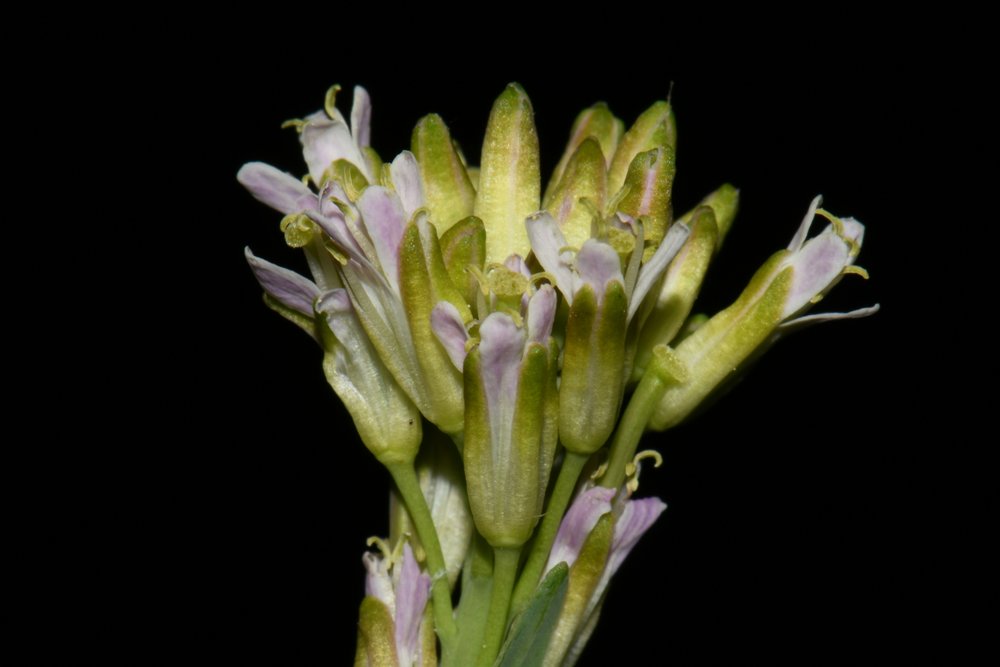
Look for the pods: long and thin, 4–10 cm (1 1/2–4 in) long and only about 1 mm wide, held straight up and pressed close to the stem, so a fruiting plant looks like a narrow tower. The stem leaves are lance-shaped, smooth and blue-green with a waxy coat, and two lobes at the base of each leaf wrap around the stem; the leaves of the first-year rosette are spoon-shaped, toothed and hairy. The flowers are small, with four white to cream petals that often barely open, and the stem is hairy near the base and smooth above. Minnesota Wildflowers says the clasping leaves and the upright pods close to the stem make it hard to mistake for anything else.
When does it bloom?
May into July.
Where does it grow?
Dry prairie, rocky ledges and woodland edges, and in the Black Hills also open ponderosa pine and white spruce woods, creek banks, roadsides and logged ground. Black Hills herbarium labels from 1892 on record it on a gravelly bank, in low moist ground in Custer State Park, along streams, on stony open range in Lawrence County, on shady spruce talus, in recently logged pine forest at 1,920 m (6,300 ft) in the Bear Lodge Mountains, and in pin oak forest on limestone. The National Park Service lists it at Wind Cave and Devils Tower.
Other mustards in this guide
Compare all 11 mustards side by side
Dame's Rocket
Hesperis matronalis
Desert Princeplume
Stanleya pinnata
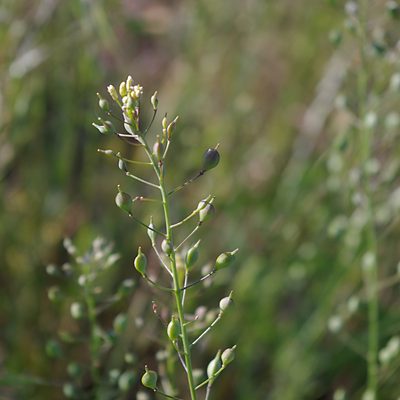
False Flax
Camelina microcarpa
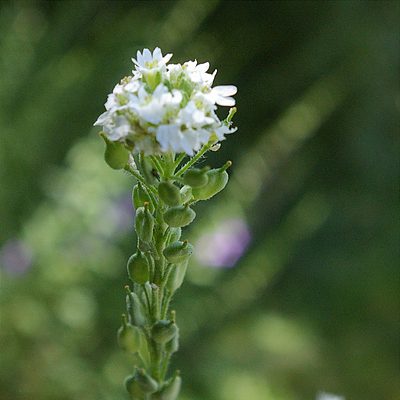
Hoary Alyssum
Berteroa incana
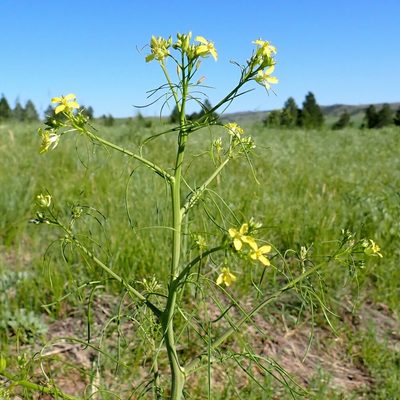
Mustard Tumbleweed
Sisymbrium altissimum
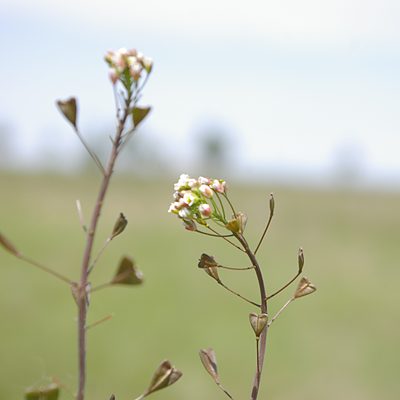
Shepherd's Purse
Capsella bursa-pastoris
Sidesaddle Bladderpod
Lesquerella arenosa var. argillosa
Watercress
Nasturtium officinale
Western Wallflower
Erysimum asperum
Wintercress
Barbarea orthoceras
Sources: Flora of North America Vol. 7: Turritis glabra (Al-Shehbaz), eFloras; Flora of North America Vol. 7: genus Turritis, eFloras; USDA PLANTS Database: Arabis glabra, tower rockcress (ARGL); SDSU Open PRAIRIE: Brassicaceae: Arabis glabra (R. Neil Reese); Minnesota Wildflowers: Tower Mustard (Turritis glabra); NPSpecies checklist, Wind Cave National Park vascular plants; NPSpecies checklist, Devils Tower National Monument vascular plants; GBIF occurrence search: Turritis glabra, South Dakota and Wyoming herbarium specimens; GBIF specimen 2620319300: Over 1914, Custer County, "gravely bank"; GBIF specimen 3023458395: Bennett 1942, Lawrence County, "shady spruce talus"; GBIF specimen 3454987820: Nelson 1982, Bear Lodge Mountains, "recently logged ponderosa pine forest", 1,920 m.