Tufted Evening Primrose Oenothera cespitosa
Also called Gumbo Lily, Gumbo Evening Primrose, Stemless Evening Primrose, Great White Evening Primrose, čhaŋȟlóǧaŋ hú saŋsáŋ (Lakota)
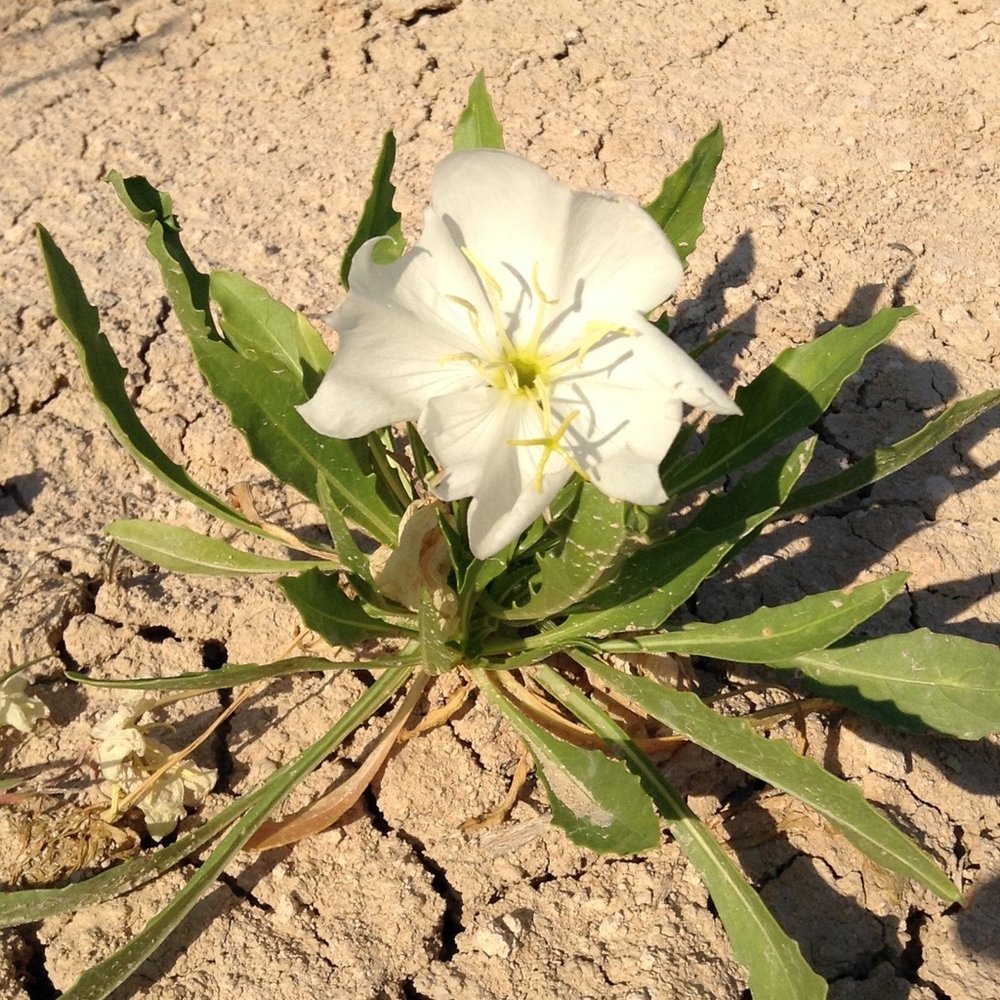
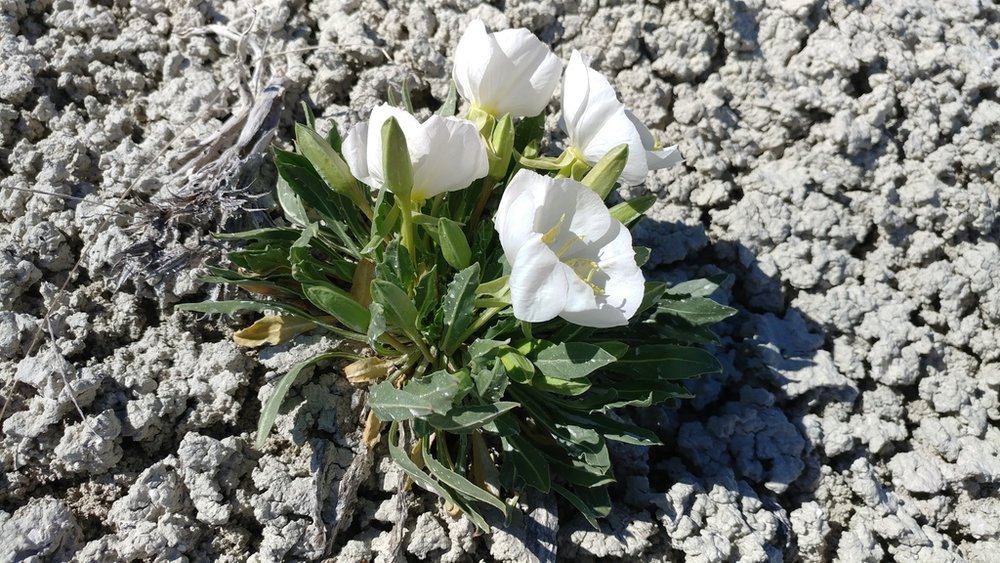
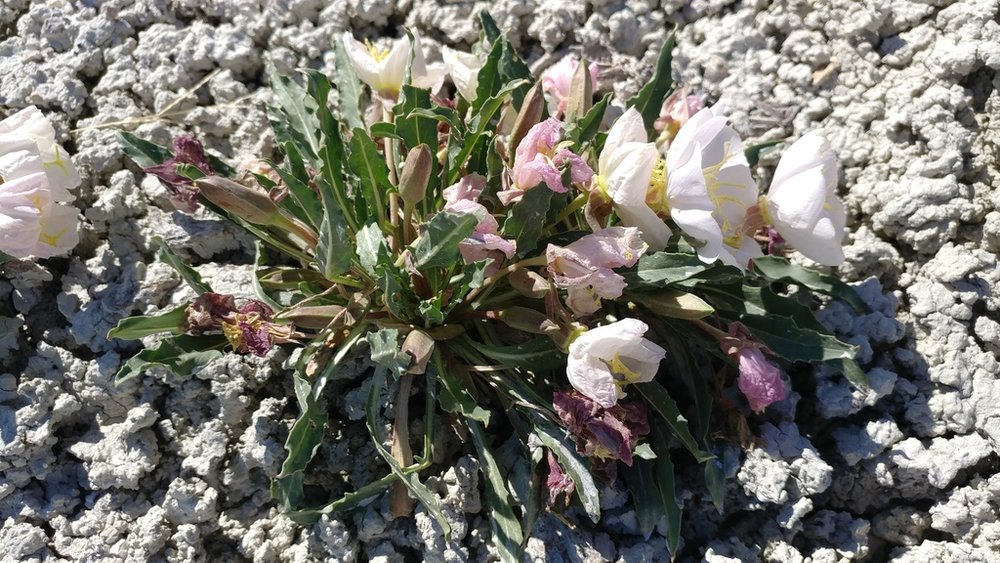
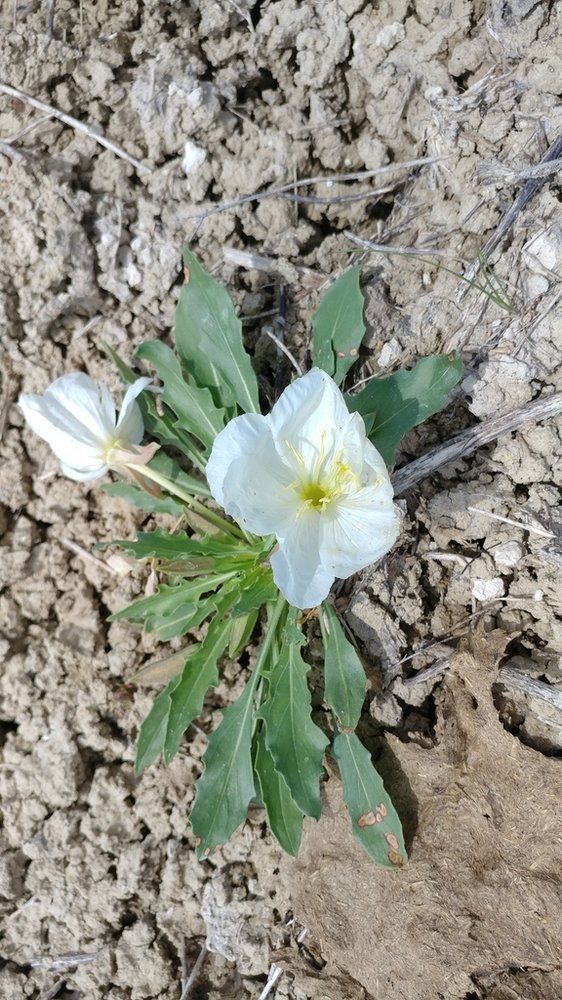
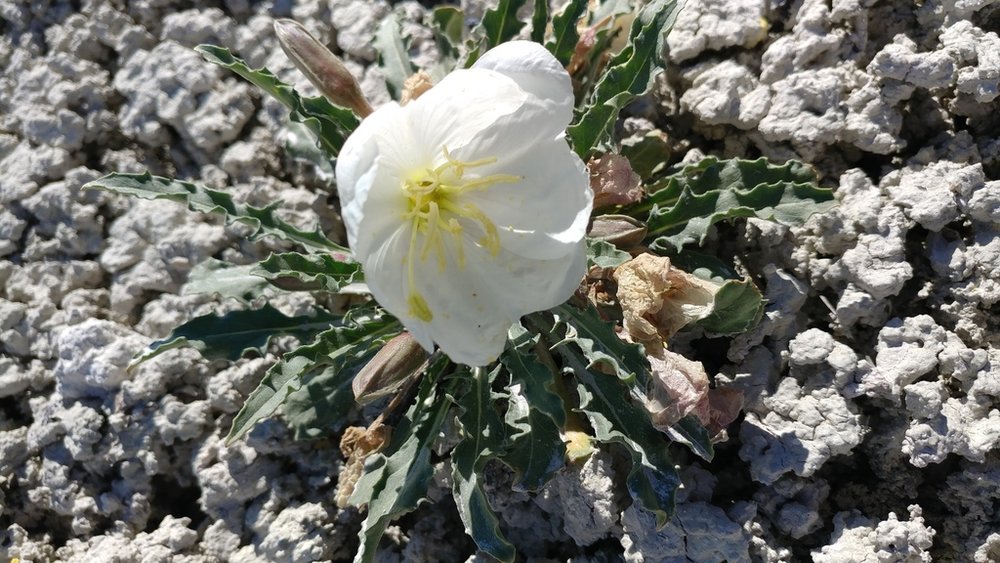
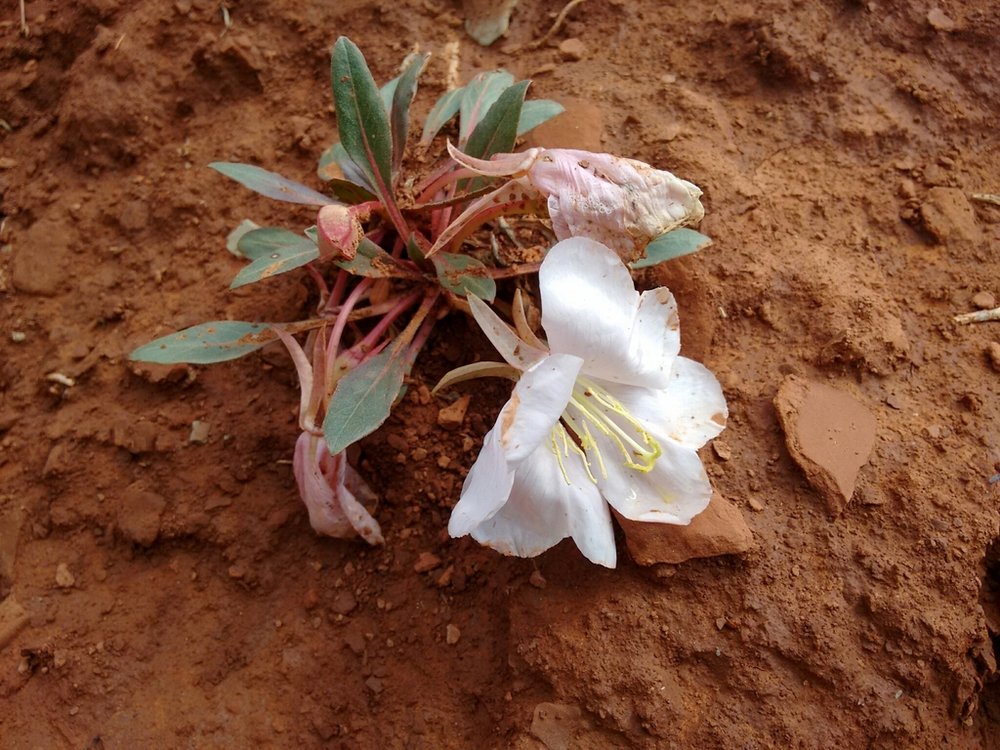
Tufted Evening Primrose (Oenothera cespitosa), also called Gumbo Lily, is a stemless native perennial whose large white flowers open near sunset and fade to pink, blooming from May through August on dry clay and rocky ground. Around the Black Hills it grows on clay buttes, badlands and prairie, and the National Park Service lists it at Wind Cave and Devils Tower.
Free photos from other sources
| Family | Onagraceae · Evening Primrose |
|---|---|
| Status | Native perennial |
| Blooms | May through August |
| Height | 15–25 cm (6–10 in) |
| Where | Dry, rocky or clay prairie, buttes, hillsides and open woodland |
| Also called | Gumbo Lily, Gumbo Evening Primrose, Stemless Evening Primrose, Great White Evening Primrose, čhaŋȟlóǧaŋ hú saŋsáŋ (Lakota) |
| Synonym | Oenothera caespitosa |
| Traditional use | Moerman's database records that the Blackfoot applied a poultice of the pounded root to inflamed sores and swellings (McClintock 1909; Johnston 1987), and that the Kayenta Navajo used the plant in ceremonies and as a dusting powder for chafing (Wyman and Harris 1951). It also records that the Hopi used the flowers ceremonially as 'white flower' (Colton 1974, under subspecies marginata). |
| Note | Some sources spell the species caespitosa. It has five subspecies, which Rocky Mountain Flora says differ in seed capsule, floral tube length and leaf shape and hairiness; the National Park Service lists the Devils Tower plants as subspecies cespitosa. |
Traditional use: first drafted by Google AI, then checked against the sources on this page.
Roots, seeds & germination
Root: It grows from a branching caudex (the woody base where the stems meet the root), and lateral roots send up new plants. Utah State University Extension describes a thick taproot.
Seed: The fruit is a hard, lumpy, elongated capsule 2–5 cm (1–2 in) long with a constricted end. SDSU says to collect seed when the pods turn brown and the seeds turn dark brown to black.
Germination: SDSU says fall sowing gives high germination, and that depending on the seed source, 60 to 120 days of cold, moist treatment may be needed before spring sowing. The Wildflower Center says germination is low.
How do you identify Tufted Evening Primrose?
Look for a low mound of narrow, gray-green leaves, 3–21 cm (1–8 in) long, from nearly smooth-edged to toothed or deeply lobed, and from hairy to hairless. There is no real stem: each large white flower sits on a slender floral tube 3–8 cm (1–3 in) long, often reddish, that looks like a stem rising from the leaves. The flower has four heart-shaped petals 2.5–5 cm (1–2 in) long and eight yellow stamens, and may reach 10 cm (4 in) across. It opens near sunset with a sweet scent, closes the next morning and fades to pink or red-violet. The seed capsule is hard, lumpy and 2–5 cm (1–2 in) long. Rocky Mountain Flora describes Prairie Evening Primrose (Oenothera albicaulis) with white or pinkish stems up to 30 cm (12 in) tall and Pale Evening Primrose (Oenothera pallida) with arching reddish stems up to 50 cm (20 in) tall; this plant has no real stem.
When does it bloom?
May through August.
Where does it grow?
Dry, rocky prairies, buttes, hillsides and open woodland, often in clay soil; South Dakota Open PRAIRIE puts it in the western and central parts of the state. Herbarium labels from the Black Hills region describe gumbo clay soil (Pennington County, 1993, 'locally common'), bare buttes with native mixed prairie (Fall River County, 1991), badlands (Custer County, 2013) and rocky red soil in grassland (Weston County, Wyoming, 2018). The National Park Service lists it as present at Wind Cave National Park and Devils Tower National Monument.
Other evening primroses in this guide
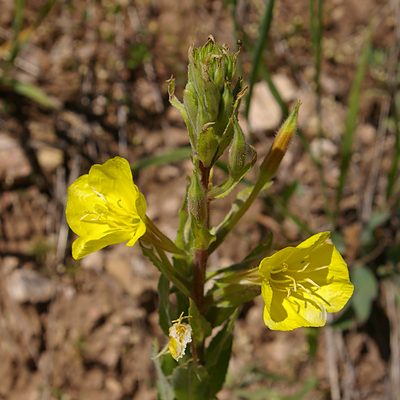
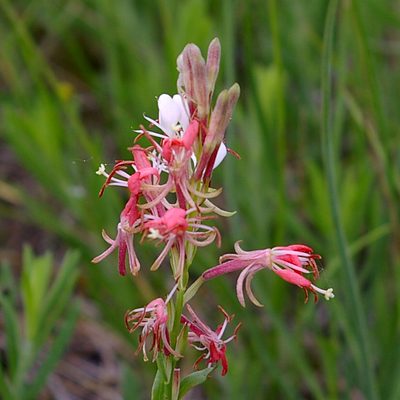
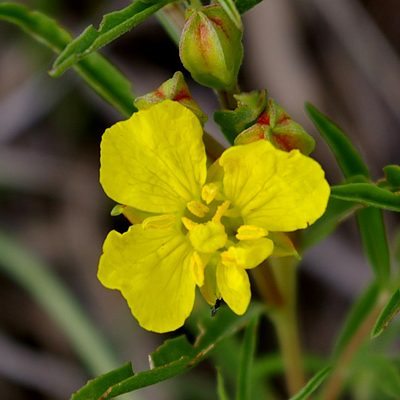
Evening Primrose family (Onagraceae): 6 other plants in this guide
Sources: SDSU Open PRAIRIE: Onagraceae: Oenothera caespitosa (R. Neil Reese); Lady Bird Johnson Wildflower Center: Oenothera caespitosa (OECA10); Rocky Mountain Flora: White Evening Primrose and look-alikes; Utah State University Extension: Tufted Evening-primrose; NPSpecies checklist, Wind Cave National Park vascular plants; NPSpecies checklist, Devils Tower National Monument vascular plants; GBIF specimen 5159122819: Pennington County SD, 20 May 1993; GBIF specimen 5159122768: Fall River County SD, 21 May 1991; GBIF specimen 2859505532: Custer County SD, 21 June 2013; GBIF specimen 4900813367: Weston County WY, 16 June 2018; Native American Ethnobotany Database (BRIT): Oenothera caespitosa.