Water Hemlock Cicuta maculata
Also called Spotted Water Hemlock, Spotted Cowbane, Poison Parsnip, yažópi hú (Lakota)
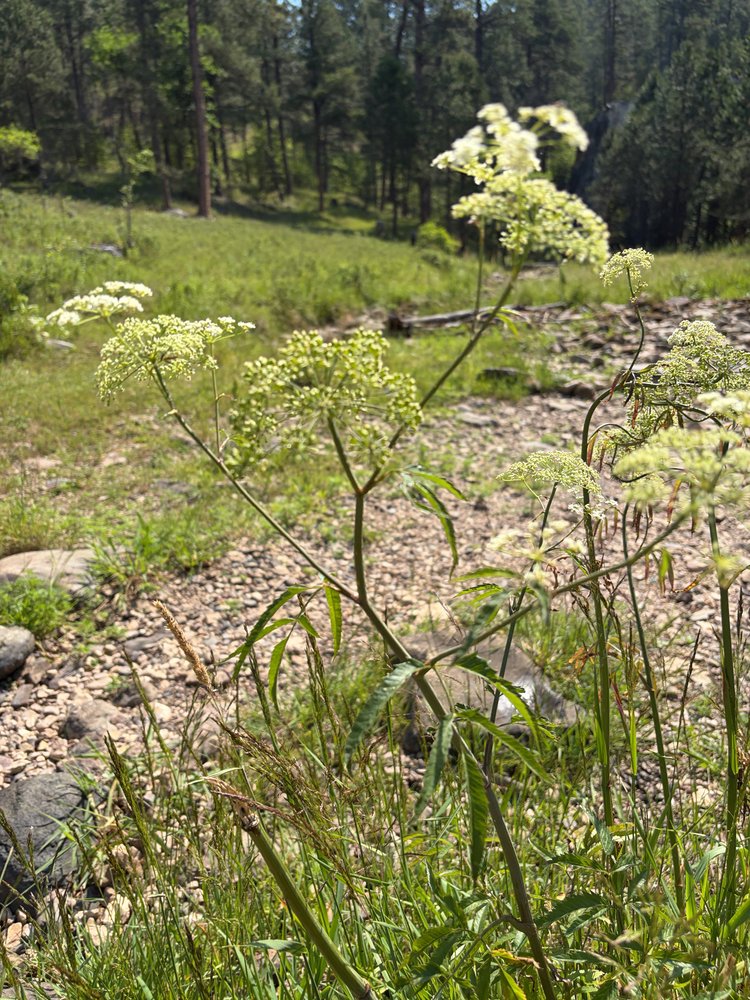
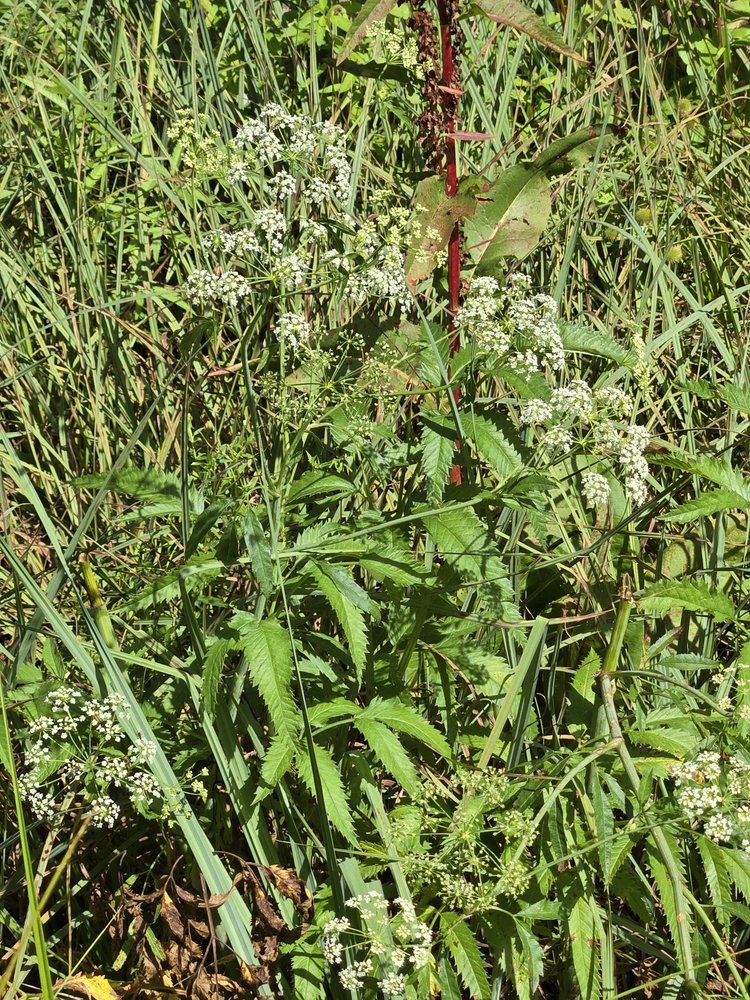
Water Hemlock (Cicuta maculata) is a native carrot-family plant of wet ground, 30–200 cm (1–6½ ft) tall, with a smooth hollow stem that is often streaked purple, leaves divided two or three times into narrow toothed leaflets, and domed clusters of tiny white flowers from June into September. Every part of it contains cicutoxin, and the swollen, chambered root base is the most poisonous part. In the Black Hills it grows along creeks, in marshy ground and on lake shores, and the National Park Service lists it at Mount Rushmore and Devils Tower.
Free photos from other sources
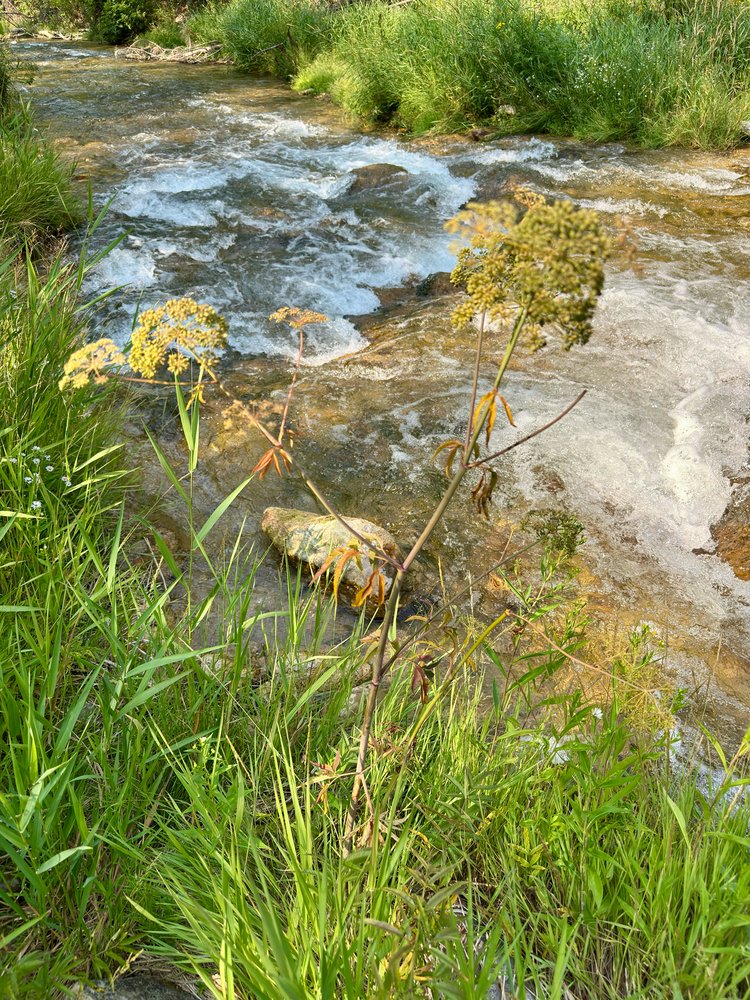
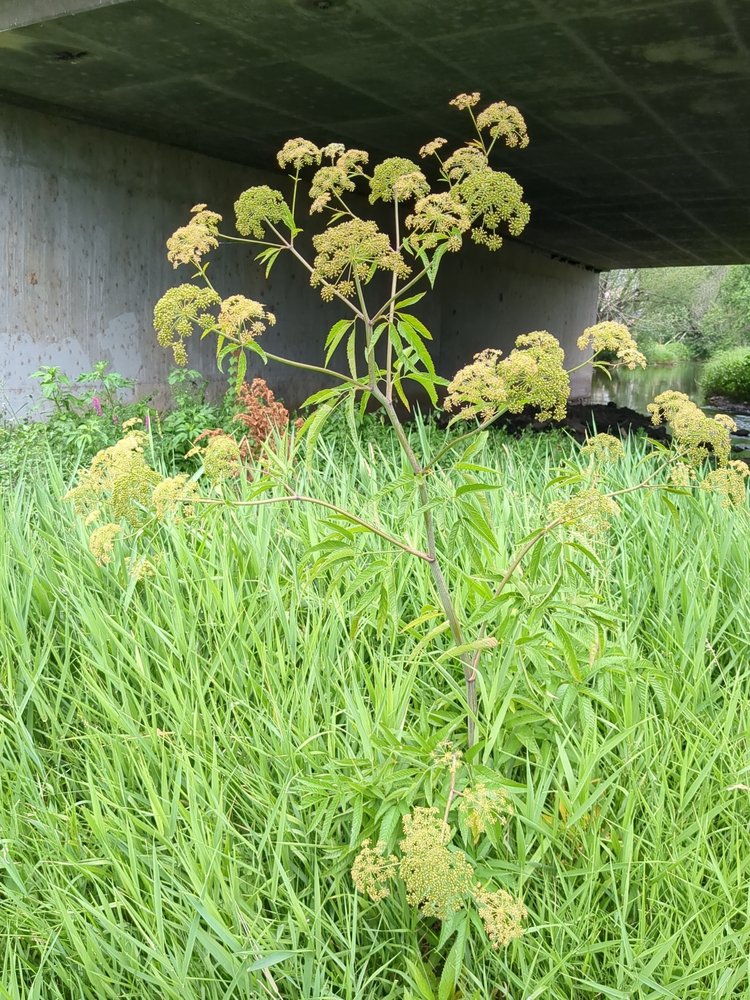
| Family | Apiaceae · Carrot |
|---|---|
| Status | Native biennial or short-lived perennial |
| Blooms | June into September |
| Height | 30–200 cm (1–6½ ft) |
| Where | Creek banks, wet meadows, marshes, pond and lake margins and roadside ditches |
| Also called | Spotted Water Hemlock, Spotted Cowbane, Poison Parsnip, yažópi hú (Lakota) |
| Toxicity | Every part of the plant contains cicutoxin, a convulsant; the roots hold the most, a small piece of root can be fatal, dead plants stay poisonous, and the sap can irritate some people's skin. |
| Note | Black Elk and Flying By (1998) list it under the Lakota name yažópi hú and mark it poisonous: all parts deadly. |
Roots, seeds & germination
Root: Several fleshy, egg-shaped roots grow at the base of the plant. The swollen stem base and upper roots are divided inside into chambers by cross partitions, which show when the base is sliced lengthwise, and the chambers hold an oily yellowish liquid.
Seed: Each flower makes a small egg-shaped to nearly round, two-seeded fruit up to 4 mm (⅙ in) long that turns tan-brown when ripe. The seeds are flat on one side, rounded on the other, ridged, and straw-colored with dark blotches. The plant spreads by seed, which floodwater and birds help carry, and water birds often eat the fruit with no ill effect.
Germination: An Ontario weed guide says the seeds germinate only after they have been under water, which is why the plant stays close to water.
How do you identify Water Hemlock?
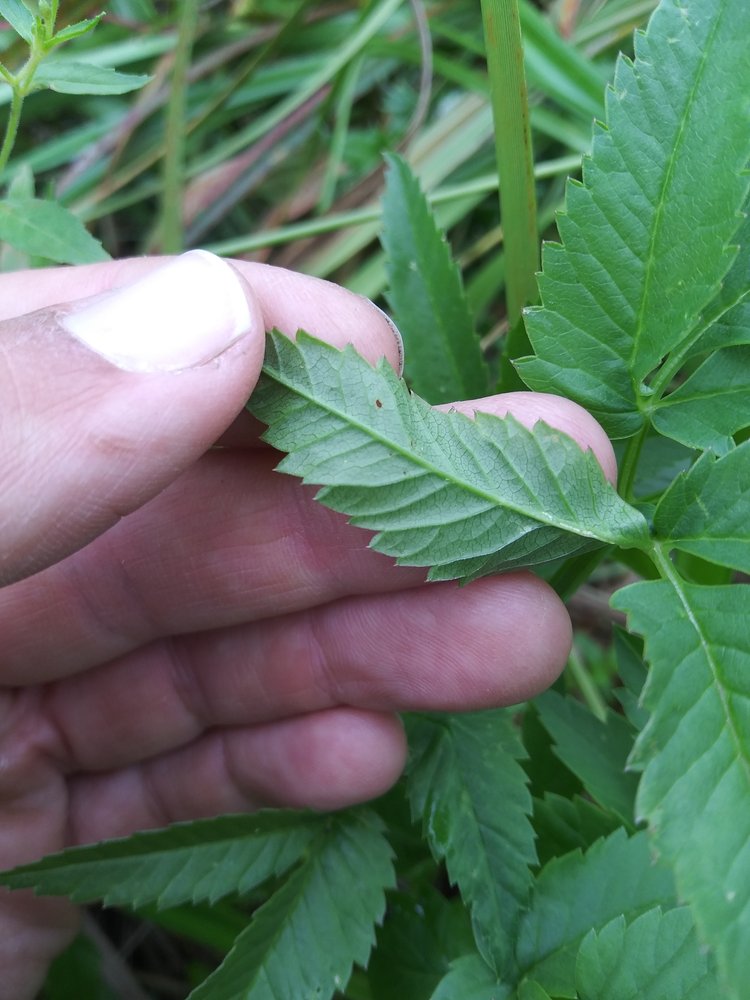
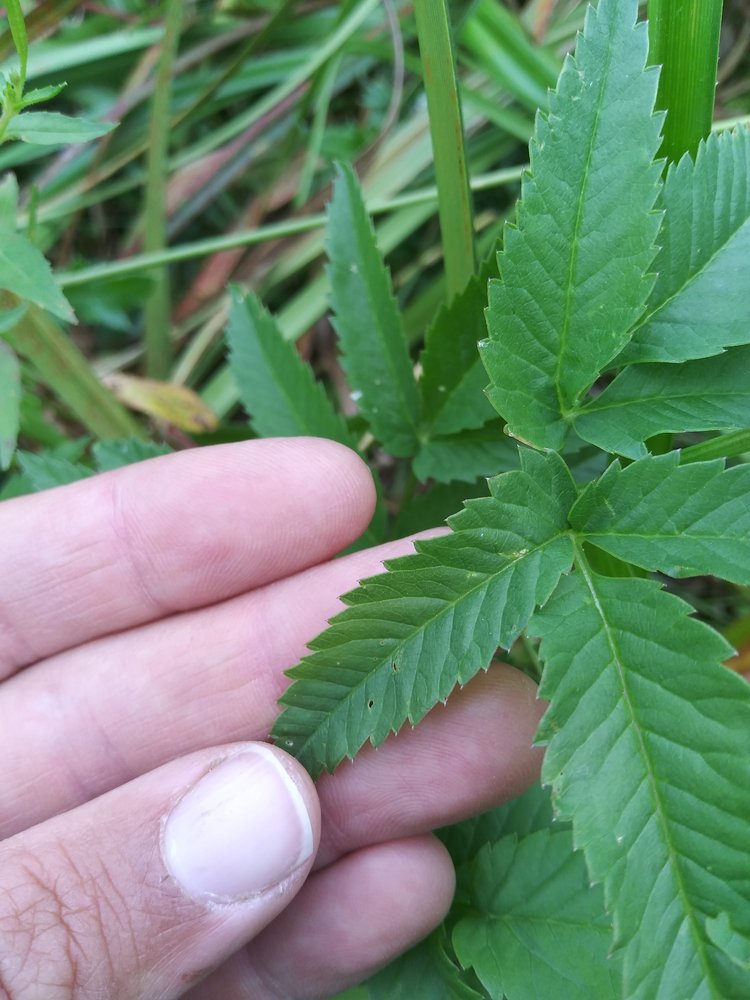
Look for an upright, smooth, hairless, hollow stem that branches near the top, often streaked or spotted with purple, and leaves cut two or three times into lance-shaped, sharply toothed leaflets 2–10 cm (1–4 in) long. The surest mark is in the leaflet: the side veins run to the notches between the teeth, not to the tips. The tiny white flowers sit in domed compound umbels 4–15 cm (1½–6 in) across at the stem and branch tips, and the stem base is swollen and divided inside into chambers that hold a yellowish liquid. Cow Parsnip, another big white umbel of Black Hills streamsides, is usually taller, thicker and woolly-looking: its hollow stem is covered in short soft hairs, its base is not swollen, its leaves are split into three broad, lobed, softly hairy leaflets, and its umbels are flat and 10–20 cm (4–8 in) across. Poison Hemlock, an introduced weed, has purple spots on the lower stem and fern-like leaves divided three times, and it usually grows on drier ground than Water Hemlock.
When does it bloom?
June into September.
Where does it grow?
Wet ground through the Black Hills: creek banks, marshy meadows, shallow standing water, lake and pond shores, the edge of an old beaver dam, saturated spruce bottoms and roadsides, from about 1,200 m (4,000 ft) at the edge of the Hills to about 2,000 m (6,600 ft) on specimen labels. The National Park Service lists it as present at Mount Rushmore and Devils Tower, and herbarium specimens from 1892 to 2018 come from Lawrence, Pennington, Custer and Meade counties and from Crook County, Wyoming, including Custer State Park and the Black Hills National Forest.
Other flowers to compare
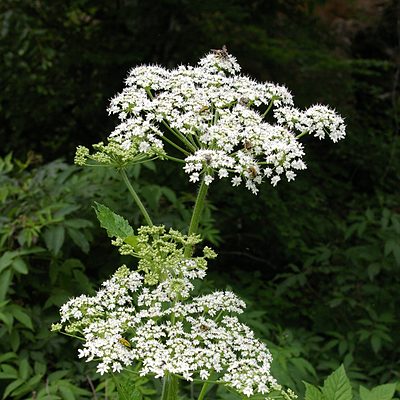
Carrot family (Apiaceae): 7 other plants in this guide
Sources: SDSU Open PRAIRIE: Apiaceae: Cicuta maculata (R. Neil Reese); USDA PLANTS Database: Cicuta maculata (CIMA2); GBIF species page: Cicuta maculata L.; NPSpecies checklist, Mount Rushmore National Memorial vascular plants; NPSpecies checklist, Devils Tower National Monument vascular plants; Minnesota Wildflowers: Cicuta maculata (Water Hemlock); Illinois Wildflowers: Water Hemlock, Cicuta maculata; Kansas Wildflowers and Grasses: Cicuta maculata, Water hemlock; Montana Field Guide: Spotted Water-hemlock, Cicuta maculata; US Forest Service, Plant of the Week: Spotted water hemlock, Cicuta maculata (Walter Fertig); Ontario Ministry of Agriculture, Weed Identification Guide: Spotted water-hemlock; NDSU Agriculture: Producers advised to scout wet areas for spotted water hemlock before cutting hay (2026); Minnesota Wildflowers: Heracleum maximum (Common Cow Parsnip); Black Hills National Forest: Black Hills native plants (Cow parsnip entry); GBIF occurrence search: Cicuta maculata herbarium specimens, South Dakota and Wyoming; Culturally Important Plants of the Lakota (Black Elk and Flying By, 1998), filed with the South Dakota PUC.