Leafy Musineon Musineon divaricatum
Also called Leafy Wildparsley, Wild Parsley, tȟathíŋpsila (Lakota)
Leafy Musineon (Musineon divaricatum) is a low, native member of the carrot family that sends up flat clusters of tiny yellow flowers on dry, open ground in spring. In the Black Hills region, herbarium specimens come from the dry prairie and badlands country on the Hills' edge, most of them collected in May and June.
Free photos from other sources
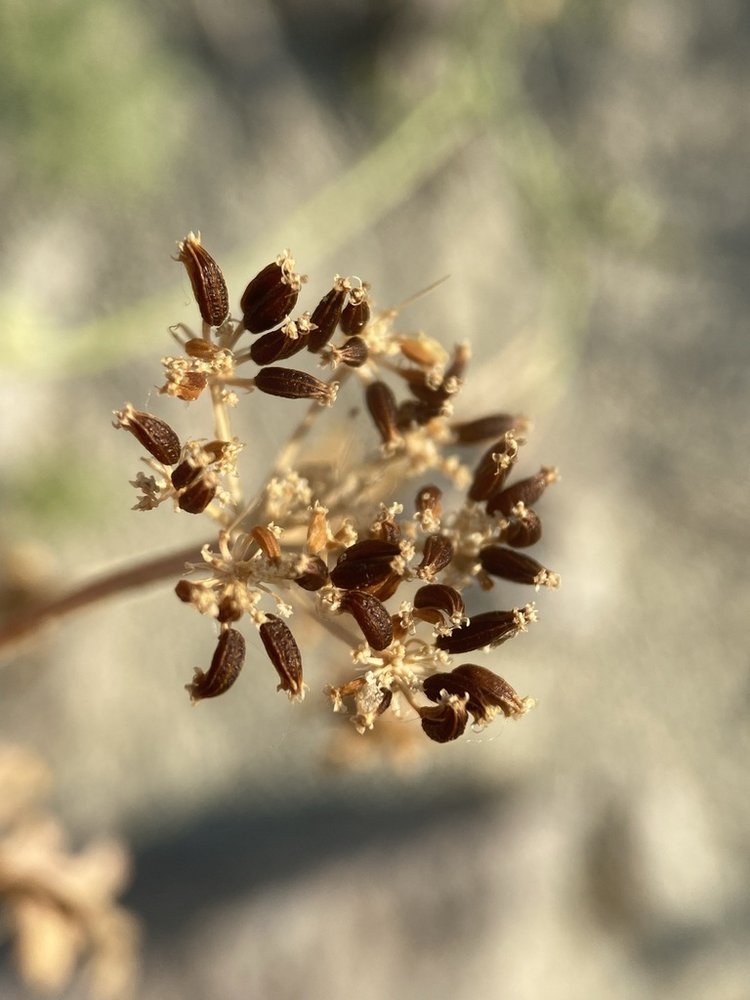
| Family | Apiaceae · Carrot |
|---|---|
| Status | Native perennial |
| Blooms | May and June |
| Height | Up to 20 cm (8 in) |
| Where | Dry prairie, open hillsides, rocky or clay slopes and bare limestone buttes |
| Also called | Leafy Wildparsley, Wild Parsley, tȟathíŋpsila (Lakota) |
| Traditional use | The Blackfoot ate the roots raw, according to McClintock (1909) as recorded in Moerman's ethnobotany database (BRIT), and the same database records, from Blankinship (1905), that the Crow used the fleshy root for food. Black Elk and Flying By (1998) record the roots as eaten raw by the Lakota and give the Lakota name as tȟathíŋpsila. |
Traditional use: first drafted by Google AI, then checked against the sources on this page.
Roots, seeds & germination
Root: It grows from a thickened taproot, according to the Flora of the Pacific Northwest key to the genus.
How do you identify Leafy Musineon?
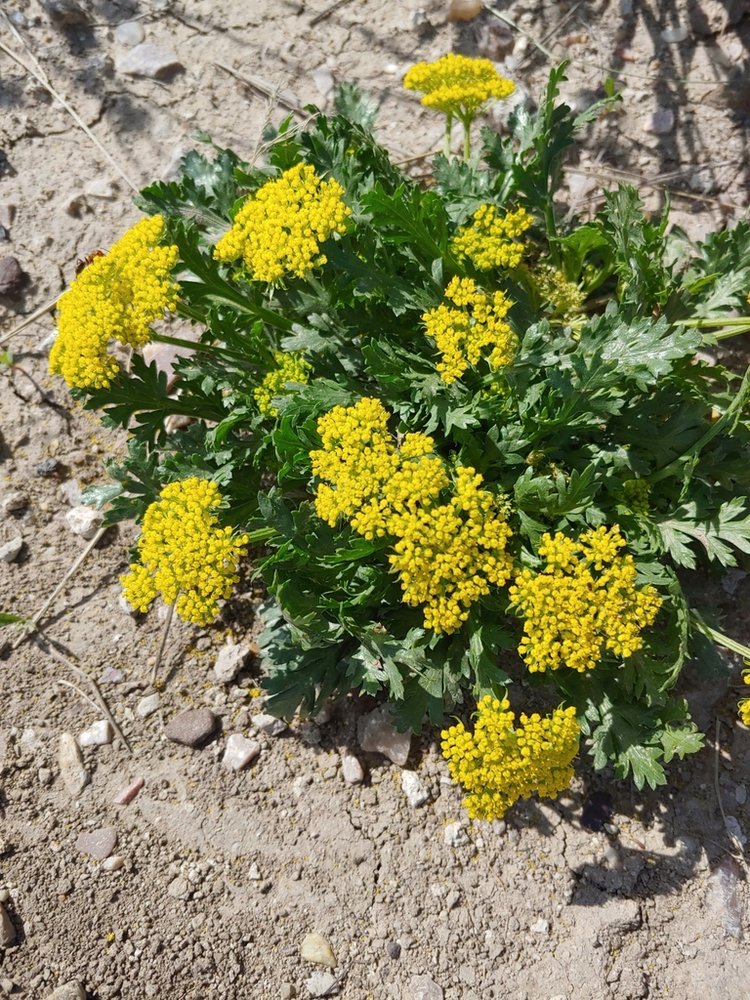
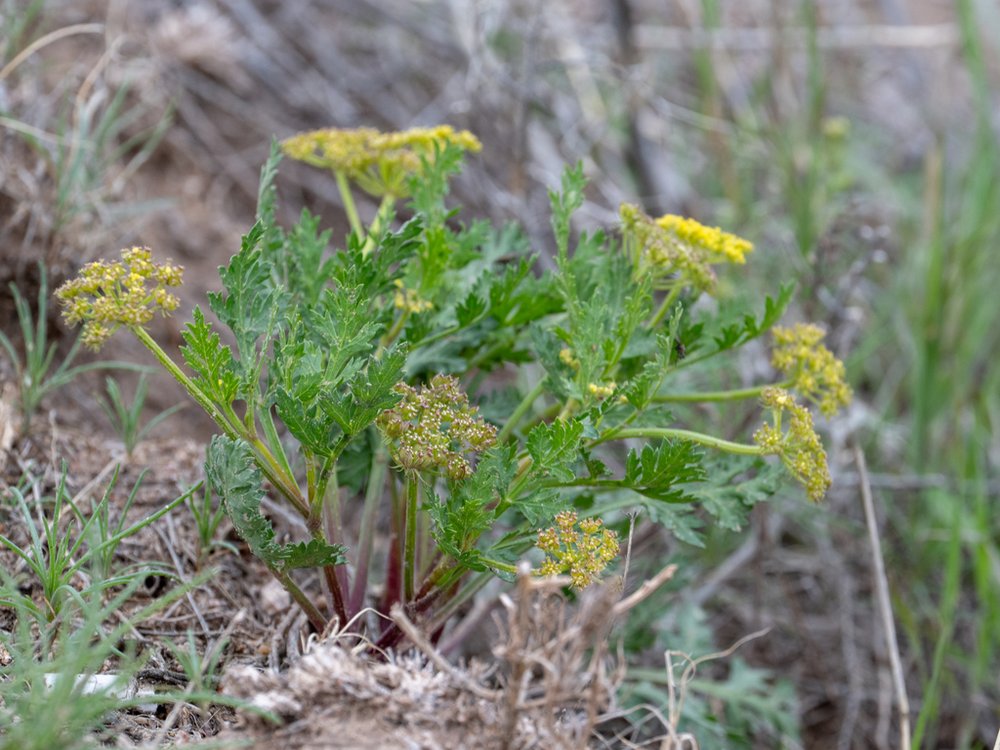
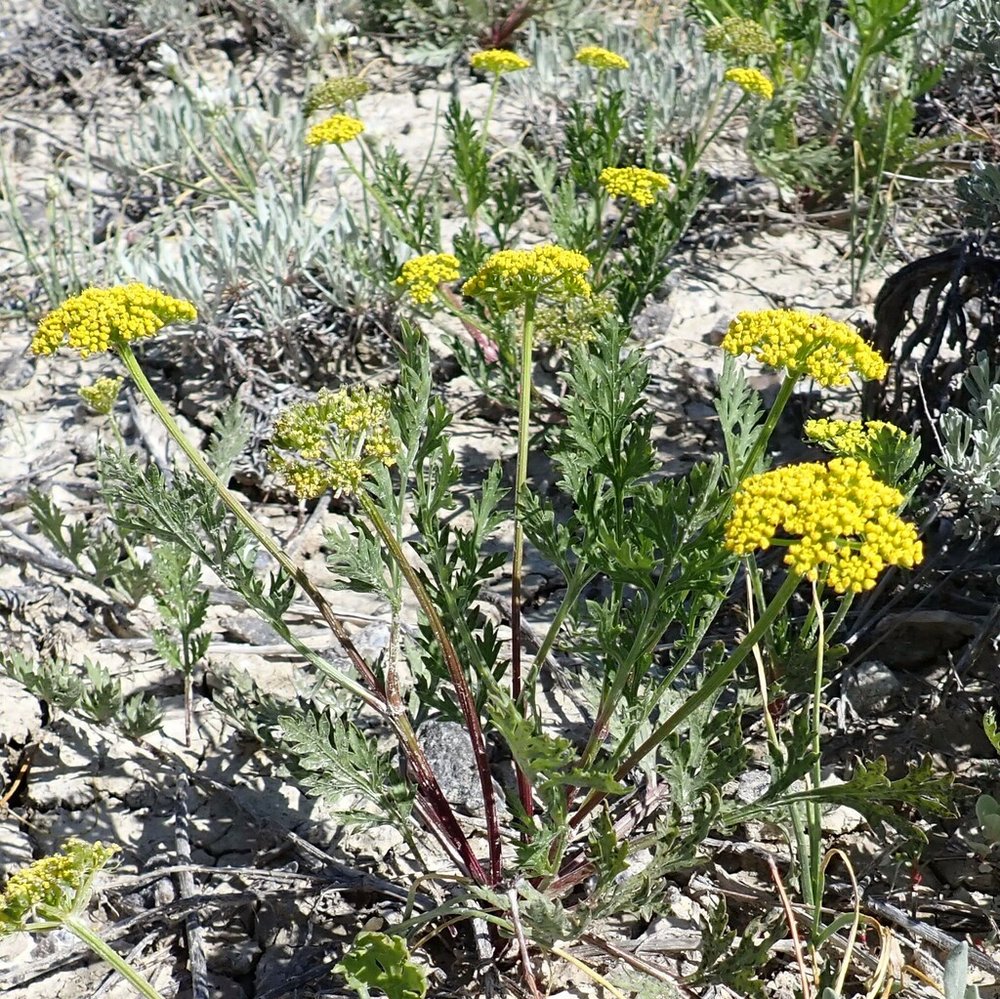
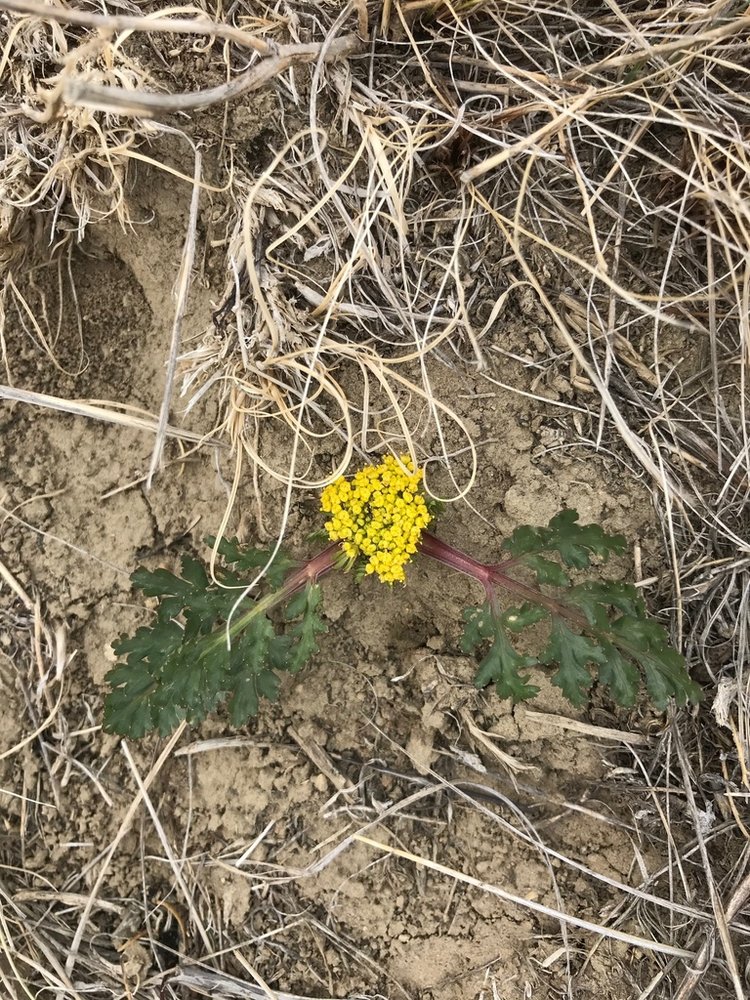
Look for a low plant with shiny, smooth leaves, cut into lobes, growing from the base, and one or more flat-topped umbels (clusters of small flower clusters) of tiny bright yellow flowers, each cluster about 2.5 cm (1 in) across, sitting close to the ground. The leaves are smooth rather than hairy, and the leaf stalks are concave on top. It grows from a thickened taproot (a single main root). Saskatchewan Wildflowers compares it with Desert Biscuitroot (Lomatium foeniculaceum), another low, yellow-flowered plant of the carrot family that grows in the same habitat and blooms at the same time: Desert Biscuitroot has hairy stems and leaves and leaf stalks that are cylindrical, while Leafy Musineon is smooth and its leaf stalks are concave.
When does it bloom?
May and June.
Where does it grow?
Dry prairie, open hillsides and rocky or clay slopes. Herbarium labels from Pennington, Fall River, Custer and Meade counties in South Dakota describe rocky hillsides with cheatgrass and yucca, bare limestone buttes, gumbo clay soil, badlands, rolling prairie and rocky, sandy ridge tops, including sites in Buffalo Gap National Grassland. Crook and Weston counties in Wyoming also have specimens. Of 59 specimens from Black Hills-area counties of South Dakota and Wyoming in GBIF, 51 were collected in May or June.
Other flowers to compare
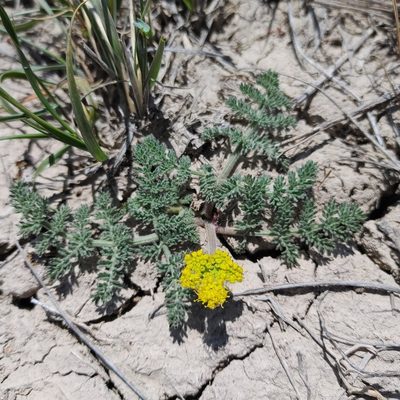
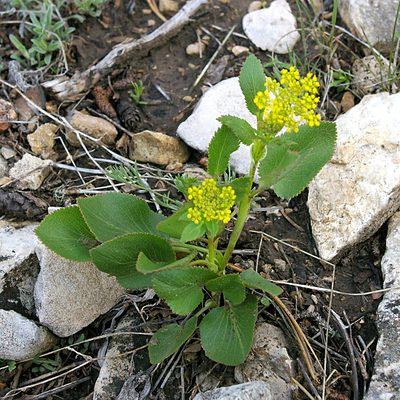
Carrot family (Apiaceae): 7 other plants in this guide
Sources: Flora of the Pacific Northwest (FloraPNW): Musineon key and genus description, Burke Herbarium; Lady Bird Johnson Wildflower Center: Musineon divaricatum; Saskatchewan Wildflowers: Musineon divaricatum (Leafy Musineon); Galt Museum and Archives: Leafy Musineon; USDA PLANTS Database: Musineon divaricatum (MUDI); Native American Ethnobotany Database (BRIT): Musineon divaricatum; Culturally Important Plants of the Lakota (Black Elk and Flying By, 1998), entry 199; GBIF specimen 2869128554 (Pennington County, SD, 2003; rocky hillside); GBIF specimen 5159117489 (Fall River County, SD, 1991; limestone butte); GBIF specimen 2859147399 (Custer County, SD, 2013; badlands); GBIF specimen 2862184309 (Meade County, SD, 1993; rocky sandy ridge); GBIF occurrence search: Musineon divaricatum, preserved specimens, South Dakota and Wyoming.