Mountain Wafer Parsnip Cymopterus montanus
Also called Mountain Springparsley, Mountain Spring-parsley, Montana Wavewing
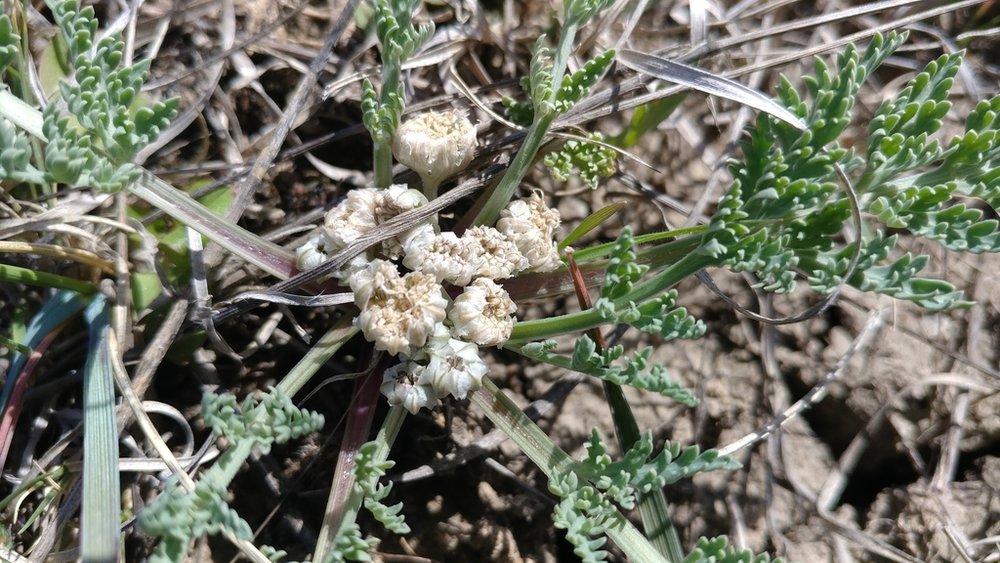
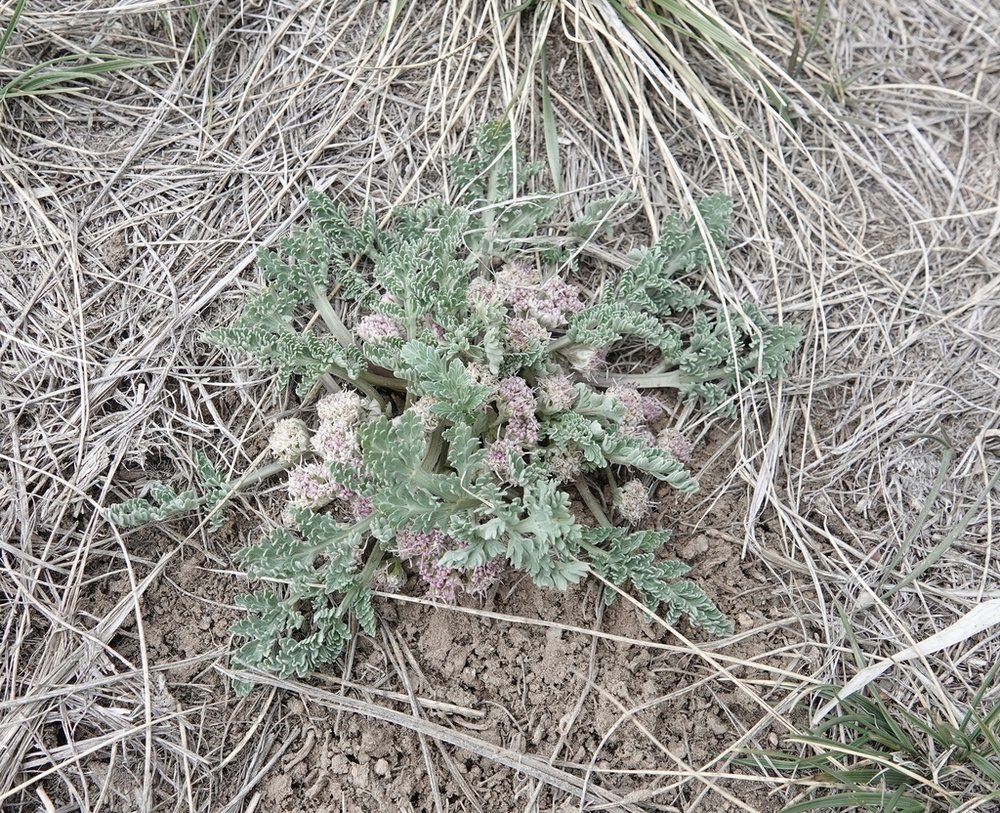
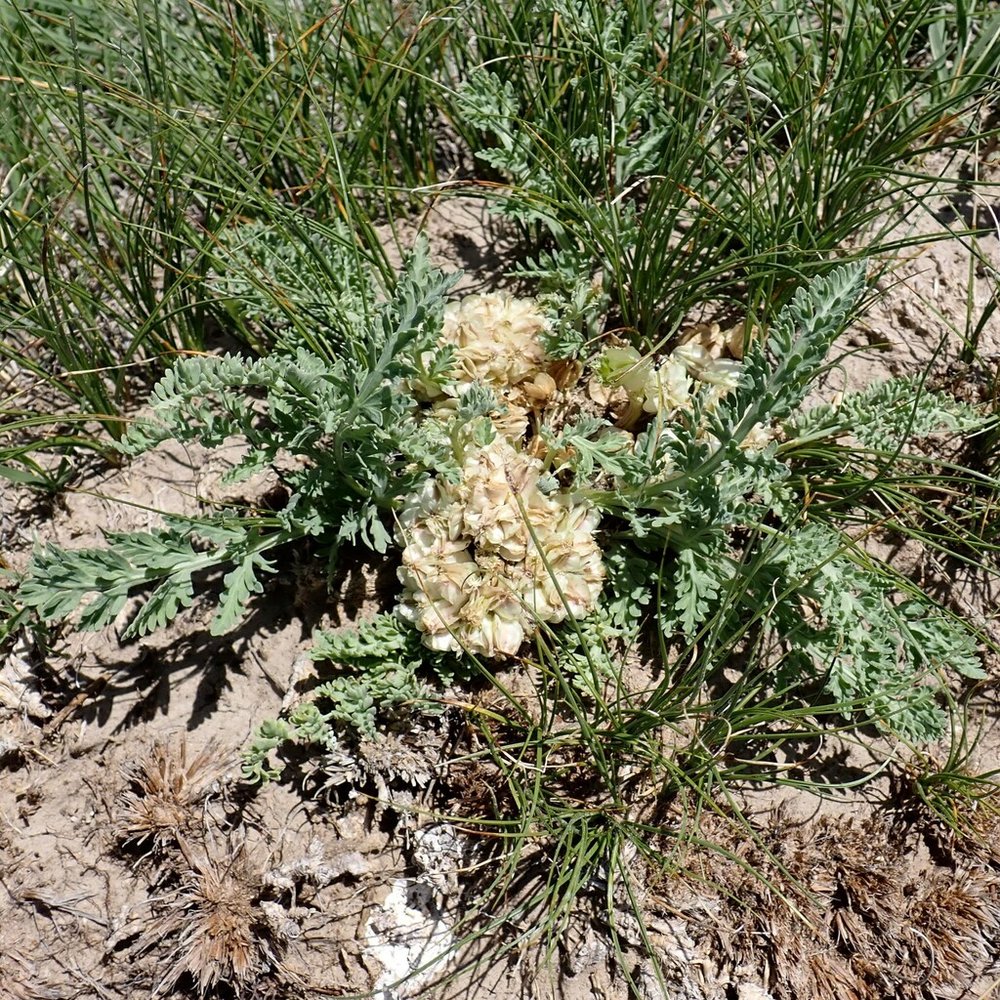
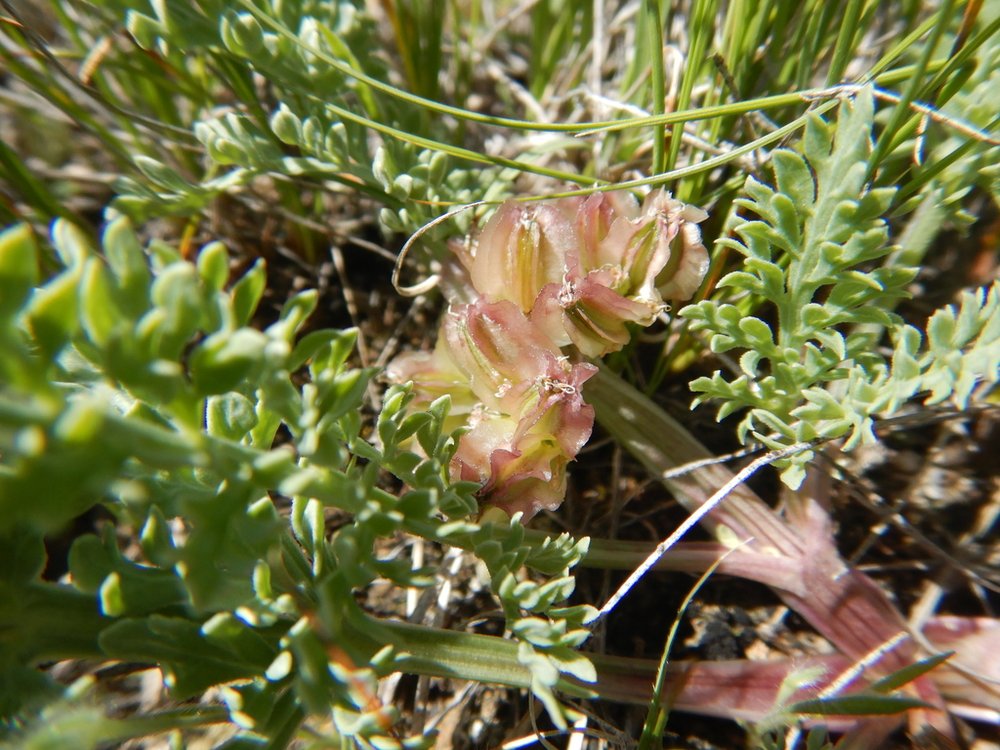
Mountain Wafer Parsnip (Cymopterus montanus) is a low, stemless native perennial of the carrot family whose small, tight clusters of white to lavender flowers open early in spring, in April and May, close to the ground. It grows on dry prairie and open range; herbarium specimens come from the prairie and open range at the edge of the Black Hills.
Free photos from other sources
| Family | Apiaceae · Carrot |
|---|---|
| Status | Native perennial |
| Blooms | April and May, early in the spring |
| Height | Up to 20 cm (8 in) |
| Where | Dry, gravelly or clay slopes, short-grass prairie and open range |
| Also called | Mountain Springparsley, Mountain Spring-parsley, Montana Wavewing |
| Synonym | Phellopterus montanus, Vesper montanus |
| Traditional use | The Navajo ate the roots raw, cooked them in winter with wild carrot roots or dried wild onions, and sometimes peeled, baked and ground them as a substitute for cornmeal (Elmore 1944; Castetter 1935, as recorded in Moerman's ethnobotany database). The same database records that the Gosiute used the seeds and underground parts for food (Chamberlin 1911). |
| Note | Sources describe the flowers as white, lavender or pinkish-purple; they are not yellow. |
Traditional use: first drafted by Google AI, then checked against the sources on this page.
How do you identify Mountain Wafer Parsnip?
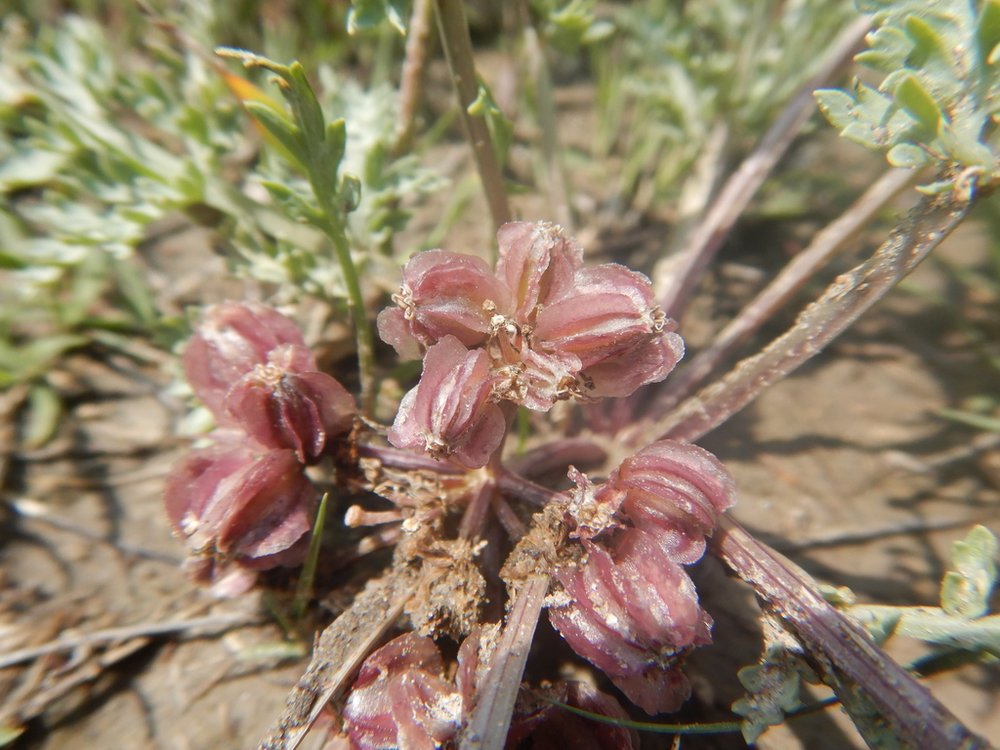
Look for a plant with no above-ground stem: the gray-green leaves, cut once or twice into small segments, and the flower stalks all come from the ground, and the stalks are shorter than the leaves. The tiny flowers, white or lavender, sit in 3 to 7 small, tight clusters (umbels) that stay bunched even when in fruit. The fruits are the showiest part: each is 5 to 13 mm (1/5 to 1/2 in) long with broad wings, often purple-tinged, about twice as wide as the body of the fruit.
When does it bloom?
April and May, early in the spring.
Where does it grow?
Dry, rocky or clay prairie, grassland and open range, from the plains up to the foothills. South Dakota herbarium labels from Pennington County describe a roadside, an upland gumbo (clay) flat and plains; one from Lawrence County is open range at the edge of open pine, and others from Fall River and Meade counties come from prairie and pasture. Most of the 8 Black Hills–county specimens in GBIF are from the plains edge of the Hills, not the pine forest.
Other flowers to compare
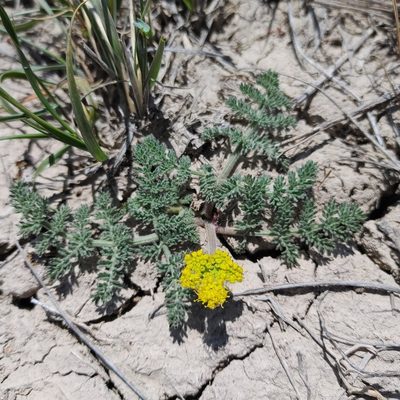
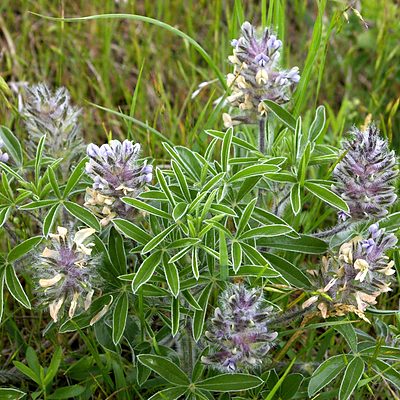
Carrot family (Apiaceae): 7 other plants in this guide
Sources: Kansas Wildflowers and Grasses: Mountain spring-parsley (Cymopterus montanus); Lady Bird Johnson Wildflower Center: Cymopterus montanus; Rocky Mountain Flora: Spring Parsley (Vesper montanus = Cymopterus montanus); USDA PLANTS Database: Cymopterus montanus (CYMO); Native American Ethnobotany Database (BRIT): Cymopterus montanus; GBIF specimen 2512285428 (Pennington County, SD, 1968; roadside); GBIF specimen 2869128429 (Lawrence County, SD, 1931; open range at edge of open pine); GBIF specimen 5895825661 (Fall River County, SD, 1937; prairie); GBIF specimen 2512287426 (Pennington County, SD, 1924; gumbo of upland); GBIF occurrence search: Cymopterus montanus, preserved specimens, South Dakota.