Queen Anne's Lace Daucus carota
Also called Wild Carrot, Bird's Nest, pȟaŋǧí zí (Lakota)
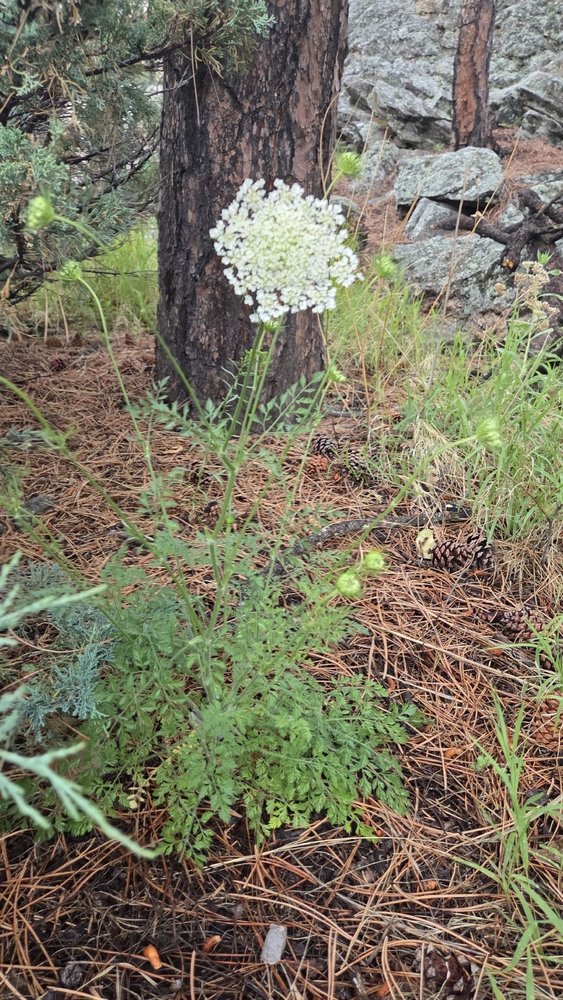
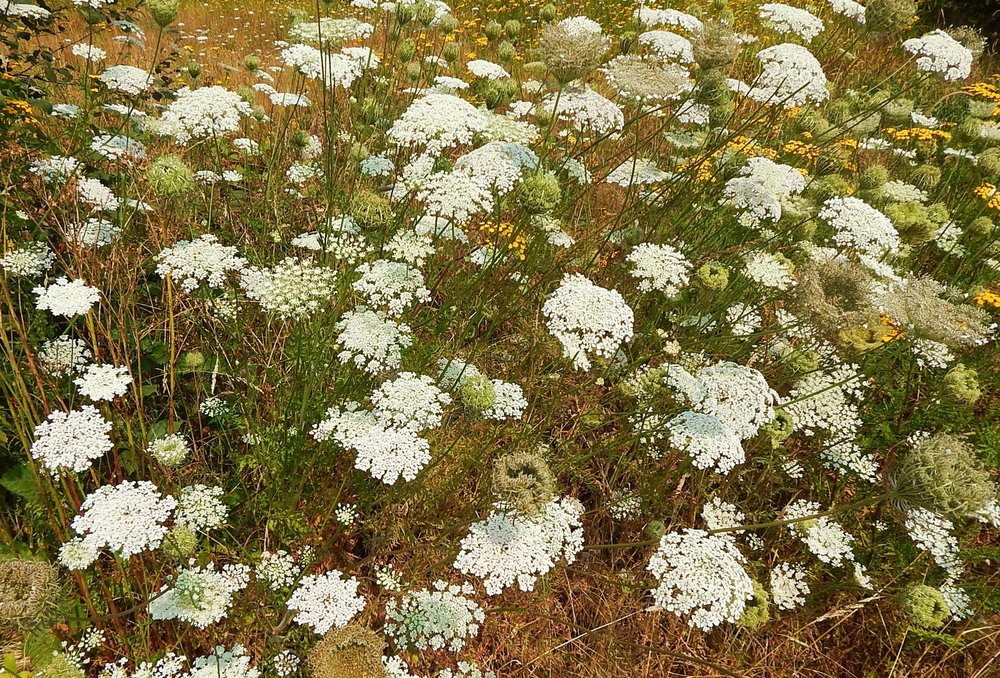
Queen Anne's Lace (Daucus carota), also called Wild Carrot, is an introduced biennial with flat-topped clusters of tiny white flowers, often with one dark purple flower in the center, that bloom from June into September. It grows along roadsides and in fields and waste ground, and herbarium specimens from Lawrence, Pennington and Custer counties in South Dakota are on record.
Free photos from other sources
| Family | Apiaceae · Carrot |
|---|---|
| Status | Introduced biennial |
| Blooms | June into September |
| Height | 30–100 cm (12–40 in) |
| Where | Roadsides, ditches, fields, pastures and waste ground, in sun or part shade |
| Also called | Wild Carrot, Bird's Nest, pȟaŋǧí zí (Lakota) |
| Toxicity | The sap may cause a skin rash (Minnesota Department of Agriculture), and in Europe the plant is considered mildly poisonous to horses and cattle (Kansas Wildflowers). |
| Traditional use | Moerman's ethnobotany database (BRIT) records that the Sanpoil and Nespelem of Washington stored dried roots for winter (Ray 1932) and that the Cherokee used an infusion as a wash for swelling (Hamel and Chiltoskey 1975). |
Roots, seeds & germination
Root: A taproot, brownish white to white, somewhat woody and bitter (Illinois Wildflowers); the Minnesota Department of Agriculture says the long taproots smell like edible carrots. Iowa State University Extension calls Wild Carrot the same species as the cultivated carrot, and Minnesota Wildflowers says the food crop carrot was cultivated from it.
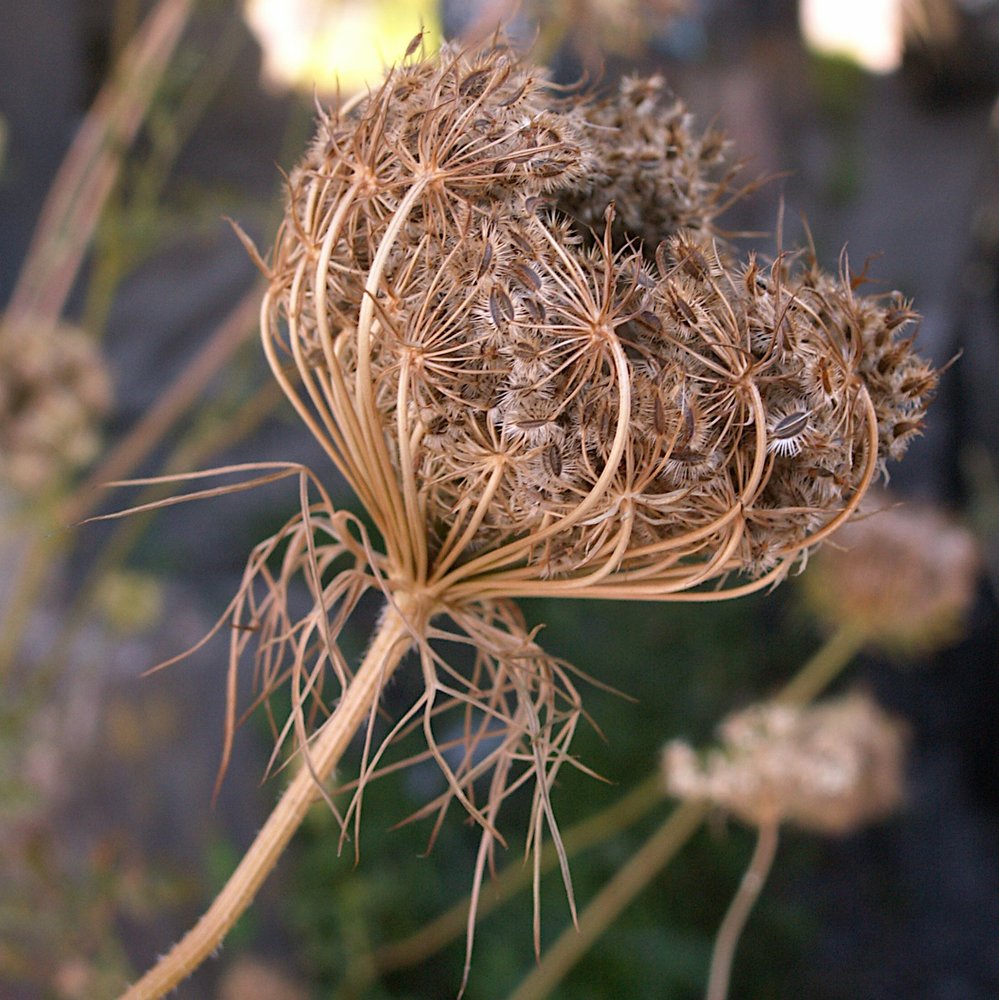
Seed: It reproduces by seed (Kansas Wildflowers). The fruits are 3–4 mm (⅛–⅙ in) long, slightly flattened, reddish and bristly while young, and each holds 2 seeds (Illinois Wildflowers). The seed has hooked spines that catch on clothing and animal fur, and the whole dried cluster can break off and be blown along by the wind (Minnesota Department of Agriculture; Minnesota Wildflowers). Small mammals and upland game birds eat the seeds (Kansas Wildflowers).
How do you identify Queen Anne's Lace?
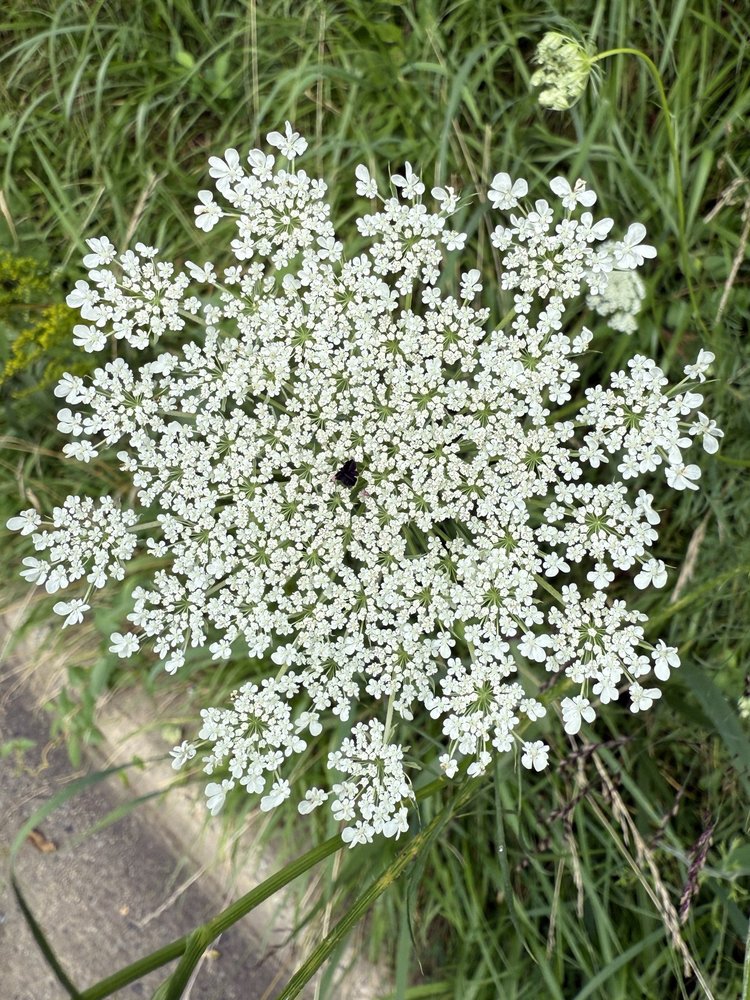
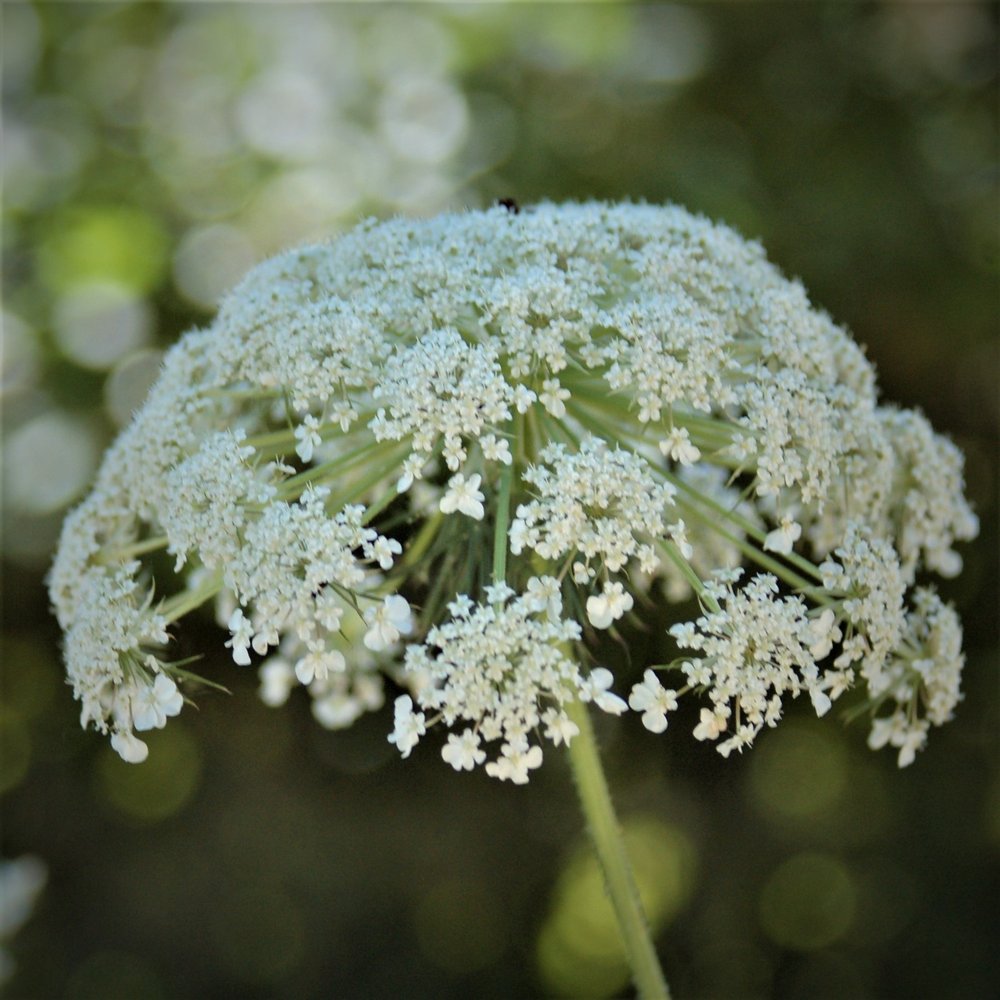
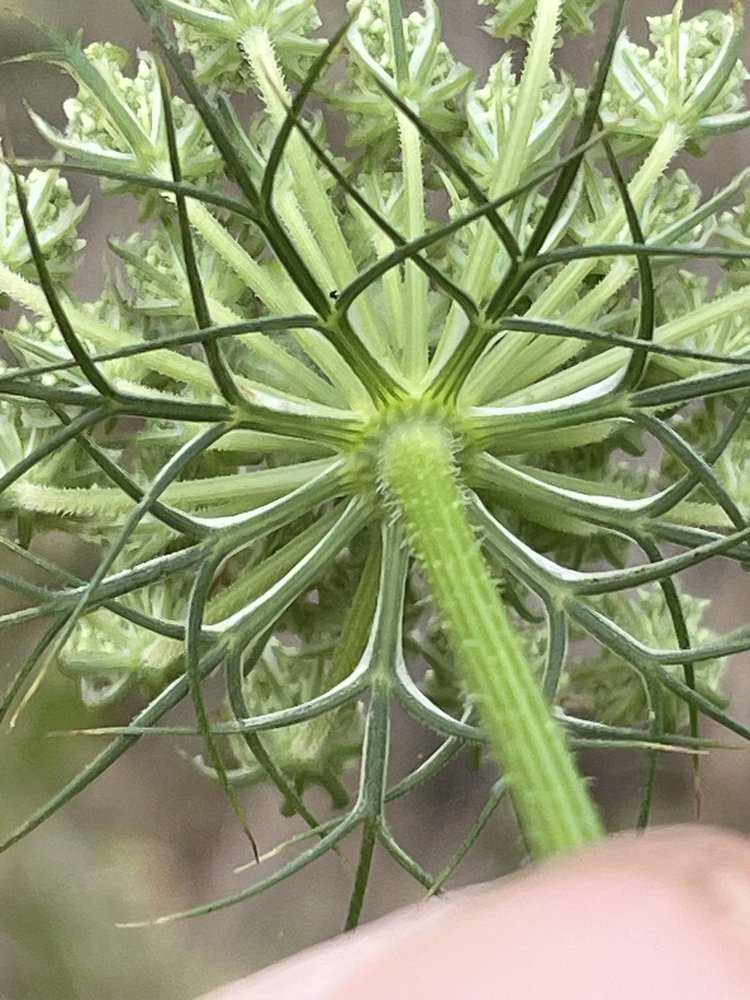
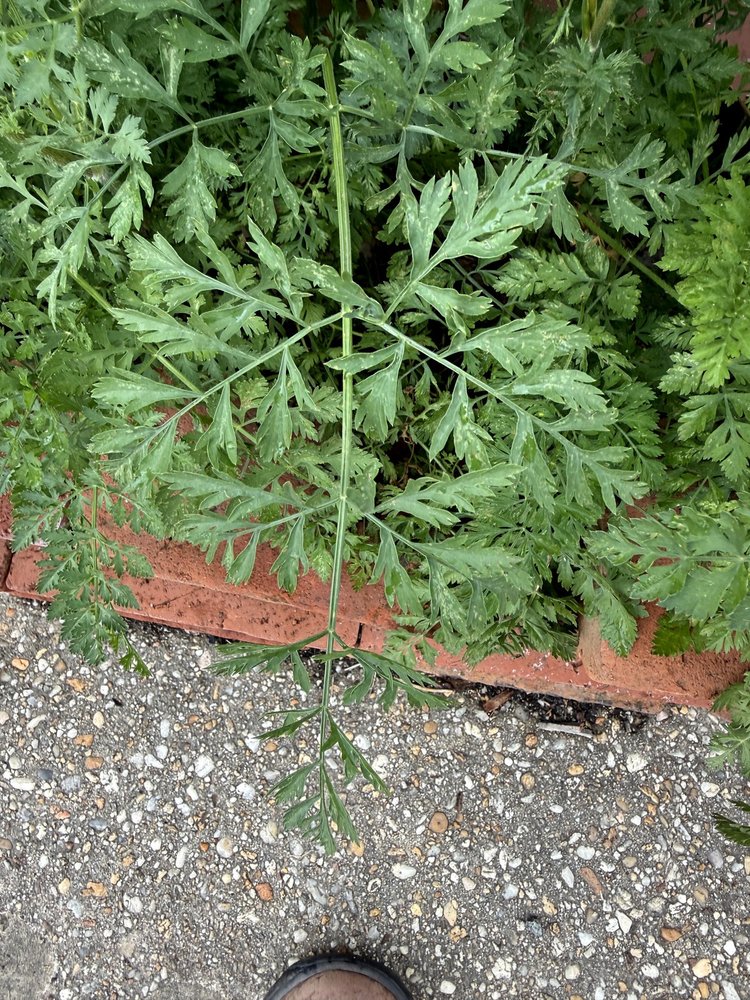
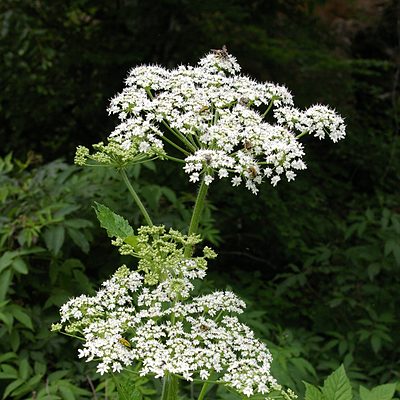
Look for a flat-topped cluster of tiny white flowers (a compound umbel) 5–13 cm (2–5 in) across on a branching stem 30–100 cm (12–40 in) tall. Each flower is about 3 mm (⅛ in) wide with 5 white petals, and the outer petals of the edge flowers are larger than the inner ones. Often, though not always, one flower in the middle of the cluster is dark purple. The showy bracts under the cluster are lobed into long, narrow segments. The stem is usually hairy and ribbed, and the leaves are fern-like and finely divided, the lower ones twice compound. As the fruits ripen the cluster folds up into a cage, the “bird's nest,” holding ribbed seeds with stiff hairs along the ribs. Illinois Wildflowers describes the smell of the leaves as bitter and soapy, typical of carrots. Minnesota Wildflowers says Queen Anne's Lace prefers dry soil and isn't likely to be found in wetlands or wet meadows. Poison Hemlock grows in similar places (Iowa State). Its stem is hairless and has purple spots (Minnesota Department of Agriculture; Minnesota Wildflowers), and it is typically taller, at least 1.5 m (5 ft) at maturity (Minnesota Wildflowers). Iowa State adds that its leaf lobes are less finely divided than Wild Carrot's and its leaves are triangular, where Wild Carrot's leaf margins are nearly parallel. The bracts under its cluster are short and undivided (Minnesota Wildflowers; Illinois Wildflowers), where Wild Carrot's are long and lobed. Water Hemlock (Cicuta maculata) grows in wet ground such as shores, wet ditches and swamps (Minnesota Wildflowers) and has a hairless stem and sharply toothed leaflets whose side veins run to the notches between the teeth, not to the tips (Minnesota Wildflowers; Illinois Wildflowers).
When does it bloom?
June into September.
Where does it grow?
Roadsides, fields, waste ground and woodland edges, in sun or part shade (Minnesota Wildflowers); the Minnesota Department of Agriculture adds pastures, old fields, prairies and ditches, and Kansas Wildflowers adds meadows, railroads, woodland openings and stream banks. GBIF holds 114 preserved specimens from South Dakota, 108 of them from Lawrence, Pennington and Custer counties; the oldest, from Custer County, was collected in 1924, and the labels give roadsides, ditches, lawns, gardens, creek banks and wooded areas. The plant lists of Wind Cave National Park and Mount Rushmore National Memorial record it as present. iNaturalist has 35 research-grade records from the Black Hills and its foothills, dated June to October. Minnesota lists it as a restricted noxious weed. It isn't on South Dakota's state noxious weed list or its locally noxious (county) list, or on Wyoming's state designated weed list or weed-seed lists.
Other flowers to compare
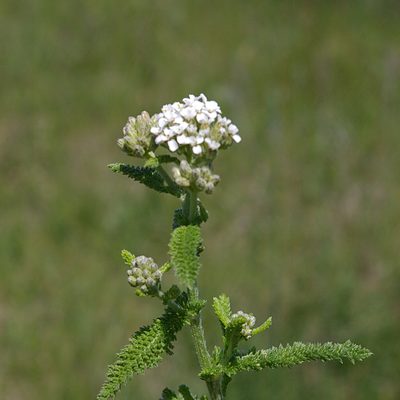
Carrot family (Apiaceae): 7 other plants in this guide
Sources: Minnesota Wildflowers: Queen Anne's Lace (Daucus carota); Illinois Wildflowers: Wild Carrot (Daucus carota); Iowa State University Extension, Weed Identification: Wild carrot (Bob Hartzler); Kansas Wildflowers and Grasses: Queen Anne's lace (Daucus carota); Minnesota Department of Agriculture, Weed of the Month (July 2017): Wild Carrot; Nebraska Invasive Species Council (University of Nebraska–Lincoln): Queen Anne's Lace; Minnesota Wildflowers: Poison Hemlock (Conium maculatum); Illinois Wildflowers: Poison Hemlock (Conium maculatum); Minnesota Wildflowers: Water Hemlock (Cicuta maculata); Illinois Wildflowers: Water Hemlock (Cicuta maculata); USDA PLANTS Database: Daucus carota (DACA6), introduced in the lower 48 states; GBIF occurrence search: Daucus carota, preserved specimens, South Dakota (114); NPSpecies checklist, Wind Cave National Park (vascular plants); NPSpecies checklist, Mount Rushmore National Memorial (vascular plants); iNaturalist: Daucus carota research-grade observations in the Black Hills; Minnesota Department of Agriculture: Minnesota Noxious Weed List (Restricted Noxious Weeds, wild carrot added 2017); South Dakota DANR: State Noxious Weed and Pest List; South Dakota DANR: Locally Noxious Weed and Pest List (county designations, PDF made March 2026; file named "Updated 2024"); Wyoming Weed and Pest Council: Identify Weeds (state designated weeds); Wyoming rule 010-63 Wyo. Code R. 63-3: Prohibited Noxious Weeds (weed-seed list); Wyoming rule 010-63 Wyo. Code R. 63-4: Restricted Noxious Weeds (weed-seed list); Native American Ethnobotany Database (BRIT): Daucus carota; Culturally Important Plants of the Lakota (Black Elk and Flying By, Sitting Bull College, 1998), entry 103.