Maryland Black Snakeroot Sanicula marilandica
Also called Maryland Sanicle, Black Snakeroot, Black Sanicle, Snakeroot, waptá yahúžiži (Lakota), waptá yaȟlá (Lakota), waptá yaȟóta (Lakota)
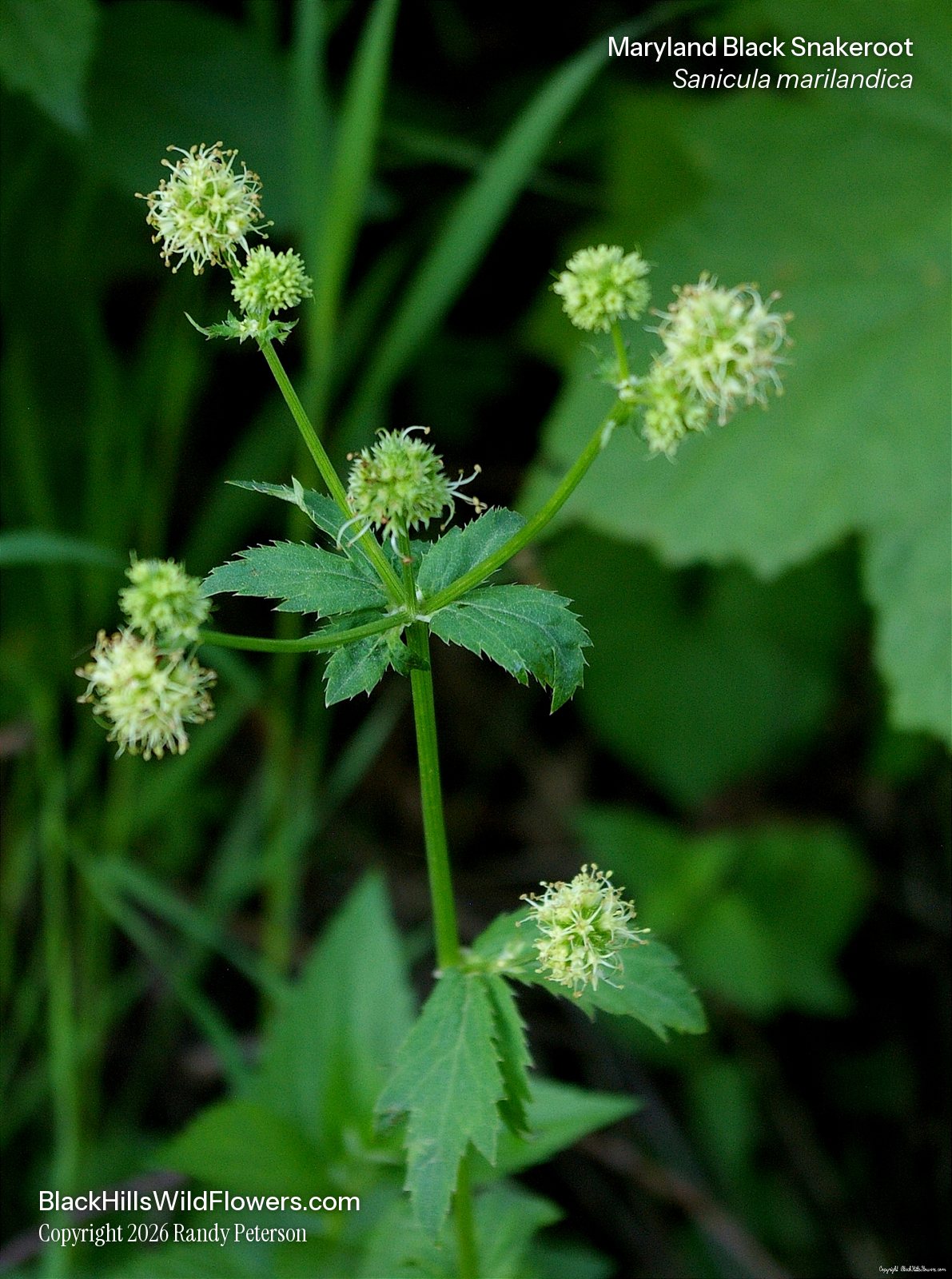
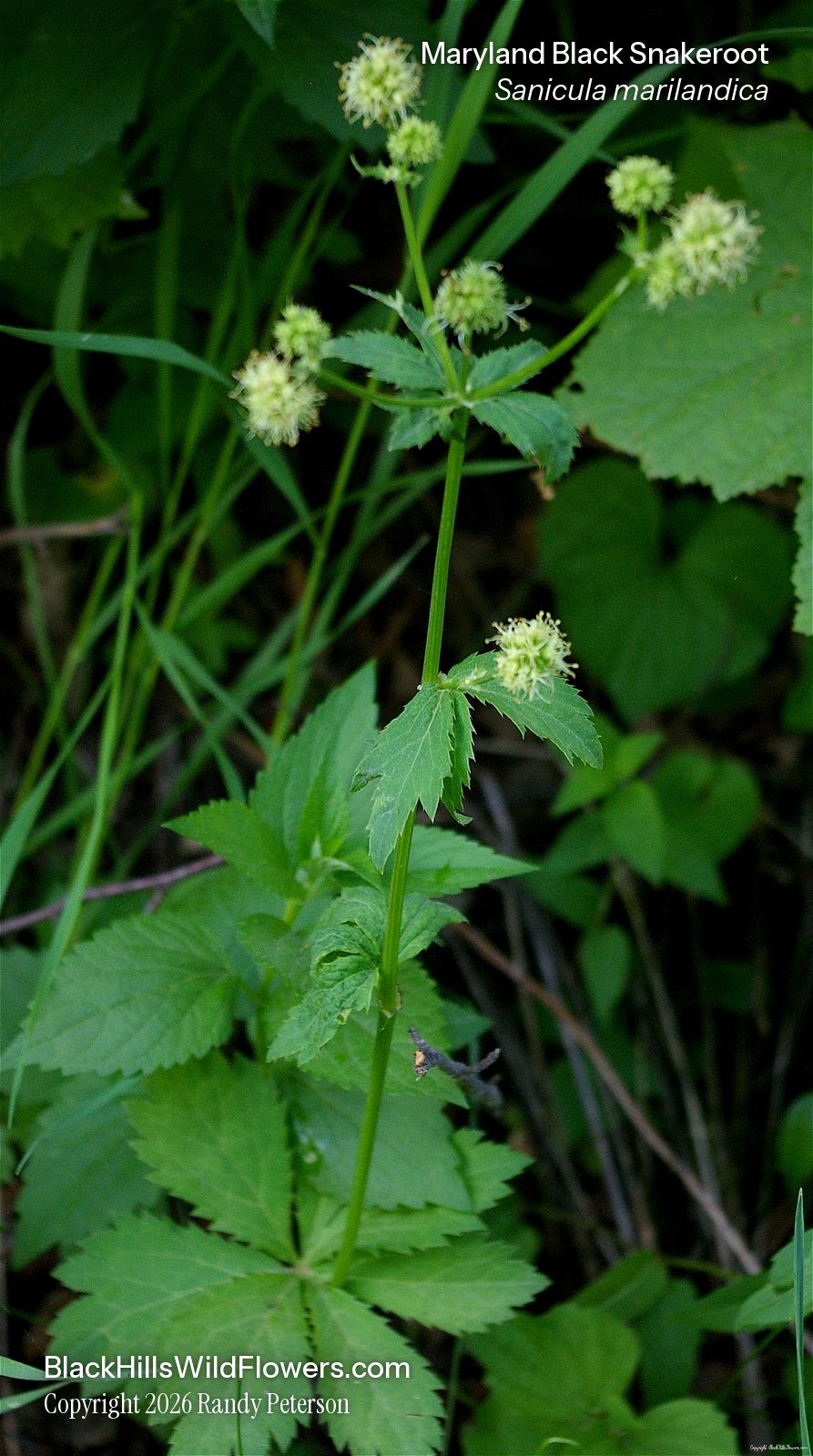
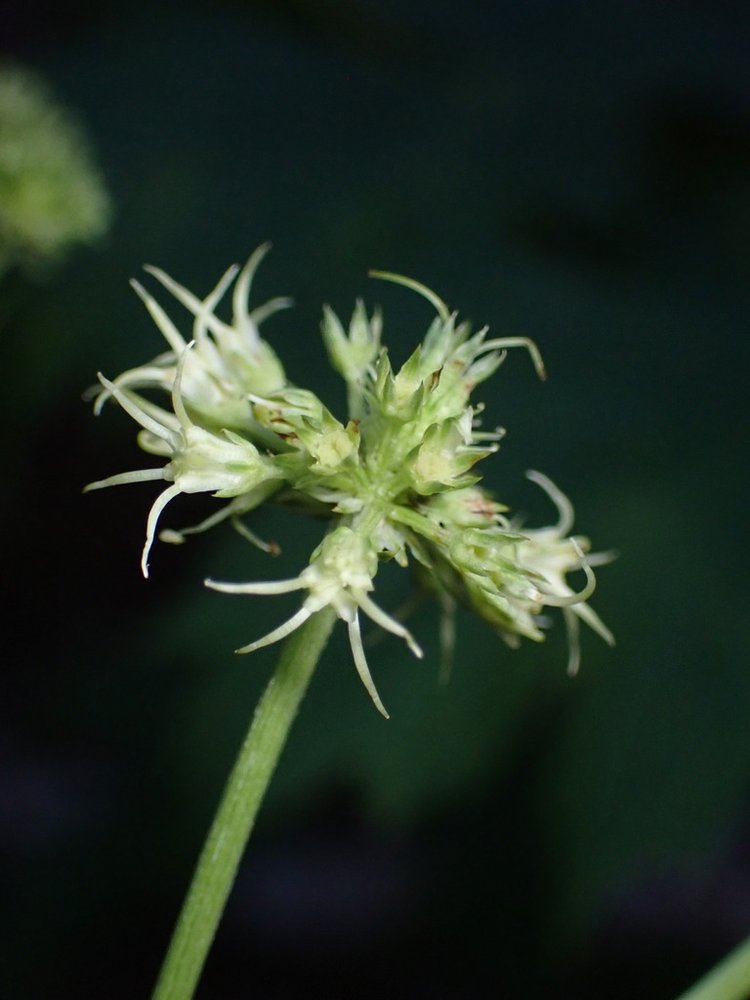
Maryland Black Snakeroot (Sanicula marilandica) is a native perennial of the carrot family with leaves cut like a hand into 5 to 7 sharply toothed leaflets and small round pom-pom clusters of greenish-white flowers with long, sticking-out styles. It blooms in June and July in moist, shaded woods, and all four National Park Service units in the Black Hills list it. Photographed in the Black Hills.
Free photos from other sources
| Family | Apiaceae · Carrot |
|---|---|
| Status | Native perennial |
| Blooms | June and July |
| Height | 30–120 cm (1–4 ft) |
| Where | Moist, shaded woods, ravines and creek sides, and pine and spruce forest |
| Also called | Maryland Sanicle, Black Snakeroot, Black Sanicle, Snakeroot, waptá yahúžiži (Lakota), waptá yaȟlá (Lakota), waptá yaȟóta (Lakota) |
| Traditional use | Lakota made a decoction of the roots for fever, eczema, psoriasis, sore throat, coughs, heavy sweating, morning sickness, toothache and menstrual problems, and put a poultice of the root on snakebites. |
Roots, seeds & germination
Seed: The fruit is a small dry burr about 4 mm (⅙ in) long, round to slightly oval and covered in hooked bristles, with the long curved style still on top. It splits into two one-seeded halves.
How do you identify Maryland Black Snakeroot?
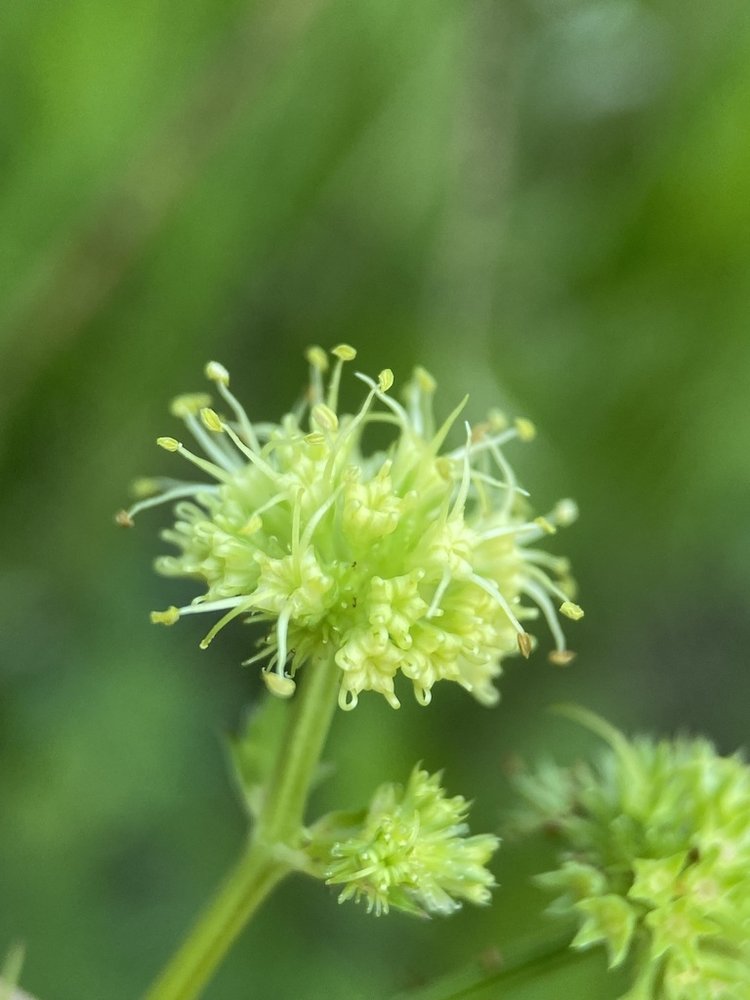
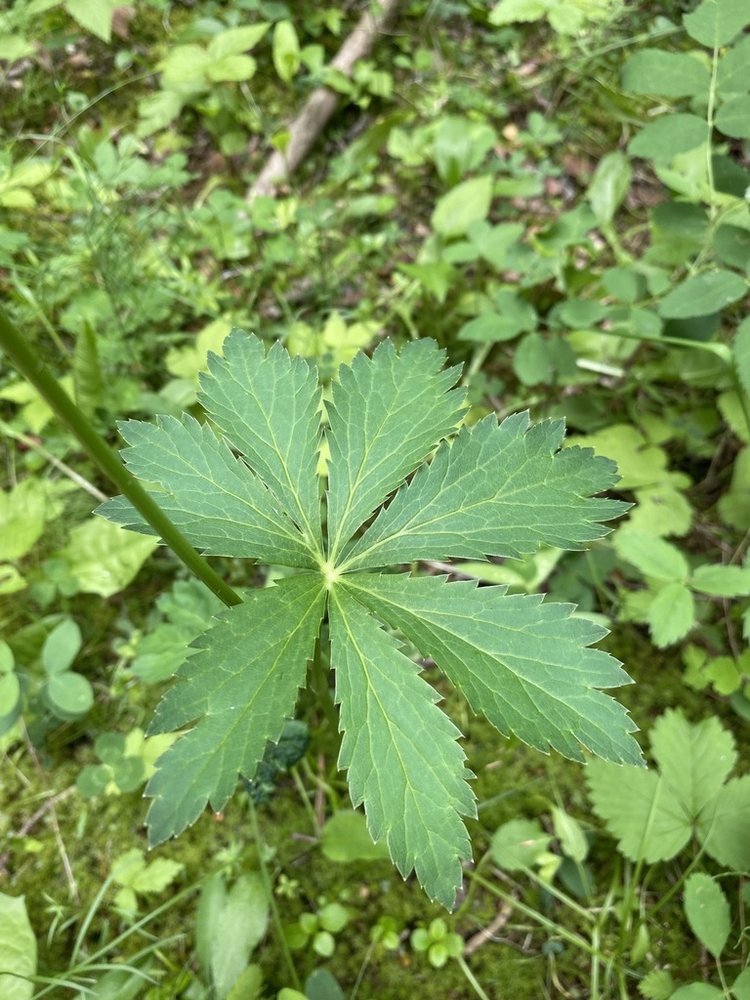
Look for an upright, hairless, branching stem 30–120 cm (1–4 ft) tall with round flower heads about 1.3 cm (½ in) across, two to four together at the ends of the branches. Each head holds 20 to 60 tiny greenish-white flowers; the stamens stick out, and the seed-making flowers have two long, spreading styles that stand well past the hooked bristles on the ovary and stay on, arching, as the fruit ripens. The leaves are palmate, like a hand: 5 or 7 coarsely double-toothed leaflets, or 5 with the side pair cut so deeply they look like 7, widest above the middle; the lower leaves have long stalks and the upper ones almost none. Minnesota Wildflowers notes that all sanicles have similar pom-pom heads and hand-shaped leaves, and that this one has 5 to 7 leaflets where the others have 3 or 5.
When does it bloom?
June and July.
Where does it grow?
Moist, shaded places: wooded ravines, edges of dense mixed woods, shaded clefts with rich soil, creek sides with cottonwood and birch, open ponderosa pine slopes and moist spruce and pine forest. The National Park Service lists it at Wind Cave, Jewel Cave, Mount Rushmore and Devils Tower, the 1986 plant survey of Jewel Cave lists it, and herbarium specimens come from Lawrence, Pennington, Custer and Meade counties and from Crook and Weston counties, Wyoming.
Carrot family (Apiaceae): 7 other plants in this guide
Sources: Minnesota Wildflowers: Sanicula marilandica (Maryland Black Snakeroot); Go Botany (Native Plant Trust): Sanicula marilandica; USDA PLANTS Database: Sanicula marilandica (SAMA2); Marriott and Hartman 1986, A Survey of the Vegetation of Jewel Cave National Monument; NPSpecies checklist, Wind Cave National Park vascular plants; NPSpecies checklist, Jewel Cave National Monument vascular plants; NPSpecies checklist, Mount Rushmore National Memorial vascular plants; NPSpecies checklist, Devils Tower National Monument vascular plants; GBIF occurrence search: Sanicula marilandica, South Dakota and Wyoming herbarium specimens; Culturally Important Plants of the Lakota (Black Elk and Flying By, 1998), entry 272.