Desert Biscuitroot Lomatium foeniculaceum
Also called Carrot-leaf Desert-parsley, Wild Parsley, Biscuitroot, Whisk-broom Parsley, Fennel-leaved Lomatium, šahíyela tȟathíŋpsila huzízi (Lakota), waȟčá zí iyawicaskapa (Lakota)
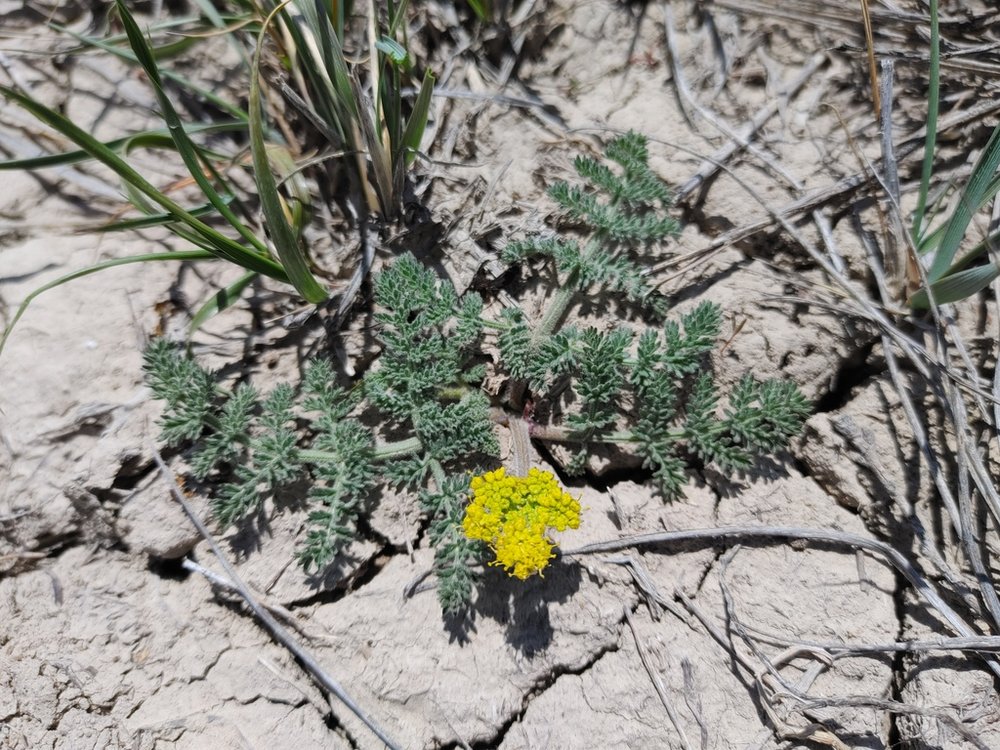
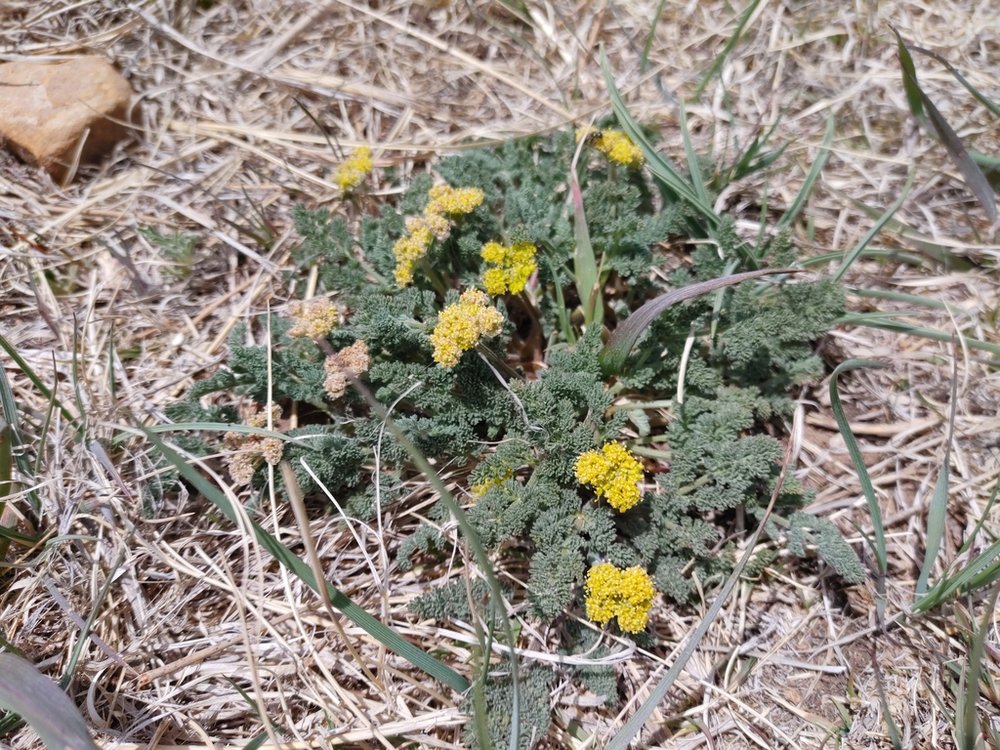
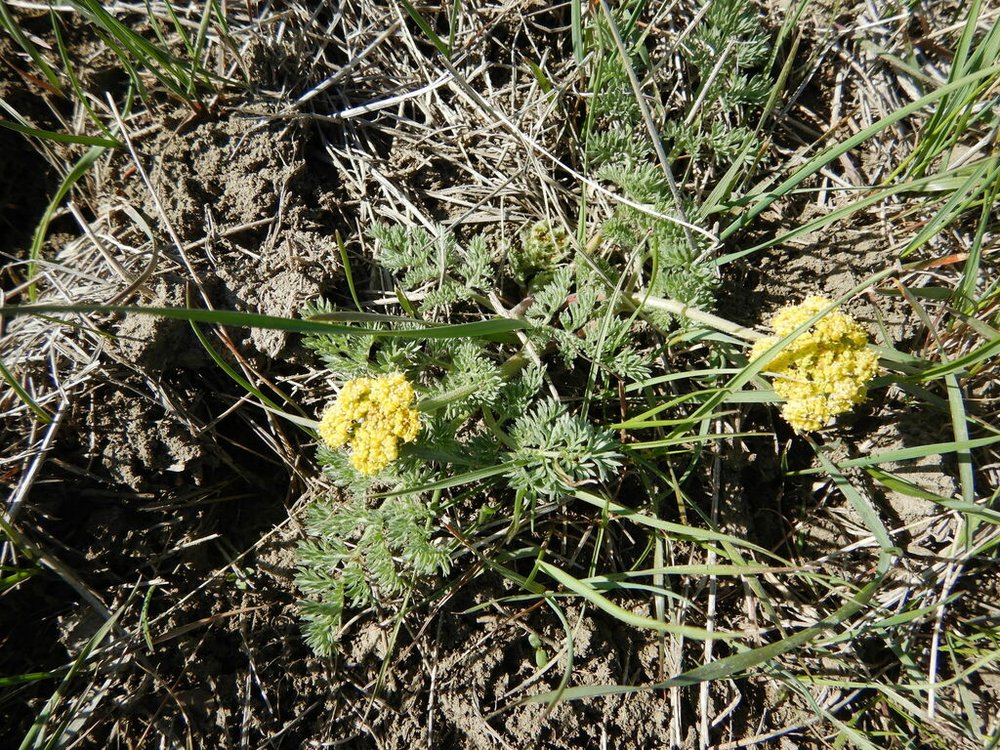
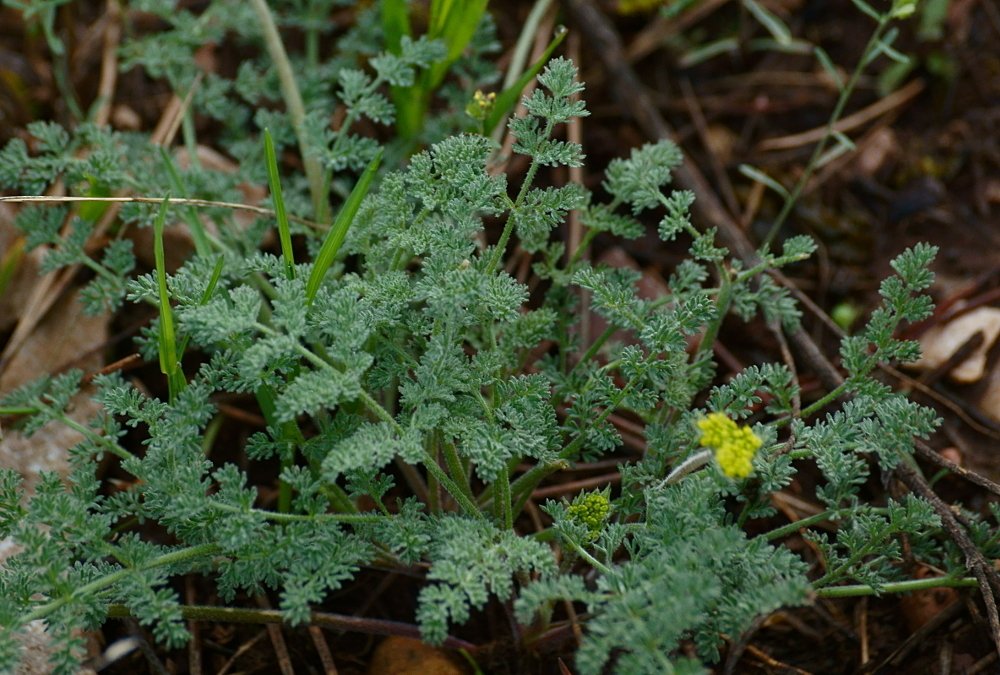
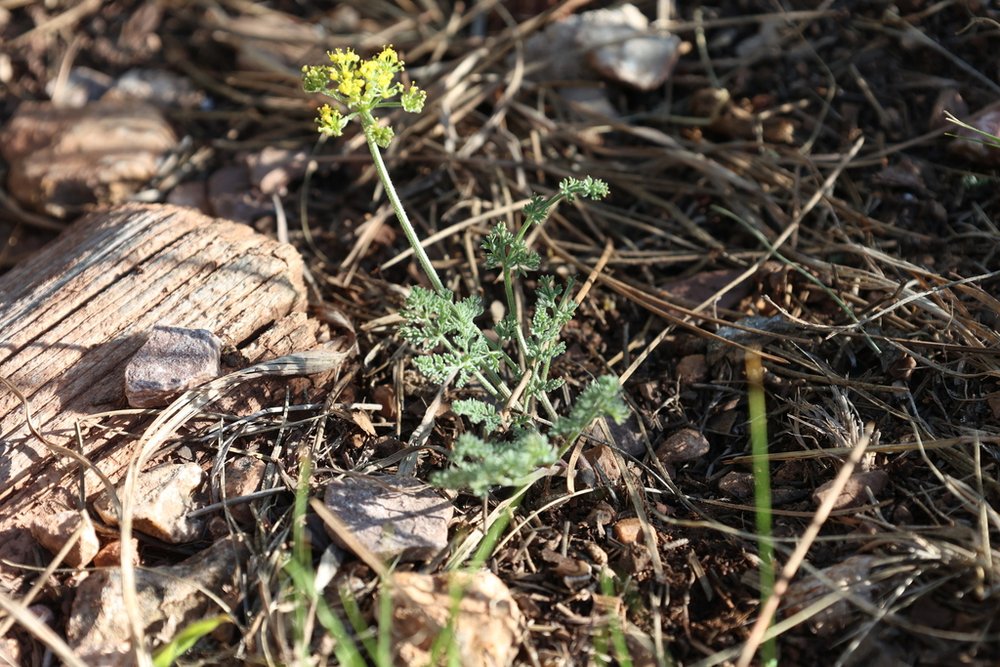
Desert Biscuitroot (Lomatium foeniculaceum) is a low, stemless native perennial in the carrot family that sends up clusters of tiny yellow flowers over gray-green, finely cut leaves, mostly in April and May, as one of the first prairie plants to bloom in spring. It grows on dry, rocky prairie hilltops, slopes and foothills. In the Black Hills the National Park Service lists it at Wind Cave, Jewel Cave and Devils Tower, and herbarium specimens come from all five Black Hills counties in South Dakota and from Crook and Weston counties in Wyoming.
Free photos from other sources
| Family | Apiaceae · Carrot |
|---|---|
| Status | Native perennial |
| Blooms | April and May, with a few still in flower in June |
| Height | 10–50 cm (4–20 in) |
| Where | Dry, open, rocky prairie hilltops and slopes, dry plains and foothills, and open pine on limestone ridges |
| Also called | Carrot-leaf Desert-parsley, Wild Parsley, Biscuitroot, Whisk-broom Parsley, Fennel-leaved Lomatium, šahíyela tȟathíŋpsila huzízi (Lakota), waȟčá zí iyawicaskapa (Lakota) |
| Synonym | Ferula foeniculacea, Peucedanum foeniculaceum, Cogswellia foeniculacea, Pastinaca foeniculacea |
| Traditional use | Black Elk and Flying By (1998) record that the Lakota roasted the strong-flavored root to tame its taste, sometimes grinding it into flour for bread or to thicken soups and stews, and used the dried plant in a love charm. Gilmore (1919), listing the plant as Cogswellia daucifolia, recorded that men of all tribes in the Plains region used its seeds with other plants as a love charm, and that a Pawnee said carrying the seeds made a man attractive to everyone. |
Traditional use: first drafted by Google AI, then checked against the sources on this page.
Roots, seeds & germination
Root: A long, thick taproot, 4–17 mm (up to about ⅔ in) wide just below the crown.
Seed: The fruit is oval, winged and usually hairy, 5–12 mm long, and splits into two one-seeded halves. Fruits split apart in June and July.
Germination: South Dakota State University says the seed is dormant when collected and needs 90 days of cold treatment, and recommends planting outdoors in fall.
How do you identify Desert Biscuitroot?
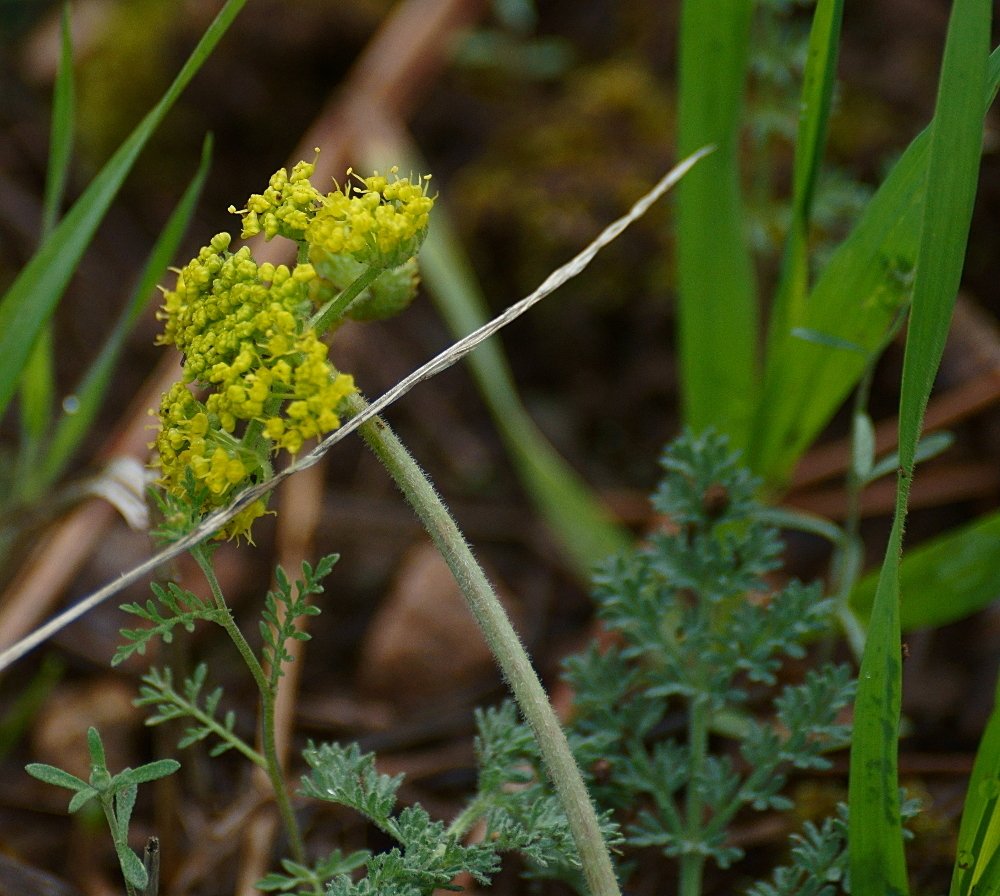
Look for a plant with no stem: the leaves and the hairy flower stalks rise straight from the crown of a thick taproot. The leaves are cut three or four times into crowded segments only 1–5 mm long, like a carrot leaf, and are gray-green from fine hairs, with a purplish sheath at the base of each leaf stalk. The tiny yellow flowers sit in a compound umbel (a cluster of small clusters) with 8–24 rays of unequal length, and the narrow bractlets under each small cluster are covered in woolly, coiled hairs. The plant is fragrant, and the fruit is oval and winged, 5–12 mm long. The Forest Service describes two other yellow parsleys of the Hills by their own marks: Threadleaf Musineon, not in this guide, is low-growing, with finely dissected leaves and yellow clusters on dry, rocky ground in open forest and grassland, and Heartleaf Alexanders, in this guide, has thick, smooth leaves and flat-topped clusters in moist forest and meadows in midsummer.
When does it bloom?
April and May, with a few still in flower in June.
Where does it grow?
Dry, open, rocky prairie hilltops and slopes, dry plains and foothills, and open ponderosa pine on limestone ridges, in full sun on well-drained sandy to clay soil. The National Park Service lists it at Wind Cave, Jewel Cave and Devils Tower, the 1986 Jewel Cave plant survey records it, and the Black Hills National Forest names it among its spring wildflowers. Herbarium specimens come from Lawrence, Meade, Pennington, Custer and Fall River counties in South Dakota, Bear Butte State Park among them, and from Crook and Weston counties in Wyoming, at about 1,070–1,370 m (3,500–4,500 ft). Labels in the Hills give pine and oak on stony soil, open pine on talus, and ponderosa pine on a limestone ridge.
Carrot family (Apiaceae): 7 other plants in this guide
Sources: Black Hills Native Plants — Black Hills National Forest, USDA Forest Service; Wildflowers — Devils Tower National Monument, National Park Service; NPSpecies checklist, Wind Cave National Park vascular plants; NPSpecies checklist, Jewel Cave National Monument vascular plants; NPSpecies checklist, Devils Tower National Monument vascular plants; Marriott and Hartman 1986, A Survey of the Vegetation of Jewel Cave National Monument; SDSU Open PRAIRIE: Apiaceae: Lomatium foeniculaceum (R. Neil Reese); Botello et al. 2024, Taxonomic revision of the Lomatium foeniculaceum complex (Apiaceae) — Phytoneuron 2024-26; ITIS: Lomatium foeniculaceum, TSN 29699; Montana Field Guide: Carrotleaf Desert-parsley, Lomatium foeniculaceum; Lady Bird Johnson Wildflower Center: Lomatium foeniculaceum (LOFO); Kansas Wildflowers and Grasses: Lomatium foeniculaceum, wild parsley; Range Plants of Utah: Desert Parsley — Utah State University Extension; Missouri Plants: Lomatium foeniculaceum; GBIF occurrence search: Lomatium foeniculaceum herbarium specimens, South Dakota and Wyoming; GBIF specimen 1986993429: Pennington County, Black Hills, 2010, flowering June 17, ponderosa pine on a limestone ridge, 1298 m; GBIF specimen 5220035322: Bear Butte State Park, 2013, 1250 m; GBIF specimen 2869128404: Crook County, Wyoming, 1937, open pine and talus; GBIF specimen 2869128400: Pennington County, 1935, flowering April 4, among pine and oak on stony soil; Culturally Important Plants of the Lakota (Black Elk and Flying By, 1998), entry 174, filed with the South Dakota PUC; Moerman, Native American Ethnobotany Database (BRIT): Lomatium foeniculaceum; Gilmore 1919, Uses of Plants by the Indians of the Missouri River Region.