Dalmatian Toadflax Linaria dalmatica
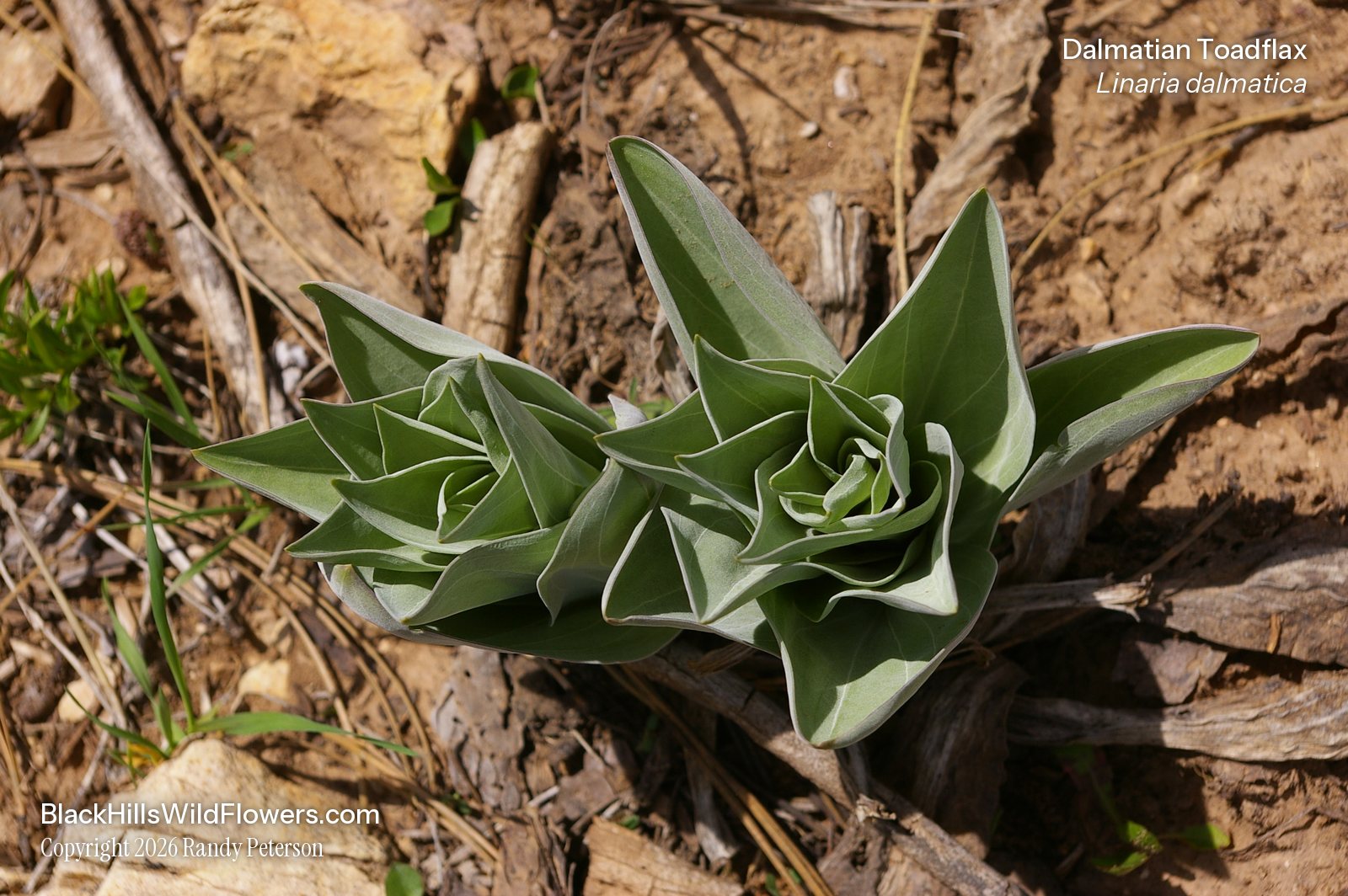
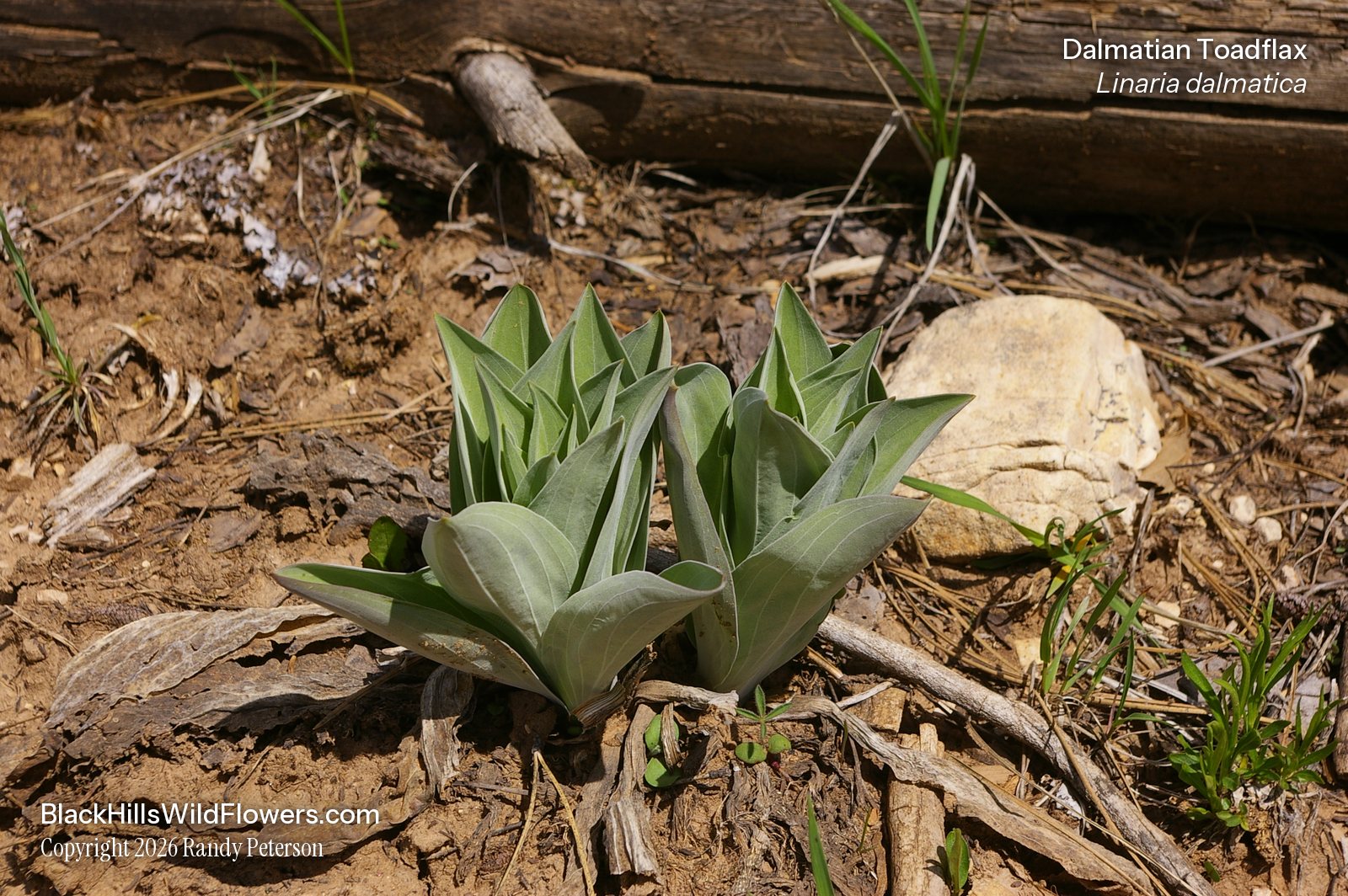
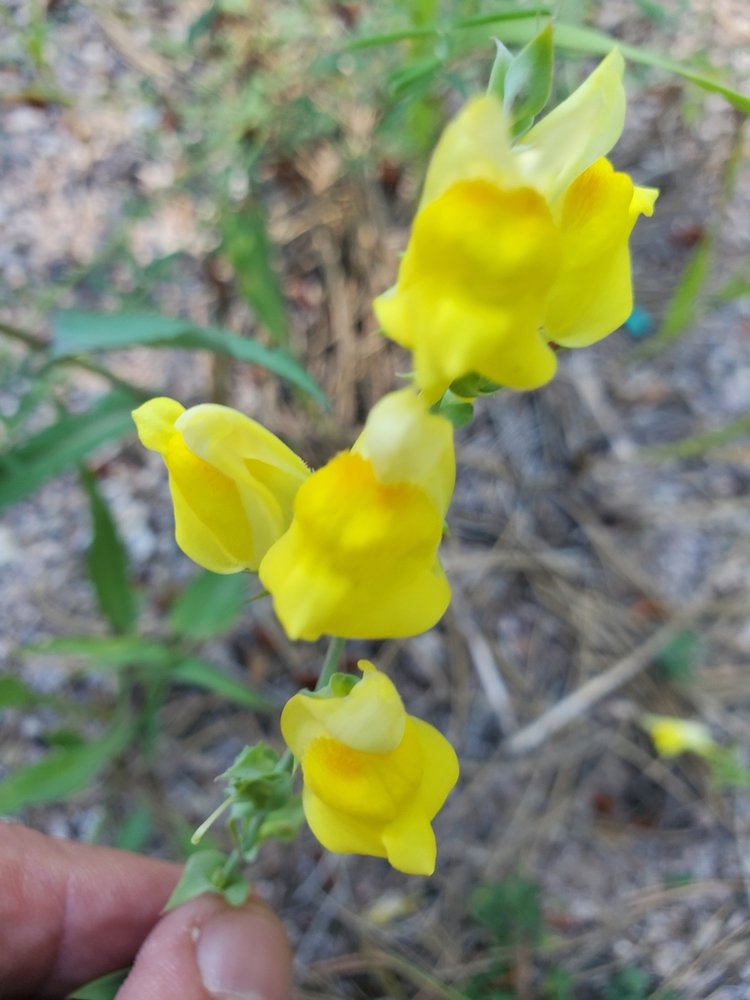
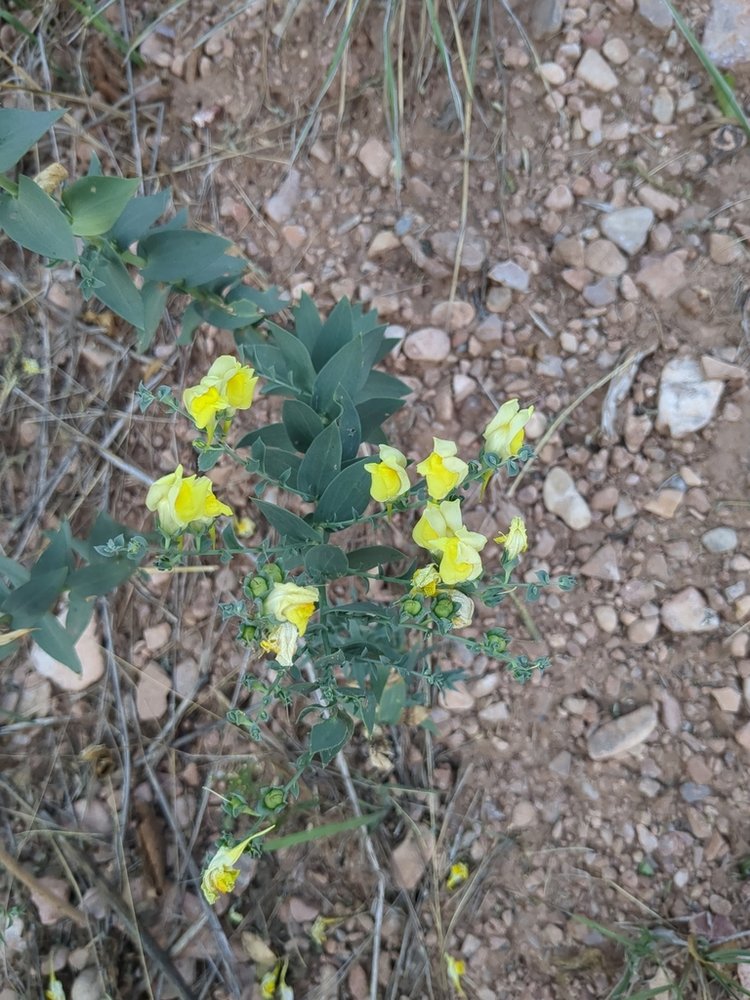
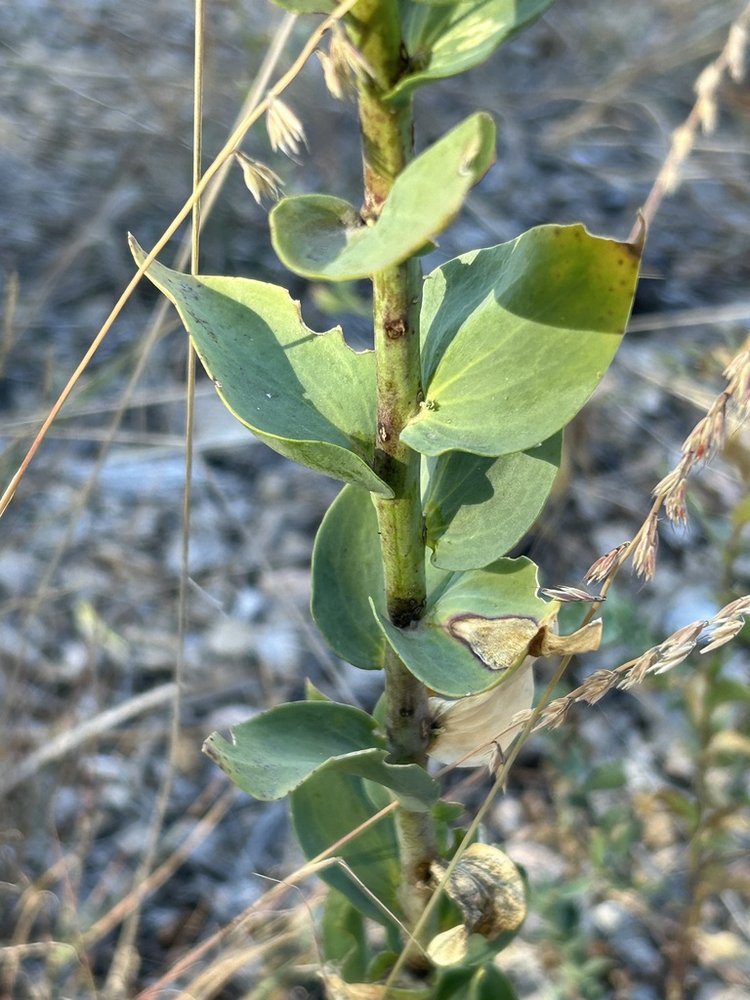
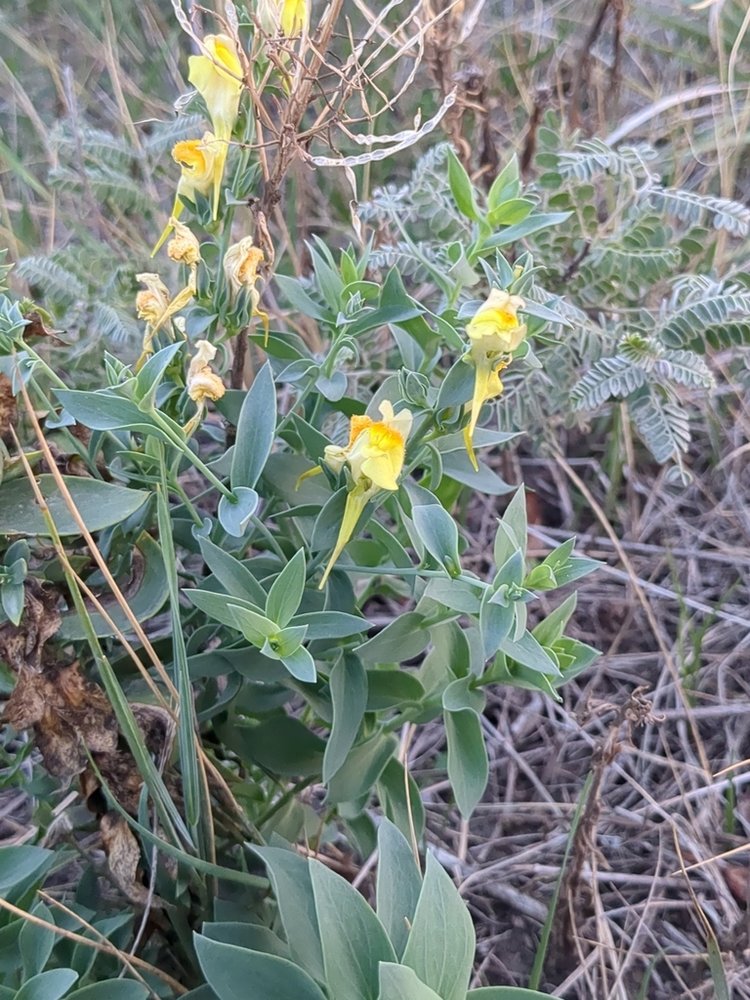
Dalmatian Toadflax (Linaria dalmatica) is a Mediterranean perennial weed 40–90 cm (16–36 in) tall, with waxy, blue-green, heart-shaped leaves that clasp the stem and bright yellow, snapdragon-like flowers with an orange, hairy throat and a long spur. It blooms from May into August on roadsides, dry fields and disturbed ground; herbarium specimens from the Black Hills and its edges come from Lawrence, Pennington, Meade and Fall River counties, and Fall River, Lawrence and Meade counties list it as a locally noxious weed. Photographed in the Black Hills.
Free photos from other sources
| Family | Plantaginaceae · Plantain |
|---|---|
| Status | Introduced perennial |
| Blooms | May into August |
| Height | 40–90 cm (16–36 in) |
| Where | Roadsides, dry fields, disturbed ground and open, rocky slopes |
| Synonym | Linaria genistifolia subsp. dalmatica |
| Listed | Locally noxious in Fall River, Lawrence and Meade counties, South Dakota (designated 2024, through 2028); designated noxious weed on Wyoming's state list |
Roots, seeds & germination
Root: A deep taproot that can reach 1.3–3 m (4–10 ft), with side roots that can spread 3.6 m (12 ft). Most new shoots come from buds on the side roots in the top 5–30 cm (2–12 in) of soil. Shoots come up singly or in clumps of up to 25 stems along those side roots, and a patch spreads by both roots and seed.
Seed: Each capsule is 6–7 mm long and holds on average 140 to 250 winged seeds 1.2–2 mm long, and a plant with 10 stems can make about 500,000 seeds when it has room and water. Most seeds probably fall close to the plant; in eastern Washington they are estimated to stay alive in the soil for about 10 years, and they survive passing through cattle.
Germination: Seedlings come up in both spring and fall, and spring seedlings appear to survive better. In eastern Washington they came up from early March to late April on south-facing slopes and 2 to 3 weeks later on level ground, when the soil 2.5 cm (1 in) down reached about 10 °C (50 °F).
How do you identify Dalmatian Toadflax?
Look for stout, waxy, blue-green stems, often branched near the top and somewhat woody at the base, crowded with alternate, toothless leaves 2–5 cm (¾–2 in) long that are broad and heart-shaped at the base, pointed at the tip and clasp the stem. The flowers are bright yellow and two-lipped like a snapdragon, about 4 cm (1½ in) long, with an orange, hairy throat and a spur about as long as the rest of the flower; they grow from the axils of the upper leaves in loose spikes at the tops of the stems. In early fall, first-year plants send out low, sprawling stems that last through the winter, and the next spring's flowering stems grow from them. Butter-and-eggs (Linaria vulgaris) has nearly the same flowers, but its leaves are long and very narrow, 2–6 mm wide, and don't clasp the stem.
When does it bloom?
May into August.
Where does it grow?
Roadsides, dry fields, disturbed ground and open, rocky slopes. Herbarium labels from the Black Hills and its edges, collected from 1964 to 2005, record it on a sunny roadside bank, at the edge of the pavement, on a south-facing pasture slope, on rocky hillsides, along an open trail through conifer forest, in a rocky creek bottom and on open range in Bear Butte State Park. GBIF lists 25 specimens from Lawrence, Pennington, Meade and Fall River counties, and the National Park Service lists it at Wind Cave.
Other toadflaxes in this guide
Plantain family (Plantaginaceae): 11 other plants in this guide
Sources: USDA Forest Service Fire Effects Information System: Linaria spp. (Zouhar 2003); Minnesota Wildflowers: Linaria dalmatica (Dalmatian Toadflax); USDA PLANTS Database: Linaria dalmatica (LIDA); South Dakota Locally Noxious Weed Pest List (March 2026 version), SD Department of Agriculture and Natural Resources; University of Wyoming CAPS: Dalmatian Toadflax, Linaria dalmatica (state designated noxious weed in Wyoming); Wyoming Weed and Pest Lists (S. Franklin, Wyoming Department of Agriculture): Designated Noxious Weeds, W.S. 11-5-102(a)(xi); NPSpecies checklist, Wind Cave National Park vascular plants; GBIF occurrence search: Linaria dalmatica, South Dakota and Wyoming herbarium specimens; GBIF specimen 3038911454: Kravig 1964, Pennington County, "roadside bank, sunny exposure"; GBIF specimen 5159158587: Weedon 1988, Fall River County, at the edge of the pavement; GBIF specimen 3038911463: Sjomeling-Rahja 1994, Lawrence County, "full sun, rocky hillside"; GBIF specimen 5895831669: Medley 1994, Lawrence County, open trail through conifer forest; GBIF specimen 3038911464: Broome 1998, Meade County, Bear Butte State Park, "open range area"; GBIF specimen 5159158543: Sutton 2001, Pennington County, pasture on a south-facing slope; GBIF specimen 3038911461: Weins 1990, Meade County, "rocky creek bottom".