Blue-eyed Mary Collinsia parviflora
Also called Maiden Blue-eyed Mary, Small-flowered Blue-eyed Mary, Little-flower Collinsia, Blue Lips
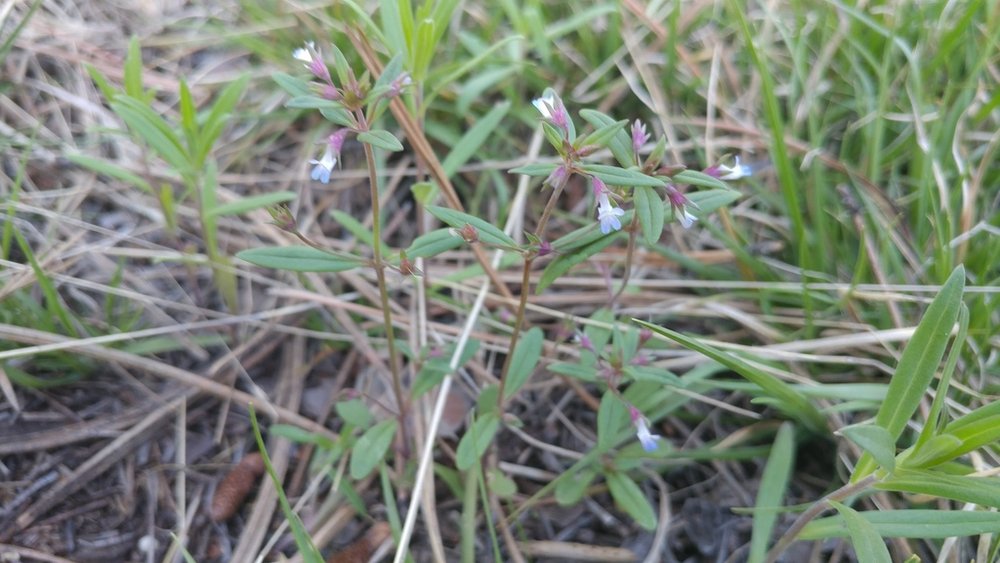
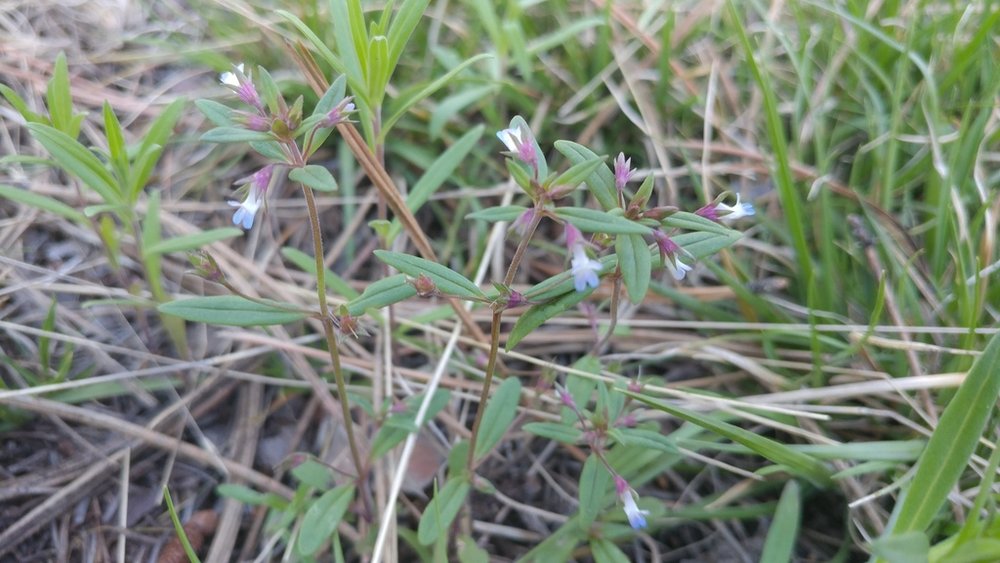
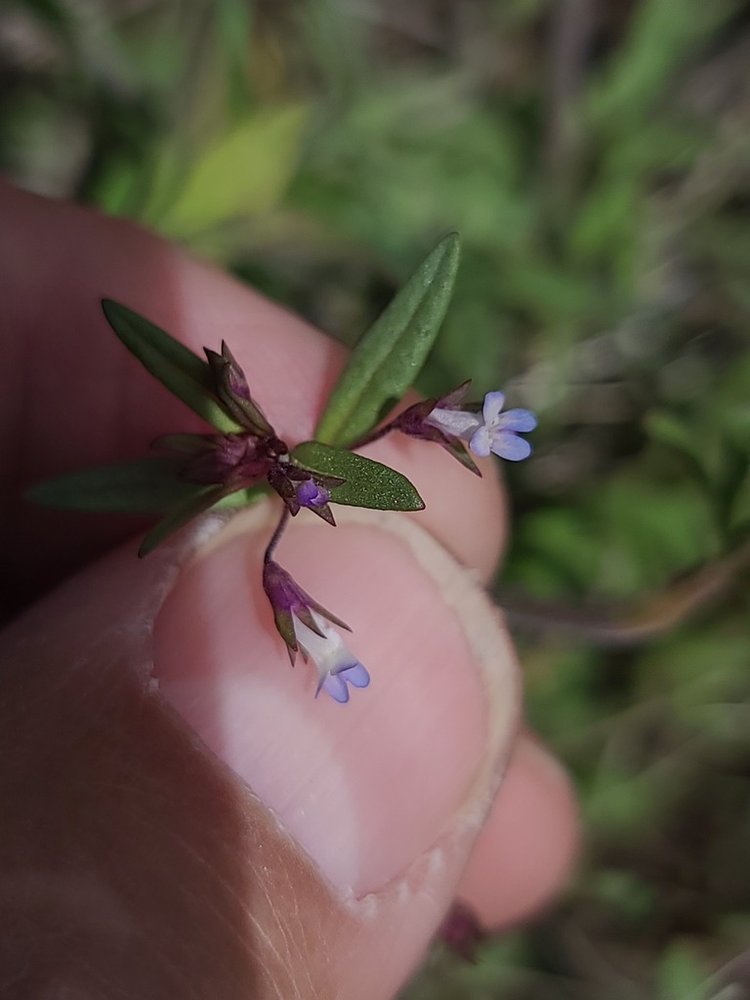
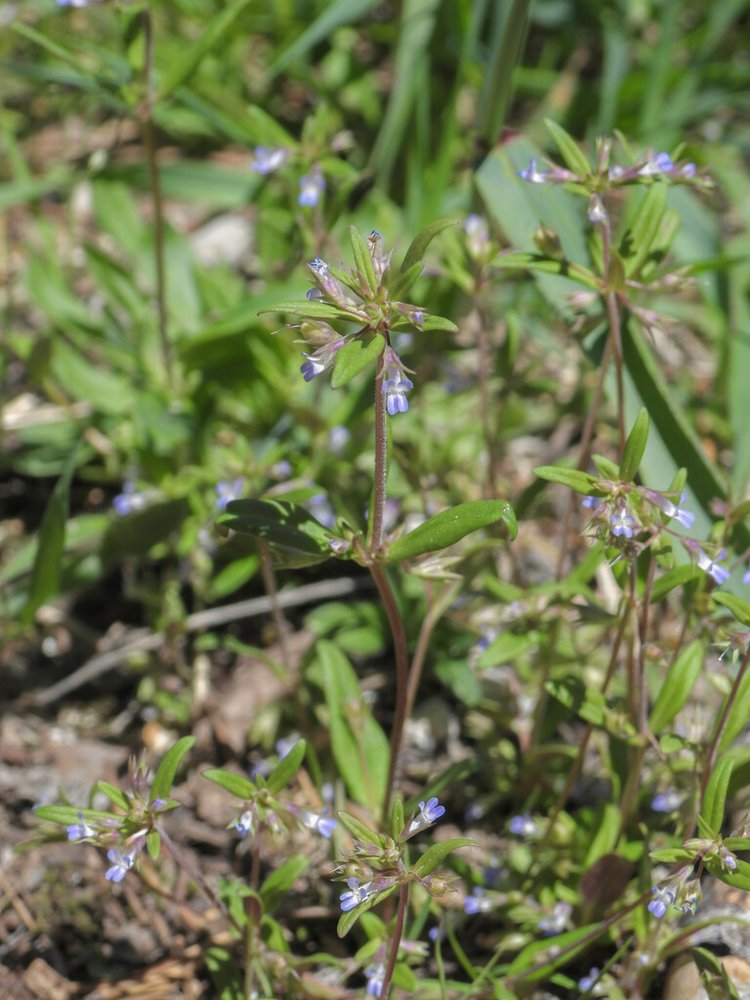
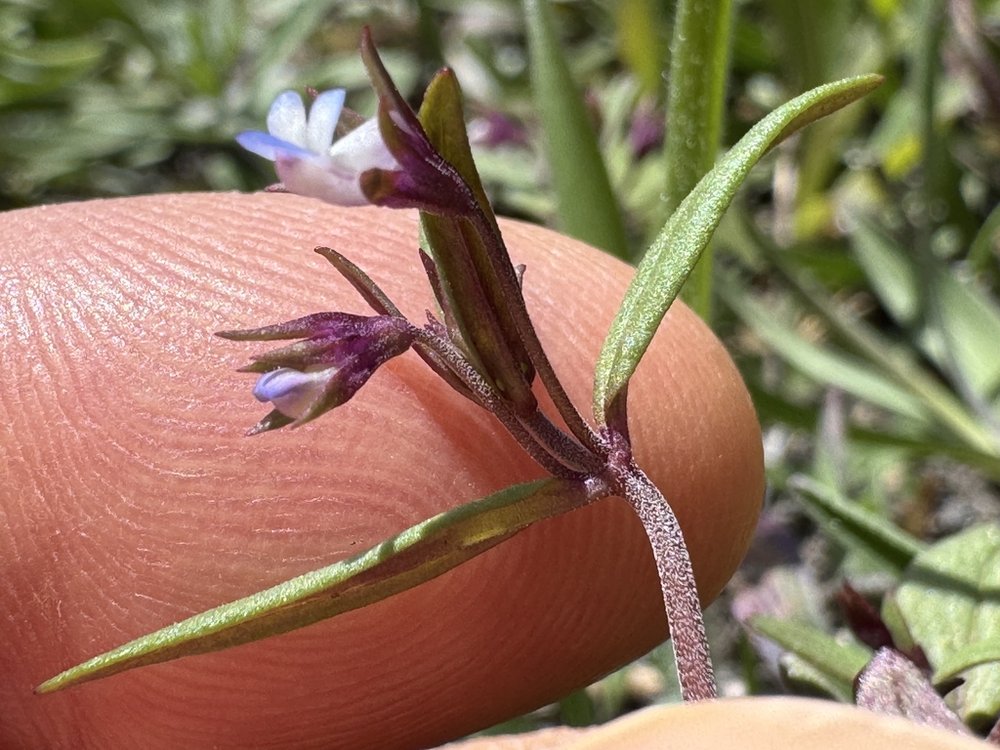
Blue-eyed Mary (Collinsia parviflora) is a tiny native annual: a slender, often branched stem 10–40 cm (4–16 in) tall with small paired leaves and two-lipped flowers only 5–8 mm long, a white upper lip over a blue lower lip, from late April into July. In the Black Hills it grows on open rocky slopes and in thin grass under pines, and the National Park Service lists it at Wind Cave, Jewel Cave, Mount Rushmore and Devils Tower.
Free photos from other sources
| Family | Plantaginaceae · Plantain |
|---|---|
| Status | Native annual |
| Blooms | Late April into July, mostly May and June |
| Height | 10–40 cm (4–16 in) |
| Where | Open gravelly flats, banks and slopes in sparse grass, and thin spots in open pine woods, moist in spring |
| Also called | Maiden Blue-eyed Mary, Small-flowered Blue-eyed Mary, Little-flower Collinsia, Blue Lips |
| Synonym | Collinsia tenella, Collinsia grandiflora var. pusilla, Antirrhinum tenellum, Collinsia minima, Collinsia pauciflora, Collinsia diehlii |
| Traditional use | The BRIT ethnobotany database records that the Ute used the plant externally for sore flesh (Chamberlin 1909) and that the Kayenta Navajo used it to make a horse run fast (Wyman and Harris 1951). |
Traditional use: first drafted by Google AI, then checked against the sources on this page.
Roots, seeds & germination
Root: A fibrous root system. SDSU calls it an annual or annual-biennial.
Seed: A small round capsule 2–3 mm, maturing in midsummer, holds several reddish-brown seeds that shatter out readily, the lowest capsules first. A seed-growers' protocol counts about 350,000 seeds to the pound.
Germination: SDSU says the seed germinates easily with no pretreatment and can be sown in fall or spring in well-drained soil. A USDA seed-growers' protocol from Washington State treats it as a winter annual that must be sown in fall: the seedlings come up with the autumn rains, grow 2 to 4 leaves before winter and flower in spring. Spring-sown seed there came up in only one year, and those plants were smaller, later and made much less seed.
How do you identify Blue-eyed Mary?
Look low, in thin grass or on bare gravel, for a slender stem 10–40 cm (4–16 in) tall, often branched, with opposite, egg- to lance-shaped leaves 1–4 cm (½–1½ in) long and smooth or barely toothed. The flowers grow from the leaf axils on slender stalks and are only 5–8 mm (about ¼ in) long, two-lipped: the upper lip is white to whitish pink and split into two small lobes, and the lower lip is blue to lavender with three broader lobes. The calyx is a short tube with five narrow pointed teeth, and the fruit is a small round capsule 2–3 mm long. The Lady Bird Johnson Wildflower Center says it has among the smallest flowers in its genus.
When does it bloom?
Late April into July, mostly May and June.
Where does it grow?
Open gravelly flats, banks and slopes in sparse grass, and thin spots in open pine woods that are moist in spring; SDSU gives open woodlands, grasslands, dry slopes and disturbed ground in the upland and foothill parts of South Dakota. Black Hills herbarium labels from 1887 to 2018 record it on rocky outcrops and rocky slopes under open ponderosa pine, on a ridge crest with pine and bur oak, on disturbed rocky ground, on a burned rocky slope, in open grassland by a creek and in rich woods in a gulch, with specimens from Lawrence, Pennington, Custer and Meade counties and from Crook and Weston counties in Wyoming. The National Park Service lists it at all four Black Hills parks, the 1986 Jewel Cave survey lists it, and iNaturalist has 12 research-grade Black Hills records, April to June.
Plantain family (Plantaginaceae): 11 other plants in this guide
Sources: Scrophulariaceae: Collinsia parviflora — SDSU Open PRAIRIE; Collinsia parviflora (Maiden Blue-eyed Mary) — Lady Bird Johnson Wildflower Center; Propagation protocol for Collinsia parviflora (Skinner 2005), Native Plant Network — USDA NRCS Pullman Plant Materials Center; Collinsia parviflora, small-flowered blue-eyed Mary — Burke Herbarium Image Collection, University of Washington; USDA PLANTS Database: Collinsia parviflora (COPA3); GBIF Backbone Taxonomy: Collinsia parviflora; NPSpecies checklist, Wind Cave National Park vascular plants; NPSpecies checklist, Jewel Cave National Monument vascular plants; NPSpecies checklist, Mount Rushmore National Memorial vascular plants; NPSpecies checklist, Devils Tower National Monument vascular plants; Marriott and Hartman 1986, A Survey of the Vegetation of Jewel Cave National Monument; GBIF occurrence search: Collinsia parviflora, South Dakota herbarium specimens; GBIF occurrence search: Collinsia parviflora, Wyoming herbarium specimens; iNaturalist: research-grade Blue-eyed Mary observations near the Black Hills; BRIT Native American Ethnobotany Database: Collinsia parviflora.