Wyoming Kittentails
Veronica wyomingensis
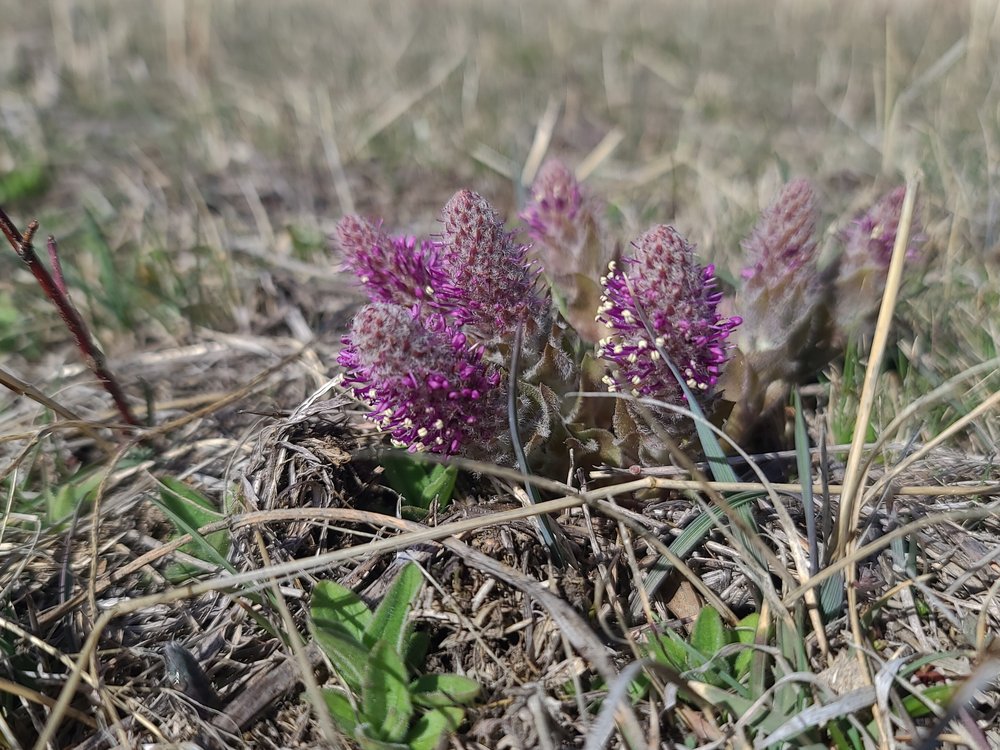
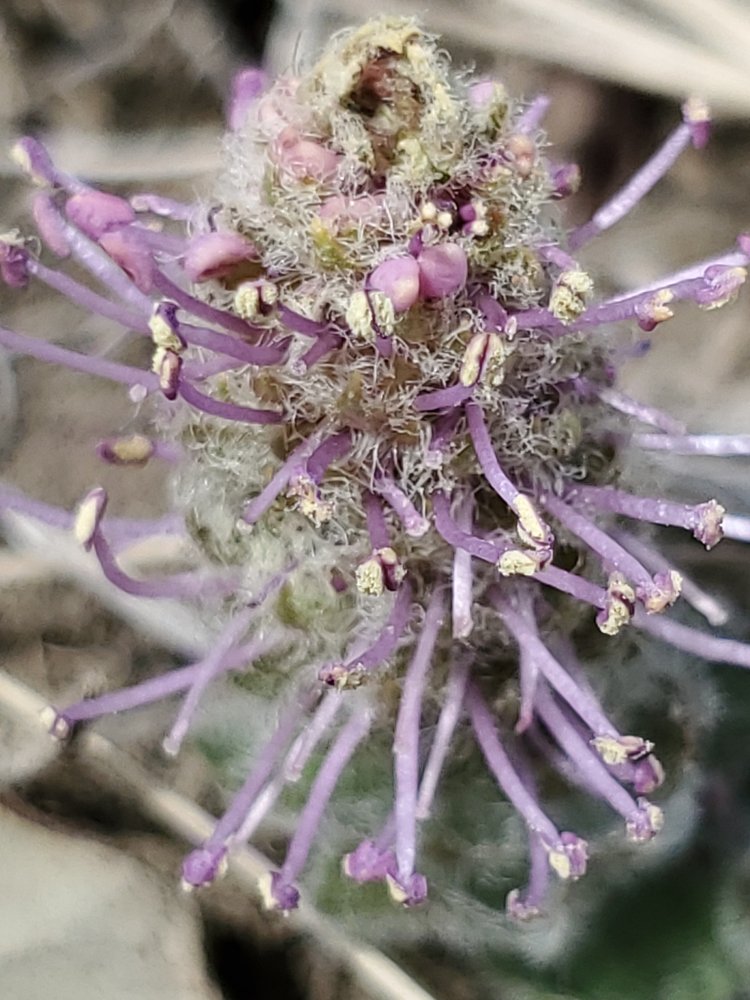
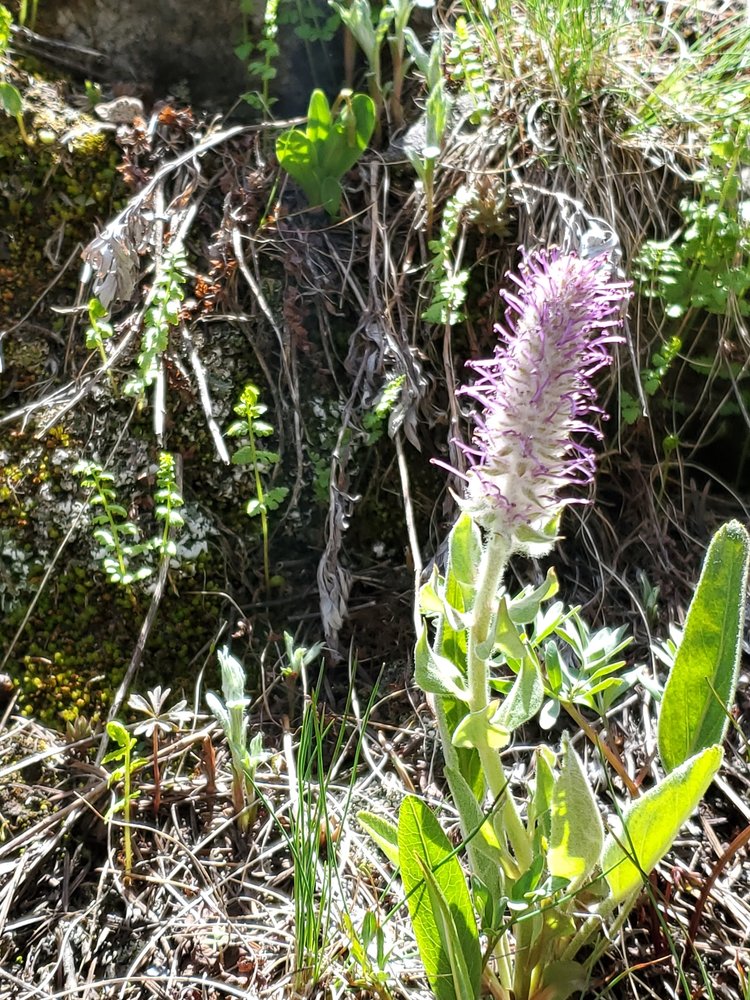
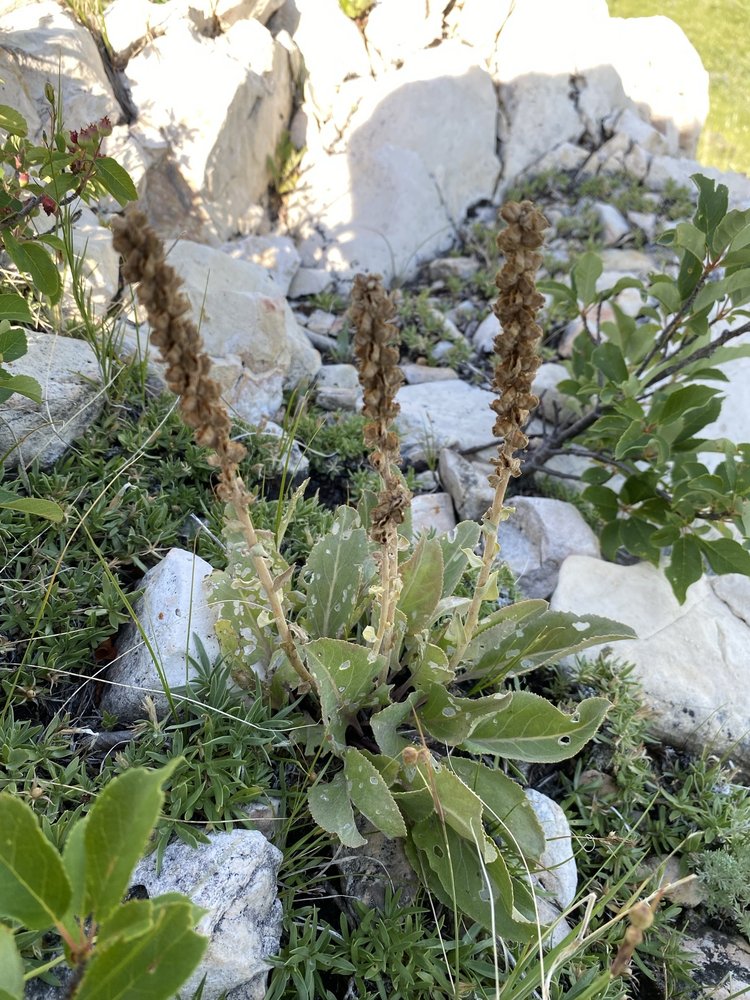
Wyoming Kittentails (Veronica wyomingensis) is a low native perennial and one of the first wildflowers of the year in the Black Hills, sending up fuzzy purple spikes above a rosette of gray-green, hairy leaves in April and May. Its flowers have no petals; the color comes entirely from the stamens. It grows on rocky prairie, in grassy openings and in open pine woods in the foothills and Hills.
Free photos from other sources
| Family | Plantaginaceae · Plantain |
|---|---|
| Status | Native perennial |
| Blooms | April and May, with a few into June |
| Height | 10–30 cm (4–12 in) |
| Where | Rocky prairie, grassy openings and open ponderosa pine woods in the foothills and Hills |
| Also called | Wyoming Besseya, Kittentail, Coral-drops |
| Synonym | Besseya wyomingensis, Synthyris wyomingensis, Wulfenia wyomingensis, Besseya cinerea, Besseya gymnocarpa, Wulfenia gymnocarpa, Synthyris gymnocarpa |
Roots, seeds & germination
Root: A short underground base with a well-branched root system, from which the plant comes back each spring. It goes dormant by mid-August.
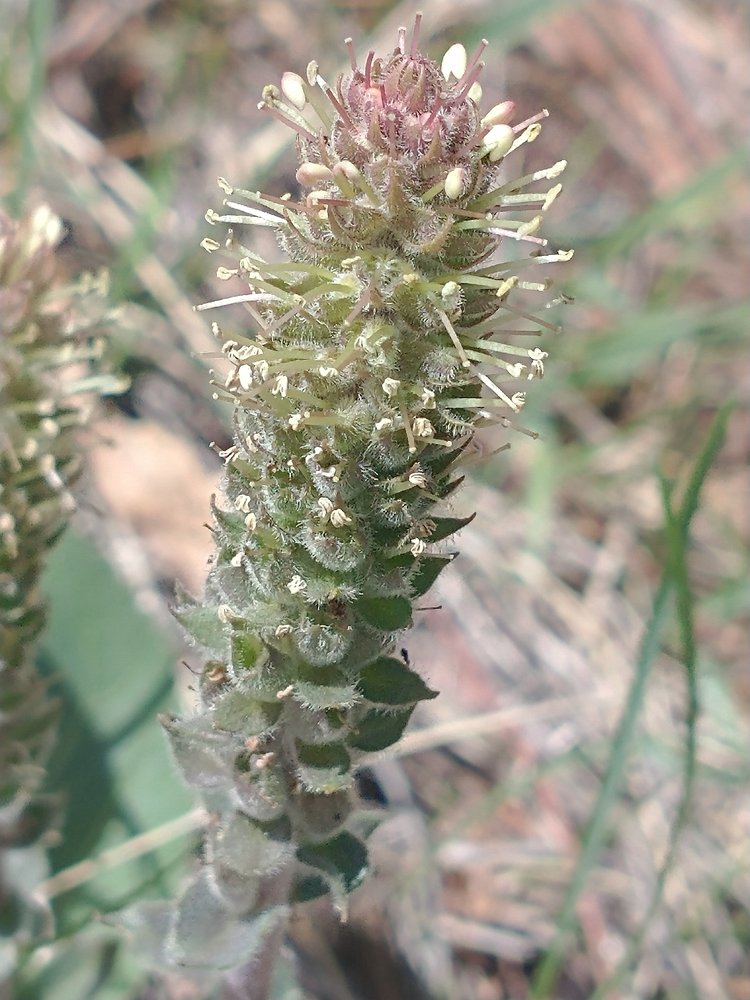
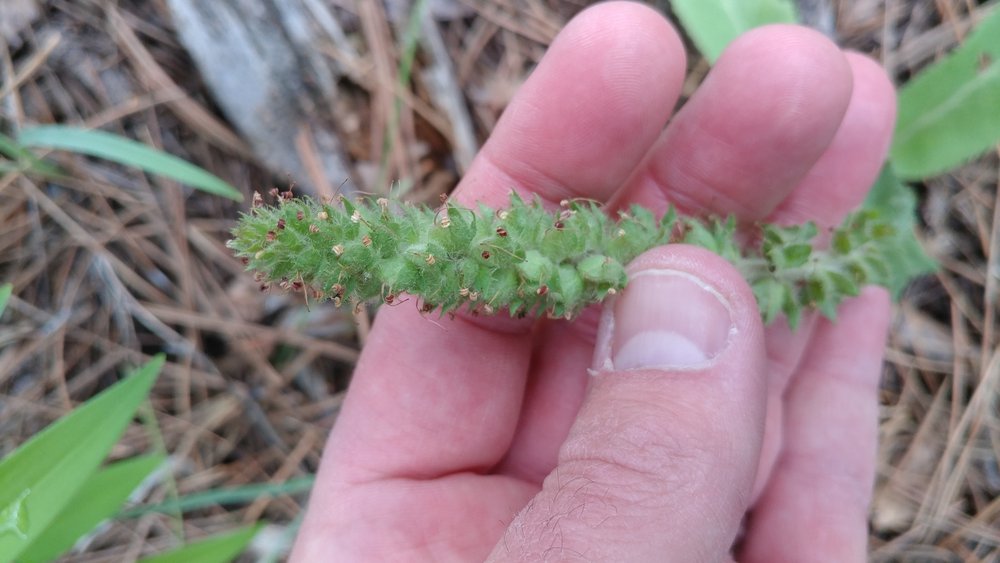
Seed: A small, flattened, hairy capsule, notched at the tip like a heart, holds many flat, round seeds that turn red-brown when ripe. Capsules turn tan and split from early summer at low elevations to August higher up.
Germination: The seeds need a cold, moist period before they sprout: Baskin and Baskin report 6 to 90 days of cold, moist stratification. In a Glacier National Park trial, seed sown outdoors in late fall came up in spring, but only about 14% germinated, and seedlings took two years to reach planting size.
How do you identify Wyoming Kittentails?
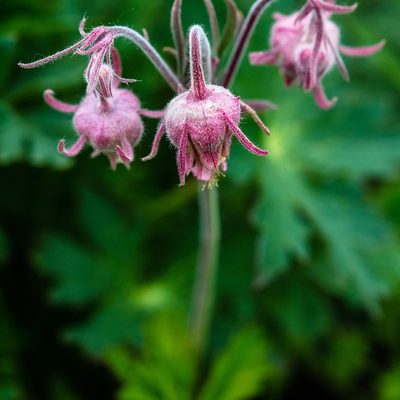
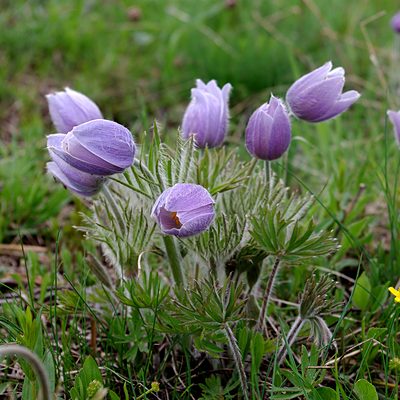
Look first for a low rosette of thick, gray-green, softly hairy leaves on long stalks, oval to oblong with scalloped edges, often tinged reddish. A stout, hairy stem 10–30 cm (4–12 in) tall carries a dense, fuzzy spike like a kitten's tail. The flowers have no petals: each is a small, hairy green calyx with two long purple to blue-violet stamens sticking out, so all the purple comes from stamens. Flowering moves up the spike, and soon the bottom is green and lumpy with flattened, notched capsules. Prairie Smoke and Pasque Flower bloom at the same time in the same places, but Prairie Smoke has nodding rose-red bells and Pasque Flower one large, cup-shaped flower per stem.
When does it bloom?
April and May, with a few into June.
Where does it grow?
Dry to moderately moist grassland, rocky prairie, grassy openings in ponderosa pine, and limestone ridges and outcrops, in open sun with early-spring moisture, at about 1,220–1,800 m (4,000–5,900 ft) in the Hills. The 1986 Jewel Cave survey lists it, and National Park Service lists record it at Wind Cave, Jewel Cave and Devils Tower. More than 35 herbarium specimens, back to 1888, come from the South Dakota Black Hills counties, including Custer State Park, with more from Crook and Weston counties in Wyoming.
Other flowers to compare
Sources: Marriott & Hartman 1986, Vegetation and flora of Jewel Cave National Monument (NPS History); NPSpecies checklist service, Wind Cave NP (WICA) vascular plants; NPSpecies checklist service, Jewel Cave NM (JECA) vascular plants; NPSpecies checklist service, Devils Tower NM (DETO) vascular plants; USDA PLANTS Database, Besseya wyomingensis (BEWY); GBIF occurrence search, Synthyris wyomingensis in South Dakota; GBIF occurrence search, Synthyris wyomingensis in Wyoming; World Flora Online, Veronica wyomingensis (A.Nelson) M.M.Mart.Ort. & Albach; IPNI, Veronica wyomingensis (A.Nelson) M.M.Mart.Ort. & Albach, Taxon 2004; IPNI, Wulfenia wyomingensis A.Nelson (basionym, 1898); POWO, Veronica besseya (sister species; shows POWO's Veronica treatment of Besseya); Flora of North America, Synthyris alpina (vol. 17, Synthyris treatment that includes Besseya); Hufford & McMahon 2004, Morphological evolution and systematics of Synthyris and Besseya, Systematic Botany 29(3); Hufford 1995, Patterns of ontogenetic evolution in perianth diversification of Besseya, Am. J. Bot. (abstract, AGRIS); Fertig 2025, Wyoming kittentails, WSU Marion Ownbey Herbarium blog; Hall 2023, Propagation protocol for Besseya wyomingensis (Univ. of Washington ESRM 412); Budd 1956, Some Cypress Hills floral rarities, The Blue Jay 14(3); iNaturalist, Veronica wyomingensis observations within 90 km of the central Black Hills; Native American Ethnobotany Database, search 'Besseya'.