Mountain Deathcamas Anticlea elegans also listed as Zigadenus elegans
Also called White Camas, Glaucous Death-camas, Showy Death Camas, Mountain Death Camas, pšíŋ hublóka (Lakota)
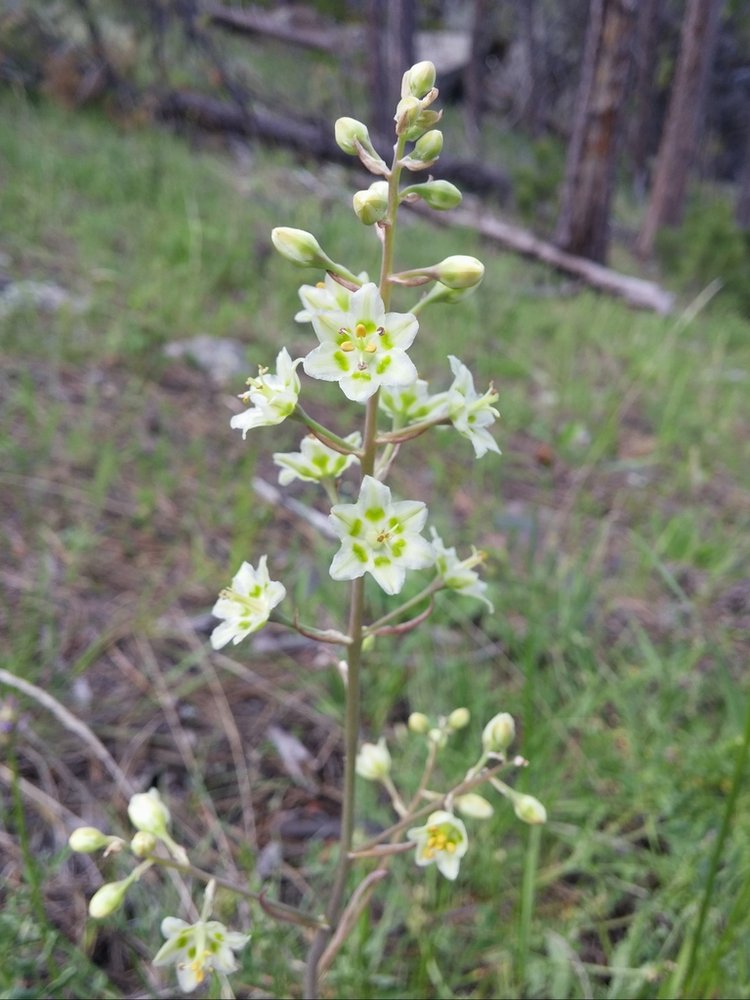
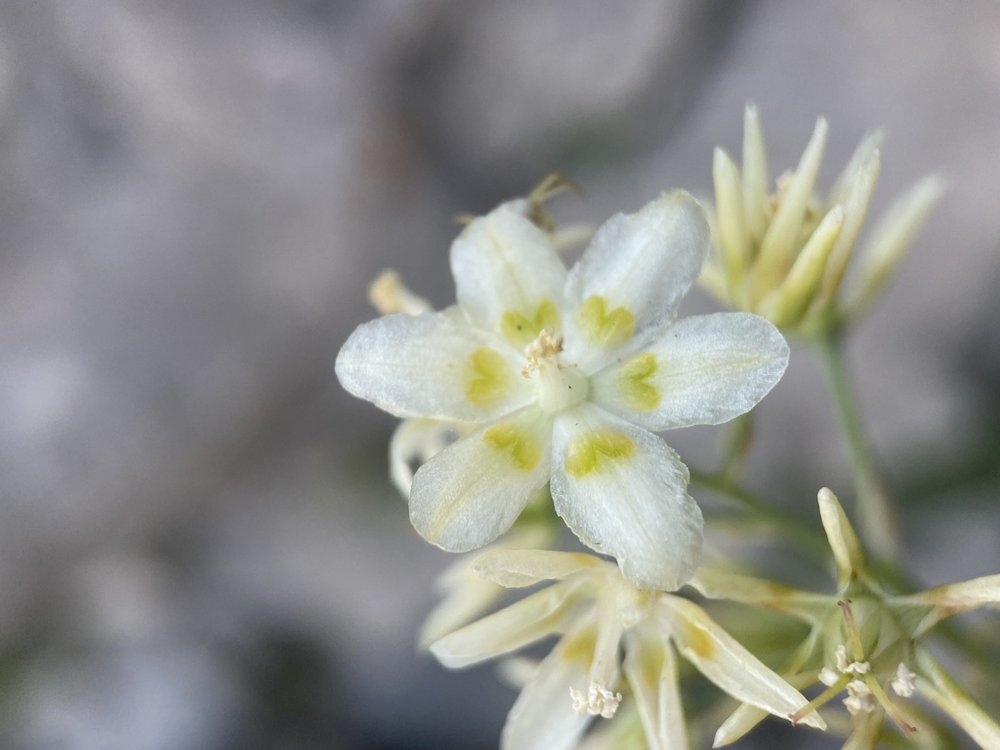
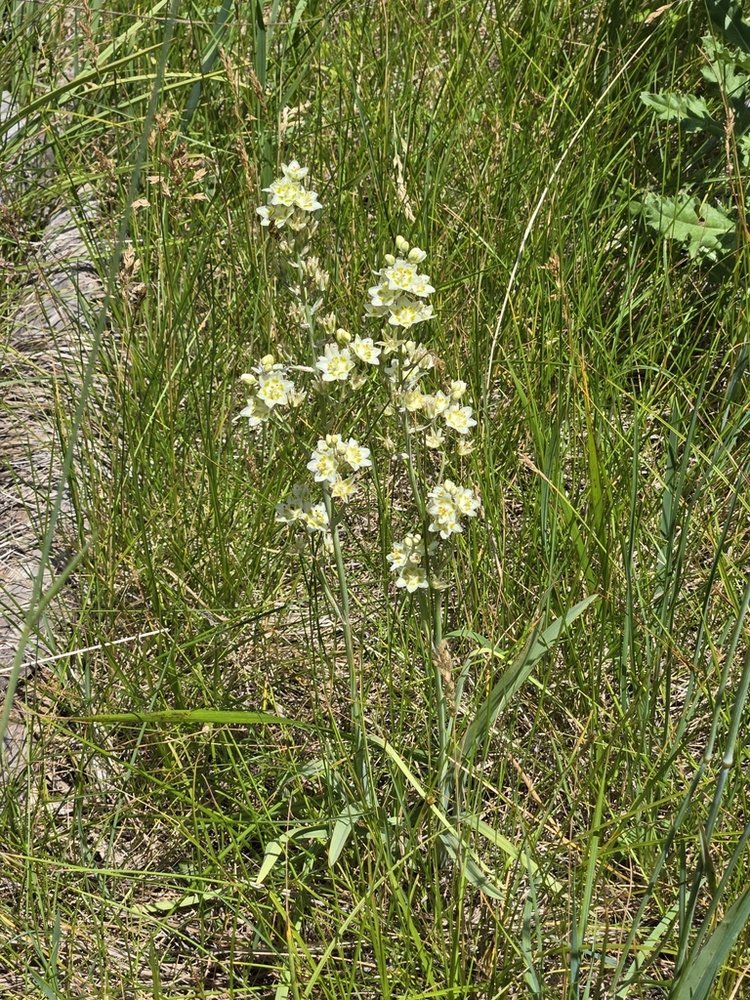
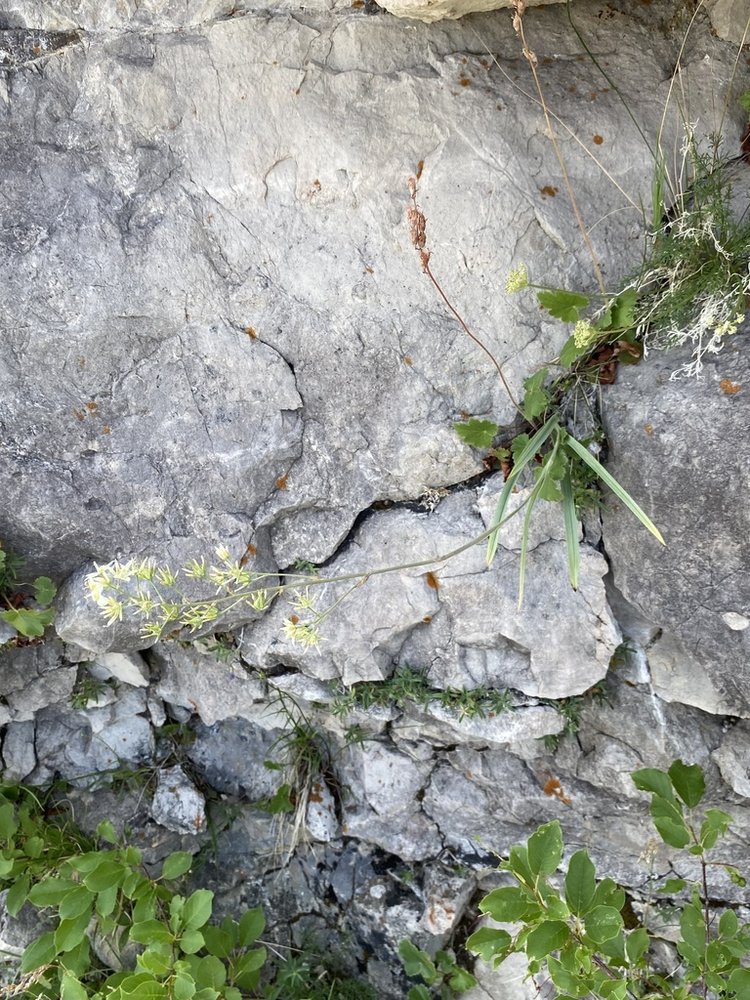
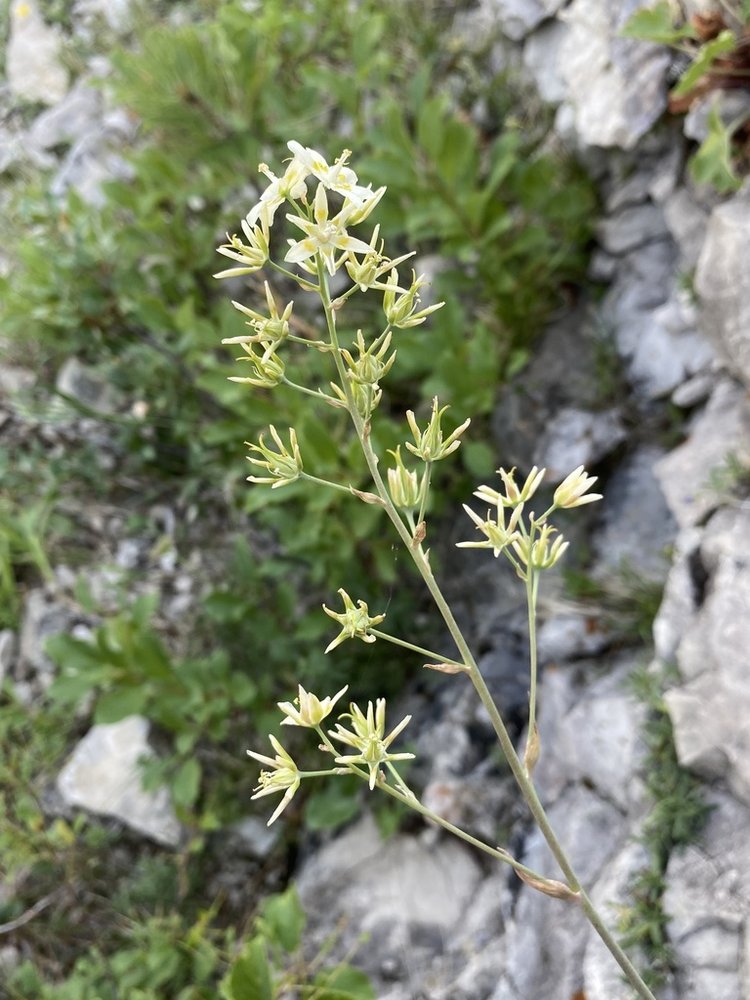
Mountain Deathcamas (Anticlea elegans, long listed as Zigadenus elegans) is a native perennial that grows from a bulb and sends up a stem 20–80 cm (8–31 in) tall with grass-like, often waxy blue-green leaves and a loose cluster of cream to greenish-white, star-shaped flowers, each tepal marked with one heart-shaped green-yellow gland. It blooms from June into August in moist meadows, open pine and spruce forest and on rocky slopes in the Black Hills, where the National Park Service lists it at Wind Cave, Jewel Cave and Mount Rushmore.
Free photos from other sources
| Family | Melanthiaceae · False Hellebore |
|---|---|
| Status | Native perennial |
| Blooms | June into August |
| Height | 20–80 cm (8–31 in) |
| Where | Moist meadows, open pine and spruce forest, streamsides and rocky slopes |
| Also called | White Camas, Glaucous Death-camas, Showy Death Camas, Mountain Death Camas, pšíŋ hublóka (Lakota) |
| Synonym | Zigadenus elegans, Zigadenus elegans subsp. glaucus, Zigadenus elegans var. glaucus, Anticlea elegans var. glaucus, Zigadenus glaucus, Anticlea coloradensis, Zigadenus alpinus |
| Toxicity | All parts of the plant are poisonous from alkaloids; eating it can be fatal to people, and it can sicken livestock. |
| Traditional use | Black Elk and Flying By's 1998 Culturally Important Plants of the Lakota (Sitting Bull College) records the name pšíŋ hublóka on the death camas entry, with Meadow Deathcamas, and says all parts are highly poisonous and the plant is avoided. |
Roots, seeds & germination
Root: A single coated bulb, narrowly egg-shaped, 1.5–3 cm (⅝–1¼ in) long and 1–2 cm (⅜–¾ in) wide, that doesn't form clumps. South Dakota State University says a mature plant makes side bulbs that can be split off once the plant goes dormant, and Minnesota Wildflowers notes that the bulb looks very much like a wild onion's.
Seed: The fruit is a narrow, cone-shaped capsule 10–20 mm (⅜–¾ in) long, with the dried tepals hanging on around it. South Dakota State University collects the capsules in late summer once they turn brown, dries them and lets them split open in a paper bag.
Germination: South Dakota State University sows the seed in fall, or gives it a 60-day cold treatment before a spring planting, in full sun to part shade, light sandy soil and moist to wet ground.
How do you identify Mountain Deathcamas?
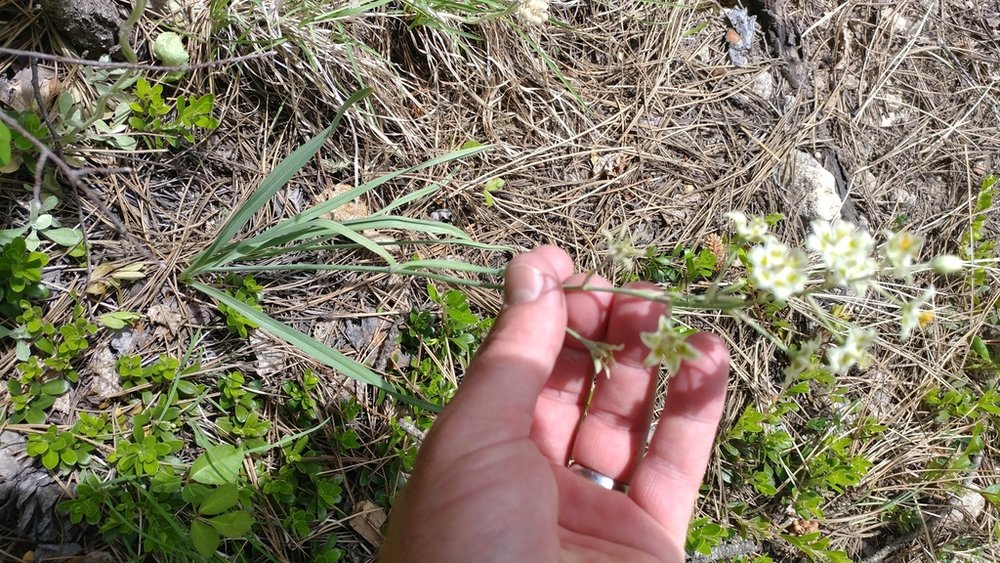
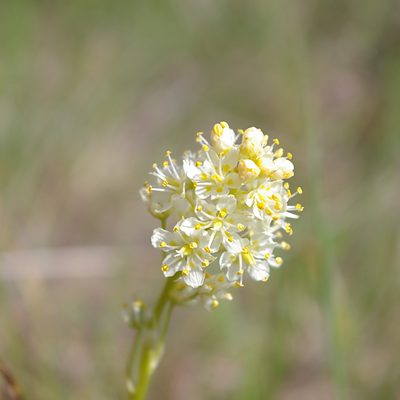
Look for a single smooth stem with most of its leaves at the base: narrow, grass-like blades 10–30 cm (4–12 in) long and often bluish from a waxy coat. The flowers sit in a loose cluster, unbranched or with 1 to 4 branches, 10 to 50 of them, each flat and star-shaped, 15–20 mm (⅝–¾ in) across, with six cream to greenish tepals 7–12 mm (¼–½ in) long. The mark to check is the gland: one heart-shaped green-yellow spot near the base of each tepal, and the small bracts under the flower stalks are often tinged purple or pink. The fruit is a narrow, cone-shaped capsule 10–20 mm (⅜–¾ in) long with the dried tepals still attached. Meadow Deathcamas, the other deathcamas in the Hills, has tepals only 4–6 mm (about ¼ in) long, an egg-shaped rather than heart-shaped gland, inner tepals sharply pinched into a narrow stalk at the base, and a flower cluster that is usually unbranched; Devils Tower lists it in flower from April to June, in grassland and pine openings. The bulb looks very much like a wild onion's.
When does it bloom?
June into August.
Where does it grow?
Moist meadows, open pine and spruce forest, often along streams, lake edges and limestone cliffs and scree, and the wetter parts of the pine-spruce forest floor on granite, from about 1,200 to 2,175 m (4,000–7,140 ft) on labeled Black Hills specimens. The National Park Service lists it at Wind Cave, Jewel Cave and Mount Rushmore, the 1986 plant survey of Jewel Cave records it, and herbarium specimens come from Lawrence, Pennington, Custer and Meade counties in South Dakota and Crook and Weston counties in Wyoming, from 1892 to 2018.
Other deathcamas in this guide
Sources: Flora of North America vol. 26: Zigadenus elegans (F. C. Schwartz) — eFloras; Flora of North America vol. 26: Zigadenus, genus account and key — eFloras; Anticlea elegans — Burke Herbarium Image Collection, University of Washington; Toxicoscordion venenosum — Burke Herbarium Image Collection, University of Washington; Zigadenus elegans (Mountain Death Camas) — Minnesota Wildflowers; Liliaceae: Zigadenus elegans (R. Neil Reese) — SDSU Open PRAIRIE; Mountain Deathcamas, Anticlea elegans — Montana Field Guide; Zigadenus elegans Pursh (ZIEL2) — USDA PLANTS Database; Anticlea elegans (Pursh) Rydb., TSN 508927 — ITIS; NPSpecies checklist, Wind Cave National Park vascular plants — National Park Service; NPSpecies checklist, Jewel Cave National Monument vascular plants — National Park Service; NPSpecies checklist, Mount Rushmore National Memorial vascular plants — National Park Service; Marriott and Hartman 1986, A Survey of the Vegetation of Jewel Cave National Monument — NPS History; Native Plants, wildflowers by color (Meadow deathcamas, April–June) — Devils Tower National Monument, National Park Service; Anticlea elegans, South Dakota and Wyoming herbarium specimens — GBIF; Toxicoscordion (Meadow Deathcamas), South Dakota and Wyoming herbarium specimens — GBIF; Culturally Important Plants of the Lakota (Black Elk and Flying By, 1998) — South Dakota PUC docket HP14-001.