Enchanter's Nightshade
Circaea alpina also listed as Circaea canadensis
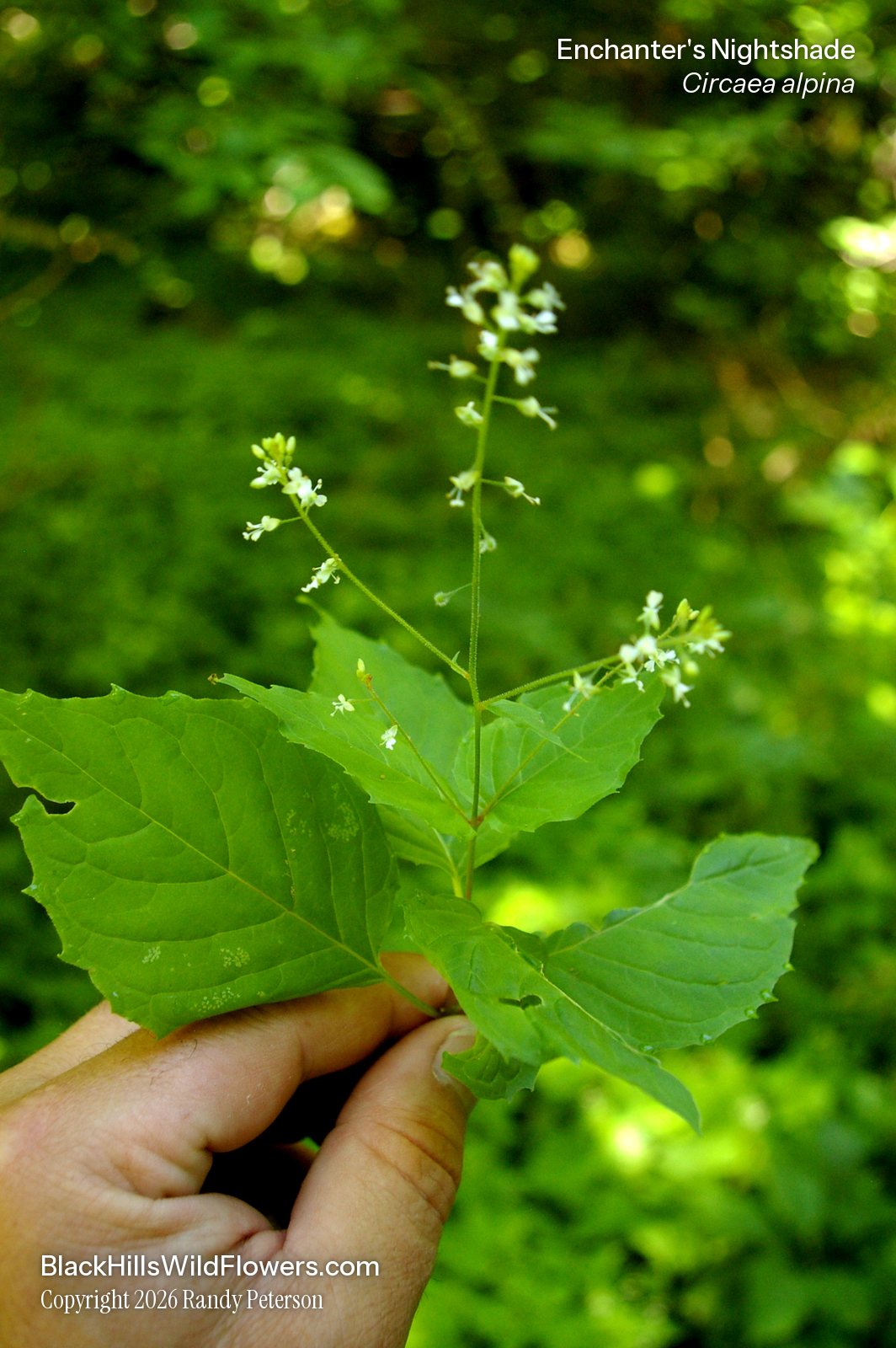
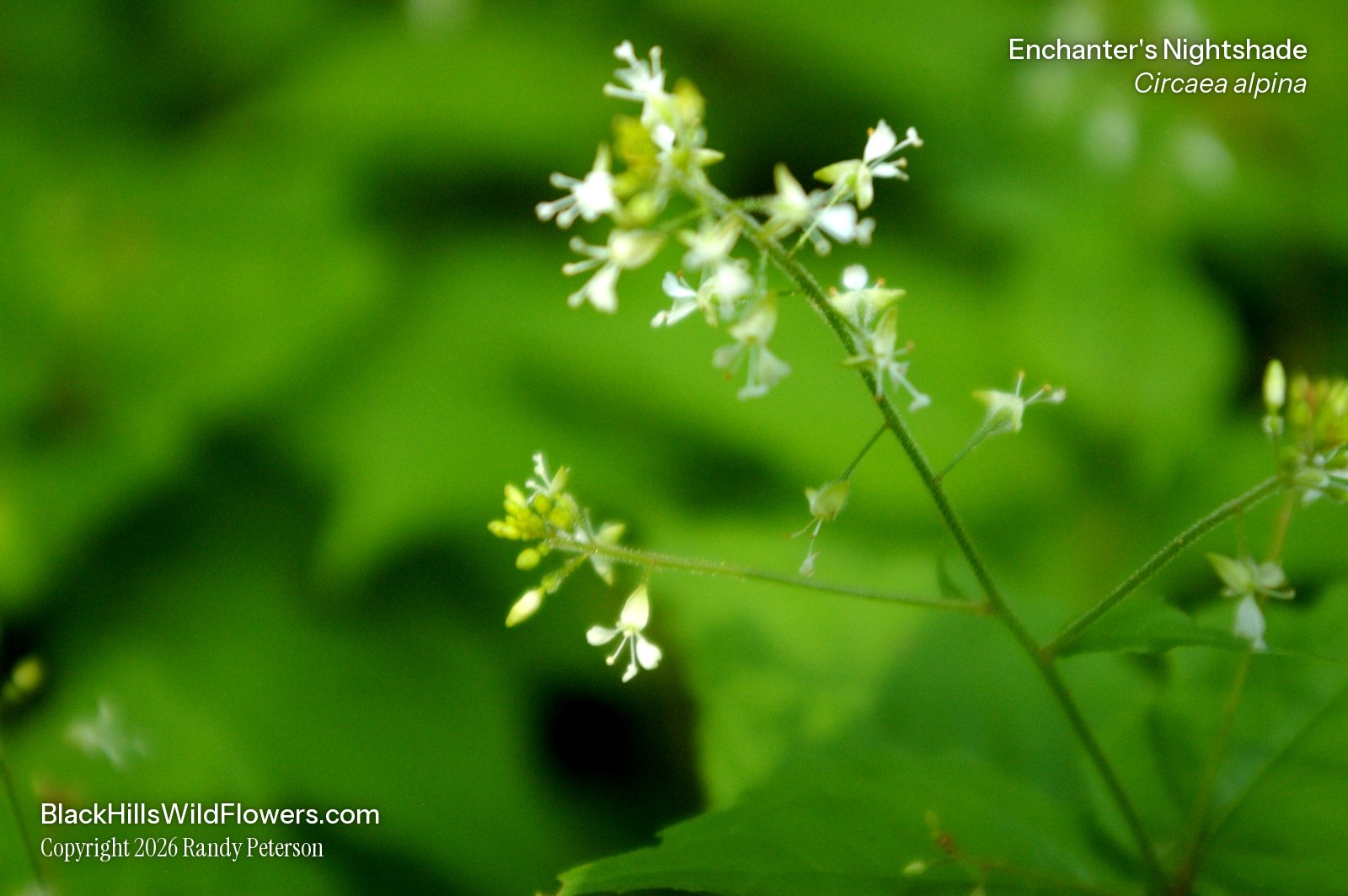
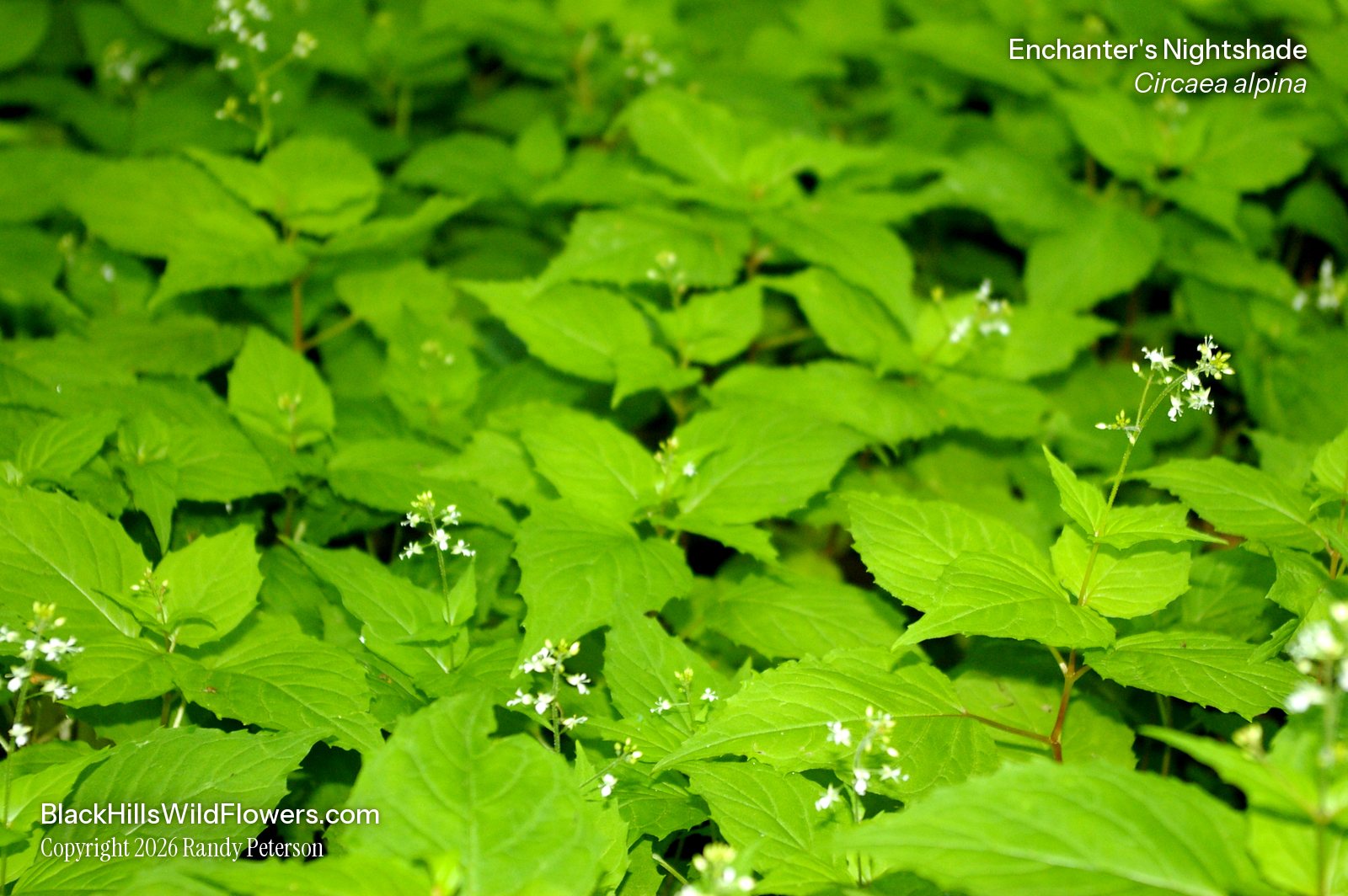
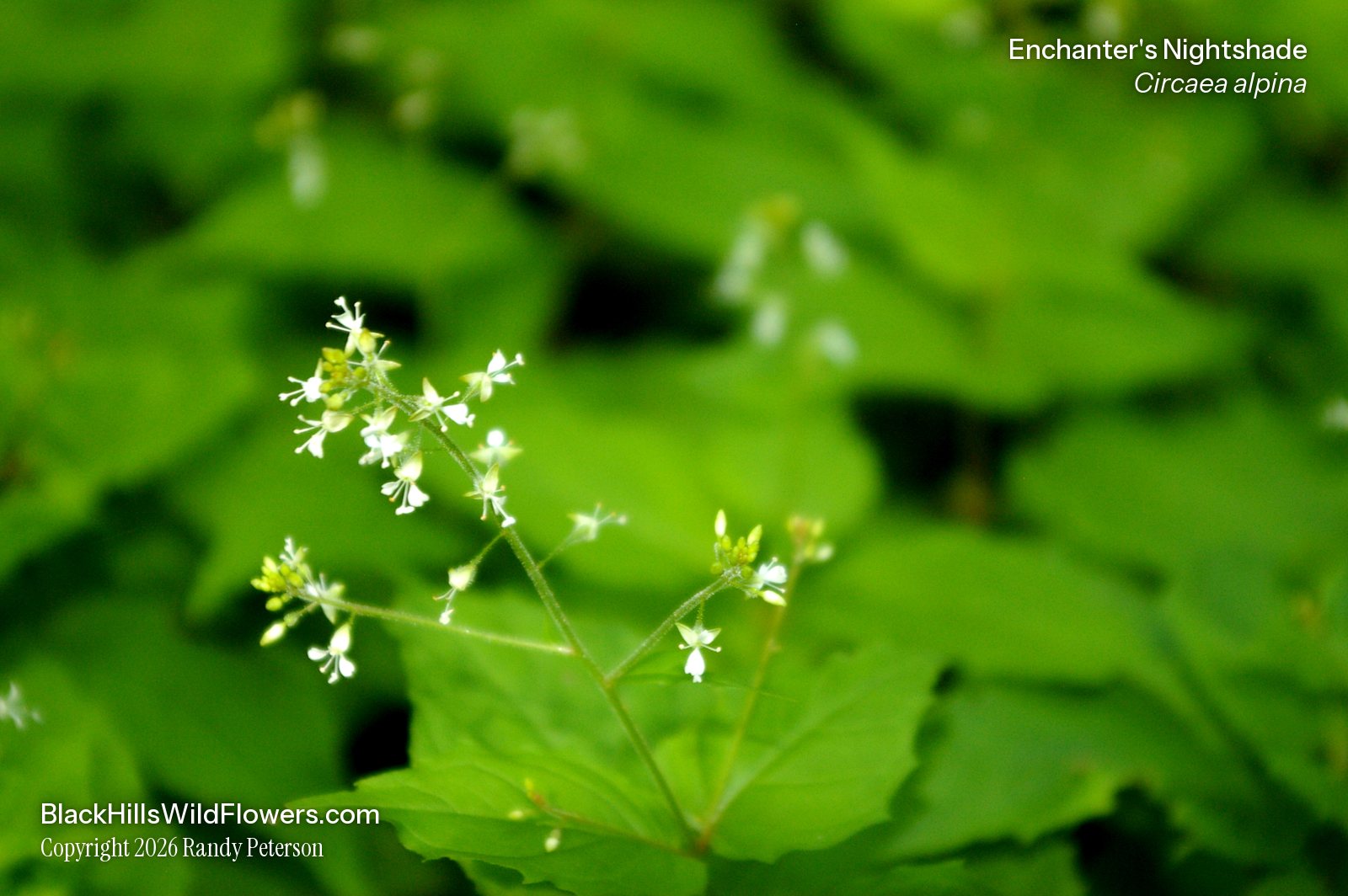
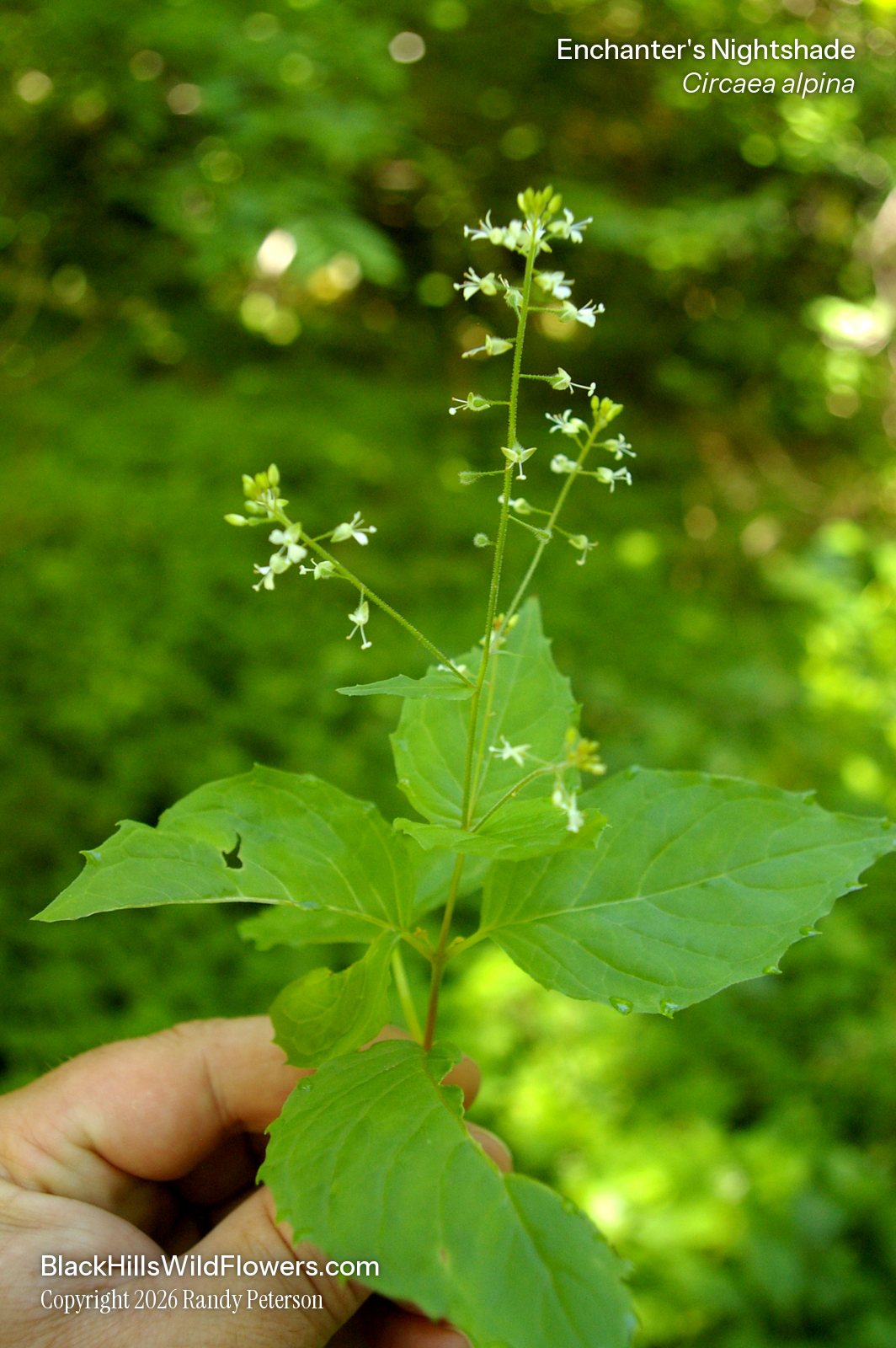
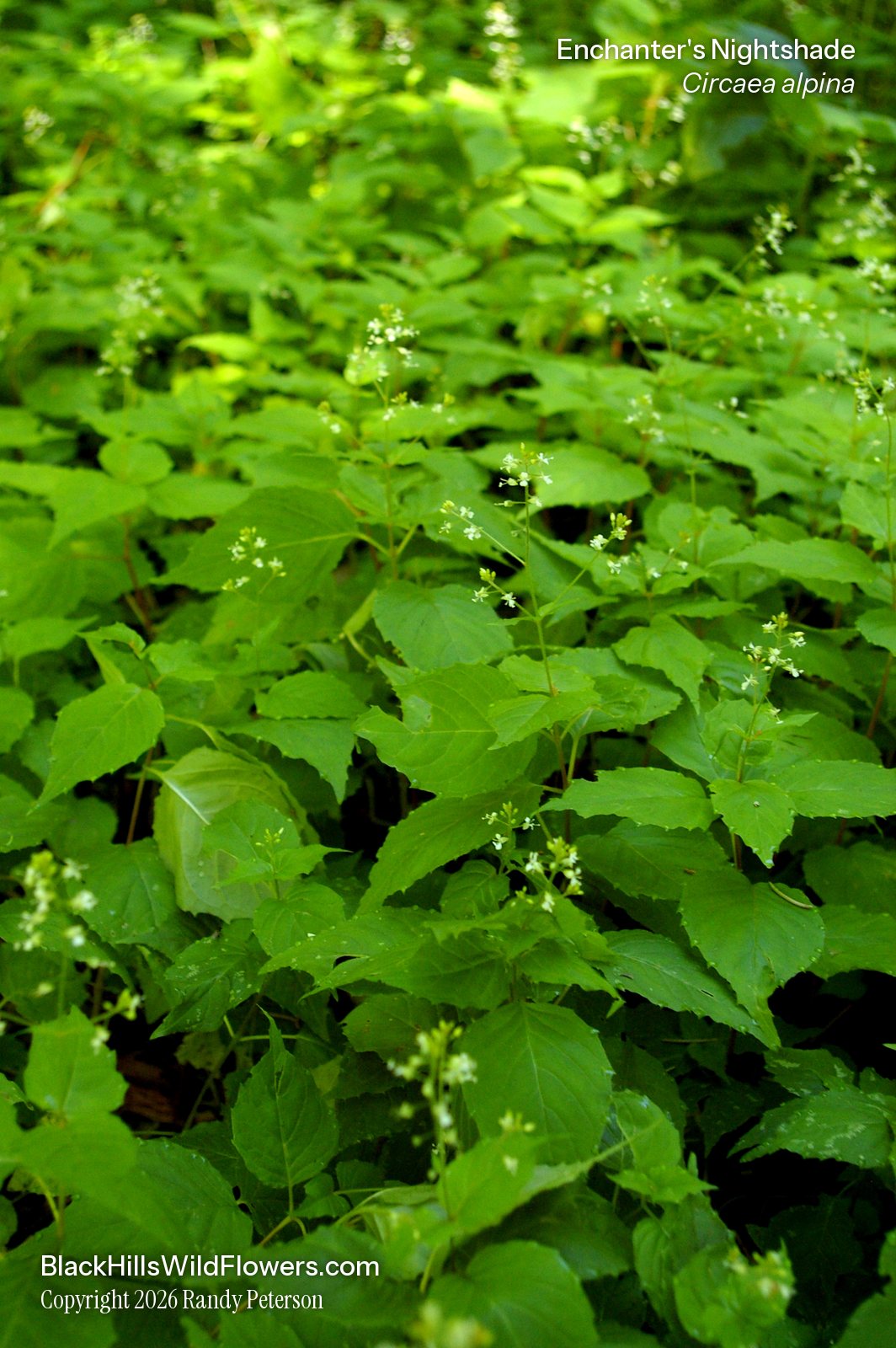
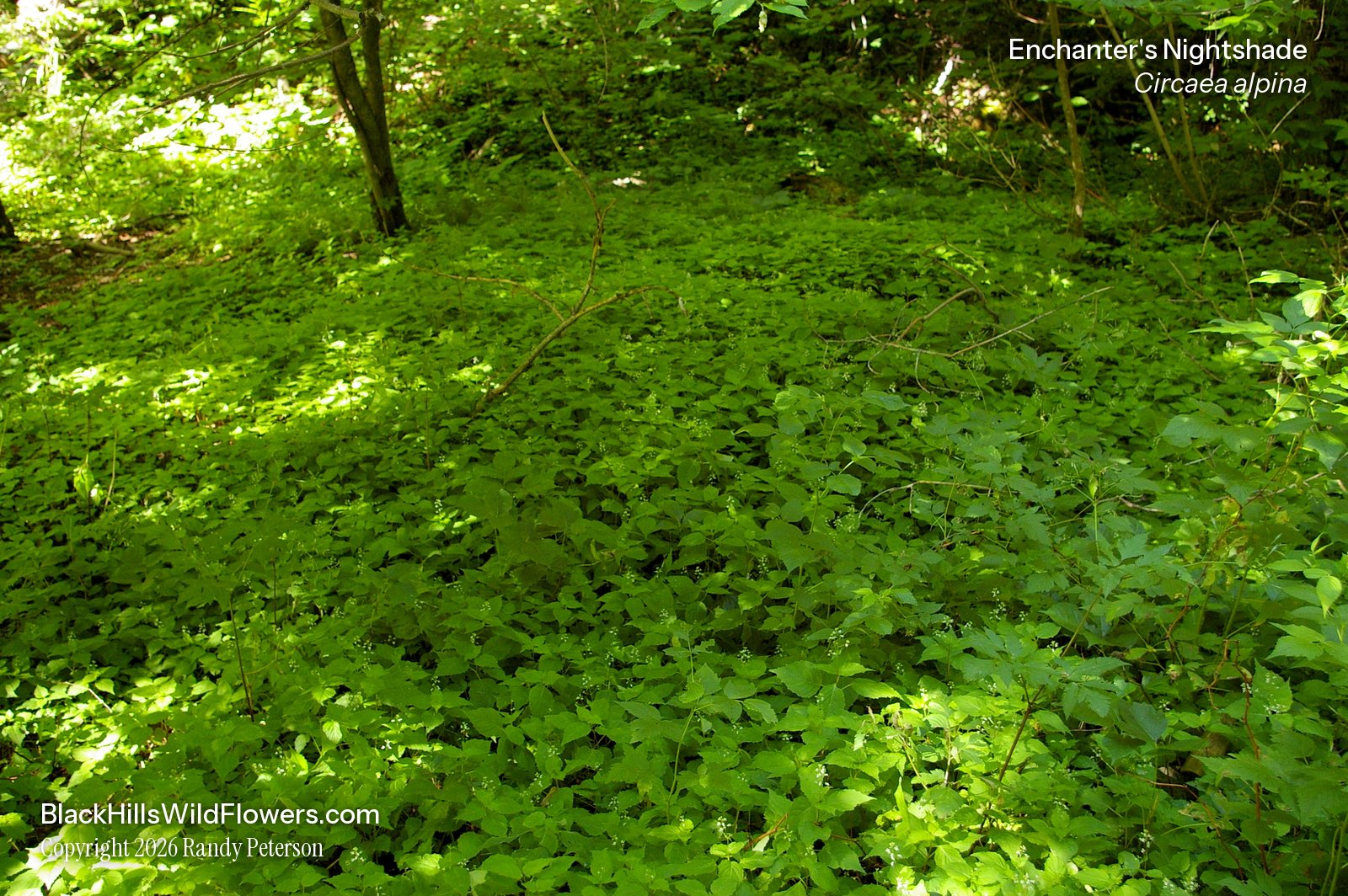
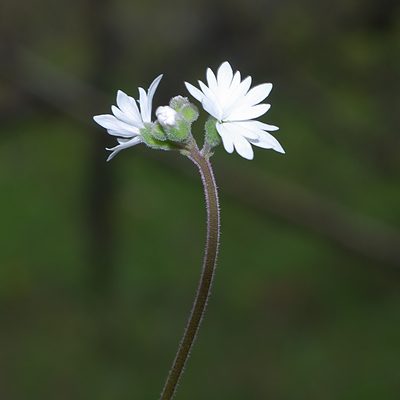
Enchanter's Nightshade (Circaea alpina) is a small native perennial, 8 to 30 cm (3 to 12 inches) tall, with thin, toothed, opposite leaves and tiny white flowers that have two notched petals. It grows in moist, shaded woods in the Black Hills. In neighboring Minnesota it blooms June into August, often on mossy rocks and logs. Photographed in the Black Hills.
| Family | Onagraceae · Evening Primrose |
|---|---|
| Status | Native perennial |
| Blooms | June into August |
| Height | 8–30 cm (3–12 in) |
| Where | Moist, shaded woods and bogs, often on mossy rocks and logs |
| Also called | Alpine Enchanter's Nightshade, Small Enchanter's Nightshade, Dwarf Enchanter's Nightshade, Broadleaf Enchanter's Nightshade, Common Enchanter's Nightshade |
| Note | Also listed here as Circaea canadensis, because the photos don't settle which one this is. The Black Hills National Forest names Broadleaf Enchanter's Nightshade (C. canadensis) a Species of Conservation Concern. To tell them apart, check height and fruit: C. canadensis is the larger plant, 15–70 cm, with grooved fruit, and C. alpina's fruit has no ribs. |
Roots, seeds & germination
Root: Spreads by stolons (creeping stems) that end in a tuber, and forms colonies.
Seed: One seed in each tiny burr, which sticks to clothing or fur.
How do you identify Enchanter's Nightshade?
Tiny flowers, about ⅛ inch across, cluster at the top of the stem and look four-petaled, because 2 whitish sepals spread beside 2 notched white petals. The fruit is a tiny burr, 1.6–2.6 mm long, with hooked hairs, no ribs and one seed. Common Enchanter's Nightshade is much larger, with flowers spread along the stalk and grooved fruit.
When does it bloom?
June into August.
Where does it grow?
Moist places in part shade or shade, including rich woods, mossy bogs, and moss-covered rocks and logs. In the Black Hills, look for it in moist, shaded woods. Flora of North America places it in cold temperate and boreal forests at high altitudes and latitudes.
Other flowers to compare
Sources: Flora of North America: Circaea alpina; Minnesota Wildflowers: Circaea alpina; Go Botany, Native Plant Trust: Circaea alpina; Kew Plants of the World Online: Circaea alpina; Montana Field Guide: Small Enchanter's-nightshade; Black Hills National Forest: At-Risk Species Assessment, October 2023; South Dakota Game, Fish and Parks: Rare Plants of South Dakota.