Yellow Sundrops Oenothera serrulata also listed as Calylophus serrulatus
Also called Serrate-leaf Evening Primrose, Plains Yellow Primrose, Toothed Evening Primrose, Halfshrub Sundrop, Yellow Evening Primrose, Golden Sundrops, waȟčá zí čík’ala (Lakota)
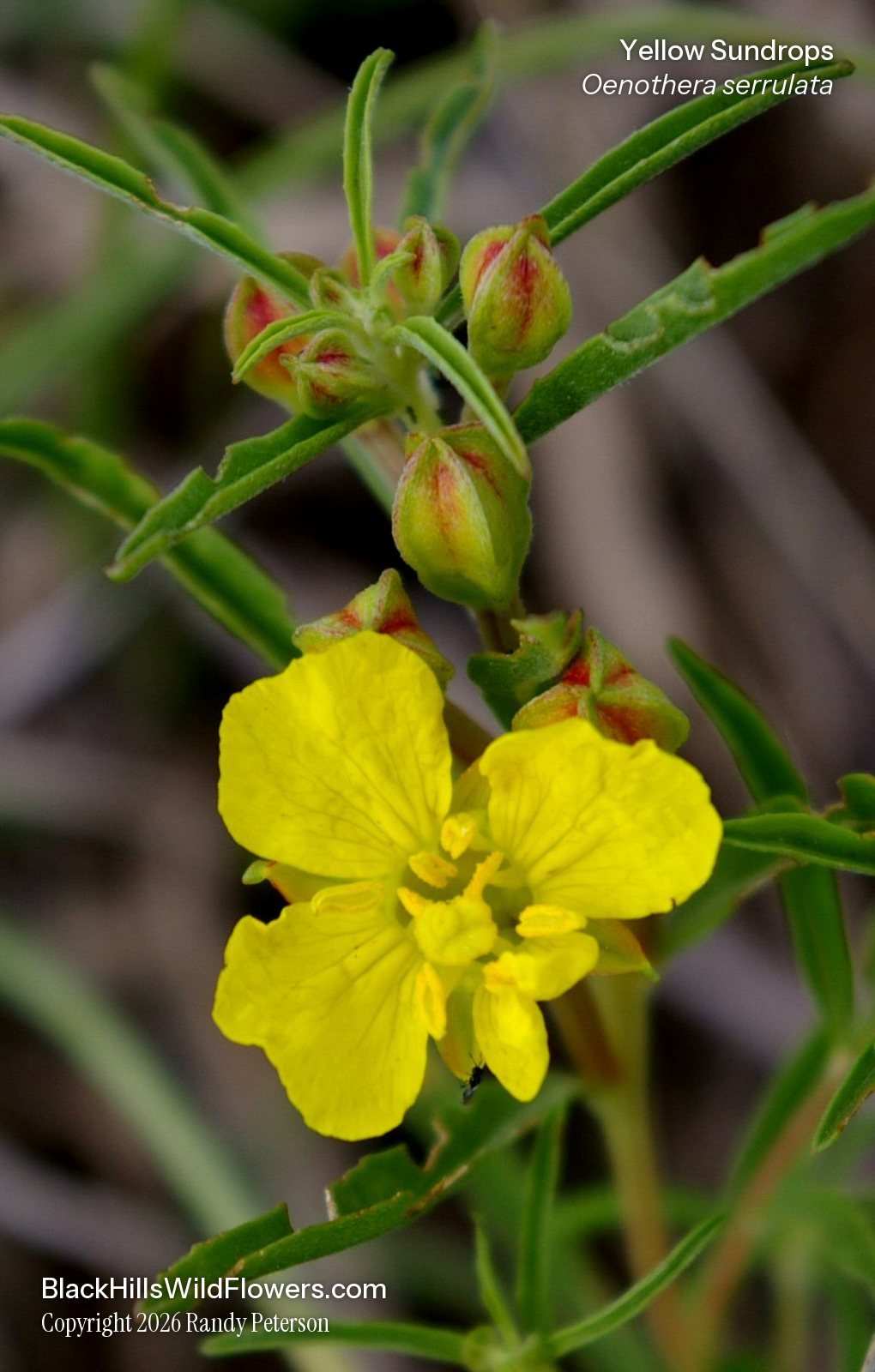
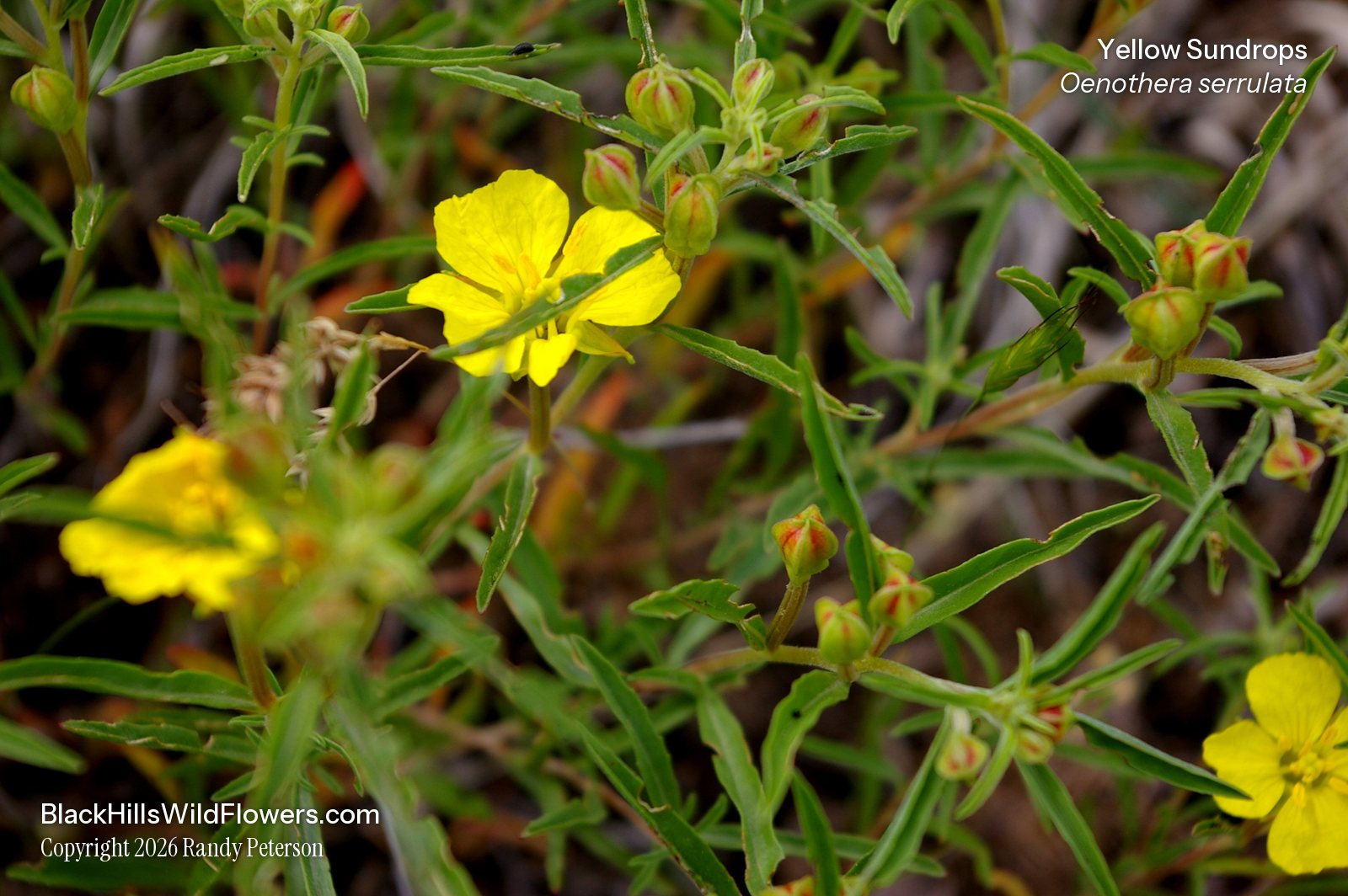
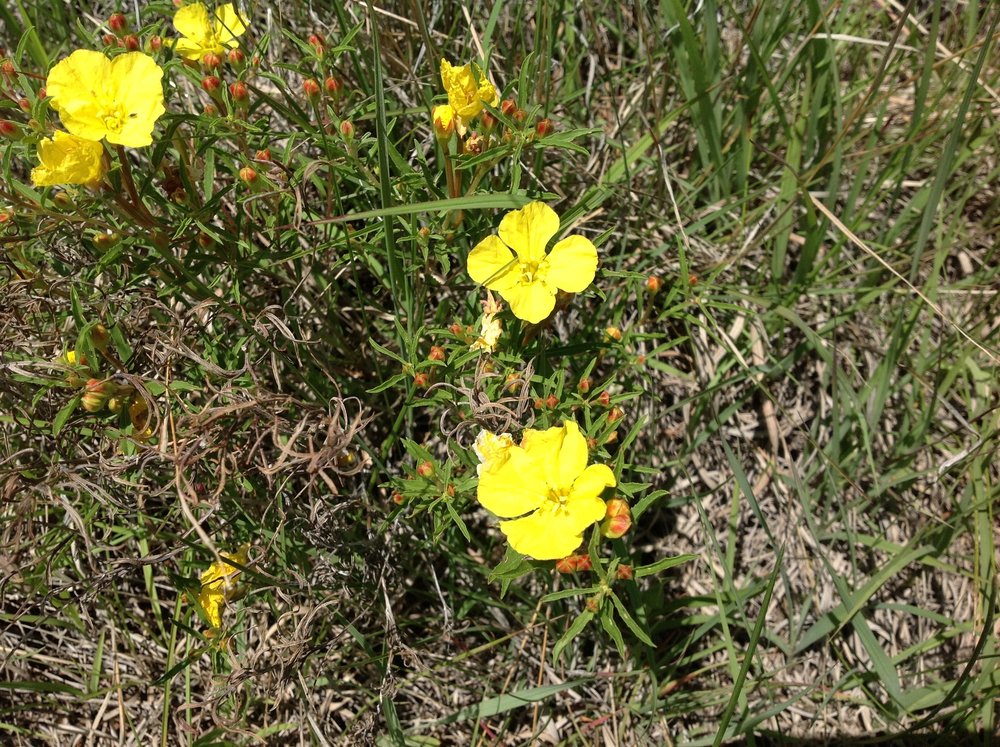
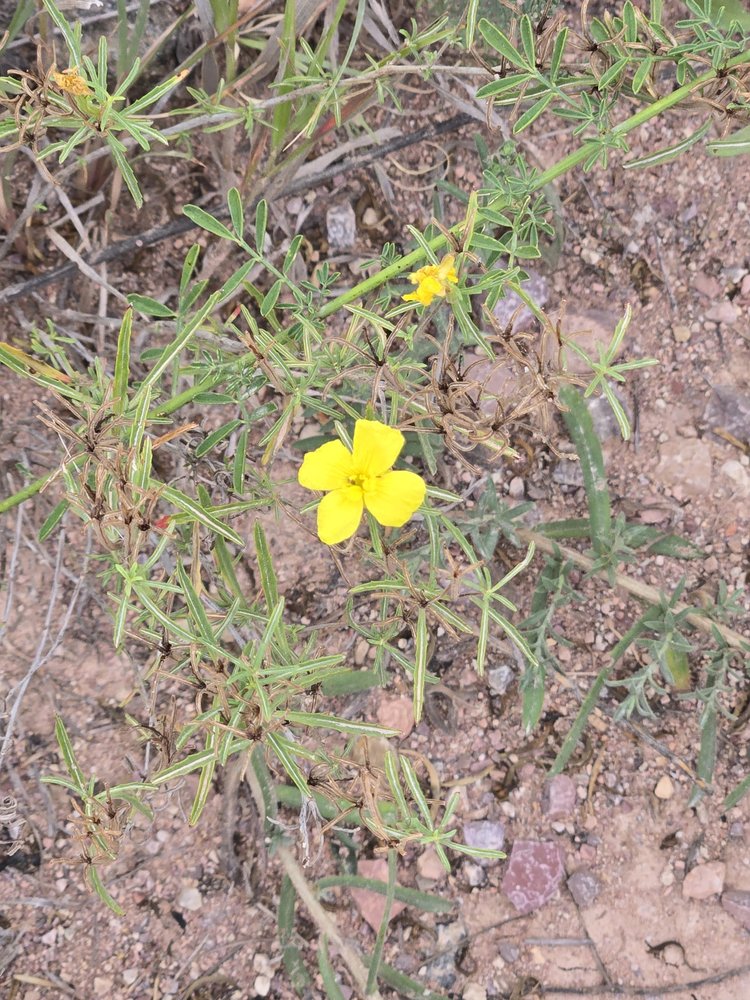
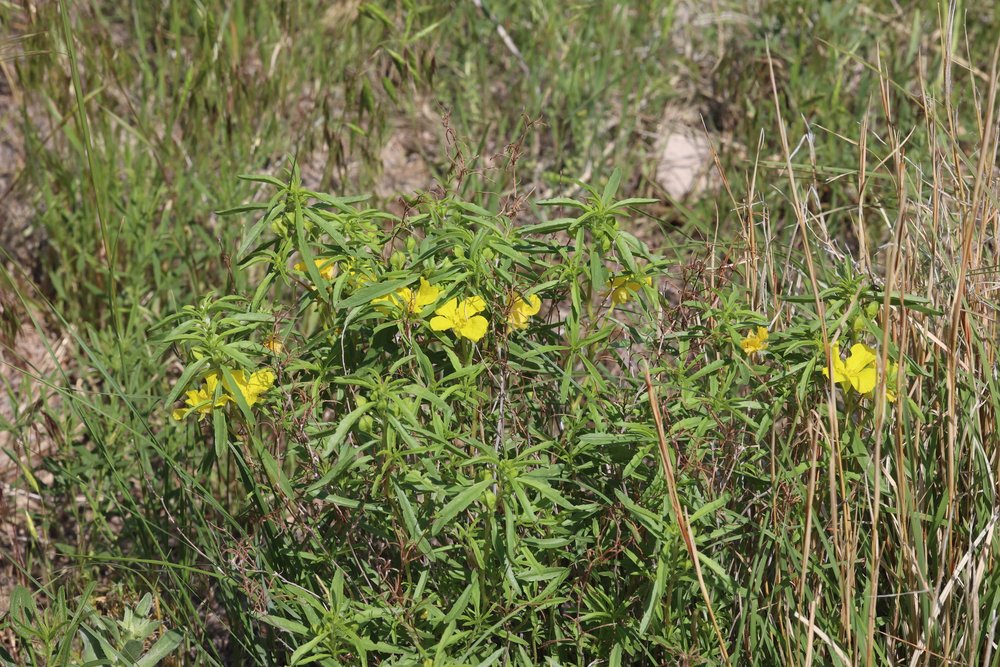
Yellow Sundrops (Oenothera serrulata, also listed as Calylophus serrulatus) is a native perennial of dry prairie and rocky hillsides, bushy and woody at the base, 10–60 cm (4–24 in) tall, with narrow, finely toothed leaves and four-petaled yellow flowers, the petals 5–12 mm (¼–½ in) long, that open by day from June into August. In the Black Hills the National Park Service lists it at Wind Cave, and herbarium specimens come from all five Black Hills counties of South Dakota and from Crook County, Wyoming. Photographed in the Black Hills.
Free photos from other sources
| Family | Onagraceae · Evening Primrose |
|---|---|
| Status | Native perennial |
| Blooms | June into August |
| Height | 10–60 cm (4–24 in) |
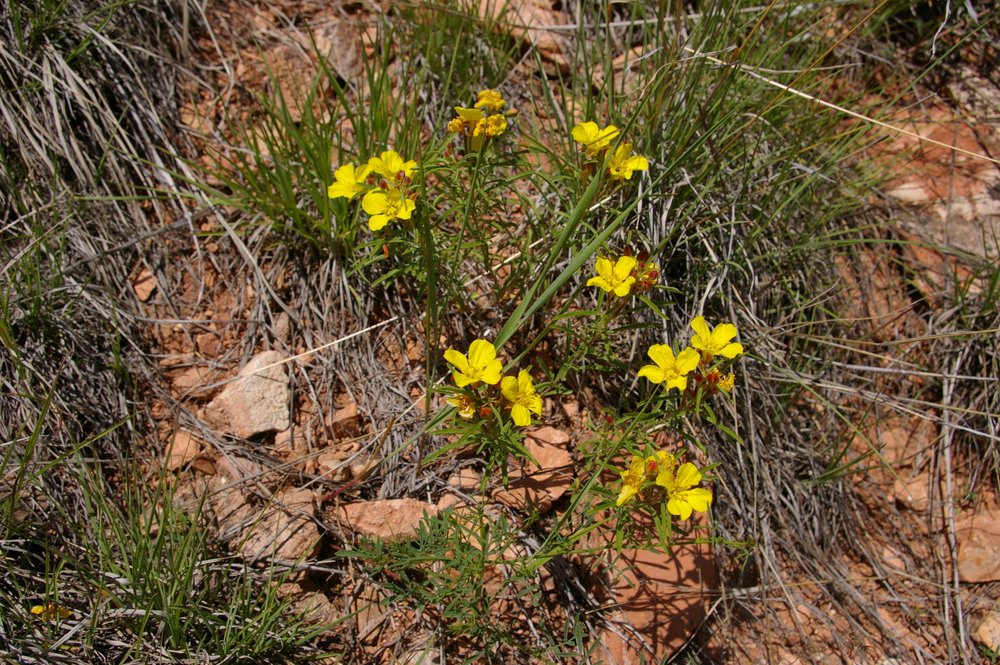
| Where | Dry rocky, gravelly or sandy prairie, hillsides, rock outcrops and ledges, roadsides and open woods |
| Also called | Serrate-leaf Evening Primrose, Plains Yellow Primrose, Toothed Evening Primrose, Halfshrub Sundrop, Yellow Evening Primrose, Golden Sundrops, waȟčá zí čík’ala (Lakota) |
| Synonym | Calylophus serrulatus, Calylophus australis, Calylophus drummondianus, Meriolix serrulata |
| Traditional use | The Lakota name waȟčá zí čík’ala is recorded for it by Black Elk and Flying By (1998), who note only that it is good forage for wildlife. |
Roots, seeds & germination
Root: A stout taproot. An extensive root system and leaves that fold in the midday sun to cut water loss help it stand drought.
Seed: Slender, hard, four-angled capsules 6–25 mm (¼–1 in) long and 1–3 mm thick, silvery-hairy, split along half their length, and often later all the way, to release many small brown seeds 1–1.8 mm long with sharp angles.
Germination: A USDA fact sheet from Texas says seed that falls from a ripe capsule can sprout in 10 to 15 days in moist, warm soil, and advises sowing in early spring about 6 mm (¼ in) deep.
How do you identify Yellow Sundrops?
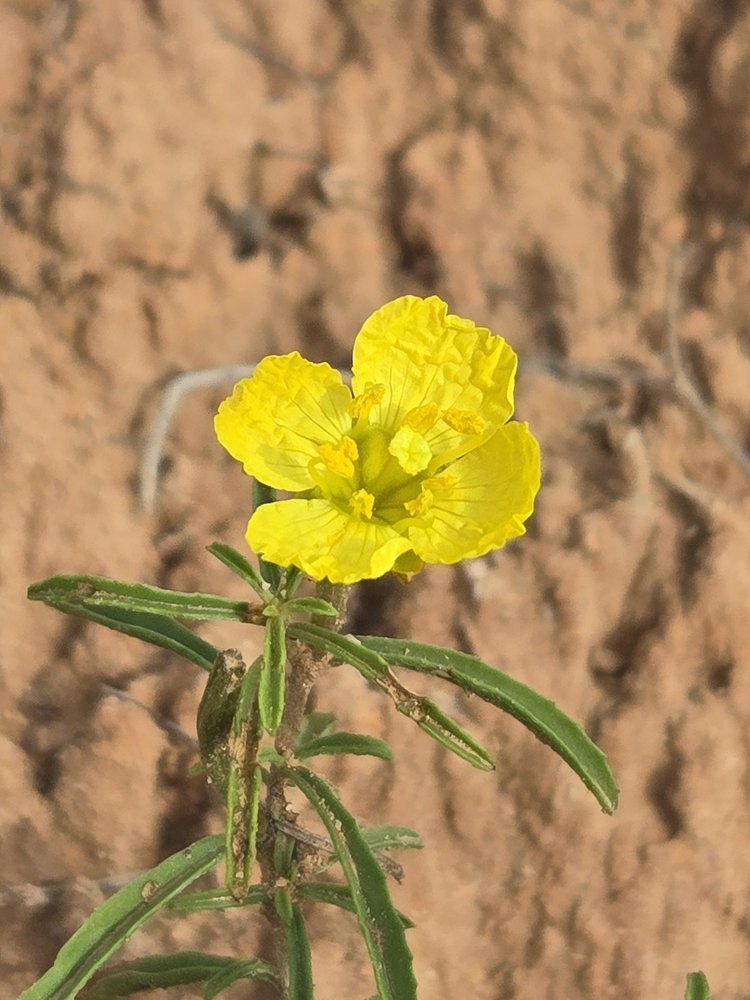
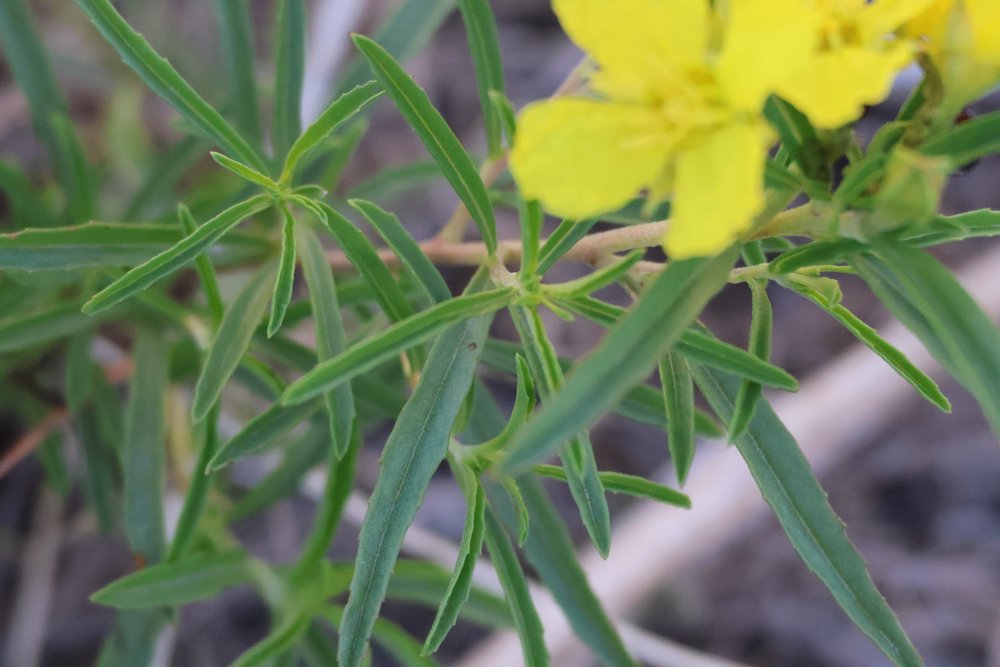
Look for a low, bushy plant with many branches, woody at the base, crowded with narrow leaves 1–9 cm (½–3½ in) long that are often folded lengthwise and usually edged with small sharp teeth. Each flower sits stalkless in a leaf axil near the top of a stem, with 4 yellow petals 5–12 mm long that are often wrinkled, with wavy edges and a rounded notch at the tip, 8 stamens, and a disc-shaped stigma in the middle; the 4 sepals bend back, and old flowers fade to orange or pink. The flowers open near sunrise and close in late afternoon, while most evening primroses open in the afternoon or evening, and Yellow Sundrops is typically much shorter than those tall spiked evening primroses, with much narrower leaves. After bloom, slender hairy capsules 6–25 mm (¼–1 in) long, four-angled and tapered at both ends, sit in the leaf axils.
When does it bloom?
June into August.
Where does it grow?
Dry rocky, gravelly or sandy prairie, hillsides, rock outcrops, roadsides and open woods, from the plains up to about 2,100 m (6,900 ft) across its range. The National Park Service lists it at Wind Cave. Herbarium specimens from 1892 to 2018 come from all five Black Hills counties of South Dakota and from Crook County, Wyoming: dry hillsides, rocky open banks and ledges, a limestone cliff and a limestone slope, prairie hillsides, open range (including in Wind Cave National Park), a sunny gravel bank, roadsides, old road cuts in oak woods in the Bear Lodge Mountains, and dry ridges. iNaturalist has 36 research-grade Black Hills records, June to August.
Other evening primroses in this guide
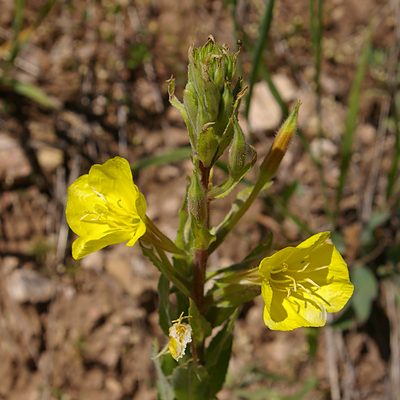
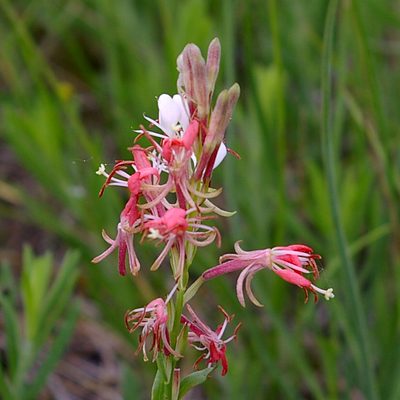
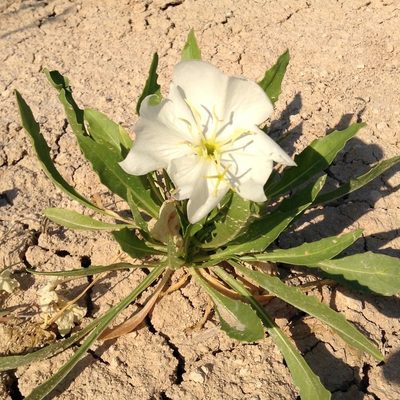
Evening Primrose family (Onagraceae): 6 other plants in this guide
Sources: Flora of North America Vol. 10: Oenothera serrulata (Wagner and Hoch), eFloras; Minnesota Wildflowers: Oenothera serrulata (Yellow Sundrops); Kansas Wildflowers and Grasses: Oenothera serrulata (serrate-leaf evening primrose); USDA NRCS Plant Fact Sheet: Halfshrub Sundrop, Calylophus serrulatus (Esquivel 2006); USDA PLANTS Database: Calylophus serrulatus (CASE12), profile API; Lady Bird Johnson Wildflower Center: Calylophus serrulatus (name confirmed on the page); NPSpecies checklist, Wind Cave National Park vascular plants; GBIF occurrence search: Oenothera serrulata, South Dakota and Wyoming herbarium specimens; iNaturalist: research-grade Oenothera serrulata observations in the Black Hills; Culturally Important Plants of the Lakota (Black Elk and Flying By, 1998), entry 64 Calylophus serrulatus, filed with the South Dakota PUC.