Spreading Groundsmoke Gayophytum diffusum
Also called Diffuse Groundsmoke, Bigflower Groundsmoke
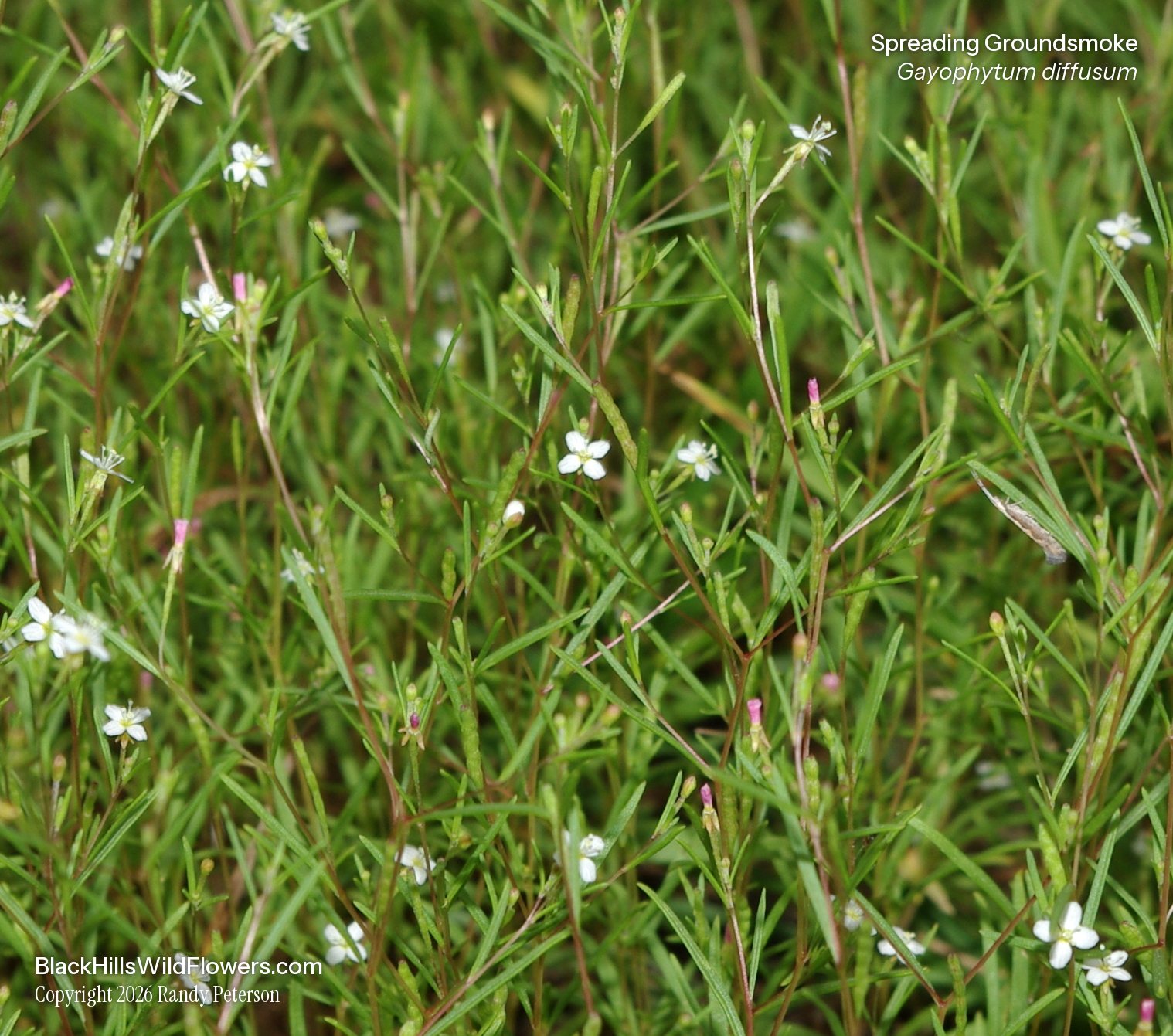
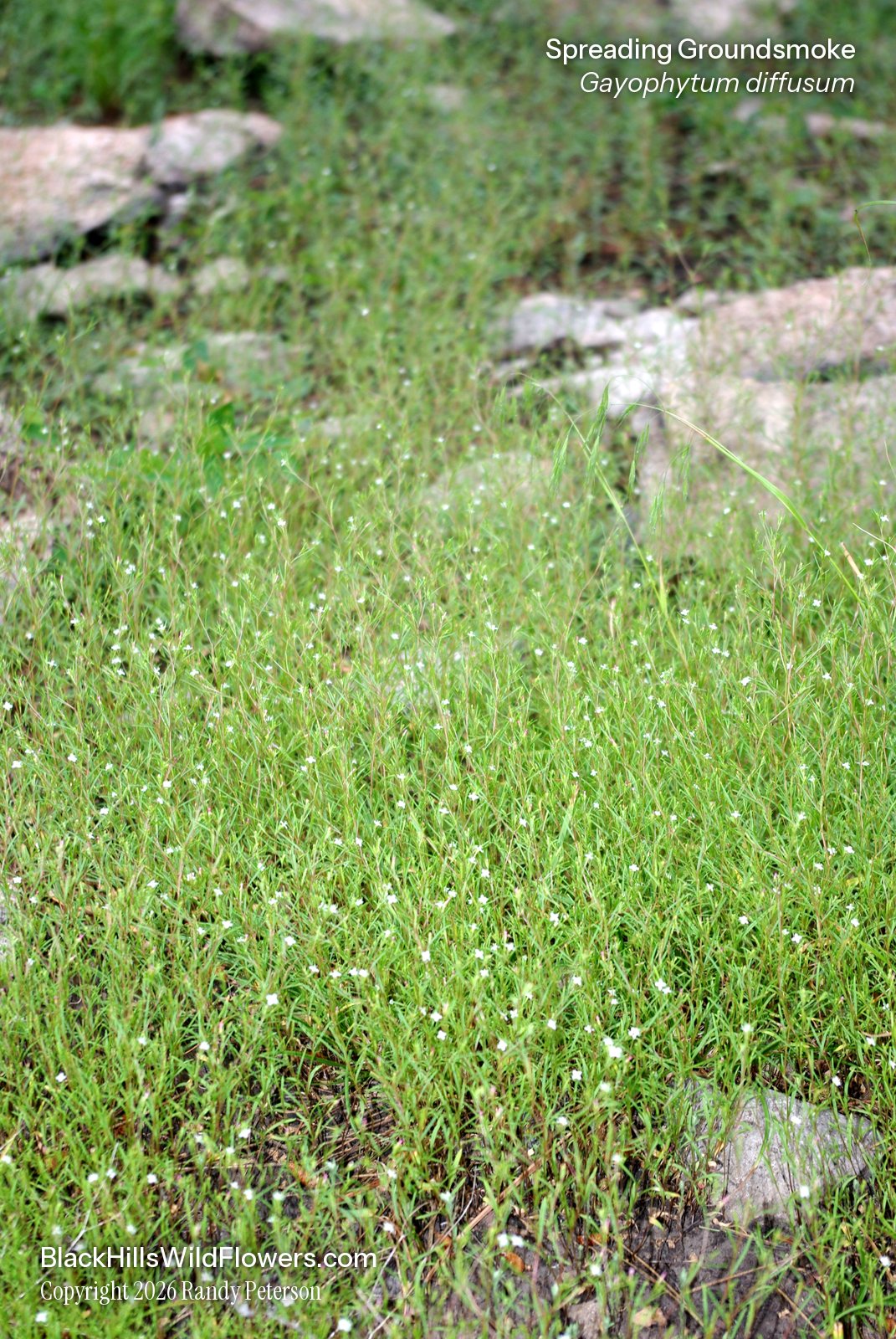
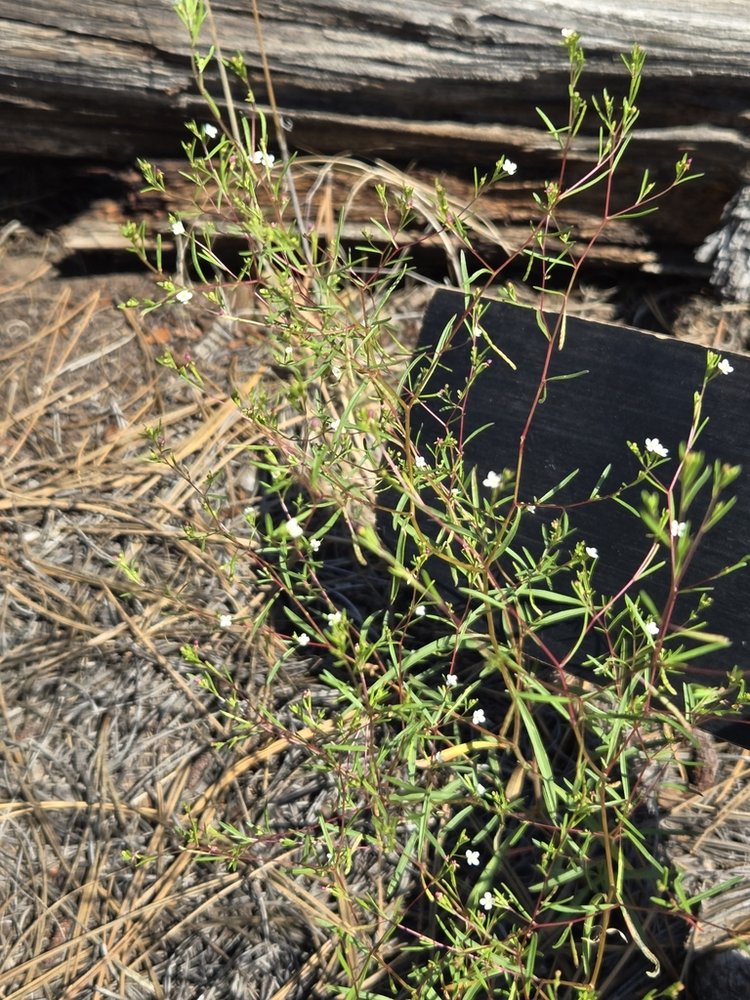
Spreading Groundsmoke (Gayophytum diffusum) is a small native annual, 5–60 cm (2–24 in) tall, with slender, much-branched stems, very narrow leaves and tiny white four-petaled flowers that fade pink, from June into August. In the Black Hills it grows in open ponderosa pine forest and on sandy or disturbed roadsides, and the National Park Service lists it at Wind Cave, Mount Rushmore and Devils Tower. Photographed in the Black Hills.
Free photos from other sources
| Family | Onagraceae · Evening Primrose |
|---|---|
| Status | Native annual |
| Blooms | June into August |
| Height | 5–60 cm (2–24 in) |
| Where | Open ponderosa pine forest, sandy or disturbed roadsides |
| Also called | Diffuse Groundsmoke, Bigflower Groundsmoke |
| Synonym | Gayophytum lasiospermum |
Roots, seeds & germination
Seed: Each capsule holds 3–18 brown seeds, sometimes mottled gray, 1–1.6 mm long. They sit in a staggered single row, or so crowded and overlapping that they look like two rows.
How do you identify Spreading Groundsmoke?
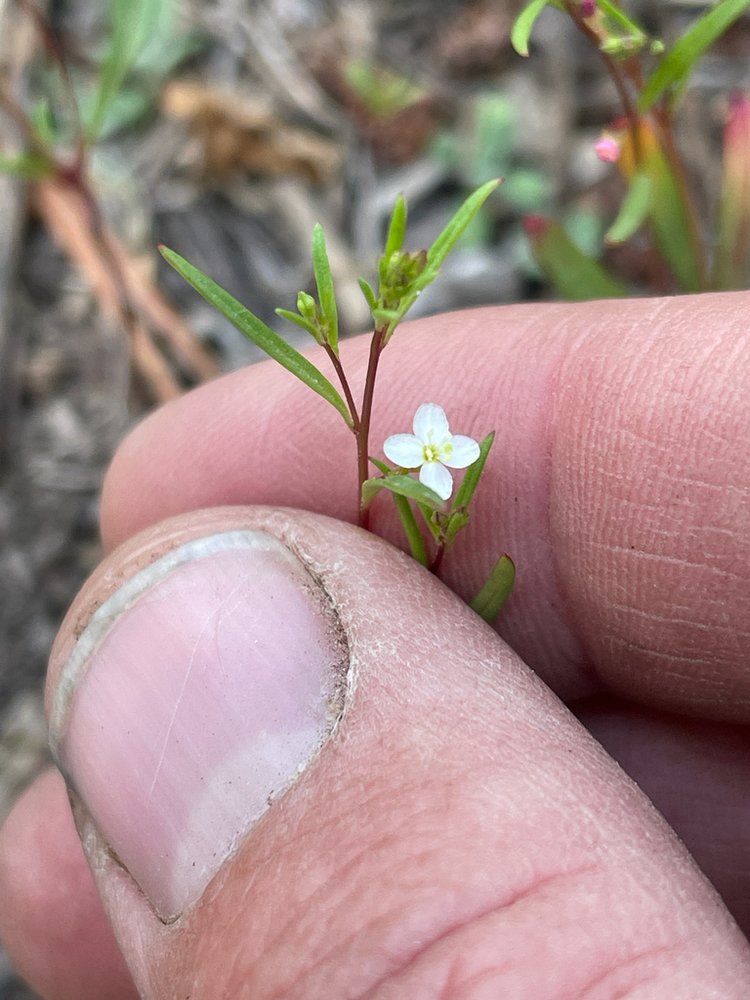
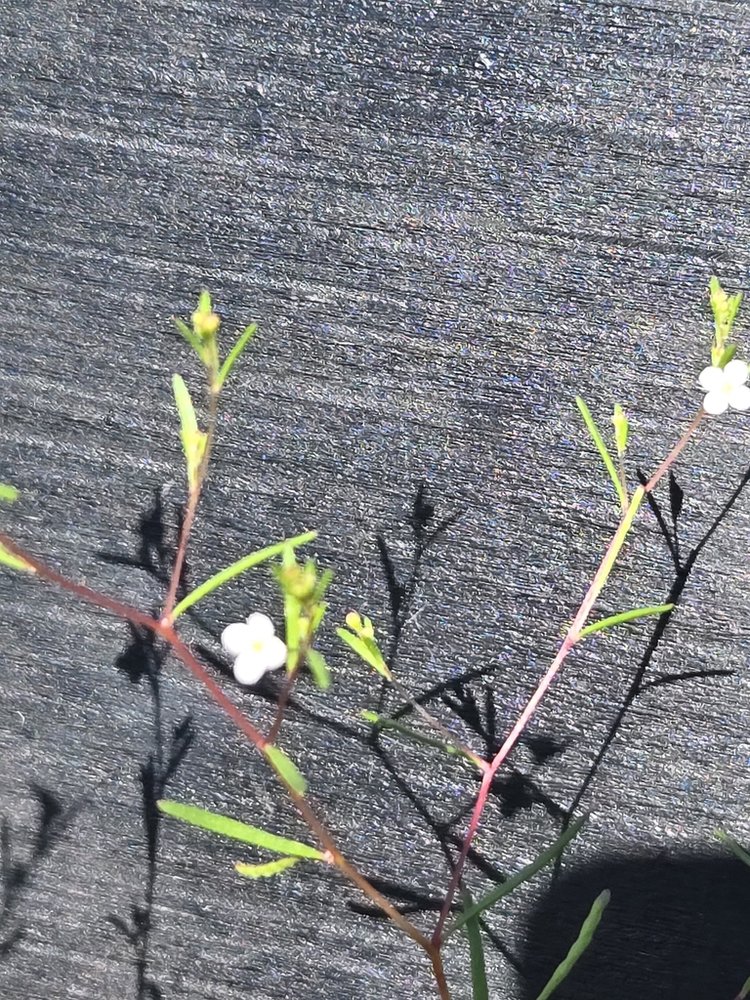
Look for a wiry, airy annual that branches again and again toward the top, usually with only 1 or 2 leaf joints between branches. The leaves are very narrow, 1–6 cm (½–2½ in) long, and get smaller toward the tips. The flowers are tiny: 4 white petals 1.2–5 mm long, 1.2–3 mm in subspecies parviflorum, the form recorded in South Dakota, with a round stigma. The fruit is a slender capsule 3–15 mm (⅛–⅝ in) long, often lumpy where the seeds sit, on a stalk usually shorter than the capsule. Flora of North America's key separates three other groundsmokes collected in the Black Hills by their flowers and fruit: Much-branched Groundsmoke (Gayophytum ramosissimum) has even smaller petals, 0.7–1.5 mm, and capsule stalks longer than the capsules, while Racemed Groundsmoke (Gayophytum racemosum) and Dwarf Groundsmoke (Gayophytum humile) have flattened capsules that aren't pinched between the seeds, on stems usually branched only near the base.
When does it bloom?
June into August.
Where does it grow?
Open ponderosa pine forest and woodland, dry sandy or disturbed roadsides, railroad grades, and sagebrush slopes. Herbarium specimens collected from 1892 to 2018 come from Lawrence, Pennington and Custer counties in South Dakota and Crook and Weston counties in Wyoming, and the National Park Service lists it at Wind Cave, Mount Rushmore and Devils Tower.
Evening Primrose family (Onagraceae): 6 other plants in this guide
Sources: Flora of North America Vol. 10: Gayophytum diffusum (W. L. Wagner et al.), eFloras; Flora of North America Vol. 10: Gayophytum diffusum subsp. parviflorum, eFloras; Flora of North America Vol. 10: Gayophytum diffusum subsp. diffusum, eFloras; Flora of North America Vol. 10: genus Gayophytum (description and key to species), eFloras; Flora of North America Vol. 10: Gayophytum ramosissimum, eFloras; Lady Bird Johnson Wildflower Center: Gayophytum diffusum (Spreading Groundsmoke); Montana Field Guide: Diffuse Groundsmoke, Gayophytum diffusum (Montana Natural Heritage Program); Montana Field Guide: Racemed Groundsmoke, Gayophytum racemosum (Montana Natural Heritage Program); USDA PLANTS Database: Gayophytum diffusum, spreading groundsmoke (GADI2); ITIS: Gayophytum diffusum (TSN 27671); ITIS: Gayophytum ramosissimum, muchbranched groundsmoke (TSN 27679); ITIS: Gayophytum humile, dwarf groundsmoke (TSN 27676); NPSpecies checklist, Wind Cave National Park vascular plants; NPSpecies checklist, Mount Rushmore National Memorial vascular plants; NPSpecies checklist, Devils Tower National Monument vascular plants; GBIF occurrence search: Gayophytum, South Dakota and Wyoming herbarium specimens; South Dakota Game, Fish and Parks: Rare Plants of South Dakota (checked; not listed); Black Hills National Forest Revised Forest Assessment: At-Risk Species, October 2023 (checked; not listed).