Spreading Dogbane
Apocynum androsaemifolium
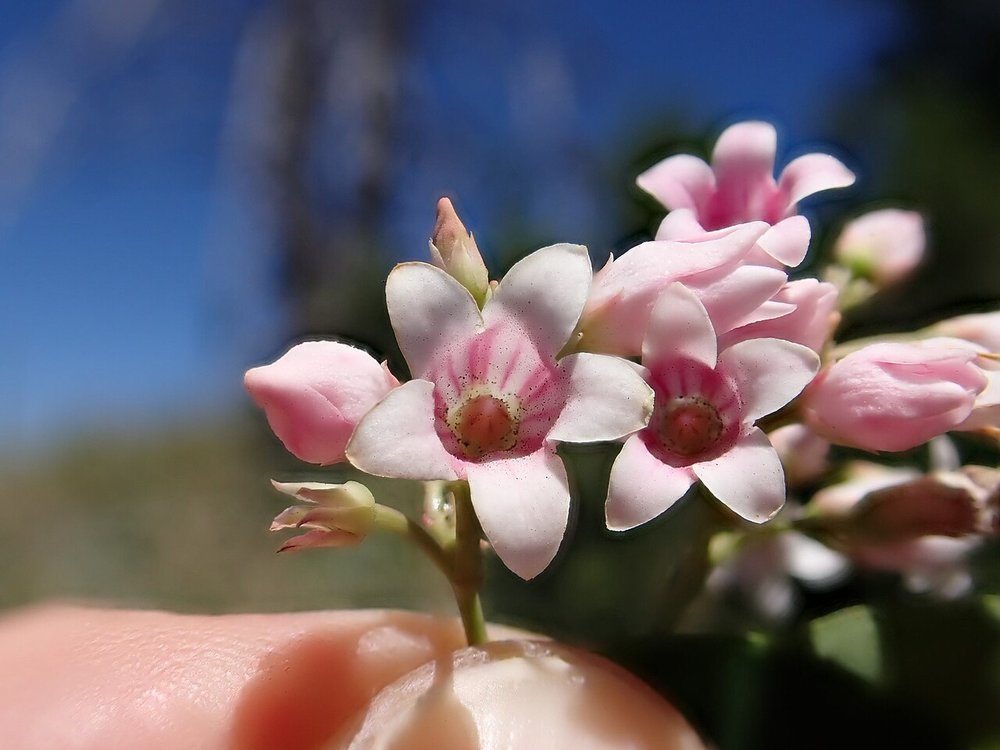
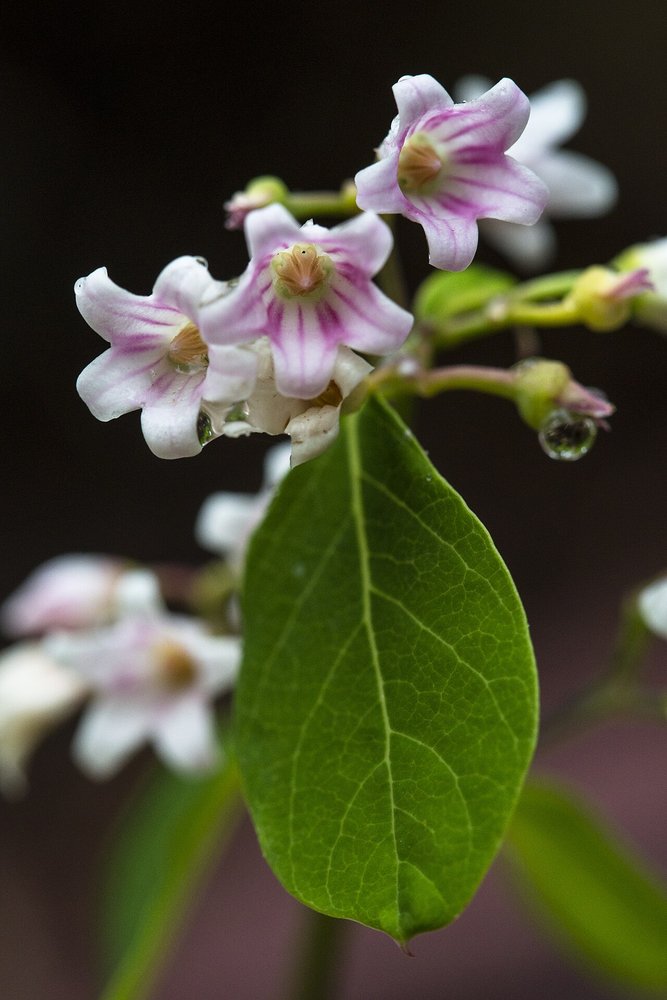
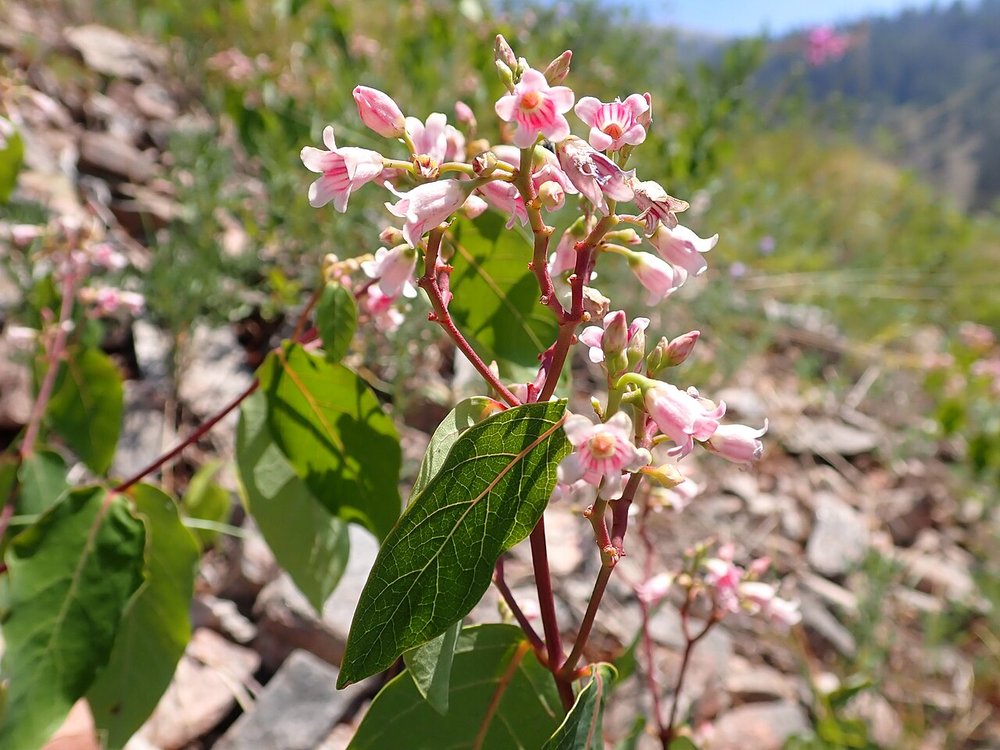
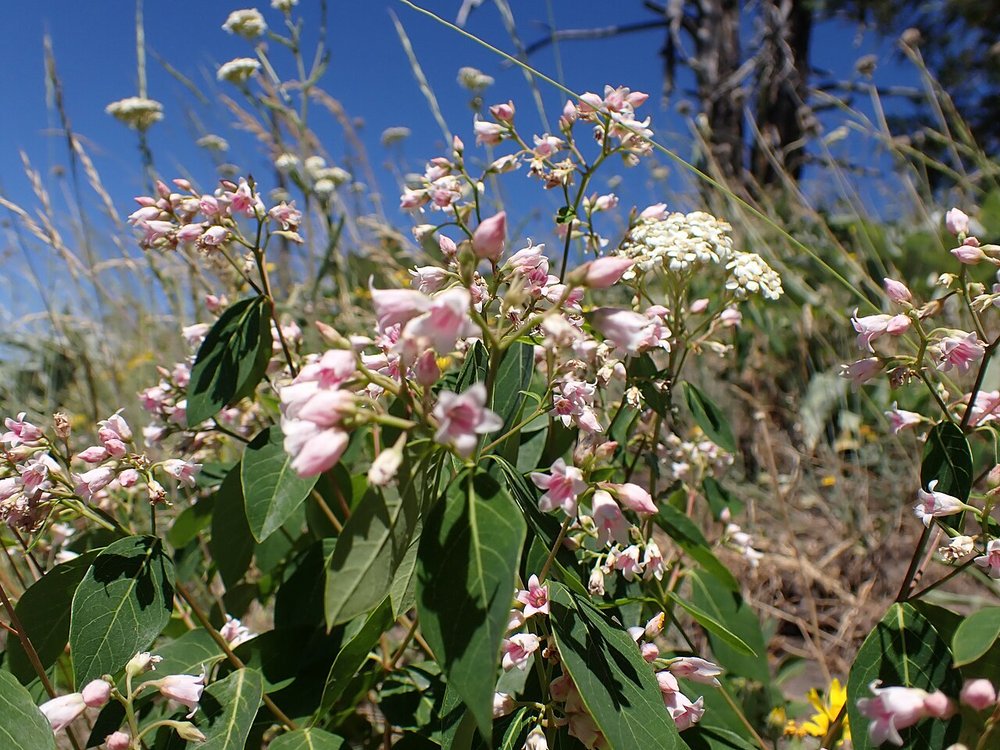
Spreading Dogbane (Apocynum androsaemifolium) is a low, bushy native perennial with reddish stems, drooping leaves, milky sap and small, sweet-scented pink bells. It blooms from June into August, and the Black Hills National Forest calls it common on forest edges and openings at low to middle elevations in the Black Hills.
Free photos from other sources






| Family | Apocynaceae · Dogbane |
|---|---|
| Status | Native perennial |
| Blooms | June into August, peaking in July |
| Height | 15–90 cm (6–36 in) |
| Where | Open ponderosa pine woods, forest edges and openings, burns, rocky slopes and roadsides |
| Also called | Flytrap Dogbane, Dogbane |
| Synonym | Apocynum ambigens, Apocynum pumilum, Apocynum scopulorum, Apocynum androsaemifolium var. glabrum, Apocynum androsaemifolium var. griseum, Apocynum androsaemifolium var. incanum, Apocynum androsaemifolium var. intermedium, Apocynum androsaemifolium var. pumilum, Apocynum androsaemifolium var. tomentellum, Apocynum androsaemifolium var. woodsonii |
| Toxicity | The milky sap contains cardiac glycosides and the root contains cymarin, a strong heart stimulant; the plant is poisonous to people and livestock, and the sap can irritate or blister skin. |
Roots, seeds & germination
Root: It spreads by creeping underground rhizomes, so one plant becomes a patch of many stems. Rhizomes have been found more than 25 cm (10 in) down in mineral soil, deep enough to survive a hot fire, and the plant often comes back thicker after a burn.
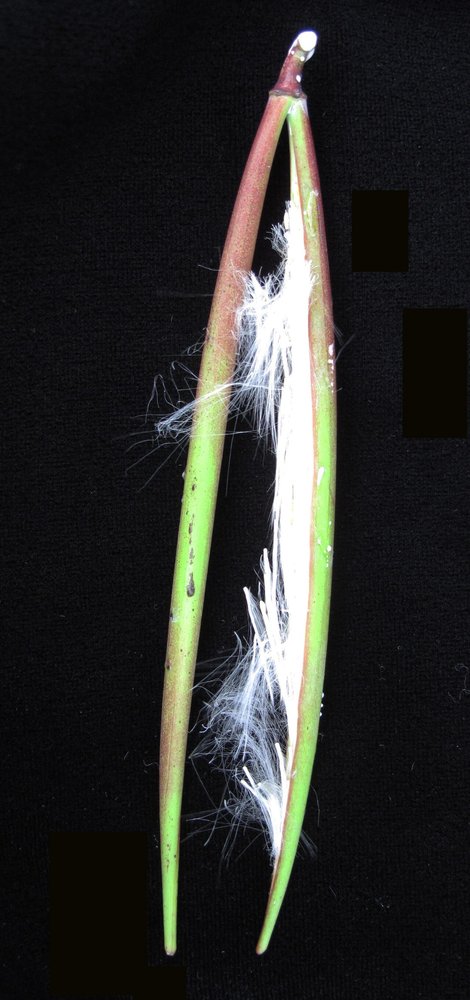
Seed: Each pollinated flower makes a pair of slender, hanging pods 6–14 cm (2½–5½ in) long that turn from green to dull red. In late summer they split down one side and release many seeds 2–4 mm long, each with a tuft of white silky hairs about 2 cm (¾ in) long that carries it on the wind.
Germination: The seed has only a light dormancy: SDSU says to collect it once the pods split and sow it in fall or spring. In an older Wisconsin test, 2 months of cold, moist stratification raised germination from 36% to 56%. Established patches can also be divided in spring.
How do you identify Spreading Dogbane?
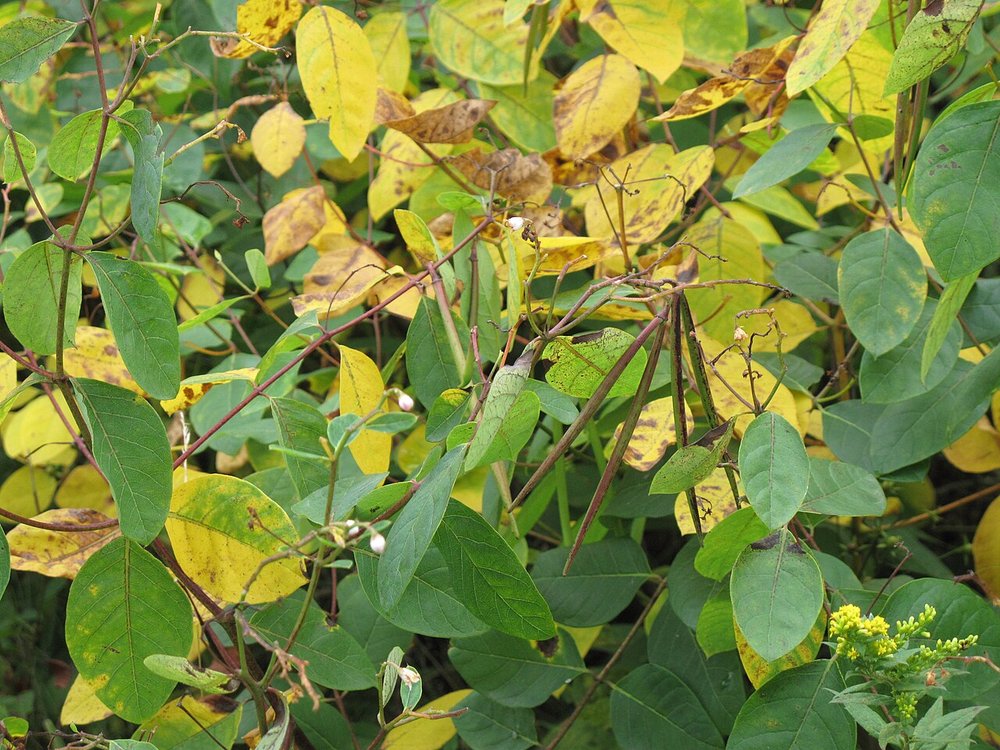
Look for a bushy plant, usually knee-high or less, with forked branches that spread outward and smooth, often red stems that ooze white, milky sap when snapped. The leaves are opposite, oval with a pointed tip, 3–8 cm (1¼–3 in) long and untoothed, and they spread sideways and droop. Small bells 6–10 mm (¼–⅓ in) long, pink or white with pink stripes inside, hang in loose clusters at the branch tips, their five lobes flaring and curling back. Hemp Dogbane is taller and more upright, with tiny greenish-white flowers that point up and leaves that angle upward. Snowberries also have small pink bells and opposite oval leaves, but they are woody shrubs with no milky sap, and they make white berries instead of long pods.
When does it bloom?
June into August, peaking in July.
Where does it grow?
Dry to moderately moist open ponderosa pine woods, forest edges and openings, aspen groves, rocky slopes, roadsides and creek banks, in sun or light shade. It moves quickly into burns, logged areas and road cuts, and grows from the edge of the foothills to the highest summits of the Hills. The 1986 plant survey of Jewel Cave lists it, the National Park Service lists it at Wind Cave, Mount Rushmore and Devils Tower, and about 195 herbarium specimens from 1892 to 2012 come from all seven Black Hills counties.
Sources: USDA Forest Service, Black Hills National Forest: Black Hills Native Plants; Marriott and Hartman 1986, A Survey of the Vegetation of Jewel Cave National Monument; NPSpecies checklist, Wind Cave National Park vascular plants; NPSpecies checklist, Jewel Cave National Monument vascular plants; NPSpecies checklist, Mount Rushmore National Memorial vascular plants; NPSpecies checklist, Devils Tower National Monument vascular plants; GBIF: Apocynum androsaemifolium herbarium specimens, South Dakota; GBIF: Apocynum androsaemifolium herbarium specimens, Wyoming; GBIF: Apocynum x floribundum (hybrid dogbane) records, South Dakota; iNaturalist: research-grade Spreading Dogbane observations, Black Hills area; USDA Forest Service Fire Effects Information System: Apocynum androsaemifolium; USDA Forest Service Celebrating Wildflowers, Plant of the Week: Spreading Dogbane; SDSU Open PRAIRIE: Apocynaceae: Apocynum androsaemifolium (R. Neil Reese); SDSU Open PRAIRIE: Apocynaceae: Apocynum cannabinum (R. Neil Reese); Native Plant Network propagation protocol: Apocynum androsaemifolium, Hiawatha National Forest (Schultz, Beyer and Williams 2001); Native Plant Network propagation protocol: Apocynum androsaemifolium, Bend Seed Extractory (Barner 2009); Minnesota Wildflowers: Spreading Dogbane; Minnesota Wildflowers: Indian Hemp (Apocynum cannabinum); Minnesota Wildflowers: Snowberry (Symphoricarpos albus); Illinois Wildflowers: Spreading Dogbane; Native Plant Trust Go Botany: Apocynum androsaemifolium; SEINet: Apocynum x floribundum (hybrid dogbane); ITIS: Apocynum androsaemifolium L., TSN 30156; USDA PLANTS Database: Apocynum androsaemifolium (APAN2); Culturally Important Plants of the Lakota (Black Elk and Flying By, Sitting Bull College, 1998), filed with the South Dakota PUC; Maud Going, Field, Forest, and Wayside Flowers (1899), ch. XIII, Dogbane and Milkweed.