Snow on the Mountain Euphorbia marginata
Also called Whitemargined Spurge, Variegated Spurge, Smoke-on-the-prairie, itópta sápa tȟapȟéžuta (Lakota), asáŋpi pȟežúta (Lakota)
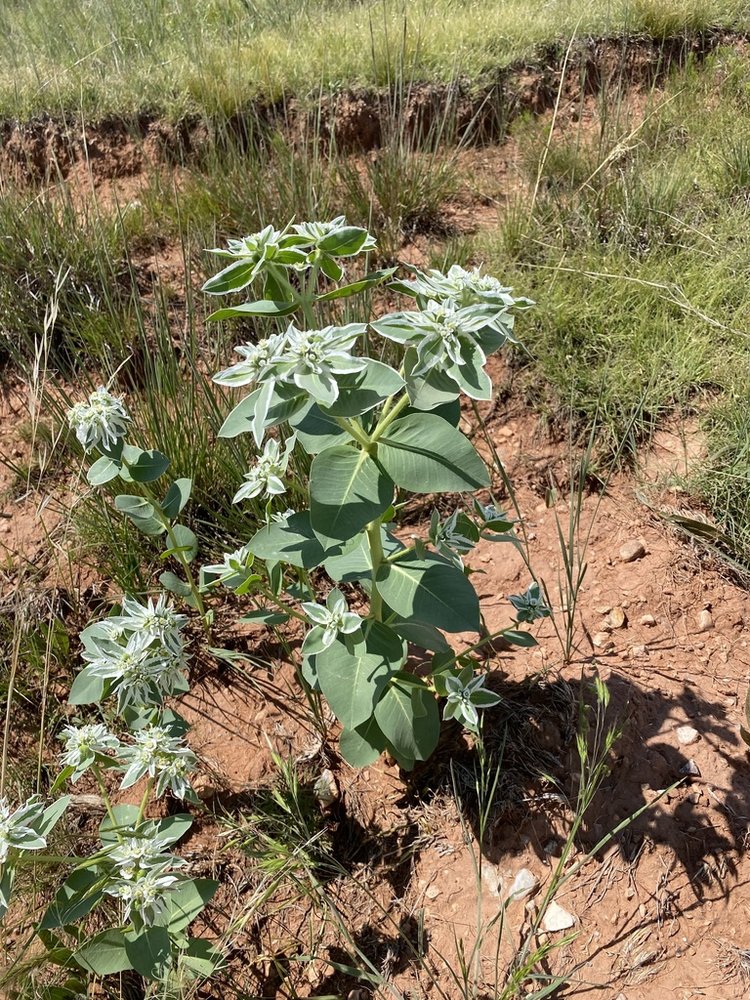
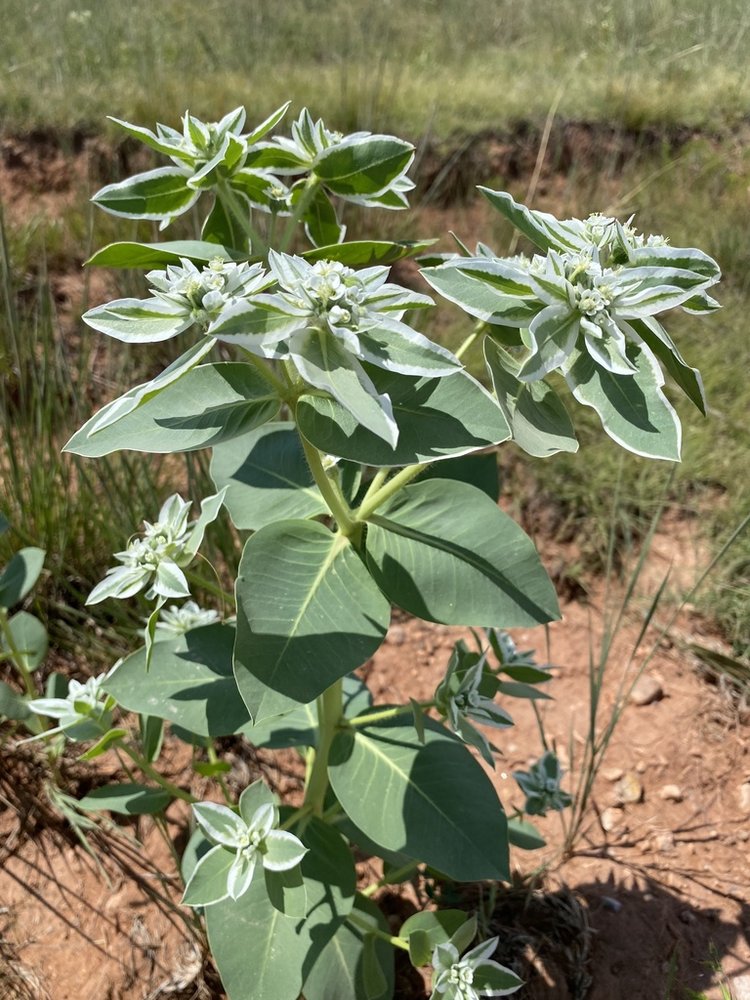
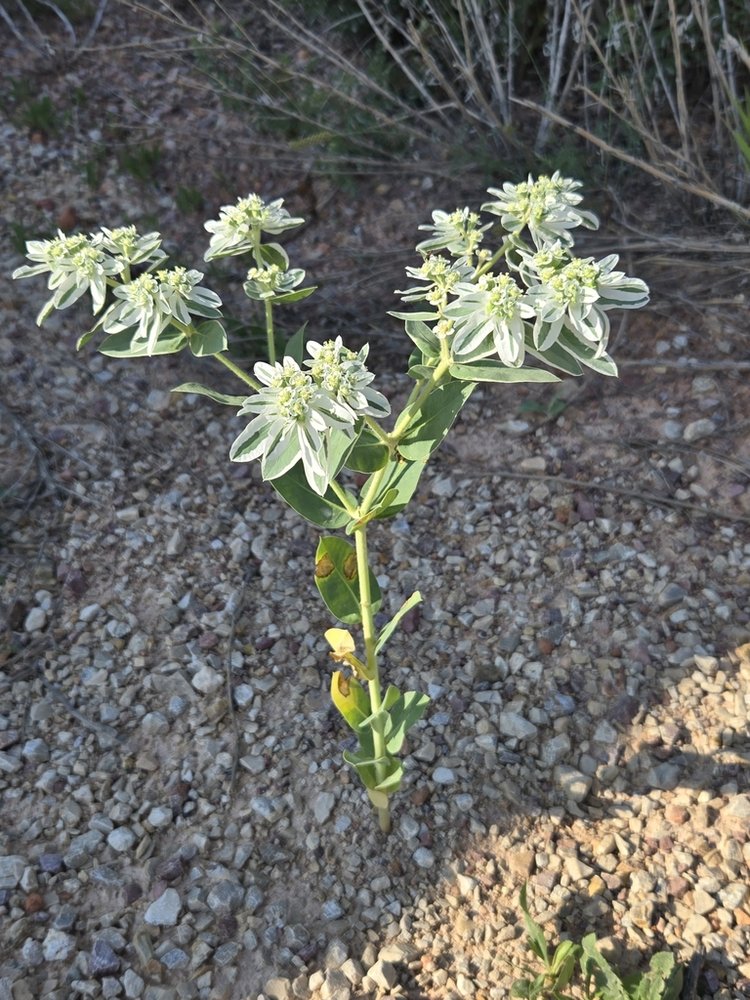
Snow on the Mountain (Euphorbia marginata) is a native Great Plains annual, 30–100 cm (1–3 ft) tall, whose upper leaves and leafy bracts have broad white edges around small white flowers, blooming from June into October. Around the Black Hills, herbarium labels from Lawrence, Fall River and Custer counties record it on open range, rocky ground and streamside woodland, and the National Park Service lists it at Wind Cave.
Free photos from other sources
| Family | Euphorbiaceae · Spurge |
|---|---|
| Status | Native annual |
| Blooms | June into October |
| Height | 30–100 cm (12–40 in) |
| Where | Dry prairie, roadsides, stream bottoms and waste ground |
| Also called | Whitemargined Spurge, Variegated Spurge, Smoke-on-the-prairie, itópta sápa tȟapȟéžuta (Lakota), asáŋpi pȟežúta (Lakota) |
| Synonym | Dichrophyllum marginatum, Agaloma marginata |
| Toxicity | The milky sap can irritate the skin much like poison ivy, and Kansas Wildflowers says cattle can be debilitated or die after eating hay that contains it. |
| Traditional use | Rogers (1980), cited in Moerman's database, records that the Lakota used an infusion of the crushed leaves as a liniment for swellings and an infusion of the plant for mothers without milk. Black Elk and Flying By (1998) list the same two uses with Lakota names, and add that the plant may be toxic. Gilmore (1919, under the name Dichrophyllum marginatum) records that the Pawnee considered it poisonous, and Moerman's database records the Kiowa using it as chewing gum (Vestal and Schultes 1939). |
| Note | Snow on the Mountain is also a garden plant, and the Wildflower Center says it is naturalized in waste areas east to the Atlantic; none of the opened sources says whether a given Black Hills plant is wild or an escape. |
Traditional use: first drafted by Google AI, then checked against the sources on this page.
Roots, seeds & germination
Seed: Minnesota Wildflowers gives the seeds as 3.7–3.9 mm long, oval to nearly round, with a conspicuous brown ridge down one side, and white to gray to orange-tan in color.
Germination: The Wildflower Center says it is grown from seed sown in fall or spring.
How do you identify Snow on the Mountain?
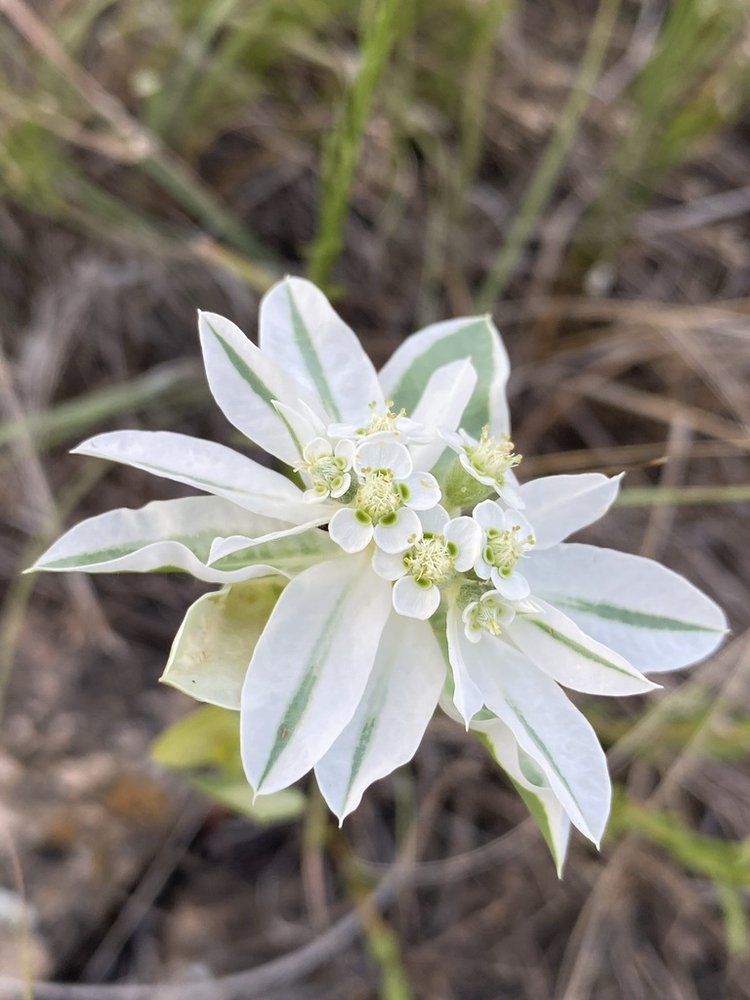
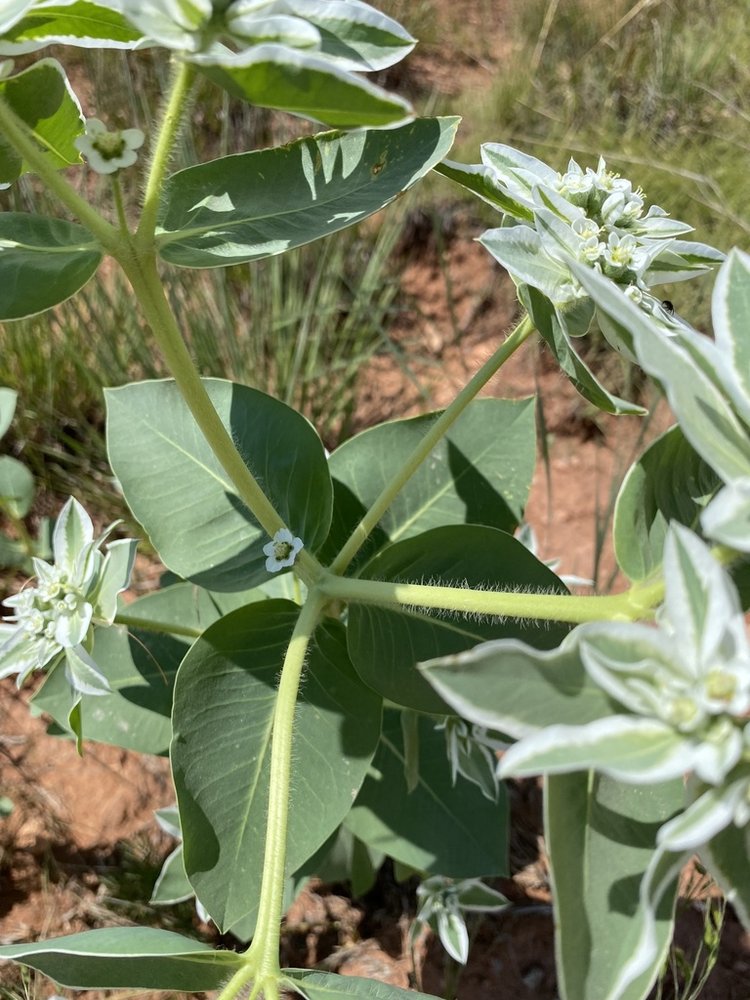
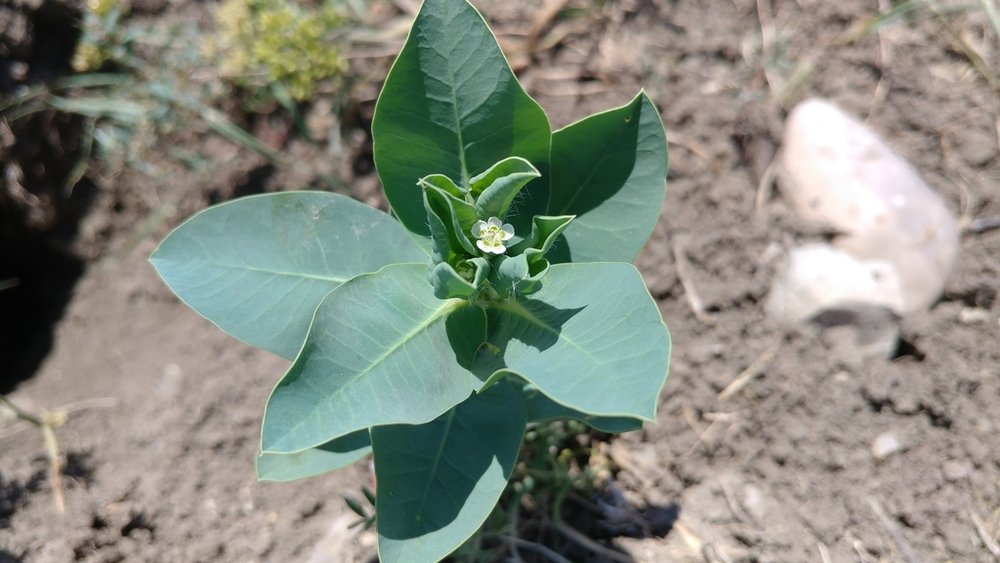
Look for an upright, mostly unbranched annual with a milky sap and smooth-edged, oblong leaves up to 10 cm (4 in) long that sit directly on the stem. The upper leaves and the leafy bracts under each flower cluster have a broad white band along the edge, and some are almost all white, which gives the plant its name. The true flowers are tiny: each cluster has five white, petal-like appendages with a green gland at the base of each, around one green female flower and many small male flowers with yellow-green stamens. The fruit is a hairy, three-sectioned capsule about 3 mm (⅛ in) long. Minnesota Wildflowers notes that a variegated form of Goutweed (Aegopodium podagraria), a non-native perennial that spreads by creeping rhizomes, is also called snow on the mountain in some areas.
When does it bloom?
June into October.
Where does it grow?
Dry prairie, roadsides, stream bottoms and waste ground; Kansas Wildflowers says it is most abundant on limestone soils. The Black Hills herbarium labels include open range pasture in Lawrence County (1937), a moist rocky area in Lawrence County (1982), a riparian woodland near a stream below ponderosa pine forest in Fall River County (1978), other Fall River and Custer County specimens from 1892 and 1927, and a roadside right-of-way in Crook County, Wyoming (1994). The National Park Service lists it as present at Wind Cave National Park. Minnesota Wildflowers calls it primarily a Great Plains species that escapes cultivation west of the Rocky Mountains.
Other spurges in this guide
Sources: Minnesota Wildflowers: Euphorbia marginata (Snow-on-the-mountain); Kansas Wildflowers and Grasses: Euphorbia marginata (snow-on-the-mountain); Lady Bird Johnson Wildflower Center: Euphorbia marginata (EUMA8); NPSpecies checklist, Wind Cave National Park vascular plants; GBIF specimen 3034739060: Northern Black Hills, Lawrence County SD, 1 August 1937; GBIF specimen 3034739053: Lawrence County SD, 3 September 1982; GBIF specimen 1321084401: The Black Hills, Fall River County SD, 9 August 1892; GBIF specimen 5159142619: Fall River County SD, 29 July 1978; GBIF specimen 1305288609: Black Hills, Custer County SD, 30 July 1927; GBIF specimen 3034739071: Crook County WY, 15 August 1994; Gilmore 1919, Uses of Plants by the Indians of the Missouri River Region, page 99 (Internet Archive); Native American Ethnobotany Database (BRIT): Euphorbia marginata; Culturally Important Plants of the Lakota (Black Elk and Flying By, 1998), entry 123.