Seneca Snakeroot Polygala senega
Also called Mountain Milkwort, Mountain Flax, Rattlesnake Snakeroot, Senega Snakeroot
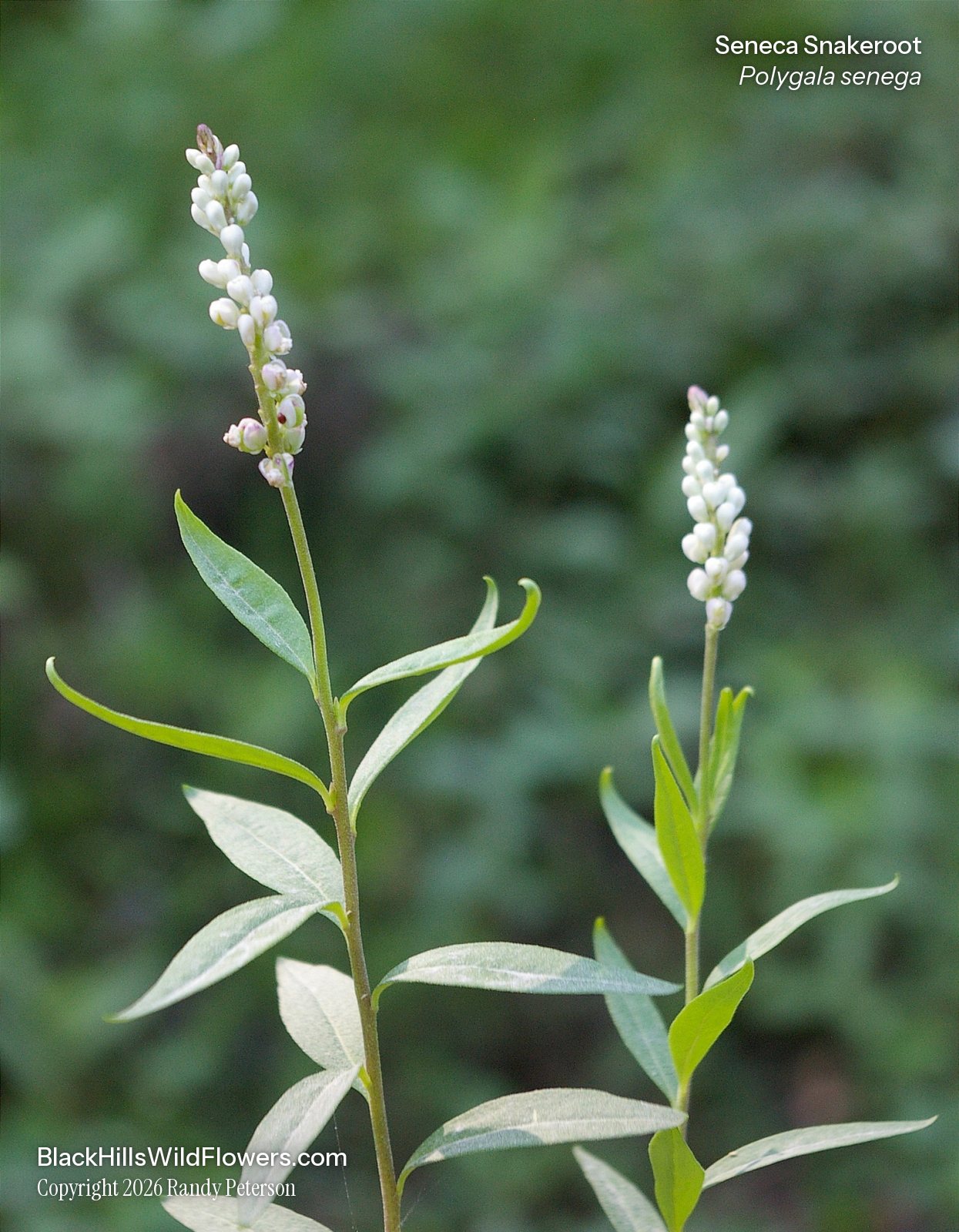
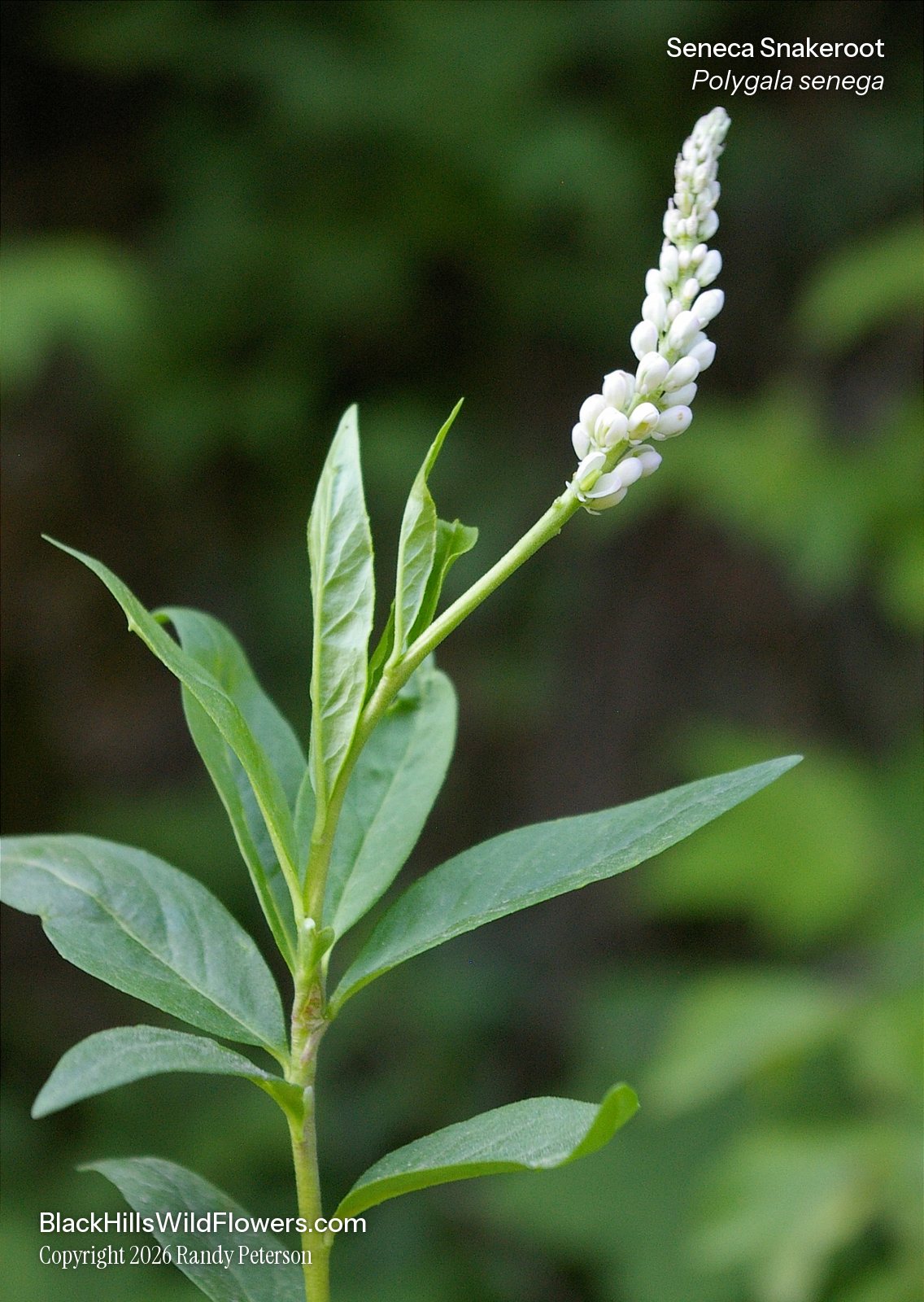
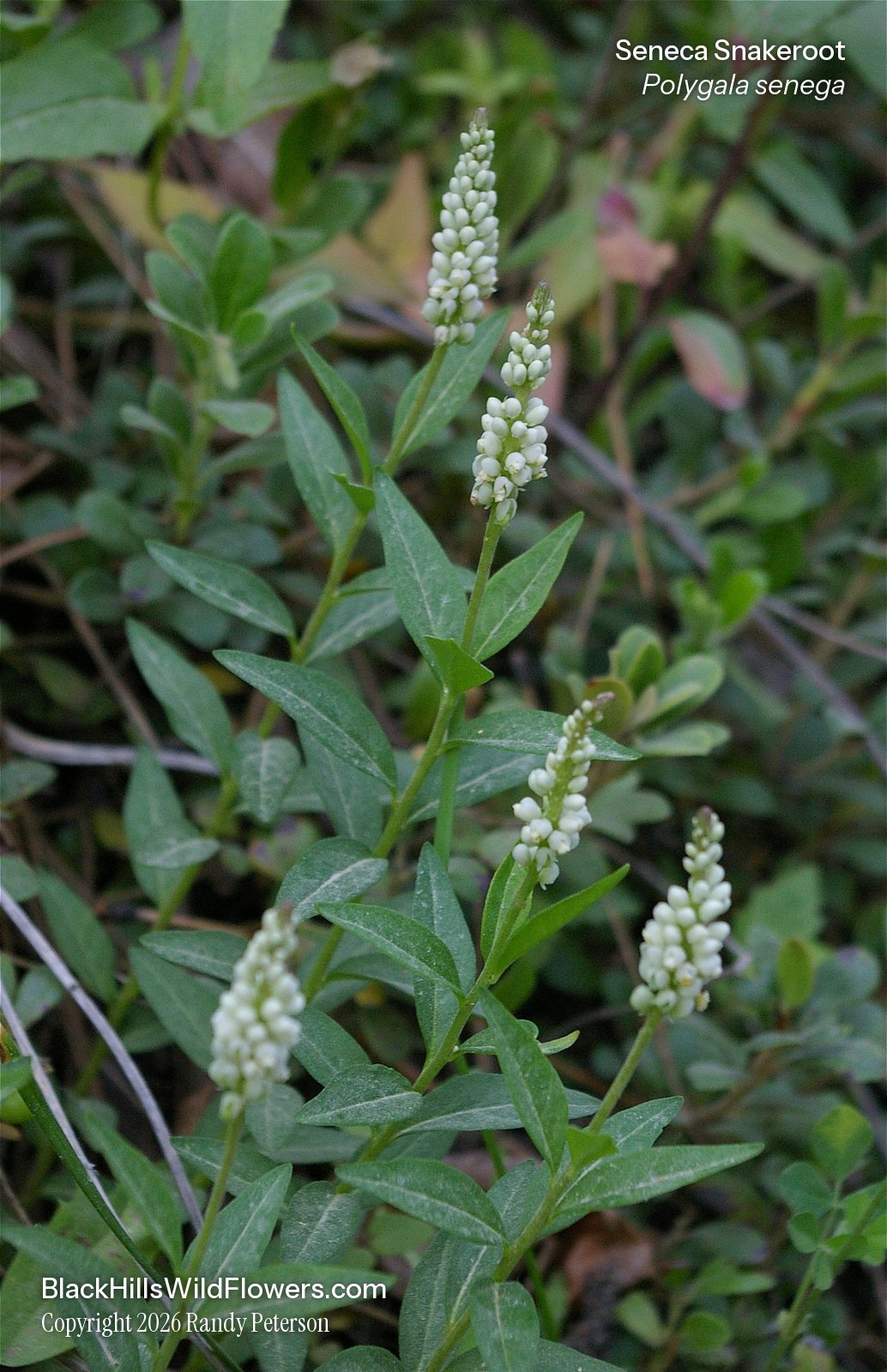
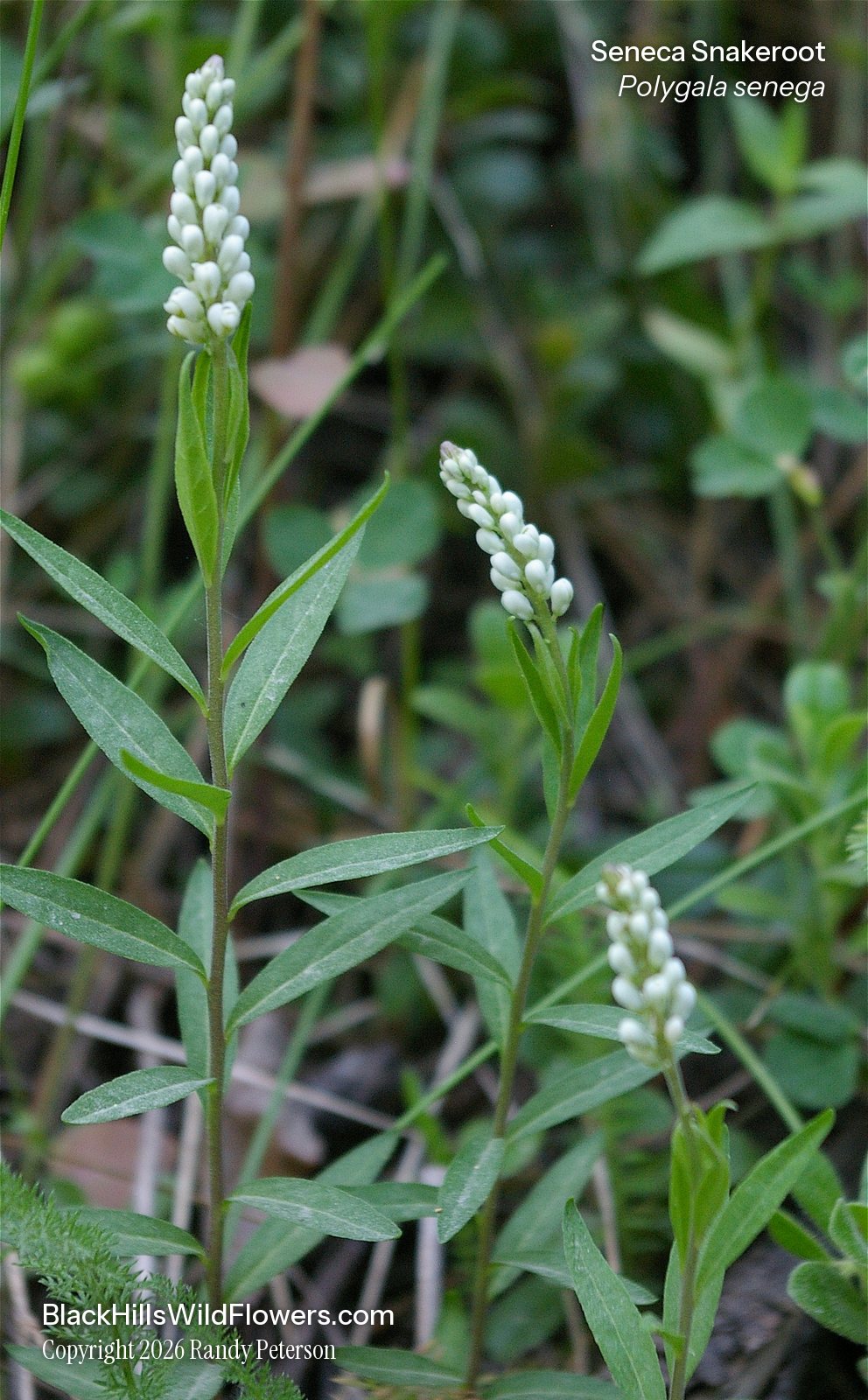
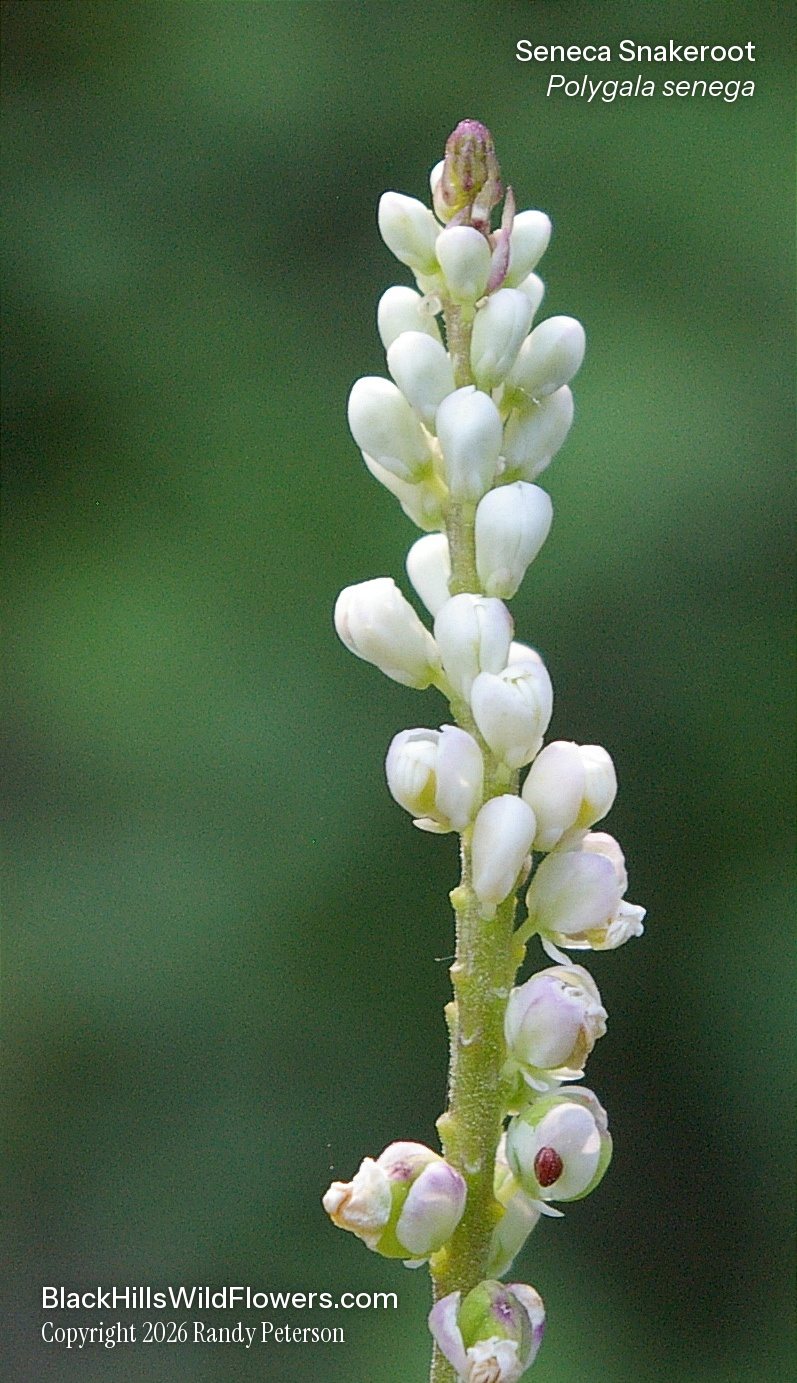
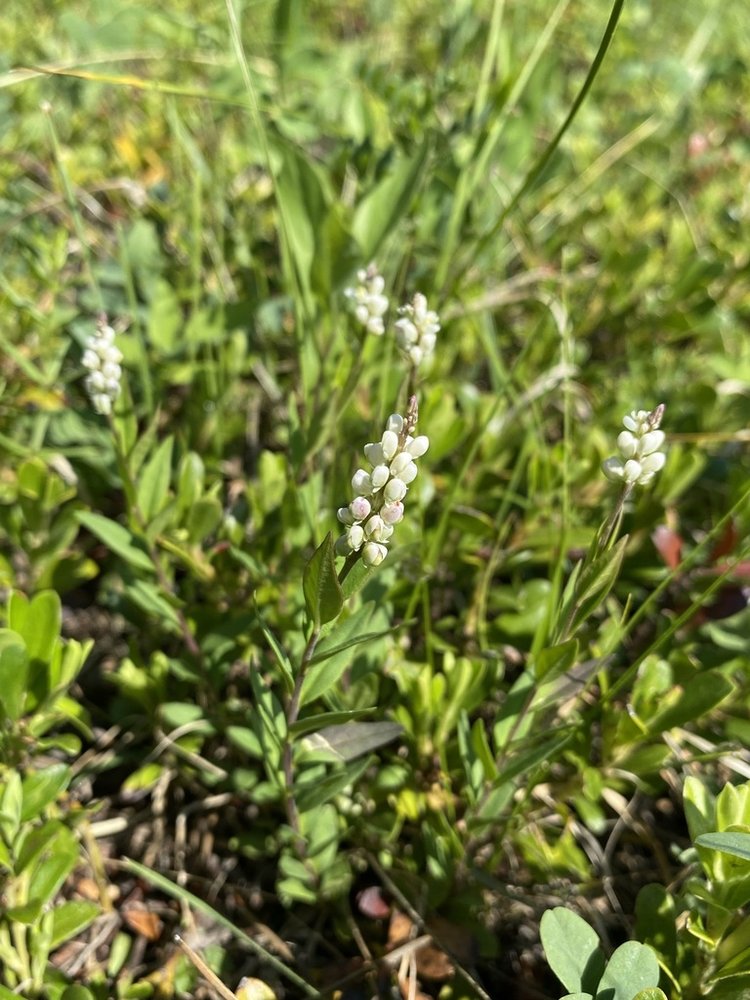
Seneca Snakeroot (Polygala senega) is a native perennial of the milkwort family with a clump of unbranched stems, narrow pointed leaves set one at a time up the stem, and a short, dense spike of small white flowers that opens from the bottom up. It grows in open pine, spruce and aspen woods, meadow edges and creek banks of the Black Hills, where herbarium collections go back to 1887 and the National Park Service lists it at Jewel Cave. Photographed in the Black Hills.
Free photos from other sources
| Family | Polygalaceae · Milkwort |
|---|---|
| Status | Native perennial |
| Blooms | May into July in Minnesota (no South Dakota bloom months found) |
| Height | 25–53 cm (10–21 in) |
| Where | Open pine, spruce and aspen woods, meadow edges, rocky hillsides and creek banks |
| Also called | Mountain Milkwort, Mountain Flax, Rattlesnake Snakeroot, Senega Snakeroot |
| Synonym | Senega officinalis |
| Traditional use | Johnston's 1987 account of the Blackfoot, as listed in BRIT's ethnobotany database, records a tea boiled from the roots for breathing illnesses. |
Roots, seeds & germination
Root: A slightly woody crown or taproot with fibrous side roots. The roots are yellowish to grayish brown and twisted like a snake, the crown carries the scars of old stems, and the root smells somewhat like wintergreen.
Seed: Each flower makes a small, nearly round, slightly flattened capsule 2–4 mm long with two chambers and one seed in each. The seeds are 2–3.5 mm long and sparsely hairy, with a two-lobed appendage about as long as the seed or longer.
Germination: Manitoba Agriculture gives 60 days of cold, moist treatment before planting, after which 60 to 80 percent of the seed sprouts. Young shoot cuttings can also be rooted.
How do you identify Seneca Snakeroot?
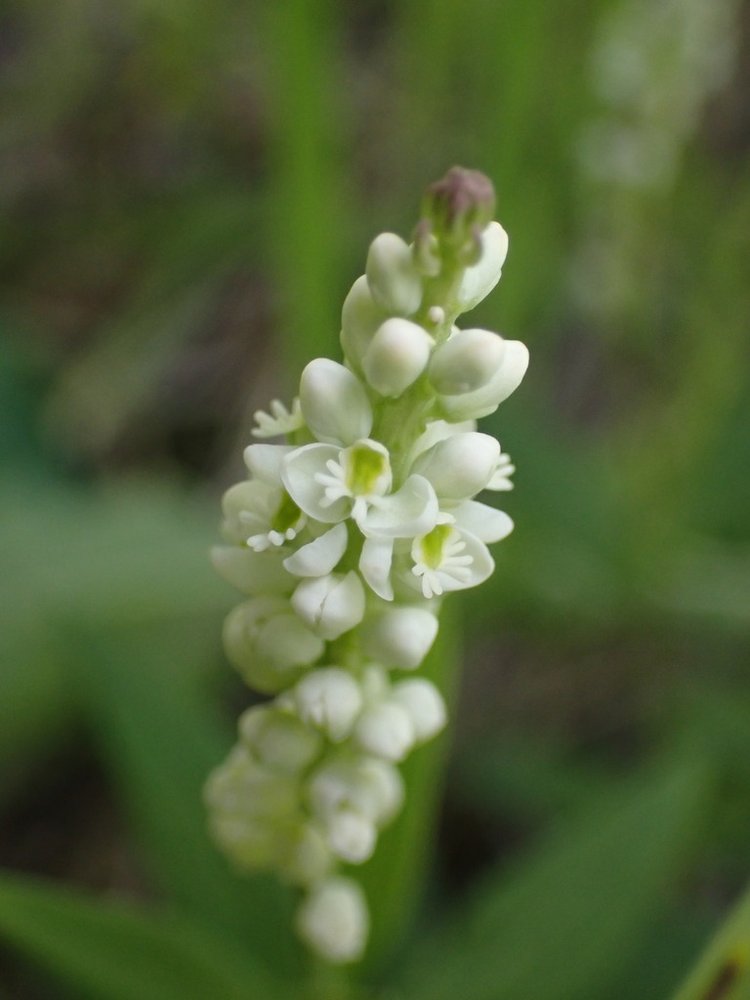
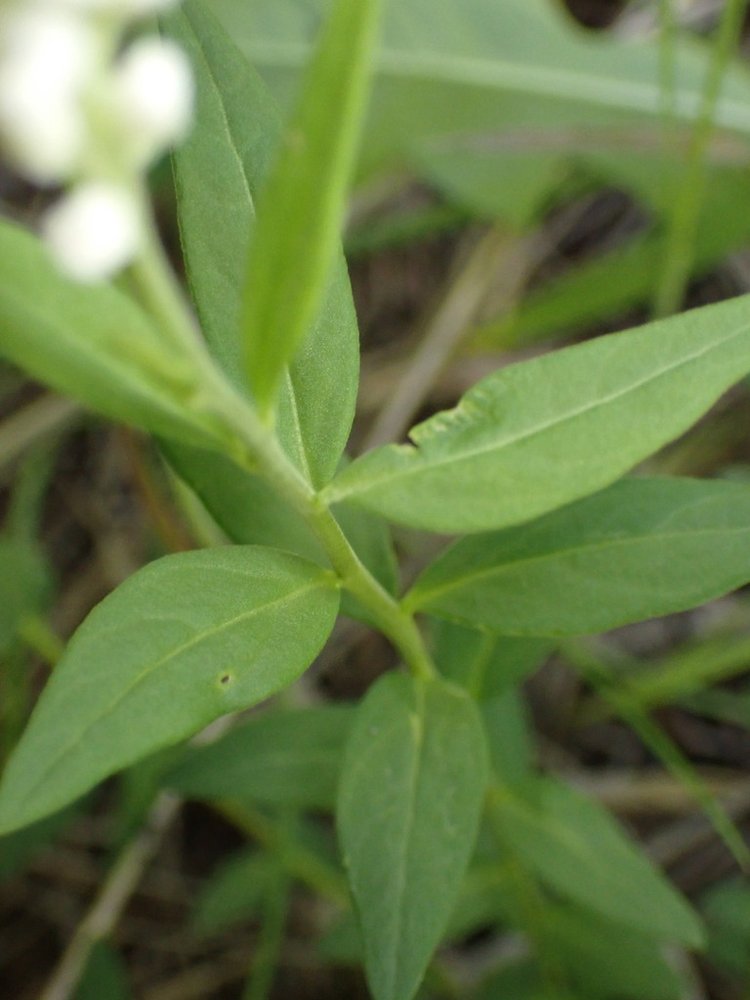
Look for several unbranched stems 25–53 cm (10–21 in) tall from one base, green to purplish, with alternate, lance-shaped leaves 2.5–6 cm (1–2½ in) long that are toothless or finely toothed; the lowest leaves are small and scale-like and the upper ones are the largest. Each stem ends in a dense spike of white to greenish-white flowers 2–4 mm long that open from the bottom up. In each flower, two rounded, petal-like sepals form wings around three petals rolled into a tube, one of them tipped with a small fringed crest. Minnesota Wildflowers separates it from White Milkwort (Polygala alba), which the National Park Service lists at Wind Cave, Jewel Cave and Devils Tower: White Milkwort's leaves are rarely more than 2.5 cm (1 in) long and its lowest leaves are usually whorled. Whorled Milkwort (Polygala verticillata) has its leaves in whorls of 4 or 5 and usually branches often.
When does it bloom?
May into July in Minnesota (no South Dakota bloom months found).
Where does it grow?
Open ponderosa pine and white spruce woods, aspen groves, meadows at the forest edge, rocky hillsides, creek banks and moist roadsides. Black Hills herbarium labels include the limestone country at 1,830–1,980 m (6,000–6,500 ft) in 1892, open woods (1928), spruce woods by a stream (1972), a meadow at the edge of ponderosa pine (2007), aspen forest below limestone cliffs (2010) and an aspen grove in Weston County, Wyoming (2018). Specimens, the oldest from 1887, come from Lawrence, Pennington and Custer counties, SD, and Crook and Weston counties, WY, most of them from the northern Hills. The National Park Service lists it at Jewel Cave, and the 1986 Jewel Cave survey recorded it as Mountain Milkwort.
Sources: Minnesota Wildflowers: Polygala senega (Seneca Snakeroot); Illinois Wildflowers: Seneca Snakeroot, Polygala senega; Manitoba Agriculture: Senega Snakeroot (crop management); NPSpecies checklist, Jewel Cave National Monument vascular plants; NPSpecies checklist, Wind Cave National Park vascular plants (Polygala alba); NPSpecies checklist, Devils Tower National Monument vascular plants (Polygala alba); Marriott and Hartman 1986, A Survey of the Vegetation of Jewel Cave National Monument; GBIF occurrence search: Polygala senega herbarium specimens, South Dakota and Wyoming; GBIF specimen 5895759056: 1892, limestone district of the Black Hills, Custer County, 6000-6500 ft (NEB); GBIF specimen 2512329014: 1928, Lawrence County, "open woods" (BHSU); GBIF specimen 5103616091: 1972, Lawrence County, "spruce woods with stream and marshy area" (UTEP); GBIF specimen 3051415337: 2007, Pennington County, meadow at edge of ponderosa pine forest (BHSU); GBIF specimen 2512332998: 2010, Pennington County, aspen forest below limestone cliffs (USFS/BHSU); GBIF specimen 4041254306: 2018, Weston County WY, lower slope of aspen grove (NCU); GBIF specimen 3960877311: 1984, Black Hills, Crook County WY, filed as Senega officinalis Spach (USF); iNaturalist taxa search: Polygala senega, accepted there as Senega officinalis; BRIT ethnobotany database: Polygala senega.