Skunkbush Sumac Rhus aromatica also listed as Rhus trilobata
Also called Skunkbush, Fragrant Sumac, Three-leaf Sumac, Aromatic Sumac, Lemonade Sumac, Basketbush, čháŋ uŋkčémna (Lakota)
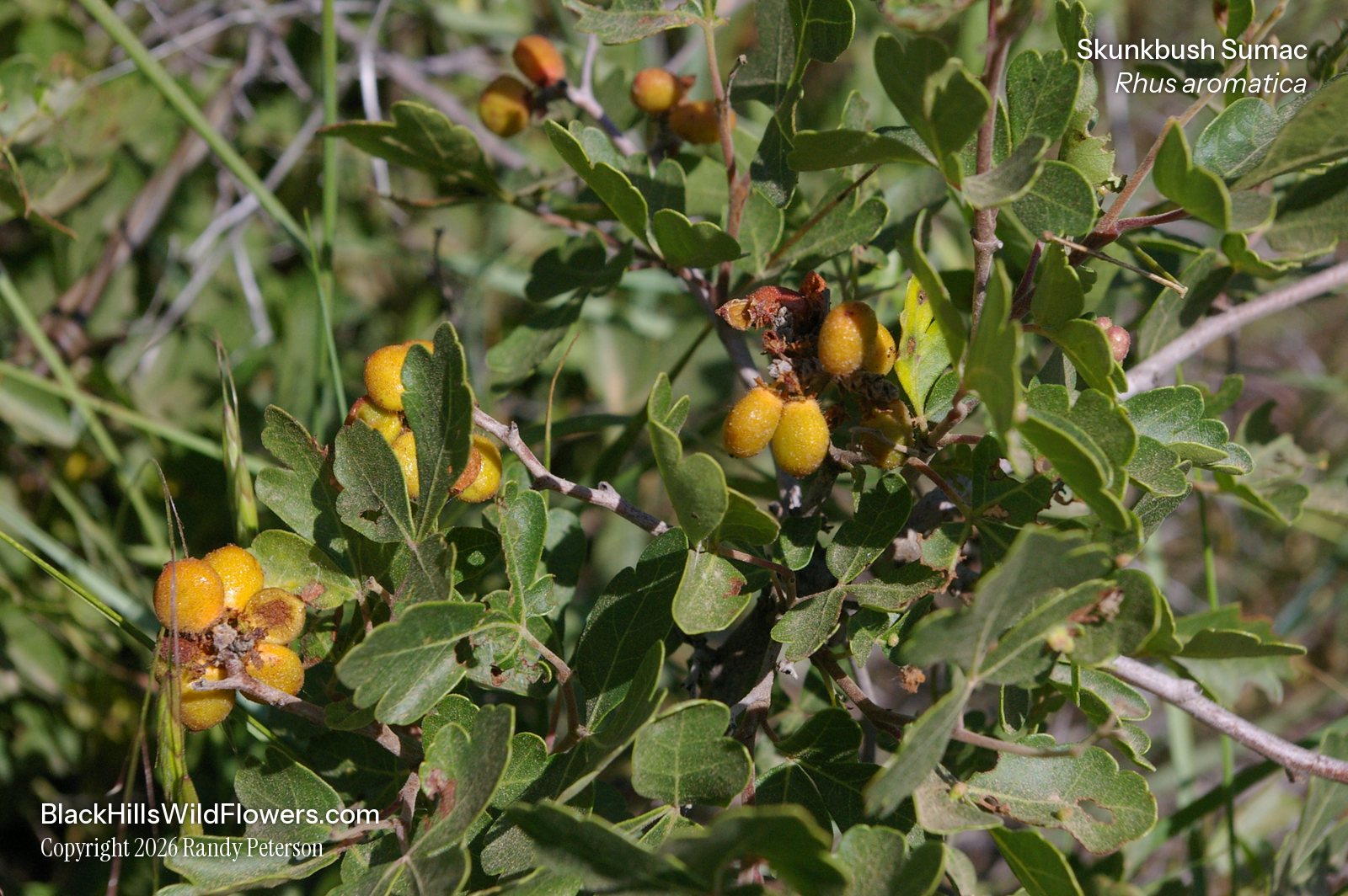
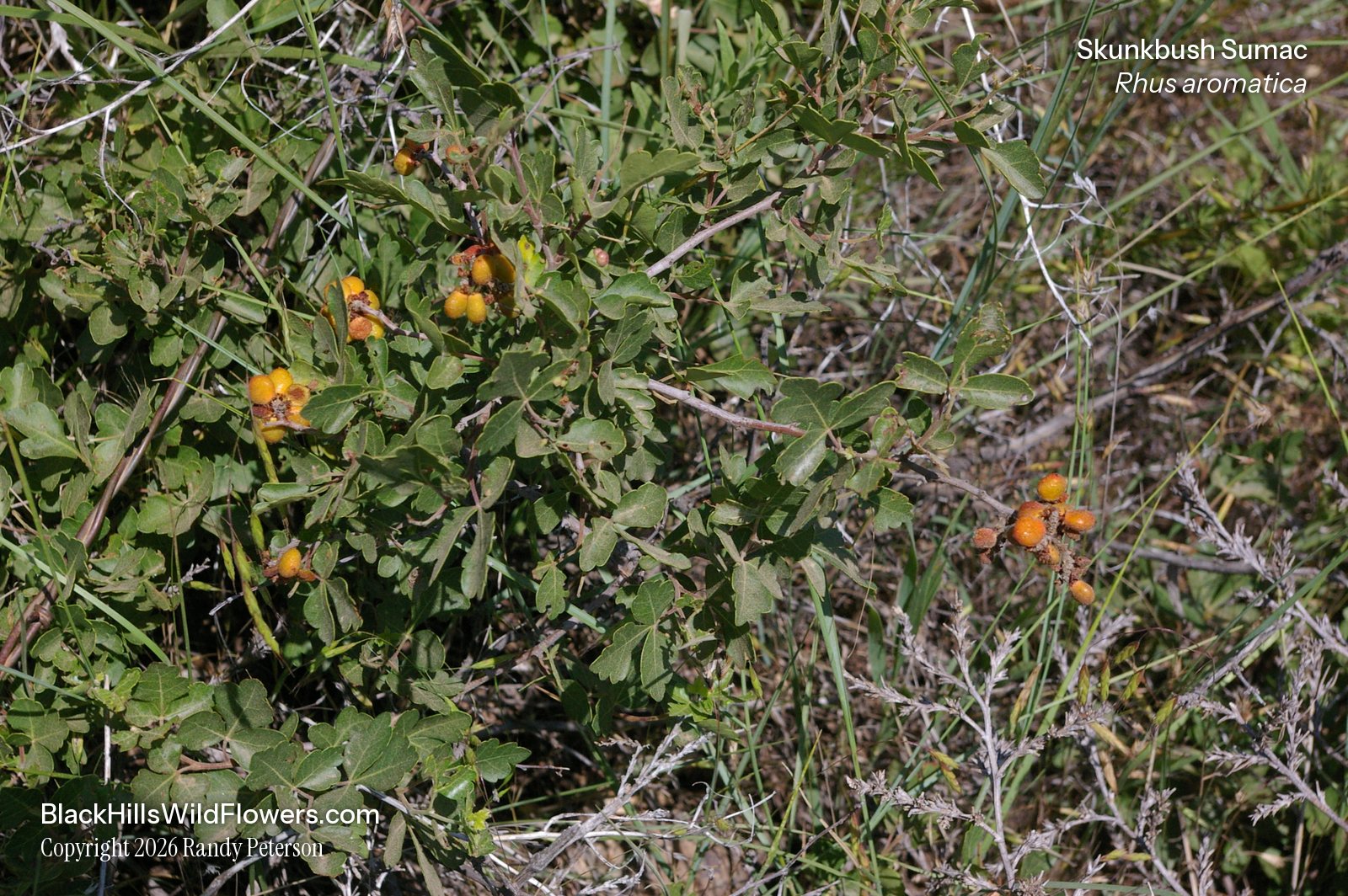
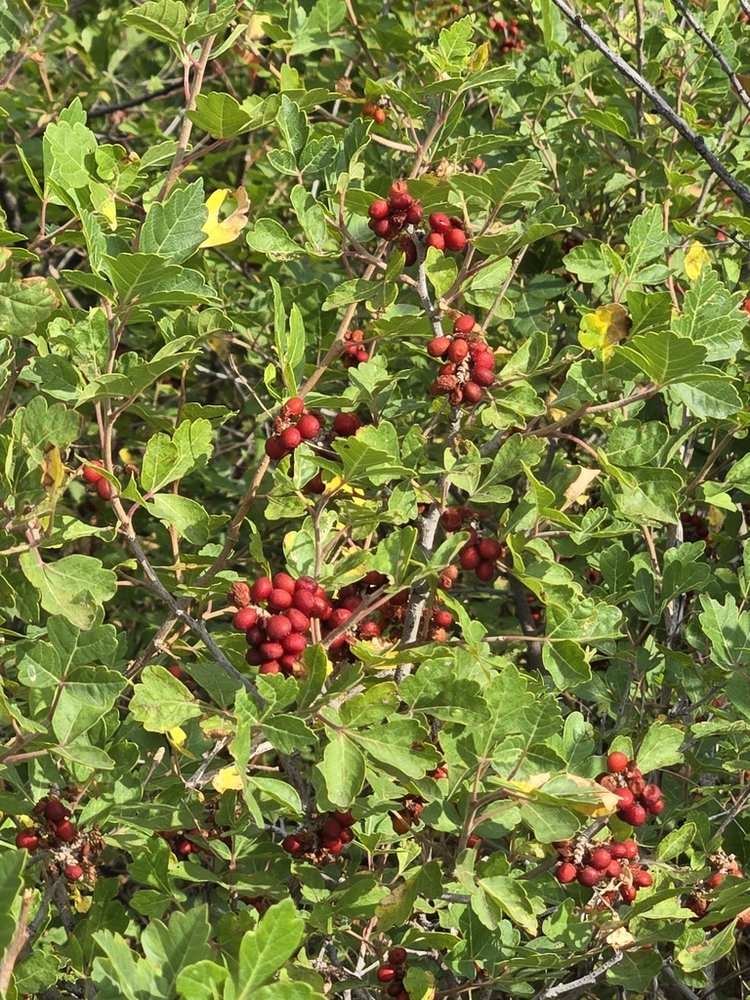
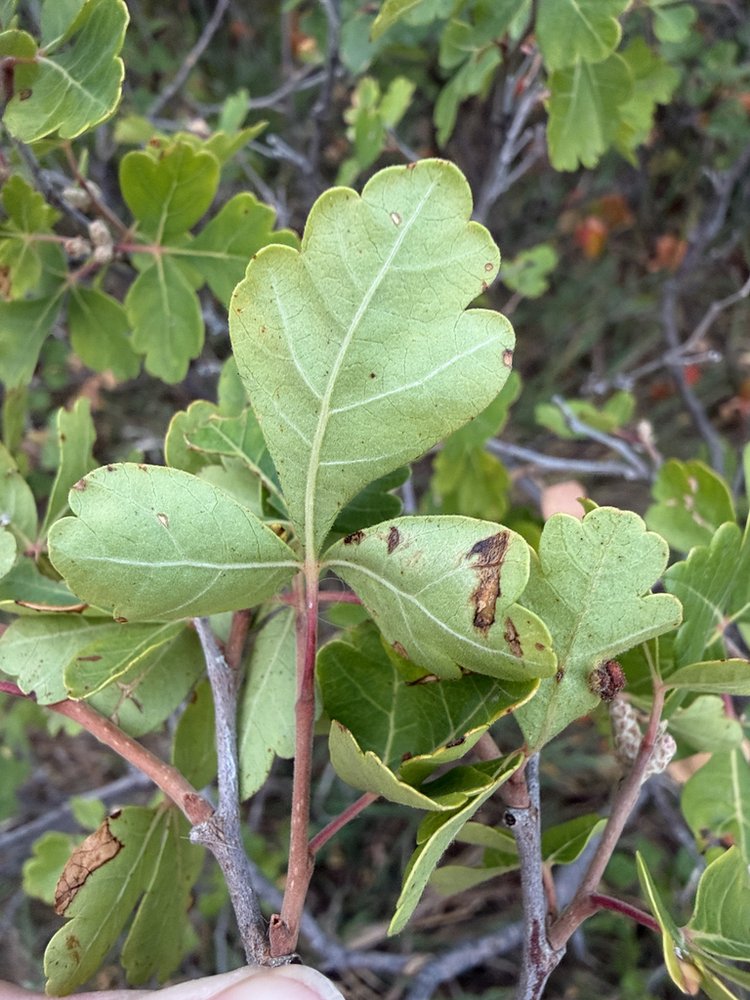
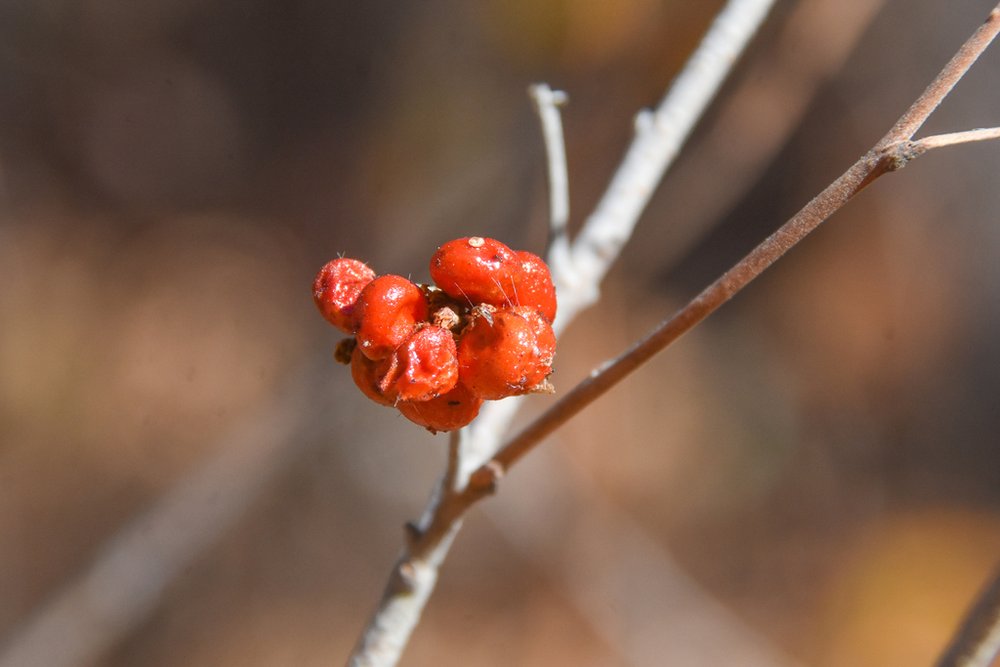
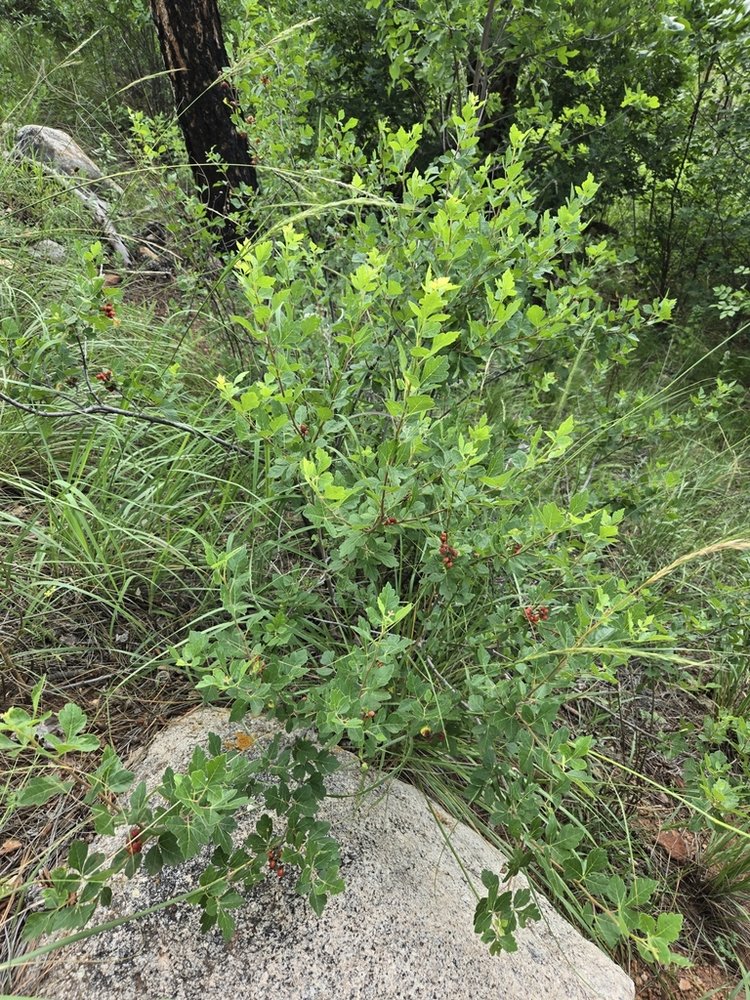
Skunkbush Sumac (Rhus aromatica, also listed as Rhus trilobata) is a native shrub 0.5–2.5 m (1½–8 ft) tall that forms rounded thickets on dry rocky slopes, rock outcrops and canyon bottoms in and around the Black Hills, where the National Park Service lists it at Wind Cave, Jewel Cave and Devils Tower. Its leaves have three coarsely toothed leaflets like poison ivy's, but the middle leaflet has no stalk, the bruised leaves smell strong, and the fruit is red and hairy, not whitish. Small yellowish flowers open from April into June, before the leaves. Photographed in the Black Hills.
Free photos from other sources
| Family | Anacardiaceae · Sumac |
|---|---|
| Status | Native deciduous shrub |
| Blooms | April into June, before the leaves open |
| Height | 0.5–2.5 m (1.5–8 ft) |
| Where | Dry rocky slopes, limestone outcrops and cliffs, canyon and creek bottoms, prairie draws and the edges of open pine and bur oak woods |
| Also called | Skunkbush, Fragrant Sumac, Three-leaf Sumac, Aromatic Sumac, Lemonade Sumac, Basketbush, čháŋ uŋkčémna (Lakota) |
| Synonym | Rhus trilobata, Rhus aromatica var. trilobata, Rhus trilobata var. trilobata |
| Toxicity | The Missouri Department of Conservation calls fragrant sumac nontoxic, though it is in the same family as poison ivy. |
| Traditional use | Black Elk and Flying By's 1998 Culturally Important Plants of the Lakota says the leaves were mixed with tobacco for pipe smoking, the berries were eaten in times of famine, the leaves or berries were soaked in warm or cold water for a tea, and a decoction was used to treat excessive vaginal discharge and thrush. The Fire Effects Information System, citing a study of Northern Cheyenne plant use, says the dried leaves were mixed with tobacco for smoking. |
| Note | USDA PLANTS, the Forest Service, GBIF and iNaturalist keep the western plant as its own species, Rhus trilobata; ITIS and the National Park Service lists put it under Rhus aromatica, and the USDA fragrant sumac guide says the two intergrade where they meet on the Great Plains, mainly from Texas to South Dakota. Black Hills herbarium and iNaturalist records are split between the two names. |
Roots, seeds & germination
Root: The roots are deep and widely branched, with woody, shallow, spreading rhizomes (underground stems) that send up sprouts and can connect shrubs more than 9 m (30 ft) apart; healthy rhizomes have been aged at more than 30 years, and a thicket can reach about 9 m across. Browsed, trampled or burned plants sprout freely from the rhizomes and root crown, while untouched plants sprout little.
Seed: Each hairy red berry holds one nutlet, about 20,300 to the pound. Fruit set is low: in a North Dakota study only 5 to 15 percent of flowers set fruit, and branches 6 to 10 years old bore the most viable seed. Birds and mammals spread the fruit, roadside colonies often start from seed cached by mice and squirrels, and seed stayed viable five years in cool storage.
Germination: A hard seed coat and a dormant embryo both block germination. Scarifying the seed coat with acid and then cold, moist pre-chilling gave the best results in lab tests, and heat above 82 °C (180 °F), as in a fire, broke dormancy in greenhouse tests. The USDA plant guide says fall or winter planting germinates best and that the shrub also grows from root and softwood cuttings. Seedlings are rare in mature stands.
How do you identify Skunkbush Sumac?
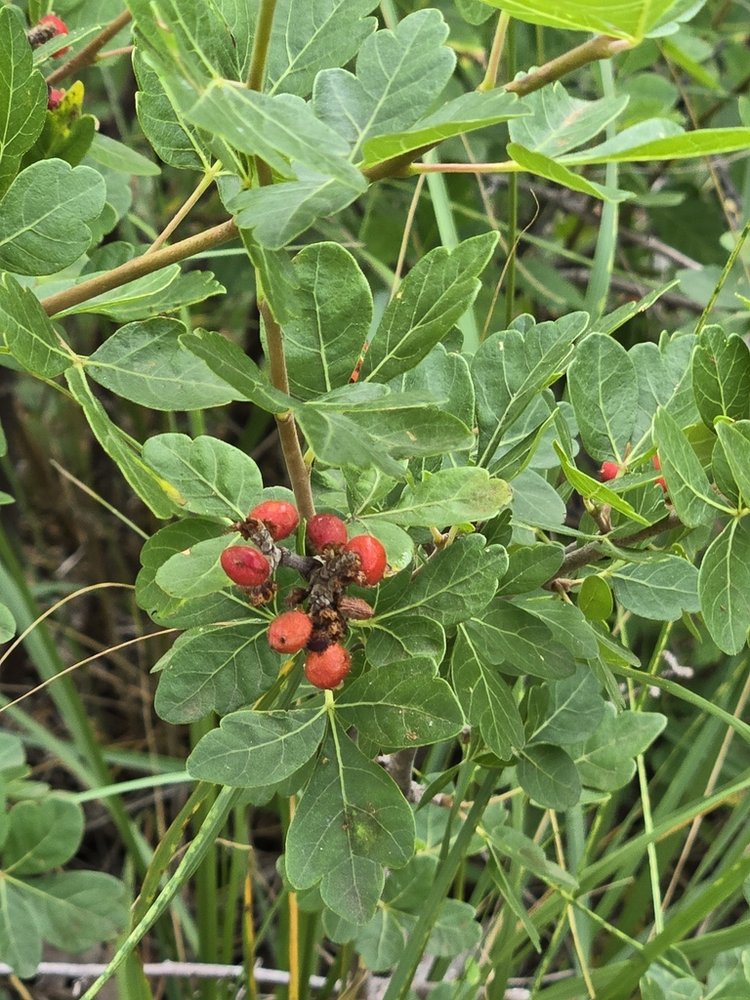
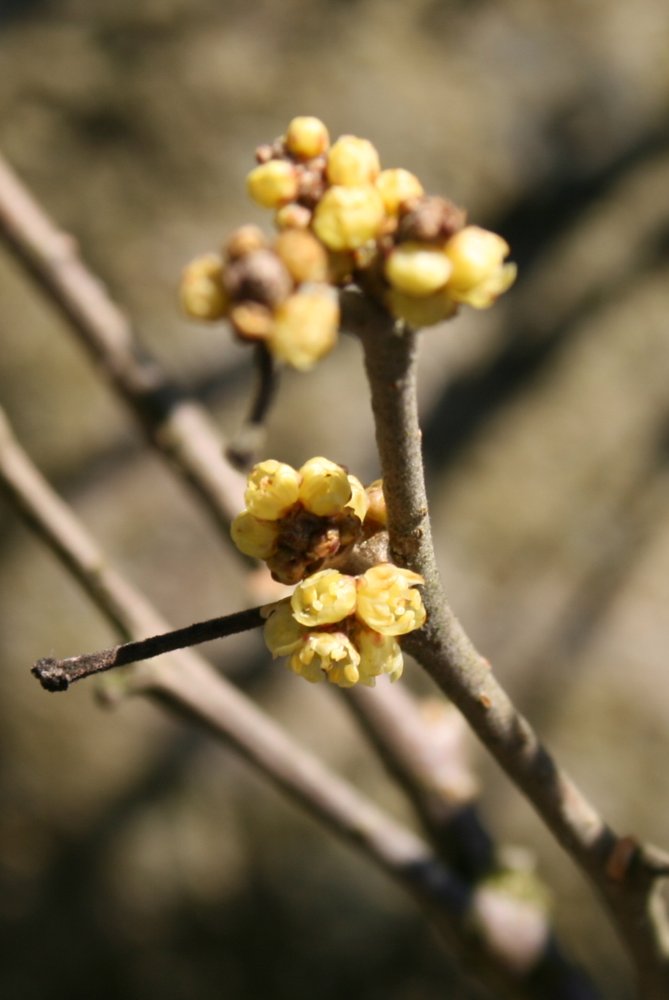
Look for an upright, arching shrub, often wider than it is tall, that spreads from underground stems into rounded thickets, with fuzzy, reddish-brown young twigs and thin, smooth gray bark on older wood. Each leaf has three leaflets that have no stalks of their own, egg- to diamond-shaped with a wedge-shaped base and coarse teeth or shallow lobes, usually shiny above, the end leaflet 3–6.5 cm (1–2½ in) long; the leaves smell strongly when bruised and turn orange to red in fall, and through the winter the twig tips carry small cylindrical clusters of reddish scales that are next spring's flower buds. Small yellowish flowers open in short dense clusters on little side shoots before the leaves, and the fruit is a cluster of round, red, sparsely hairy and sticky berries 5–7 mm across that ripens from July into October and hangs on into winter. Western Poison Ivy also has three leaflets. The Missouri Department of Conservation separates fragrant sumac from poison ivy by the middle leaflet, which on the sumac has no stalk or only a very short one, and by the fruit, which on the sumac is hairy and reddish, not waxy and whitish.
When does it bloom?
April into June, before the leaves open.
Where does it grow?
Dry rocky slopes, limestone outcrops and cliffs, rocky ledges, ridge crests with pine and bur oak, canyon and creek bottoms, riparian woodland edges, prairie draws and roadsides, from about 1,160 to 1,685 m (3,800–5,530 ft) on Black Hills herbarium labels and lower on the plains around them. The National Park Service lists it at Wind Cave, Jewel Cave and Devils Tower, the 1986 Jewel Cave plant survey calls it the most frequent shrub of the monument's pine and little bluestem slopes, the Fire Effects Information System lists Black Hills plant communities in which it shares dominance with true mountain-mahogany or bur oak, and herbarium specimens under its two names come from all seven Black Hills counties in South Dakota and Wyoming.
Other plants to compare
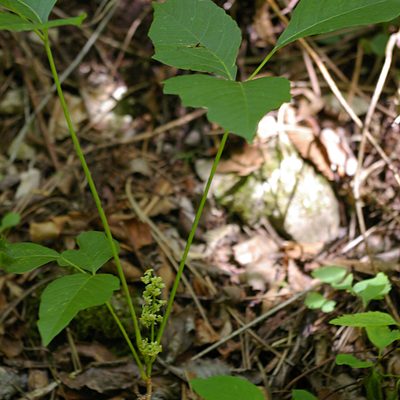
Other sumacs in this guide
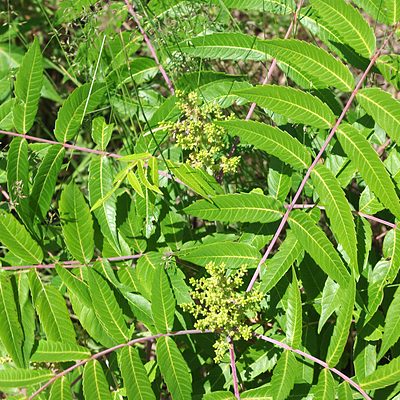
Sumac family (Anacardiaceae): 2 other plants in this guide
Sources: USDA NRCS Plant Guide: Skunkbush, Rhus trilobata (Nesom, 2000); USDA NRCS Plant Guide: Fragrant Sumac, Rhus aromatica (Nesom); USDA Forest Service Fire Effects Information System: Rhus trilobata (Anderson 2004); Missouri Department of Conservation field guide: Sumacs; Minnesota Wildflowers: Rhus aromatica (Fragrant Sumac); Lady Bird Johnson Wildflower Center: Rhus trilobata (RHTR); USDA PLANTS Database: Rhus aromatica (RHAR4); USDA PLANTS Database: Rhus trilobata (RHTR); ITIS: Rhus aromatica (TSN 28779), with Rhus trilobata as a synonym; Marriott and Hartman 1986, A Survey of the Vegetation of Jewel Cave National Monument; NPSpecies checklist, Wind Cave National Park vascular plants; NPSpecies checklist, Jewel Cave National Monument vascular plants; NPSpecies checklist, Devils Tower National Monument vascular plants; GBIF occurrence search: Rhus aromatica, South Dakota and Wyoming herbarium specimens; GBIF occurrence search: Rhus trilobata, South Dakota and Wyoming herbarium specimens; iNaturalist: research-grade Rhus aromatica observations in the Black Hills; iNaturalist: research-grade Rhus trilobata observations in the Black Hills; Culturally Important Plants of the Lakota (Black Elk and Flying By, 1998), entry 255, filed with the South Dakota PUC.