Little Bluestem Schizachyrium scoparium
Also called Broom bluestem, Broom beardgrass, Prairie beardgrass, Small feathergrass, pȟeží šašá swúla (Lakota)
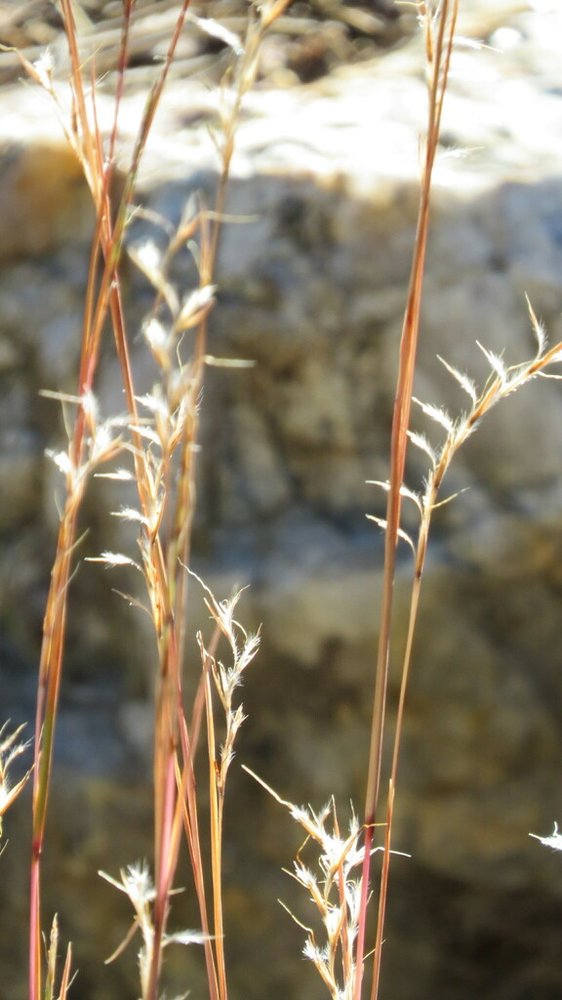
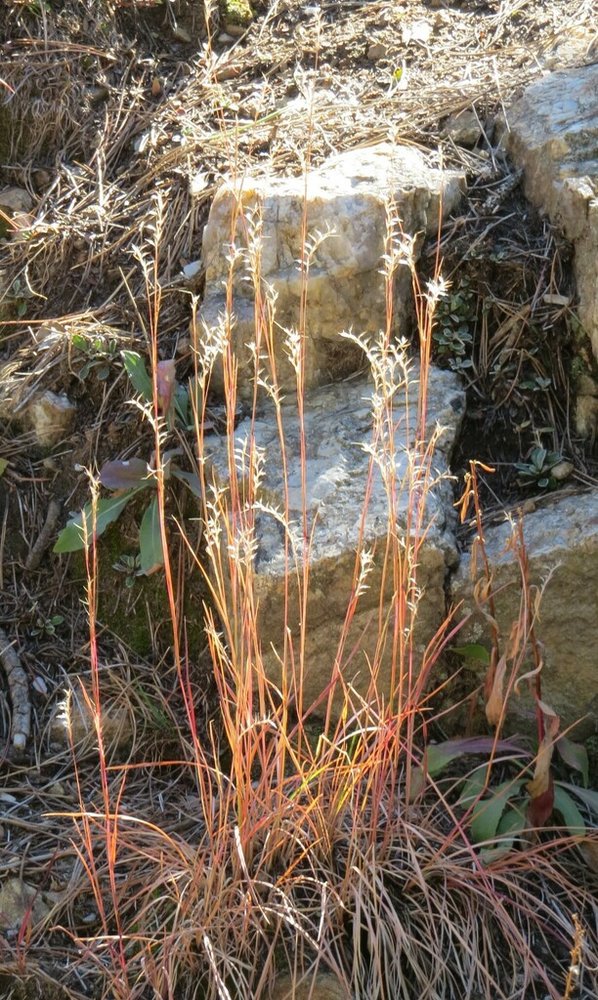
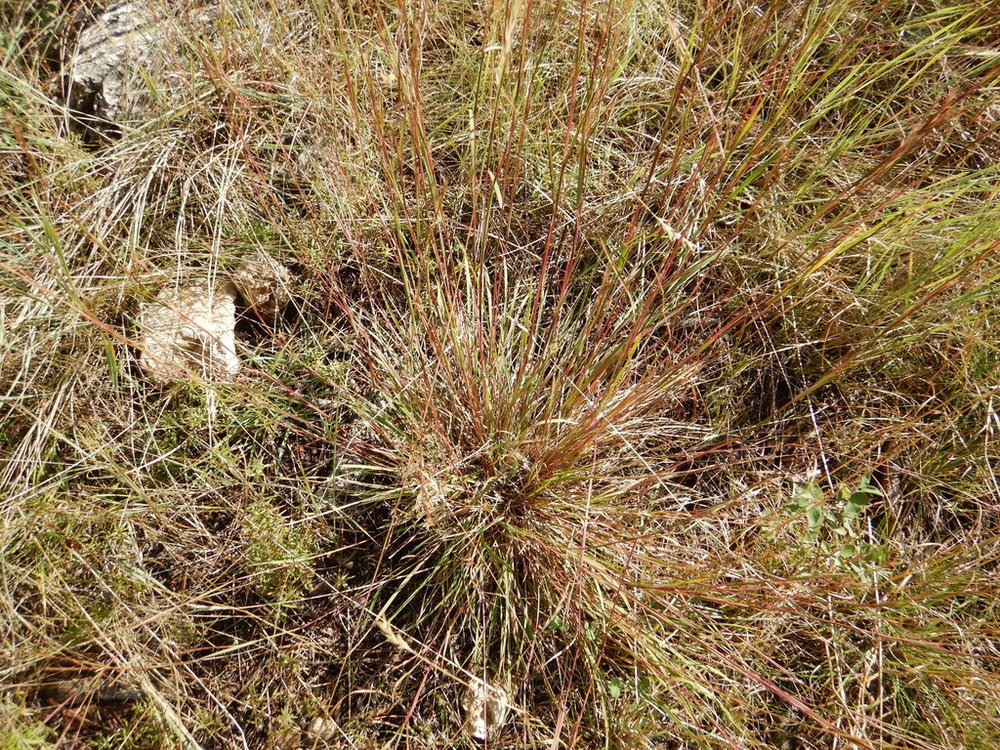
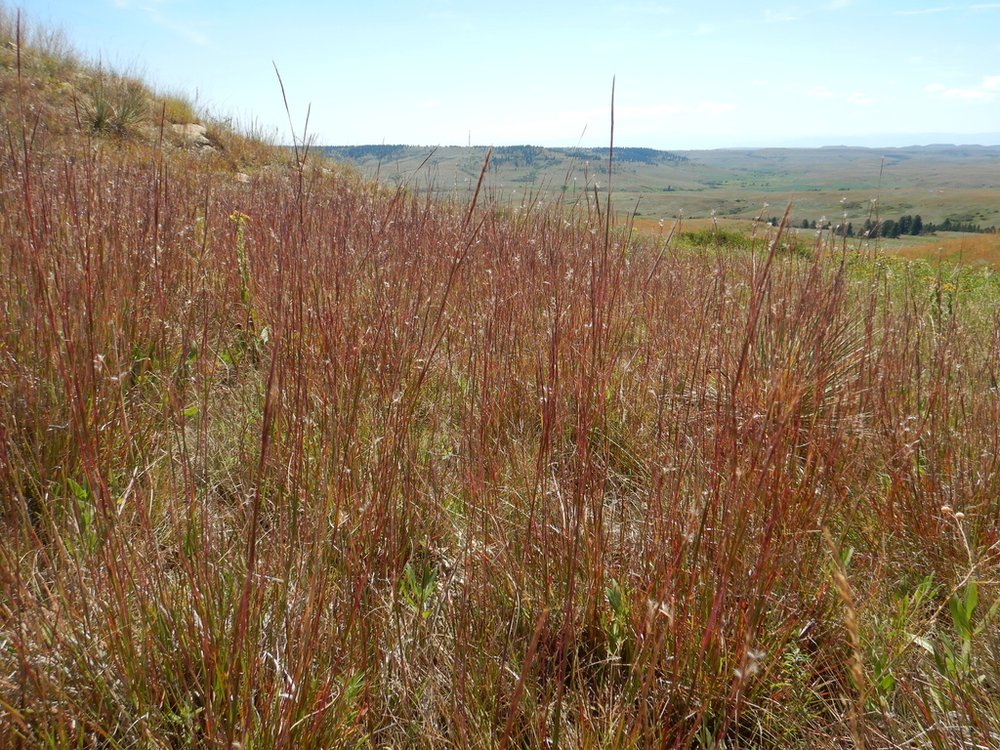
Little Bluestem (Schizachyrium scoparium) is a native bunchgrass 30–100 cm (12–40 in) tall with flattened, bluish to purplish stem bases, fuzzy white seed tufts along the stalks when ripe, and leaves and stems that turn red or bronze in fall and keep their color through winter. It flowers in August and September in South Dakota. In the Black Hills it grows under open ponderosa pine on dry, south-facing slopes and in grassland on ridgetops, and the National Park Service lists it at Wind Cave, Jewel Cave, Mount Rushmore and Devils Tower.
Free photos from other sources
| Family | Poaceae · Grass |
|---|---|
| Status | Native perennial grass |
| Blooms | Flowers in August and September; the fluffy white seed tufts follow, and the reddish stalks stand through winter |
| Height | 30–100 cm (12–40 in) |
| Where | Dry, open ground: open ponderosa pine on south-facing slopes, grassy ridgetops, dry hills and prairie, sandy and shallow soils |
| Also called | Broom bluestem, Broom beardgrass, Prairie beardgrass, Small feathergrass, pȟeží šašá swúla (Lakota) |
| Synonym | Andropogon scoparius |
| Traditional use | Black Elk and Flying By (1998) record that the Lakota rubbed the dried leaves and stems into soft fibers for an insulating, waterproof lining in shoes. Johnson and Larson add that the Lakota name means small red grass. |
Roots, seeds & germination
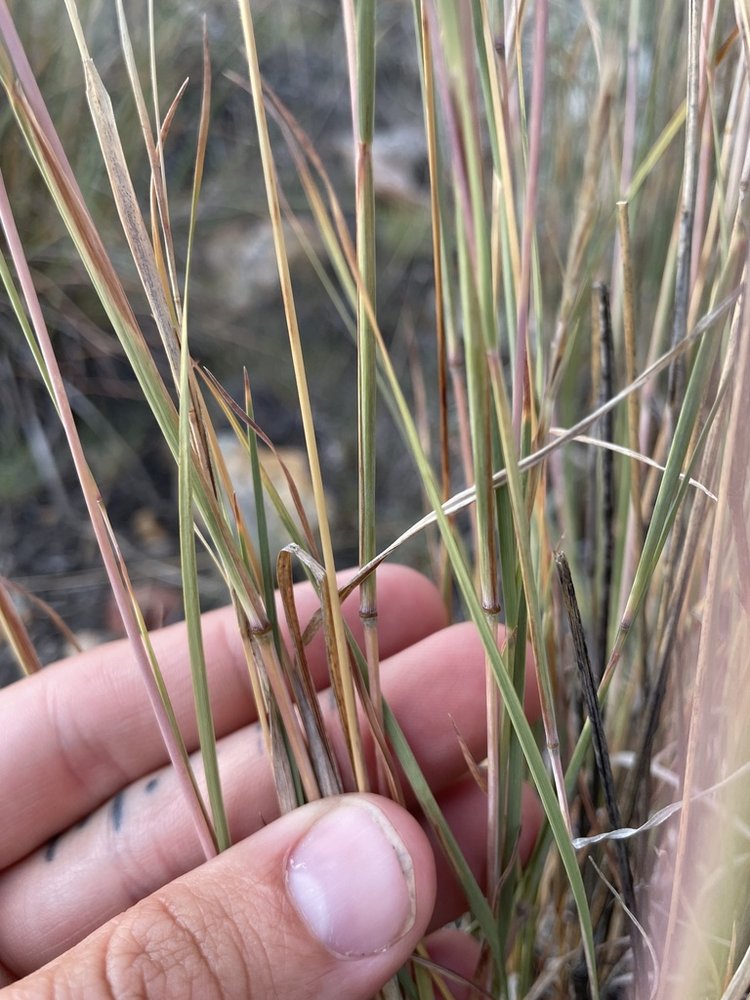
Root: A deep, fibrous root system of fine roots 0.1–1 mm thick, most of which grow nearly straight down to 1.3–1.75 m (4.5–5.5 ft), with some spreading sideways from the clump. It is usually a bunchgrass without rhizomes (underground stems), though on wetter ground it can form a loose sod from short ones.
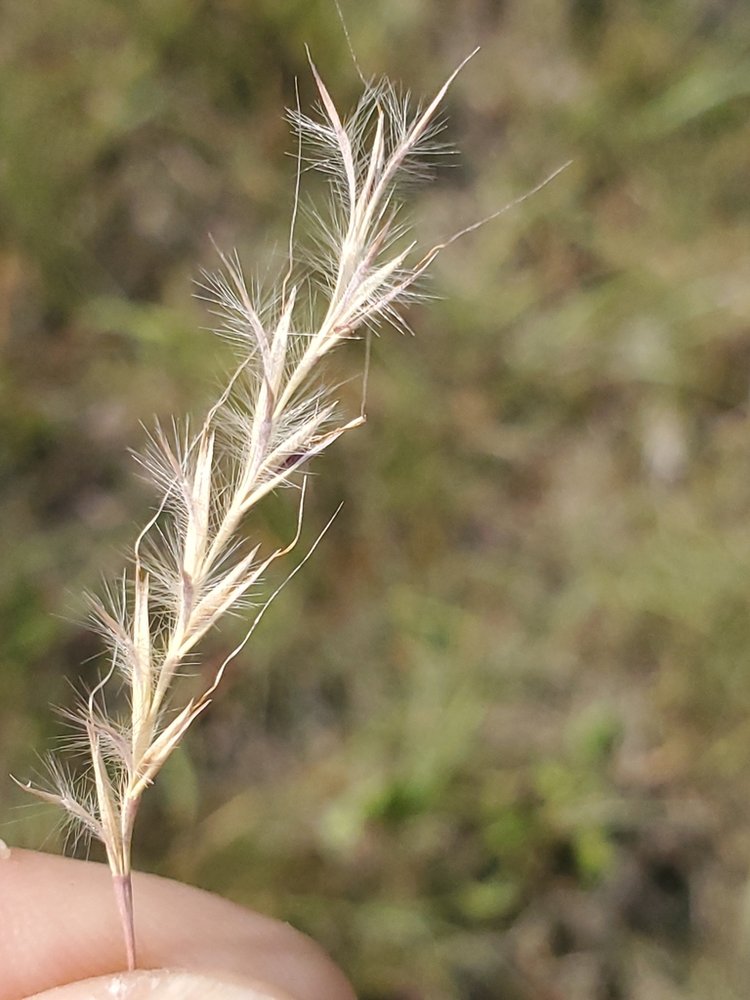
Seed: Spikelets come in pairs: the stalkless one holds a single seed and carries the bent, twisted awn, and the stalked one is sterile. The whole spikelet falls with its fluffy hairs, and pure seed runs about 225,000–250,000 per pound (about 500,000–550,000 per kilogram). The seed blows only a short way: the farthest measured was 1.5–1.8 m (5–6 ft) in an 18 mph wind. One study found about three quarters of the stems flowering, and the seed heads may fail to develop in drought years.
Germination: Field germination is low. The Fire Effects Information System reports that seed germinates best with light, 30 to 60 days of cold, moist storage at 5 °C (41 °F), and daytime temperatures of 20–30 °C (68–86 °F); after chilling, sprouting begins within 4 days at 30 °C. The USDA plant guide says to sow in spring, 3–6 mm (1/8–1/4 in) deep, and that too shallow is better than too deep. Growth starts late in spring, after the cool-season grasses are already up.
How do you identify Little Bluestem?
Start with the seed head: each stem and branch ends in a single narrow spike 2.5–7.5 cm (1–3 in) long, and as the seed ripens, fine white hairs on the spikelet stalks spread out, so the spike looks fuzzy and feathery and often arches. Each fertile spikelet carries a bent, twisted awn (a bristle) 9–16 mm (about half an inch) long. Then look at the base of the plant: the lower stems and leaf sheaths are flattened, hairless and waxy, bluish green to purplish, and the leaves are folded lengthwise, up to 25 cm (10 in) long and under 6 mm (1/4 in) wide, crowded low on the plant. The ligule (the small flap where the leaf blade meets the stem) is a fringed membrane up to 2.5 mm long. On dry ground plants grow as distinct clumps 10–25 cm (4–10 in) across. In fall the whole clump turns red to bronze, and SDSU Extension notes that a hillside that looks red is usually full of it. Big Bluestem, the other bluestem on this site, is taller, its seed head is split into 3 to 6 fingers, and SDSU Extension and Johnson and Larson note that its leaf sheaths are only slightly flattened and usually hairy, while Little Bluestem's are flatter and hairless.
When does it bloom?
Flowers in August and September; the fluffy white seed tufts follow, and the reddish stalks stand through winter.
Where does it grow?
Dry, open ground. Little Bluestem is the dominant grass of the ponderosa pine and little bluestem association that the 1986 Jewel Cave vegetation survey mapped in open pine stands on steep south-facing slopes, and the survey adds a western wheatgrass and little bluestem grassland on steeper slopes and ridgetops. The Fire Effects Information System says south-facing slopes in the Black Hills support open pine with Little Bluestem and western wheatgrass, below about 1,670 m (5,475 ft) in South Dakota, and the 1987 Forest Service habitat-type study of the Black Hills National Forest notes that it is much reduced or shaded out where the pines close in. Johnson and Larson's South Dakota grassland guide names the Black Hills among the places it is important, and SDSU Extension adds sandy and shallow sites throughout the state. The National Park Service lists it at Wind Cave National Park, Jewel Cave National Monument, Mount Rushmore National Memorial and Devils Tower National Monument, and herbarium specimens from 1892 to 2017 come from Lawrence, Pennington, Custer, Meade and Fall River counties in South Dakota and Crook and Weston counties in Wyoming, including Wind Cave and Custer State Park, with labels from open pine, sandstone ridges, rocky slopes and dry prairie.
Other grasses in this guide
Sources: USDA PLANTS Database: Schizachyrium scoparium (SCSC), plant profile service; USDA NRCS Plant Guide: Little bluestem, Schizachyrium scoparium (Tober and Jensen 2013); USDA Forest Service Fire Effects Information System: Schizachyrium scoparium (Steinberg 2002); SDSU Extension P-00232: Warm-Season Grasses of South Dakota (Ehlert and Bachler 2022); Johnson and Larson 1999, Grassland Plants of South Dakota and the Northern Great Plains (SDSU bulletin 566), Open PRAIRIE; Kansas Wildflowers and Grasses: Schizachyrium scoparium (Little bluestem); Minnesota Wildflowers: Schizachyrium scoparium (Little Bluestem); Marriott and Hartman 1986, A Survey of the Vegetation of Jewel Cave National Monument; Hoffman and Alexander 1987, Forest Vegetation of the Black Hills National Forest: A Habitat Type Classification (USDA Forest Service RM-276); NPSpecies checklist, Wind Cave National Park vascular plants; NPSpecies checklist, Jewel Cave National Monument vascular plants; NPSpecies checklist, Mount Rushmore National Memorial vascular plants; NPSpecies checklist, Devils Tower National Monument vascular plants; GBIF occurrence search: Schizachyrium scoparium, South Dakota and Wyoming herbarium specimens; Black Elk and Flying By 1998, Culturally Important Plants of the Lakota (entry 276), filed with the South Dakota PUC.