Timothy Phleum pratense
Also called Common Timothy, Herd's Grass, Meadow Cat's-tail
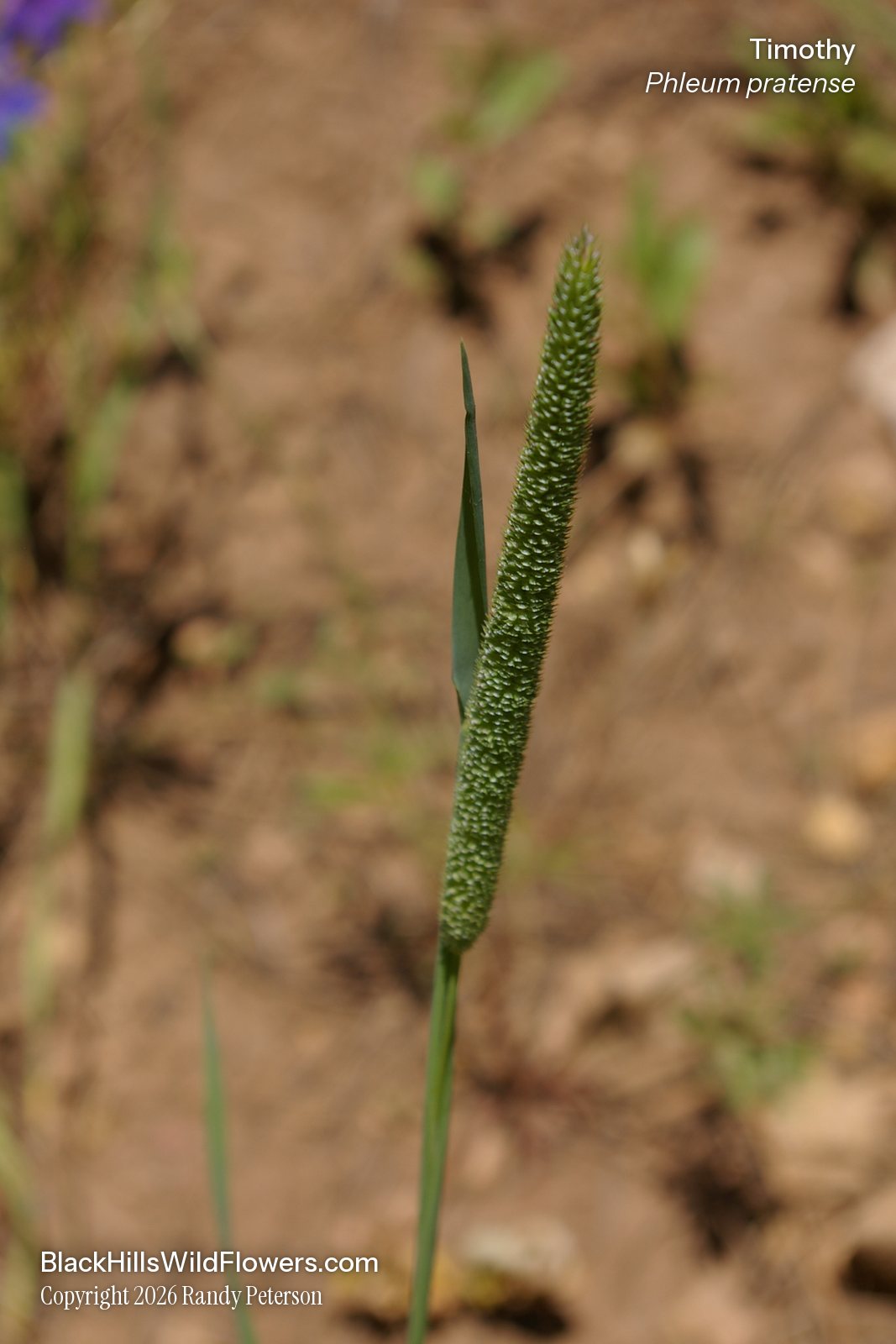
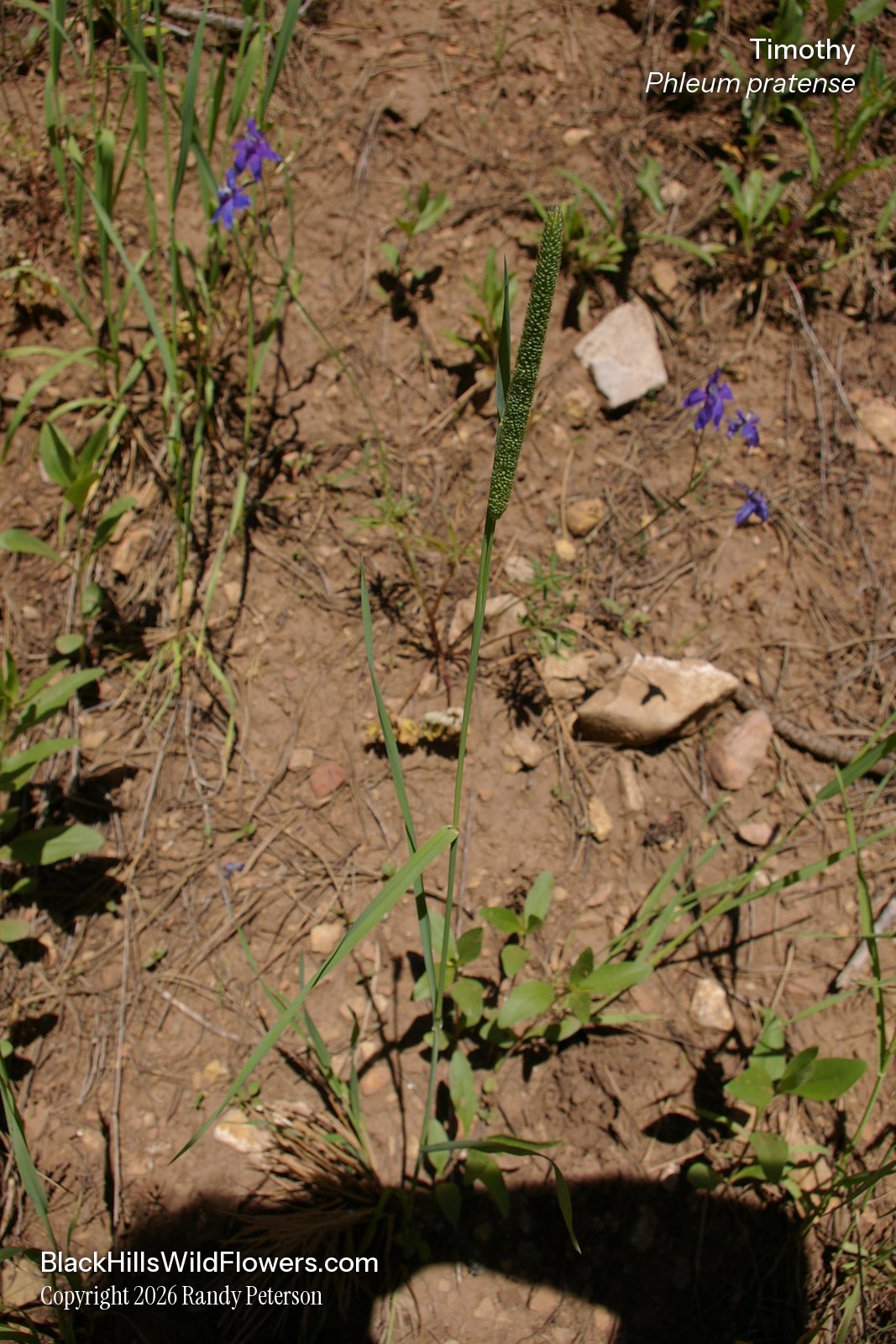
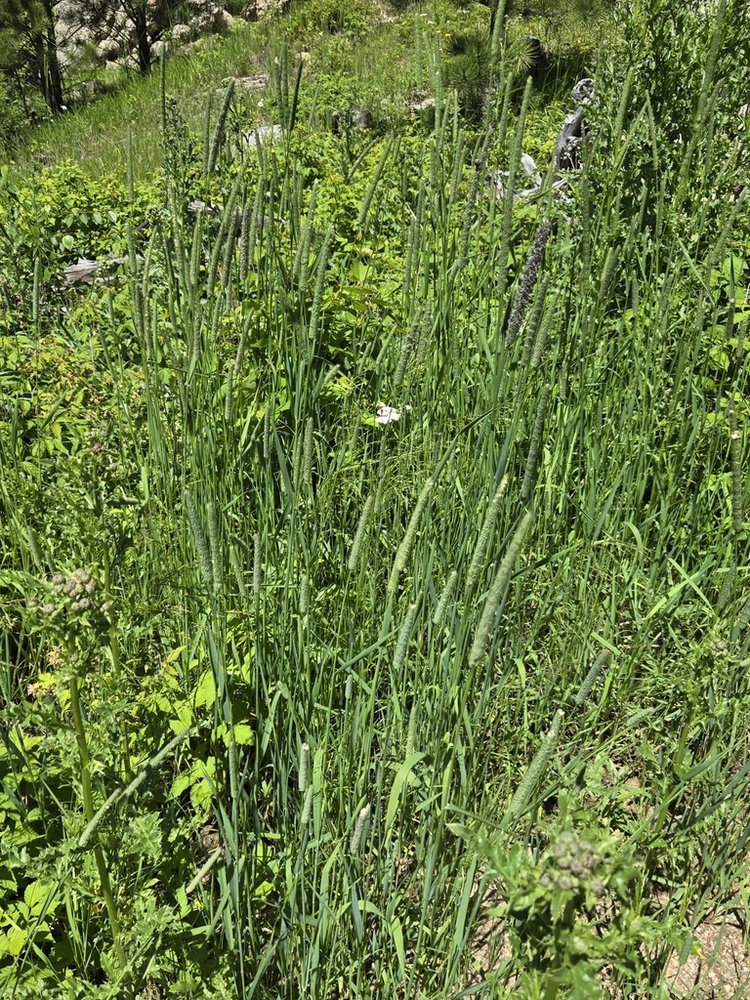
Timothy (Phleum pratense) is a European hay grass, 30–100 cm (12–40 in) tall, that has spread across North America; each stem ends in one dense, cylindrical, bristly green seed head 5–15 cm (2–6 in) long, and it flowers from June into August. In the Black Hills it grows in meadows, along roads and streams, in aspen groves and in open pine woods, and the National Park Service lists it at Wind Cave, Jewel Cave, Mount Rushmore and Devils Tower. Photographed in the Black Hills.
Free photos from other sources
| Family | Poaceae · Grass |
|---|---|
| Status | Introduced perennial grass |
| Blooms | June into August; the seed drops in August |
| Height | 30–100 cm (12–40 in) |
| Where | Meadows, roadsides, ditches and streambanks, aspen groves and open pine woods |
| Also called | Common Timothy, Herd's Grass, Meadow Cat's-tail |
Roots, seeds & germination
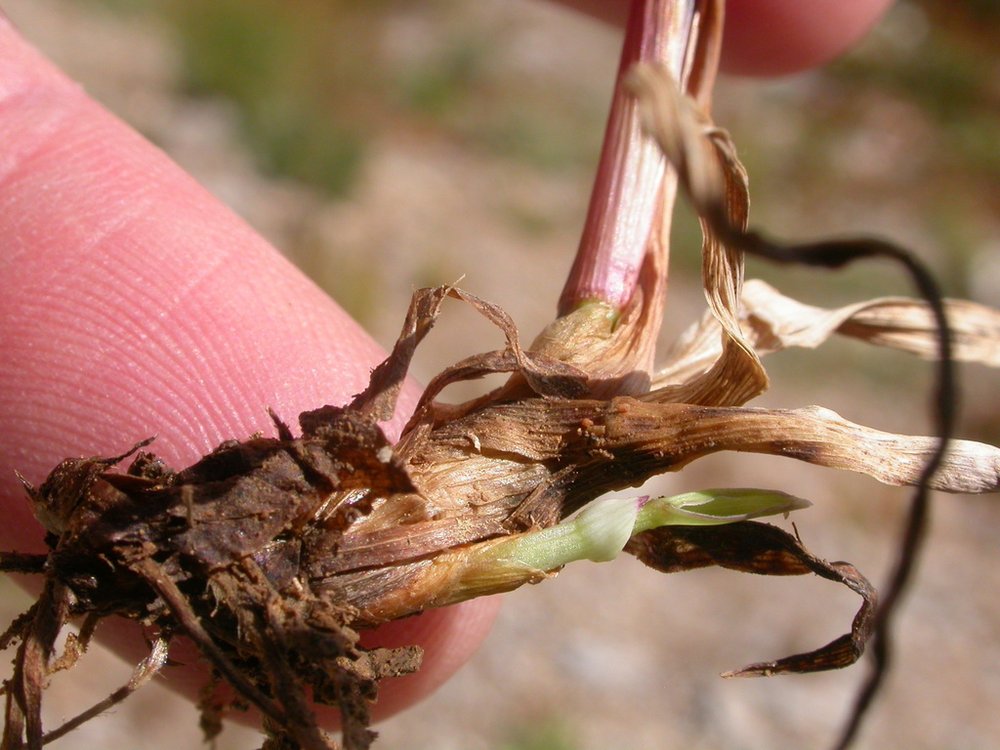
Root: A shallow, compact, fibrous root system, reaching about 120 cm (4 ft) at most. One or two joints at the base of each stem swell into a small bulb-like corm, which forms in early summer and dies the next year after the seed ripens. It has no runners and grows in clumps; a plant usually lives 4 or 5 years.
Seed: The seed is very small and usually stays wrapped in its husks; a pound holds about 1,230,000 seeds. It forms by midsummer and drops in August, and livestock and wind spread it.
Germination: Fresh seed sprouts readily: germination is near 100% three to four weeks after harvest and stays high for one to two years, and seed kept dry and cool lives 4 to 5 years. In laboratory tests it sprouts in about 10 days after a cold, moist period.
How do you identify Timothy?
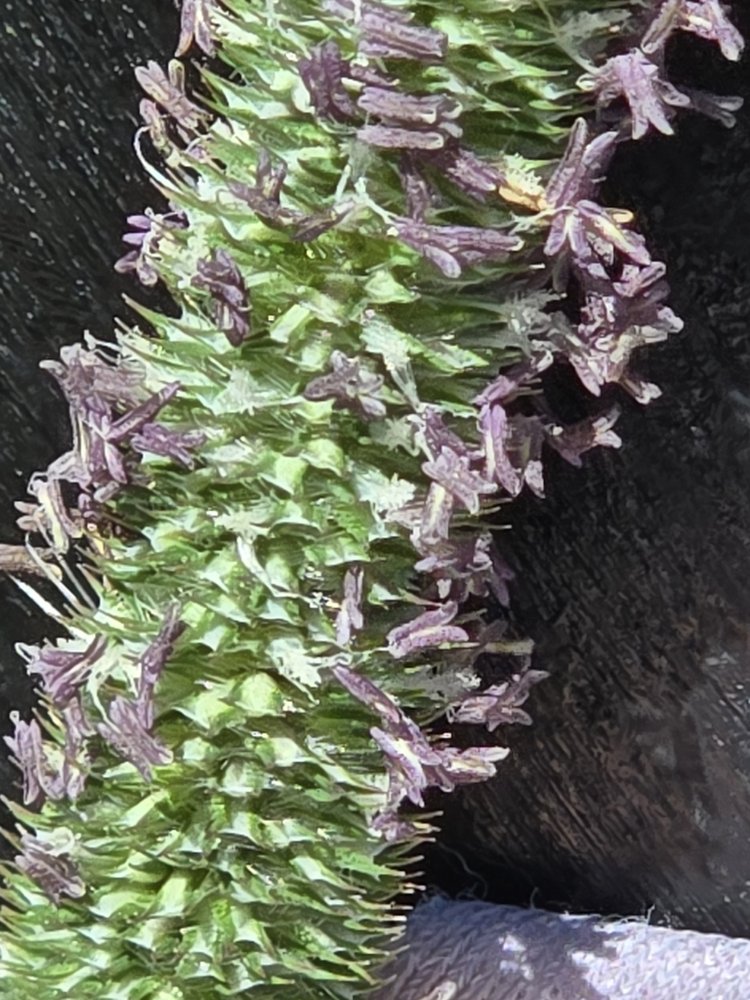
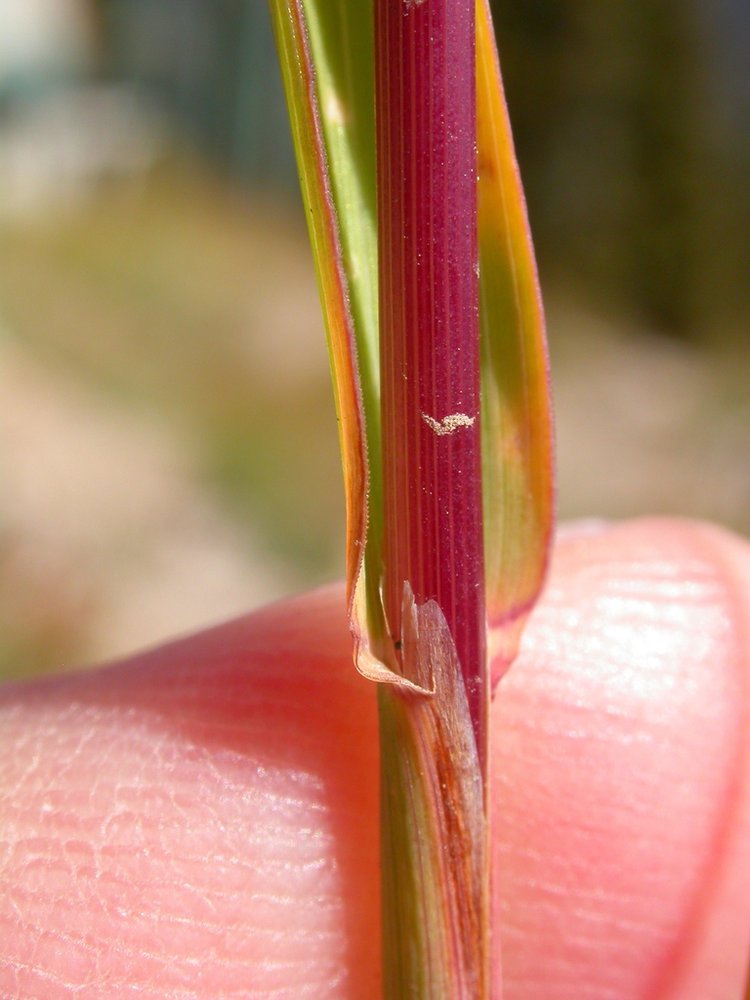
Start with the seed head: a single slender, dense cylinder 5–15 cm (2–6 in) long and only about 6 mm (¼ in) thick at the top of each stem, green and evenly bristly. Each tiny spikelet holds one flower, and its two equal husks (glumes) have long hairs along the keel and end in a short, stiff point, which gives the head its bristly feel; the floret inside has no awn. In flower, anthers hang all over the head. Then check the leaf collar: the ligule is a white, ragged flap 2–5 mm long, and the sheath is open, smooth and hairless. The leaves are flat and hairless, up to about 8 mm (1/3 in) wide, and the base of each stem swells into a small bulb, a mark the USDA plant guide uses to identify young plants. The USDA guide separates it from Alpine Timothy, which has much shorter seed heads and is a shorter plant, and from Meadow Foxtail and Creeping Foxtail, whose short, twisted awns make the head look fuzzy; ripe Creeping Foxtail heads turn dark to nearly black, while ripe Timothy heads are tan to buff.
When does it bloom?
June into August; the seed drops in August.
Where does it grow?
Moist to dry meadows, roadsides and ditches, streambanks, aspen groves and open pine woods, from about 1,100 m (3,600 ft) up to grassy mountaintops near 2,000 m (6,600 ft). It is grown for hay and has been sown in seed mixes after fires, and the Fire Effects Information System reports that after a 1959 fire in the Black Hills it became the main grass on part of the reseeded ground; the same source names it one of the two introduced grasses of greatest concern to wildland managers, because it establishes quickly, spreads vigorously and often escapes early notice. The National Park Service lists it at Wind Cave, Jewel Cave, Mount Rushmore and Devils Tower, the 1986 Jewel Cave plant survey records it, and more than 200 herbarium specimens come from Lawrence, Meade, Pennington and Custer counties in South Dakota and Crook and Weston counties in Wyoming.
Other grasses in this guide
Compare all 11 grasses side by side
Big Bluestem
Andropogon gerardii
Blue Grama
Bouteloua gracilis
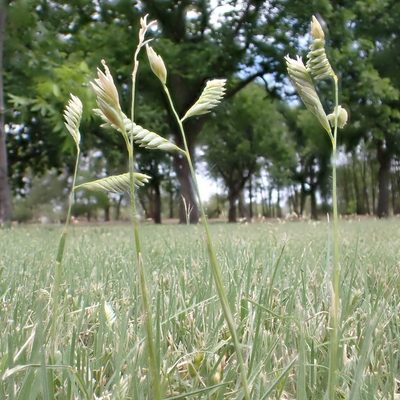
Buffalo Grass
Bouteloua dactyloides
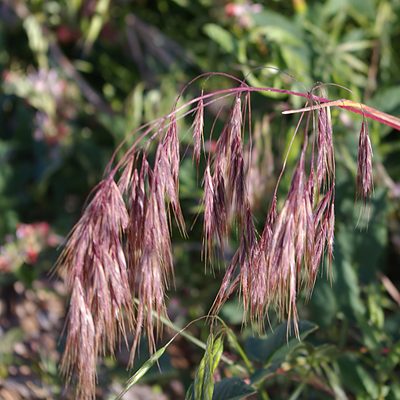
Cheatgrass
Bromus tectorum
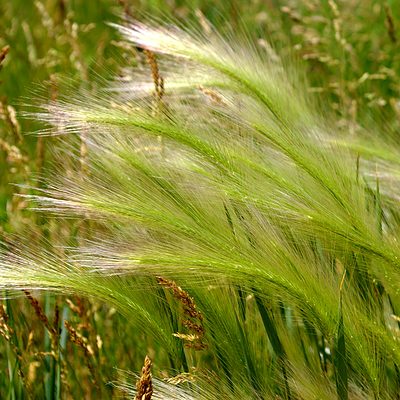
Foxtail Barley
Hordeum jubatum
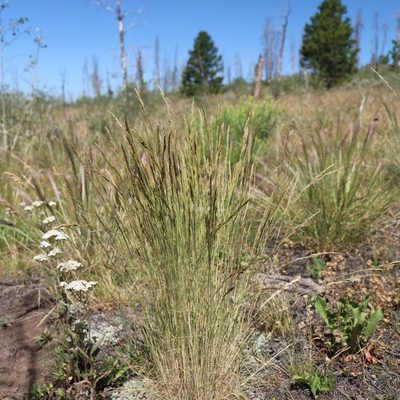
Idaho Fescue
Festuca idahoensis
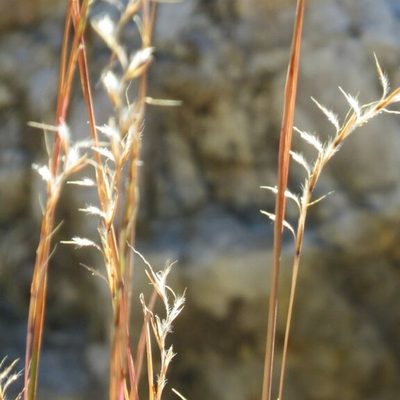
Little Bluestem
Schizachyrium scoparium
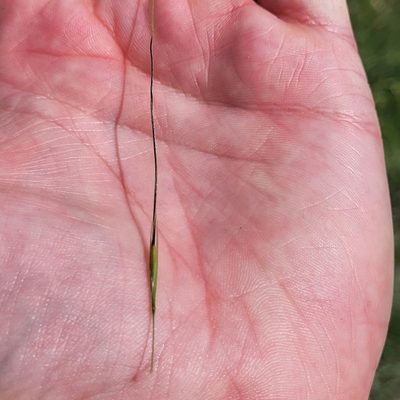
Needle-and-thread
Hesperostipa comata
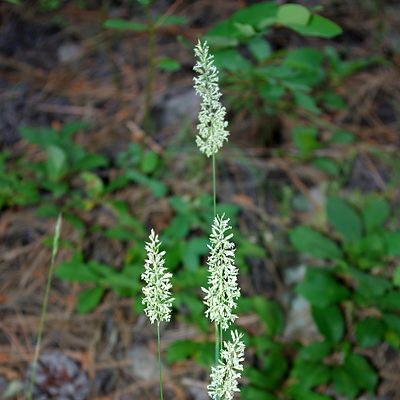
Prairie Junegrass
Koeleria macrantha
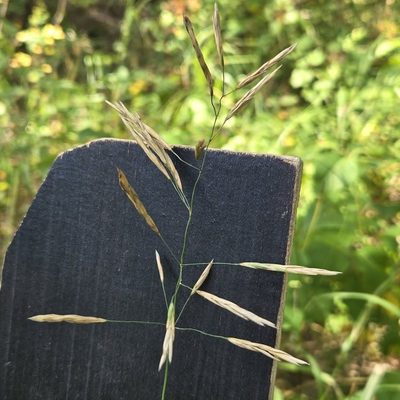
Smooth Brome
Bromus inermis
Sources: USDA NRCS Plant Guide: Timothy, Phleum pratense; USDA PLANTS Database: Phleum pratense (PHPR3); USDA Forest Service Fire Effects Information System: Phleum pratense (Esser 1993); Minnesota Wildflowers: Phleum pratense (Timothy); Marriott and Hartman 1986, A Survey of the Vegetation of Jewel Cave National Monument; NPSpecies checklist, Wind Cave National Park vascular plants; NPSpecies checklist, Jewel Cave National Monument vascular plants; NPSpecies checklist, Mount Rushmore National Memorial vascular plants; NPSpecies checklist, Devils Tower National Monument vascular plants; GBIF occurrence search: Phleum pratense, South Dakota and Wyoming herbarium specimens.