Buffalo Grass
Bouteloua dactyloides
Buffalo Grass (Bouteloua dactyloides) is a low, native, mat-forming perennial grass that spreads by stolons (runners above the ground) and has separate male and female plants. It flowers April into June on prairies, especially in western South Dakota, and the 1986 plant survey of Jewel Cave National Monument lists it in the Black Hills.
Free photos from other sources
| Family | Poaceae · Grass |
|---|---|
| Status | Native perennial |
| Blooms | April into June |
| Height | 3–20 cm (1–8 in) |
| Where | Mixed-grass and shortgrass prairies on dry, open sites |
| Also called | Buffalograss, pȟeží iwíčhakȟoyaka (Lakota), pȟeží hiŋkpíla (Lakota) |
| Synonym | Buchloe dactyloides |
| Traditional use | Sitting Bull College's 1998 Culturally Important Plants of the Lakota describes it as excellent forage for bison. |
Roots, seeds & germination
Root: Many fine, tough, wiry roots that reach 1.2–1.8 m (4–6 ft) deep, though most of the root mass is in the top 15 cm (6 in).
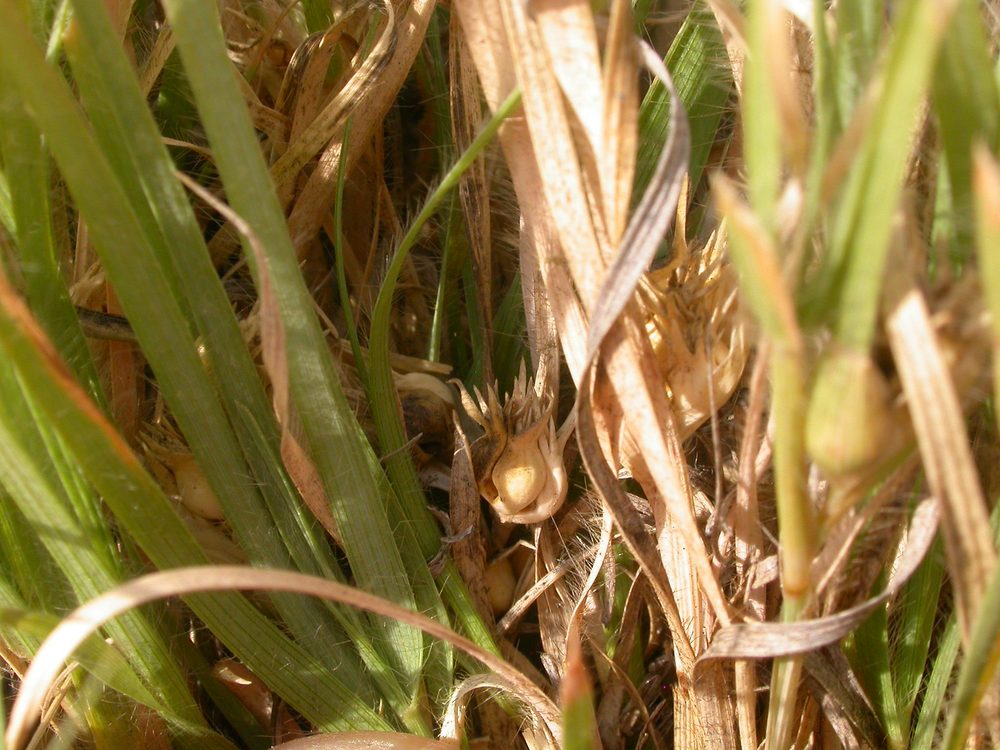
Seed: The grain-like fruits stay inside the burr. Burrs turn tan when ripe and drop to the base of the plant, which makes seed hard to harvest.
Germination: SDSU says the seeds aren't dormant and germinate in about three weeks with moisture. The USDA plant guide reports seedlings in 7 to 21 days and says the bur impedes germination unless it is prechilled or soaked in sodium hypochlorite.
How do you identify Buffalo Grass?
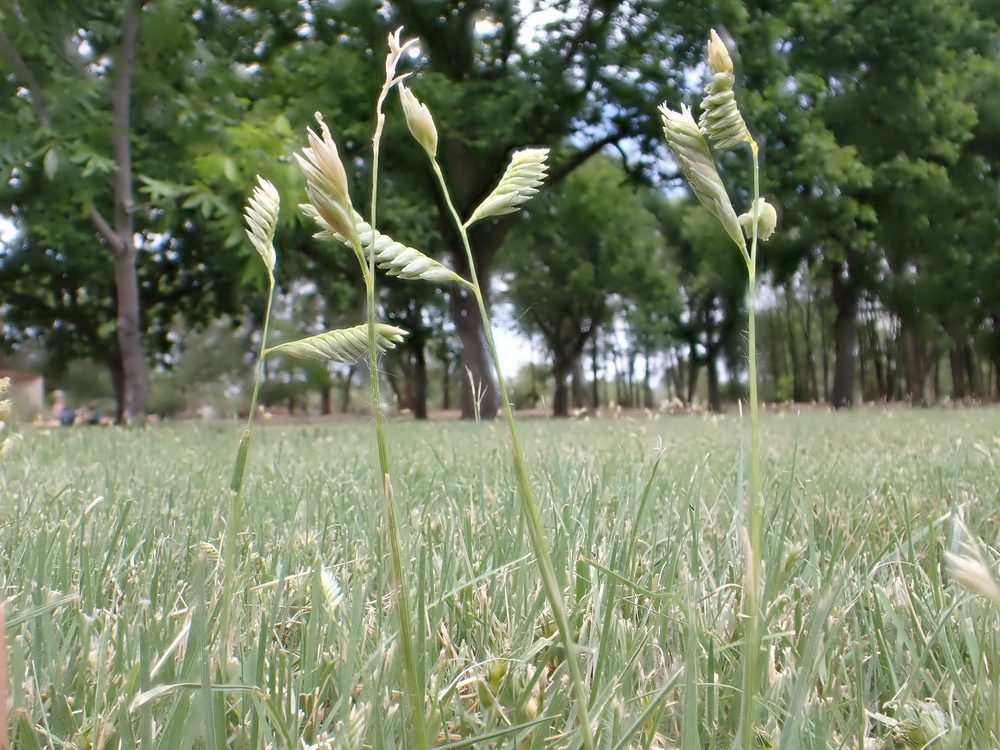
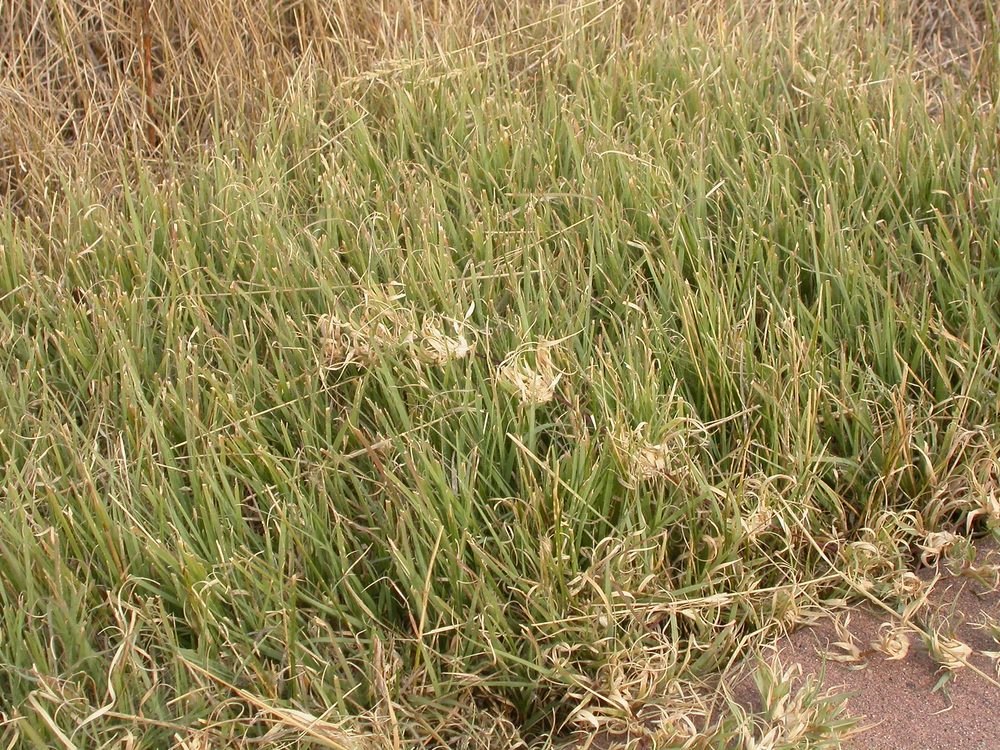
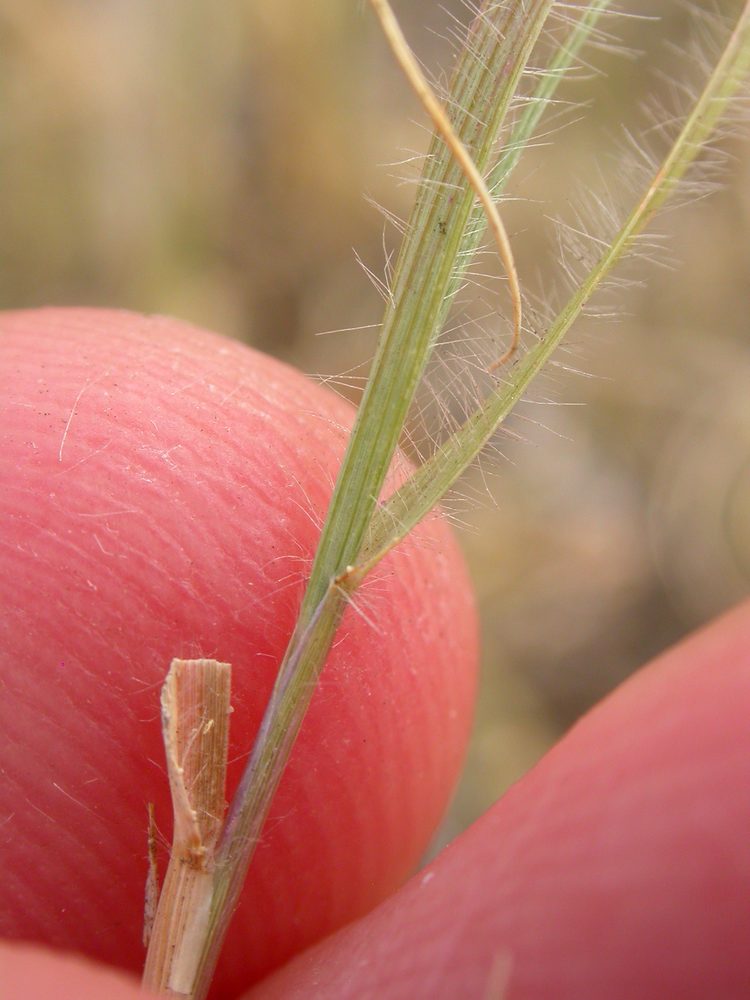
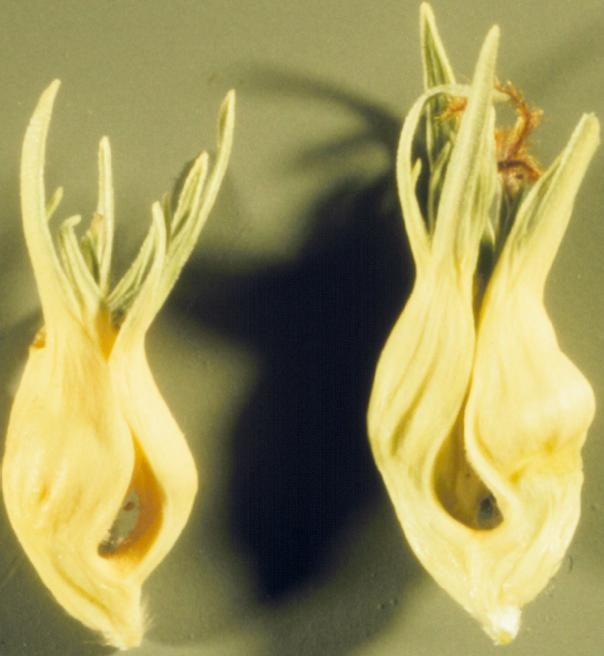
Look for a low mat, 3–20 cm tall, joined by runners, with narrow leaves up to about 2 mm wide. Male plants hold short, flag-like branches on slender, upright stems. Female plants have burr-like clusters that sit low, nearly hidden among the leaves.
When does it bloom?
April into June.
Where does it grow?
Prairies, especially in western South Dakota, where it is common and often abundant in mixed-grass and shortgrass prairie at foothill and lower elevations, often with Blue Grama. It needs full sun, does best on moderately dry to dry ground, and doesn't tolerate shade. The 1986 Jewel Cave survey lists it.
Sources: SDSU Open PRAIRIE: Bouteloua dactyloides; USDA Plant Guide: Buffalograss; Kansas Wildflowers: Buffalo Grass; Marriott and Hartman 1986, A Survey of the Vegetation of Jewel Cave National Monument; Culturally Important Plants of the Lakota (Black Elk and Flying By, Sitting Bull College, 1998), filed with the South Dakota PUC.