Prairie Junegrass Koeleria macrantha
Also called Junegrass, Mountain Junegrass, Crested Hair Grass, pȟeží šičámna (Lakota)
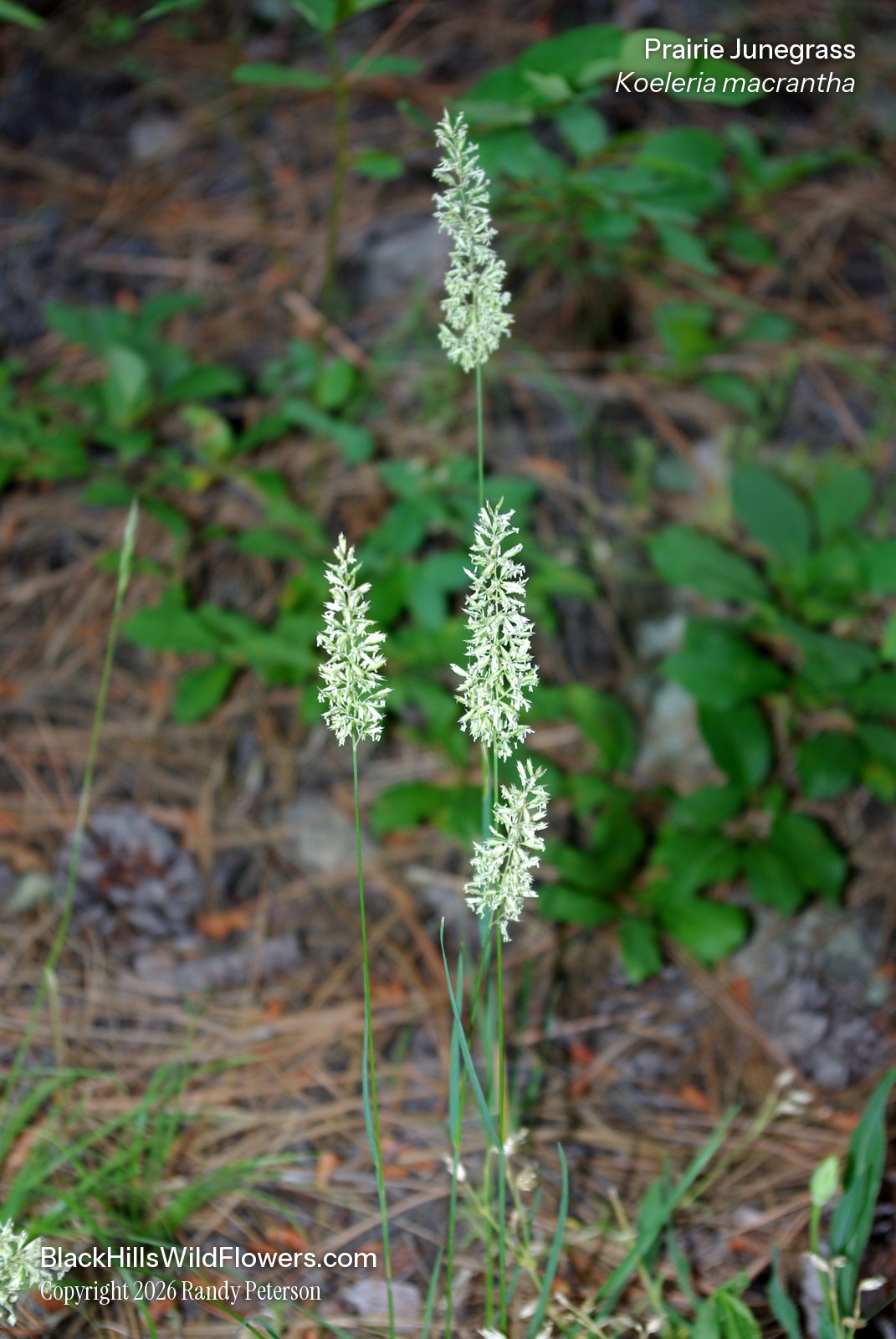
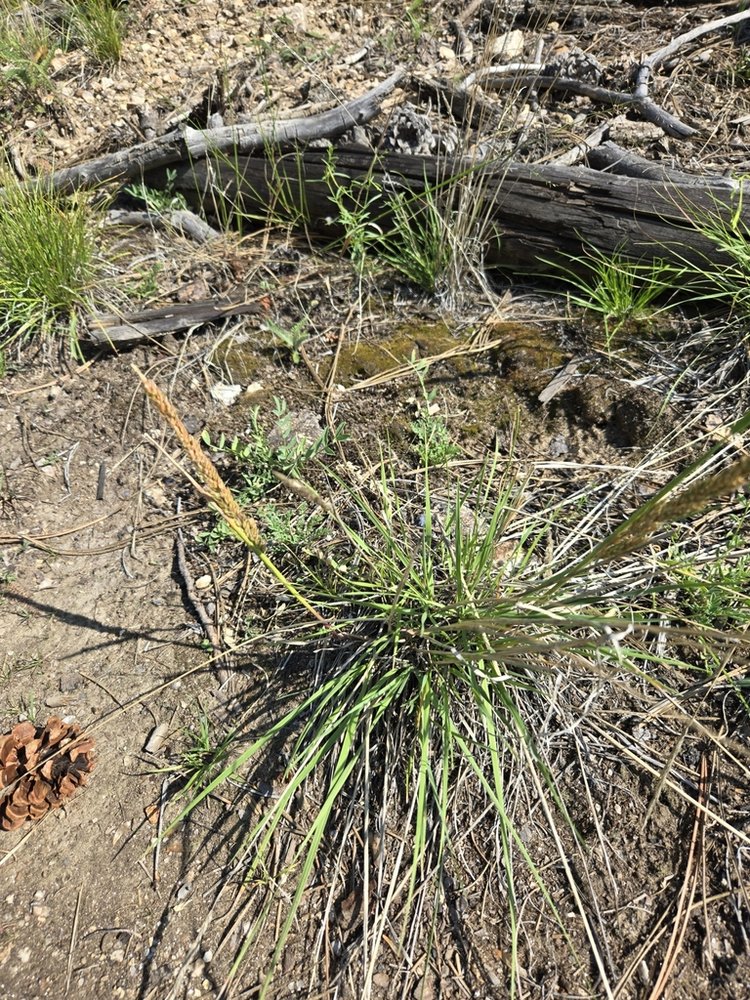
Prairie Junegrass (Koeleria macrantha) is a small native bunchgrass, 15–60 cm (6–24 in) tall, whose stems each carry one narrow, dense, shiny seed head that looks like a spike and flowers from May into July. In the Black Hills it grows in dry prairie, on open rocky slopes and in open, grassy ponderosa pine woods, and the National Park Service lists it at Wind Cave, Jewel Cave, Mount Rushmore and Devils Tower. Photographed in the Black Hills.
Free photos from other sources
| Family | Poaceae · Grass |
|---|---|
| Status | Native perennial grass |
| Blooms | May into July; the seed ripens in July and August |
| Height | 15–60 cm (6–24 in) |
| Where | Dry prairie, open rocky and grassy slopes, rock outcrops and open ponderosa pine woods |
| Also called | Junegrass, Mountain Junegrass, Crested Hair Grass, pȟeží šičámna (Lakota) |
| Synonym | Koeleria gracilis, Koeleria nitida |
Roots, seeds & germination
Root: A shallow-rooted bunchgrass: most of its fine roots lie in the top 3 cm (1 in) of soil, the deepest reach 33–75 cm (13–30 in), and they spread only 15–20 cm (6–8 in) sideways. It has no runners and spreads slowly, by seed.
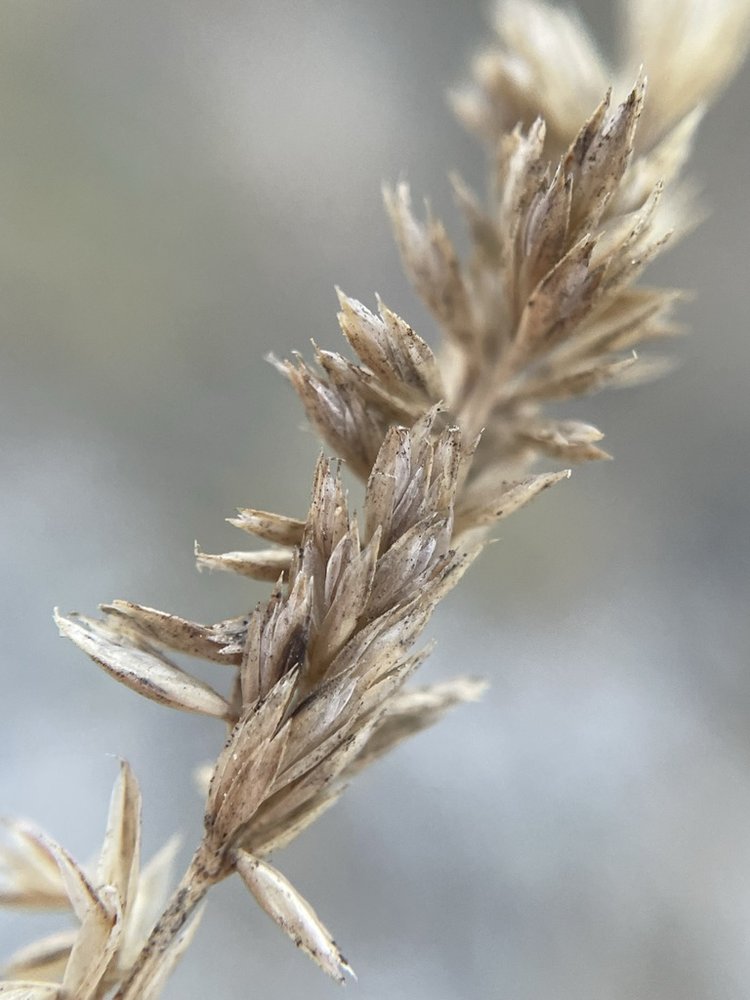
Seed: The grain is 2.5–3 mm long. At ripeness the floret falls with the seed and the glumes stay behind on the stem. Seed ripens in July and August, and a pound holds about 2,300,000 seeds, but much of it isn't viable, and little of it lasts in the soil.
Germination: The seed needs light to sprout well, so it is sown on the surface or no deeper than 3 mm (1/8 in). Sources differ on timing: the USDA plant guide advises spring sowing and not fall, while SDSU says it sprouts best sown in fall or after cold stratification (a cold, moist period). The Fire Effects Information System reports 58% germination after stratification against 18% for dry-stored seed, with the best emergence at 18 °C (64 °F).
How do you identify Prairie Junegrass?
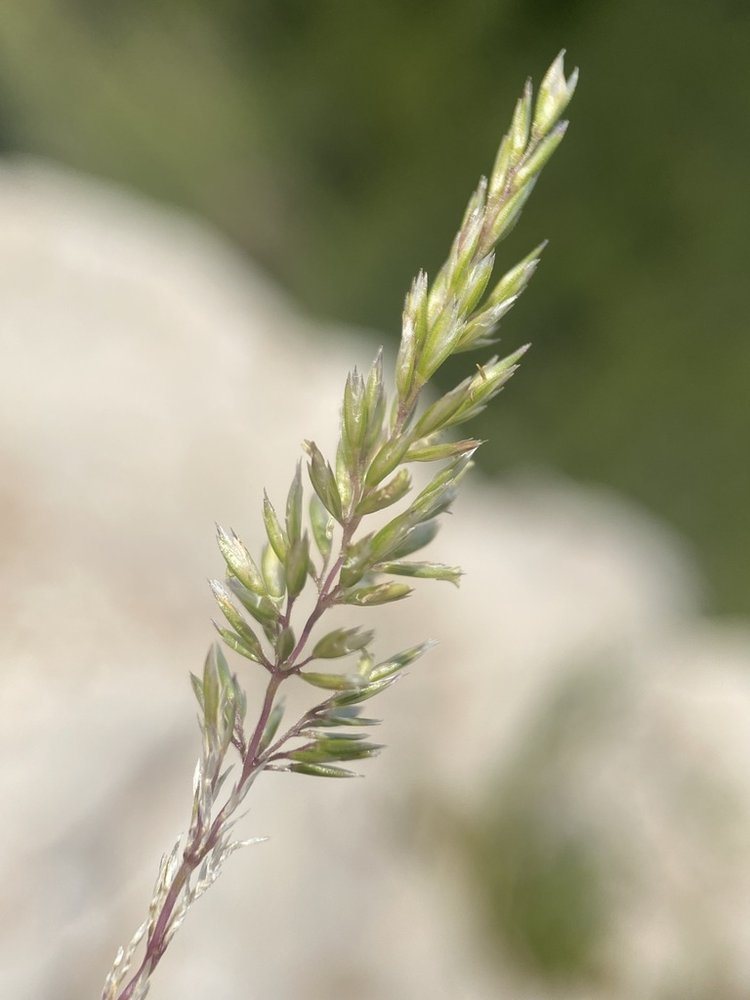
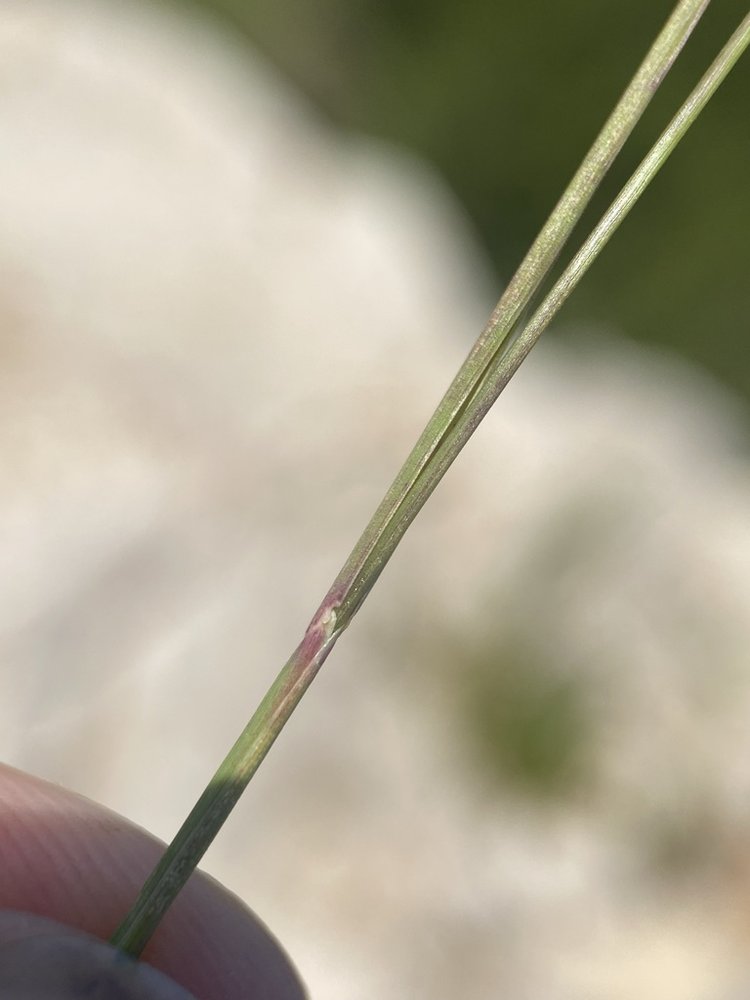
Start with the seed head: one narrow, tightly packed head 2.5–17 cm (1–7 in) long on each stem, pale green to purplish and shiny, that looks like a spike. At flowering its short branches spread a little and long yellow anthers hang from the sides; as it ripens it closes up again into a slender, light tan spike. The spikelets are 5–6 mm long, usually with 2 florets and almost never with awns (bristles), their glumes are sharp and shiny, and the stem just below the head is finely hairy. Then check the leaf collar, where the blade leaves the stem: the ligule, the small pale flap there, is very short, 2 mm or less, with a ragged top, and the sheath is open and usually covered in short hairs. The narrow leaves, 1–4 mm wide, flat or rolled, sit mostly in a small tuft at the base. The USDA plant guide says it is often mistaken for Muttongrass (Poa fendleriana), and tells them apart by Junegrass's hairy seed head and smaller spikelets. Minnesota Wildflowers separates it from the wedgegrasses (Sphenopholis), which grow taller in moister ground and have smooth glumes that fall with the rest of the spikelet, while on Junegrass the glumes stay on the stem.
When does it bloom?
May into July; the seed ripens in July and August.
Where does it grow?
Dry prairie, open rocky and grassy slopes and ridges, limestone and sandstone outcrops, open grassy ponderosa pine woods and roadsides, from the prairie around the Hills up to about 2,000 m (6,600 ft). SDSU calls it common across much of South Dakota. The National Park Service lists it at Wind Cave, Jewel Cave, Mount Rushmore and Devils Tower, the 1986 Jewel Cave plant survey records it, and 140 herbarium specimens come from Lawrence, Meade, Pennington, Custer and Fall River counties in South Dakota and Crook and Weston counties in Wyoming.
Other grasses in this guide
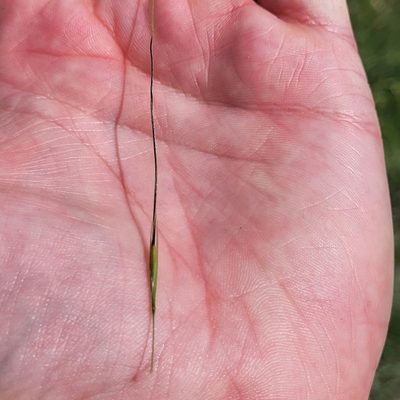
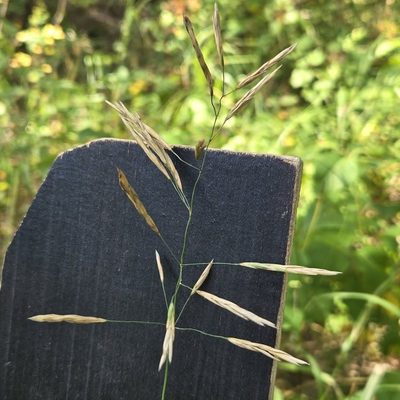
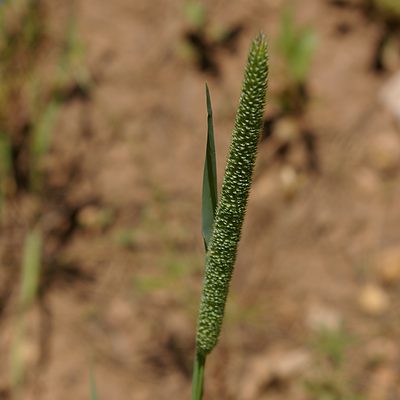
Sources: USDA NRCS Plant Guide: Prairie Junegrass, Koeleria macrantha; USDA PLANTS Database: Koeleria macrantha (KOMA); USDA Forest Service Fire Effects Information System: Koeleria macrantha (Simonin 2000); SDSU Open PRAIRIE: Poaceae: Koeleria macrantha (R. Neil Reese); Minnesota Wildflowers: Koeleria macrantha (Junegrass); ITIS: Koeleria macrantha, TSN 503284; Marriott and Hartman 1986, A Survey of the Vegetation of Jewel Cave National Monument; NPSpecies checklist, Wind Cave National Park vascular plants; NPSpecies checklist, Jewel Cave National Monument vascular plants; NPSpecies checklist, Mount Rushmore National Memorial vascular plants; NPSpecies checklist, Devils Tower National Monument vascular plants; GBIF occurrence search: Koeleria macrantha, South Dakota and Wyoming herbarium specimens.