Mosses
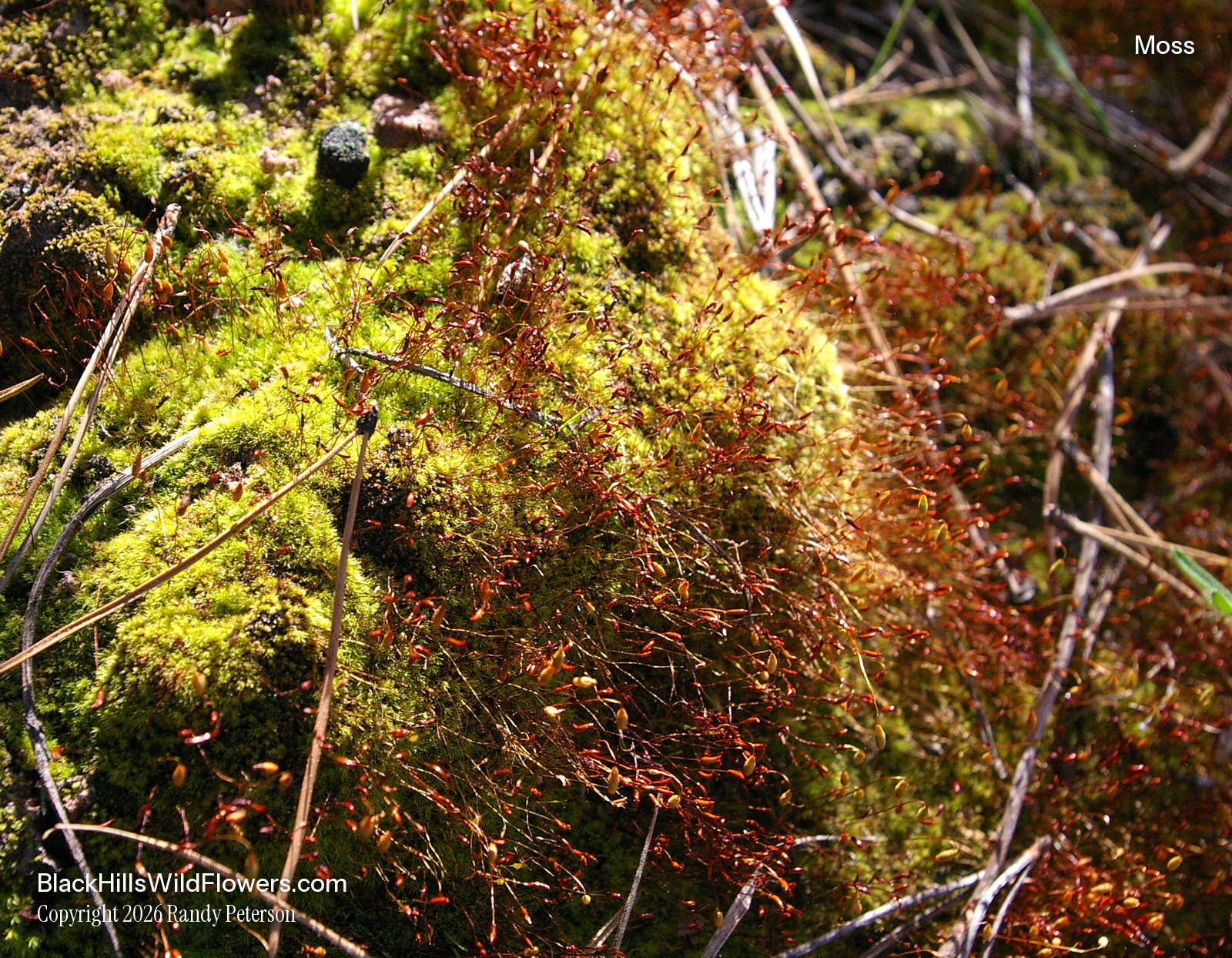
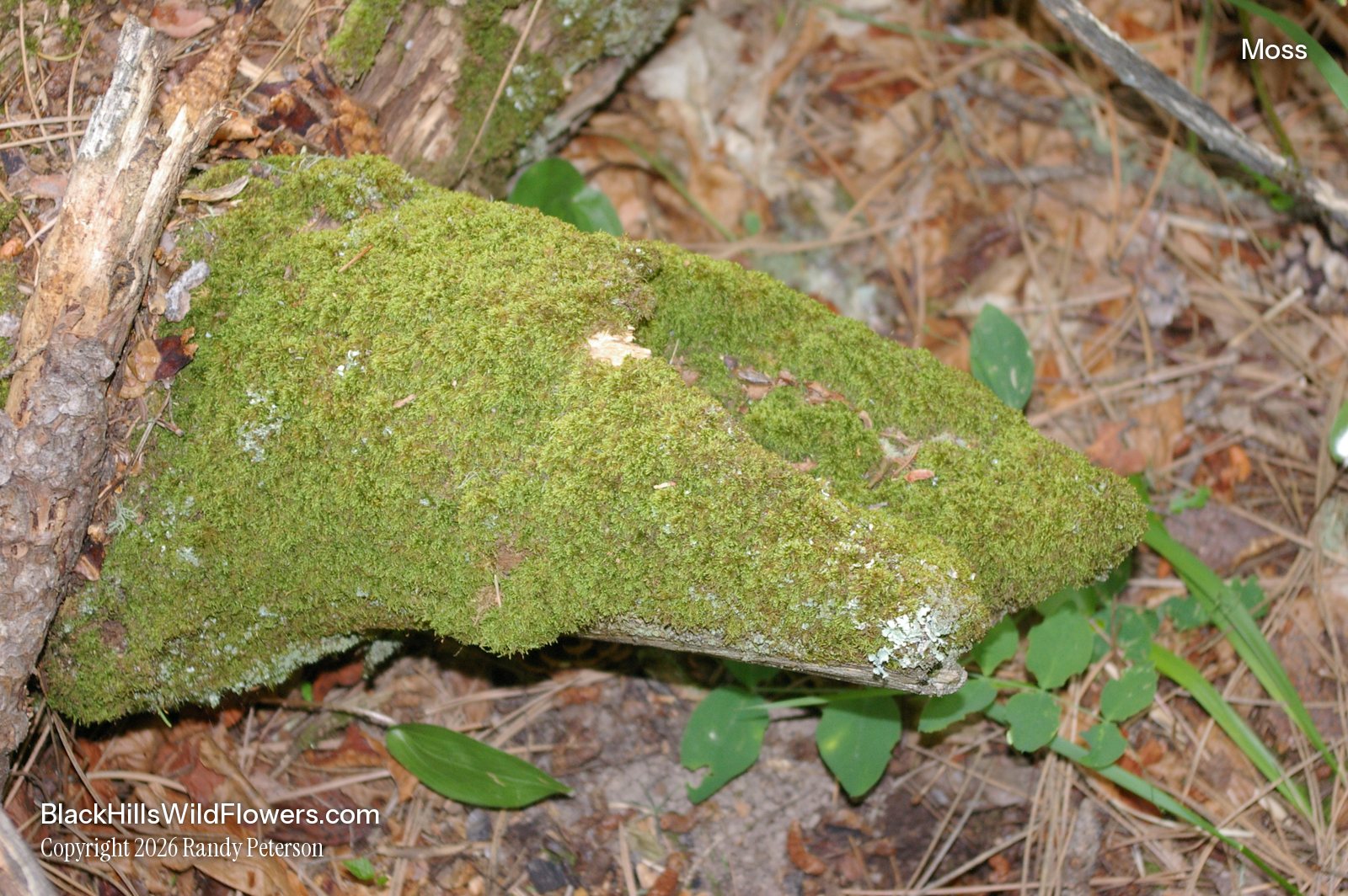
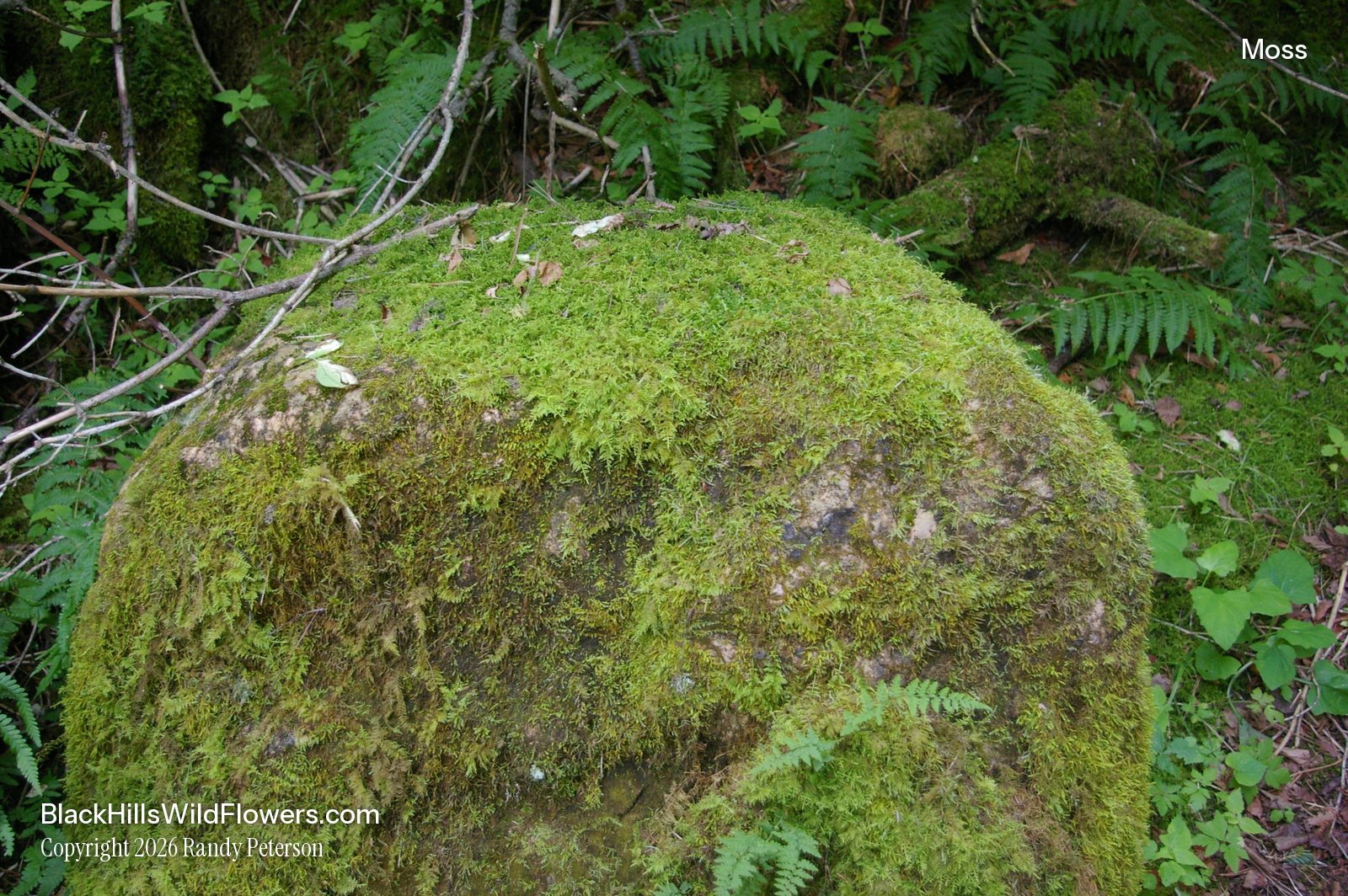
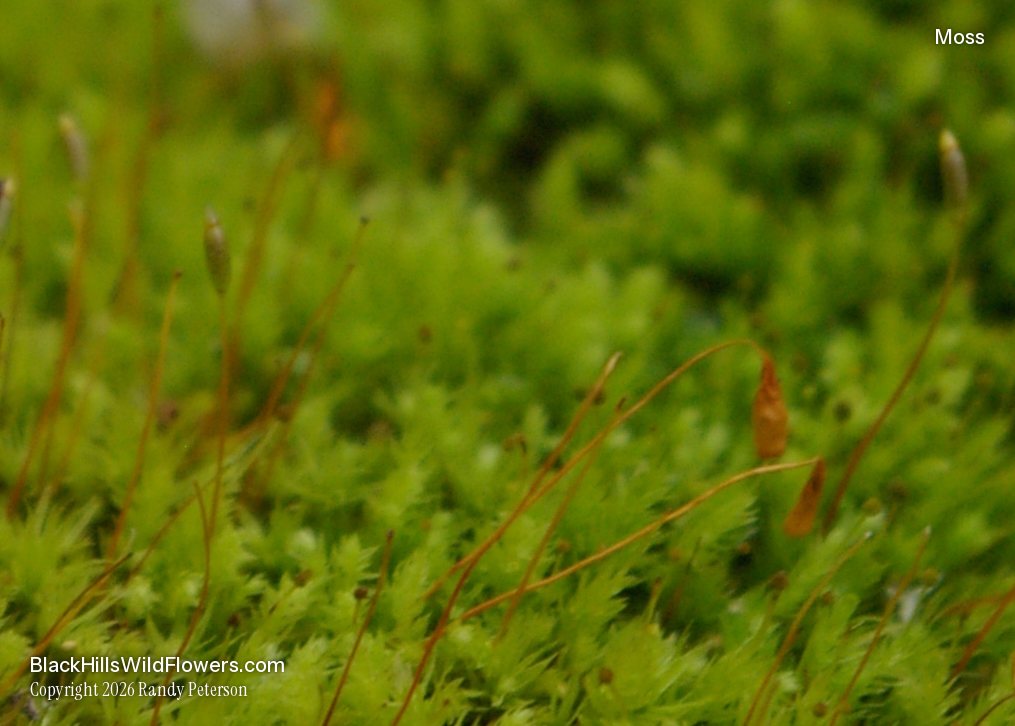
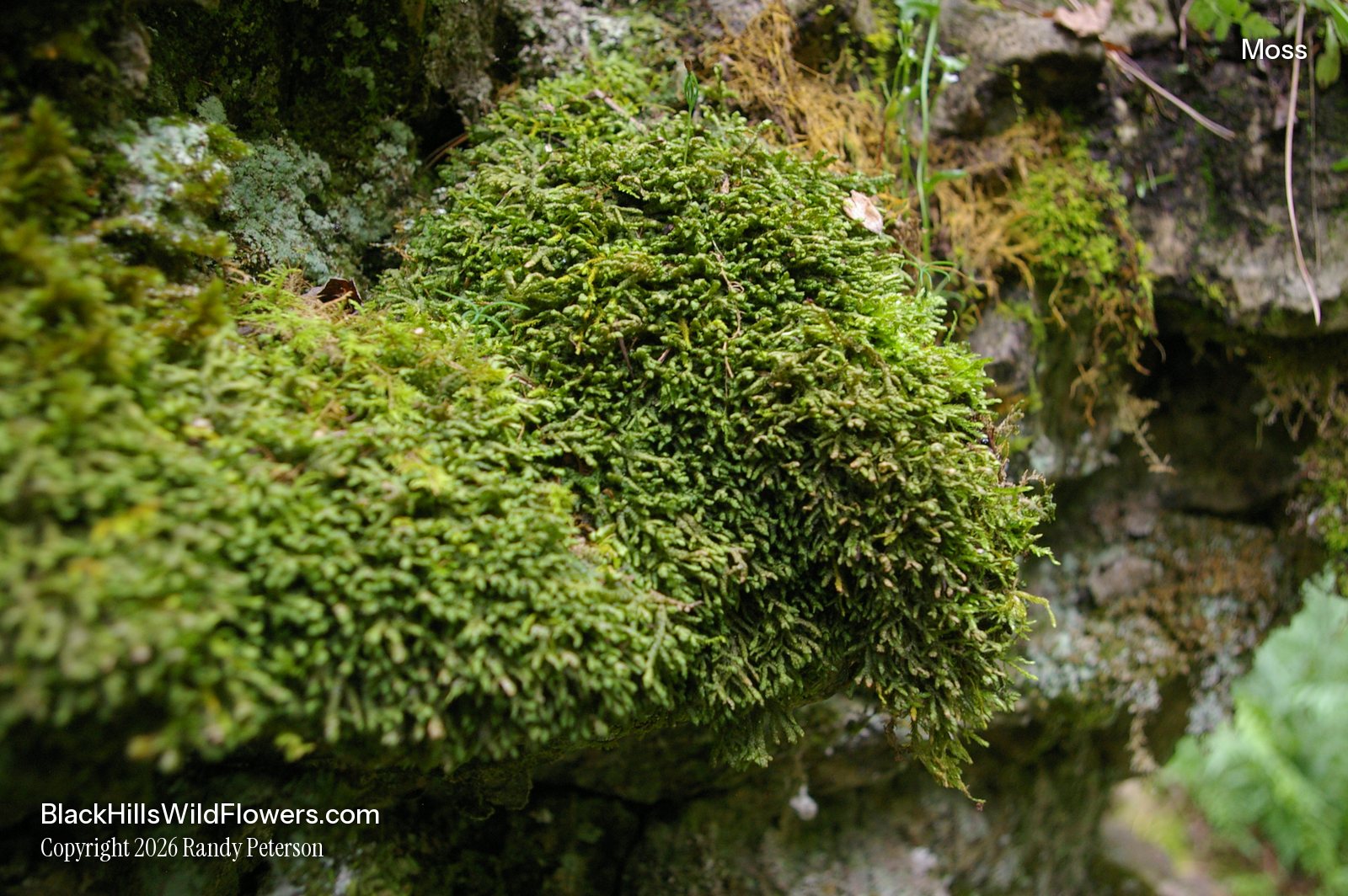
Mosses are small, leafy green plants with no flowers, no seeds and no true roots. They reproduce by spores, made in a small capsule on top of a thin stalk, and the Forest Service lists more than 20 kinds as at-risk species on the Black Hills National Forest. Photographed in the Black Hills.
| Where | Soil, rocks, tree bases, logs and stream banks; moist sites |
|---|
How do you identify Mosses?
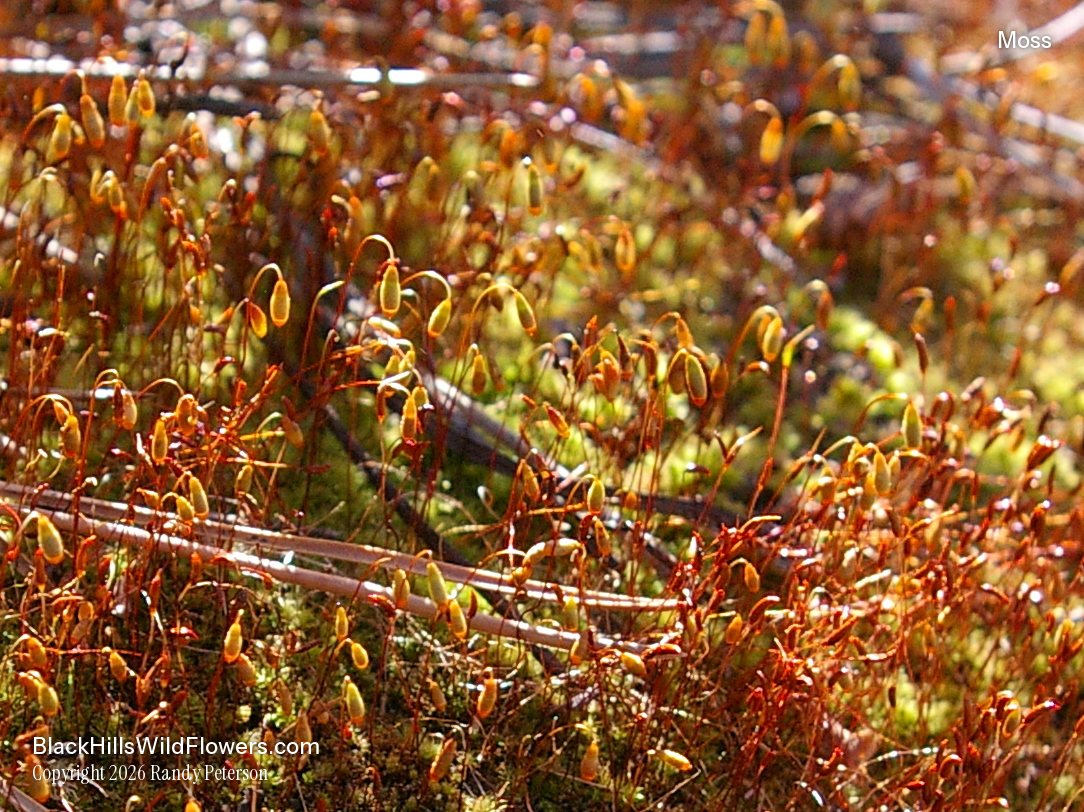
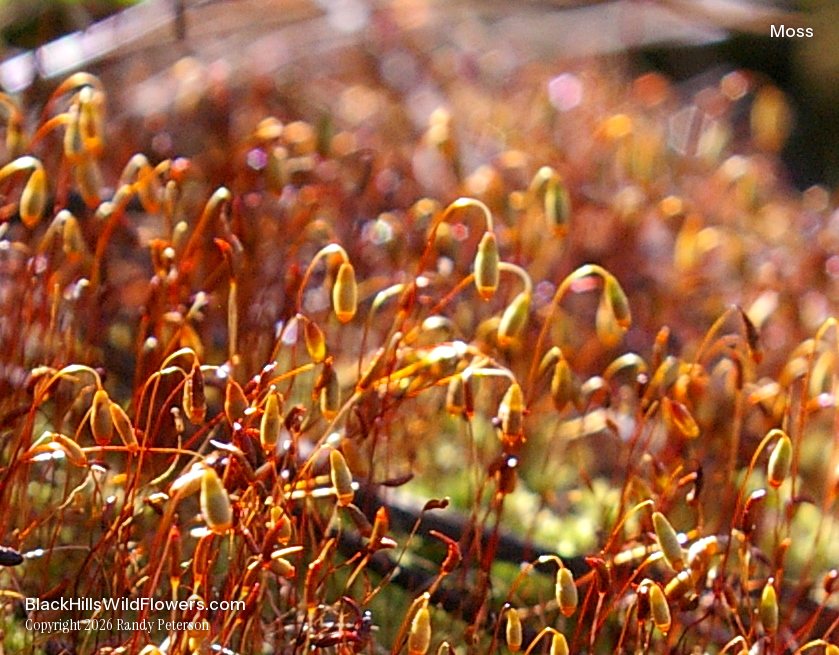
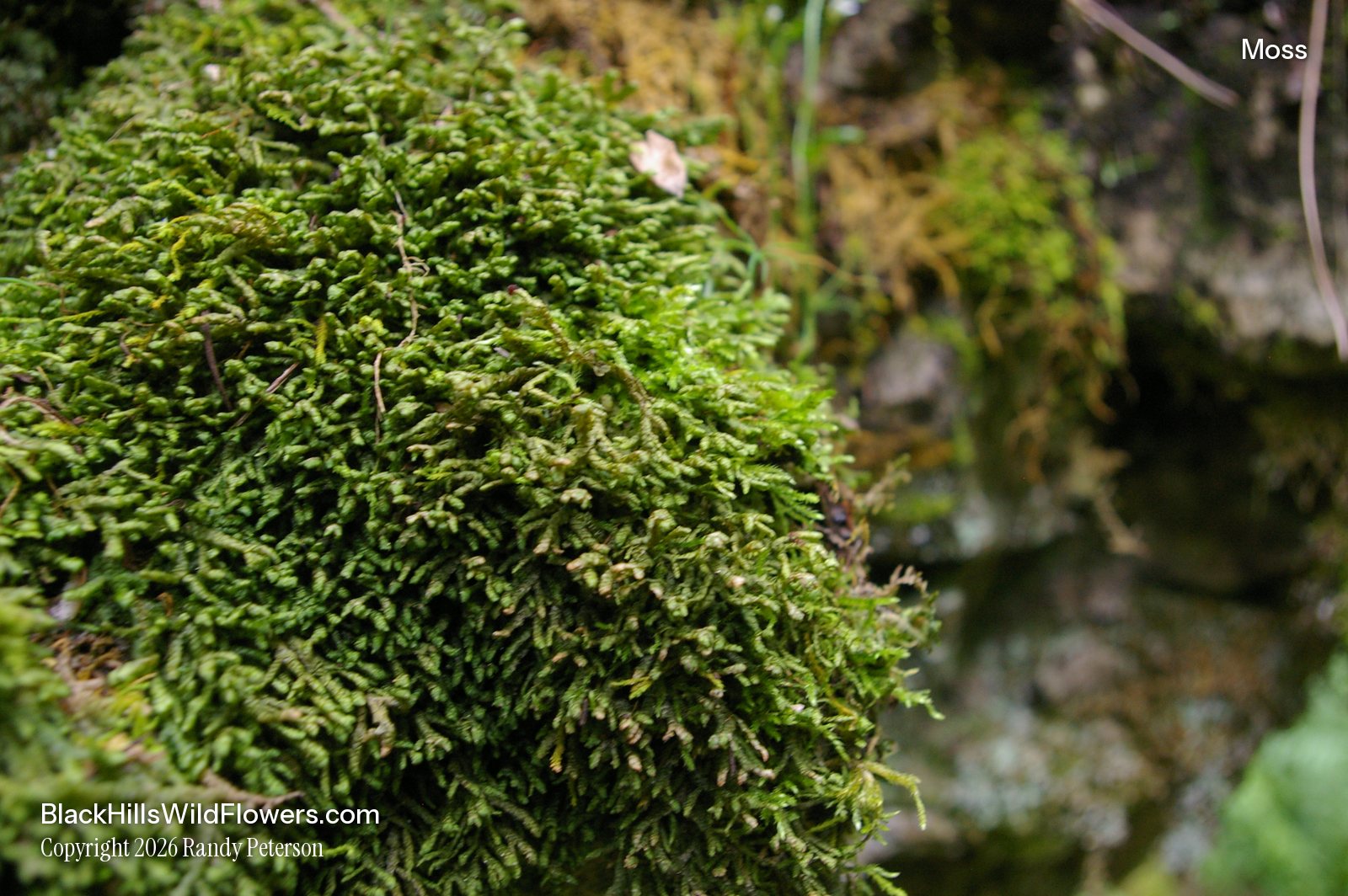
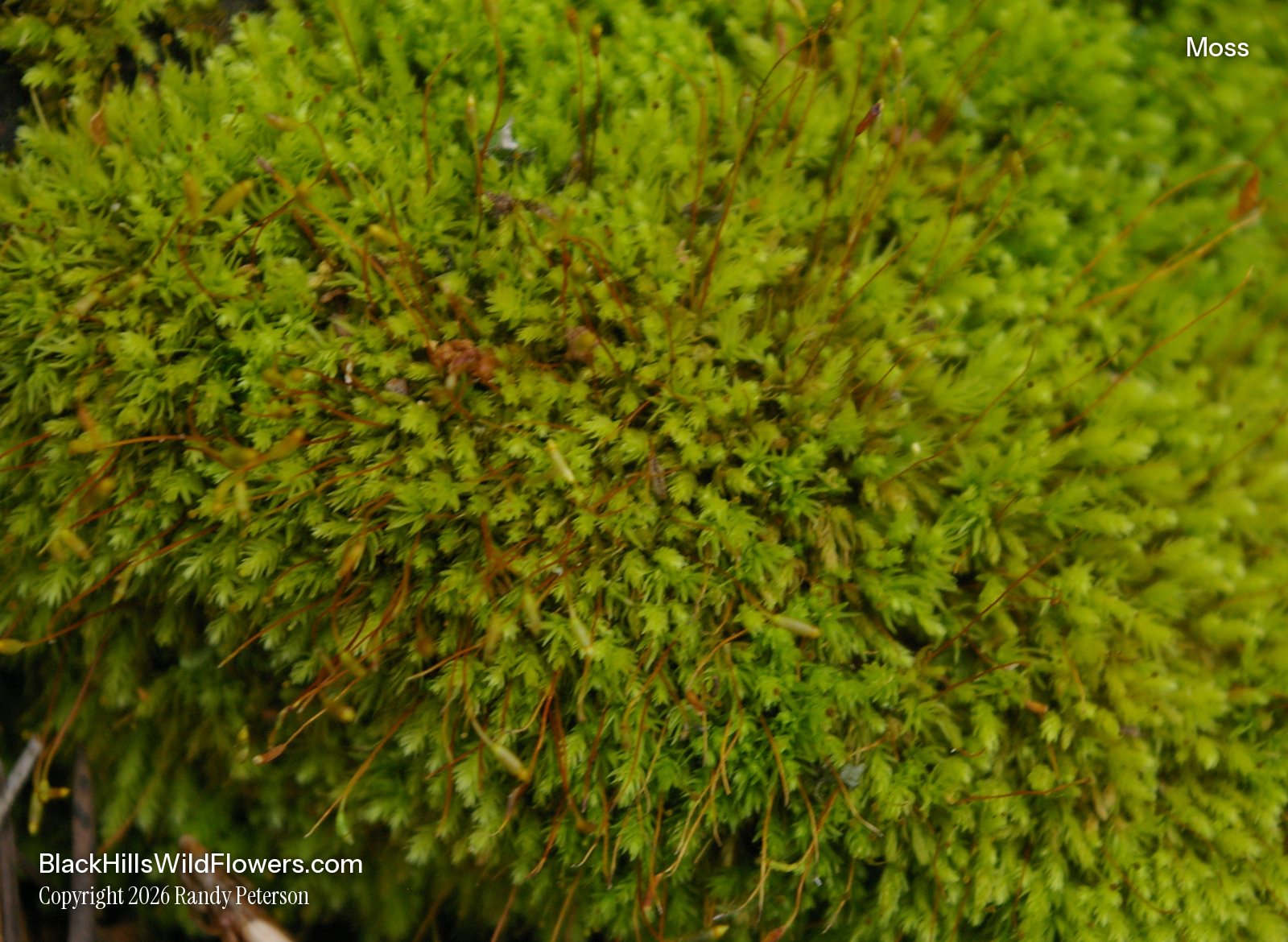
Look for low mats of small, leafy green plants. The thin stalks that rise above them are not flower stems: each stalk (the seta) carries a capsule that makes spores. In some mosses the stalk is red or red-brown.
Where does it grow?
Mosses grow on soil, rocks, tree bases and rotting logs and along streams; moisture matters most. As a group they live in nearly every kind of habitat, from deserts to fens, bogs and forests. The rare mosses the Forest Service tracks on the Black Hills National Forest include four peat mosses (Sphagnum), and many grow in fens or along forested streams.
Sources: Encyclopaedia Britannica: Moss; Forest Service: Forest Vegetation of the Black Hills National Forest, A Habitat Type Classification (RM-276); Black Hills National Forest: At-Risk Species Assessment, October 2023; Glime and Chavoutier 2017, Glossary, in Bryophyte Ecology (Michigan Technological University); USDA Forest Service, Alaska Region: Mosses and Liverworts of the National Forests in Alaska (R10-RG-179, 2008); National Park Service, Acadia National Park: Mosses.