Oval-leaf Milkweed Asclepias ovalifolia
Also called Dwarf Milkweed, Oval Milkweed, Oval-leaved Milkweed
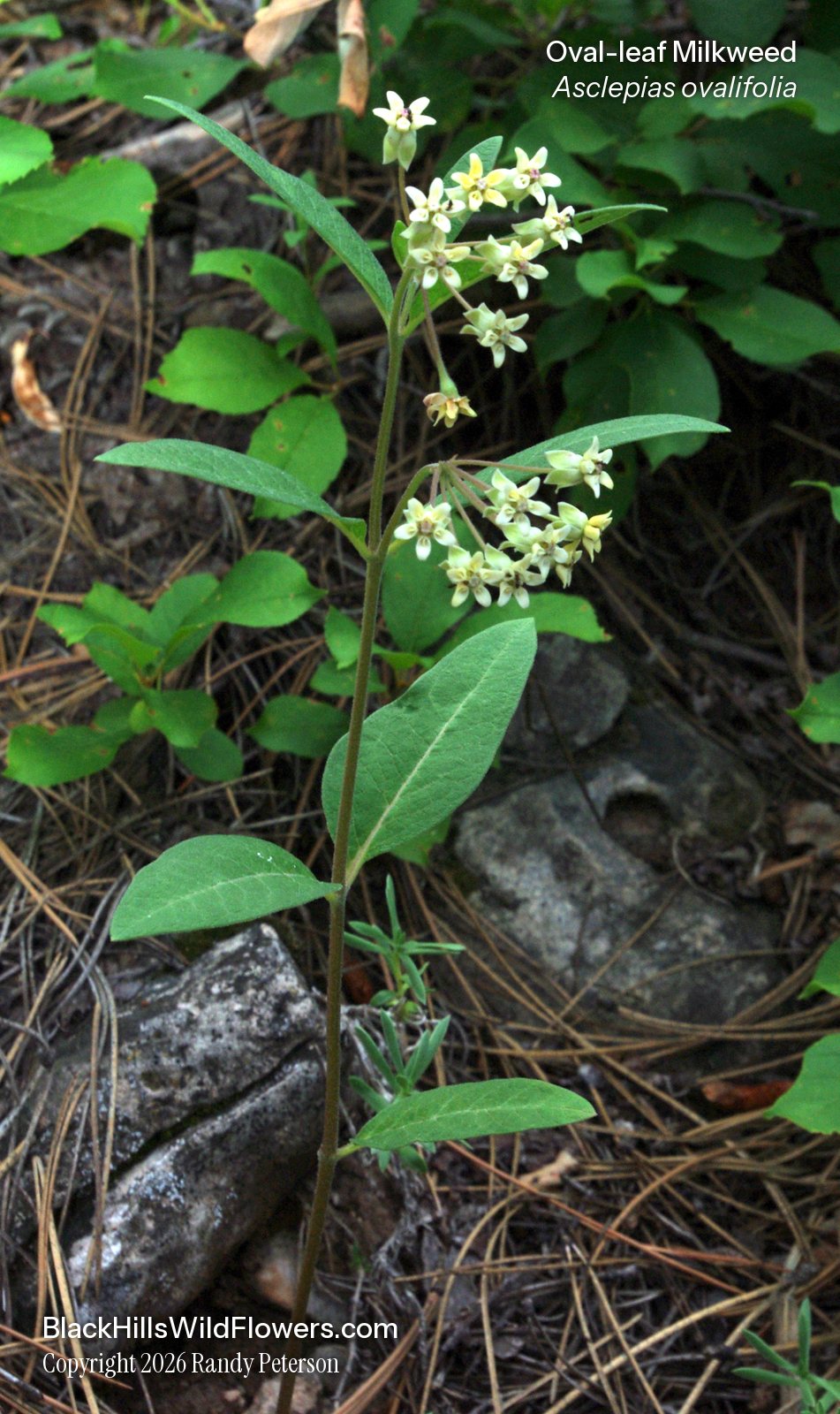
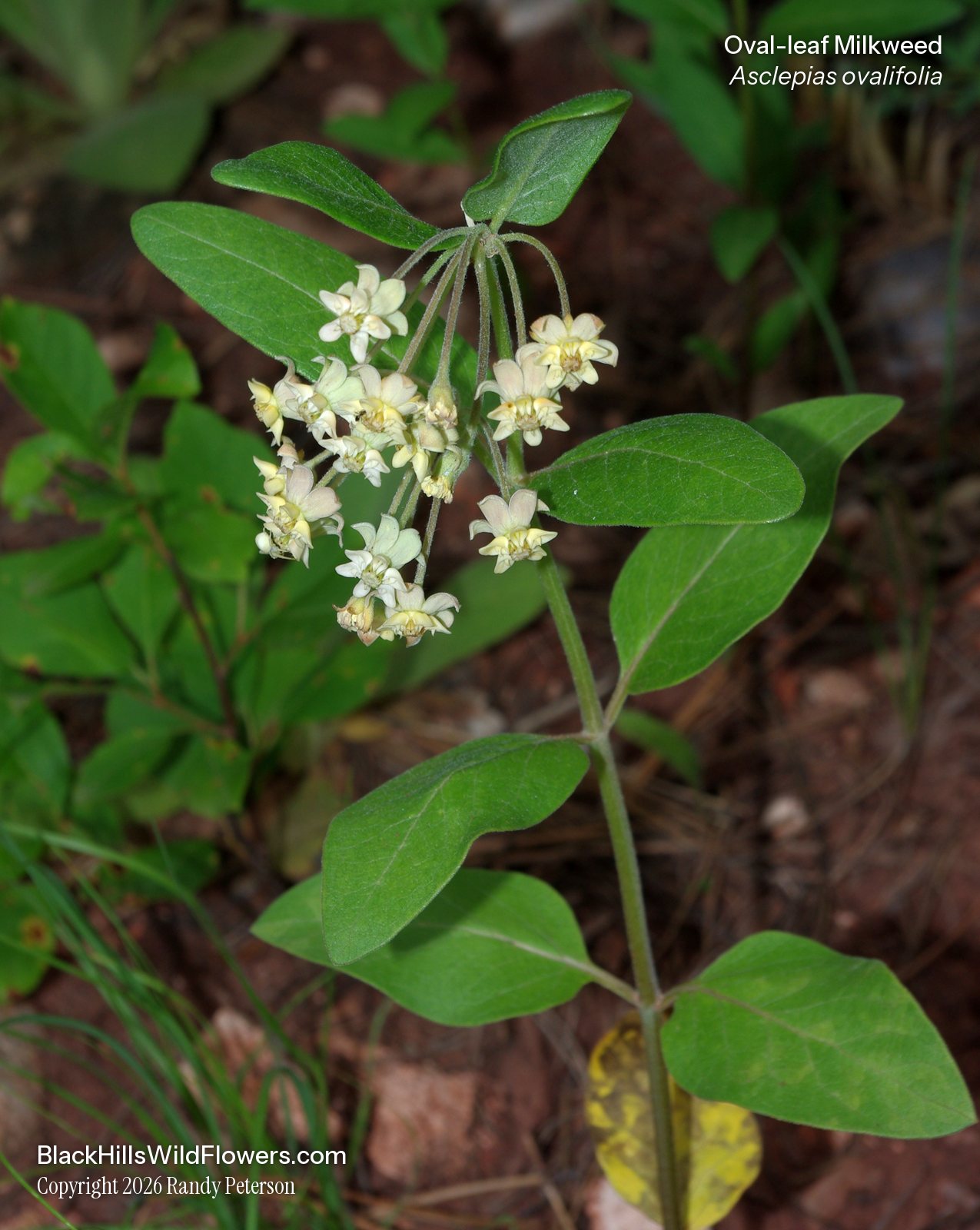
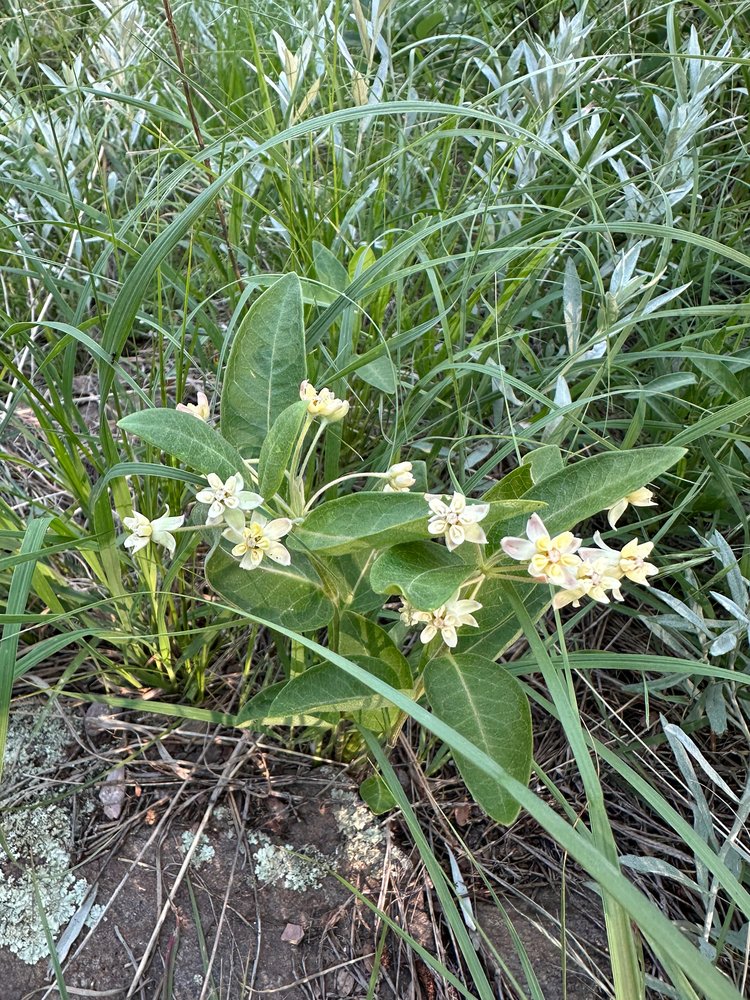
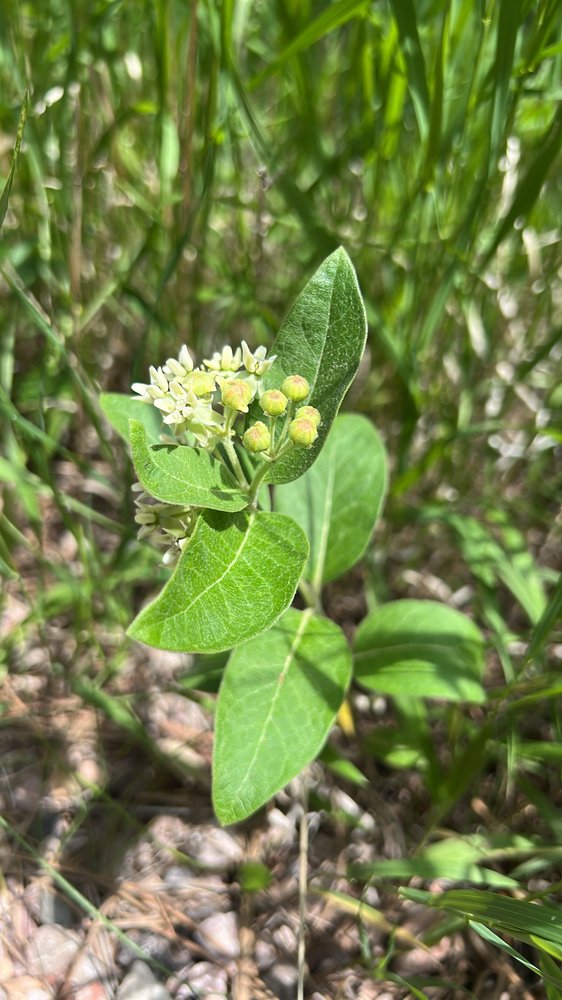
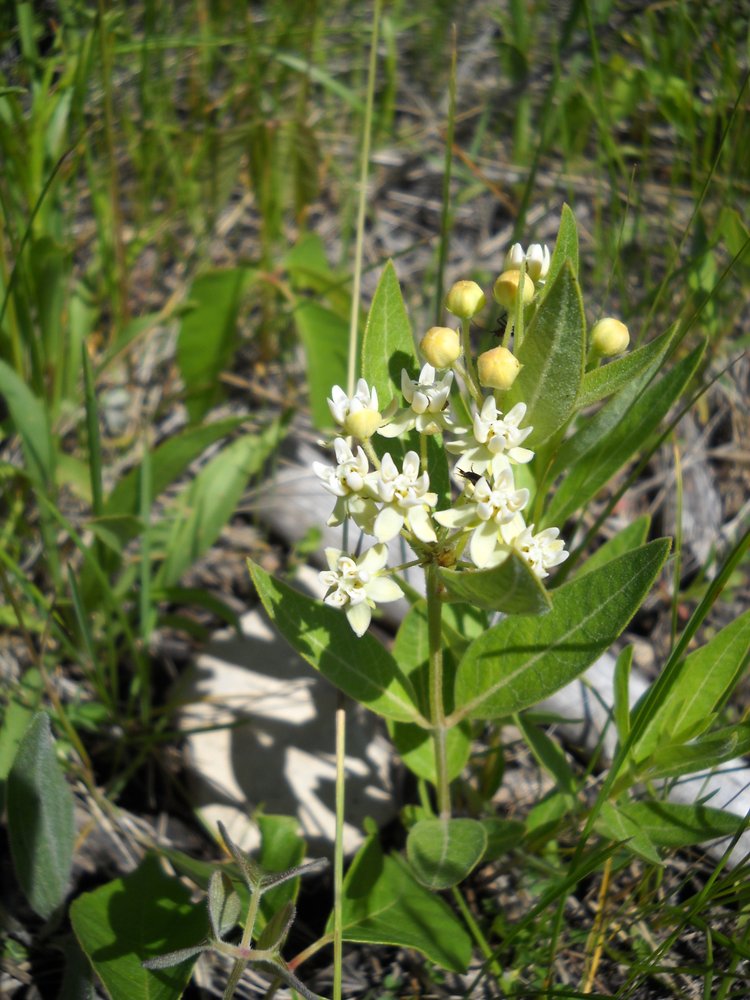
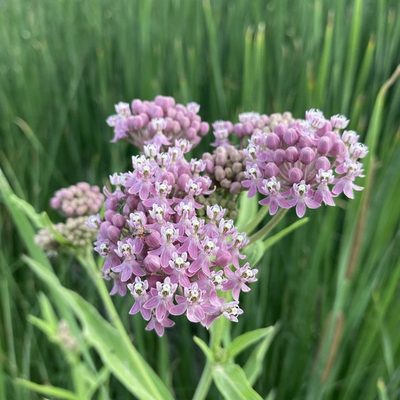
Oval-leaf Milkweed (Asclepias ovalifolia) is a short native perennial, 25–60 cm (10–24 in) tall, with a single downy stem, a few pairs of oval leaves and a rounded cluster of small white to cream flowers at the top, mainly in June and July. In the Black Hills it grows in dry sandy ground, prairie openings and open pine woods, and the National Park Service lists it at Wind Cave, Jewel Cave and Mount Rushmore. Photographed in the Black Hills.
Free photos from other sources
| Family | Apocynaceae · Dogbane |
|---|---|
| Status | Native perennial |
| Blooms | June and July, a few into August |
| Height | 25–60 cm (10–24 in) |
| Where | Dry sandy or silty ground in prairie, open pine woods, wood edges and roadsides |
| Also called | Dwarf Milkweed, Oval Milkweed, Oval-leaved Milkweed |
| Synonym | Asclepias nuttalliana |
| Toxicity | The US Forest Service's page on this species says its milky sap is toxic and contains cardiac glycosides (heart-acting compounds). |
Roots, seeds & germination
Root: Rhizomes (underground stems). The plants grow in groups, though each stem comes up single.
Seed: Spindle-shaped pods 5–7.5 cm (2–3 in) long stand upright, covered in fine hairs, and split along one side when ripe to release seeds tufted with light brown hair that the wind carries.
How do you identify Oval-leaf Milkweed?
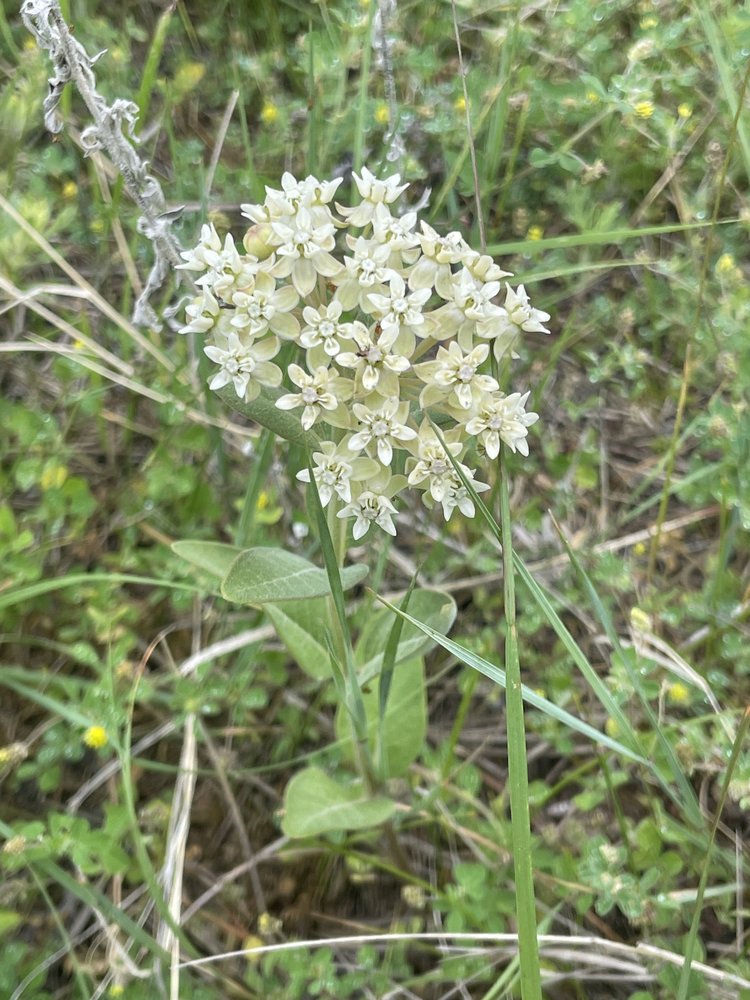
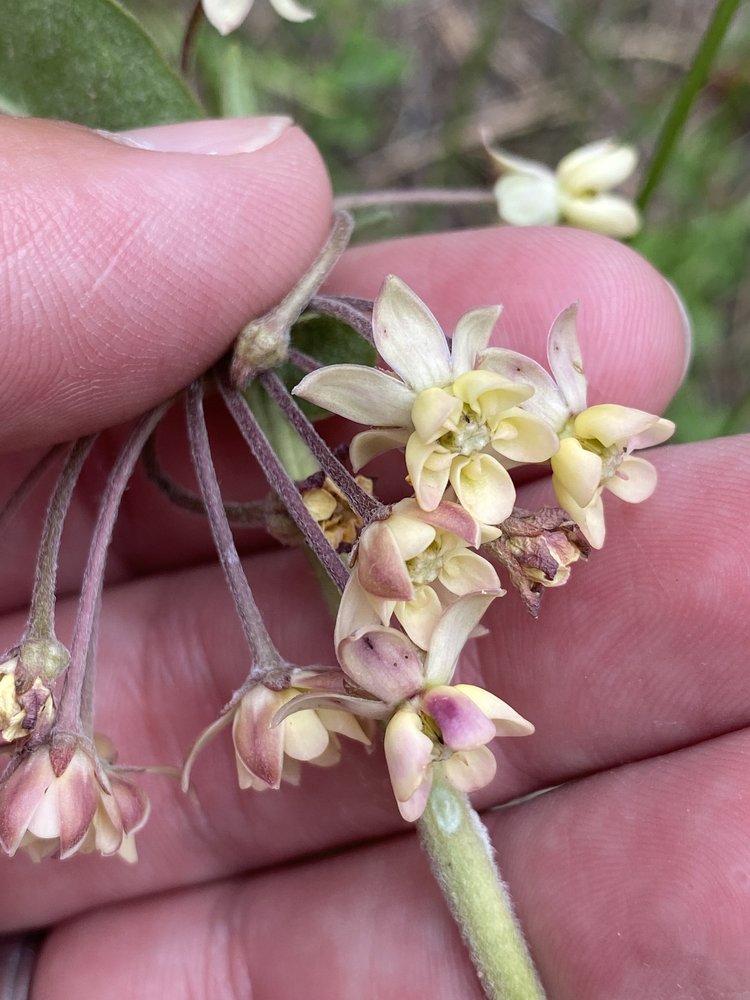
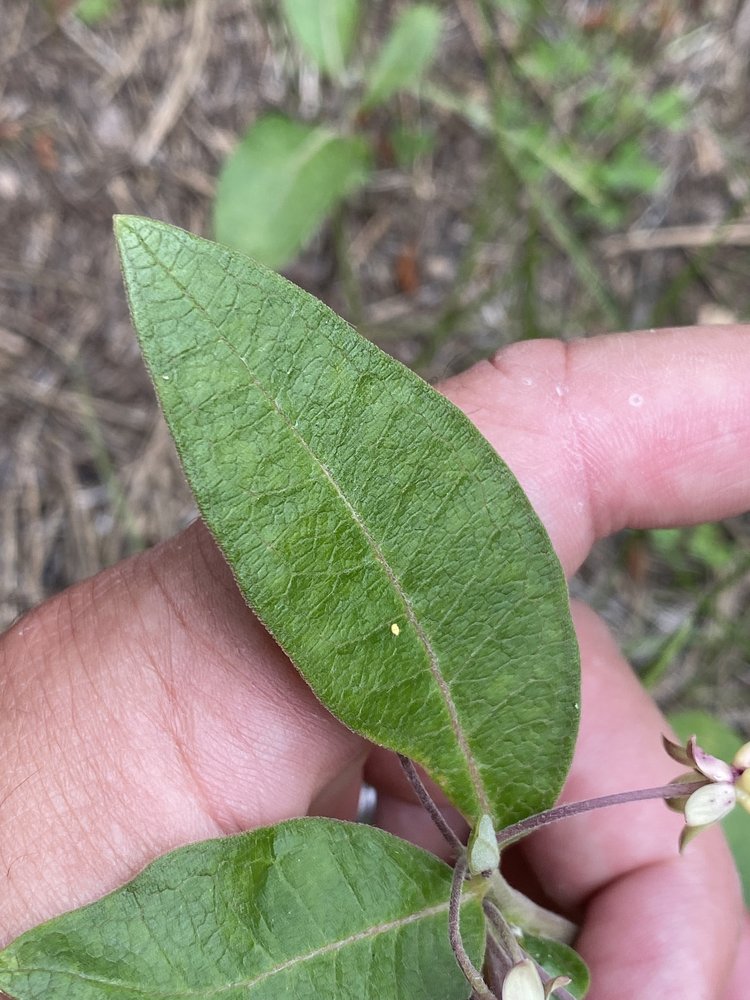
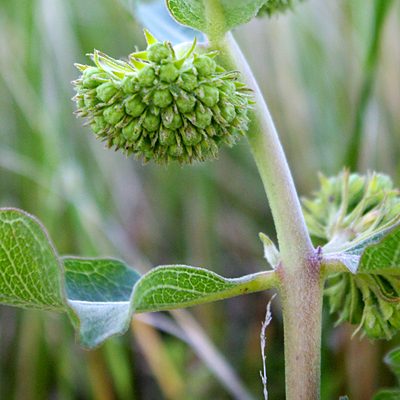
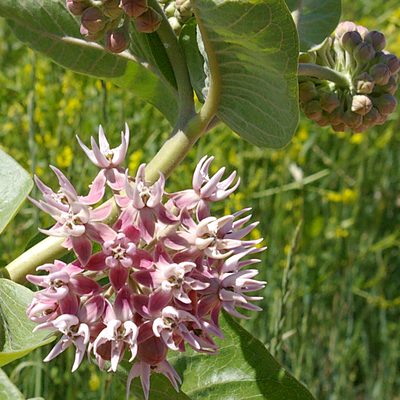
Look for a short, upright, unbranched plant, 25–60 cm (10–24 in) tall, covered in fine downy hairs, with just a few pairs of opposite oval leaves 5–7.5 cm (2–3 in) long and 2.5–4 cm (1–1½ in) wide on short stalks, green and hairless above and pale and fuzzy underneath. The flowers sit in a rounded, dome-shaped cluster under 5 cm (2 in) wide at the top of the stem, usually with one or two more from the upper leaf axils; each is about 6 mm (¼ in) across, with five petals bent down, white with pale green or pinkish-purple tones, and five clear white hoods about twice the height of the central column, each with a horn, and the whole flower fades to yellow with age. The pods are upright, spindle-shaped and finely hairy, 5–7.5 cm (2–3 in) long. Showy Milkweed has stout hairy stems, opposite oval leaves and pink and cream flowers, the largest of any North American milkweed. Green Comet Milkweed has mostly opposite, usually wavy-edged leaves, dense rounded clusters of 20 to 80 pale green flowers in the upper leaf axils, and hoods with no horns. Plains Milkweed has thread-thin alternate leaves.
When does it bloom?
June and July, a few into August.
Where does it grow?
Dry sandy or silty ground in prairie, open pine woods, wood edges and roadsides, in part shade to sun. The National Park Service lists it at Wind Cave, Jewel Cave and Mount Rushmore, and the 1986 plant survey of Jewel Cave lists it. More than a hundred herbarium specimens come from Lawrence, Pennington, Custer and Meade counties in South Dakota and Crook County in Wyoming, the earliest collected in 1892, with labels from Custer State Park, hillsides, open pine woods, pine-oak forest on limestone, talus slopes, creek bottoms, road cuts and a burned pine forest, at about 1,220–1,570 m (4,000–5,150 ft).
Other milkweeds in this guide
Dogbane family (Apocynaceae): 7 other plants in this guide
Sources: Minnesota Wildflowers: Asclepias ovalifolia (Oval-leaf Milkweed); Illinois Wildflowers: Oval Milkweed (Asclepias ovalifolia); US Forest Service, Plant of the Week: Oval-leaved milkweed (Asclepias ovalifolia); Milkweeds of Montana and Wyoming (Xerces Society and Monarch Joint Venture); Milkweeds of Nebraska and the Dakotas (Xerces Society and Monarch Joint Venture); Monarch Watch Milkweed Guide (Asclepias ovalifolia, citing Woodson 1954); Kansas Wildflowers and Grasses: Asclepias viridiflora, green milkweed; SDSU Open PRAIRIE: Asclepias pumila (R. Neil Reese); Marriott and Hartman 1986, A Survey of the Vegetation of Jewel Cave National Monument; NPSpecies checklist, Wind Cave National Park vascular plants; NPSpecies checklist, Jewel Cave National Monument vascular plants; NPSpecies checklist, Mount Rushmore National Memorial vascular plants; USDA PLANTS Database: Asclepias ovalifolia (ASOV); GBIF backbone: Asclepias ovalifolia Decne.; GBIF occurrence search: Asclepias ovalifolia, South Dakota and Wyoming herbarium specimens; GBIF specimen 3454984951: Custer County, 1892; GBIF specimen 4911319631: Pennington County, burned ponderosa pine forest, 2010.