Plains Milkweed Asclepias pumila
Also called Dwarf Milkweed, Low Milkweed, čhešlóšlo pȟežúta (Lakota), pȟeží swúla čík'ala (Lakota), ȟaŋté iyéčheča (Lakota)
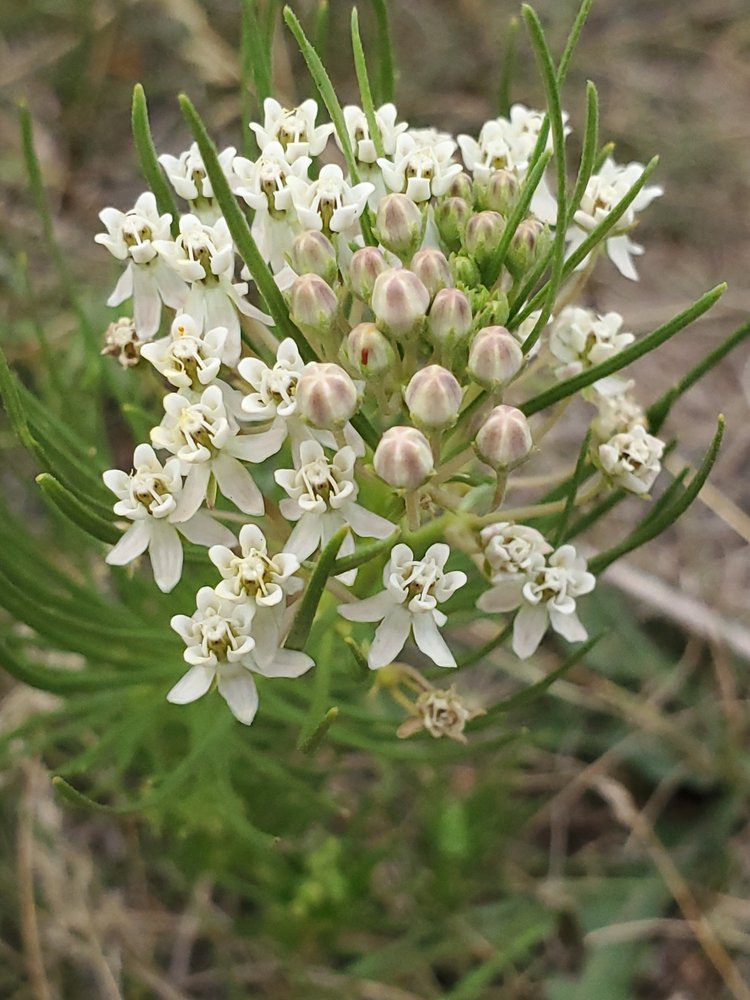
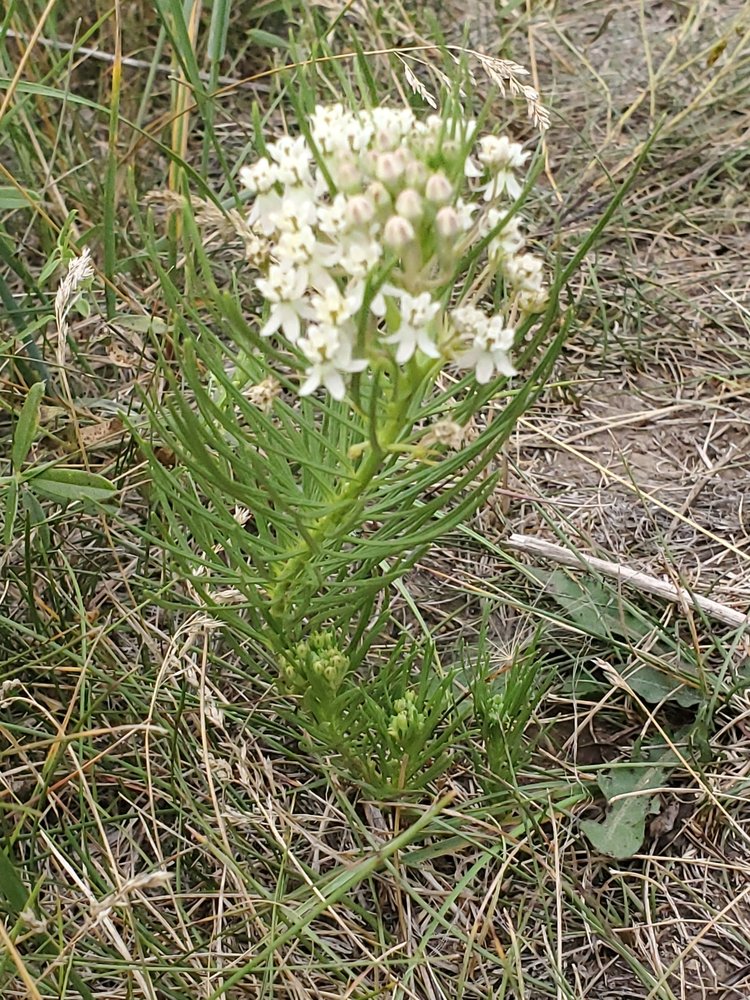
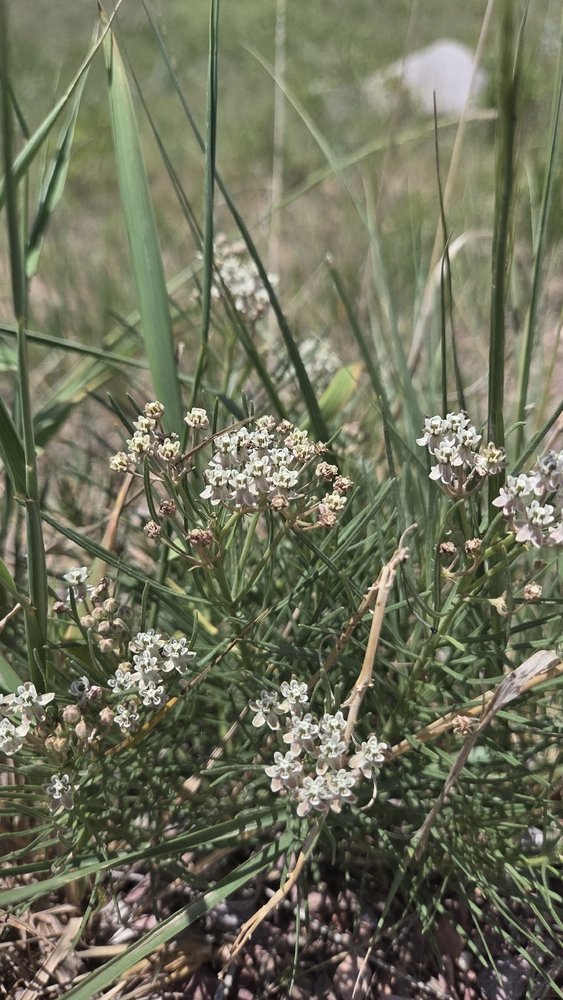
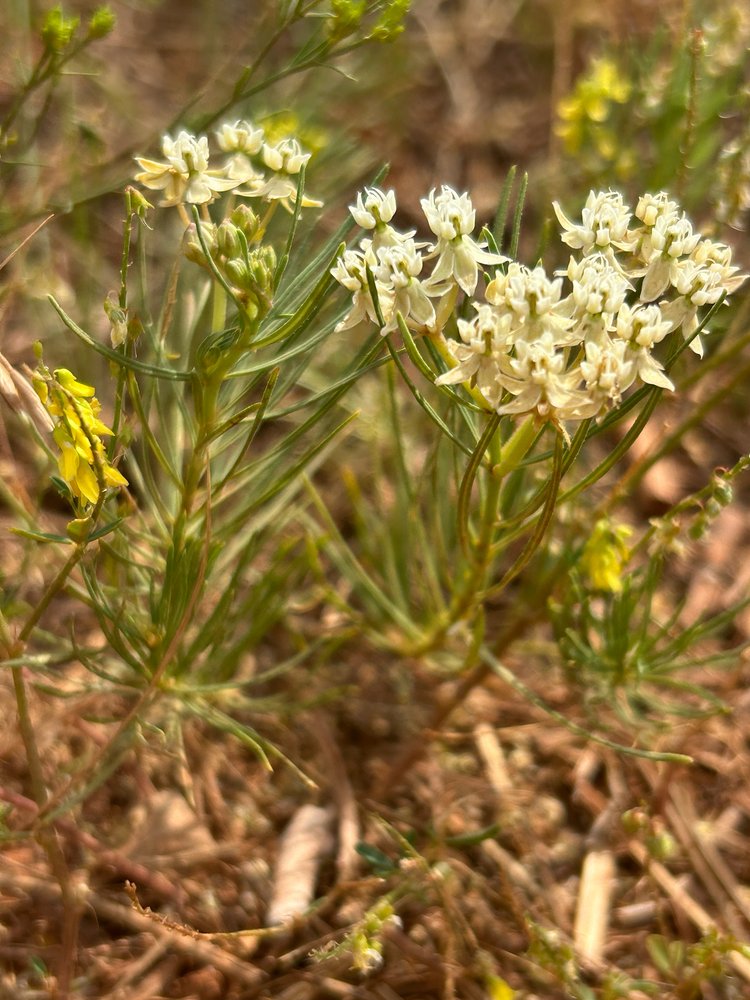
Plains Milkweed (Asclepias pumila) is a small native perennial, usually under 30 cm (12 in) tall, whose stems are so crowded with thread-thin, almost needle-like leaves that they look like small bottlebrushes, topped from June into September by small round clusters of white to greenish-white flowers. In the Black Hills it grows on dry prairie, open hillsides and roadsides, and the National Park Service lists it at Wind Cave, Jewel Cave and Devils Tower.
Free photos from other sources
| Family | Apocynaceae · Dogbane |
|---|---|
| Status | Native perennial |
| Blooms | June into September |
| Height | 8–30 cm (3–12 in) |
| Where | Dry, sandy or rocky prairie, hillsides, roadsides, prairie dog towns and open pine woods |
| Also called | Dwarf Milkweed, Low Milkweed, čhešlóšlo pȟežúta (Lakota), pȟeží swúla čík'ala (Lakota), ȟaŋté iyéčheča (Lakota) |
| Synonym | Asclepias verticillata var. pumila |
| Toxicity | All above-ground parts contain cardenolides (heart-acting glycosides) and are poisonous to livestock, sheep most of all; the Nebraska toxic-plants guide calls it one of the most toxic milkweeds and says it stays dangerous in dry hay. |
| Traditional use | Black Elk and Flying By (1998) record that the Lakota used an infusion of the leaves as a diarrhea medicine, especially for children. |
Roots, seeds & germination
Root: A taproot or a slender rhizome (an underground stem). Plants can spread into colonies: a 1982 specimen label from Wind Cave reads "individual stems in colonies."
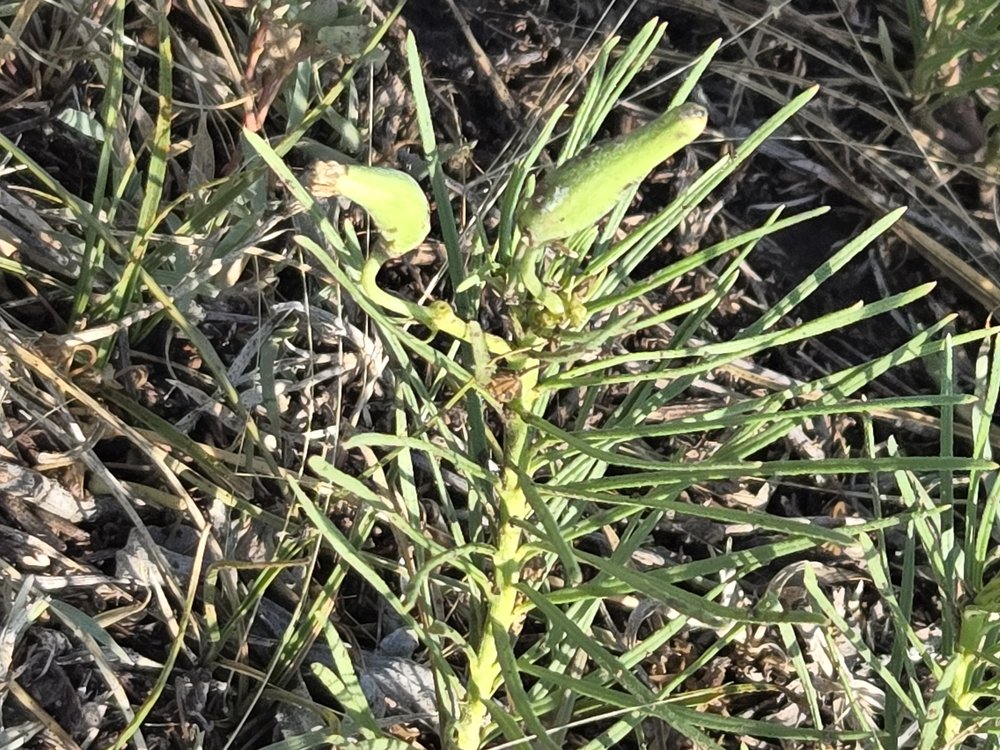
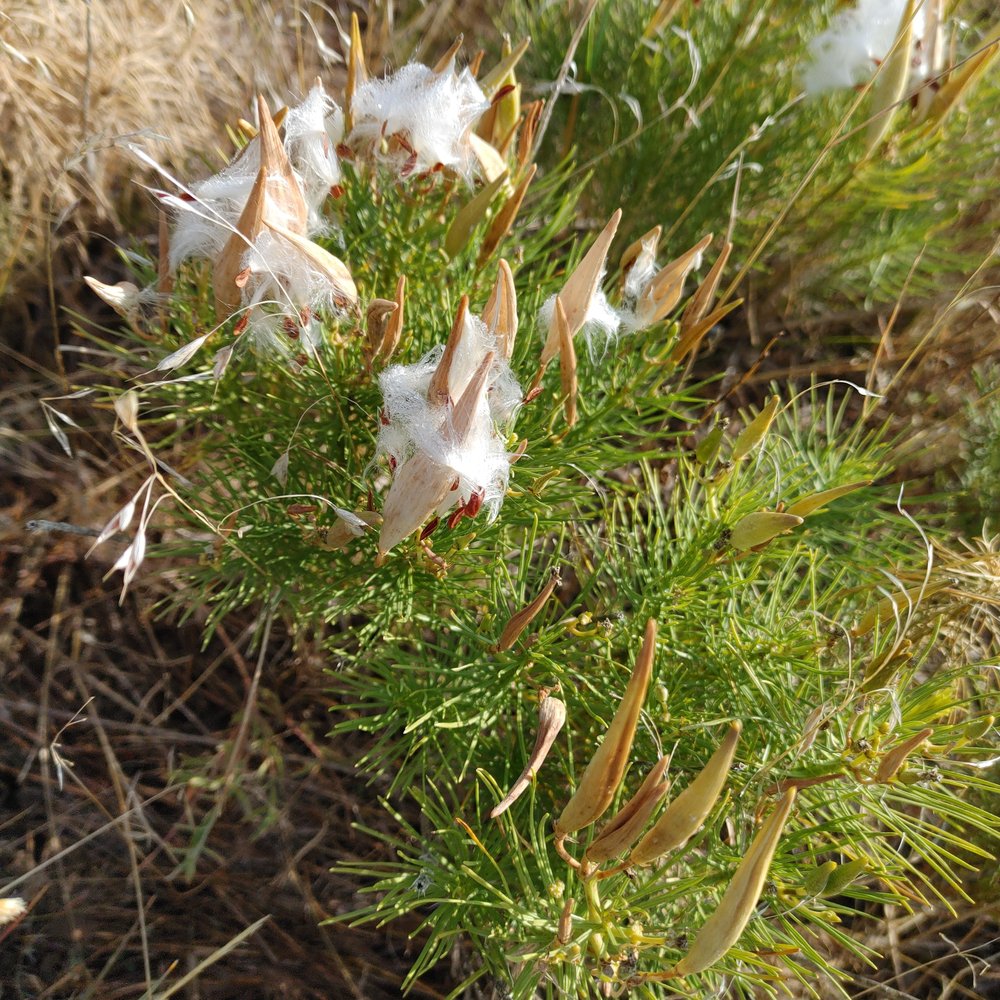
Seed: Erect, narrow, spindle-shaped pods 4–6 cm (1½–2⅜ in) long and 6–8 mm (¼ in) wide turn brownish and split open in late fall or early winter. Each oval seed, 4–6 mm long, carries a tuft of long white silky hairs that turn tan or brown with age.
Germination: SDSU says the seed needs a moist cold period: sow it outdoors in fall, or keep it in moist soil in a refrigerator for 30 days before planting in spring. Established plants can be divided in spring.
How do you identify Plains Milkweed?
Look for an ankle-high plant, 8–30 cm (3–12 in) tall, with one to several stems rising from a branched base, each packed in a tight spiral of thread-thin leaves 1.5–6 cm (⅝–2⅜ in) long and about 1 mm wide, some whorled near the base. The flowers are small, 5–8 mm long, in round clusters of 4–20 in the upper leaf axils and at the stem tips; the five petals bend straight back and are white, sometimes pink-tinged or yellow-green, and five white hoods stand up around the center, each with a needle-like horn 1.5 to 2 times as long as the hood. The stems bleed milky sap, and the pods are erect, slender and spindle-shaped, 4–6 cm (1½–2⅜ in) long. Green Comet Milkweed stands 10–100 cm (4–40 in) tall, with mostly opposite, usually wavy-edged leaves, dense rounded clusters of 20 to 80 pale green flowers in the upper leaf axils, and hoods with no horns. Showy Milkweed has stout hairy stems, opposite oval leaves and large pink and cream flowers.
When does it bloom?
June into September.
Where does it grow?
Dry, sandy, clayey or rocky ground: prairie, pastures, hillsides, roadsides, prairie dog towns and openings in pine woods. The National Park Service lists it at Wind Cave, Jewel Cave and Devils Tower, where the monument's wildflower list gives June to August. Herbarium specimens come from Fall River, Lawrence, Pennington, Custer and Meade counties in South Dakota and Crook County in Wyoming, the earliest collected in 1892, with labels from the prairie of Wind Cave National Park, prairie dog towns at Wind Cave and Devils Tower, dry prairie slopes, grassy foothills, roadsides and sandy pine woods. Most labels that give an elevation say about 1,070–1,310 m (3,500–4,300 ft).
Other milkweeds in this guide
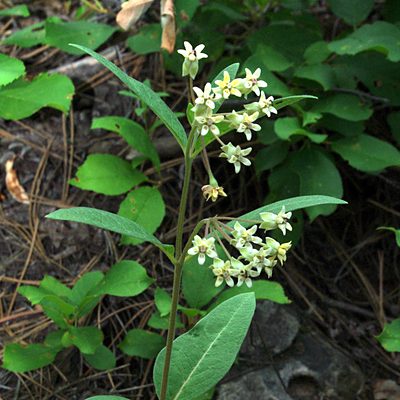
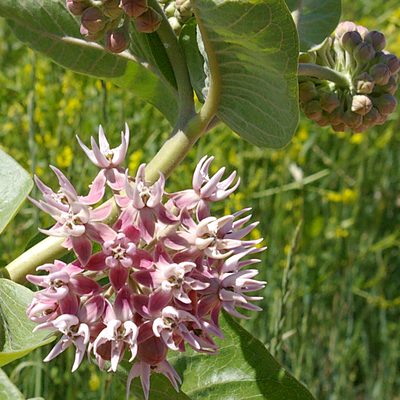
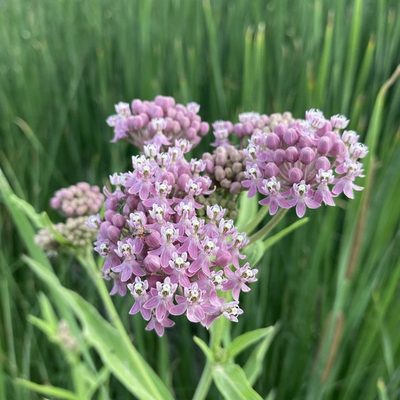
Dogbane family (Apocynaceae): 7 other plants in this guide
Sources: SDSU Open PRAIRIE: Asclepias pumila (R. Neil Reese); Kansas Wildflowers and Grasses: Asclepias pumila, plains milkweed; Kansas Wildflowers and Grasses: Asclepias viridiflora, green milkweed; Nebraska Plants Toxic to Livestock, EC3037 (Stubbendieck et al., University of Nebraska–Lincoln Extension, 2018); Milkweeds of Nebraska and the Dakotas (Xerces Society and Monarch Joint Venture); Milkweeds of Montana and Wyoming (Xerces Society and Monarch Joint Venture); National Park Service, Devils Tower National Monument: Native Plants; NPSpecies checklist, Wind Cave National Park vascular plants; NPSpecies checklist, Jewel Cave National Monument vascular plants; NPSpecies checklist, Devils Tower National Monument vascular plants; USDA PLANTS Database: Asclepias pumila (ASPU); ITIS: Asclepias pumila (A. Gray) Vail, TSN 30295; GBIF backbone: Asclepias pumila (A.Gray) Vail; GBIF occurrence search: Asclepias pumila, South Dakota and Wyoming herbarium specimens; GBIF specimen 3798123230: Wind Cave National Park, Bison Flats, 1982; GBIF specimen 5895755475: Fall River County, 1892; Culturally Important Plants of the Lakota (Black Elk and Flying By, 1998), filed with the South Dakota PUC.