Butterfly Milkweed Asclepias tuberosa
Also called Butterfly Weed, Pleurisy Root, Orange Milkweed, Chigger Weed
Butterfly Milkweed (Asclepias tuberosa) is a native perennial milkweed with flat-topped clusters of bright orange flowers on stout, hairy, leafy stems, and its sap is clear rather than milky. It blooms from June into September on dry prairie and in open woodland. The Black Hills record is thin: one herbarium specimen from Fall River County in 1898, and 14 iNaturalist records since 2017, 11 of them from one spot in Custer State Park.
Free photos from other sources
| Family | Apocynaceae · Dogbane |
|---|---|
| Status | Native perennial |
| Blooms | June into September; SDSU gives May to August for South Dakota |
| Height | 30–90 cm (12–36 in) |
| Where | Dry, sandy or rocky ground: prairie, open woodland and roadsides |
| Also called | Butterfly Weed, Pleurisy Root, Orange Milkweed, Chigger Weed |
| Synonym | Asclepias tuberosa var. interior, Asclepias tuberosa subsp. terminalis |
| Toxicity | The roots and sap are poisonous if eaten in quantity; like other milkweeds it carries cardiac glycosides that affect people and livestock. |
| Traditional use | The USDA plant guide says the Omaha and Ponca ate the raw root for bronchial and lung trouble, that the Omaha used it in the rites of the Shell Society, and that the Dakota used it to cause vomiting. Gilmore recorded in 1919 that the Omaha put the fresh or dried root on wounds and sores. The root, called pleurisy root, was listed in the U.S. Pharmacopoeia from 1820 to 1905. Moerman's database lists the Menominee as using a poultice of the pulverized root on cuts, wounds and bruises (Smith 1923) and a drink of the pounded root as a tonic (Densmore 1932). |
| Note | The Black Hills record is thin: one 1898 specimen and 14 iNaturalist records, 11 of them from one spot in Custer State Park. Flora of North America places South Dakota plants in subspecies interior (Asclepias tuberosa subsp. interior). Yellow-flowered plants occur on the western plains. |
Traditional use: first drafted by Google AI, then checked against the sources on this page.
Roots, seeds & germination
Root: A deep, woody, knobby taproot; the name tuberosa, full of swellings, refers to it. Flora of North America says the plant has no rhizomes (underground stems), while the USDA plant guide says it spreads by underground shoots and can be grown from pieces of the rootstock that carry a bud. The deep root makes it hard to move.
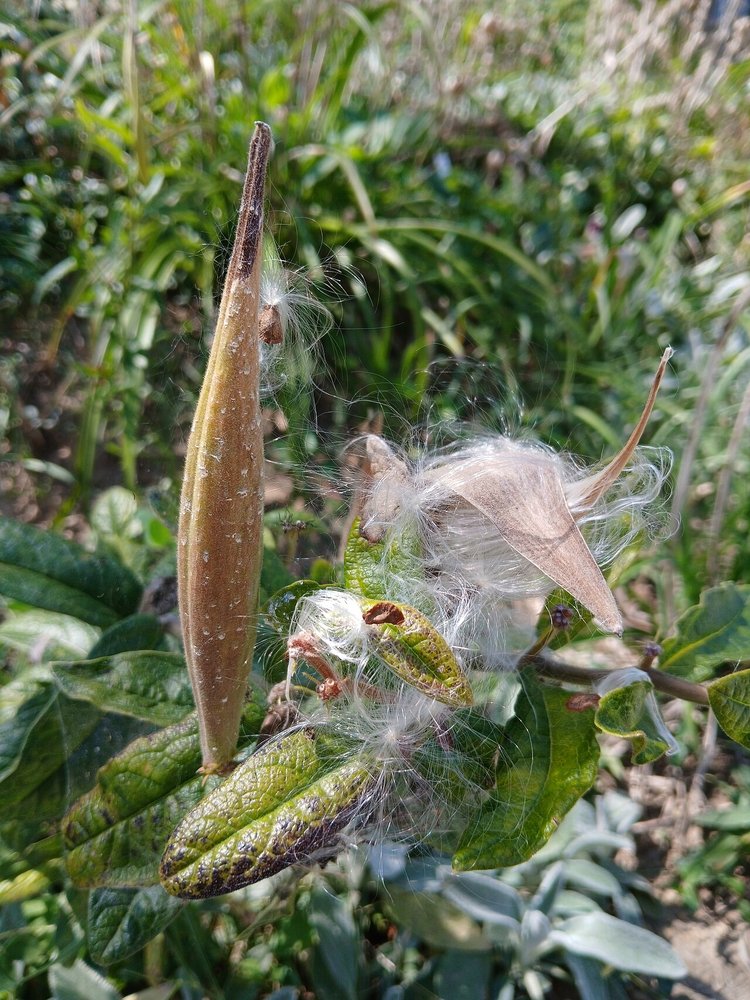
Seed: A hairy, spindle-shaped pod 7–14 cm (3–5½ in) long stands upright on a stalk that curves up, then splits to release seeds 8–9 mm long, each with a tuft of silky white hairs 3–5 cm (1–2 in) long that carries it on the wind. Pods turn brown and begin to open in late summer or early fall.
Germination: The seed needs a cold, moist period, but the sources differ on how long: the USDA plant guide and the Forest Service say three months of cold treatment or sowing outdoors in fall, and SDSU says fall sowing or 30 days in moist soil in a refrigerator. Seedlings usually bloom in their second year.
How do you identify Butterfly Milkweed?
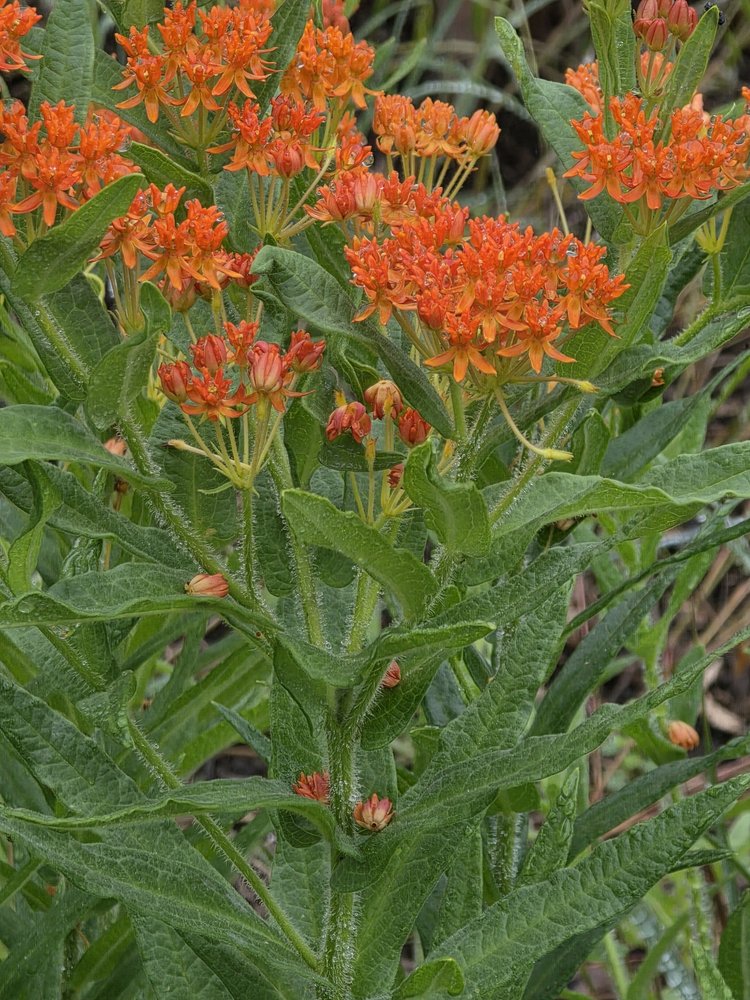
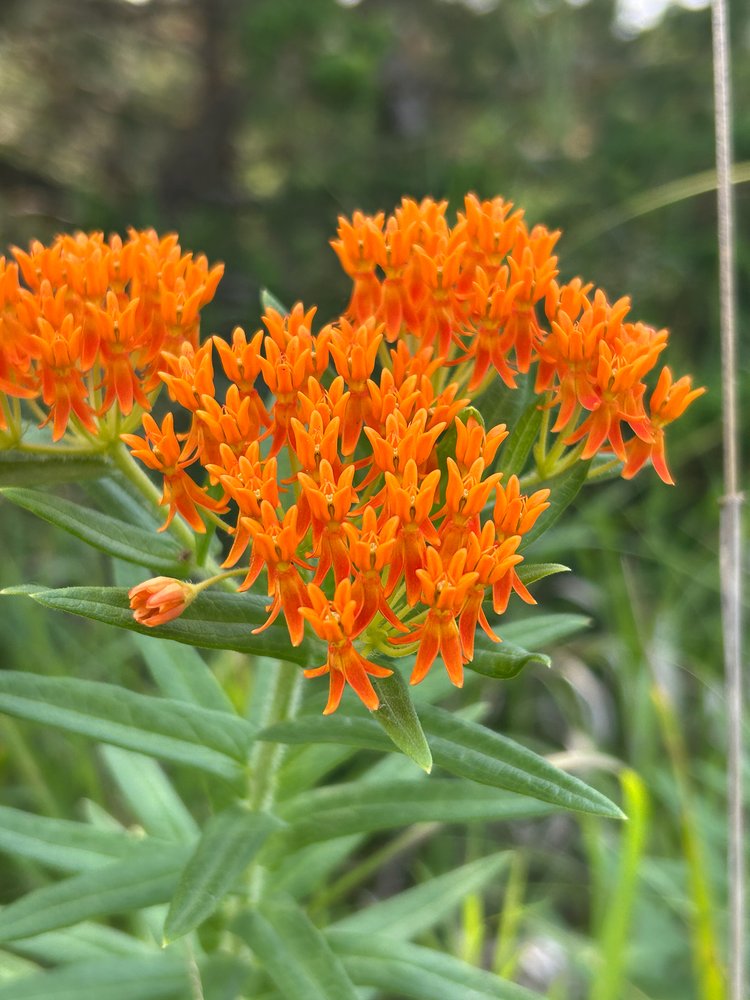
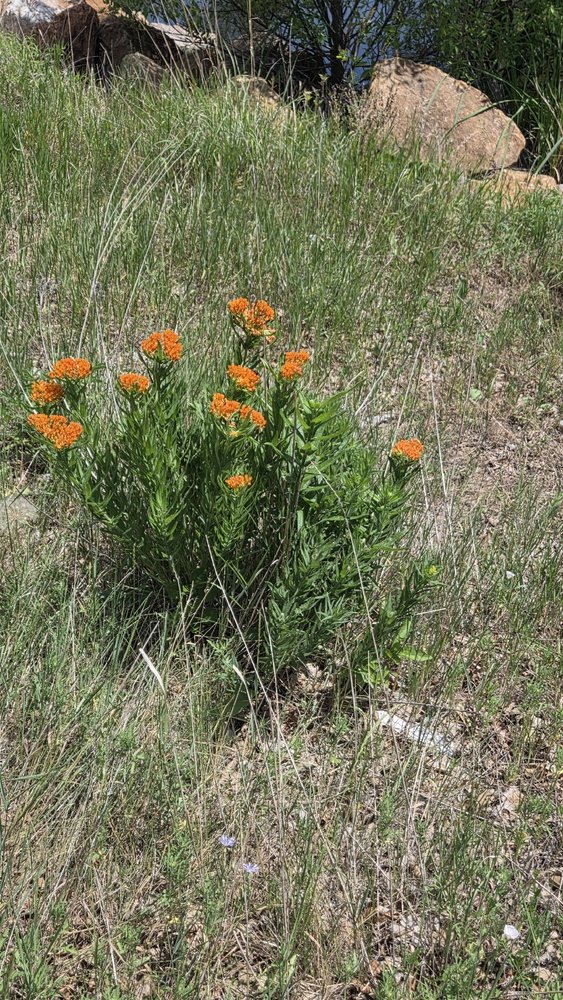
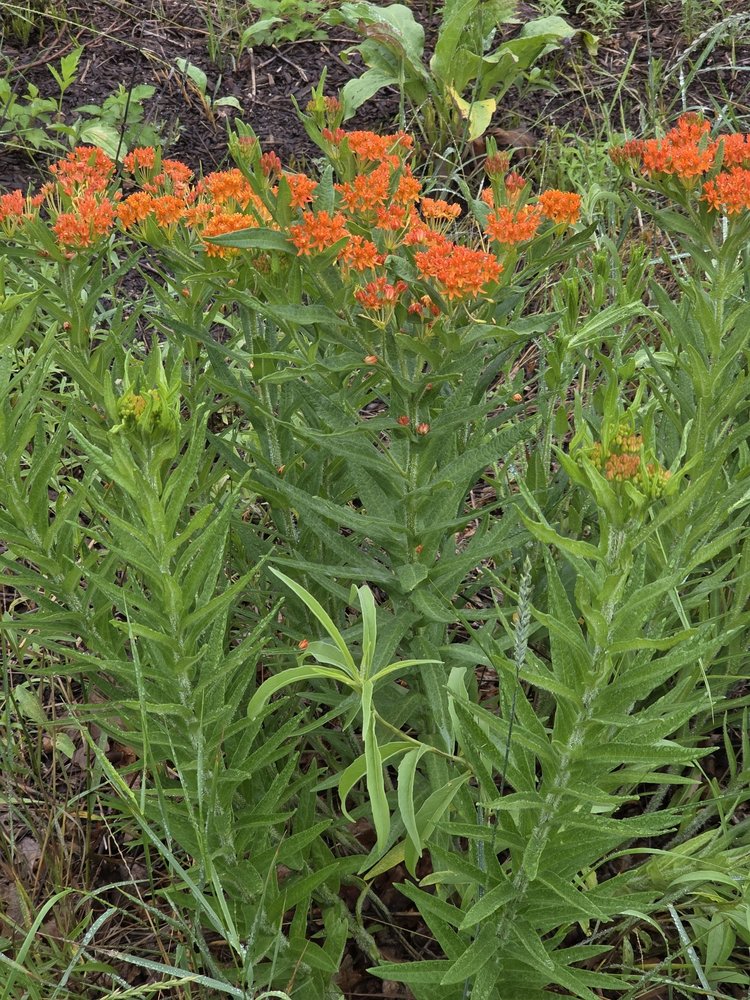
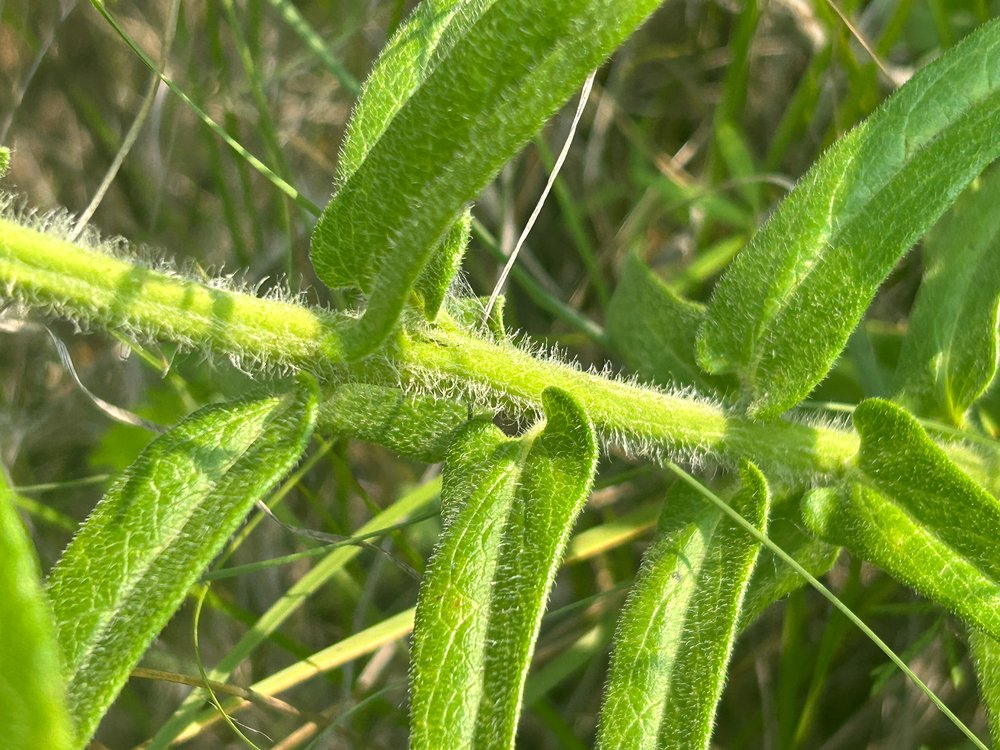
Break a leaf: the sap is clear and watery. That sets it apart from Showy Milkweed and the other milkweeds in this guide, which the Forest Service says have thick milky sap; Flora of North America calls the clear sap unusual in the genus. The flowers are bright orange, sometimes reddish or yellow, in flat-topped clusters of 5 to 27 at the stem tips and upper leaf axils, each with five petals bent down and a crown of five upright hoods, each hood with a thin horn arching over the center. The stems are stout, erect and densely hairy, one to many from a single crown, with crowded, alternate, nearly stalkless, lance-shaped leaves 2–12 cm (1–5 in) long that are hairy, most of all on the midrib beneath. The pods are hairy, spindle-shaped, 7–14 cm (3–5½ in) long and held upright.
When does it bloom?
June into September; SDSU gives May to August for South Dakota.
Where does it grow?
Dry, sandy or rocky soil on prairie, in open woodland and along roadsides. The Black Hills record is thin. The one Black Hills herbarium specimen in GBIF was collected in Fall River County in 1898. SDSU reports it from a few counties in eastern and western South Dakota, and it is on none of the National Park Service plant lists for Wind Cave, Jewel Cave, Mount Rushmore or Devils Tower. iNaturalist has 14 research-grade Black Hills records from 2017 to 2026, July to September; 11 of them were made at one spot in Custer State Park, and one is from Pennington County.
Other milkweeds in this guide
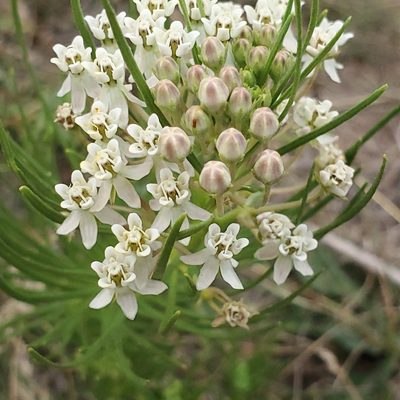
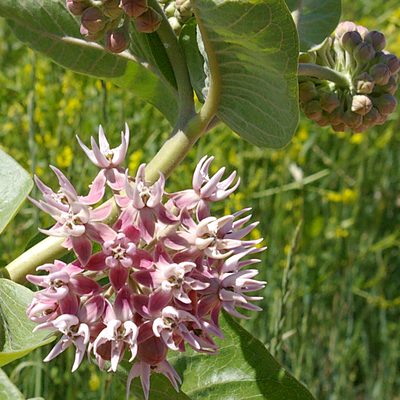
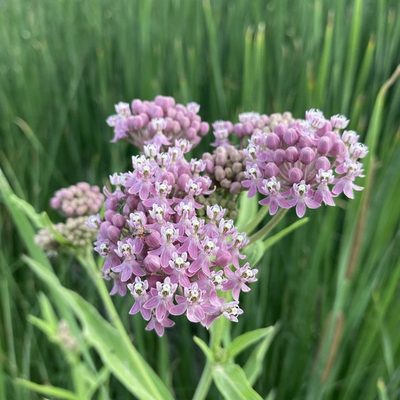
Dogbane family (Apocynaceae): 7 other plants in this guide
Sources: Flora of North America Vol. 14: Asclepias tuberosa — eFloras; Flora of North America Vol. 14: Asclepias tuberosa subsp. interior — eFloras; Asclepiadaceae: Asclepias tuberosa (R. Neil Reese) — SDSU Open PRAIRIE; Plant Guide: Butterfly Milkweed, Asclepias tuberosa (Stevens, 2001) — USDA NRCS National Plant Data Center; Plant of the Week: Butterfly Milkweed (Larry Stritch) — USDA Forest Service; Butterfly milkweed — Kansas Wildflowers and Grasses; Asclepias tuberosa (Butterfly-weed) — Minnesota Wildflowers; Asclepias tuberosa — Lady Bird Johnson Wildflower Center; Occurrence 3865230758: Williamson 1898, Fall River County — GBIF; Occurrence search: Asclepias tuberosa, South Dakota herbarium specimens — GBIF; NPSpecies checklist, Wind Cave National Park vascular plants (not listed) — National Park Service; NPSpecies checklist, Jewel Cave National Monument vascular plants (not listed) — National Park Service; NPSpecies checklist, Mount Rushmore National Memorial vascular plants (not listed) — National Park Service; NPSpecies checklist, Devils Tower National Monument vascular plants (not listed) — National Park Service; Research-grade Asclepias tuberosa observations in the Black Hills — iNaturalist; Asclepias tuberosa — Native American Ethnobotany Database (BRIT).