Swamp Milkweed Asclepias incarnata
Also called Swamp Silkweed, Marsh Milkweed, wahíŋheya íphiye (Lakota), waȟčáȟča hú bloká (Lakota)
Swamp Milkweed (Asclepias incarnata) is a tall native perennial of wet ground, with narrow, opposite, lance-shaped leaves, milky sap and rounded clusters of small bright pink flowers at the top of the stem from June into September. In the Black Hills it grows in marshes, on wet canyon floors and along streams, lakes and ditches, with herbarium records from Fall River, Lawrence, Custer and Pennington counties and a place on the National Park Service's plant list for Wind Cave National Park.
Free photos from other sources
| Family | Apocynaceae · Dogbane |
|---|---|
| Status | Native perennial |
| Blooms | June into September |
| Height | 70–200 cm (28–79 in) |
| Where | Marshes, wet meadows, stream banks, lake and pond edges and ditches, in full sun |
| Also called | Swamp Silkweed, Marsh Milkweed, wahíŋheya íphiye (Lakota), waȟčáȟča hú bloká (Lakota) |
| Toxicity | The milky sap carries cardenolides (heart toxins), though swamp milkweed's levels are very low; sheep fed it showed a faster heart rate and shortness of breath. |
| Traditional use | Black Elk and Flying By (1998) record the Lakota names wahíŋheya íphiye and waȟčáȟča hú bloká and say the powdered root is made into a salve for swollen glands and a root infusion is used for asthma, rheumatism and a weak heart. The USDA plant guide adds that the Iroquois used a root infusion on the skin and made the stem into a cord for pulling teeth. |
Roots, seeds & germination
Root: A single crown with fleshy white roots that branch little. The USDA plant guide says it does not spread from its roots, though Illinois Wildflowers calls the roots rhizomatous and says clonal patches occasionally form.
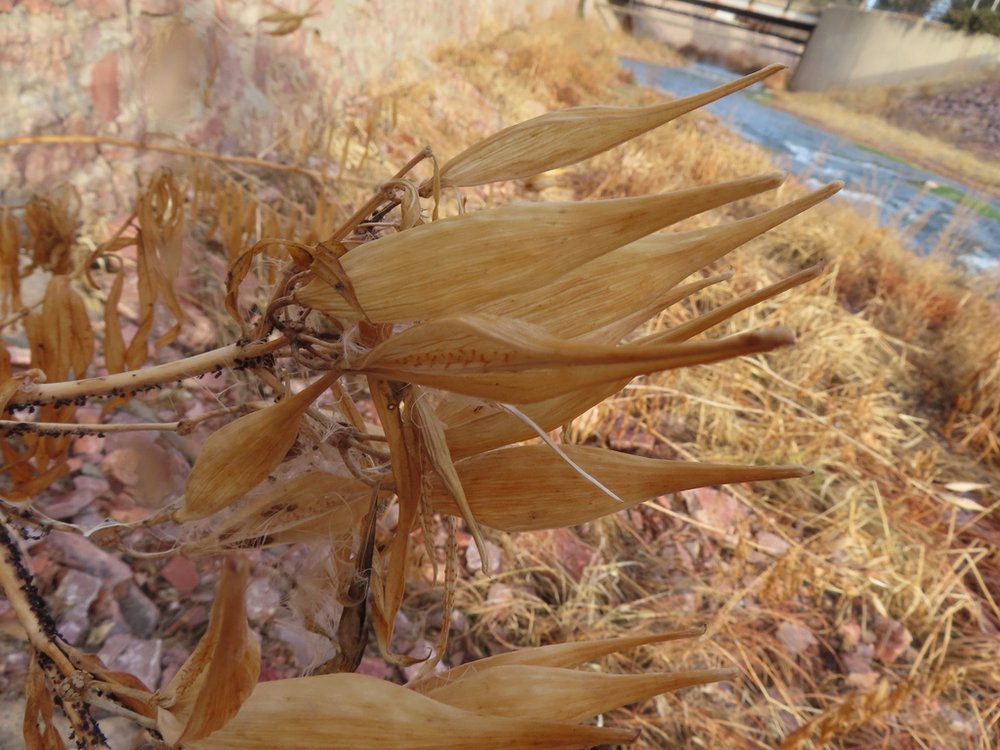
Seed: Each slender, upright pod, 5–8 cm (2–3 in) long and tapered at both ends, turns brown in fall and splits along one seam to release flat brown seeds 6–9 mm (¼–⅜ in) long, each with a tuft of long silky white hairs that carries it on the wind. A plant makes about 270 seeds, and they ripen and shed over a long period.
Germination: SDSU recommends about 30 days of cold, moist treatment before spring sowing; seed sown in fall sprouts the next spring. The USDA plant guide says to sow just below the surface and that plants can set seed in their first year and live 5 to 10 years.
How do you identify Swamp Milkweed?
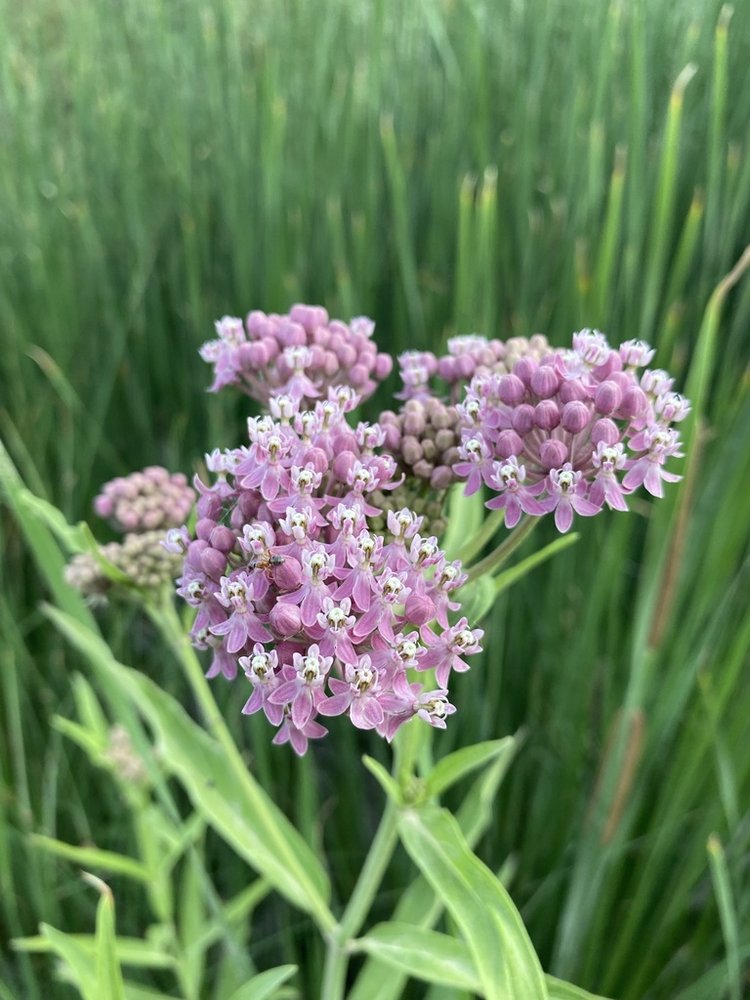
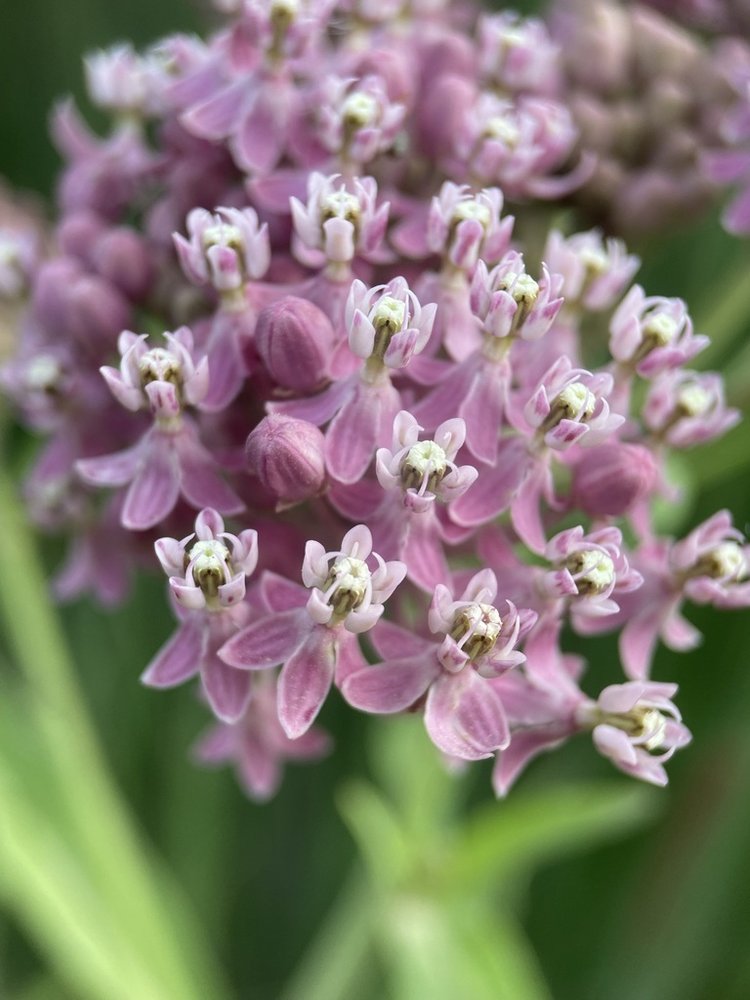
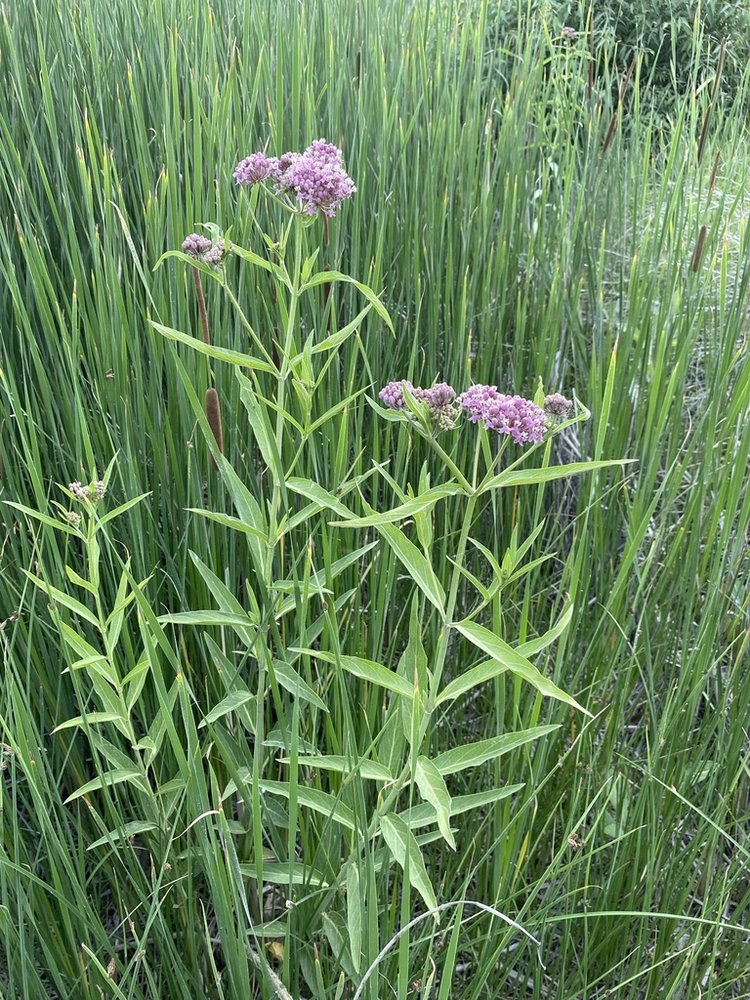
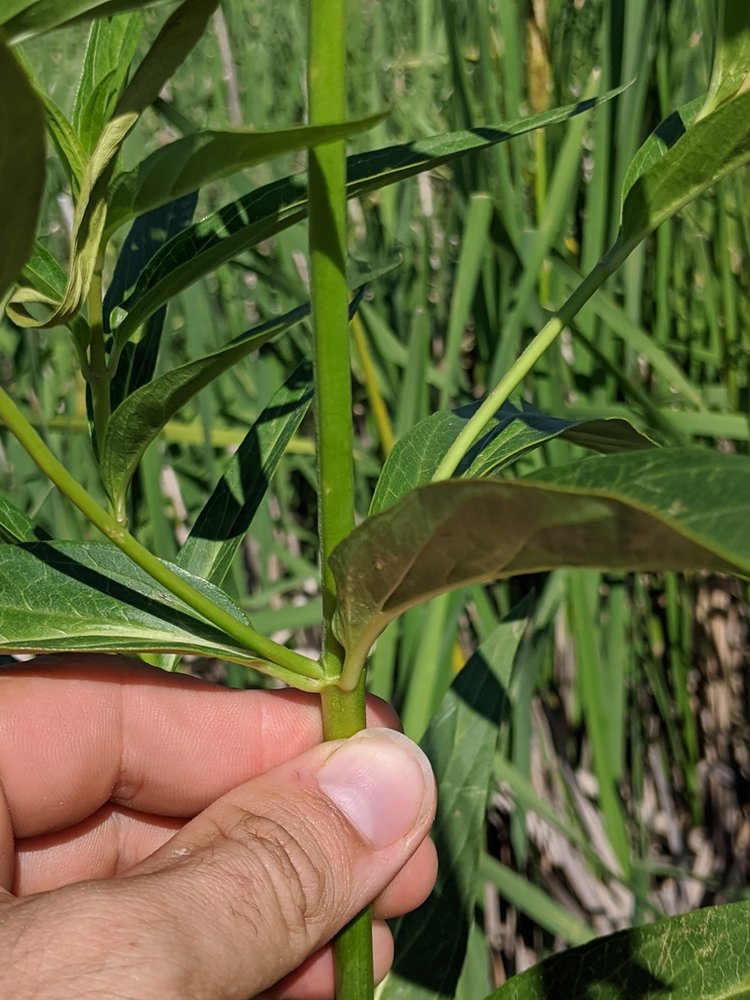
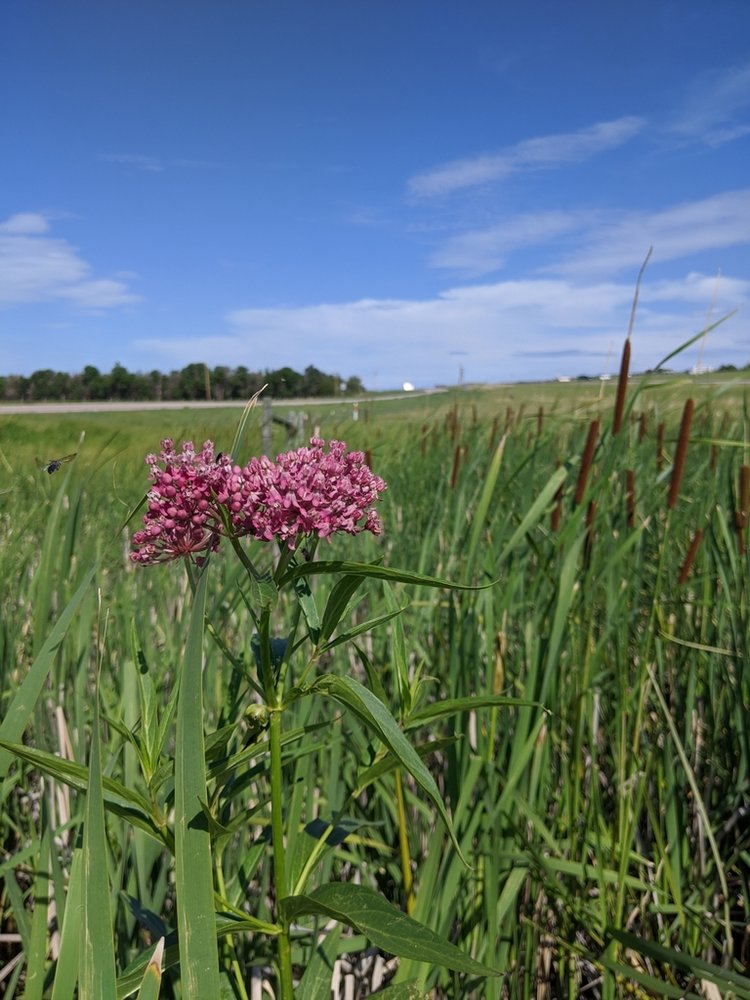
Look for rounded clusters of 10 to 40 small flowers, 5–8 cm (2–3 in) across, at the top of a stem that usually branches near the top. Each flower is about 1 cm (⅜ in) tall: five bright pink petals bend sharply back, and above them sit five pinkish or whitish hoods, each with a needle-like white horn curving over the short central column. The leaves grow in pairs, narrow and lance-shaped, 5–15 cm (2–6 in) long but only 1–3 cm (⅜–1¼ in) wide, hairless and smooth-edged, on stalks under 2 cm (¾ in). The stem is mostly hairless, 70–200 cm (2–6½ ft) tall, and every part bleeds white milky juice when broken. The pods are slender and upright, 5–8 cm (2–3 in) long, tapered at both ends. Minnesota Wildflowers says the long, narrow leaves set it apart from the other pink-flowered milkweeds; Showy Milkweed has broad oval leaves 8–20 cm (3–8 in) long and 2.5–10 cm (1–4 in) wide, thickly hairy underneath, and Common Milkweed is shorter, less branched and wider-leaved.
When does it bloom?
June into September.
Where does it grow?
Marshes, wet meadows, stream banks, lake and pond edges and ditches in full sun; SDSU calls it common in marshes and along the banks of lakes, ponds and other waterways throughout South Dakota. The National Park Service lists it at Wind Cave National Park. Herbarium specimens from 1908 to 2010 come from Fall River, Lawrence, Custer and Pennington counties in South Dakota and Weston County in Wyoming, most of them from Fall River County. Their labels name a wet canyon floor, a roadside swamp, a marsh on wet clay beside a lake, a clump beside an irrigation ditch, creek and stream banks, a marshy spot by a waterfall and the wet margins of a warm-water river, at about 910–1,340 m (3,000–4,400 ft). iNaturalist has 38 research-grade records within 100 km of the central Hills.
Other milkweeds in this guide
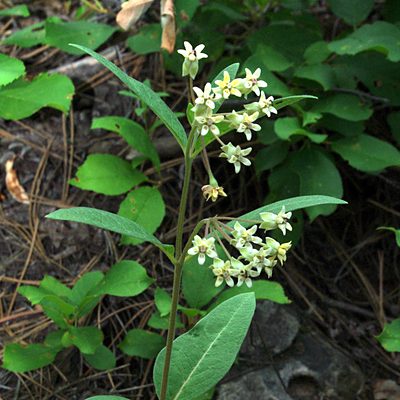
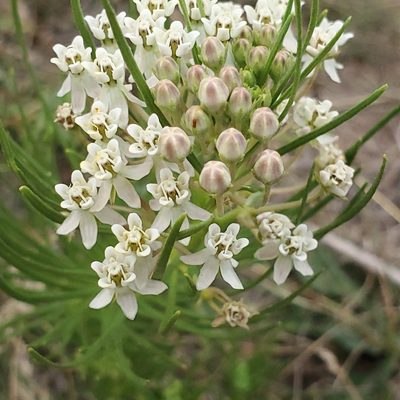
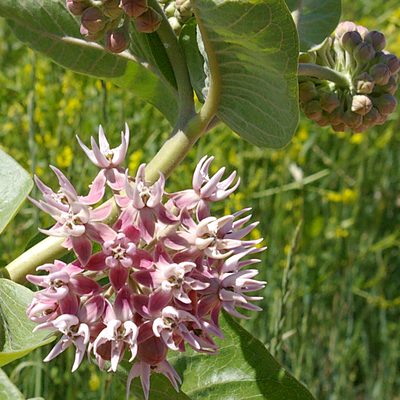
Dogbane family (Apocynaceae): 7 other plants in this guide
Sources: SDSU Open PRAIRIE, South Dakota Native Plant Research: Asclepias incarnata, swamp milkweed (R. Neil Reese); SDSU Open PRAIRIE, South Dakota Native Plant Research: Asclepias speciosa, showy milkweed (for the comparison); USDA NRCS Plant Guide: Swamp Milkweed, Asclepias incarnata (2025); USDA PLANTS Database: Asclepias incarnata (ASIN); Minnesota Wildflowers: Asclepias incarnata (Swamp Milkweed); Kansas Wildflowers and Grasses: Asclepias incarnata; Illinois Wildflowers: Swamp Milkweed (Asclepias incarnata); Black Elk and Flying By 1998, Culturally Important Plants of the Lakota (SD PUC docket HP14-001), entry 36; NPSpecies checklist, Wind Cave National Park vascular plants; GBIF occurrence search: Asclepias incarnata herbarium specimens, South Dakota and Wyoming; GBIF specimen 3454978763: Pennington County, 1908, in flower and fruit; GBIF specimen 1701753784: Custer County, 1927; GBIF specimen 2873276411: Lawrence County, 1933, wet canyon floor, 4,000 ft; GBIF specimen 2873276421: Lawrence County, 1941, roadside swamp, 3,400 ft; GBIF specimen 3034737684: Lawrence County, 1977, marsh on wet clay next to a lake, flowering July 5; GBIF specimen 2512285529: Fall River County, 1924, clump beside an irrigation ditch, 3,000 ft, flowering; GBIF specimen 3454978692: Fall River County, 1982, wet margins of a warm-water river, flowering; GBIF specimen 5159152875: Fall River County, 1986, marshy area along a waterfall, in flower; GBIF specimen 176882666: Weston County, Wyoming, 1982, east side of a reservoir, 4,400 ft; GBIF specimen 997426872: Black Hills National Forest, Fall River County, 2010, 1,008 m; iNaturalist: research-grade Asclepias incarnata observations within 100 km of the Black Hills.