One-Flower Wintergreen Moneses uniflora
Also called One-flowered Wintergreen, One-flowered Pyrola, Single Delight
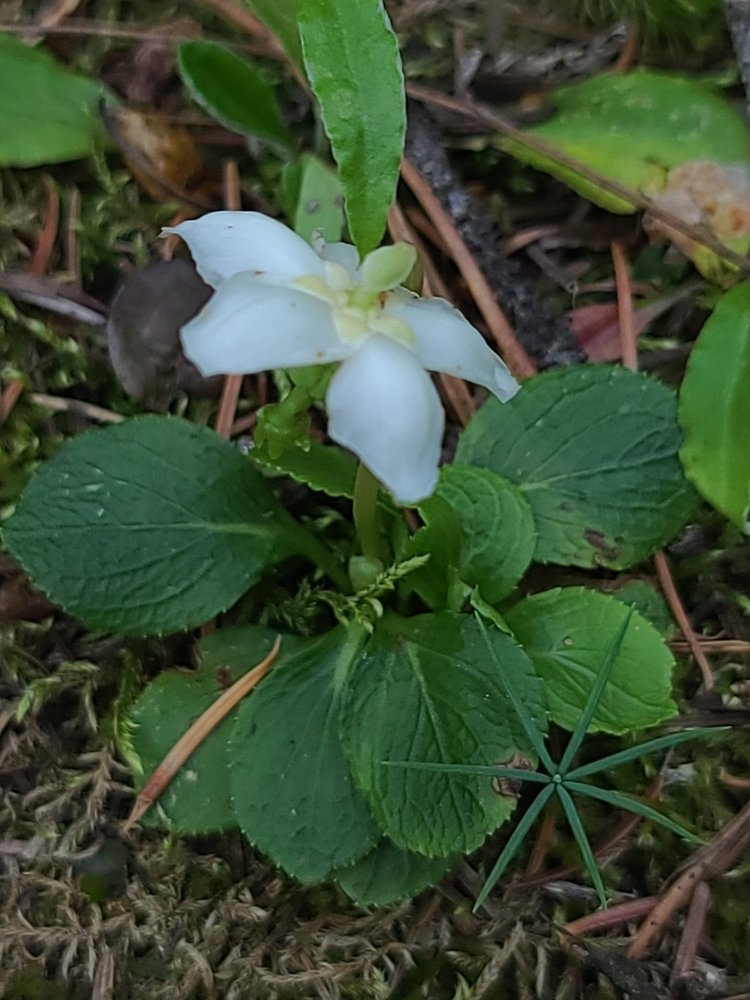
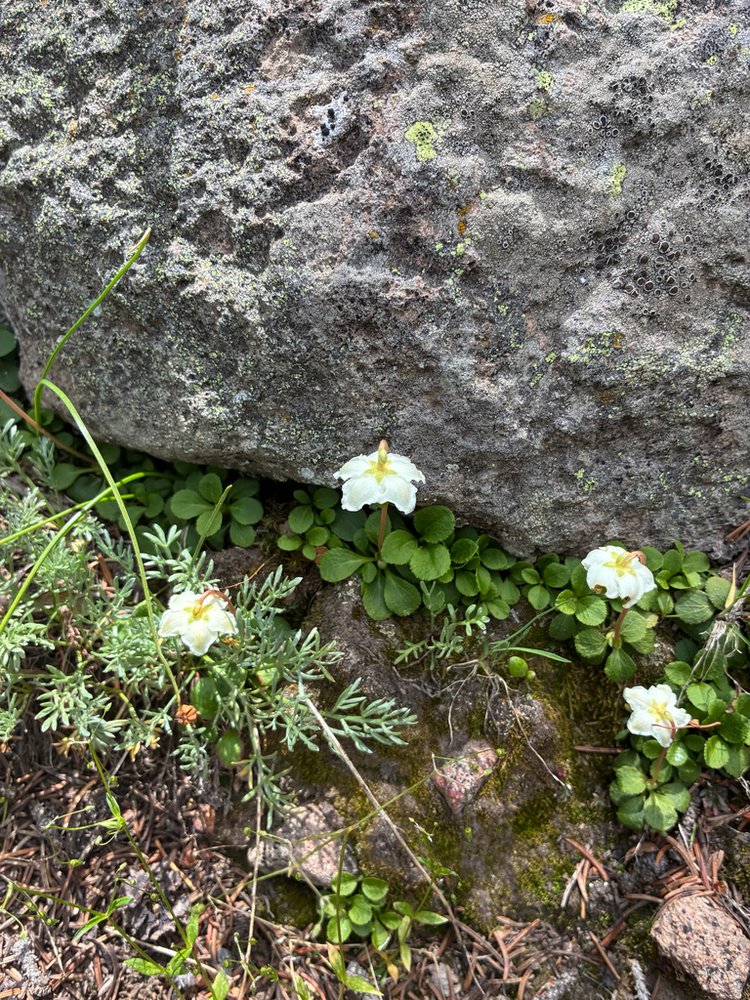
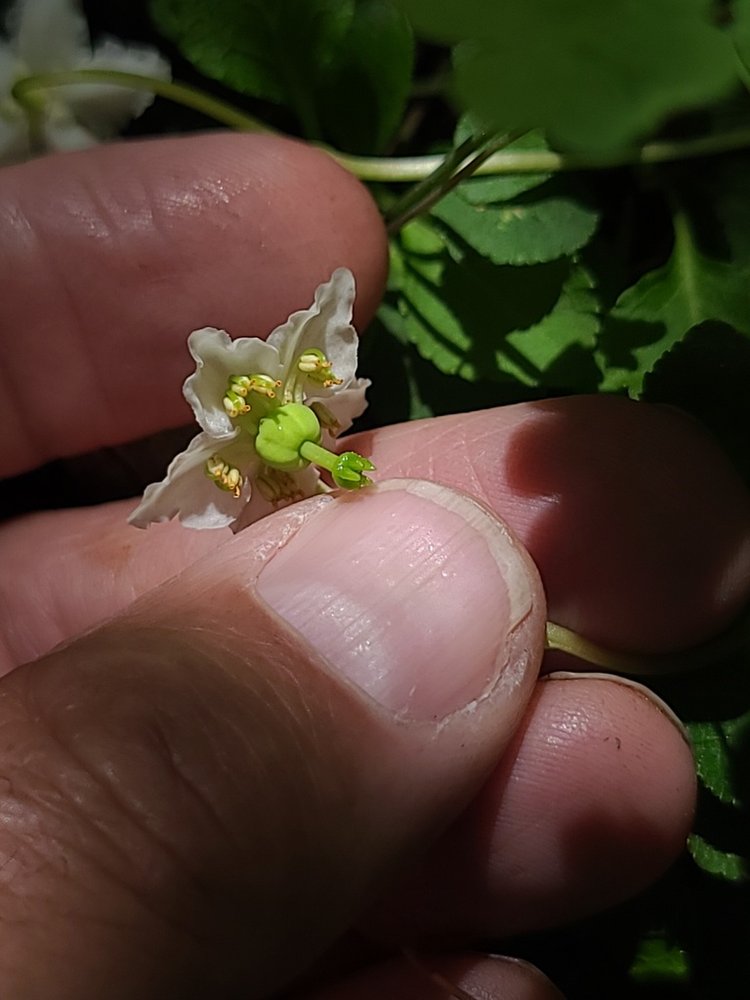
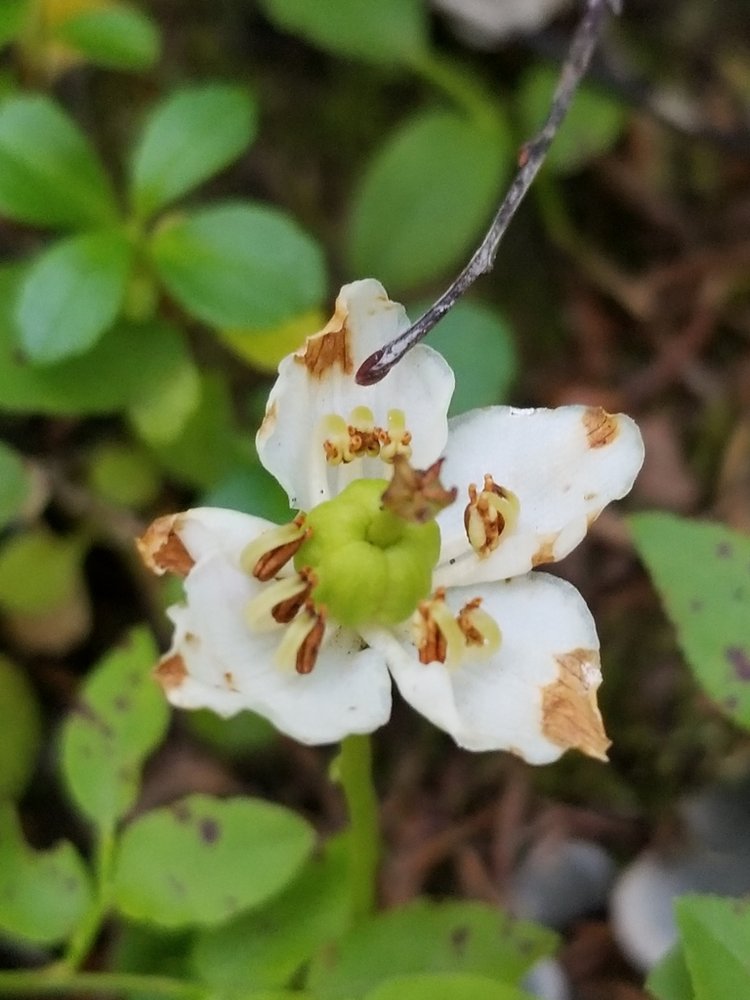
One-Flower Wintergreen (Moneses uniflora) is a small native plant with a single white flower, about 1.3–1.9 cm (½–¾ in) wide, that nods face down on a slender stalk above basal, nearly round leaves. It blooms from June into August, and in the Black Hills it grows in moist, mossy, shaded spruce forest.
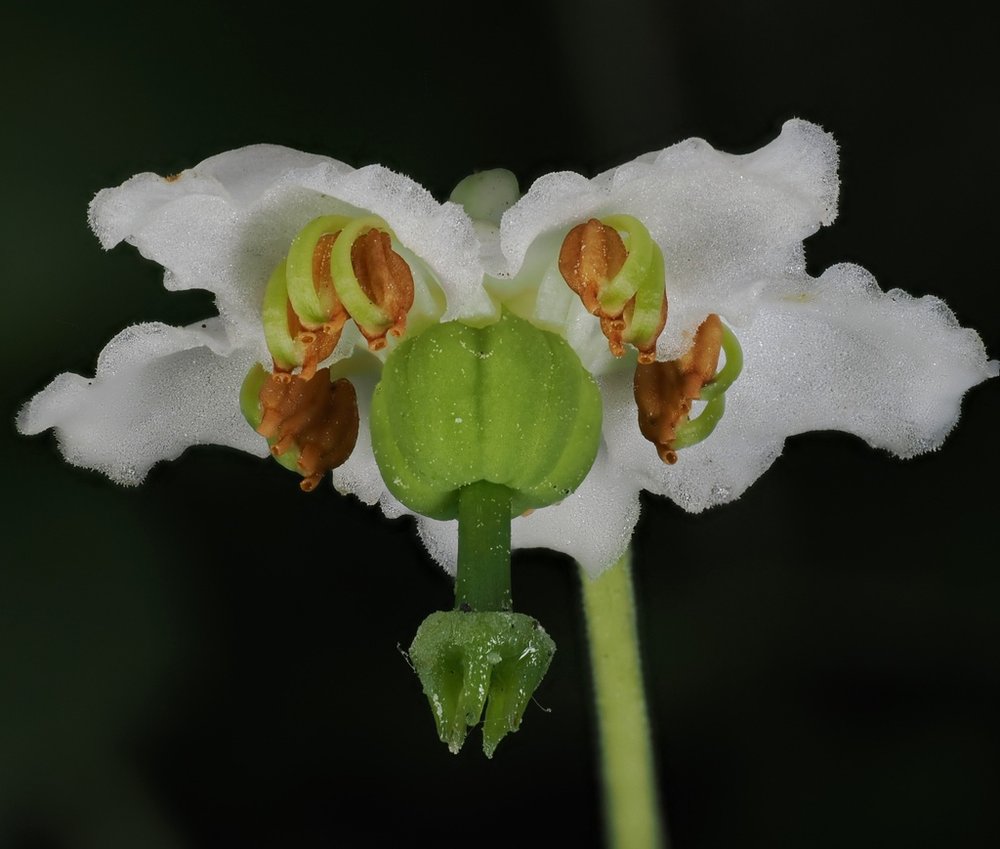
Free photos from other sources
| Family | Ericaceae · Heath |
|---|---|
| Status | Native perennial |
| Blooms | June into August |
| Height | 3–30 cm (1–12 in) |
| Where | Moist, mossy, shaded spruce forest |
| Also called | One-flowered Wintergreen, One-flowered Pyrola, Single Delight |
| Synonym | Pyrola uniflora |
| Traditional use | Moerman's database records that the Kwakiutl used a poultice of the chewed or pounded plant on swellings and to draw blisters (Turner and Bell 1973), the Coast Salish used a poultice of the leaves to draw pus from boils (Turner and Bell 1971), and the Haisla and Hanaksiala chewed the plant for sore throats (Compton 1993). |
| Note | South Dakota Game, Fish and Parks lists this plant as rare in the state. This page gives no locations. |
Traditional use: first drafted by Google AI, then checked against the sources on this page.
Roots, seeds & germination
Root: Flora of North America says the plants arise from horizontal roots.
Seed: The fruit is a round capsule 4–8 mm (⅛–⅓ in) long, according to Flora of North America.
How do you identify One-Flower Wintergreen?
Look for one nodding, five-petaled white flower on a smooth stalk that hooks downward just below the flower, where a small bract sits. The petals are egg-shaped with wavy edges, and in the middle is a large, round, green ovary with a stout style and a five-lobed stigma, ringed by ten hooked stamens. The dark green leaves are oval to nearly round, with smooth to finely wavy-toothed edges, 0.8–1.9 cm (⅓–¾ in) long, in one to three sets at the base of the plant.
When does it bloom?
June into August.
Where does it grow?
Moist, mossy, shaded forest in the Black Hills, spruce, including white spruce: slopes facing north and northwest, shaded stream banks and floodplains, and moss hummocks. Flora of North America gives moist forests and bogs from 10 to 3,500 m (33–11,500 ft) across its whole range.
Heath family (Ericaceae): 5 other plants in this guide
Sources: Flora of North America Vol. 8: Moneses uniflora (Freudenstein), eFloras; Minnesota Wildflowers: Moneses uniflora (One-flowered Pyrola); South Dakota Game, Fish and Parks: Rare Plants of South Dakota; Native American Ethnobotany Database (BRIT): Moneses uniflora; GBIF Backbone Taxonomy: Moneses uniflora (usage key 2888298); GBIF occurrence search: Moneses uniflora, South Dakota records (herbarium specimens and observations); GBIF specimen 5103625908: Magrath 1972, spruce woods, "mossy, spongy soil"; GBIF specimen 2512333149: Mayer 2006, "Steep, northwest facing drainage ... Picea glauca dominated slope"; GBIF specimen 3454989373: Ode 1991, "Moist, mossy hummock in densely shaded spruce floodplain forest"; GBIF specimen 2512285284: Ode 1989, "densly shaded low stream bank in moss"; GBIF specimen 2512284286: McIntosh 1930, "Amid patches of Climacium under spruce beside stream"; GBIF specimen 2512331889: Over 1924, "Shady, mossy places".