Pipsissewa Chimaphila umbellata
Also called Prince's-pine
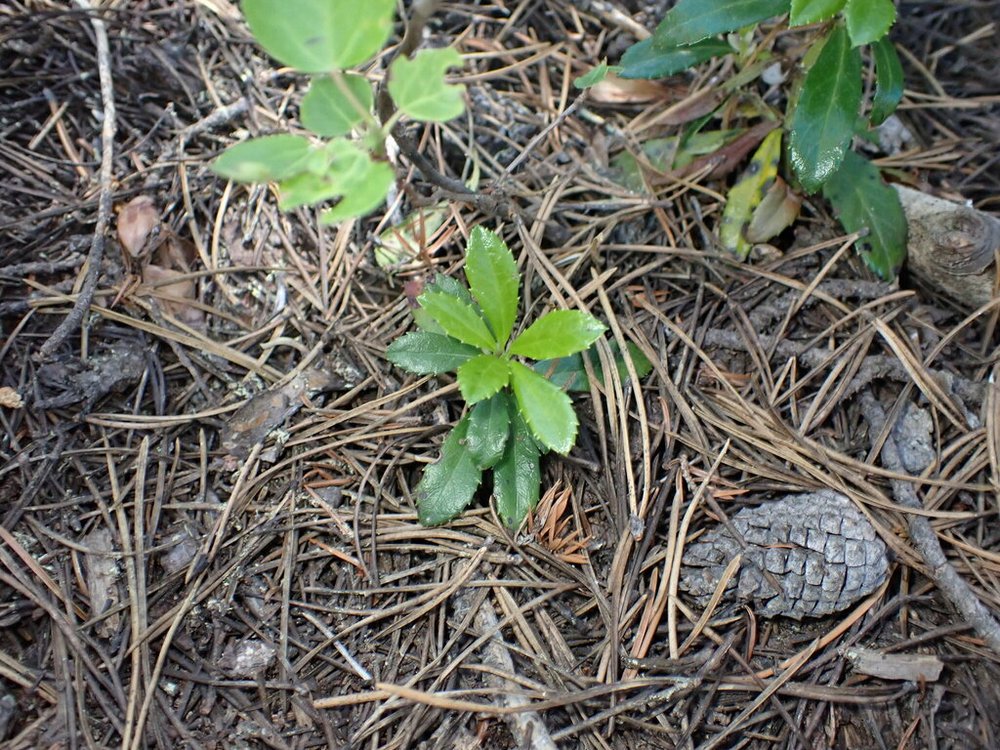
Pipsissewa (Chimaphila umbellata) is a low, evergreen plant of shady conifer woods, with shiny, sharply toothed leaves in whorls and small clusters of nodding white flowers, pink at the base, that open from June into August. In the Black Hills, herbarium specimens come from the northern Hills, in pine, spruce and aspen woods.
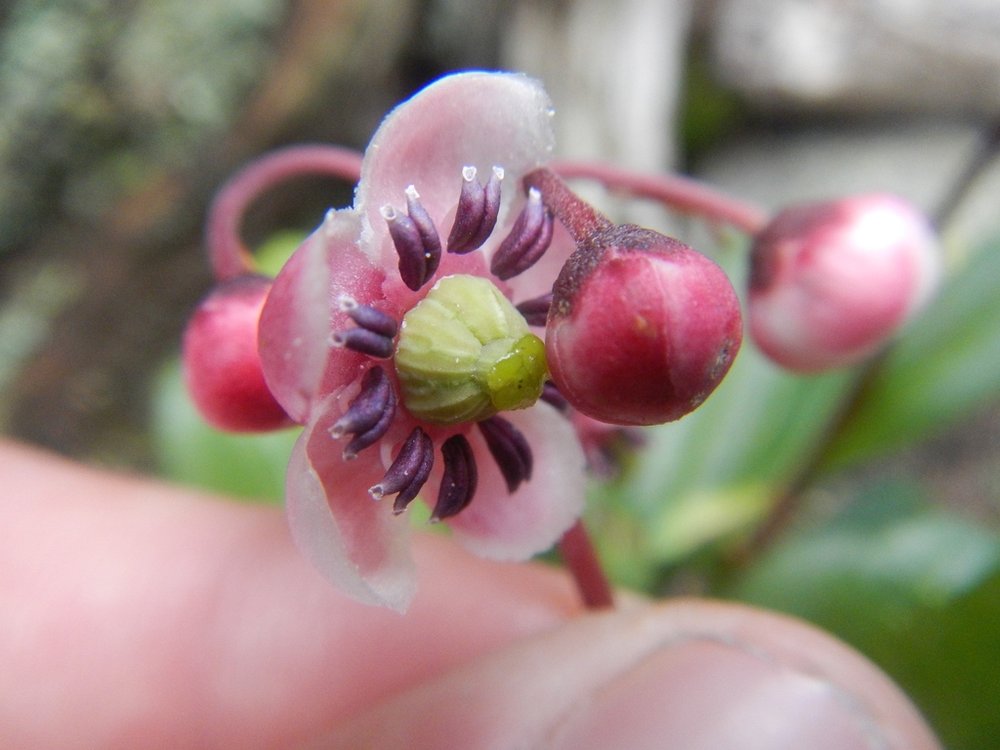
Free photos from other sources
| Family | Ericaceae · Heath |
|---|---|
| Status | Native evergreen perennial |
| Blooms | June into August |
| Height | 8–45 cm (3–18 in) |
| Where | Dry, shaded conifer woods; in the Black Hills, pine, spruce and aspen woods, including north-facing slopes |
| Also called | Prince's-pine |
| Traditional use | Moerman's ethnobotany database (BRIT) records that the Blackfoot smoked the dried leaves as a favorite smoking tobacco (McClintock 1909) and used the leaves in a tobacco mixture (Johnston 1987), and that the Woods Cree of Saskatchewan used a decoction of the plant for backaches (Leighton 1985). |
Traditional use: first drafted by Google AI, then checked against the sources on this page.
Roots, seeds & germination
Root: It spreads by woody stems that run along the ground and root as they go, forming colonies; the Lady Bird Johnson Wildflower Center gives these stems as up to about 45 cm (18 in) long.
Seed: The fruit is a dry, upright capsule that splits into 5 sections and holds on through the winter, topped by a button-like cap that is the old stigma.
How do you identify Pipsissewa?
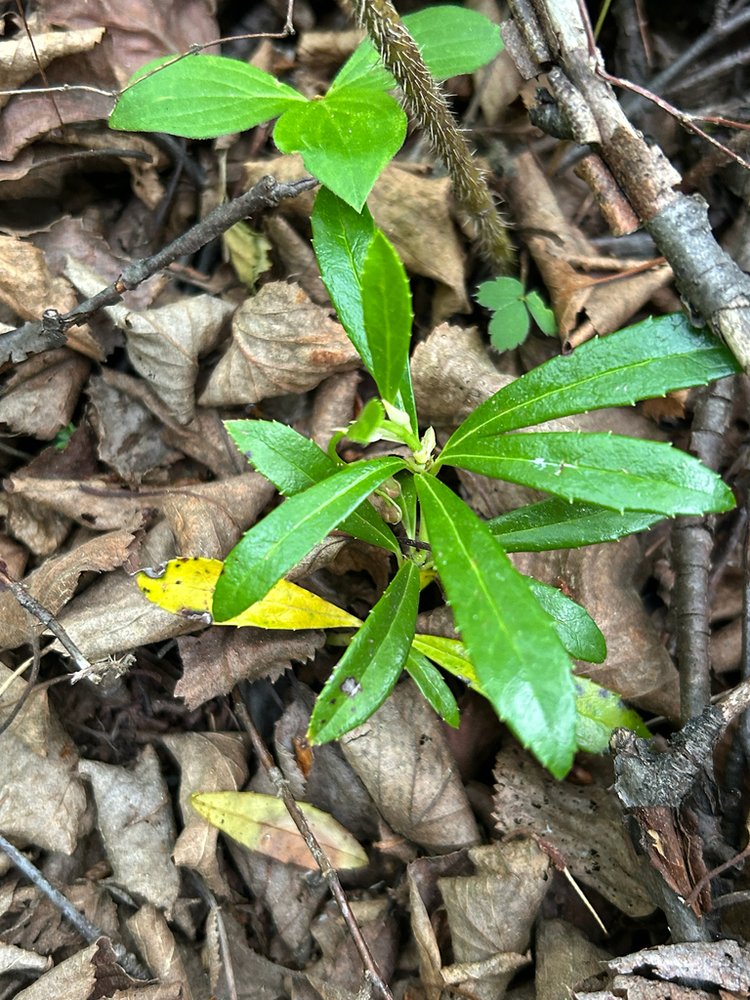
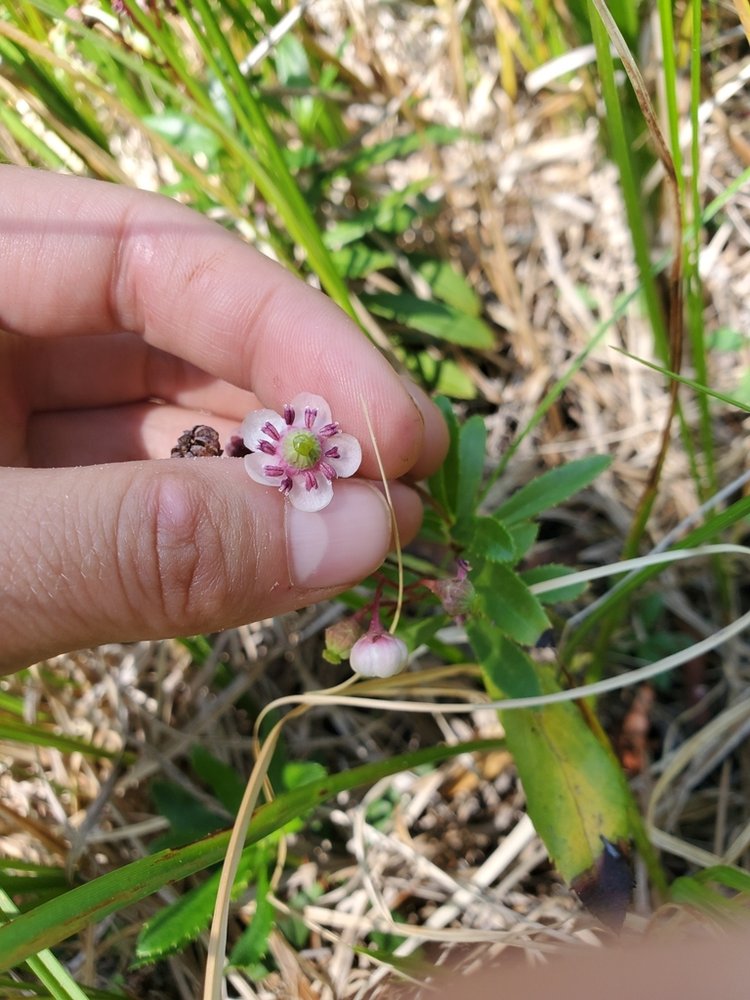
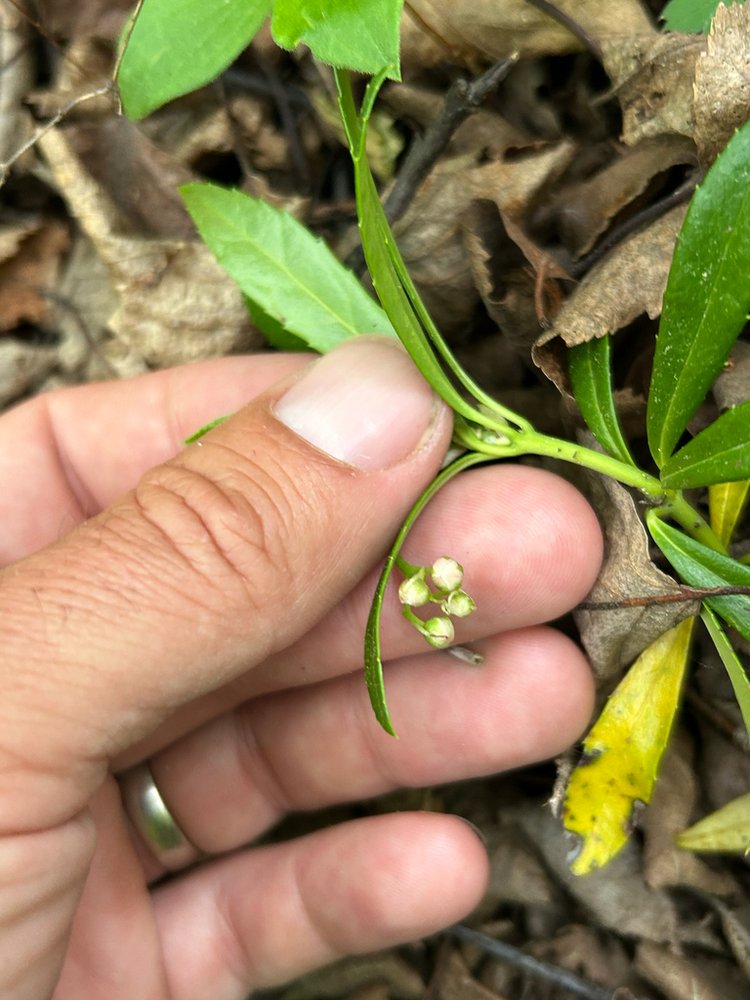
Look for a low plant with a woody stem and shiny, dark green, evergreen leaves 3–5 cm (1¼–2 in) long, with sharp teeth, set opposite or in whorls of 3 to 8. Three to seven nodding flowers hang on slender stalks held above the leaves. Each is 13–19 mm (½–¾ in) across, with 5 white petals that are pink at the base, spreading like an umbrella around a plump green center with a ring of 10 prominent anthers. After bloom, the flowers turn into upright, brown, 5-sectioned capsules about 6 mm (¼ in) wide that stay on the stalk through winter. Pink Wintergreen, also in this guide, belonged to the same old plant family; this page makes no other comparison.
When does it bloom?
June into August.
Where does it grow?
Dry woods in part shade to shade. In the Black Hills the specimens on record are from Lawrence County in the northern Hills, at about 1,500–1,800 m (5,000–6,000 ft), in ponderosa pine and white spruce forest, and in aspen understories, on some north-facing slopes and in moist ravines. Flora of North America lists it for South Dakota and Wyoming, in dry coniferous forest.
Other flowers to compare
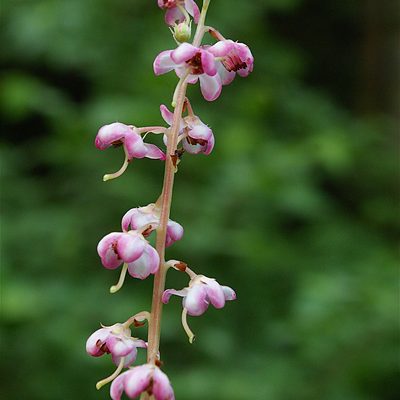
Heath family (Ericaceae): 5 other plants in this guide
Sources: Minnesota Wildflowers: Chimaphila umbellata (Pipsissewa); Flora of North America Vol. 8: Chimaphila umbellata, eFloras; Flora of North America Vol. 8: Chimaphila umbellata subsp. umbellata, eFloras; Lady Bird Johnson Wildflower Center: Chimaphila umbellata (pipsissewa); USDA PLANTS: Chimaphila umbellata (CHUM); GBIF specimen 3454985207: Schneeweis 1967, aspen understory in the northern Black Hills, flowering; GBIF specimen 5159154159: Todd 1975, Deer Mountain, white flowers; GBIF specimen 2512333493: Trillium Inc. 2009, northwest-facing slope in ponderosa pine and white spruce forest, flowering; GBIF specimen 3454984588: Brooks 1969, spruce woods above a creek, flowering; GBIF specimen 4061098274: van Ee 2013, Lawrence County, 1,524 m; GBIF specimen 3091288670: Kravig 1970, deep spruce forest in limestone, 1,829 m; Native American Ethnobotany Database (BRIT): Chimaphila umbellata.