Smooth Yellow Violet Viola pubescens var. scabriuscula also listed as Viola eriocarpa
Also called Yellow Wood Violet, Common Yellow Violet, Yellow Forest Violet
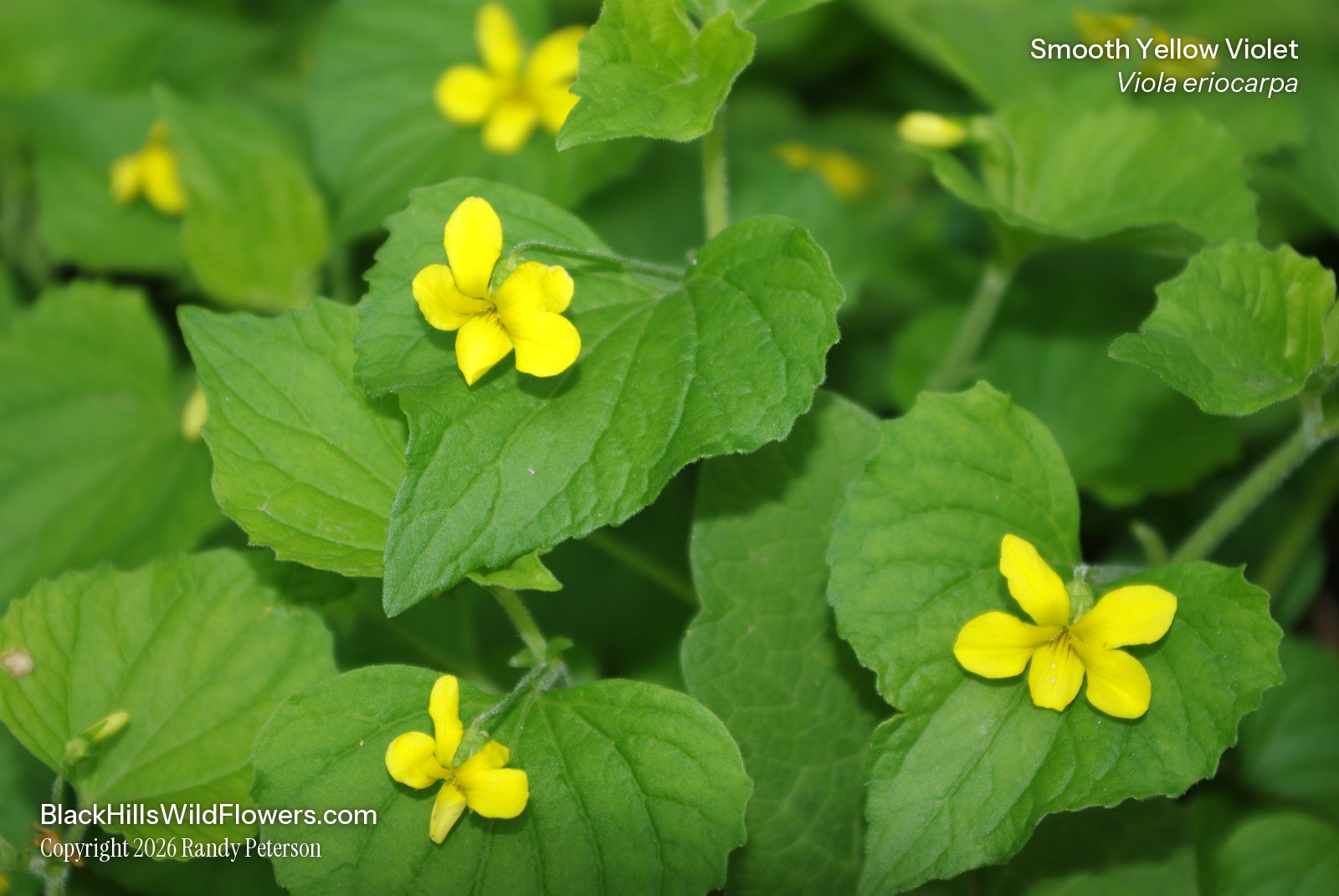
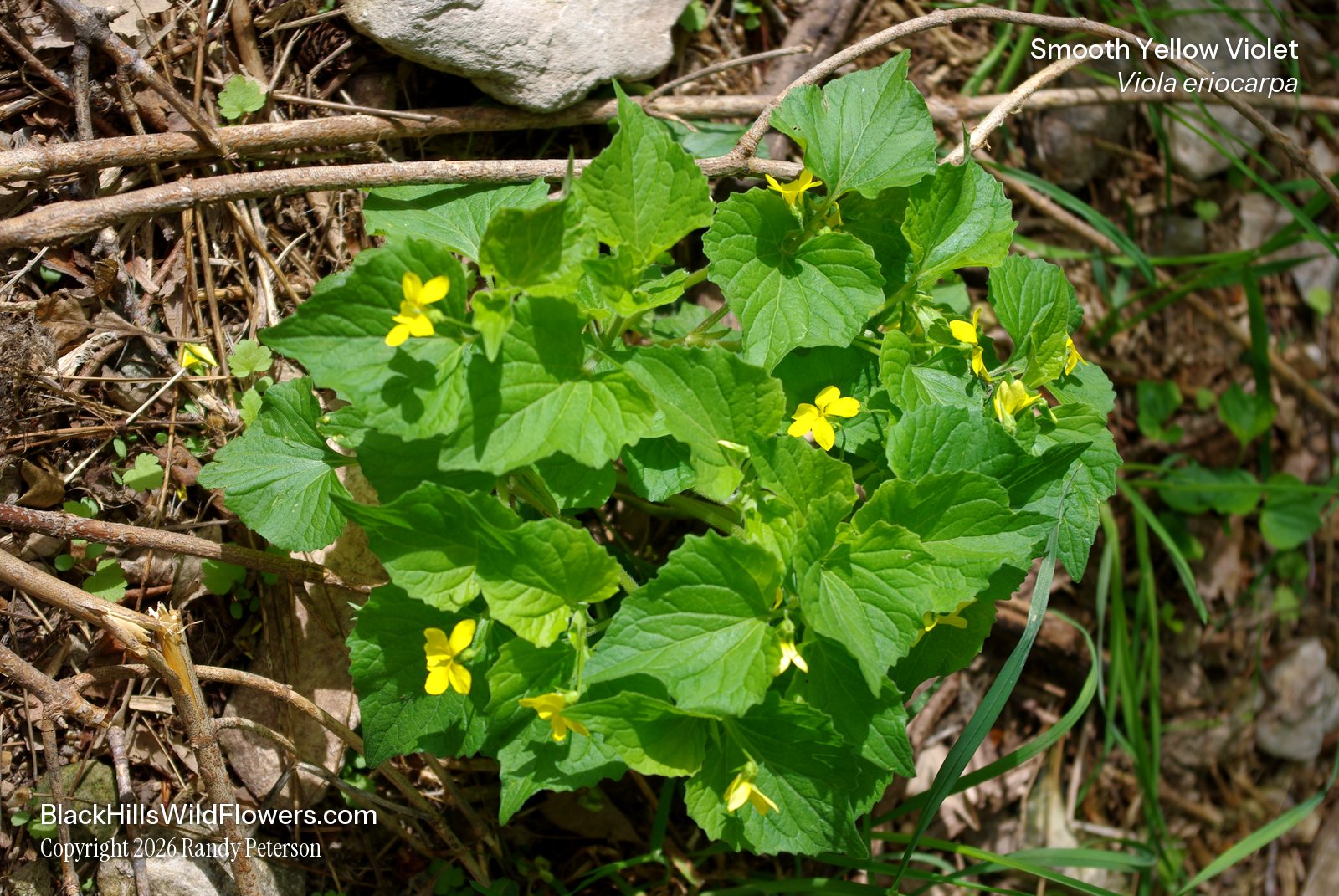
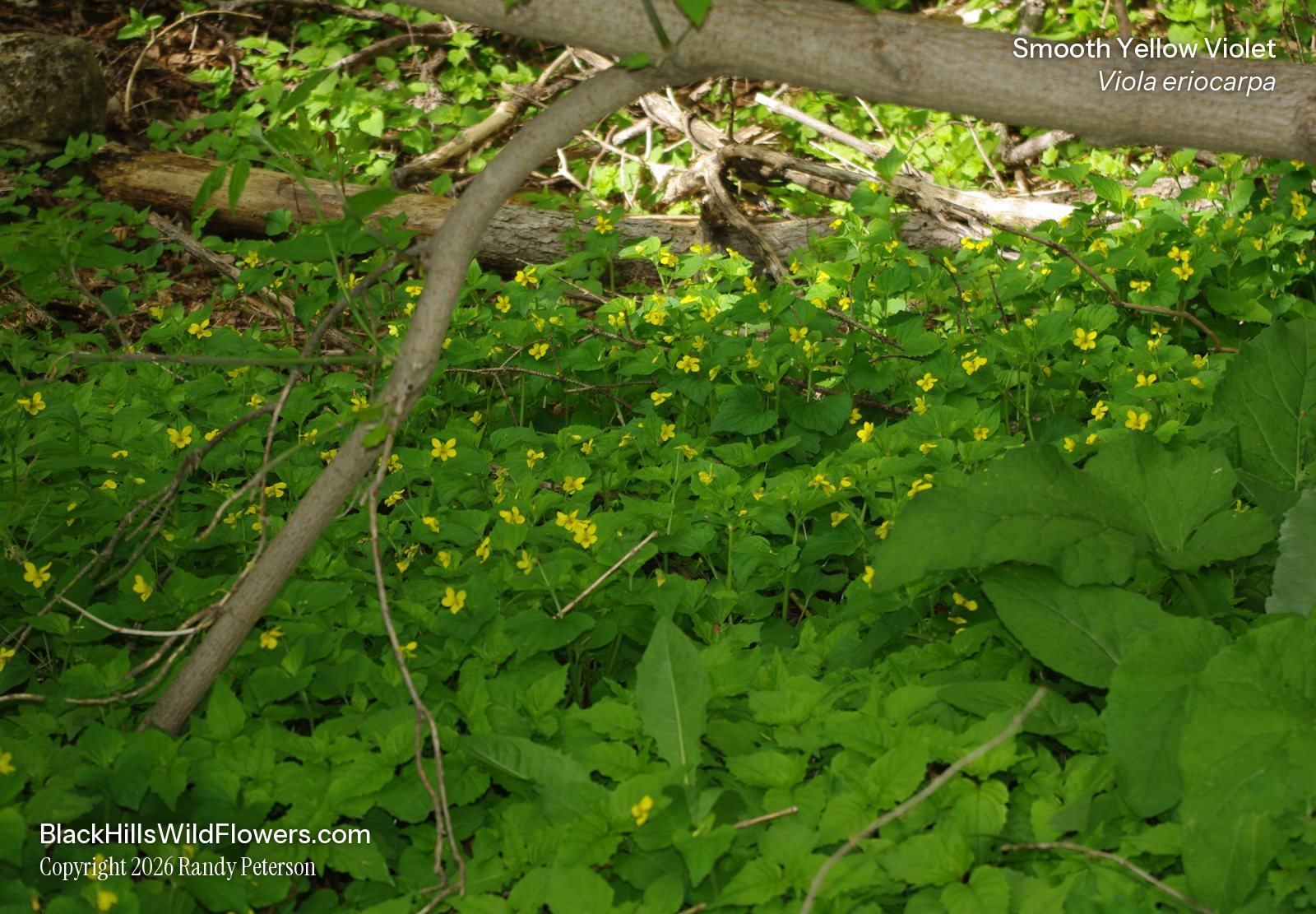
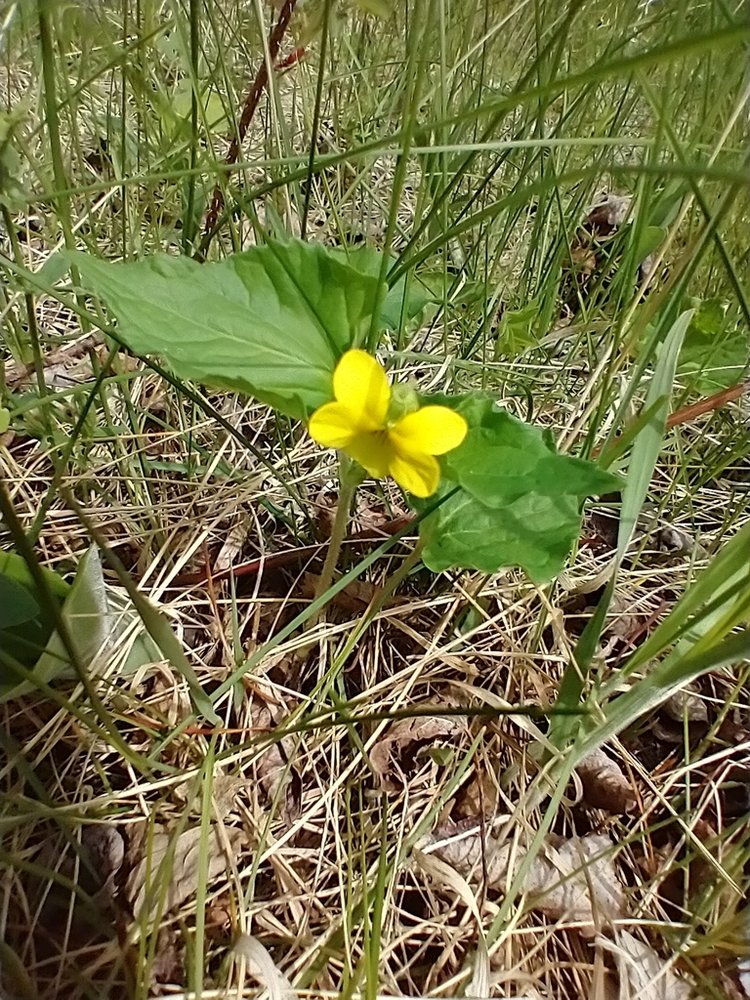
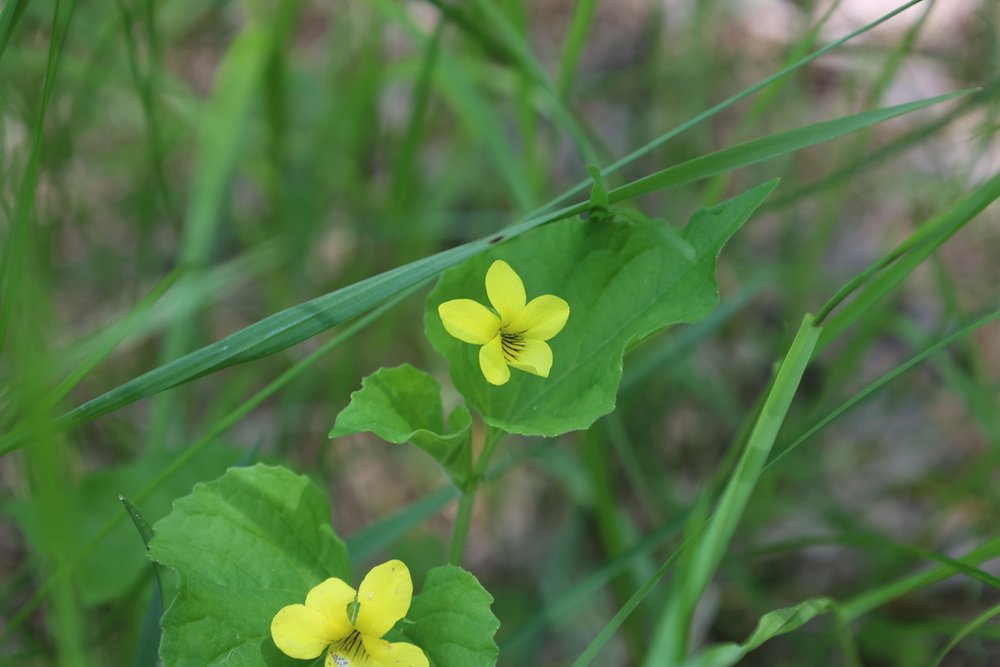
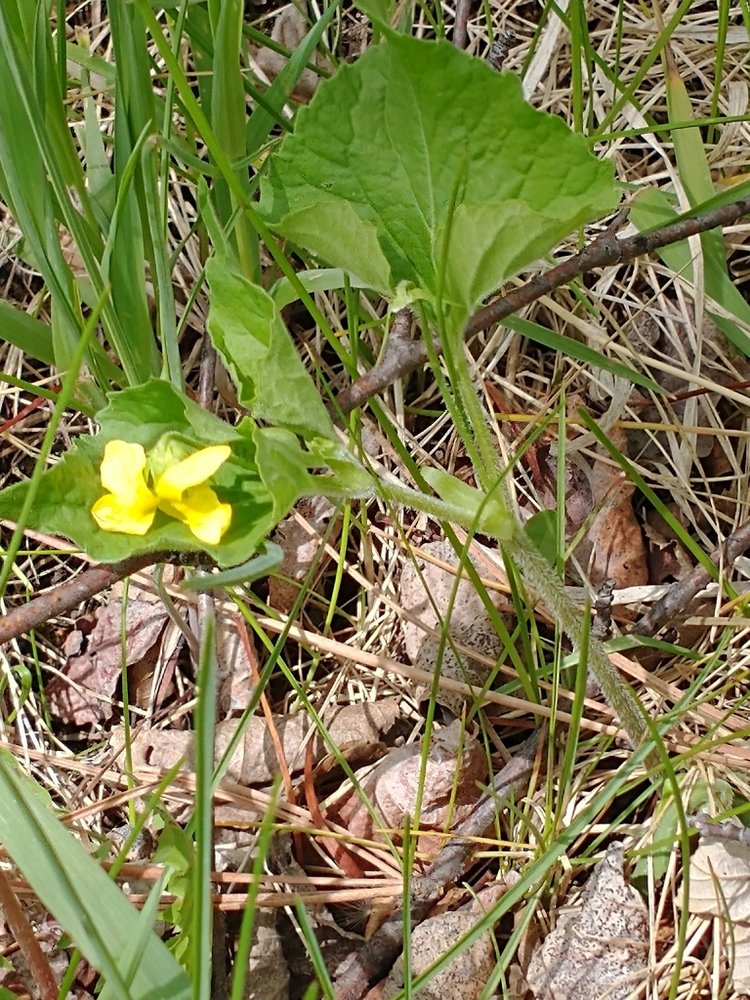
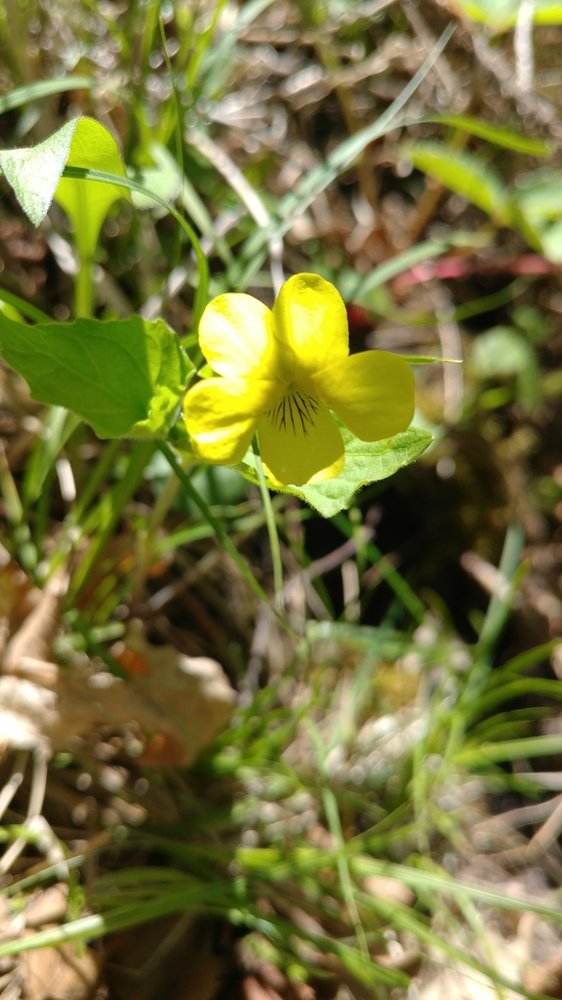
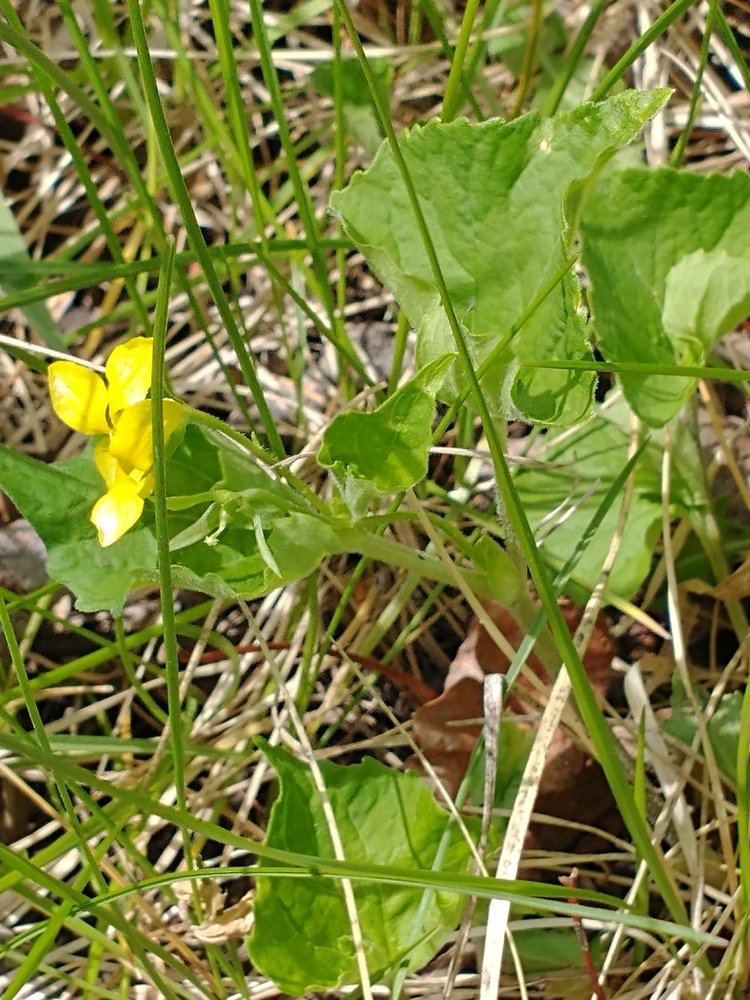
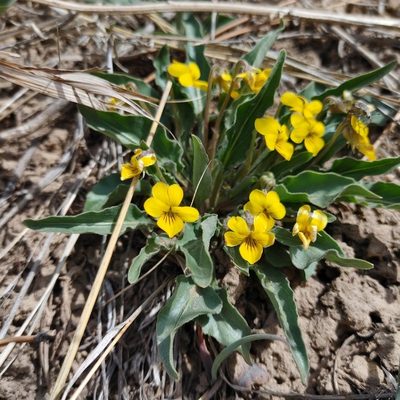
Smooth Yellow Violet (Viola pubescens var. scabriuscula, also listed as Viola eriocarpa) is the yellow violet of shaded Black Hills woods: a leafy-stemmed native 10–35 cm (4–14 in) tall with broad, heart-shaped, toothed leaves and yellow flowers 1–1.5 cm (about ½ in) long, the lower three petals lined with purple-brown veins. It blooms from April into June along creeks and in aspen, birch, spruce and moist pine forest, where the National Park Service lists it at Wind Cave and Mount Rushmore and Devils Tower calls it the yellow wood violet, all under the name Viola pubescens. Photographed in the Black Hills.
Free photos from other sources
| Family | Violaceae · Violet |
|---|---|
| Status | Native perennial |
| Blooms | April into June |
| Height | 10–35 cm (4–14 in) |
| Where | Shaded, moist woods: creek bottoms, aspen, birch and spruce stands, north-facing pine slopes and forest roadside banks |
| Also called | Yellow Wood Violet, Common Yellow Violet, Yellow Forest Violet |
| Synonym | Viola pubescens var. scabriuscula, Viola pubescens var. eriocarpa |
| Note | Botanists disagree on the name. Flora of North America and ITIS call this plant Viola pubescens var. scabriuscula, a 2023 revision followed by Minnesota Wildflowers treats it as its own species, Viola eriocarpa, and most Black Hills records list it simply as Viola pubescens. |
Roots, seeds & germination
Root: A short, thick rhizome (an underground stem) that creeps sideways, with fibrous roots. New shoots rise along it, so the plant sends up two to several stems from one crown and can form a small colony.
Seed: The fruit is an oval capsule 7–13 mm (¼–½ in) long, hairless to woolly, that ripens from green to tan between June and August, turns upright and splits into three with enough force to throw the seeds. The seeds are brown, 2–3 mm long, with a fatty appendage that ants carry off, and closed self-pollinating flowers in the upper leaf axils set seed through the summer too.
Germination: SDSU says the seed needs 60 to 90 days of cold, moist treatment at 2–4 °C (36–39 °F) to break dormancy, should be sown shallowly in fall in rich, moist soil, and that light can improve germination. Plants can be divided in early spring before flowering or in early fall as they go dormant.
How do you identify Smooth Yellow Violet?
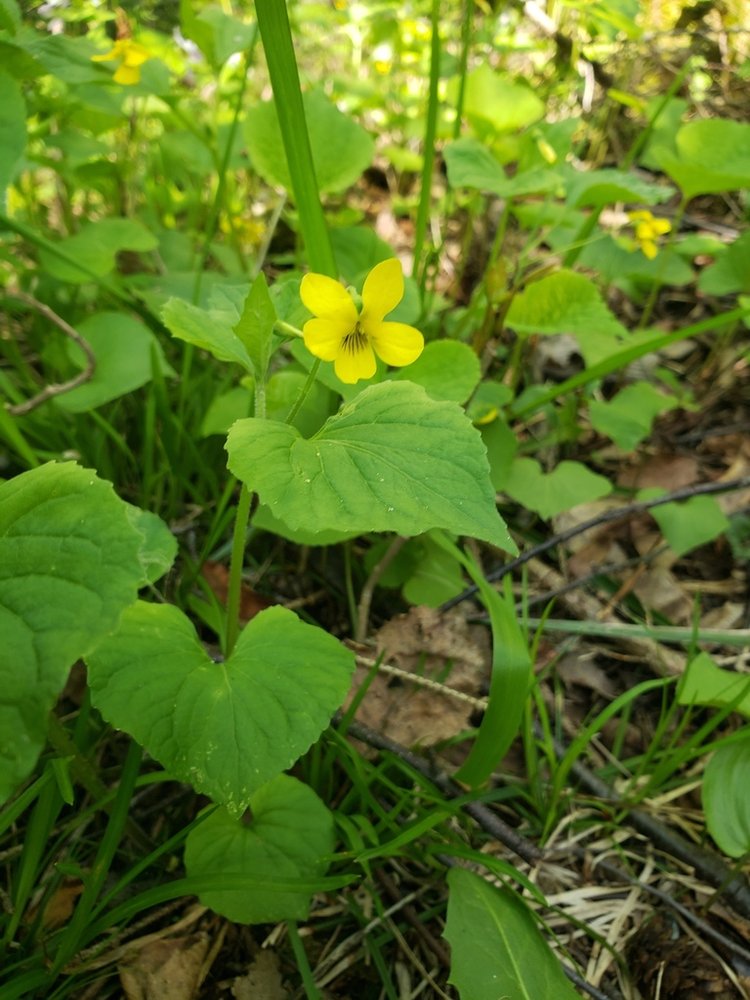
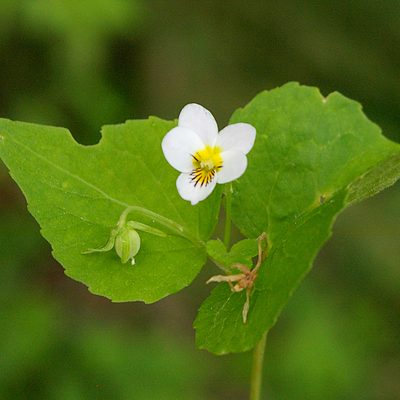
Look for a leafy stem, not a bare flower stalk from the ground: two to several stems rise from one crown, 10–35 cm (4–14 in) tall, often leaning at the base, with four or five broad heart-shaped leaves on the upper part of the stem and one to five more at the base. The leaves are 5–10 cm (2–4 in) long and about as wide, often a little wider than long, with finely toothed edges, a pointed tip and large leafy flaps (stipules) at the base of each leaf stalk. Each yellow flower, 10–15 mm long, nods at the end of a slender stalk from a leaf axil; the lower three petals carry dark purple-brown veins, the two side petals have a tuft of short white hairs at the base, and the spur is a short bump no more than 2.5 mm long. Nuttall's Violet, the yellow violet of open prairie, has narrow, lance-shaped, toothless leaves. Downy Yellow Violet, the hairy form that Flora of North America keeps as a separate variety, has one or two finely hairy stems, no basal leaves or rarely one, and only two or three stem leaves bunched near the tip; most Black Hills records don't say which of the two they are. Canada Violet, a leafy-stemmed violet with heart-shaped leaves, has white flowers with a yellow base.
When does it bloom?
April into June.
Where does it grow?
Rich, shaded, moist woods: creek bottoms, aspen and birch stands, white spruce bottoms, north-facing pine slopes and forest roadside banks, from about 1,200 to 1,750 m (4,000–5,700 ft). The National Park Service lists it at Wind Cave and Mount Rushmore and the Devils Tower wildflower page names it, all as Viola pubescens, and herbarium specimens since 1892 come from Lawrence, Pennington, Custer and Meade counties in South Dakota and Crook County in Wyoming, including the Black Elk Wilderness and the Bear Lodge Mountains.
Other violets in this guide
Sources: Flora of North America Vol. 6: Viola pubescens (Little & McKinney 2015), with the key to its varieties, eFloras; Flora of North America Vol. 6: Viola pubescens var. scabriuscula (synonym Viola eriocarpa), eFloras; Flora of North America Vol. 6: Viola pubescens var. pubescens, eFloras; Reese, R.N. Violaceae: Viola eriocarpa. South Dakota Native Plant Research, SDSU Open PRAIRIE; Reese, R.N. Violaceae: Viola pubescens. South Dakota Native Plant Research, SDSU Open PRAIRIE; Minnesota Wildflowers: Viola eriocarpa (Smooth Yellow Violet); Minnesota Wildflowers: Viola pubescens (Downy Yellow Violet); Illinois Wildflowers: Smooth Yellow Violet (Viola pubescens eriocarpa); Kansas Wildflowers and Grasses: Viola pubescens; ITIS: Viola eriocarpa (TSN 847676), accepted as Viola pubescens var. scabriuscula; NPSpecies checklist, Wind Cave National Park vascular plants; NPSpecies checklist, Mount Rushmore National Memorial vascular plants; National Park Service, Devils Tower National Monument: Wildflowers; GBIF occurrence search: Viola pubescens, South Dakota and Wyoming herbarium specimens; GBIF occurrence search: Viola eriocarpa, South Dakota herbarium specimens; Black Elk, L.S. & Flying By, W.D. 1998. Culturally Important Plants of the Lakota (Sitting Bull College) (checked; only 'Viola spp.'); Reese, R.N. Violaceae: Viola canadensis var. rugulosa (Canada white violet). South Dakota Native Plant Research, SDSU Open PRAIRIE.