Hookedspur Violet
Viola adunca
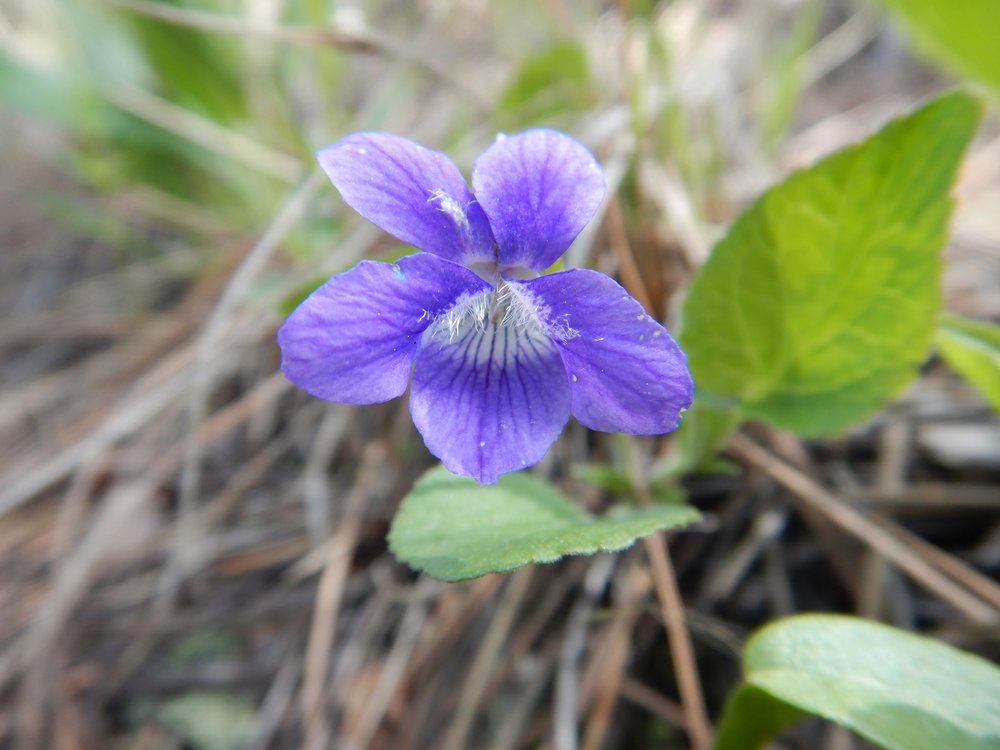
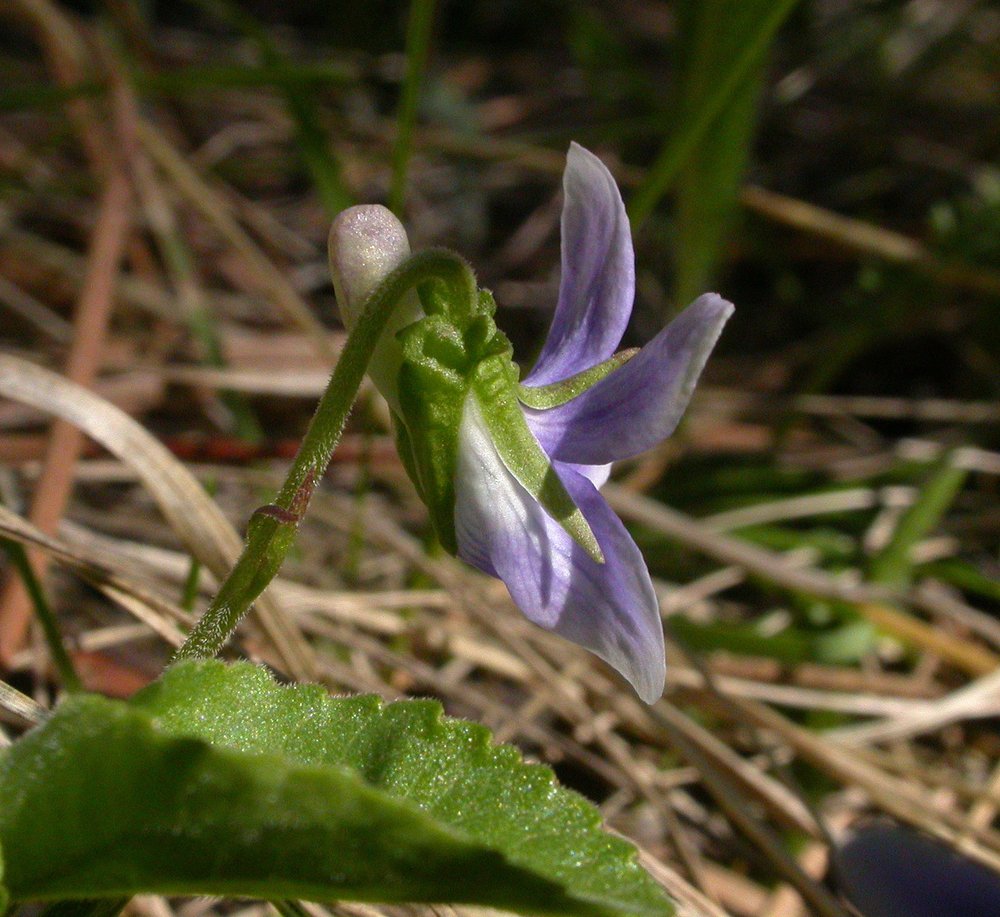
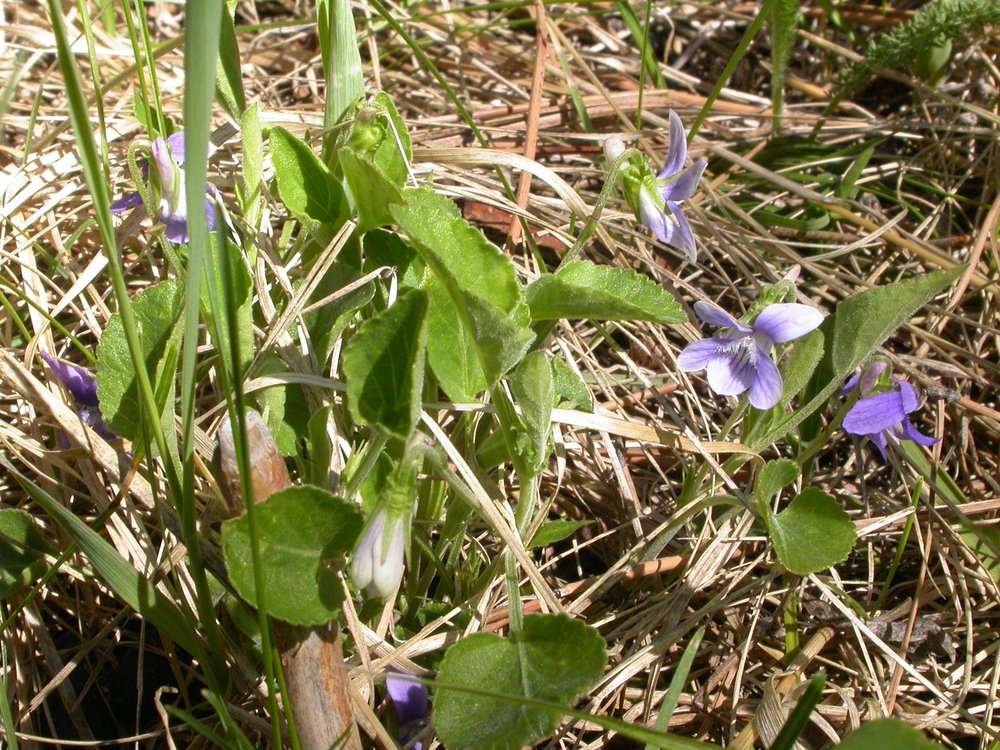
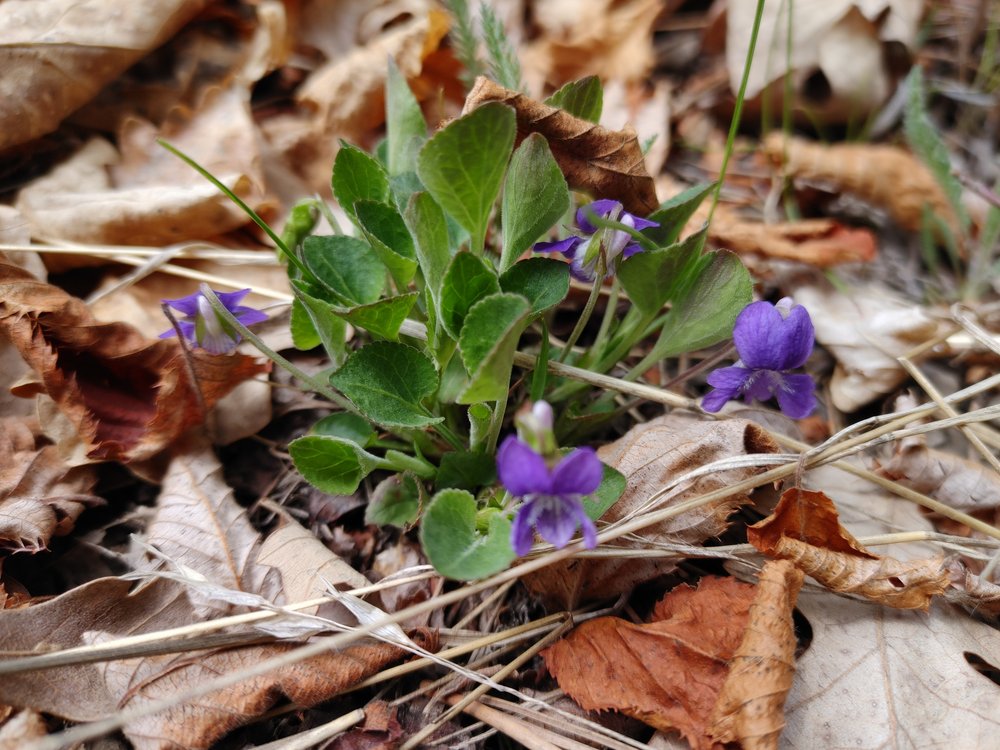
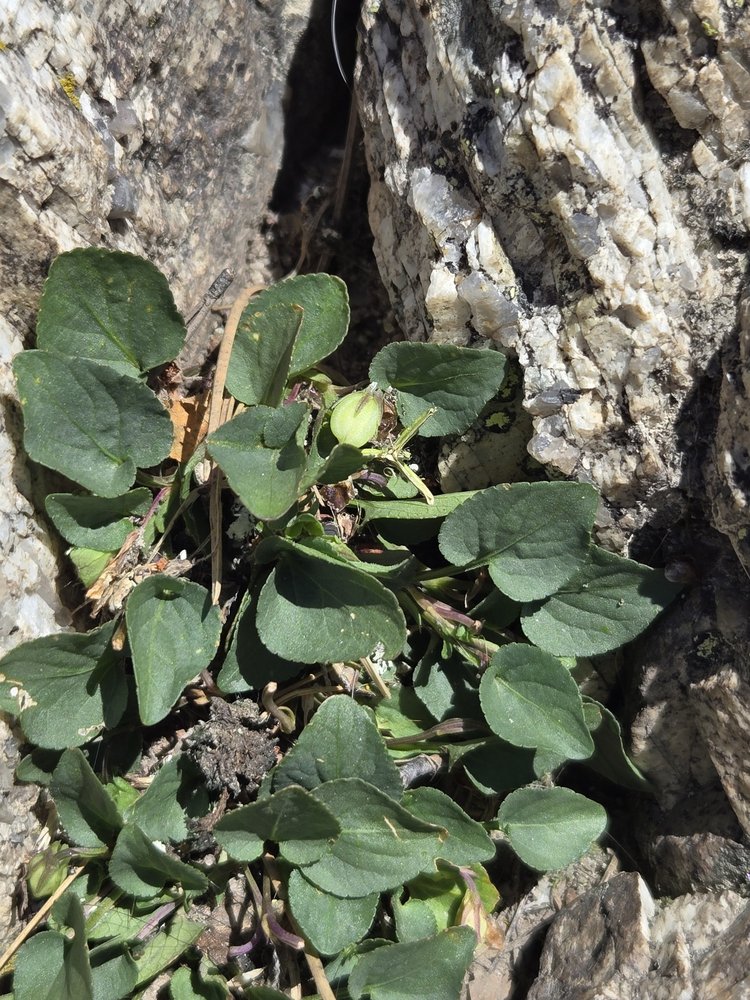
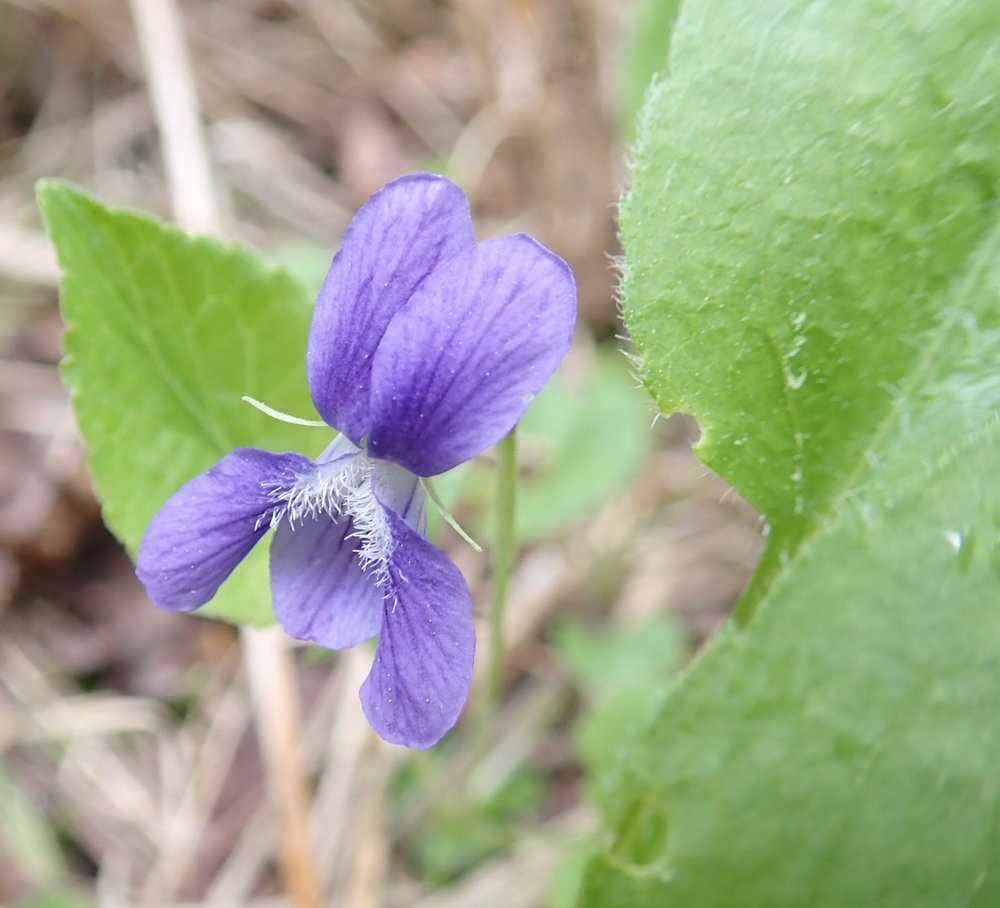
Hookedspur Violet (Viola adunca) is a common purple violet of the Black Hills, a small native perennial with short, leafy stems and a long spur with a hooked tip at the back of each flower. It blooms in May and June in open pine woods, meadows and on rocky slopes across the Hills.
Free photos from other sources
| Family | Violaceae · Violet |
|---|---|
| Status | Native perennial |
| Blooms | May and June, with a few in April and July |
| Height | 8–30 cm (3–12 in) |
| Where | Open pine and oak woods, forest edges, meadows and rocky slopes |
| Also called | Western Dog Violet, Early Blue Violet, Longspur Violet, Blue Violet, Hook Violet, Sand Violet |
| Synonym | Viola canina var. adunca, Lophion aduncum, Viola montanensis, Viola subvestita, Viola oxyceras, Viola adunca var. oxyceras, Viola adunca var. uncinulata, Viola cascadensis |
| Toxicity | The USDA Plant Guide says the rhizomes, fruit and seeds are poisonous to people. |
| Traditional use | Sitting Bull College's 1998 Culturally Important Plants of the Lakota gives waȟpé tȟó čík’ala as the Lakota name for violets in general, and says the young leaves and flower buds were eaten, a tea of the leaves and roots was given to children for asthma, and chewed leaves were put on sore eyes. The USDA Plant Guide names the Blackfoot among the tribes that used the leaves and roots for stomach problems and children's asthma, and says the Blackfoot dyed arrows blue with it. |
Roots, seeds & germination
Root: A short, slender rhizome (underground stem) with fibrous roots. Several leafy stems rise from the base, and the plant forms loose clumps or small patches.
Seed: A three-parted capsule about 5–9 mm (¼–⅜ in) long ripens in July and August. When ripe it splits into three sections and throws the seeds some distance. Each small, dark seed carries a fleshy tag that draws ants, which carry it off. Through the summer the plant also makes flowers without petals that pollinate themselves.
Germination: Seeds are dormant and need a cold, moist period before they sprout: SDSU gives 60–90 days of cold, moist stratification, and the USDA Plant Guide up to 120 days of wet, cool conditions. Seed can be sown in fall less than 3 mm (⅛ in) deep, and clumps can be divided in early spring.
How do you identify Hookedspur Violet?
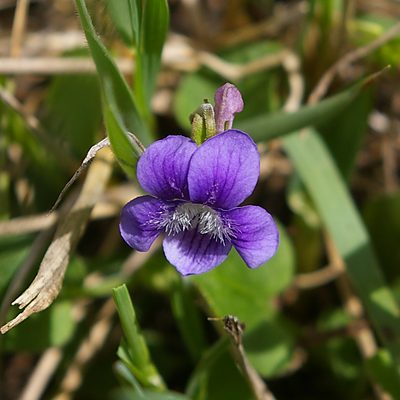
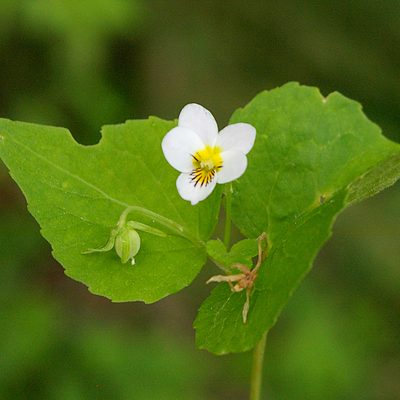
Follow a flower stalk down: it comes from a leaf joint on a short, leafy stem, not straight from the ground. The violet to blue-purple flowers are 1.5–2.5 cm (⅝–1 in) across; the lower three petals are white at the base with purple veins, and the two side petals are bearded with white hairs. From the side, the spur behind the flower is long for a violet, with a hooked tip. Northern Bog Violet has all its leaves rising from the base, a short spur, and grows on wet ground. Canada Violet has white petals with a yellow base.
When does it bloom?
May and June, with a few in April and July.
Where does it grow?
Open ponderosa pine and pine-oak woods, aspen edges, mountain meadows, grassy openings, and rocky slopes and crevices in granite and limestone, in full sun to part shade, on dry to moist ground. The Black Hills National Forest calls it common throughout the Black Hills. The 1986 Jewel Cave survey lists it, National Park Service lists record it at Wind Cave, Jewel Cave, Devils Tower and Mount Rushmore, and herbarium specimens and photos come from Custer State Park.
Other flowers to compare
Sources: Black Hills Native Plants: spring to early-summer wildflowers ("Longspur violet"), Black Hills National Forest, USDA Forest Service; Vegetation of Jewel Cave National Monument (Marriott & Hartman 1986); NPSpecies checklist, Wind Cave National Park vascular plants; NPSpecies checklist, Jewel Cave National Monument vascular plants; NPSpecies checklist, Devils Tower National Monument vascular plants; NPSpecies checklist, Mount Rushmore National Memorial vascular plants; GBIF preserved specimens of Viola adunca in the Black Hills (bounding box 43.3-44.8 N, 103.1-104.7 W); Flora of North America: Viola adunca; Hoffman, R. 2012. Plant Guide for hookedspur violet (Viola adunca). USDA-NRCS Corvallis Plant Materials Center; USDA PLANTS Database: Viola adunca Sm. (VIAD); Reese, R.N. 2025. Violaceae: Viola adunca. South Dakota Native Plant Research, SDSU Open PRAIRIE; ITIS: Viola adunca Sm. (TSN 22032); Black Elk, L.S. & W.D. Flying By. 1998. Culturally Important Plants of the Lakota. Sitting Bull College (entry 328, Viola spp.); Bartow, A. 2014. Propagation protocol for early blue violet (Viola adunca). Native Plants Journal 15(2):124-128; iNaturalist research-grade observations of Viola adunca within 80 km of the central Black Hills; Black Hills Flowers: Canada Violet; Black Hills Flowers: Northern Bog Violet; Minnesota Wildflowers: Viola adunca (Sand Violet); VASCAN (Canadensys): Viola adunca, accepted name and synonyms.