Spearleaf Stonecrop
Sedum lanceolatum
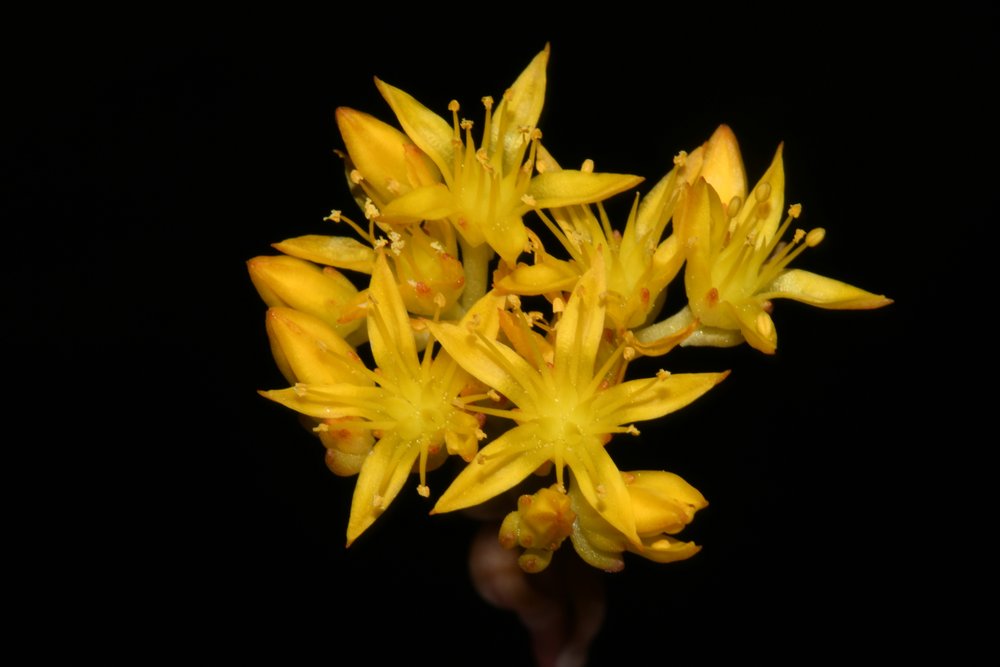
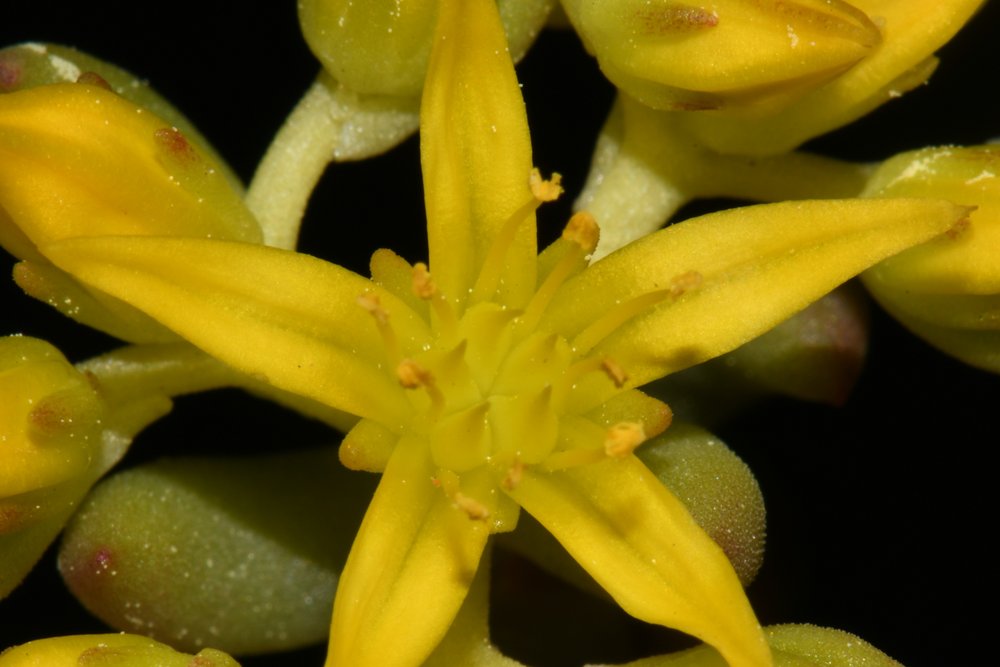
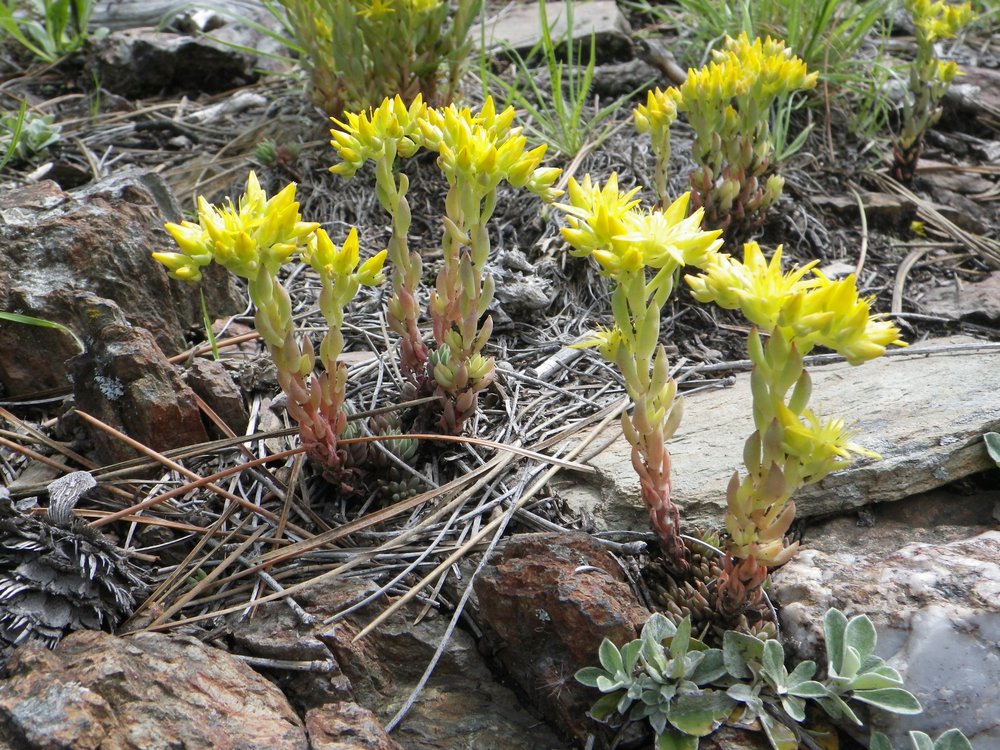
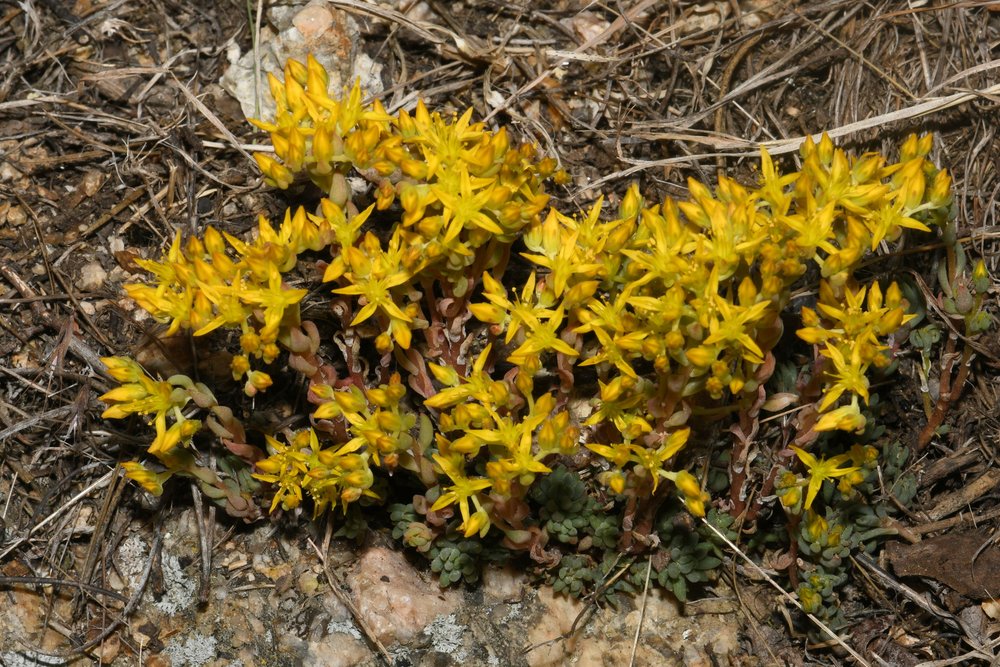
Spearleaf Stonecrop (Sedum lanceolatum) is a small native succulent that sits low on bare granite and opens clusters of bright yellow, star-shaped flowers in June and July. It lives on rock where little else can, storing water in thick, fleshy leaves, and in South Dakota it is a plant of the Black Hills, most common in the high granite country of the central Hills.
Free photos from other sources
| Family | Crassulaceae · Stonecrop |
|---|---|
| Status | Native perennial |
| Blooms | Mid-June through July, a few into early August |
| Height | 5–20 cm (2–8 in) |
| Where | Granite outcrops, rock ledges and thin, gravelly soil in open pine forest |
| Also called | Lanceleaf Stonecrop, Lance-leaved Stonecrop, Spear-leaved Stonecrop, Yellow Stonecrop |
| Synonym | Amerosedum lanceolatum, Sedum subalpinum, Sedum stenopetalum var. alpinum |
| Traditional use | Moerman (1998) records that the Okanagan-Colville, far to the west in British Columbia, used it as a laxative. No Lakota or other Plains use was found. |
Roots, seeds & germination
Root: Short and shallow: a slender, creeping base sends fine roots into rock cracks and the thin grit on top of the stone. Short shoots root where they touch the ground, and broken pieces can root and start new plants.
Seed: Each flower makes five small, upright pods, 5–7 mm (¼ in) long, that turn tan and split at the top from about August to September, spilling many tiny, light tan seeds about 1 mm long.
Germination: Easy. A Native Plant Network protocol rates the seed as non-dormant: sown in late fall and left outdoors, it comes up evenly in early spring, though the cold period isn't required. Stem cuttings also root readily in a sandy mix kept from staying wet.
How do you identify Spearleaf Stonecrop?
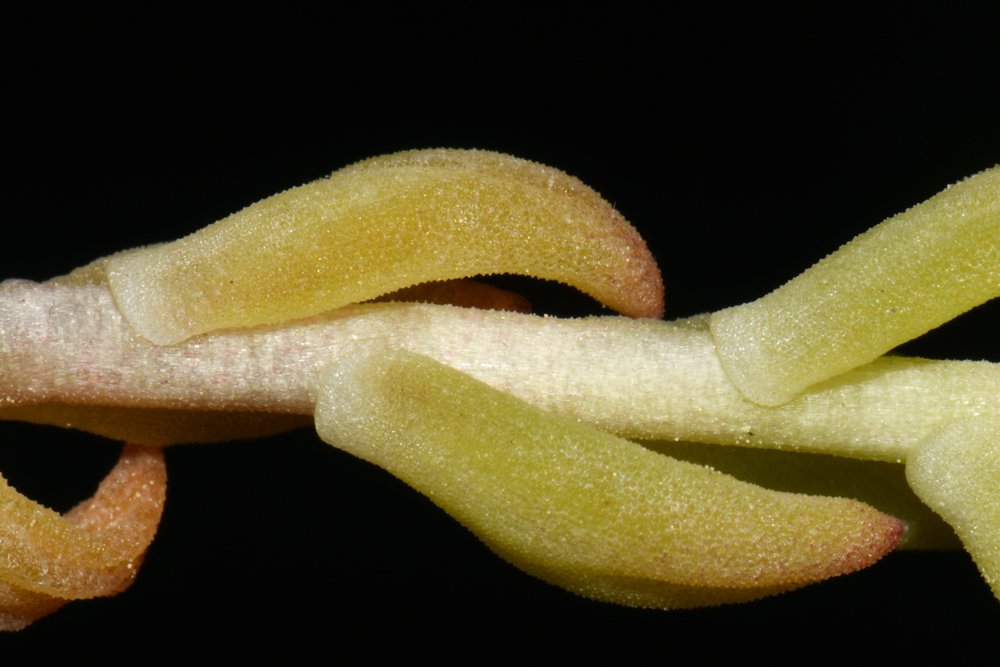
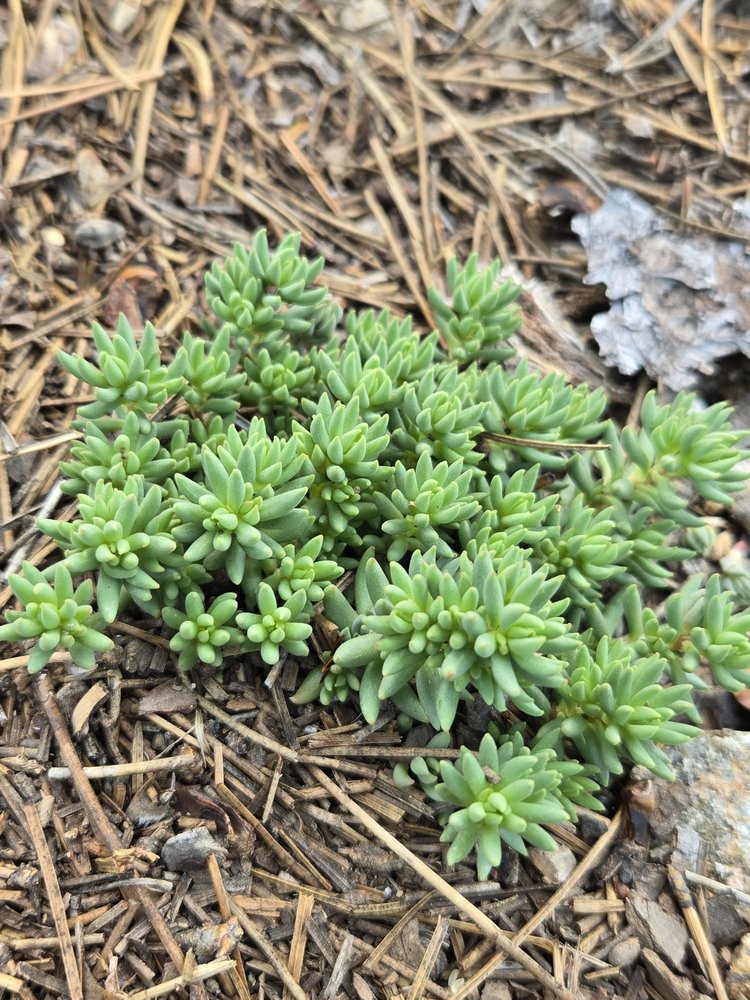
Look on bare rock and thin gravel for a low tuft or mat, 5–20 cm (2–8 in) tall in flower, with no hair anywhere. The leaves are thick, fleshy, nearly round in cross-section, lance-shaped and pointed, mostly under 1.5 cm (½ in) long, packed in tight blue-green rosettes that often blush red or bronze. A flat-topped cluster of bright yellow flowers, each 1–1.5 cm across with five narrow, pointed petals, sits on a reddish stem, and afterward five small pods stand straight up side by side. Goldmoss Stonecrop, a garden escape around towns, has tiny, egg-shaped, bright green leaves crowded like overlapping scales in a dense, moss-like mat.
When does it bloom?
Mid-June through July, a few into early August.
Where does it grow?
Bare granite, schist and other hard rock: outcrop tops, cracks and ledges, and thin, gravelly soil among ponderosa pine where rock is close to the surface, in full sun or light shade. Most records come from the high granite core of the central Hills, and many photo records are from Custer State Park. The 1986 plant survey of Jewel Cave National Monument lists it, NPSpecies lists it at Wind Cave and Mount Rushmore, and herbarium specimens come from Lawrence, Pennington, Custer and Meade counties and from Crook and Weston counties in Wyoming.
Sources: Crassulaceae: Sedum lanceolatum (R. Neil Reese, SDSU Open PRAIRIE, South Dakota Native Plant Research, 2025); Propagation protocol for Sedum lanceolatum (Native Plant Network, RNGR); Marriott & Hartman 1986, Vegetation of Jewel Cave National Monument (lists Sedum lanceolatum, 'stonecrop'); NPSpecies checklist, Wind Cave National Park, vascular plants; NPSpecies checklist, Jewel Cave National Monument, vascular plants; NPSpecies checklist, Mount Rushmore National Memorial, vascular plants; NPSpecies checklist, Devils Tower National Monument, vascular plants (Sedum not listed); GBIF occurrence records, Sedum lanceolatum in South Dakota (herbarium specimens by county); USDA PLANTS Database: Sedum lanceolatum, spearleaf stonecrop; Flora of North America: Sedum stenopetalum (range and fruit characters); Lance-leaved Stonecrop (Garry Oak Ecosystems Recovery Team); Sedum lanceolatum, Field Botany (University of Puget Sound); Kathleen H. Keeler, Spearleaf Stonecrop, Sedum lanceolatum (A Wandering Botanist, 2025); Sedum lanceolatum (Wikipedia; Parnassius host relationship, sarmentosin, synonyms); Marrone 1994, Checklist of South Dakota Butterflies, Journal of the Lepidopterists' Society 48(3):228-247; Butterflies and Moths of North America: Rocky Mountain Parnassian sighting, Custer County SD, 2018; Butterflies of America: Parnassius smintheus sayii foodplant and habitat photos (incl. Pennington Co., SD); U.S. Fish & Wildlife Service: Leedy's Roseroot; Andropogon (J. Olfelt): roseroot research, Black Hills disjunct population; Black Elk & Flying By 1998, Culturally Important Plants of the Lakota (checked; no stonecrop entry); iNaturalist research-grade observations of Sedum lanceolatum within 80 km of the central Black Hills.