Nuttall's Violet Viola nuttallii
Also called Yellow Prairie Violet, Nuttall's Yellow Violet
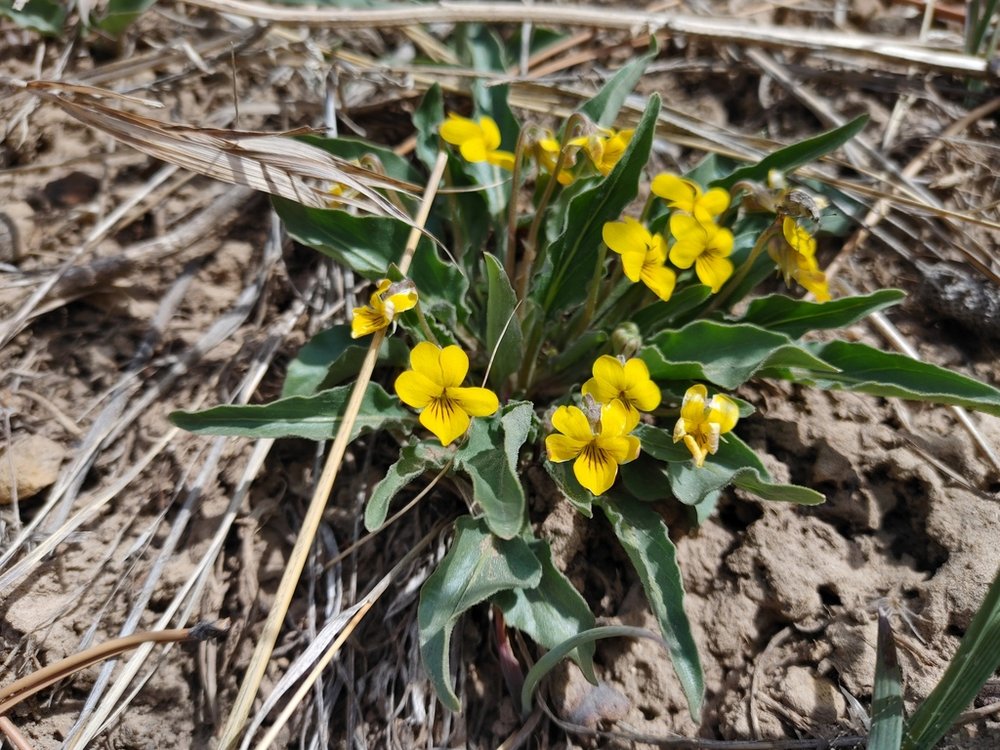
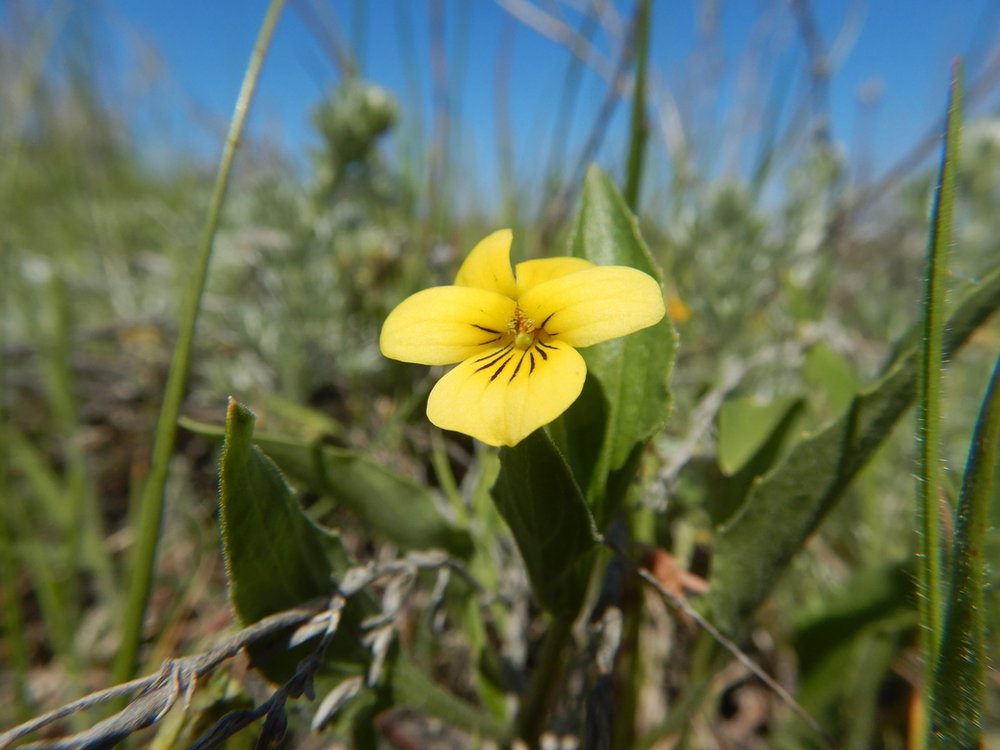
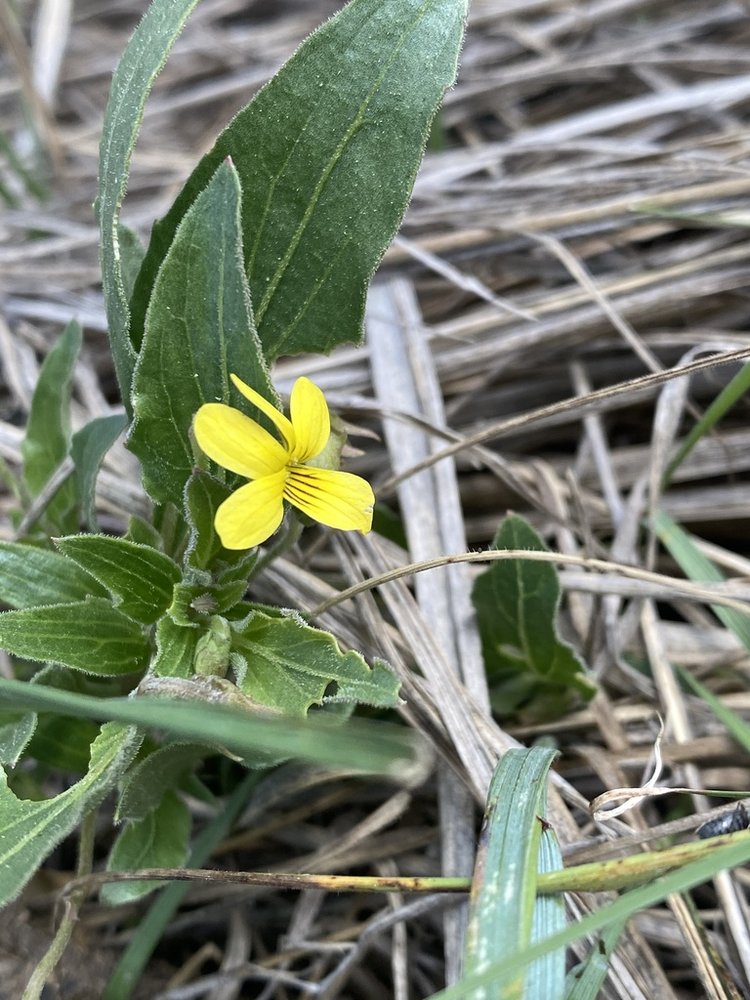
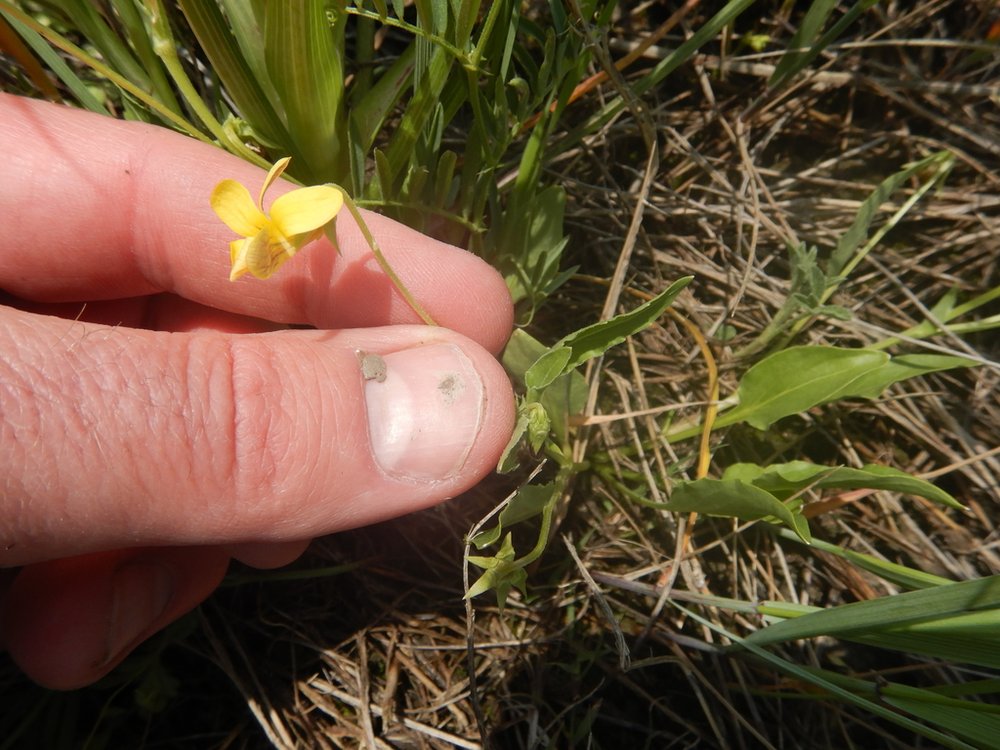
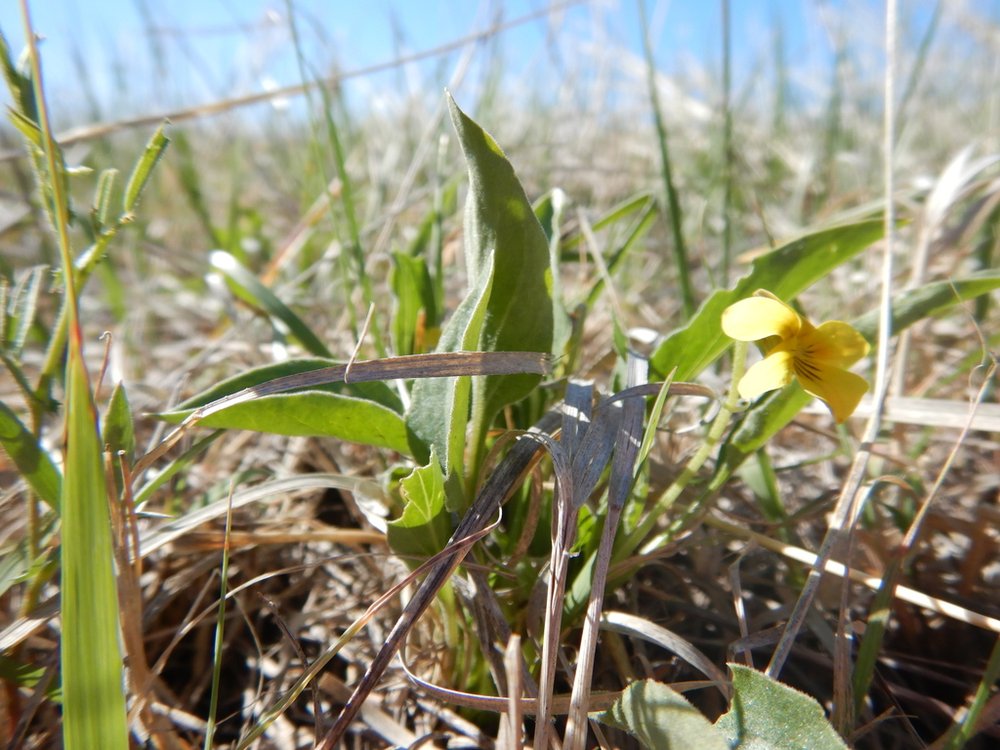
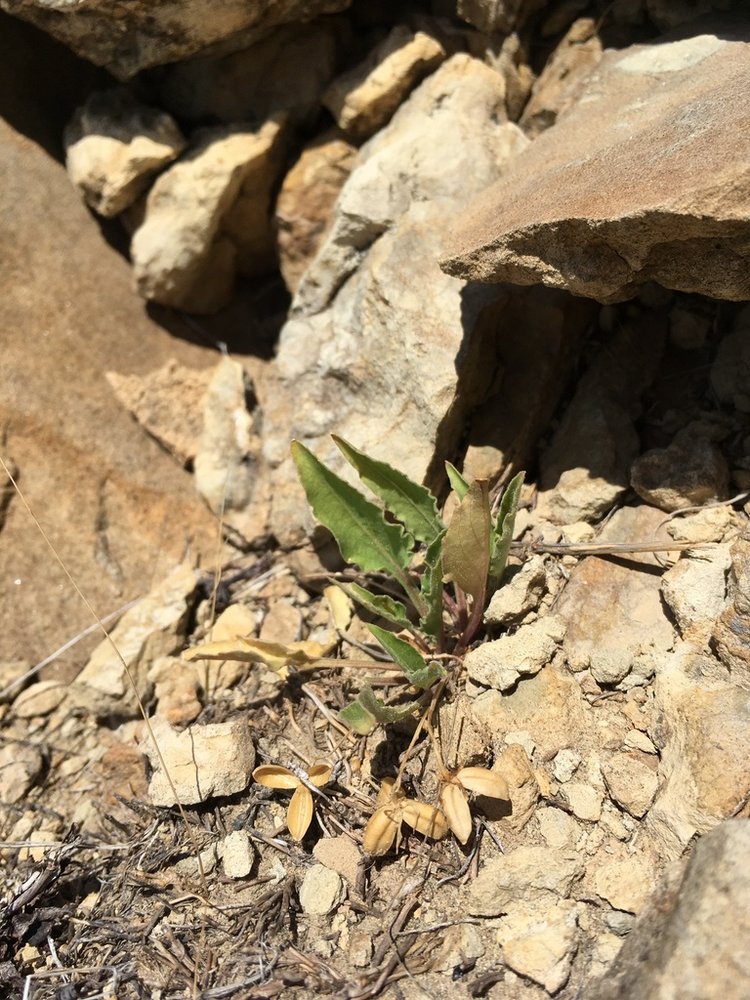
Nuttall's Violet (Viola nuttallii) is a small native violet of dry prairie, 2–27 cm (1–11 in) tall, with yellow flowers about 1.5 cm (½ in) long, purple-brown veins on the lower three petals, and narrow, lance-shaped leaves usually at least three times as long as wide. It blooms from April into June, mostly April and May, and in the Black Hills it grows on open grassland, grassy hillsides and pine edges, where the National Park Service lists it at Wind Cave, Jewel Cave and Devils Tower.
Free photos from other sources
| Family | Violaceae · Violet |
|---|---|
| Status | Native perennial |
| Blooms | April into June, mostly April and May |
| Height | 2–27 cm (1–11 in) |
| Where | Dry open prairie, grassy hillsides, sagebrush and open pine edges on sandy, gravelly or rocky ground |
| Also called | Yellow Prairie Violet, Nuttall's Yellow Violet |
| Synonym | Crocion nuttallii |
| Toxicity | SDSU says the roots, fruits and seeds are toxic. |
Roots, seeds & germination
Root: A thick, usually vertical, somewhat woody rhizome (an underground stem) with a deep taproot that suits it to dry prairie, topped by a crown from which one to six stems rise, about half of each stem underground.
Seed: The fruit is a rounded to egg-shaped capsule 4–10 mm long, usually hairless, that nods at first, then turns upright as it ripens from late June into August, dries tan and splits into three sections to throw the seeds. The seeds are medium brown, 2–3 mm long, with a fatty appendage that runs more than a third of the seed's length. Closed, self-pollinating flowers in the leaf axils also set seed.
Germination: SDSU says the seed needs 60 to 90 days of cool, moist treatment, germinates best at 15–21 °C (59–70 °F), and is best sown in fall and covered so that light doesn't reach it. Plants can also be divided at the crown in early fall or early spring while dormant.
How do you identify Nuttall's Violet?
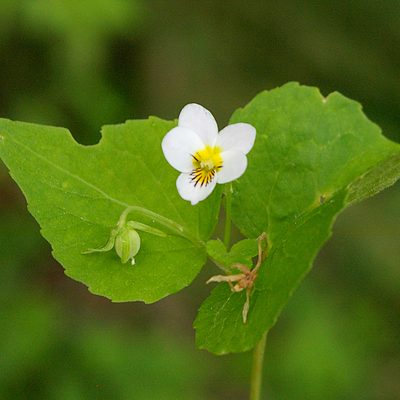
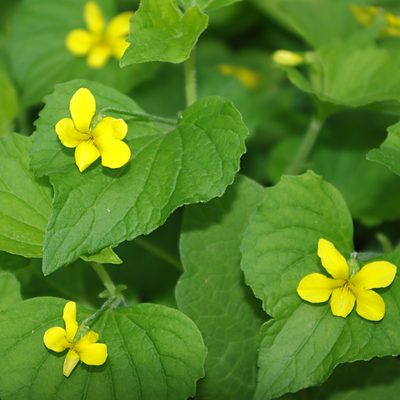
Check the leaves first: they are narrow and lance-shaped, tapering into the stalk with no notch at the base, gray-green, minutely hairy, toothless or with a few small teeth, and usually at least three times as long as wide. The flower is yellow, about 1.5 cm (½ in) long, with dark brown to purple-brown veins on the lower three petals, a small tuft of hairs at the base of each side petal, a short yellow spur no more than 1.5 mm long, and backs of the upper petals often tinged brownish purple. The plant stands 2–27 cm (1–11 in) tall, with one to six short leafy stems that are about half underground, so all the leaves may look as if they rise from the ground, with the flowers held among them. Smooth Yellow Violet, the yellow violet of shaded woods, has broad, heart-shaped, toothed leaves on a leafy stem 10–35 cm (4–14 in) tall. Valley Violet, listed at Devils Tower, has oval leaves with a squared-off or slightly heart-shaped base, only about twice as long as wide; Flora of North America notes in-between leaf shapes where the two grow together.
When does it bloom?
April into June, mostly April and May.
Where does it grow?
Dry open prairie, grassy hillsides and bluffs on sandy, gravelly or rocky ground in full sun, also sagebrush, dry stream banks, open pine forest and rocky slopes above creeks, from about 1,050 to 1,700 m (3,500–5,500 ft) in the Hills. The National Park Service lists it at Wind Cave, Jewel Cave and Devils Tower, the 1986 plant survey of Jewel Cave lists it, and herbarium specimens since 1892 come from Pennington, Custer, Lawrence, Meade and Fall River counties in South Dakota and Crook and Weston counties in Wyoming, including Wind Cave National Park and Custer State Park.
Other violets in this guide
Sources: Flora of North America Vol. 6: Viola nuttallii (Little & McKinney 2015), eFloras; Flora of North America Vol. 6: Viola vallicola, eFloras; Reese, R.N. Violaceae: Viola nuttallii. South Dakota Native Plant Research, SDSU Open PRAIRIE; Minnesota Wildflowers: Viola nuttallii (Yellow Prairie Violet); Minnesota Wildflowers: Viola pubescens (Downy Yellow Violet), notes on the three yellow violets; Minnesota Wildflowers: Viola eriocarpa (Smooth Yellow Violet); Kansas Wildflowers and Grasses: Viola nuttallii; NPSpecies checklist, Wind Cave National Park vascular plants; NPSpecies checklist, Jewel Cave National Monument vascular plants; NPSpecies checklist, Devils Tower National Monument vascular plants; Marriott & Hartman 1986. A Survey of the Vegetation of Jewel Cave National Monument; GBIF occurrence search: Viola nuttallii, South Dakota and Wyoming herbarium specimens; Black Elk, L.S. & Flying By, W.D. 1998. Culturally Important Plants of the Lakota (Sitting Bull College) (checked; only 'Viola spp.').