Prairie Violet Viola pedatifida
Also called Crowfoot Violet, Larkspur Violet, Bearded Birdfoot Violet, Purple Prairie Violet
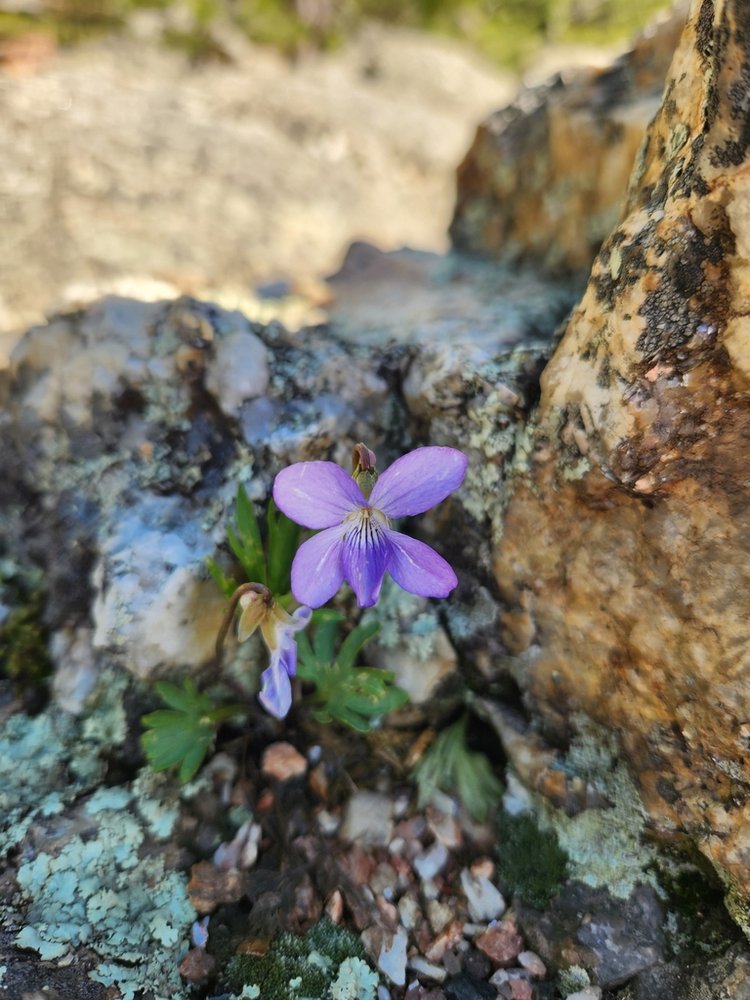
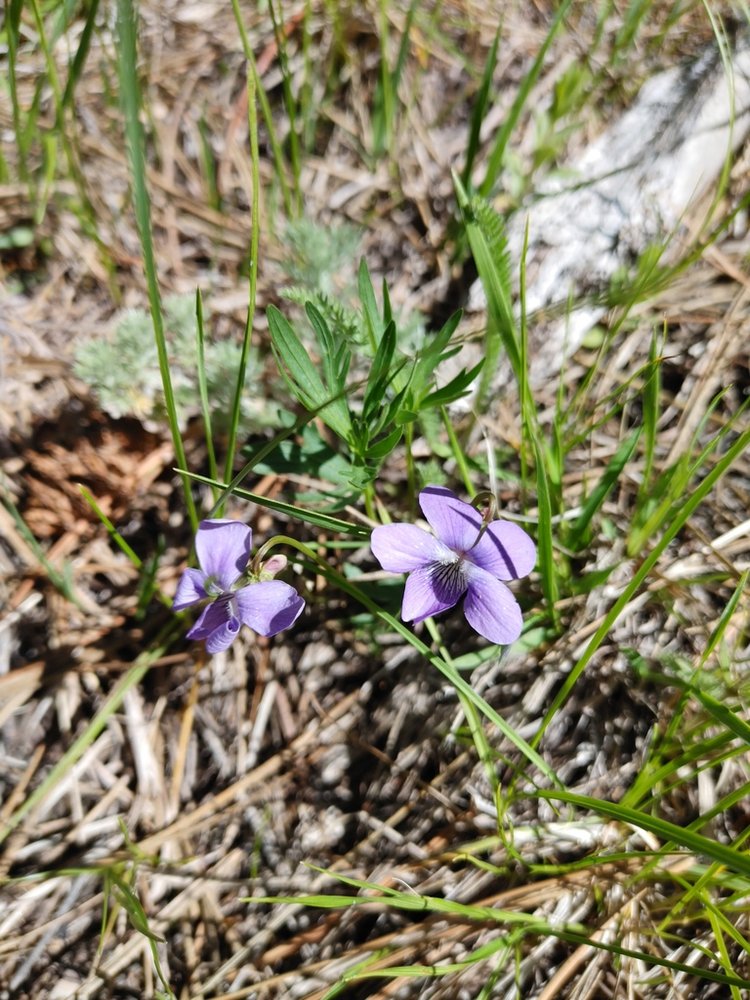
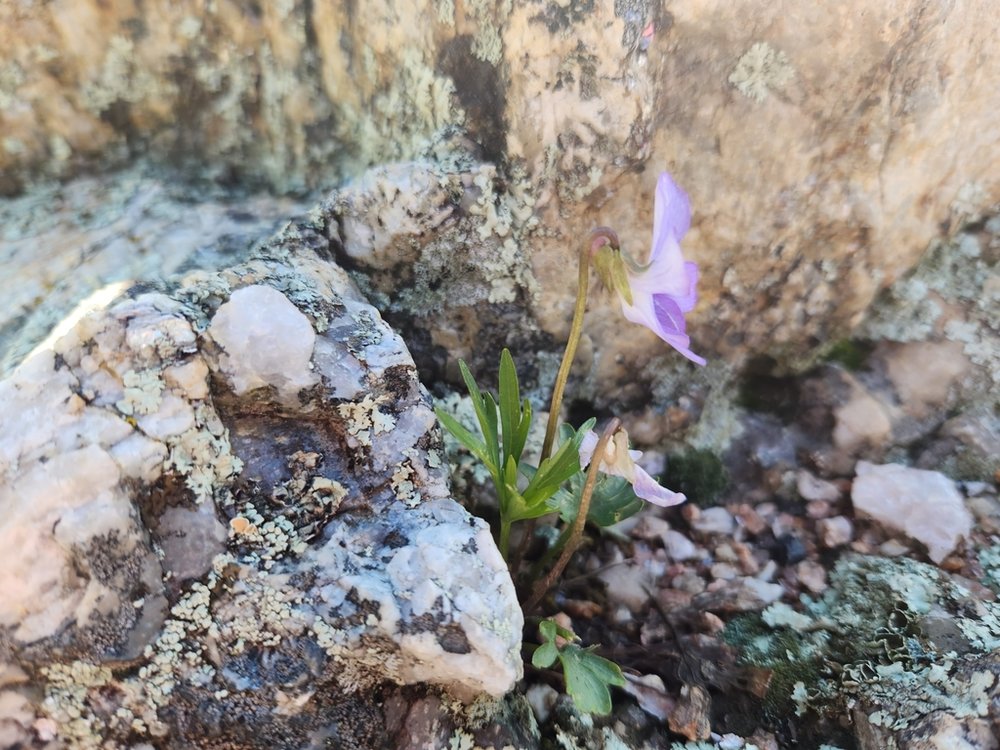
Prairie Violet (Viola pedatifida) is a small native violet, 5–30 cm (2–12 in) tall, whose leaves are cut into narrow, finger-like lobes. Its violet flowers open from April into June on bare stalks above the leaves, on prairie and in grassy openings in the pine forest, and in the Black Hills the National Park Service lists it at Wind Cave, Mount Rushmore and Devils Tower.
Free photos from other sources
| Family | Violaceae · Violet |
|---|---|
| Status | Native perennial |
| Blooms | April into June, sometimes again in September |
| Height | 5–30 cm (2–12 in) |
| Where | Prairie, grassy openings and edges of ponderosa pine forest, and burned slopes |
| Also called | Crowfoot Violet, Larkspur Violet, Bearded Birdfoot Violet, Purple Prairie Violet |
| Synonym | Viola delphiniifolia, Viola palmata var. pedatifida |
Roots, seeds & germination
Root: A thick, fleshy rhizome (an underground stem); the plant sends up no runners.
Seed: The fruit is a smooth, egg-shaped capsule 10–15 mm (about ½ in) long that stands upright and turns tan as it ripens, then splits and throws its beige to bronze seeds, 1.5–2.5 mm long, a short distance from the plant. Capsules come both from the spring flowers and from small closed, self-pollinating flowers made later in the season.
Germination: SDSU's native plant guide says fall sowing works best. Seed for spring planting needs about 60 days of cold, moist treatment first, and should be kept refrigerated until then. It wants full sun to part shade and well-drained soil.
How do you identify Prairie Violet?
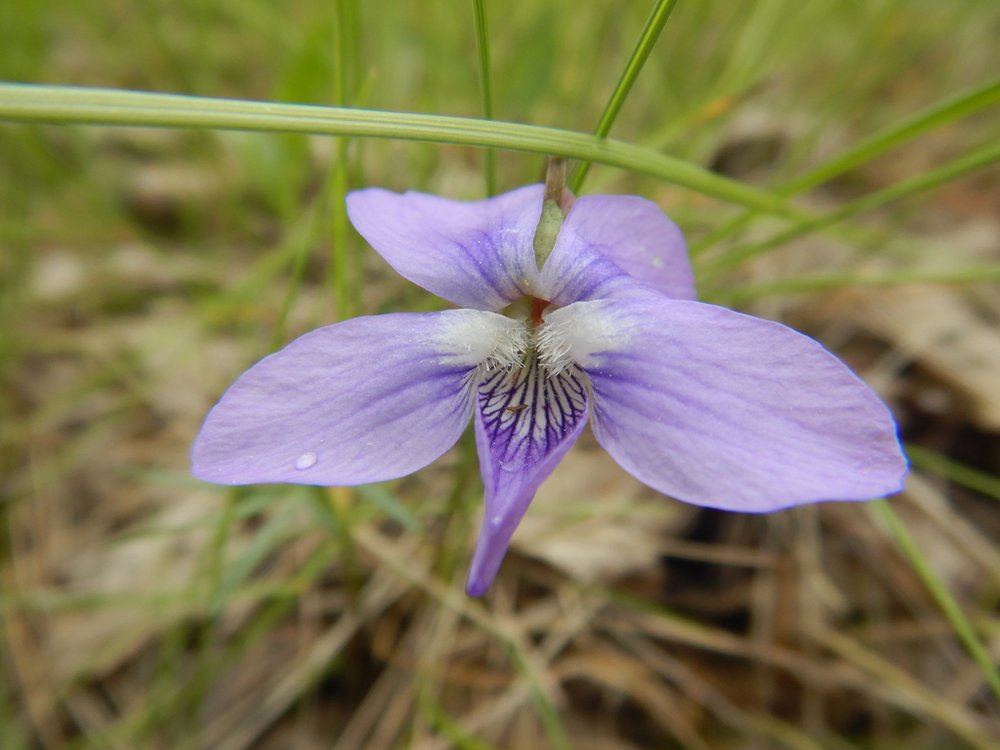
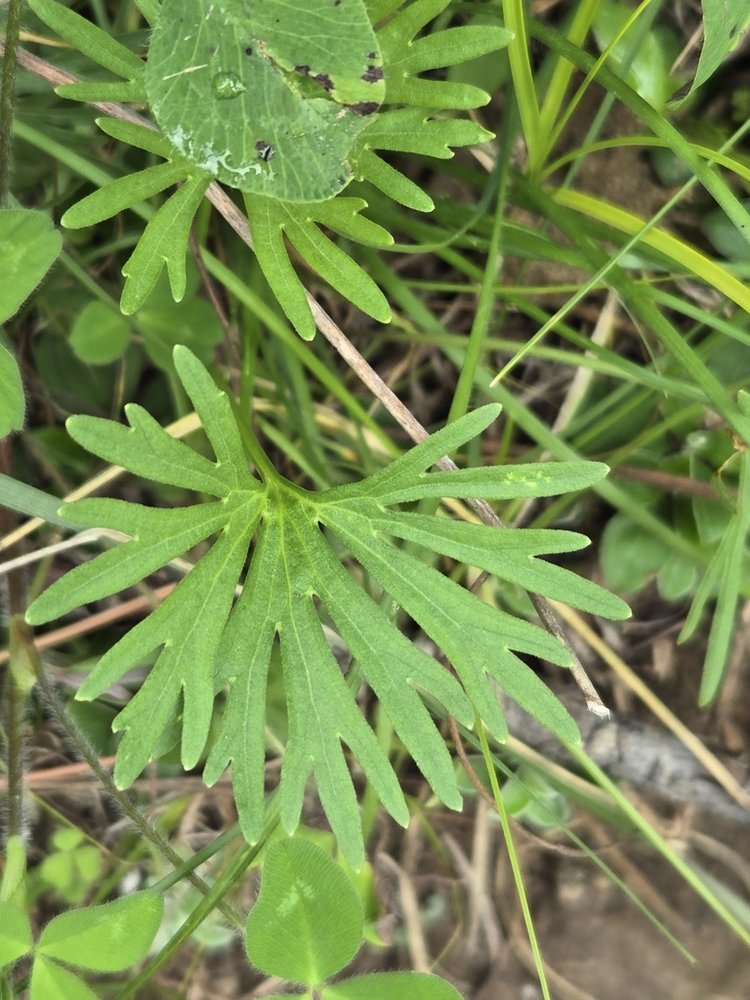
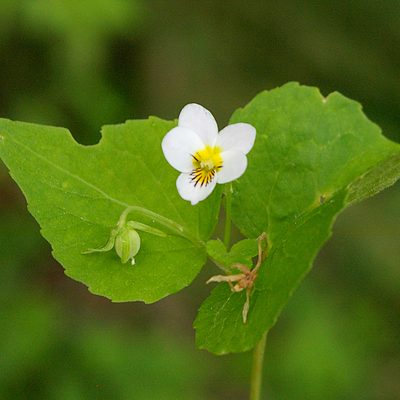
Start with the leaves: each blade is deeply cut into 5 to 9 lobes, and the lobes often split again into narrow, finger-like segments, with tiny hairs fringing the edges. SDSU's native plant page notes that this foliage sets it apart from most other violets. The plant is stemless, so every leaf and flower stalk rises straight from the crown, and the flower stalk is usually longer than the leaves. The flower is light to reddish violet, with the lowest petal 10–25 mm long; the lower three petals are white at the base with dark violet veins, the two side petals carry a tuft of white hairs, and the spur at the back is a short pouch, 2–3 mm, the same color as the petals. Hookedspur Violet has egg-shaped to round leaves with small rounded teeth and a heart-shaped base, on leafy stems, and its single flowers come from the leaf joints; the University of Alberta herbarium separates the two by Prairie Violet's basal leaves with 6 to 15 finger-like lobes. Northern Bog Violet has kidney- to heart-shaped leaves with scalloped edges and grows on wet ground.
When does it bloom?
April into June, sometimes again in September.
Where does it grow?
Prairie, grassy openings and the edges of ponderosa pine forest, in sun or part shade, including slopes that have burned. The National Park Service lists it as present at Wind Cave National Park, Mount Rushmore National Memorial and Devils Tower National Monument, where it is on the list of wildflowers commonly seen along the trails. Herbarium specimens from 1892 to 2015 come from Pennington, Custer, Lawrence and Meade counties in South Dakota and Crook County in Wyoming, from about 1340 to 1840 m (4400 to 6050 ft): open meadows, grassy openings and edges of pine forest, limestone talus, a limestone slope that had burned, and a slope under pines killed in a 2012 wildfire.
Other violets in this guide
Sources: Flora of North America Vol. 6: Viola pedatifida — eFloras; Violaceae: Viola pedatifida — SDSU Open PRAIRIE; Viola pedatifida (prairie violet) — SDSU Extension; Viola pedatifida (Prairie Violet) — Minnesota Wildflowers; Viola nephrophylla (Northern Bog Violet) — Minnesota Wildflowers; Viola pedatifida — Kansas Wildflowers and Grasses; Prairie Violet — Illinois Wildflowers; Prairie Violet, Viola pedatifida — Montana Field Guide; Viola adunca, with notes on Viola pedatifida — University of Alberta Vascular Plant Herbarium; Black Hills native plants — USDA Forest Service, Black Hills National Forest; Viola pedatifida — Lady Bird Johnson Wildflower Center; Viola pedatifida (VIPE2) — USDA PLANTS Database; Native plants — NPS, Devils Tower National Monument; NPSpecies checklist, Wind Cave National Park vascular plants — National Park Service; NPSpecies checklist, Mount Rushmore National Memorial vascular plants — National Park Service; NPSpecies checklist, Devils Tower National Monument vascular plants — National Park Service; Viola pedatifida, South Dakota and Wyoming herbarium specimens — GBIF.