Prostrate Vervain Verbena bracteata
Also called Bigbract Verbena, Bracted Vervain, Carpet Vervain, Prostrate Verbena, apé sloháŋ (Lakota)
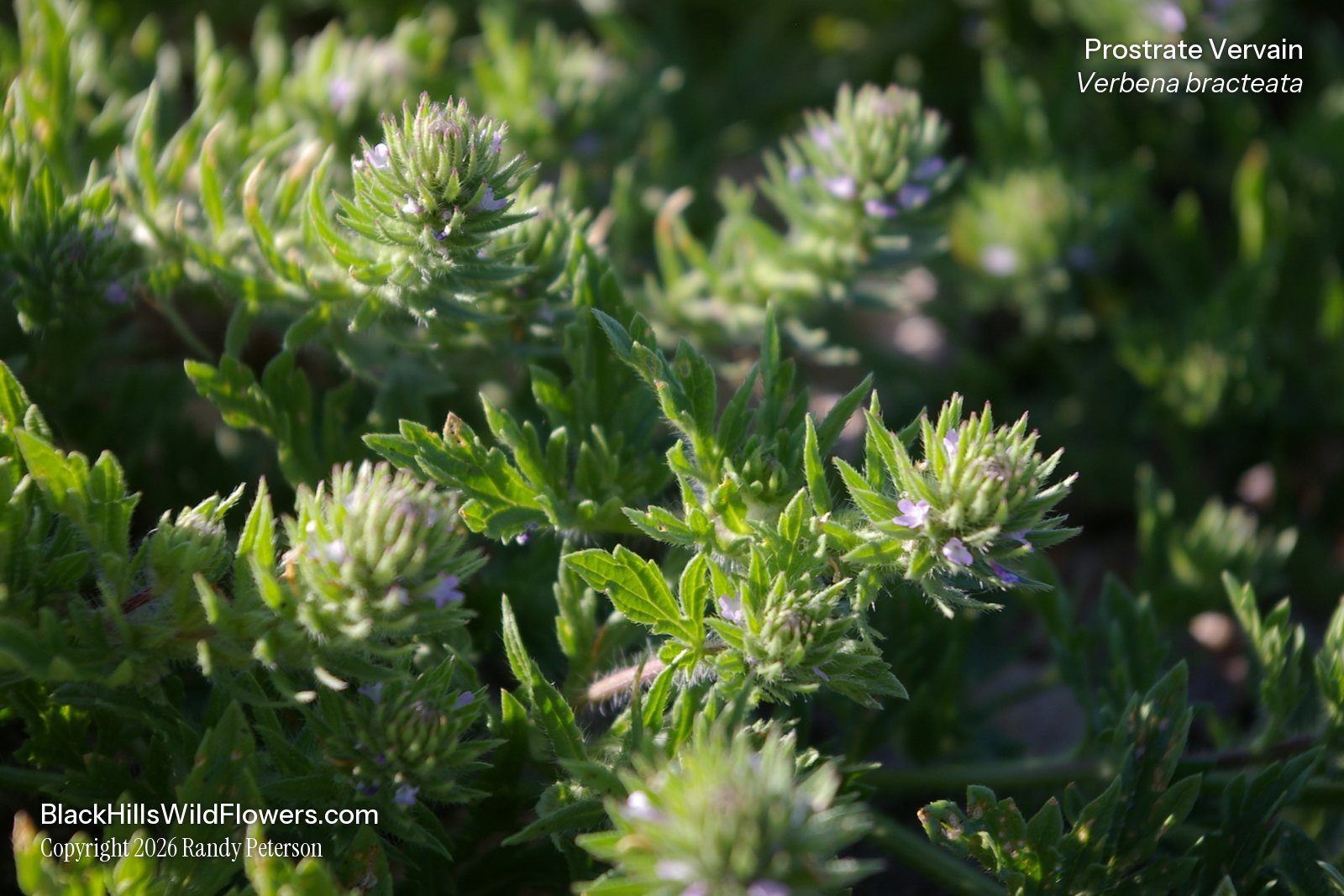
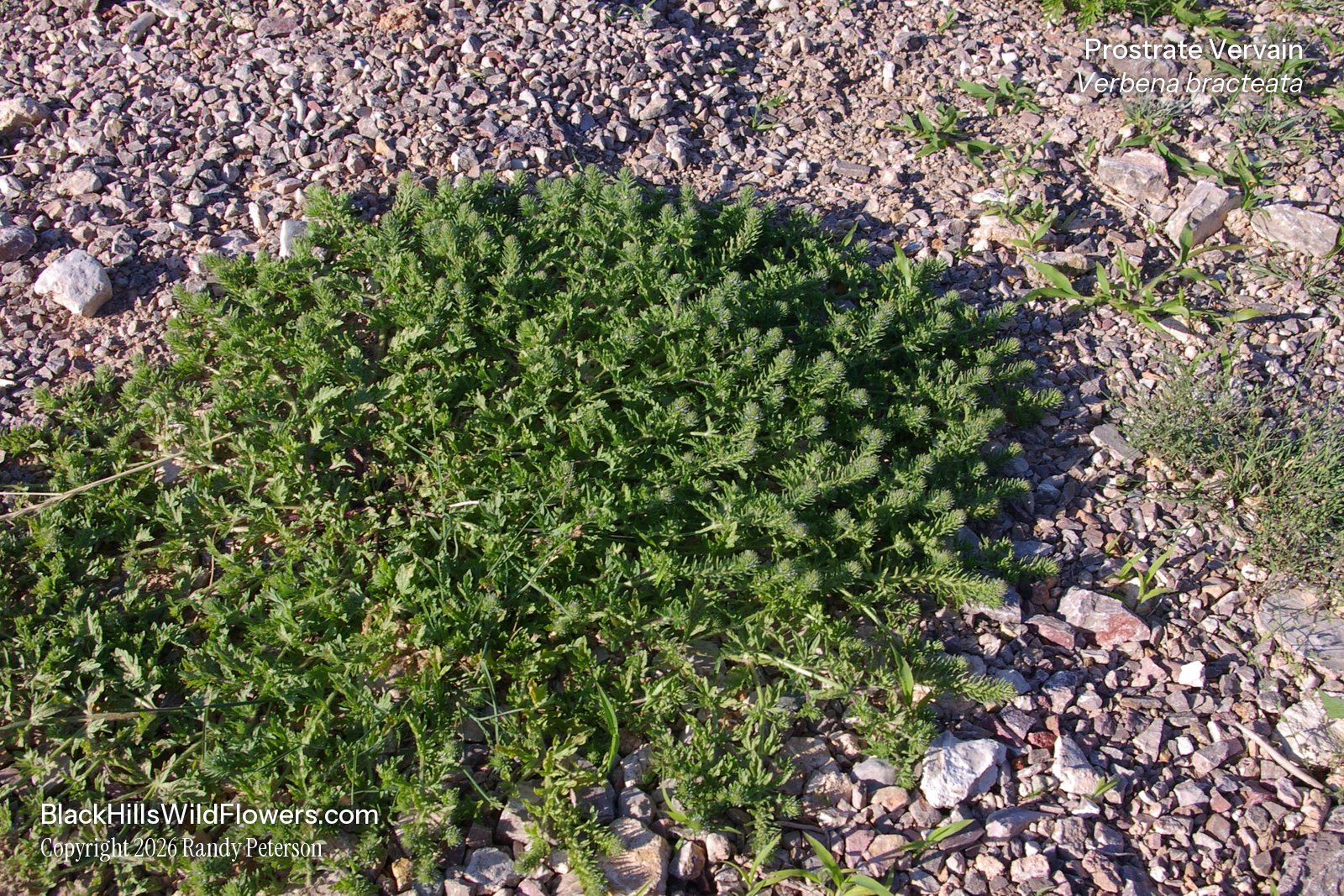
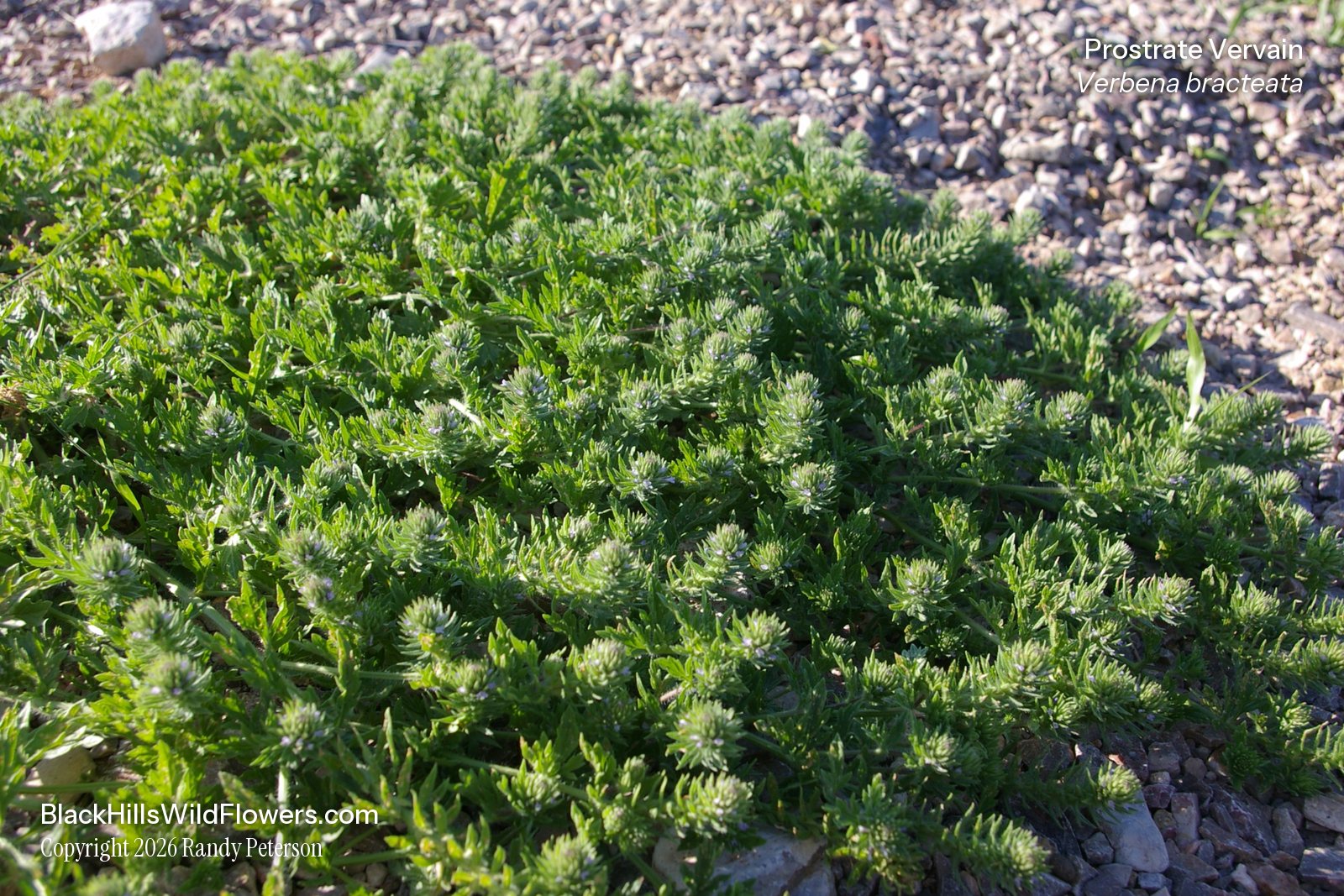
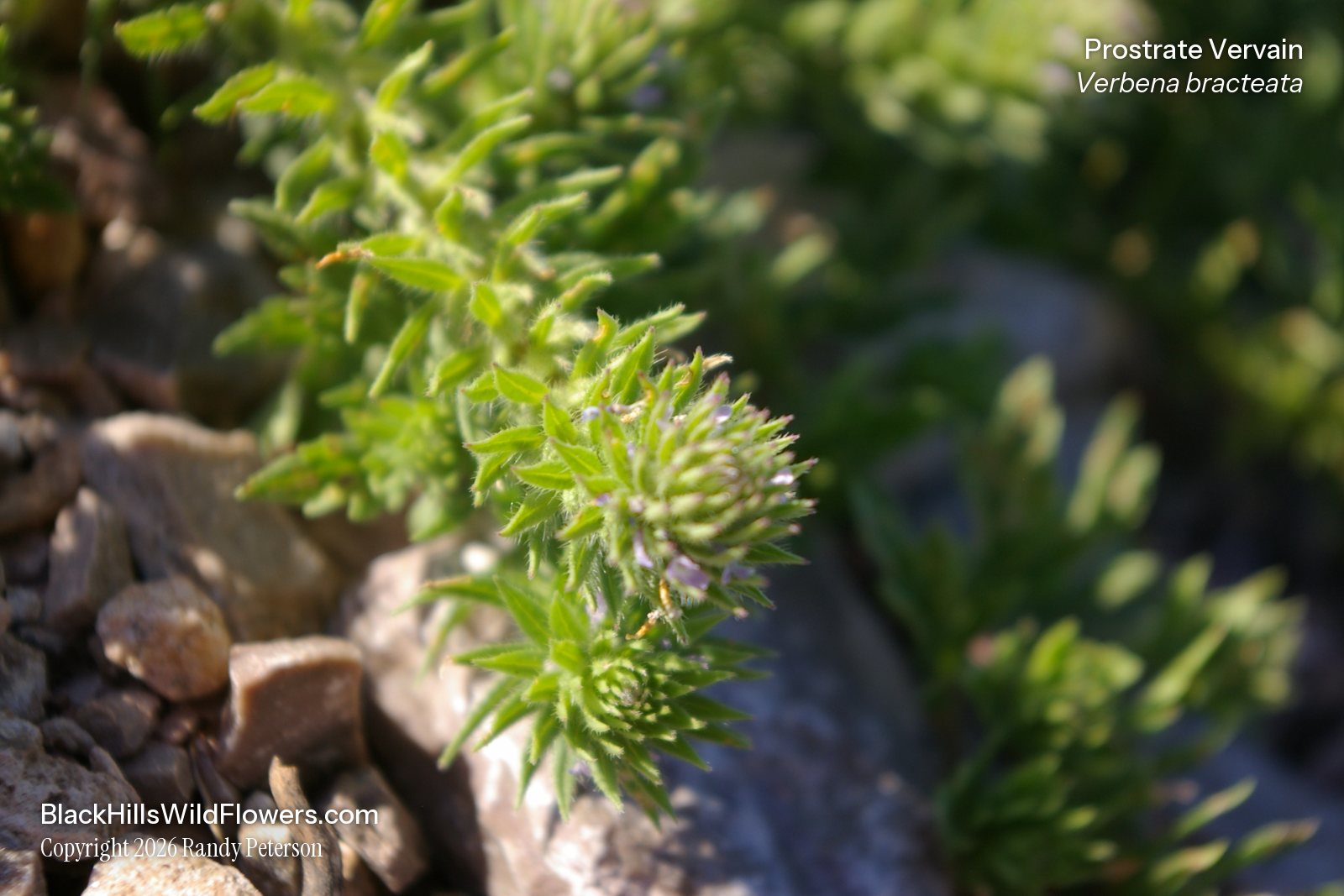
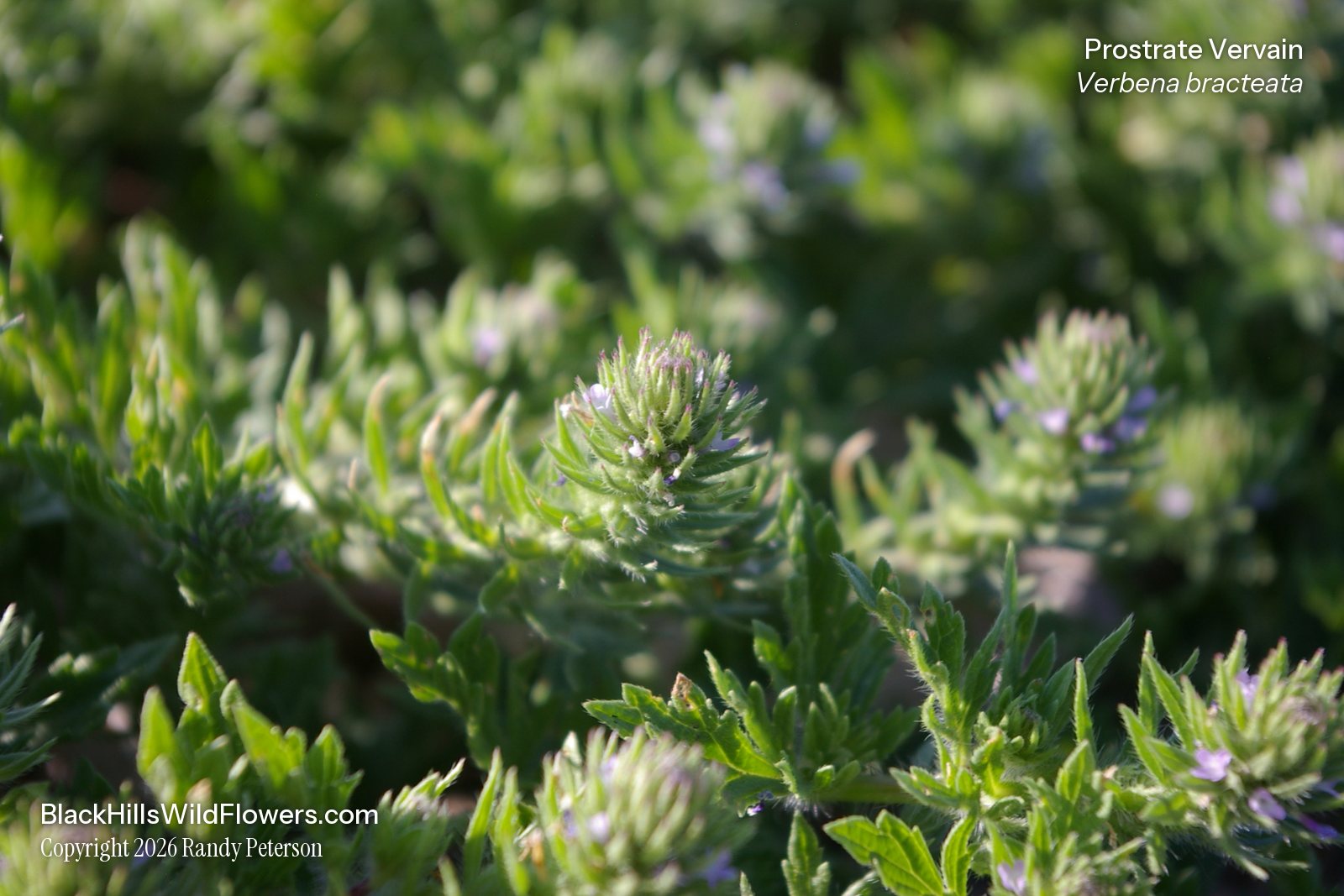
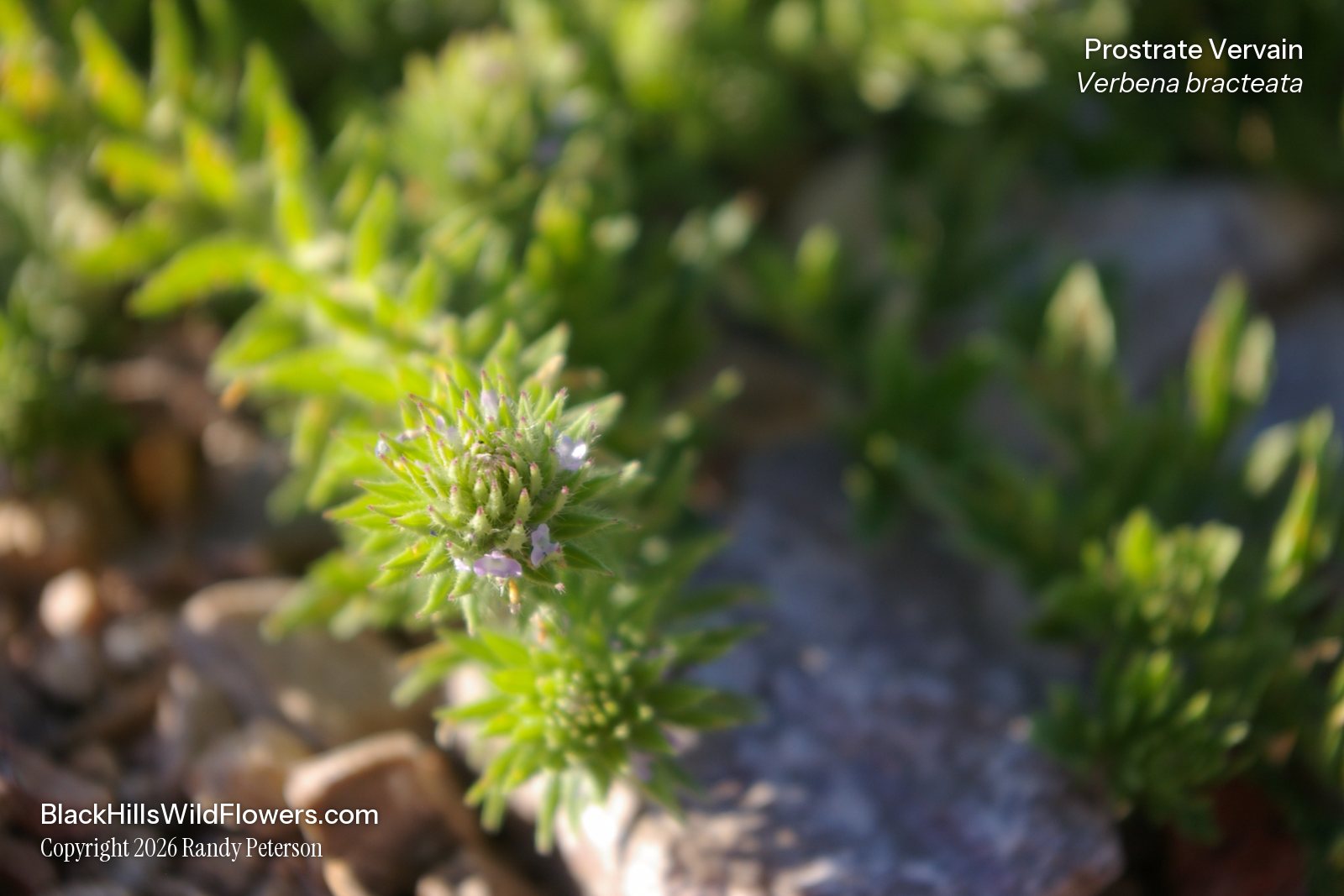
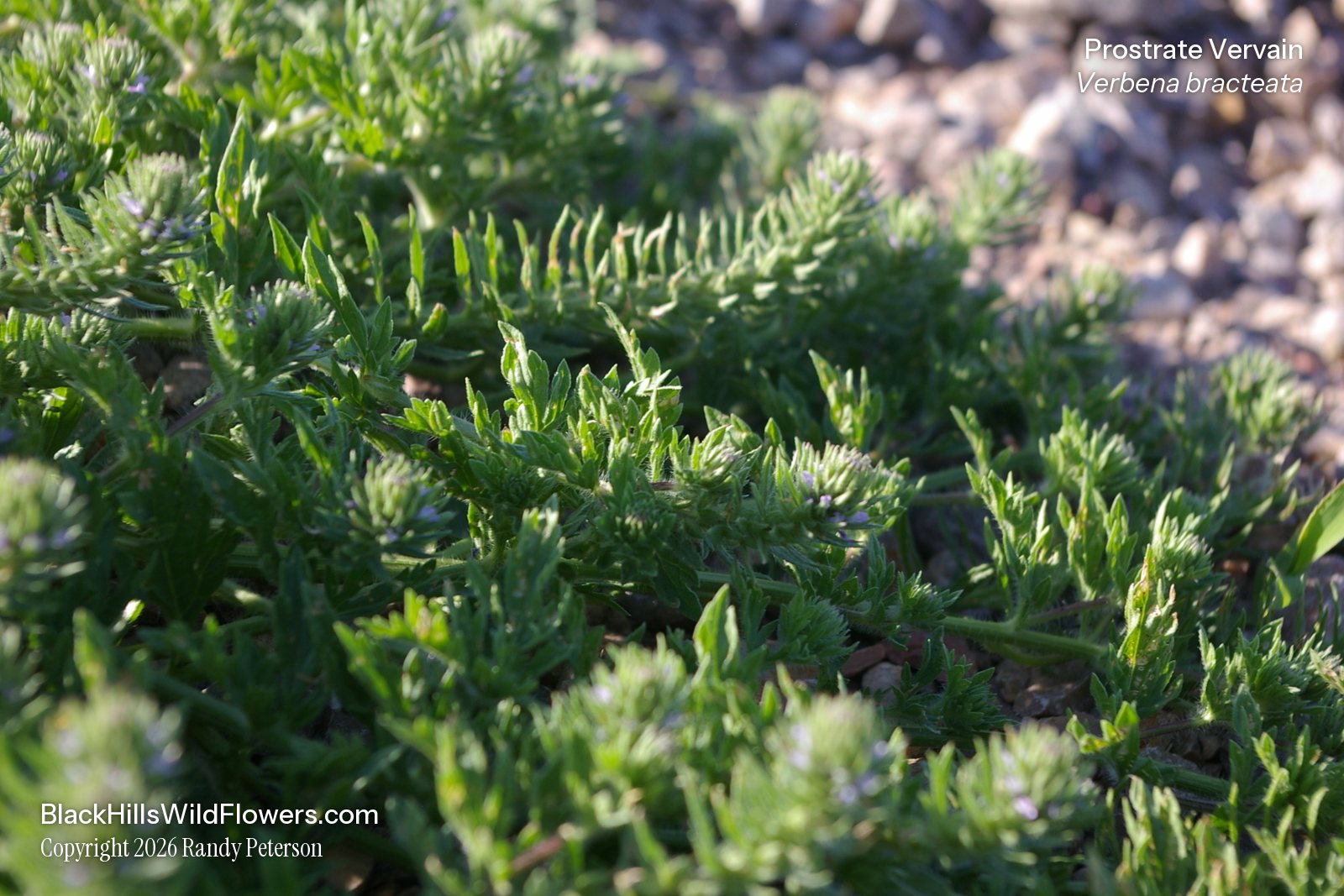
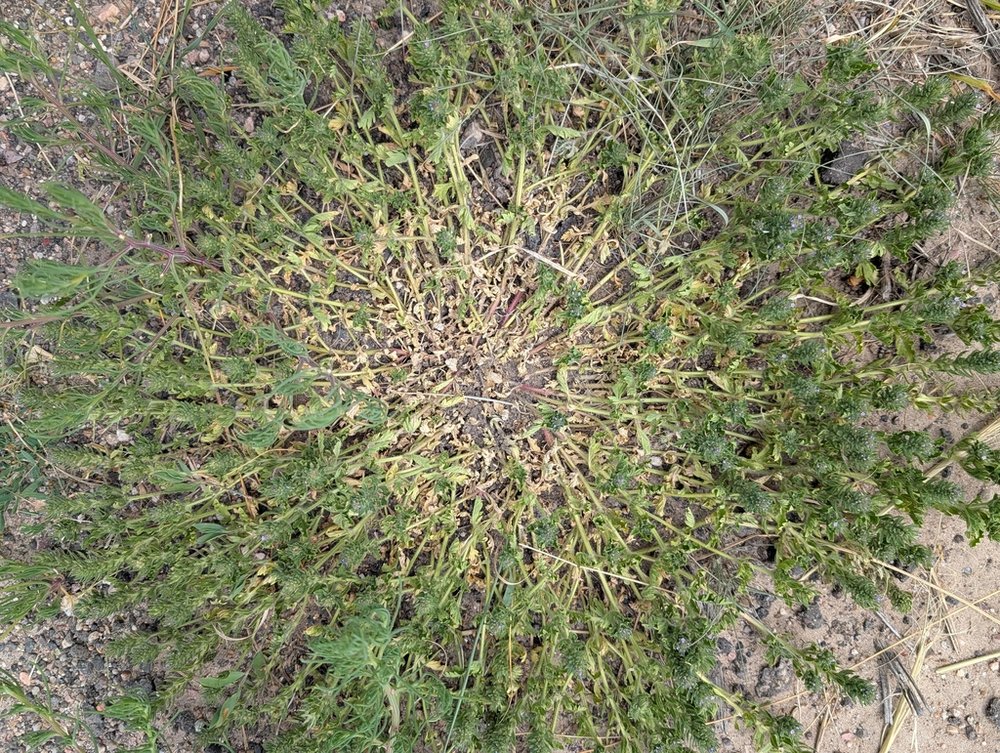
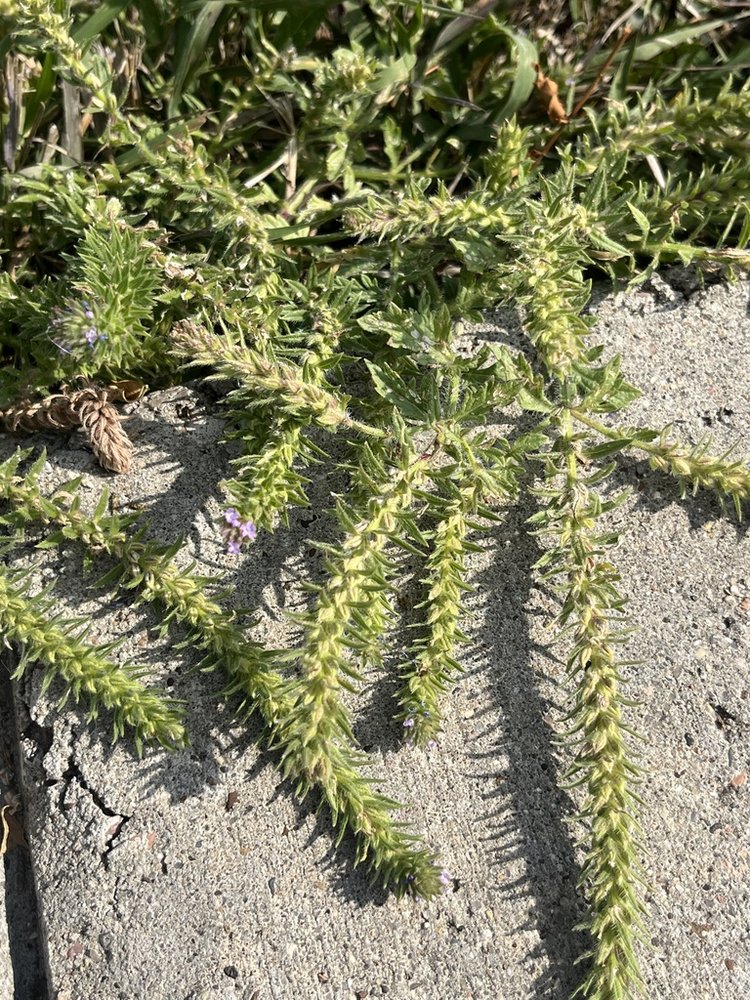
Prostrate Vervain (Verbena bracteata) is a native vervain that spreads in a flat, hairy mat, with 3-lobed, toothed leaves and thick spikes packed with long, hairy bracts that nearly hide its tiny pale blue to lavender flowers. It blooms from June into September on roadsides, pastures, lawns and other dry, disturbed ground, and the National Park Service lists it at Wind Cave, Jewel Cave, Mount Rushmore and Devils Tower. Photographed in the Black Hills.
Free photos from other sources
| Family | Verbenaceae · Vervain |
|---|---|
| Status | Native annual or short-lived perennial |
| Blooms | June into September |
| Height | Stems 10–64 cm (4–25 in) long, lying flat |
| Where | Roadsides, pastures, lawns and other dry, disturbed ground, gravelly or rocky soil and open pine woods |
| Also called | Bigbract Verbena, Bracted Vervain, Carpet Vervain, Prostrate Verbena, apé sloháŋ (Lakota) |
| Synonym | Verbena imbricata, Verbena bracteosa, Verbena prostrata |
| Traditional use | Black Elk and Flying By (1998) record that the Lakota used a tea of the root for tuberculosis, particularly when it had spread to the lymph nodes. Kansas Wildflowers notes that the Navajo used a poultice of the plant for centipede bites. |
Roots, seeds & germination
Root: A taproot.
Seed: Each flower leaves 4 narrow nutlets (one-seeded fruits) about 2–2.5 mm long, yellowish to reddish brown, with a net-like pattern on the surface. Mourning Doves, Northern Cardinals, juncos and native sparrows eat a few of the seeds.
How do you identify Prostrate Vervain?
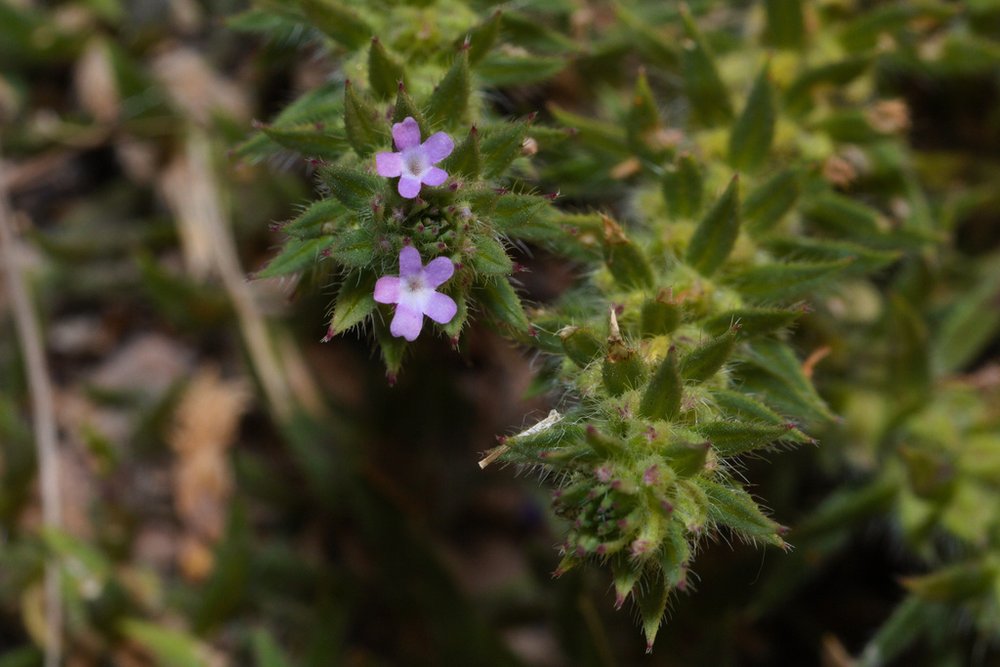
Look for a low, round mat of hairy, roughly square stems spreading from a taproot. The opposite leaves are 1–7 cm (½–2¾ in) long, and the lower ones are cut into 3 lobes: a large, toothed, wedge-based middle lobe and 2 much smaller, narrow side lobes; the upper leaves are a little smaller and have no side lobes. Each stem ends in a thick spike, 2.5–20 cm (1–8 in) long, crowded with narrow, white-hairy bracts (leafy scales) 8–15 mm (⅓–⅗ in) long, 2 to 3 times the length of the flower's calyx. The flowers are only about 3 mm (⅛ in) across, light blue to lavender with a whitish throat and 5 rounded lobes, and most of each flower hides among the bracts. Illinois Wildflowers notes that the flat habit and the thick, bract-filled spikes set it apart from other vervains, which mostly stand upright.
When does it bloom?
June into September.
Where does it grow?
Dry, open, disturbed ground: roadsides and road beds, pastures, lawns, prairie dog towns, rocky or gravelly soil and open pine woods. The 1986 plant survey of Jewel Cave lists it, the National Park Service lists it at Wind Cave, Jewel Cave, Mount Rushmore and Devils Tower, and herbarium specimens come from Lawrence, Pennington, Custer, Fall River and Meade counties and Crook and Weston counties, Wyoming, from waste places in Lawrence County in 1913 and a lawn in 1937 to a prairie dog town in Wind Cave National Park in 1979.
Other vervains in this guide
Sources: Kansas Wildflowers and Grasses: Verbena bracteata (prostrate vervain); Illinois Wildflowers: Prostrate Vervain, Verbena bracteata; USDA PLANTS Database: Verbena bracteata (VEBR); ITIS: Verbena bracteata, TSN 32085; Culturally Important Plants of the Lakota (Black Elk and Flying By, 1998), entry 321, filed with the South Dakota PUC; Marriott and Hartman 1986, A Survey of the Vegetation of Jewel Cave National Monument; NPSpecies checklist, Wind Cave National Park vascular plants; NPSpecies checklist, Jewel Cave National Monument vascular plants; NPSpecies checklist, Mount Rushmore National Memorial vascular plants; NPSpecies checklist, Devils Tower National Monument vascular plants; GBIF occurrence search: Verbena bracteata, South Dakota and Wyoming herbarium specimens; GBIF specimen 5895862764: Lawrence County, 1913, waste places, in flower; GBIF specimen 3305421312: Lawrence County, 1937, lawn, in flower and fruit; GBIF specimen 2618307642: Wind Cave National Park, 1979, prairie dog town.