Pleated Gentian Gentiana affinis
Also called Northern Gentian, Prairie Gentian, Rocky Mountain Gentian
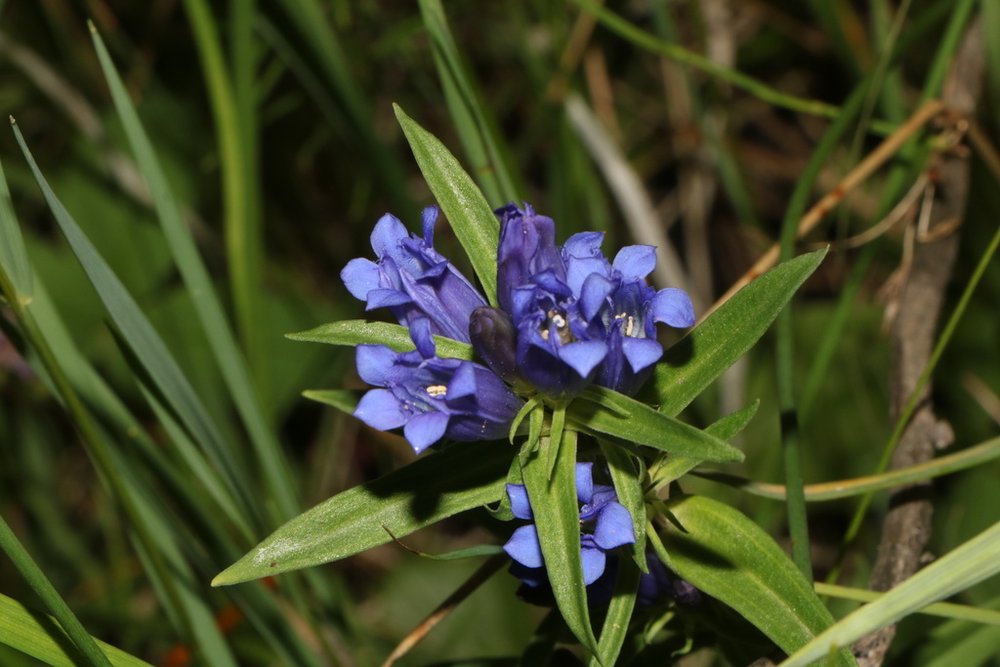
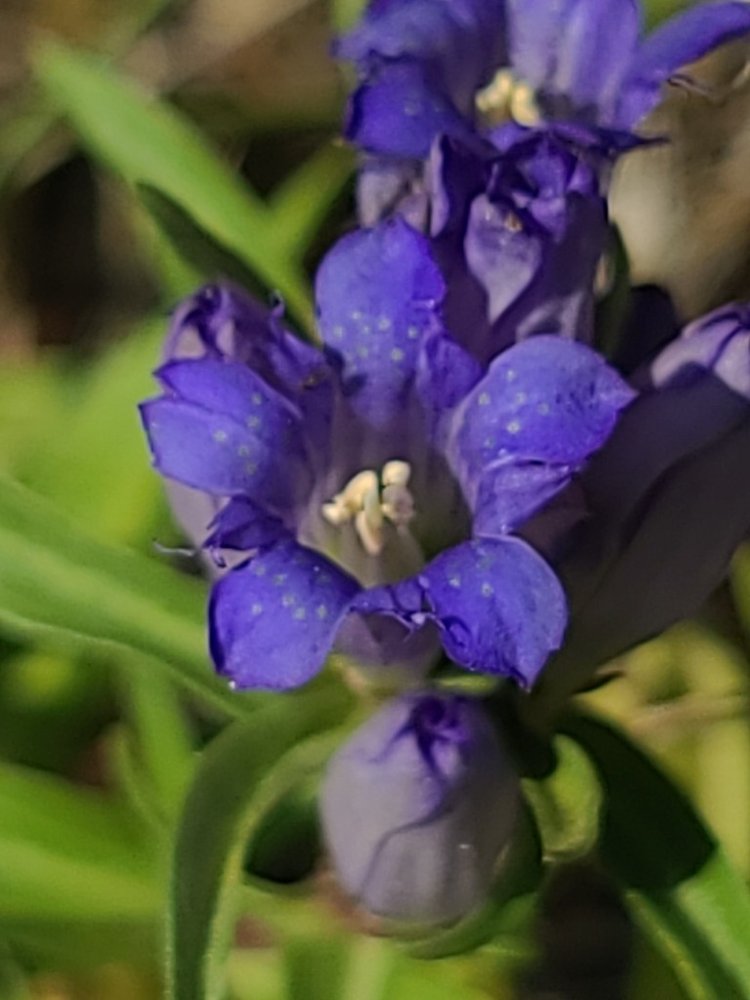
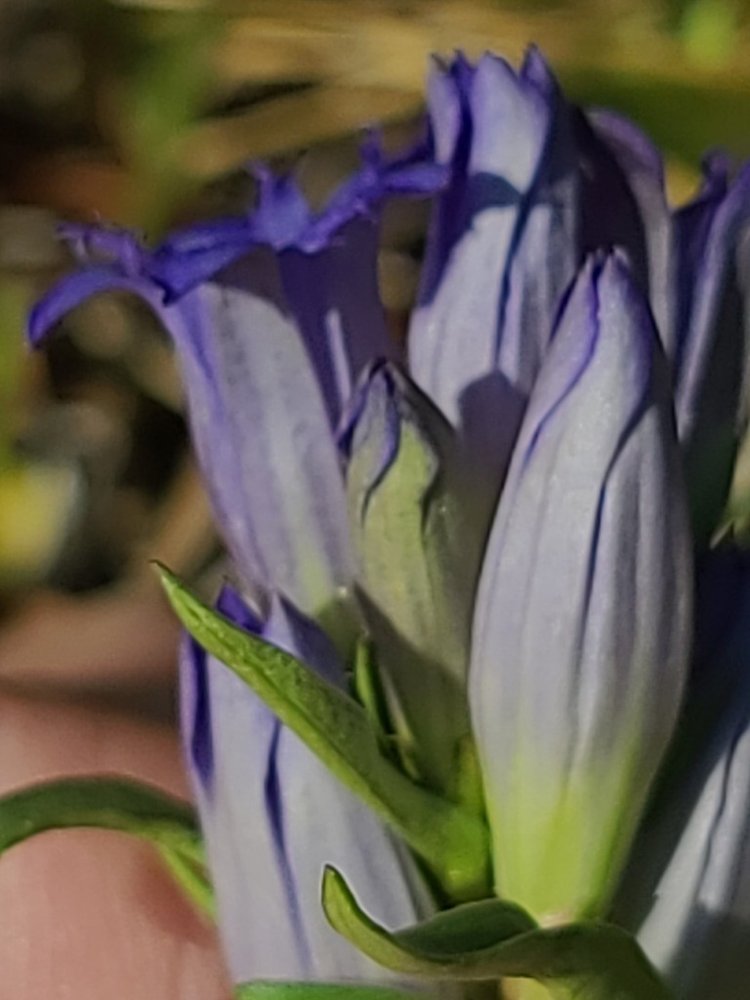
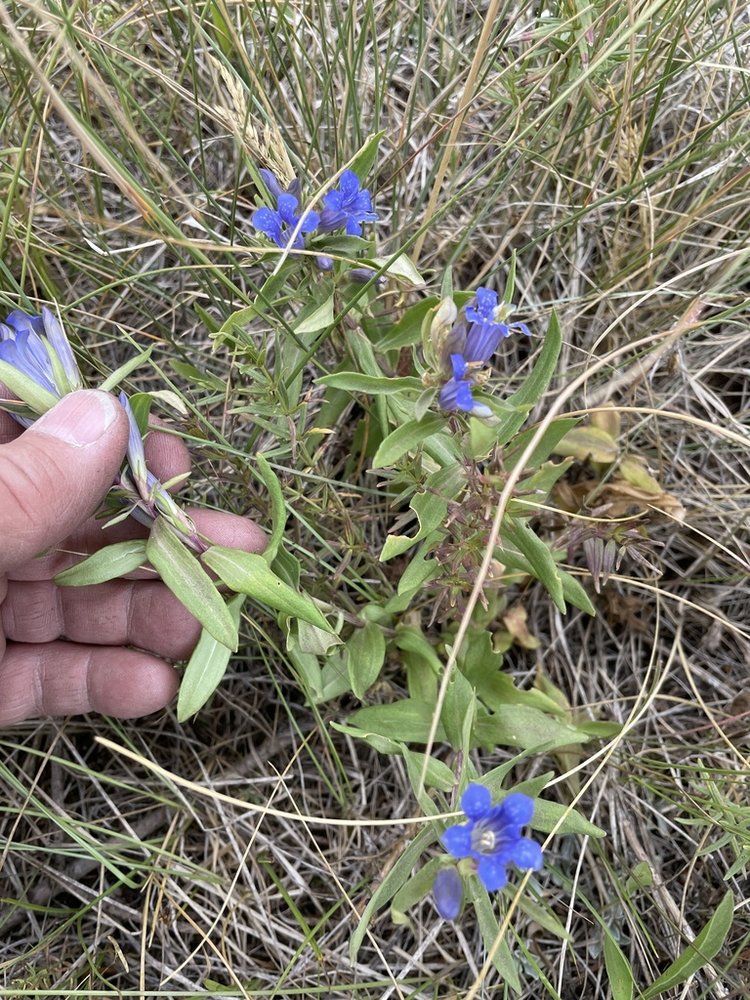
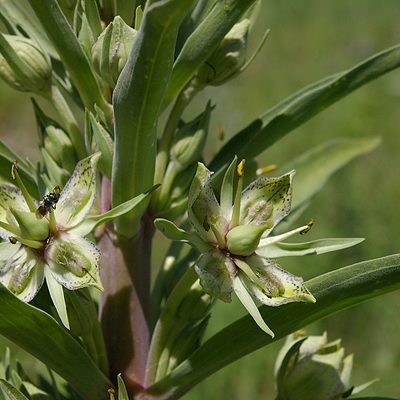
Pleated Gentian (Gentiana affinis) is a native perennial with clusters of stalkless, deep blue, funnel-shaped flowers at the tops of its stems, each flower with ragged pleats between its five pointed lobes. It blooms in August and September in moist, open meadows in the Black Hills, where it is uncommon and ranked as a rare plant in South Dakota.
Free photos from other sources
| Family | Gentianaceae · Gentian |
|---|---|
| Status | Native perennial |
| Blooms | August and September |
| Height | 10–40 cm (4–16 in) |
| Where | Moist, open meadows, fen edges and stream margins on limestone ground |
| Also called | Northern Gentian, Prairie Gentian, Rocky Mountain Gentian |
| Synonym | Pneumonanthe affinis, Gentiana affinis var. bigelovii, Gentiana forwoodii, Gentiana bigelovii, Gentiana interrupta, Dasystephana affinis |
| Note | The U.S. Forest Service named it a plant species of local concern for the Black Hills in 2005; it is not on the Forest Service's 2023 draft list of species of conservation concern. South Dakota's rare plant list ranks it S2S3, imperiled to vulnerable. This page gives no locations. |
Roots, seeds & germination
Root: Fleshy, fibrous roots below a branched crown (caudex: a short, thick stem base), from which several stems rise.
Seed: A cylindrical capsule 2–4 cm (¾–1½ in) long ripens in September and October and holds many small, flat seeds with narrow wings, which the wind carries.
How do you identify Pleated Gentian?
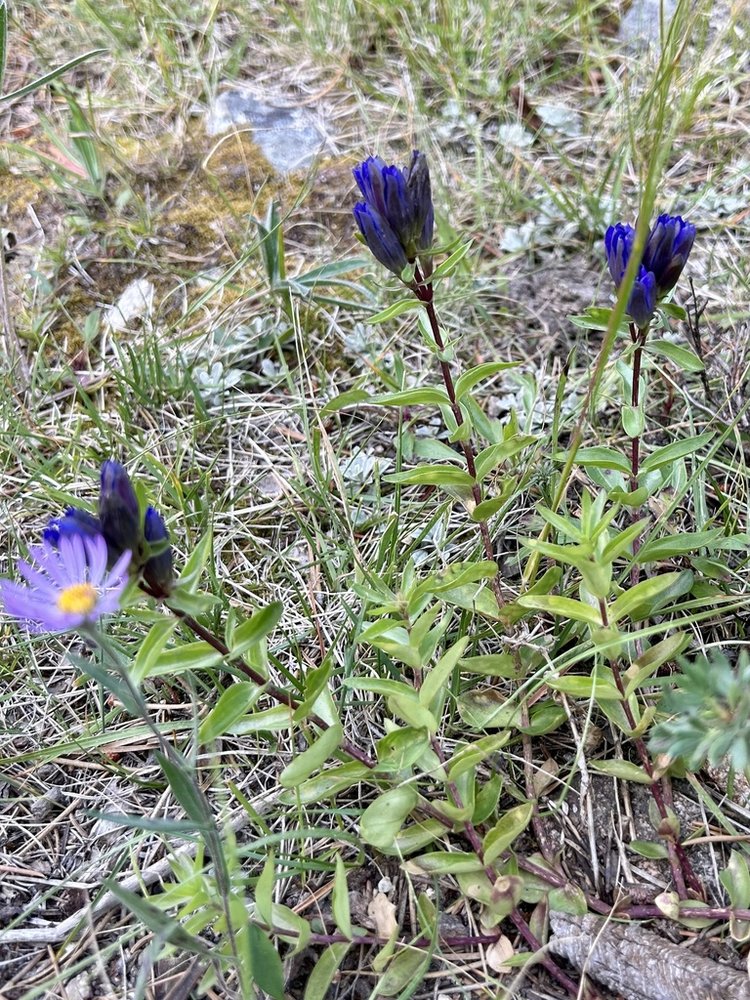
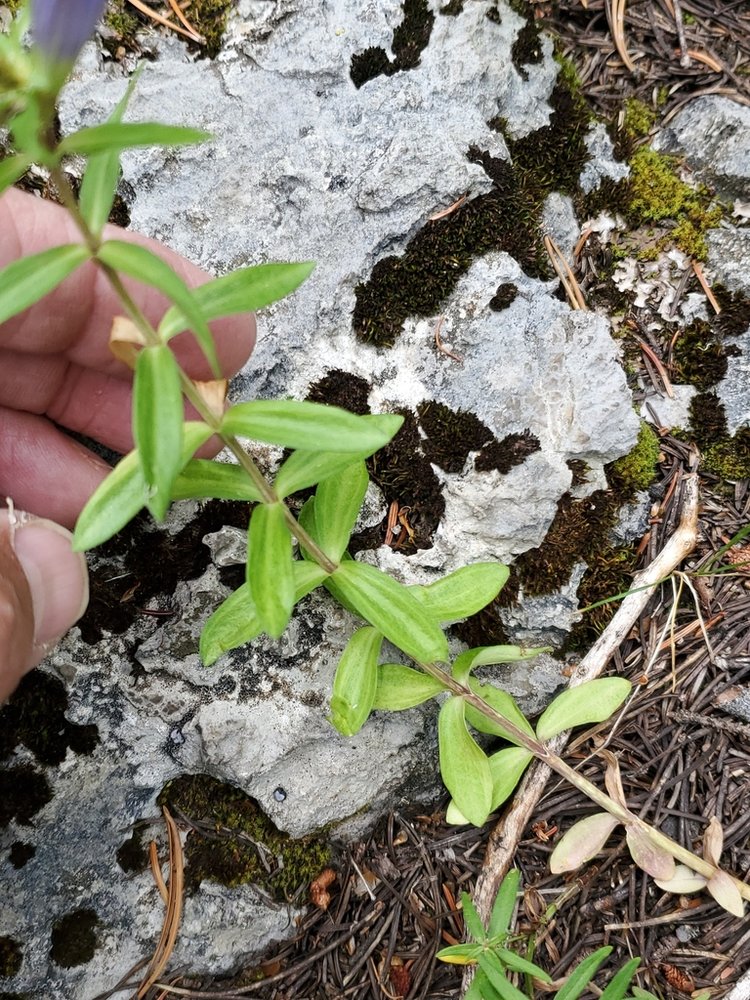
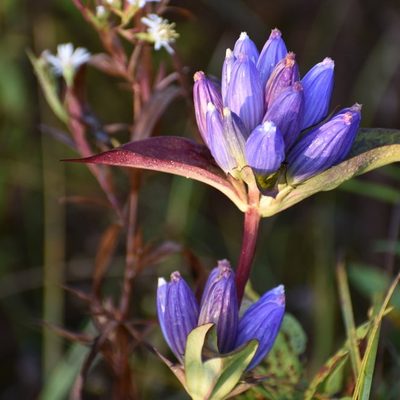
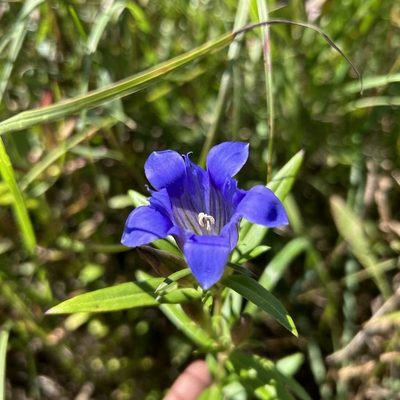
Look for several stems from one base, often tinged red, 10–40 cm (4–16 in) tall, with pairs of narrow, stalkless, toothless leaves 1–4 cm (⅜–1½ in) long, each pair set at a right angle to the next. The flowers sit stalkless in a cluster at the top of the stem, with a few more on short stalks from the upper leaf joints. Each is an erect, funnel-shaped tube 18–40 mm (¾–1½ in) long that opens into five spreading, sharply pointed lobes; between the lobes is a pleat of tissue with a ragged outer edge, and the inside of the lobes and pleats is bright blue with whitish to greenish spots. Downy Gentian (Gentiana puberulenta) also grows in the Black Hills, on limestone where grassland meets forest. Flora of North America says its flowers are generally much larger, with lobes more than twice as long as the free part of the pleats, while Pleated Gentian's lobes are less than twice as long; Minnesota Wildflowers adds that Downy Gentian's deeper blue-violet flowers have no spotting. Closed Bottle Gentian (Gentiana andrewsii), which also blooms in August and September in wet meadows of western South Dakota, has a closed tube with incurved petals, so its flowers look like large buds that never open.
When does it bloom?
August and September.
Where does it grow?
Moist but not waterlogged ground in open meadows with little or no tree cover, sometimes beside wet meadows, fens (peat wetlands fed by groundwater) and stream edges, mostly on limestone, at about 1,500–2,000 m (5,000–6,500 ft). The Forest Service calls it uncommon in the Black Hills at low to middle elevations, growing in full or nearly full sun, and South Dakota's rare plant list places it in montane meadows of the Black Hills and in the northeast of the state.
Other gentians in this guide
Sources: Phase II Amendment Final Environmental Impact Statement, Chapter 3-3.2 Flora: Pleated Gentian (Gentiana affinis), Species of Local Concern (2005) — USDA Forest Service; Revised Forest Assessment: At-Risk Species, draft October 2023 (Pleated Gentian not listed; Downy Gentian habitat) — USDA Forest Service; Rare Plants of South Dakota (Gentiana affinis, Northern Gentian, G5 S2S3) — South Dakota Natural Heritage Program, SD Game, Fish and Parks (2018); Flora of North America Vol. 14: Gentiana affinis (J. S. Pringle) — eFloras; Flora of North America Vol. 14: Gentiana affinis var. affinis — eFloras; Flora of North America Vol. 14: Gentiana puberulenta (comparison with G. affinis) — eFloras; USDA PLANTS Database: Gentiana affinis Griseb., pleated gentian (GEAF); ITIS: Gentiana affinis Griseb., TSN 29964 (synonyms); Minnesota Wildflowers: Gentiana affinis (Pleated Gentian); Montana Field Guide: Prairie Gentian, Gentiana affinis — Montana Natural Heritage Program; SDSU Open PRAIRIE, South Dakota Native Plant Research: Gentiana andrewsii, bottle gentian (R. Neil Reese); Minnesota Wildflowers: Gentiana andrewsii (Bottle Gentian).